
India / Hemis / Hemis zones & snow leopard routes
Hemis zones & snow leopard routes
India's largest national park with one of the world's highest snow leopard densities. The Rumbak valley is the operational centre for winter snow leopard tracking. Open year-round — no monsoon closure.
Safari zones at a glance
| Zone / Valley | Altitude | Best For | Peak Season | Access |
|---|---|---|---|---|
| Rumbak valley | 3,900 m | Snow leopard (winter) | Jan – Mar | 4-hr walk from Jingchen |
| Husing valley | 4,000–4,200 m | Snow leopard, bharal | Nov – Mar | Side valley off Rumbak |
| Markha valley | 3,600–4,500 m | Bharal, trekking | May – Oct | 5–7 day trek circuit |
| High plateau | 4,500–5,500 m | Bharal herds (summer) | Jun – Sep | Multi-day expedition |
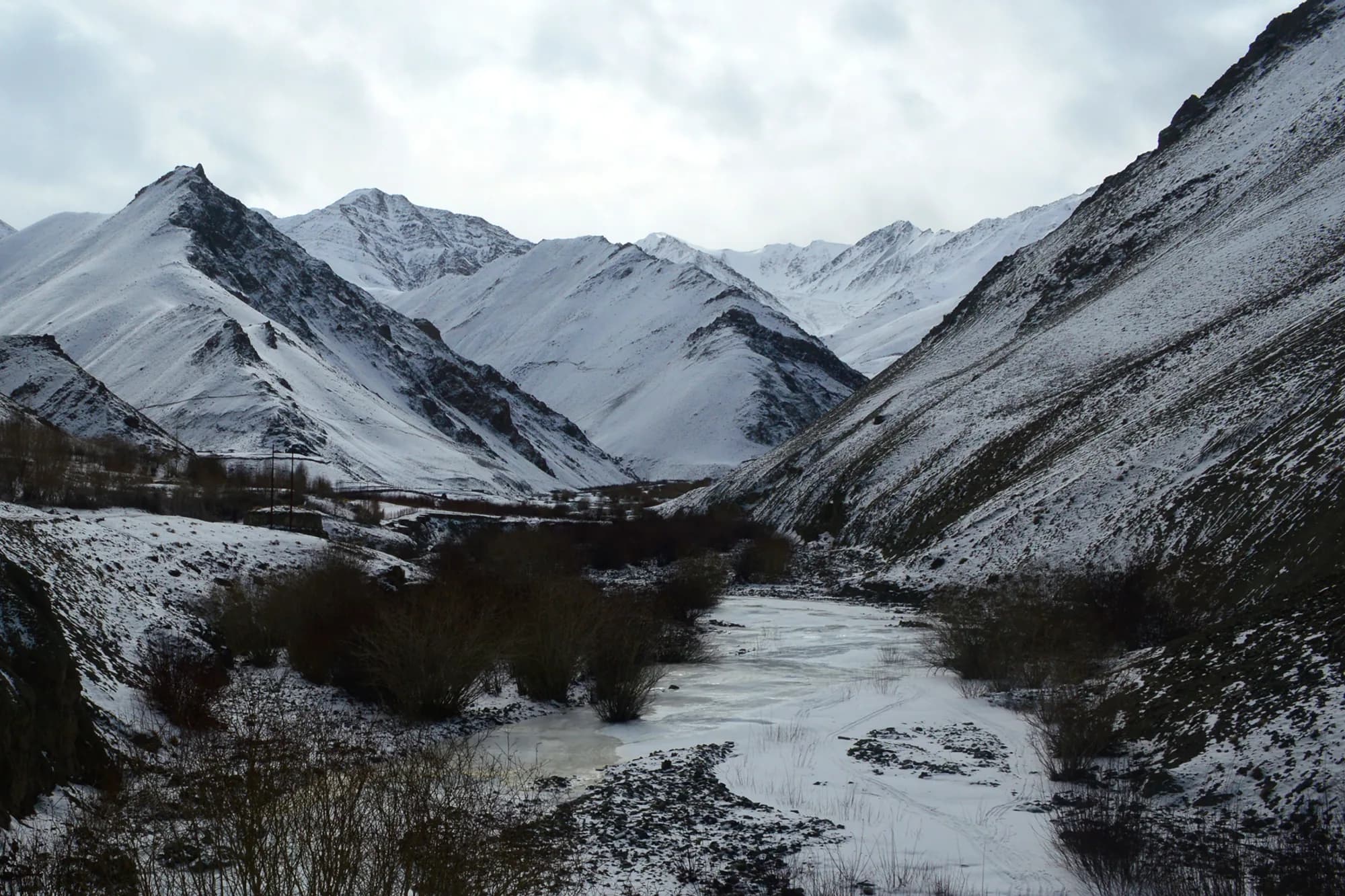
Rumbak valley snow leopard tracking camp in winter with snow-covered mountains in Hemis National Park, Ladakh
Ratio 16:9 · Alt: Rumbak valley snow leopard home-stay camp in February with frozen stream and Zanskar range in background, Hemis National Park
Rumbak valley — snow leopard zone
Rumbak (3,900 m) is the operational hub for Hemis snow leopard tracking. The valley has 8–10 resident home-stay families who host tracking visitors from January to March. A total of 8–12 beds are available at Rumbak — book 2–3 months ahead for February. Trackers use spotting scopes from elevated positions to scan the cliff faces where cats rest during midday.
Husing valley
Husing valley (4,000–4,200 m) is a side valley off the Rumbak circuit. It holds a resident snow leopard family and is the area most frequently checked on multi-day tracking programs. The approach from Rumbak takes 2–3 hours. Bharal congregate in the upper Husing meadows year-round, which keeps snow leopard activity consistent.
Markha valley circuit
The Markha valley is the summer trekking circuit — a 5–7 day loop through the heart of Hemis accessible from Chilling (via Zanskar confluence) or Spituk (via Indus valley). The circuit passes through Hankar, Nimaling meadows (4,700 m) and crosses the Kongmaru La (5,150 m). Bharal herds are consistently seen on the high meadows in July–September.
High plateau zones
Above 4,500 m, Hemis becomes a genuine high-altitude wilderness with virtually no facilities or trails. Kiang (Tibetan wild ass) are found in the eastern plateau sections near the Changtang border. Wolves hunt bharal in open terrain. Access requires full expedition logistics including camping at altitude and acclimatisation protocols.
Buffer zone and valley entry
The Jingchen trailhead (30 minutes from Leh on the Indus valley road) is where all Rumbak visits begin. The buffer zone around the lower Indus valley is accessible without core permits for day walks. The Hemis monastery itself (outside the park) is a popular half-day excursion from Leh and gives a sense of the landscape.
Inner line permit and guide rules
Indian nationals: inner line permit (ILP) required for restricted zones within Hemis — available from the Leh DC office or online. Foreign nationals: Protected Area Permit (PAP) required from the Leh DC office. A licensed local guide is mandatory for the Rumbak snow leopard circuit. Snow leopard tracking operators in Leh arrange all permits.
Snow leopard tracking operations
Tracking method
Spotting scope & binoculars
Experienced local trackers scan the cliff faces and rocky outcrops from elevated positions using spotting scopes. The cats rest on ledges 200–800 m above the valley floor. Early morning (05:30–09:00) and late afternoon (15:00–17:30) are active hours.
Sighting rates
70–80% over 5 days (Feb)
Operators report 70–80% sighting rates over 5-day stays in February at Rumbak. January rates are slightly lower (55–65%). March rates drop as bharal move higher and cats follow.
Best zones for each species
- Snow leopard — Rumbak and Husing valleys (Jan–Mar). Best odds in India.
- Bharal — Husing meadows (winter), Nimaling (summer). Large herds year-round.
- Kiang — Eastern high plateau, border with Changtang. July–September.
- Ladakh urial — Rocky slopes at 3,500–4,000 m in Rumbak and Markha valleys.
- Lammergeier — Updrafts above Rumbak cliffs year-round. Regular sightings.
Data source
Zone data from Ladakh Wildlife Protection Dept
Zone boundaries, wildlife distribution and permit rules from Ladakh Wildlife Protection Dept and licensed Hemis snow leopard tracking operators based in Leh. Checked 8 Sep 2026.