
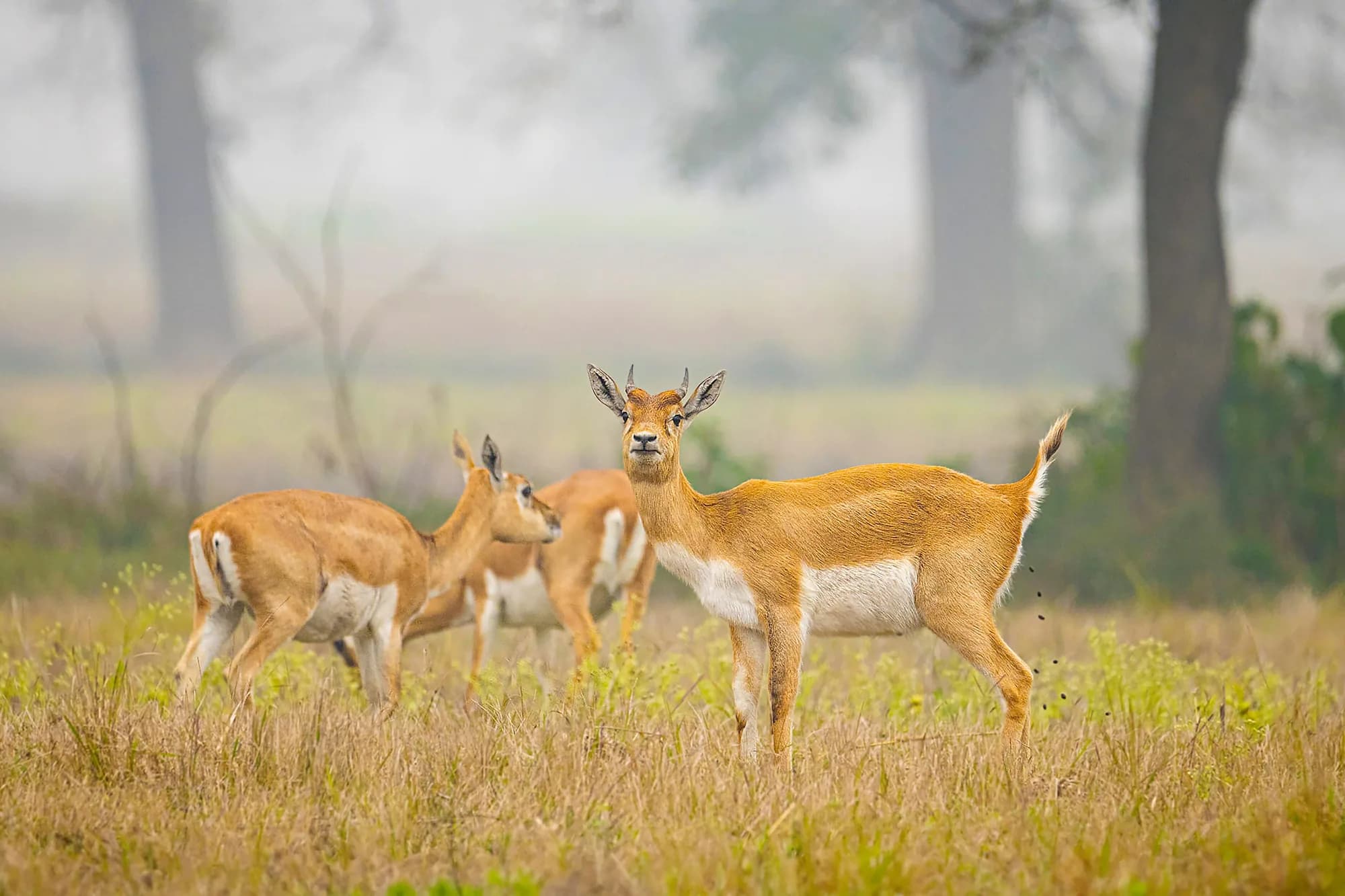
Species · Antilope cervicapra
Blackbuck
India's most striking antelope — spiral horns, a hard black-and-white male in the rut — on flat open grassland where you can watch a hundred at once.
Also called
- Kala hiran (काला हिरण) · Hindi
- Kaliyar · Gujarati
- Vellai maan · Tamil
Checked 30 Aug 2026
- Where
- Gujarat, Rajasthan, the Deccan
- Best months
- October–March
- Speed
- Among the fastest in Asia
- Note
- Males darken with age
Open grassland, scrub and farmland across peninsular and northwestern India, mostly outside the forest reserves people visit.
Where it is
Where to actually go
Ranked, with the reason each — these are not interchangeable.
- 01VelavadarGujaratFlat grassland full of blackbuck, with a winter harrier roost and a genuine chance of Indian wolf. The best grassland park in the country and one of the least visited.Two days, and go for the wolves too
- 02Tal ChhaparRajasthanSmall, flat, and dense with blackbuck. Easy, close to the road, and excellent for photography.A short detour, well worth it
- 03GirGujaratPresent in the open areas, and easily added to a lion trip.A bonus
Where you will not see one
- Inside forest reservesBandhavgarh, Kanha, Tadoba and Periyar have effectively none. This is a grassland animal, and the reserves that hold it are grassland reserves nobody markets.
- Expecting all of them to be blackOnly mature males are. Females and young males are fawn with white underparts, and a herd is mostly fawn with one or two black males in it.
- Anywhere expecting a chinkaraDifferent animal. Chinkara are smaller, sandy, with short straight-ish horns; blackbuck males are dark with long spiral horns and there is no mistaking a mature one.
When to go
When to go
- J
- F
- M
- A
- M
- J
- J
- A
- S
- O
- N
- D
January: best. February: best. March: good. April: marginal. May: marginal. June: marginal. July: closed or unproductive. August: closed or unproductive. September: marginal. October: best. November: best. December: best.
Through the day
- Dawn
- Morning
- Midday
- Afternoon
- Dusk
- Night
Dawn: most active. Morning: most active. Midday: usually resting. Afternoon: active. Dusk: most active. Night: not normally seen.
What it looks like in the field
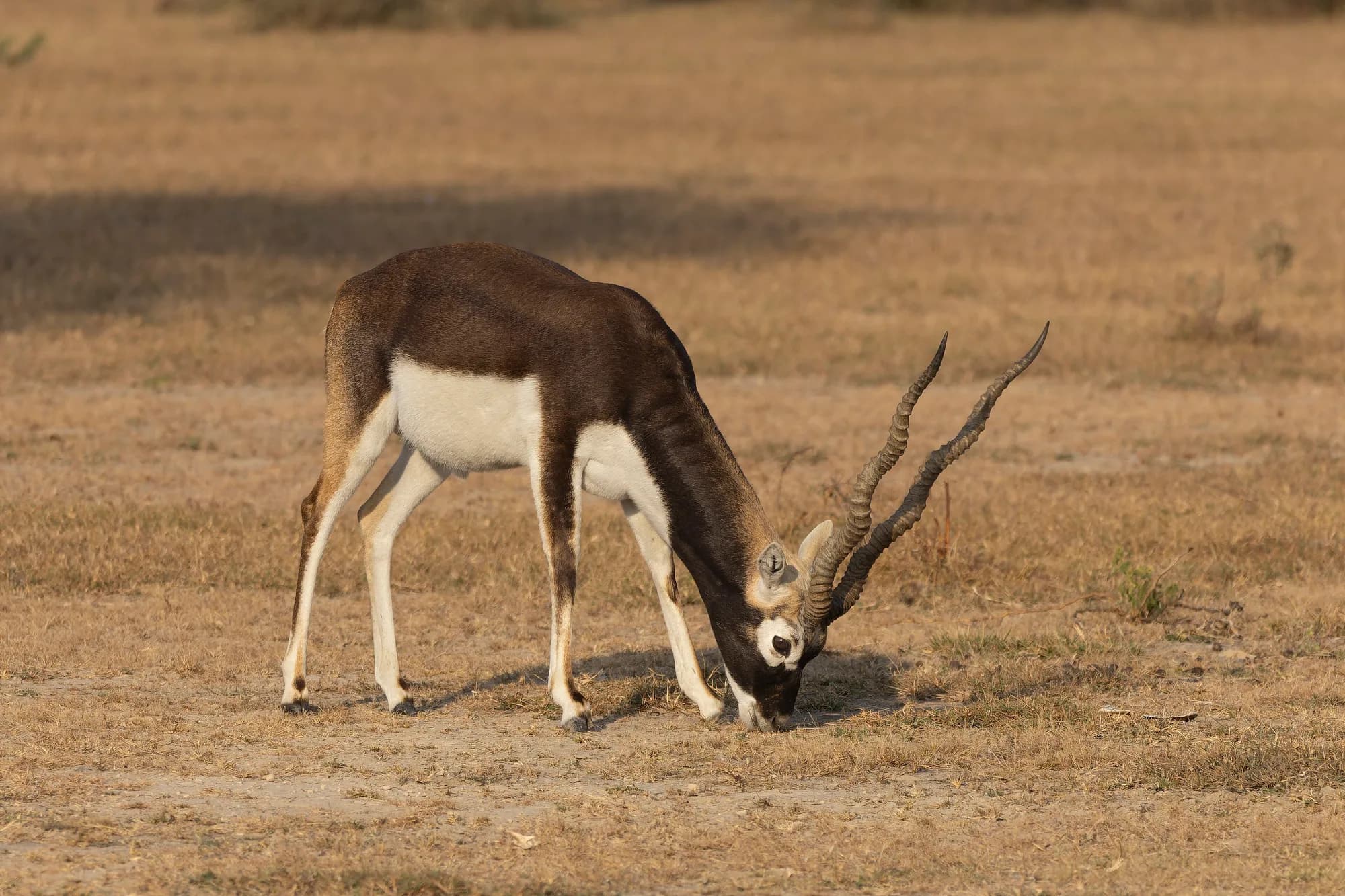
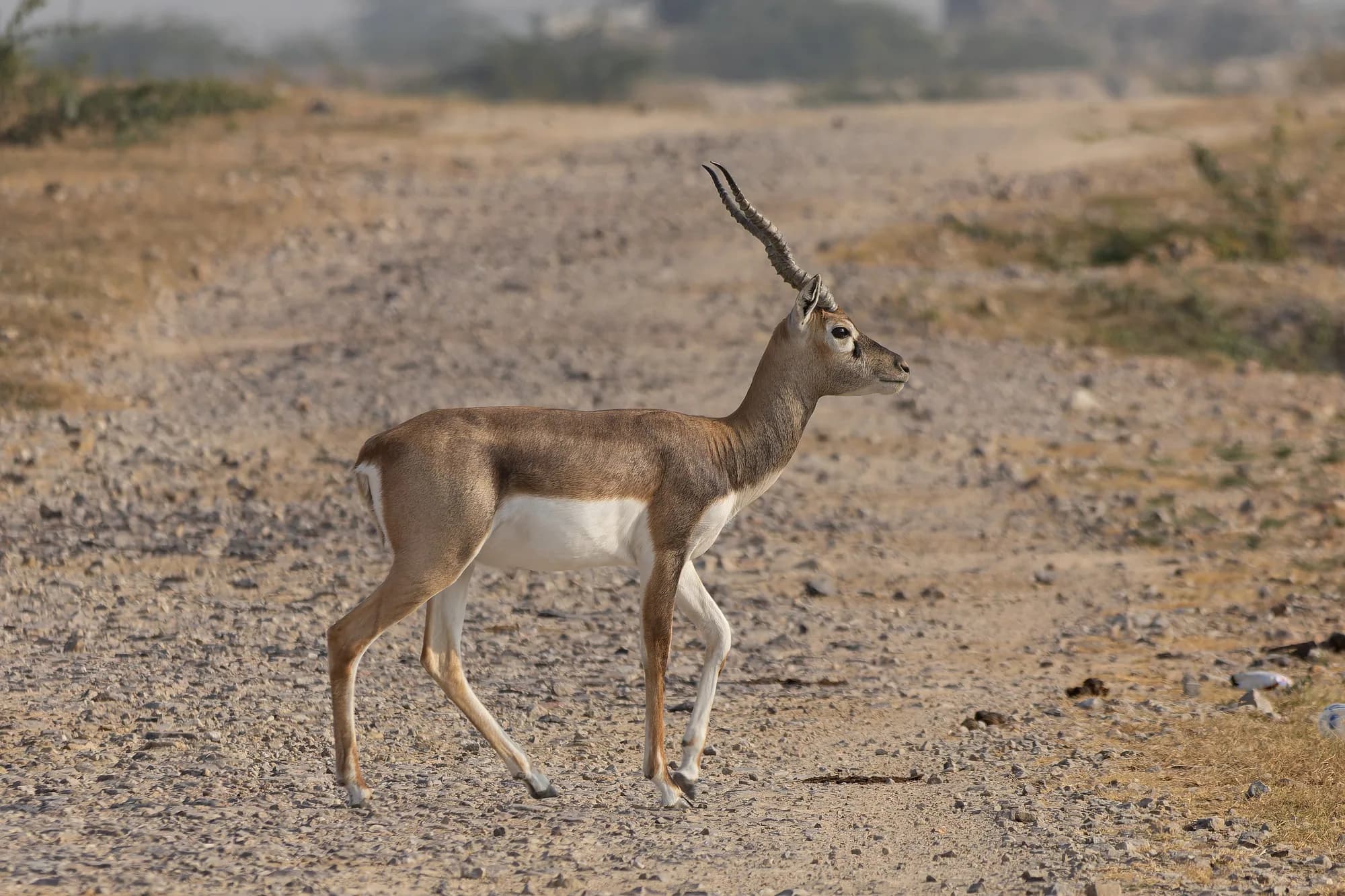
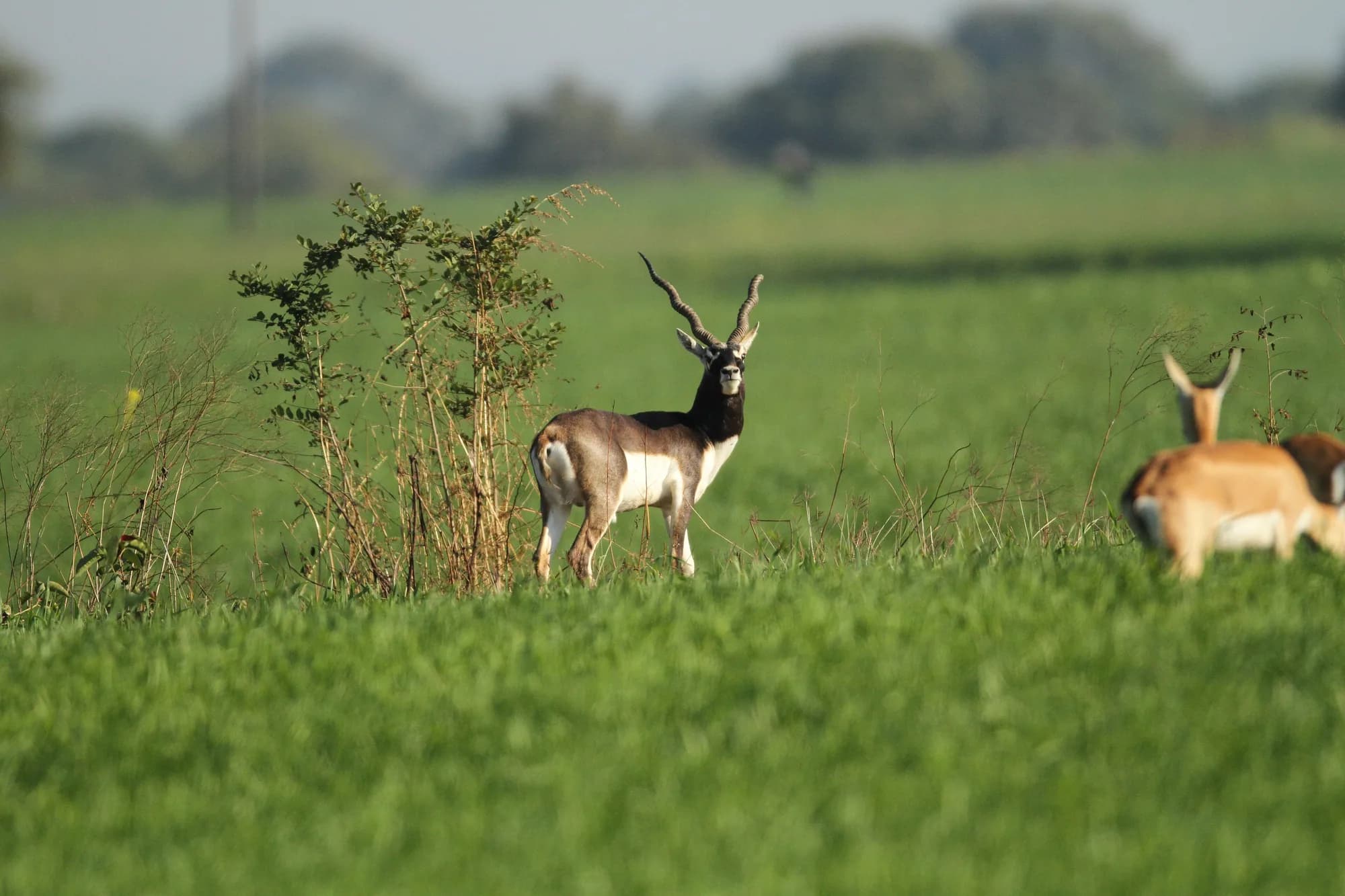
Photographs of Blackbuck in the wild, in Indian reserves. We publish no captive, baited or digitally composited images, and no photograph whose licence we cannot show.
What a sighting is actually like
Generous. Blackbuck stand in the open in numbers, and a Velavadar morning gives you a hundred animals across flat grass with nothing in the way — the opposite of every forest sighting on this site.
When a herd pronks, the whole thing lifts off the ground together.
The habitat nobody protects
Indian grassland is officially classed as wasteland in a good deal of policy, which is why so little of it is inside the protected-area network and why so much has gone to plantation, solar and irrigation.
Status and protection
Status and protection
- IUCN Red List
- Least Concern
- Population trend
- · Unknown
- Wildlife Protection Act 1972
- Schedule I (post-2022 amendment numbering)
- CITES
- Appendix III
Species-level assessment matching the binomial given (Antilope cervicapra). Date assessed 21 June 2016, year published 2017.
Assessed 2017 · IUCN Red List assessment
What to book to see one
What you would be booking
- How it is seen
- Jeep on grassland tracks. Velavadar is a small park and a couple of hours covers a lot of it.
- Drives to book
- Two. This is among the easiest sightings in Indian wildlife once you are in the right habitat.
- Zone or shift
- Velavadar in Gujarat, which also gives you harriers roosting in winter and a real chance of wolves.
Go in the rut, roughly through the cooler months, when males hold territories and lek. A blackbuck lek at dawn is one of the better wildlife spectacles in India and almost nobody goes.
Gir — the usual pairingOn the same trip you would also get
- Indian wolf — the predator, on the same grassland
- Indian fox — the same fields at dusk
- Chinkara — the other antelope, and the identification
- Indian wild ass — two hours away, in the Little Rann
Questions people ask
Where is the best place to see blackbuck?
Why are only some of them black?
Can I see blackbuck in a tiger reserve?
Read next
Gujarat
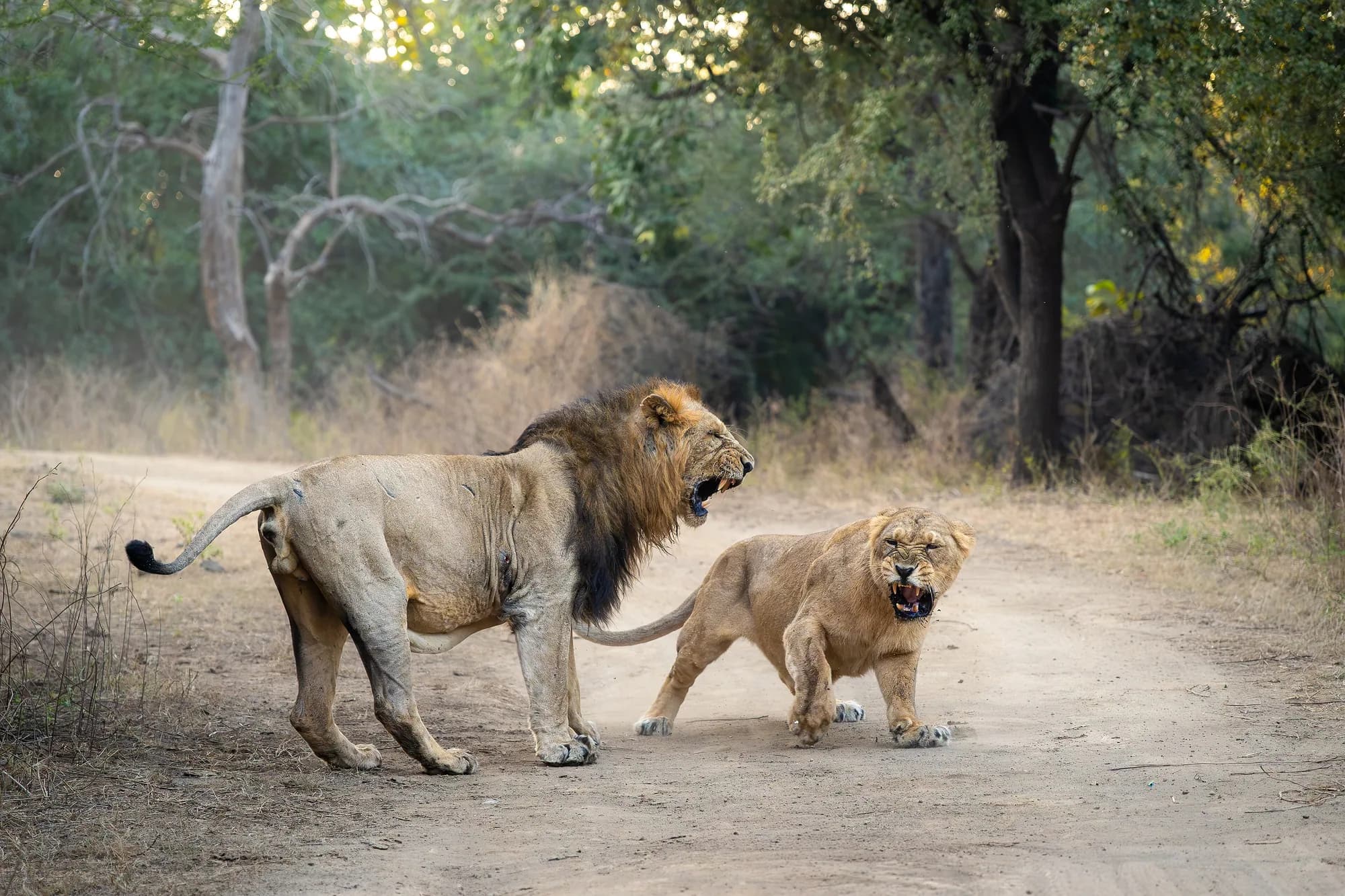
Gir — the usual pairing
The only wild Asiatic lions on earth, in dry thorn scrub. Permits are the constraint here, not the animals.
Grassland, not forest
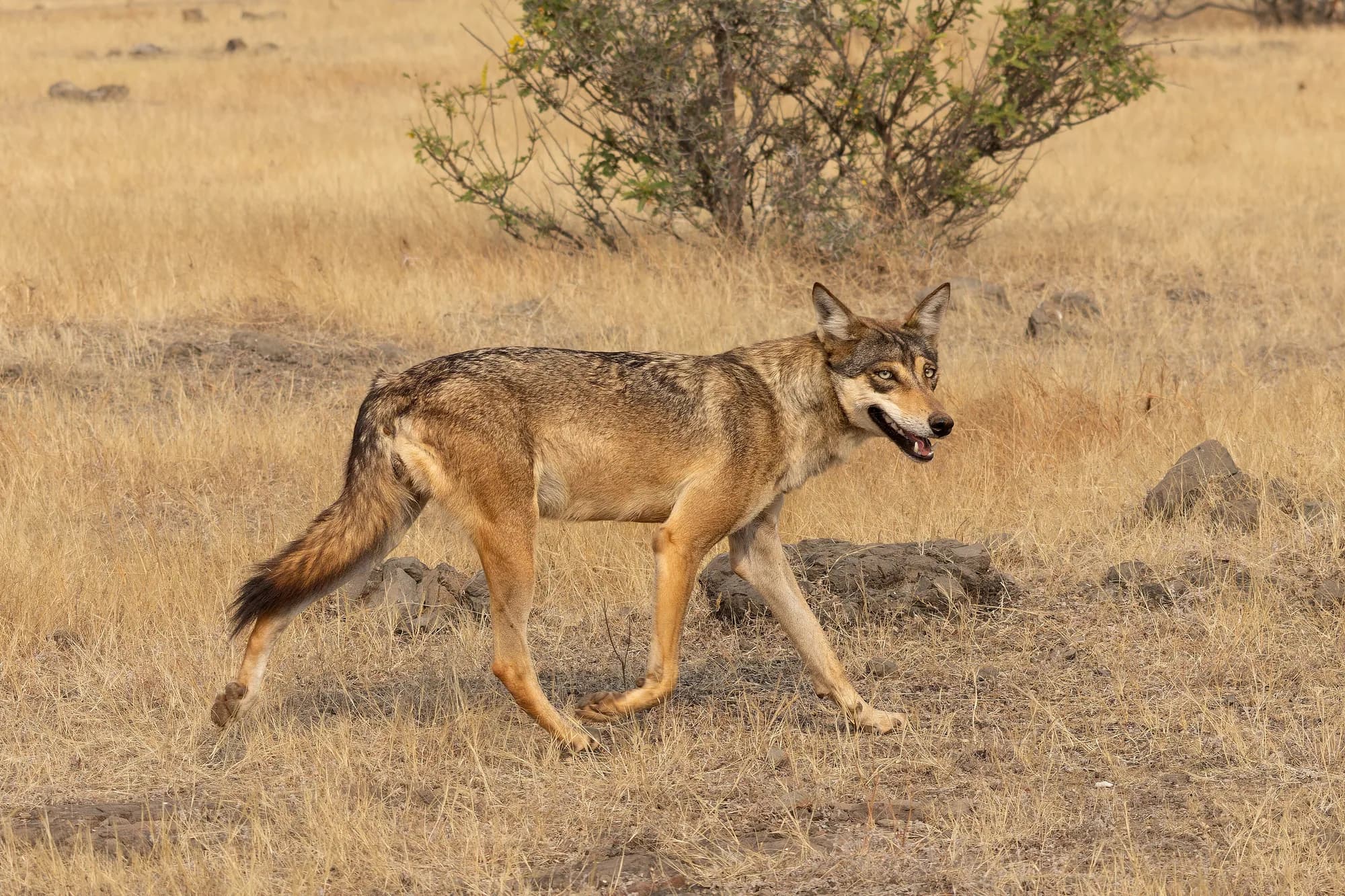
Indian wolf — the same grassland
One of the oldest wolf lineages alive, hunting blackbuck across grassland that almost nobody protects. Rarer in India than the tiger, and with a fraction of the attention.
The dry country, and it makes it read as desert
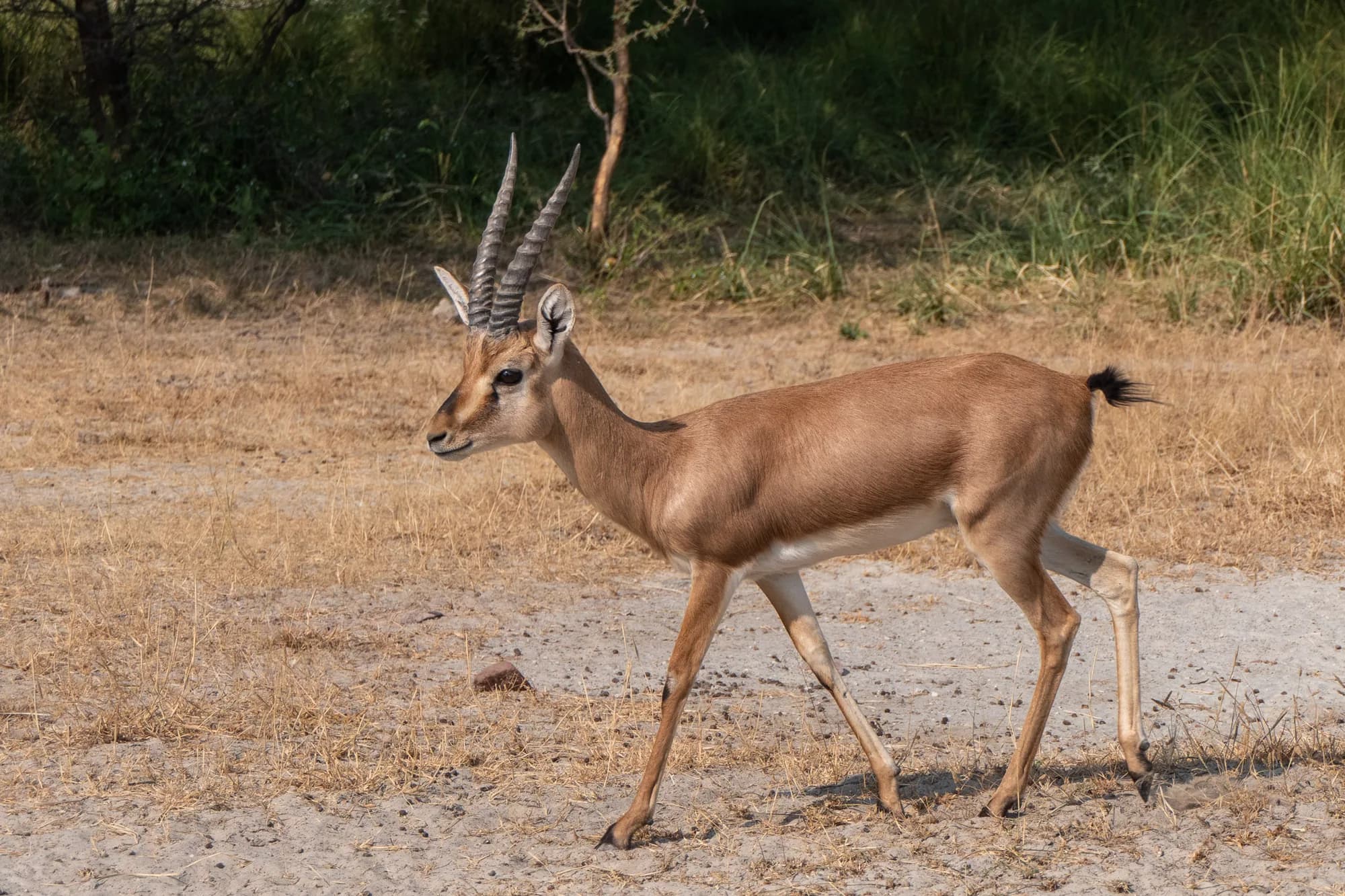
Chinkara — the other dry-country antelope
India's gazelle — small, sandy and built for heat, going long stretches without drinking. The animal that makes Ranthambore and Jawai look like the dry country they are.
Twelve months, cross-park
When to go, month by month
The single decision that moves the odds most. Heat, crowds, closures and what is actually open, one page per month.