
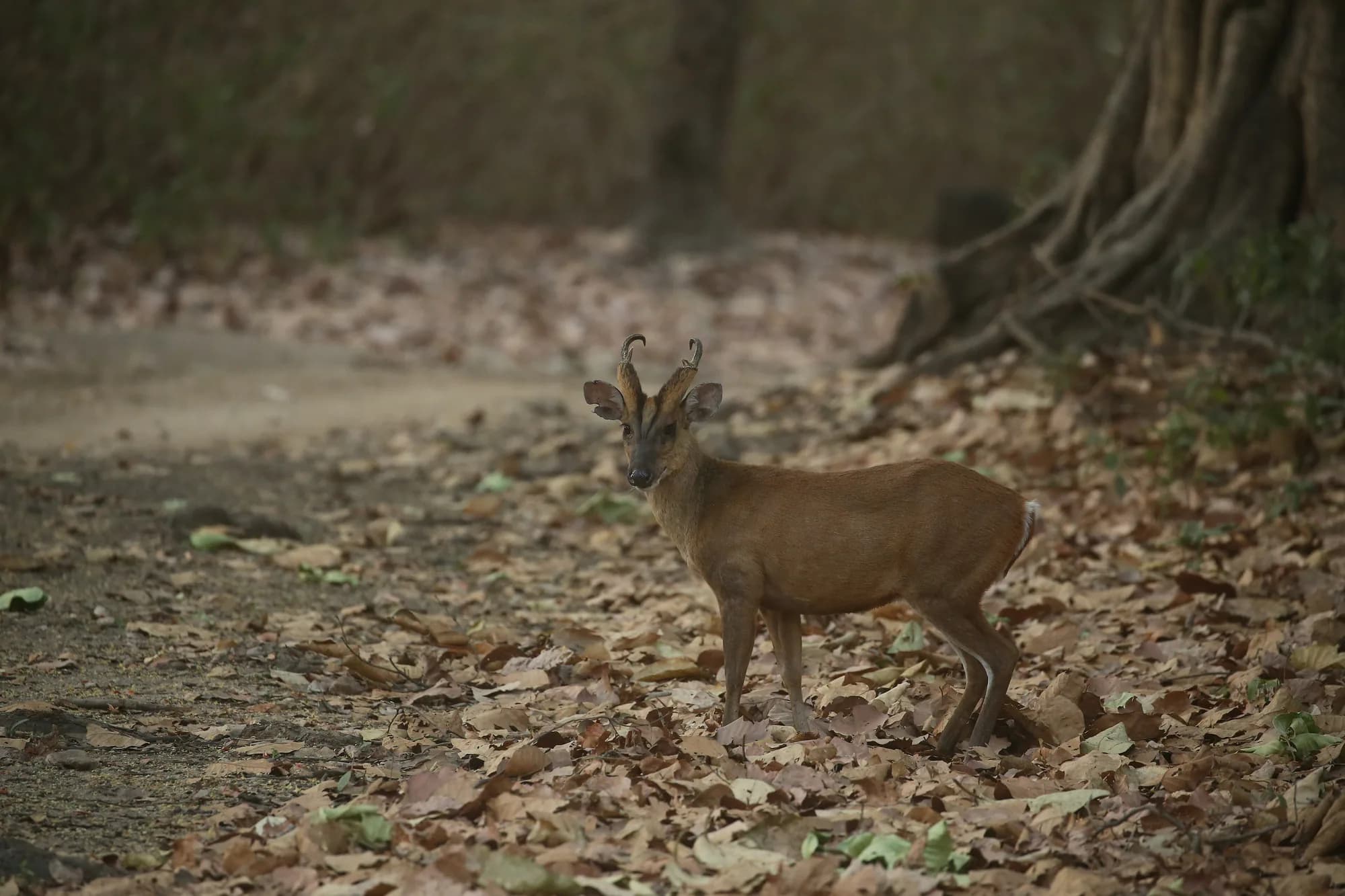
Species · Muntiacus muntjak
Indian muntjac
A small russet deer with tusks and a bark like a dog, solitary in thick cover. Its call is routinely mistaken for an alarm, and usually is not one.
Also called
- Kakar (काकड़) · Hindi
- Bhekar · Marathi
- Kalamaan · Malayalam
Checked 30 Aug 2026
- Where
- Forest across most of India
- Best months
- November–April
- Call
- A single dog-like bark
- Note
- Males have tusks
Dense forest undergrowth from the Himalayan foothills to the Western Ghats. Widespread, and consistently under-recorded because it lives where you cannot see.
Where it is
Where to actually go
Ranked, with the reason each — these are not interchangeable.
- 01SatpuraMadhya PradeshGood numbers, and the walking safari lets you move slowly enough to see into undergrowth.On foot
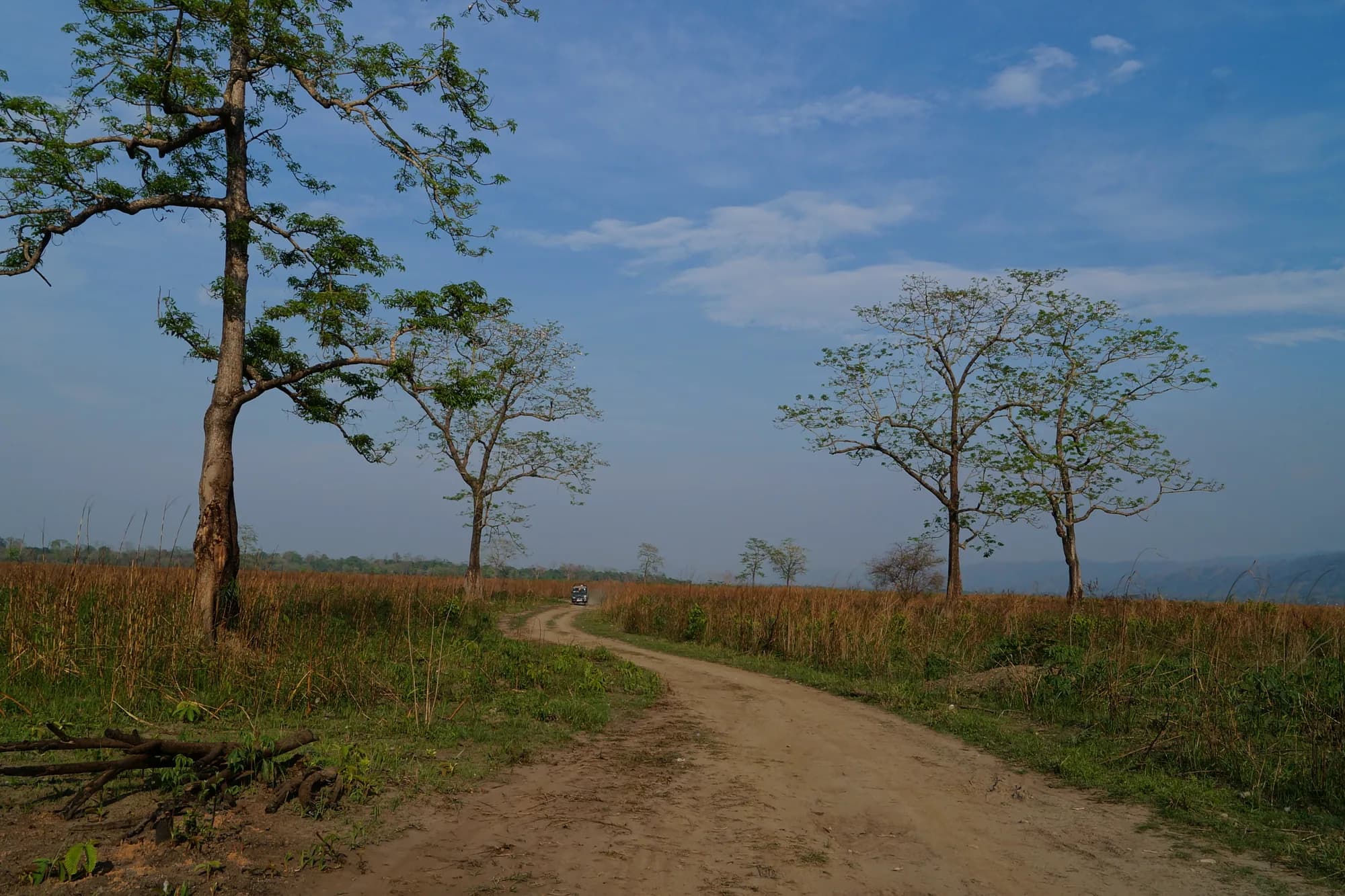
- 02CorbettUttarakhandRiverine undergrowth holds them densely, and they cross the tracks regularly.Early morning
- 03KanhaMadhya PradeshThe sal understorey is ideal, and they are heard on every drive.Listen more than look
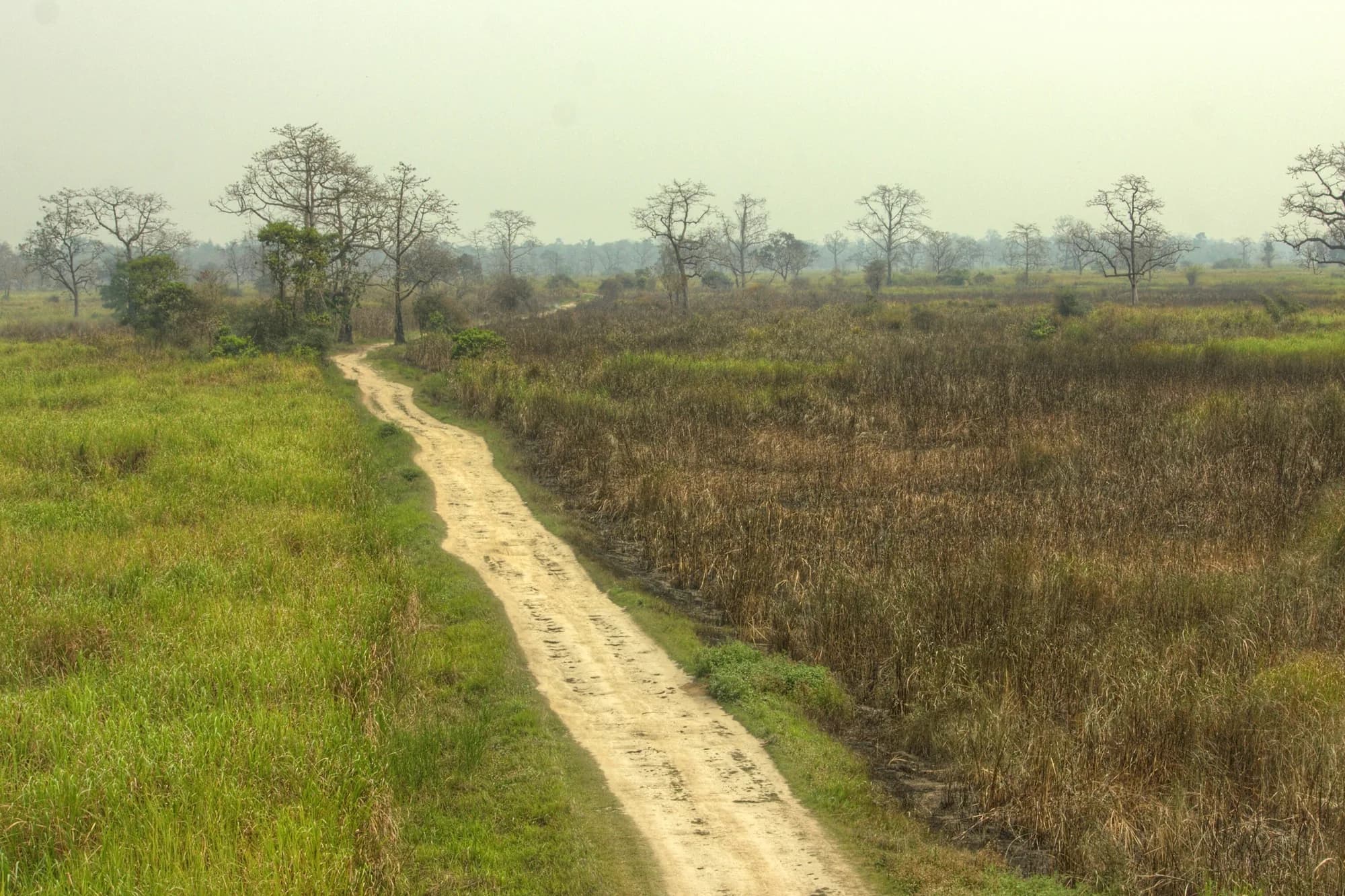
Where you will not see one
- Open meadowBarking deer are cover animals. A small deer out on a Kanha maidan is a chital, not this.
- Assumed to mean a tigerThe common and expensive error. A barking deer barks at a great many things and often for a long time at nothing in particular. Treat it as far weaker evidence than a sambar honk.
When to go
When to go
- J
- F
- M
- A
- M
- J
- J
- A
- S
- O
- N
- D
January: best. February: best. March: best. April: good. May: marginal. June: marginal. July: closed or unproductive. August: closed or unproductive. September: closed or unproductive. October: marginal. November: best. December: best.
Through the day
- Dawn
- Morning
- Midday
- Afternoon
- Dusk
- Night
Dawn: most active. Morning: active. Midday: usually resting. Afternoon: active. Dusk: most active. Night: active.
Telling it apart
Told apart from
Central Indian undergrowth
Both small and solitary. Barking deer are richer red-brown with antlers on long bony pedicles and dark facial ridges; chousingha are yellowish with two pairs of true horns and no pedicles.
Chital fawn
Forest edge
Spots. Chital are spotted at every age; barking deer never are.
Marks chosen to be usable from a moving vehicle — a indian muntjac is rarely still and never close enough for anything subtler.
What it looks like in the field
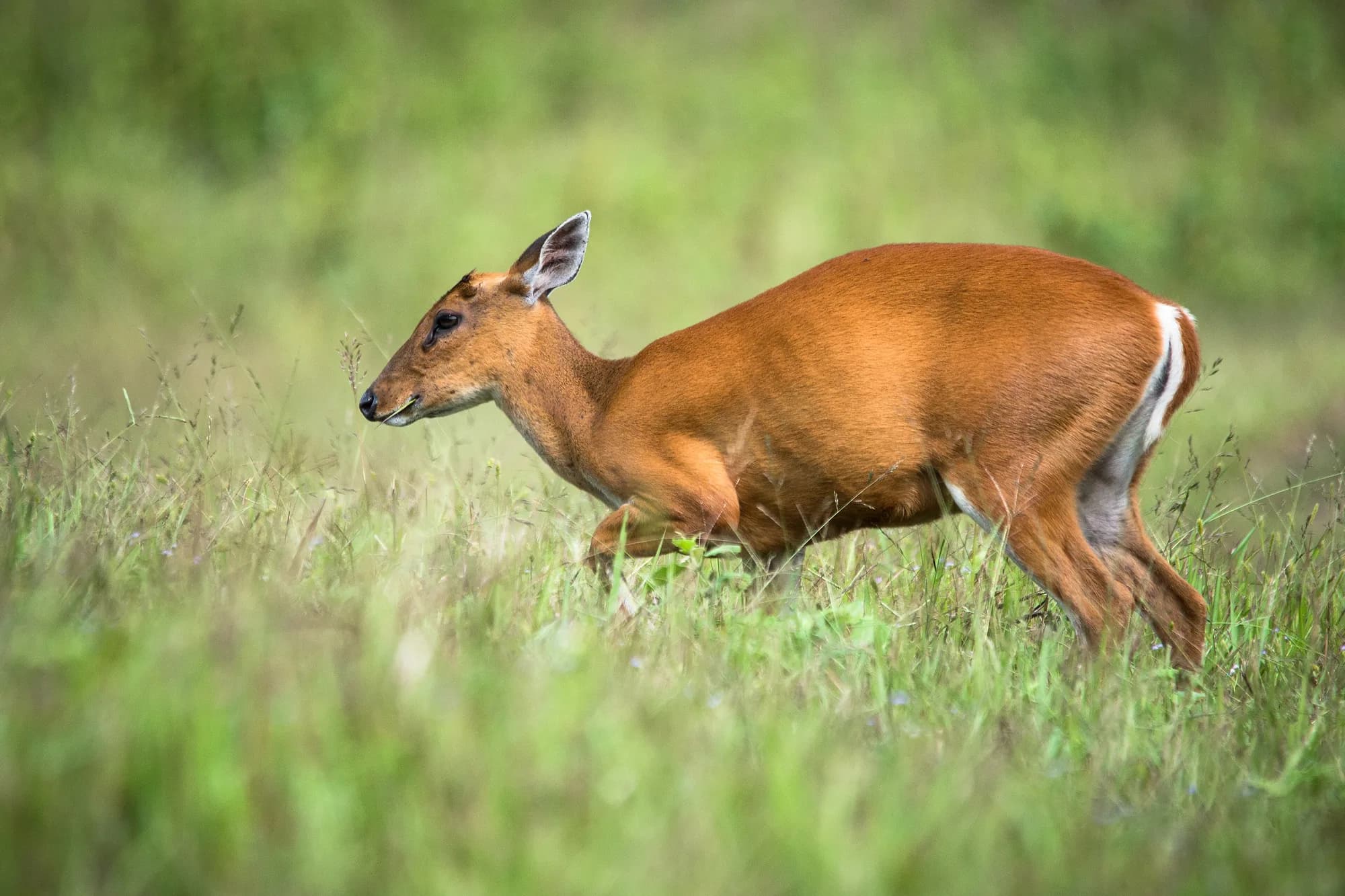
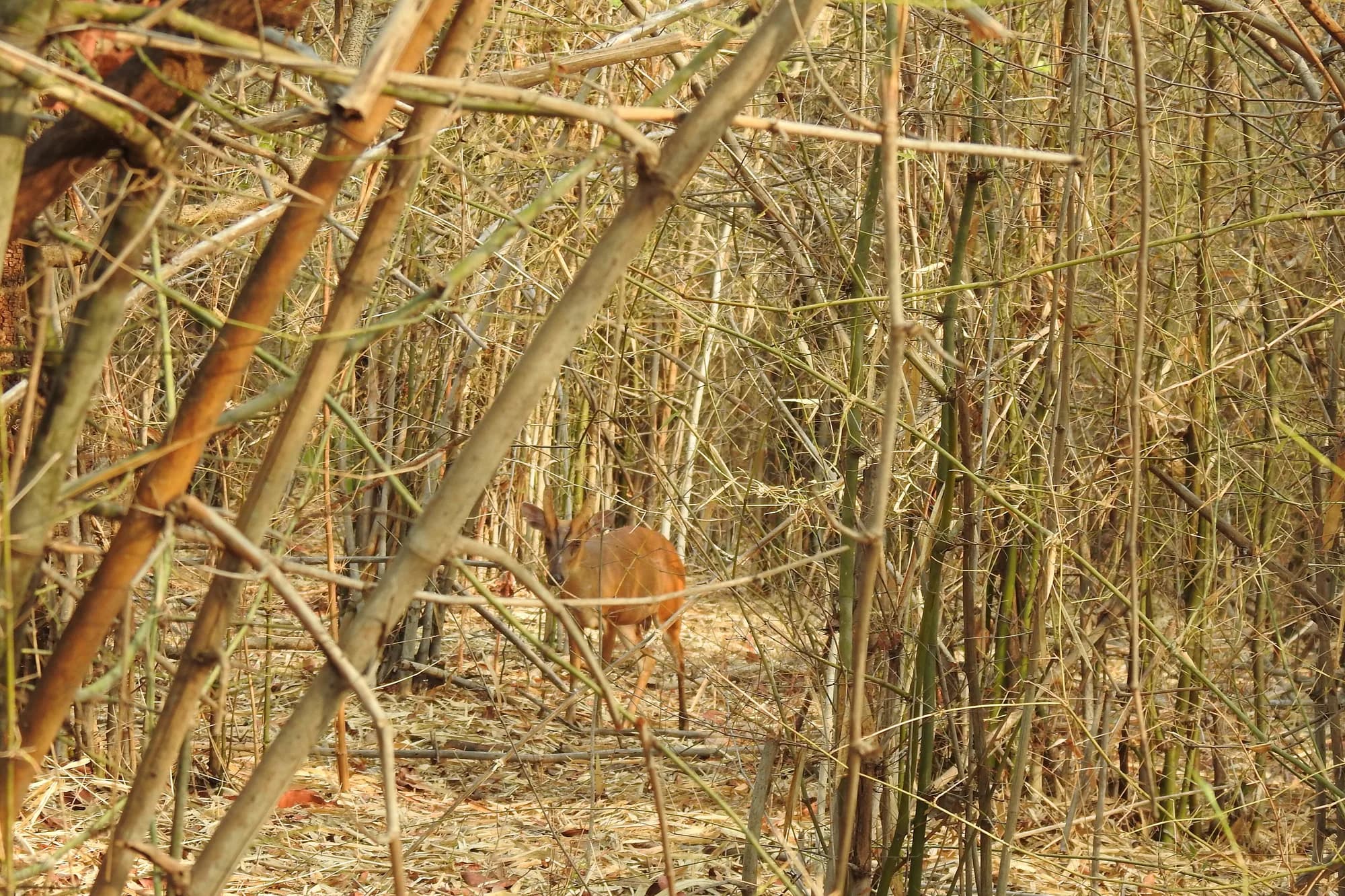
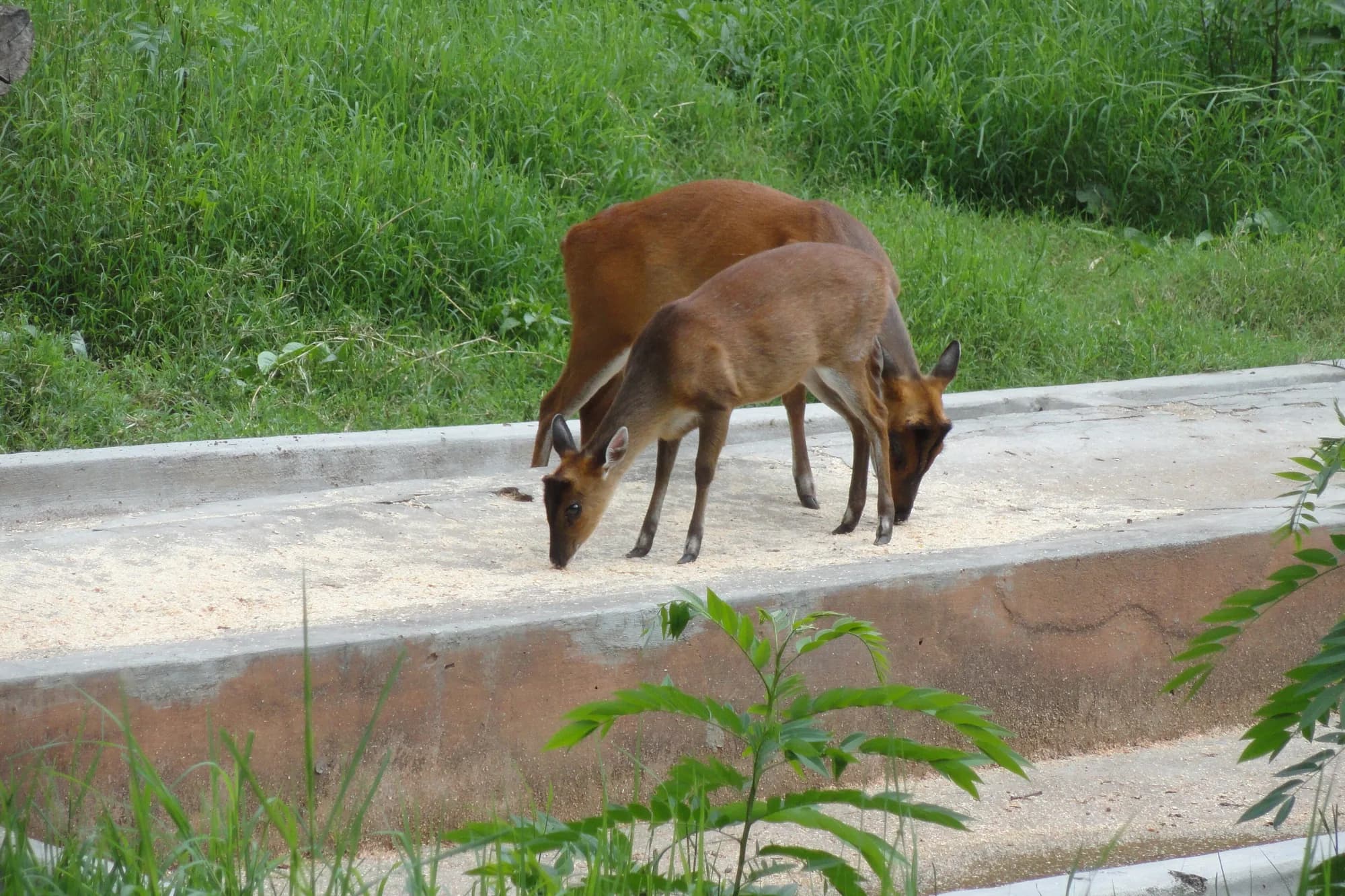
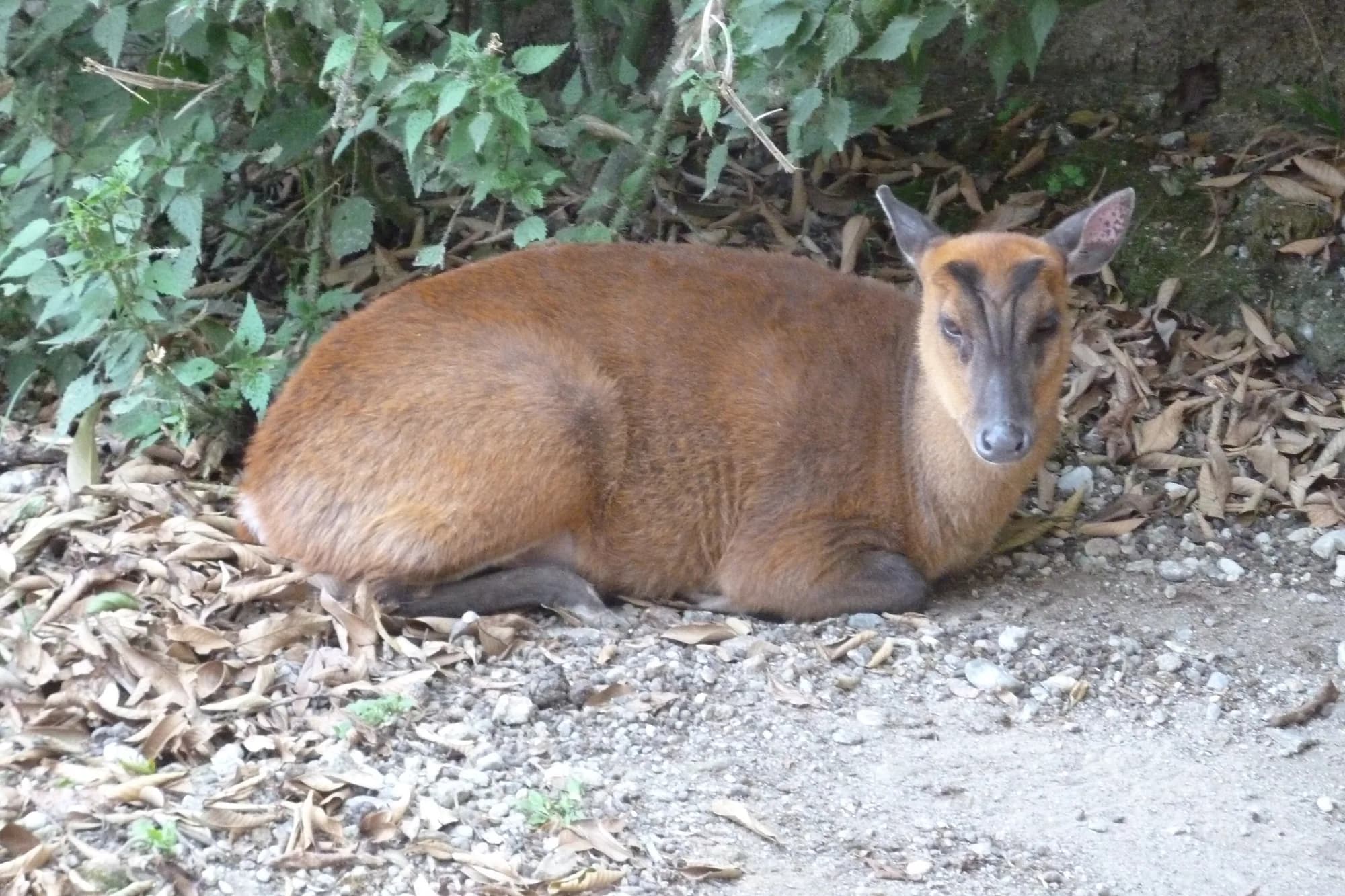
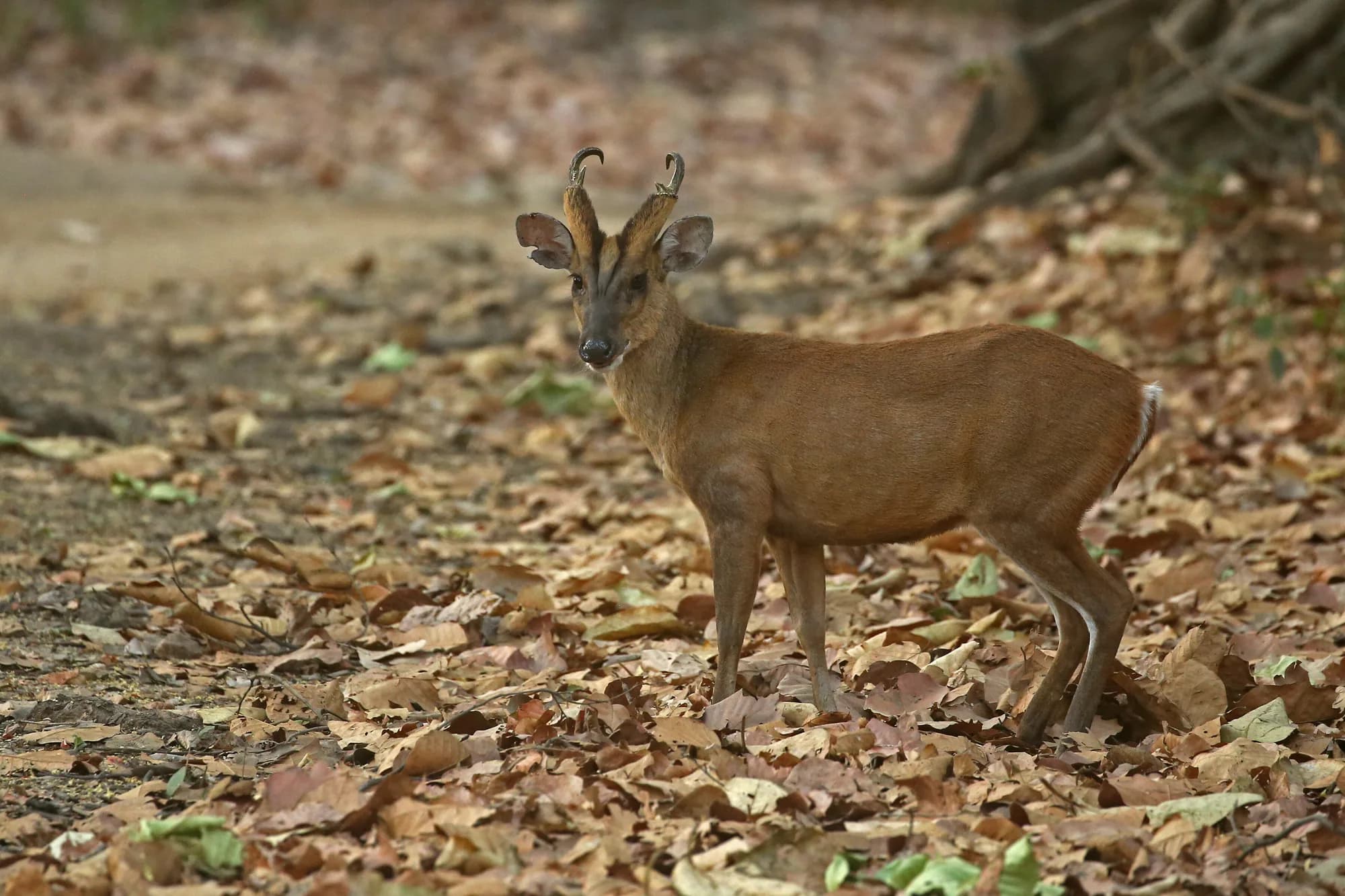
Photographs of Indian muntjac in the wild, in Indian reserves. We publish no captive, baited or digitally composited images, and no photograph whose licence we cannot show.
The bark, and what it is worth
A single flat bark, very like a dog, repeated slowly. It is one of the most common sounds in an Indian forest and one of the most over-interpreted.
Antlers and tusks
Males carry both — short antlers on long furred pedicles that run down the face as dark ridges, and protruding upper canines a couple of centimetres long.
They fight with the tusks rather than the antlers, which is the wrong way round.
Status and protection
Status and protection
- IUCN Red List
- Least Concern
- Population trend
- ↓ Decreasing
- Wildlife Protection Act 1972
- Schedule I (post-2022 amendment numbering)
- CITES
- Not listed in any CITES Appendix
MAJOR TAXONOMIC CAVEAT. The retrieved assessment is the species-level global assessment for the binomial supplied, Muntiacus muntjak, which IUCN titles 'Southern Red Muntjac'.
Assessed 2016 · IUCN Red List assessment
What to book to see one
What you would be booking
- How it is seen
- Any jeep safari, or better, a walking safari where undergrowth can be watched slowly.
- Drives to book
- No arrangement needed. The animal is common; the sighting is a matter of cover and luck.
Learn to separate its bark from a chital's. A muntjac's is a single flat dog-like bark, repeated slowly and often for many minutes; a chital's is sharper and rises.
Satpura — the park in fullQuestions people ask
What is a barking deer?
Does a barking deer call mean a tiger?
Where can I see one?
Read next
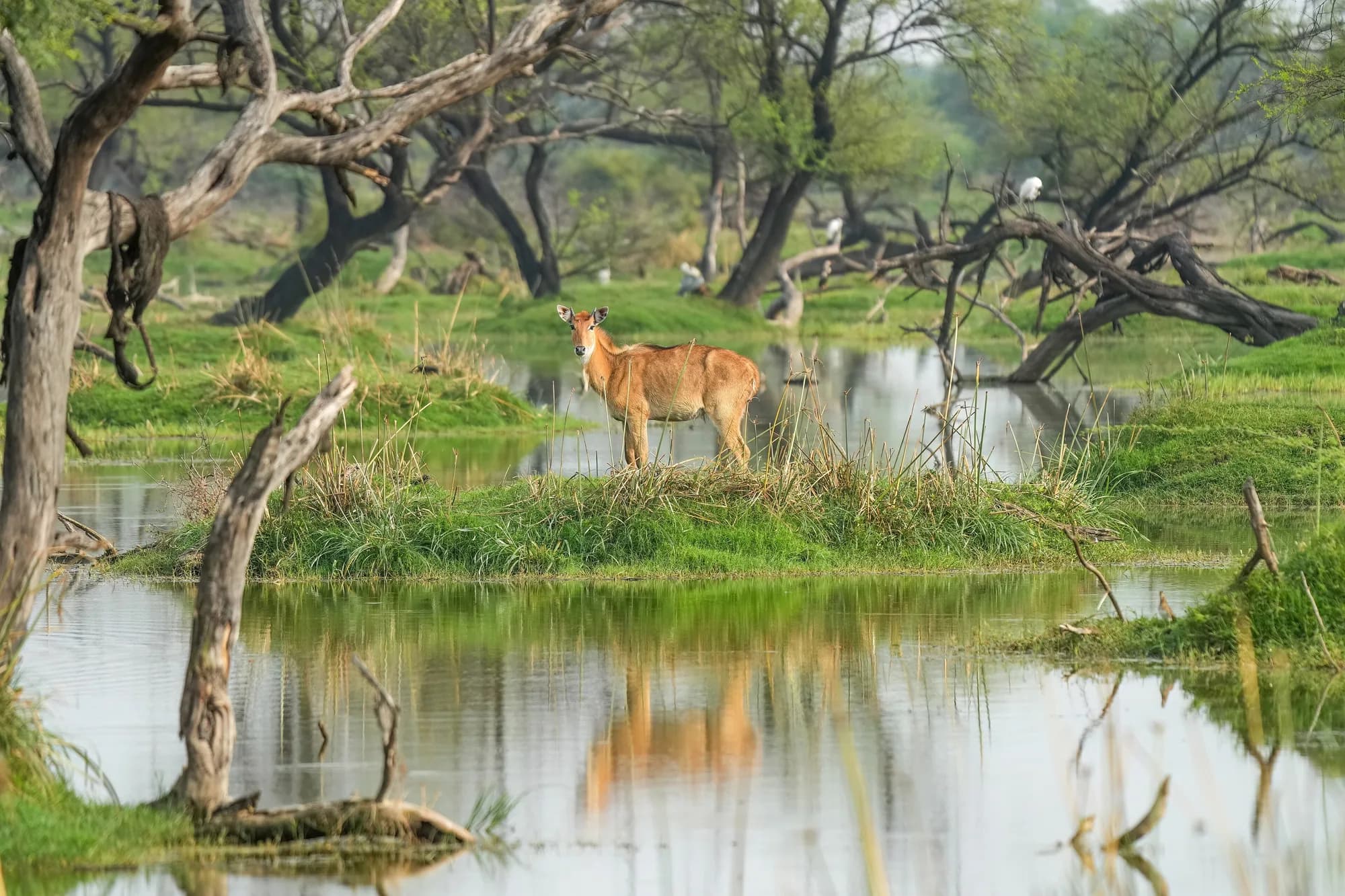
Every reserve, and the call that matters most
Sambar — the call that matters
India's largest deer, and the animal whose alarm call is worth more to you than any pugmark. When a sambar honks, the vehicle should stop.
Madhya Pradesh
Satpura — the park in full
The one central Indian reserve that permits walking and boat safaris. You see less and understand considerably more.
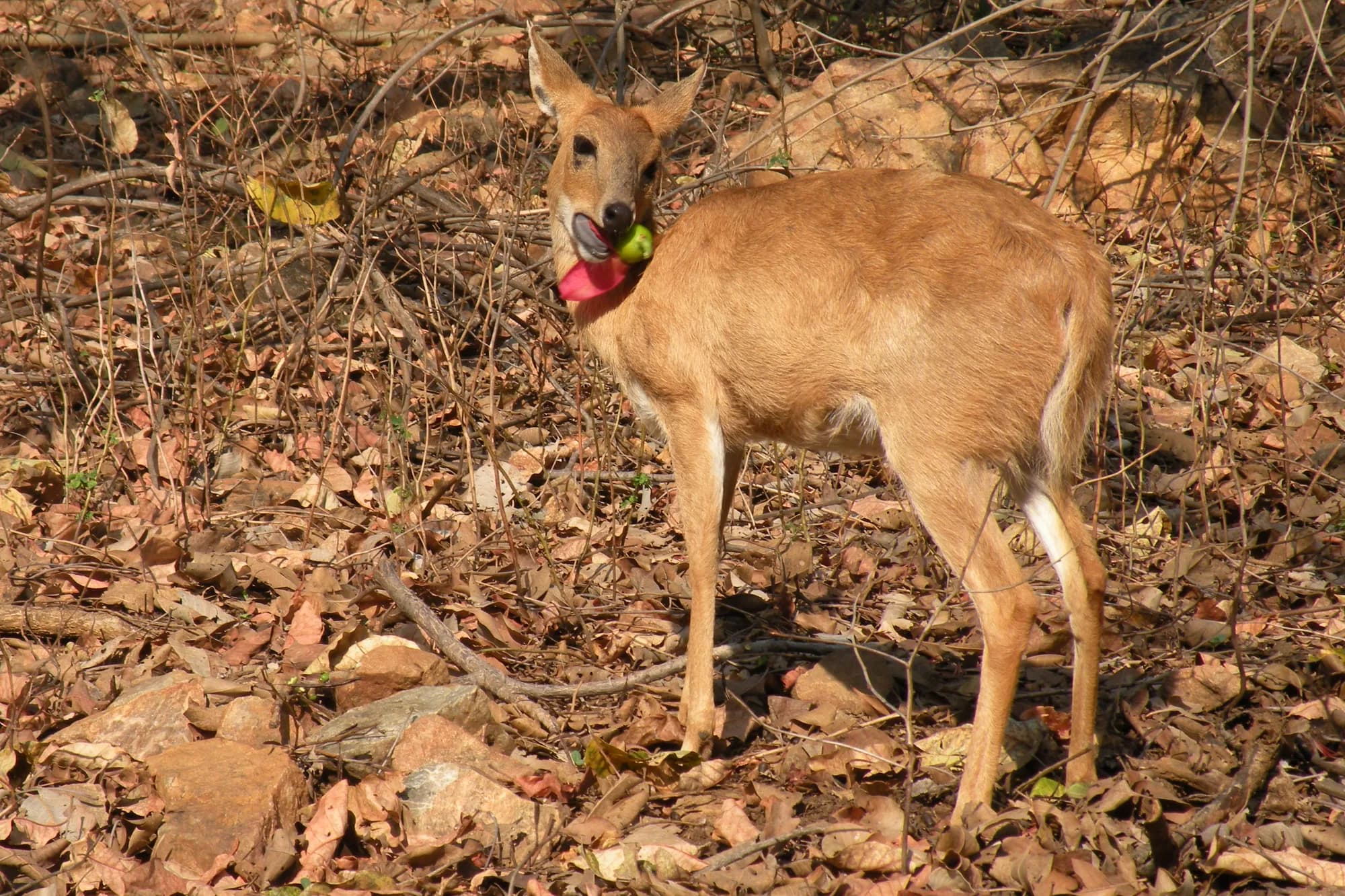
Central India, and walked past daily
Chousingha — the confusion pair
The only four-horned antelope in the world, endemic to the subcontinent, small and shy and driven past by every vehicle heading for a tiger.
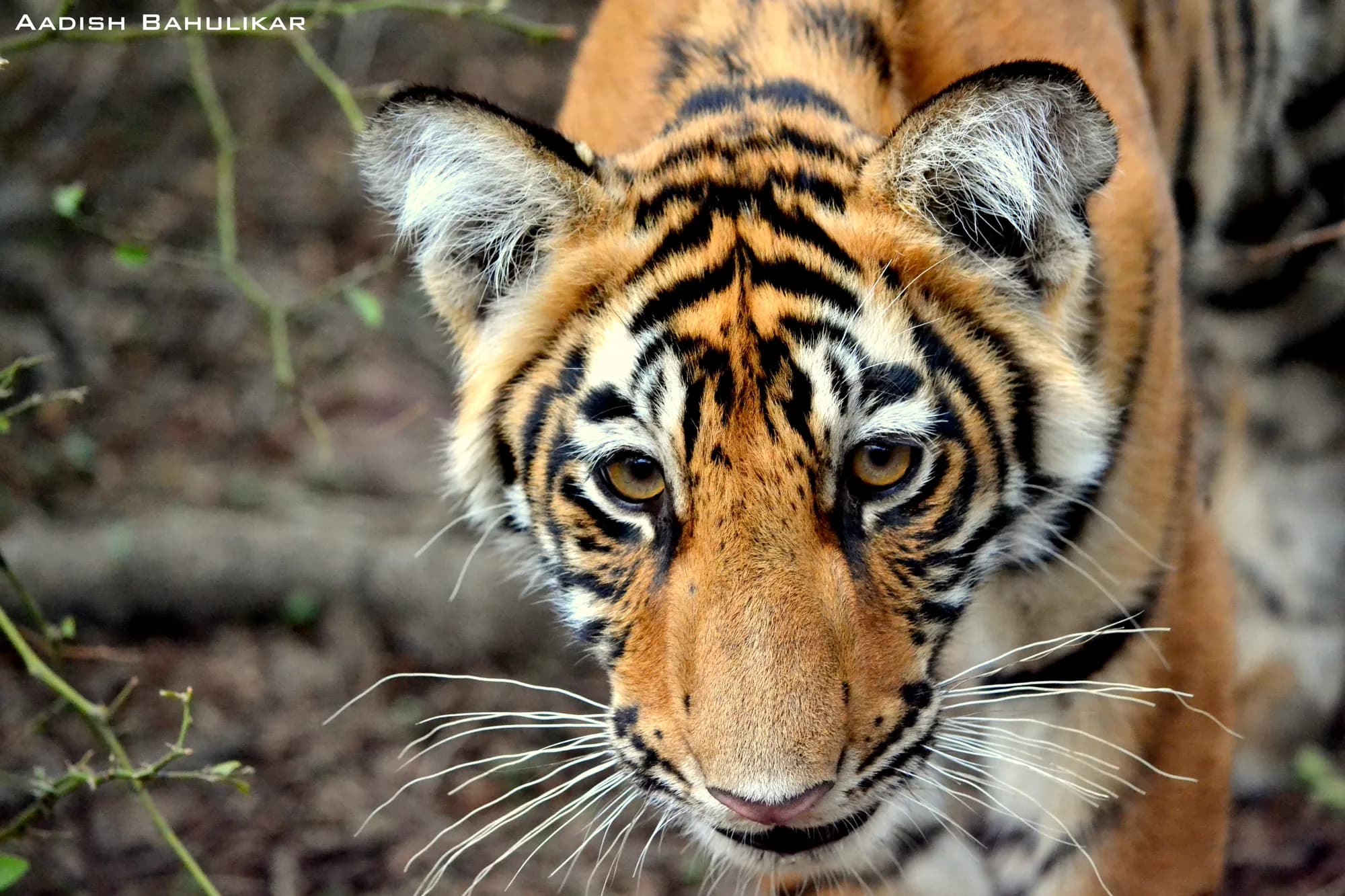
58 reserves, six worth the trip
Tiger — where and when
The animal most people come for, and the one most often missed. Where the odds actually are, and how they move by month and by zone.