
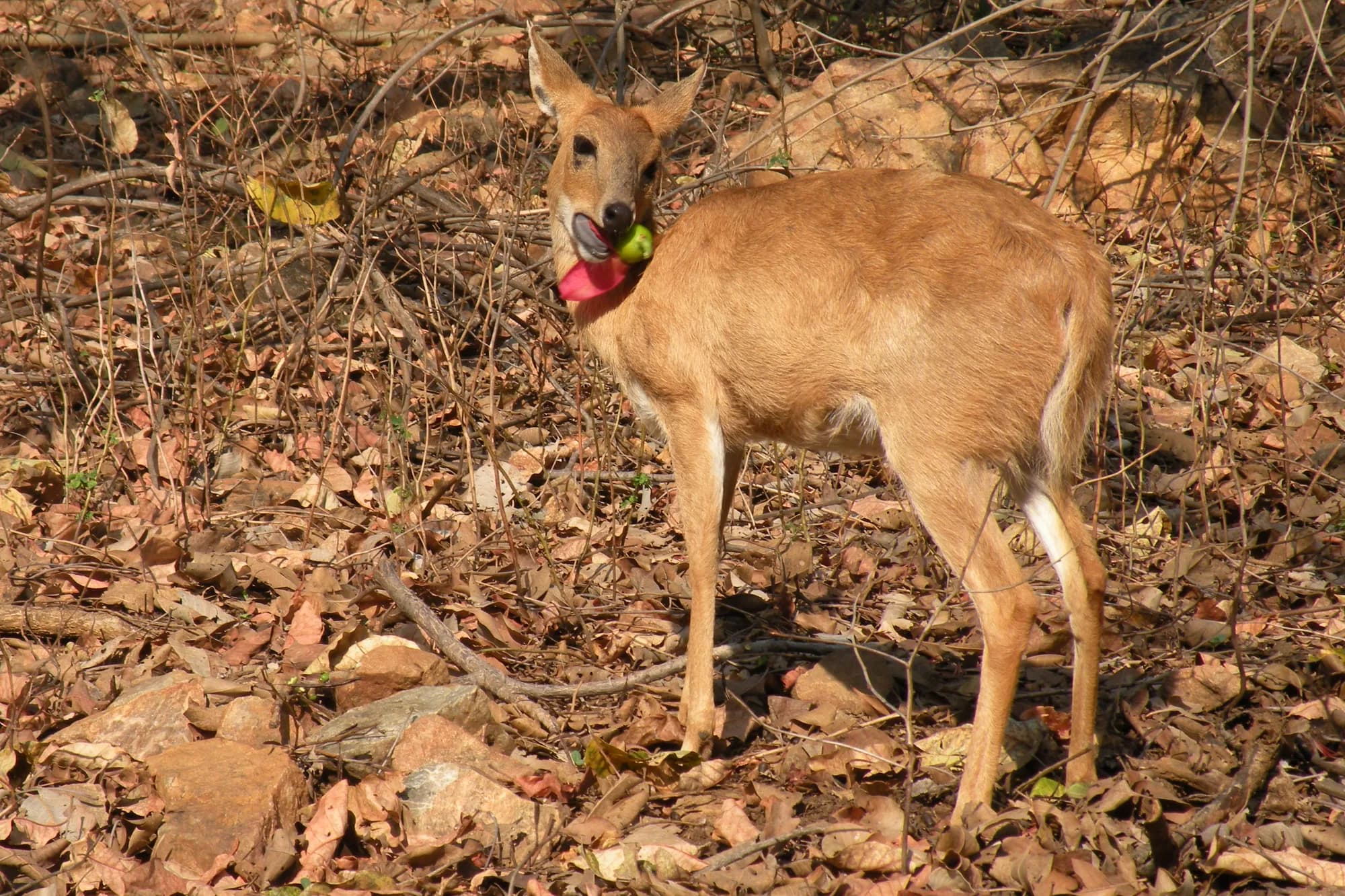
Species · Tetracerus quadricornis
Four-horned antelope
The only four-horned antelope in the world, endemic to the subcontinent, small and shy and driven past by every vehicle heading for a tiger.
Also called
- Chousingha (चौसिंगा) — four horns · Hindi
- Bhekar · Marathi
- Chosingha · Gujarati
Checked 30 Aug 2026
- Where
- Central & peninsular India
- Best months
- November–April
- Horns
- Two pairs, males only
- Note
- Unique in the world
Dry and moist deciduous forest with undergrowth and water nearby, across central and peninsular India. Endemic to the subcontinent.
Where it is
Where to actually go
Ranked, with the reason each — these are not interchangeable.
- 01SatpuraMadhya PradeshGood numbers and the option to walk, which is the best way to see a shy animal that freezes rather than flees.The walking safari
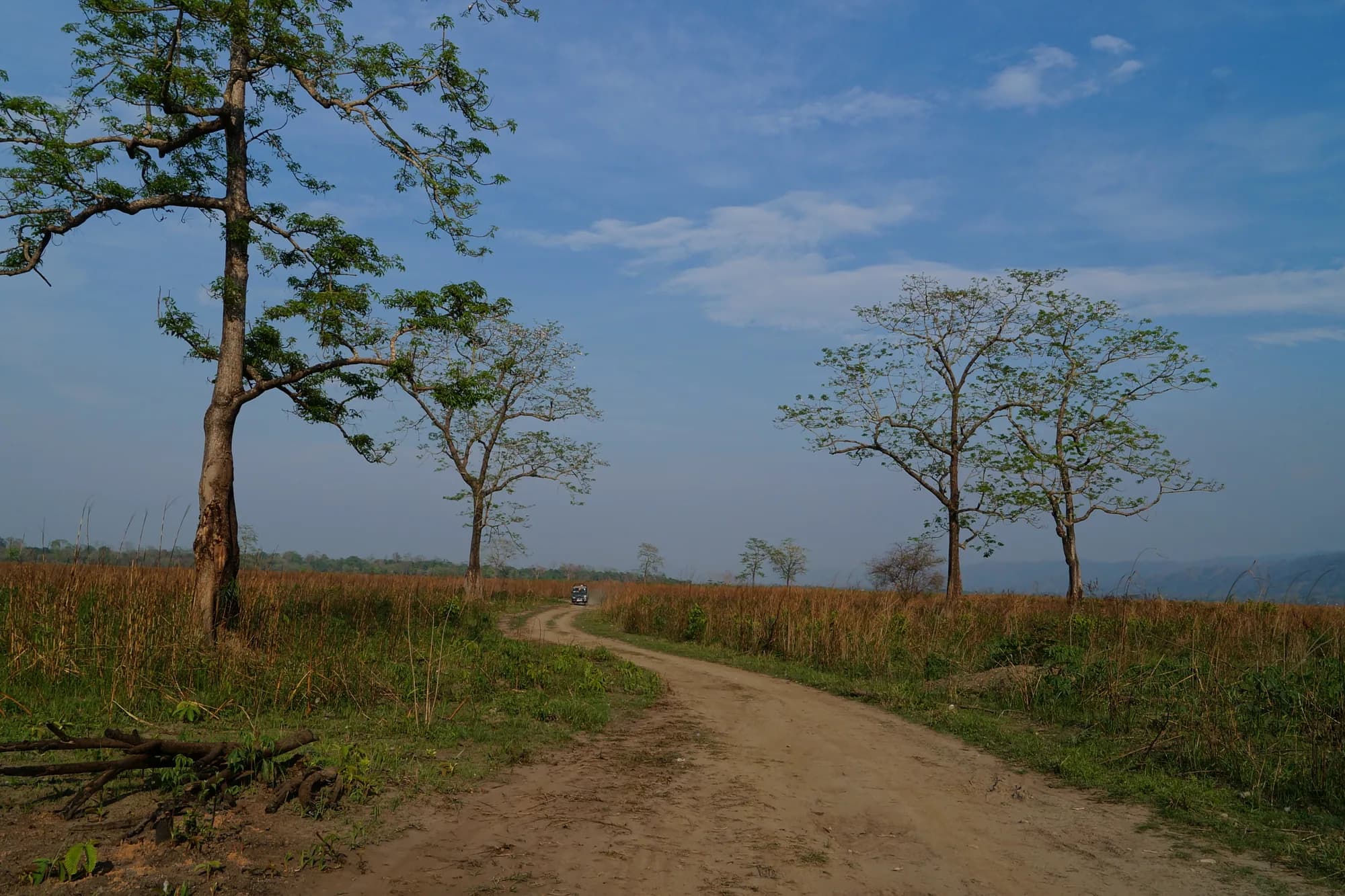
- 02PenchMadhya PradeshRegular sightings along the tracks for anyone looking.Slow driving, morning
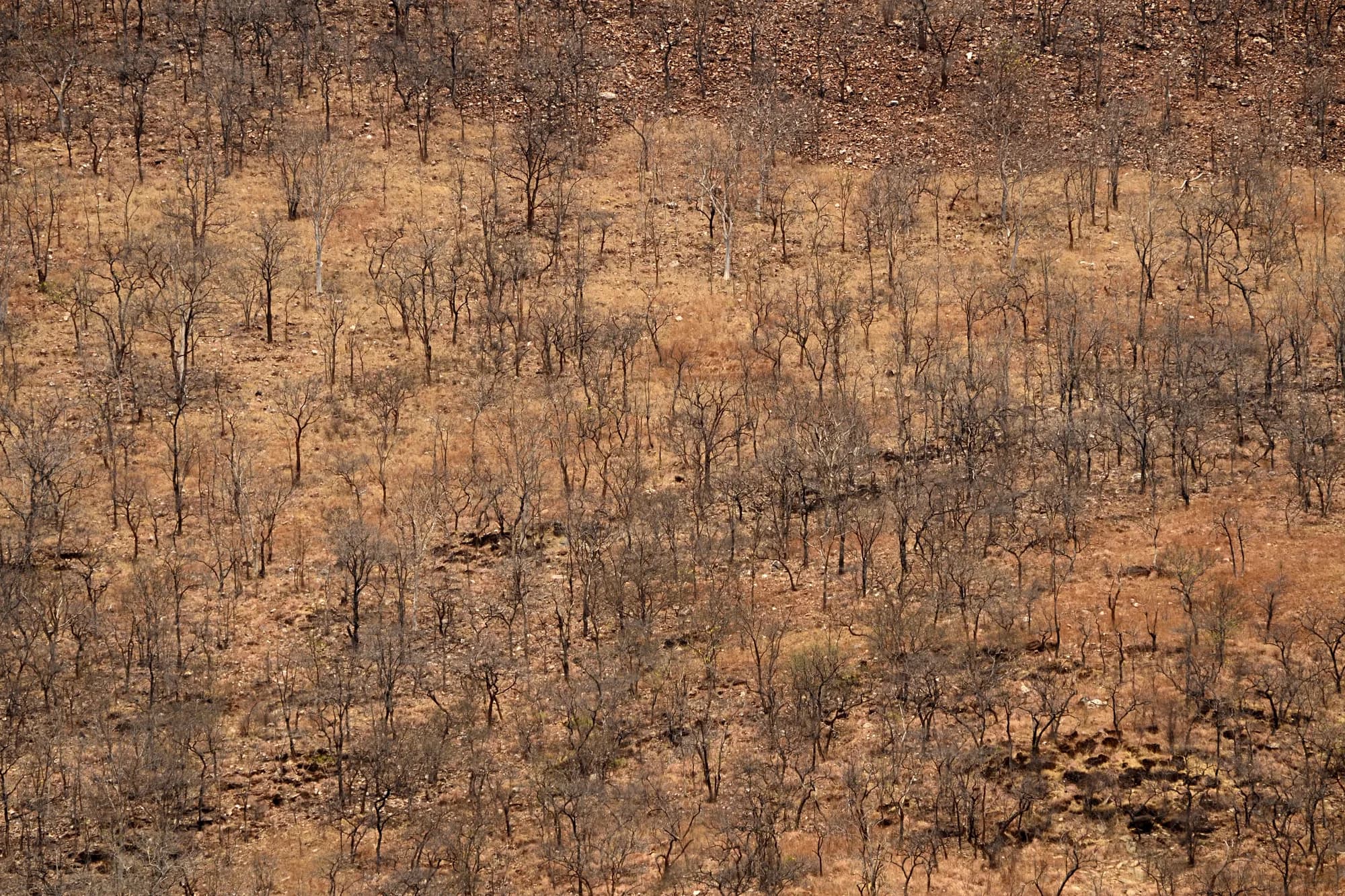
- 03TadobaMaharashtraPresent in the teak, and usually seen while waiting for something else.A bonus on a tiger trip
Where you will not see one
- The Himalaya and the NortheastA peninsular animal. Nothing in the mountains or east of Bengal.
- Expecting a herdChousingha are solitary or in pairs. A group of small deer-like animals is chital or barking deer, not this.
When to go
When to go
- J
- F
- M
- A
- M
- J
- J
- A
- S
- O
- N
- D
January: best. February: best. March: best. April: good. May: marginal. June: marginal. July: closed or unproductive. August: closed or unproductive. September: closed or unproductive. October: marginal. November: best. December: best.
Through the day
- Dawn
- Morning
- Midday
- Afternoon
- Dusk
- Night
Dawn: most active. Morning: active. Midday: usually resting. Afternoon: active. Dusk: most active. Night: not normally seen.
Telling it apart
Told apart from
Central Indian undergrowth
Similar size and both solitary. Barking deer are richer red-brown with short unbranched antlers on a bony pedicle; chousingha are yellowish-brown with two pairs of true horns and no pedicle.
Chital fawn
Meadow edges
Spots settle it — chital of any age are spotted, chousingha never are.
Marks chosen to be usable from a moving vehicle — a four-horned antelope is rarely still and never close enough for anything subtler.
What it looks like in the field
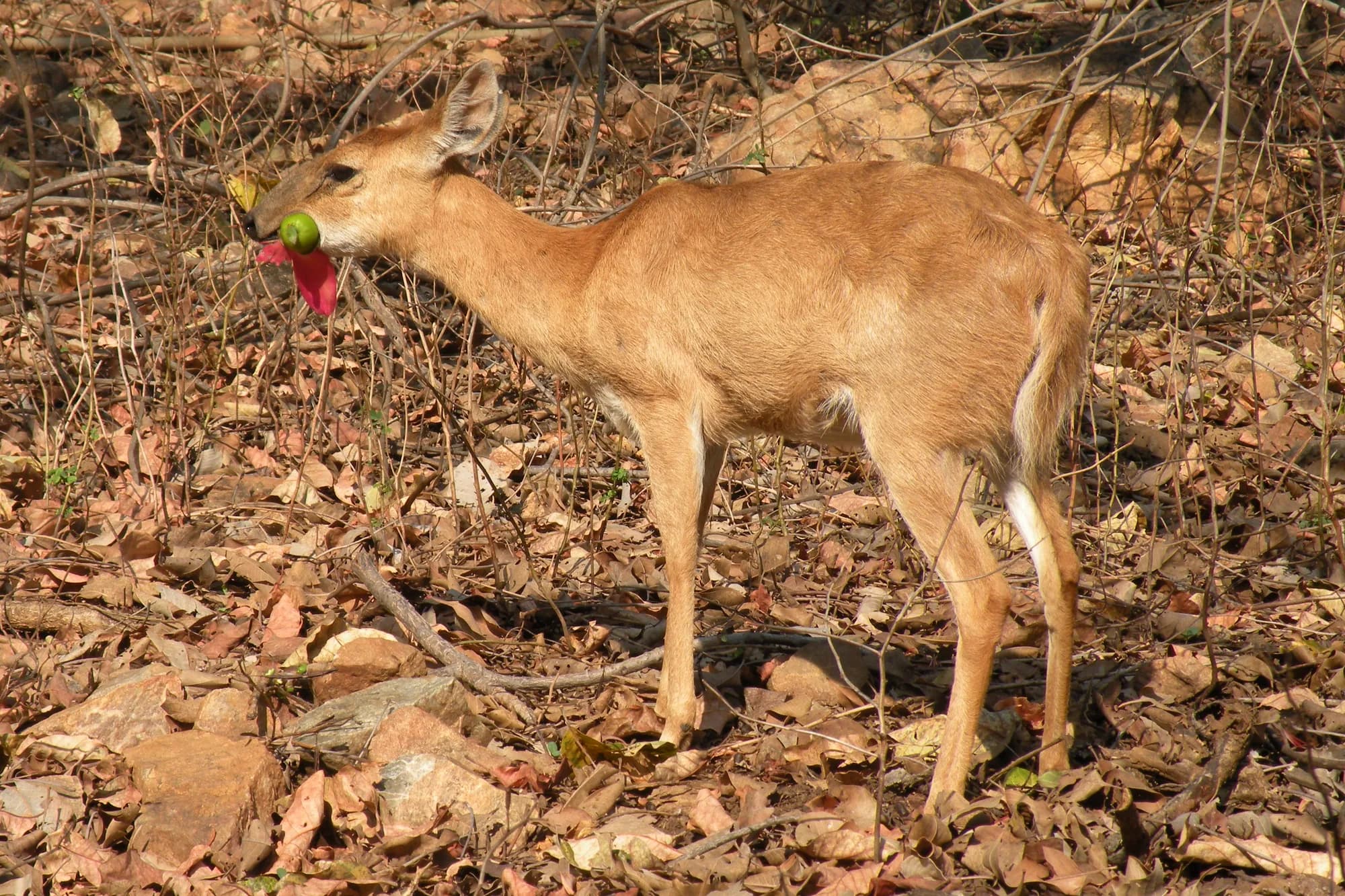
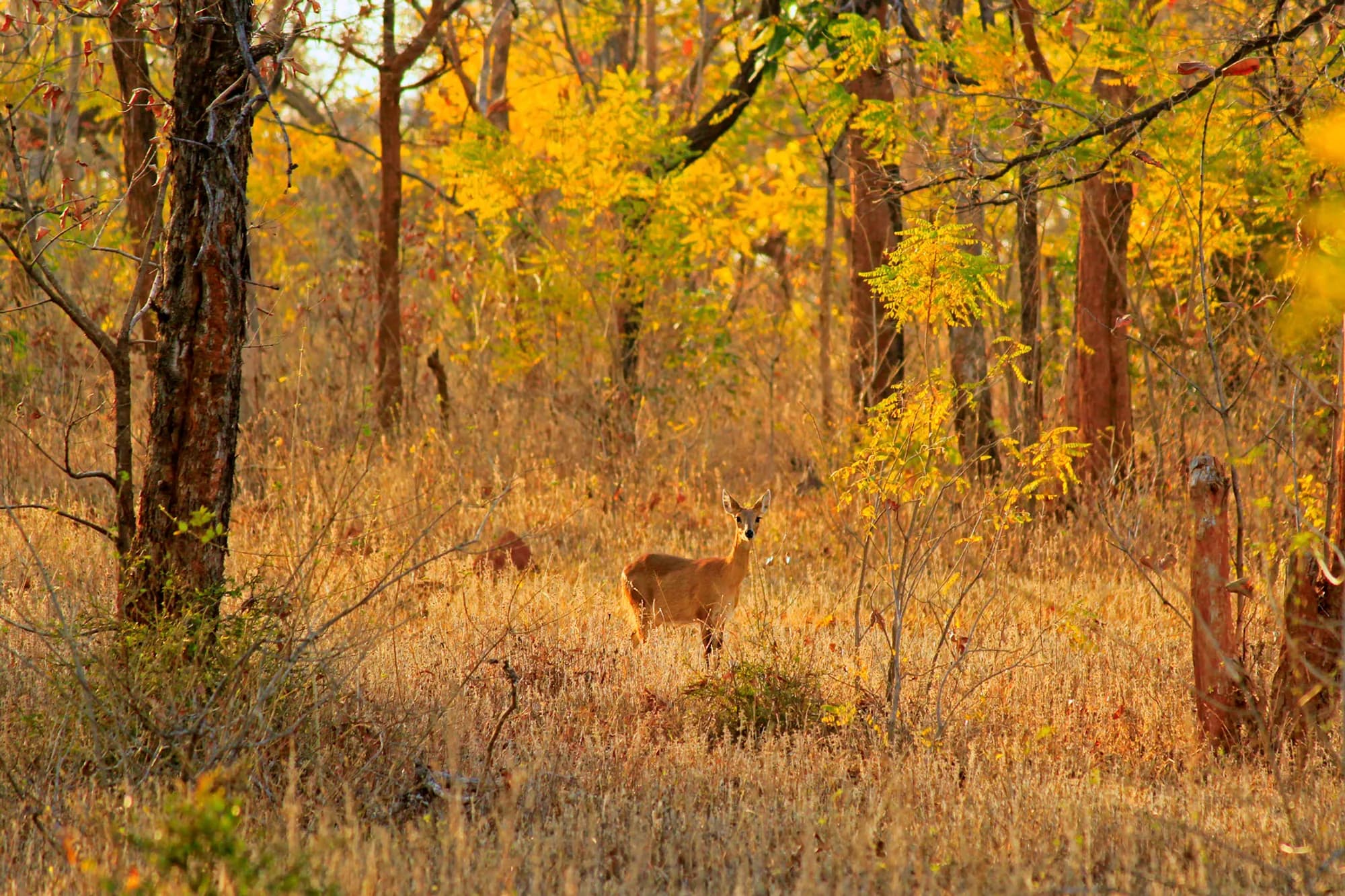
Photographs of Four-horned antelope in the wild, in Indian reserves. We publish no captive, baited or digitally composited images, and no photograph whose licence we cannot show.
What a sighting is actually like
A small yellowish animal standing absolutely still in scrub twenty metres off the track, which you only notice because it has not moved and everything else has.
Its defence is stillness, which works far better against predators than against tyres.
Four horns, and only in males
No other living antelope has two pairs. The rear pair are the proper ones; the front pair sit above the eyes and are shorter, sometimes barely raised bumps.
Status and protection
Status and protection
- IUCN Red List
- Vulnerable
- Population trend
- ↓ Decreasing
- Wildlife Protection Act 1972
- Schedule I (post-2022 amendment numbering)
- CITES
- Appendix III (listed by Nepal)
Species-level global assessment of Tetracerus quadricornis; the binomial given is the full species, not an Indian subspecies.
Assessed 2016 (published in the 2017 Red List) · IUCN Red List assessment
What to book to see one
What you would be booking
- How it is seen
- Any jeep safari in central India, at low speed.
- Drives to book
- No special booking. The variable is whether anyone in the vehicle is looking at the undergrowth rather than the track ahead.
Ask your guide to slow down through scrub. Chousingha freeze when a vehicle approaches and are usually passed at exactly the moment they become visible.
Satpura — the park in fullQuestions people ask
What is a chousingha?
Where can I see one?
Do females have four horns?
Read next
Madhya Pradesh
Satpura — the park in full
The one central Indian reserve that permits walking and boat safaris. You see less and understand considerably more.
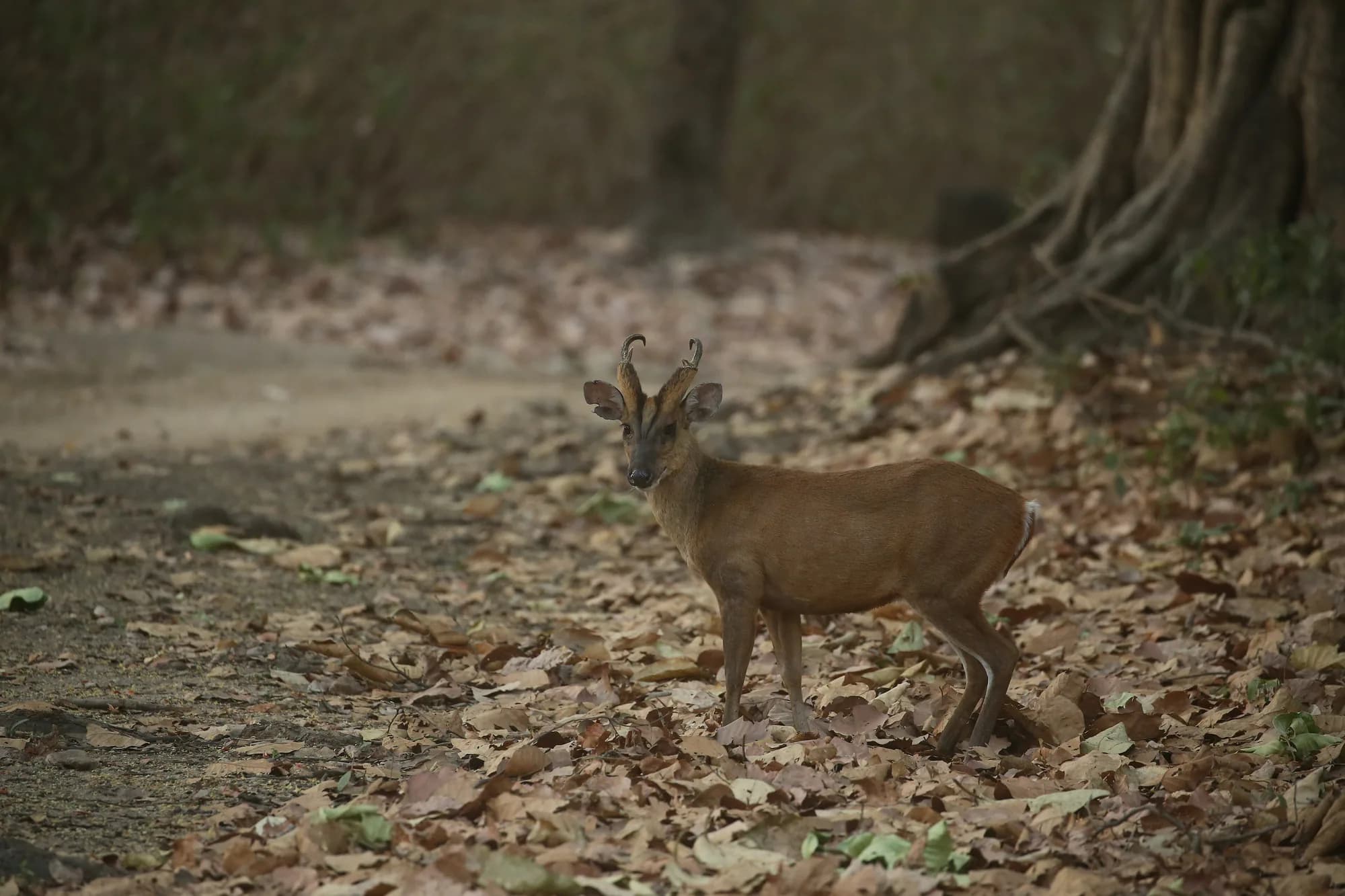
Heard far more than seen
Barking deer — the confusion pair
A small russet deer with tusks and a bark like a dog, solitary in thick cover. Its call is routinely mistaken for an alarm, and usually is not one.
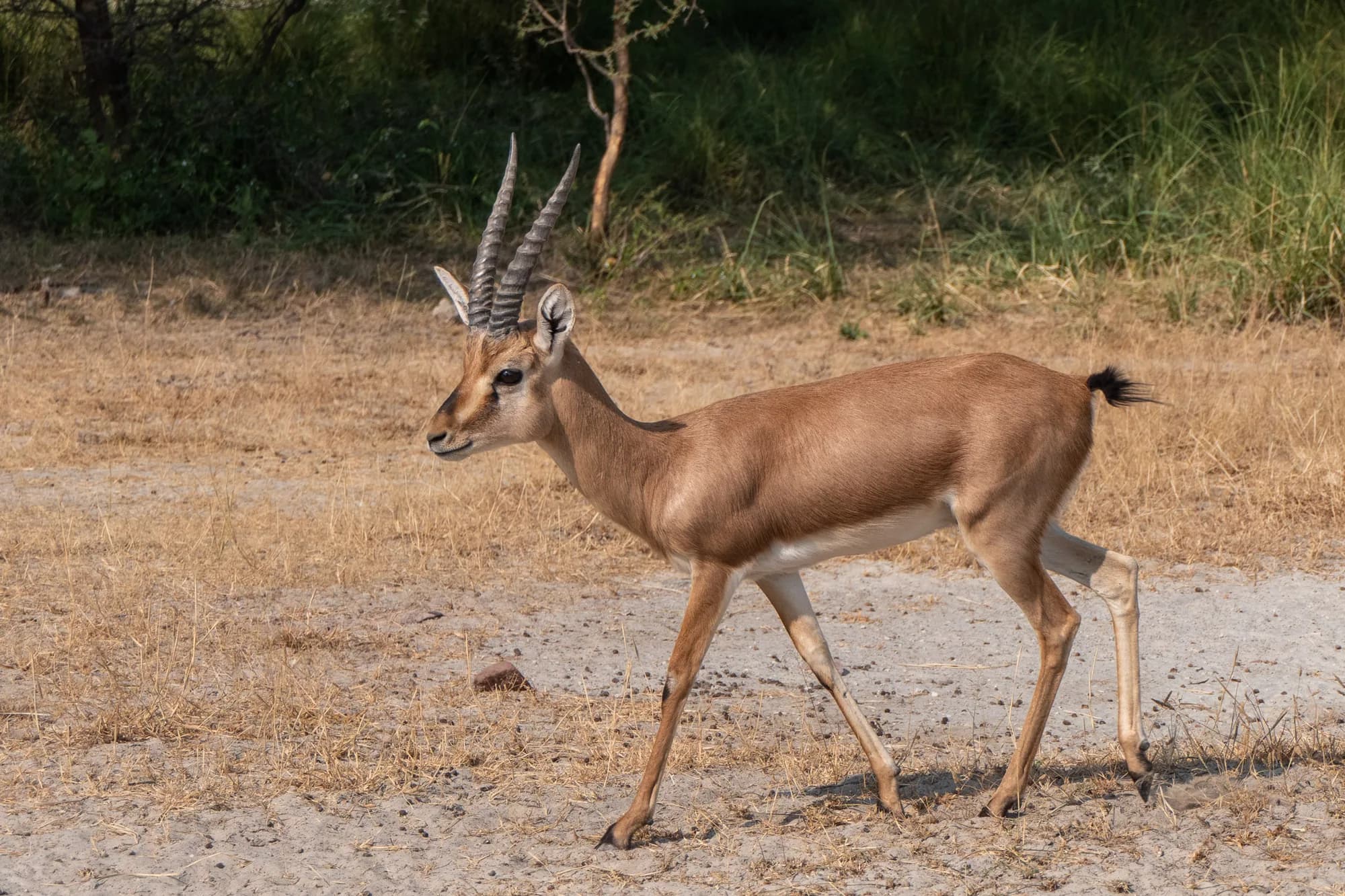
The dry country, and it makes it read as desert
Chinkara — the dry-country one
India's gazelle — small, sandy and built for heat, going long stretches without drinking. The animal that makes Ranthambore and Jawai look like the dry country they are.
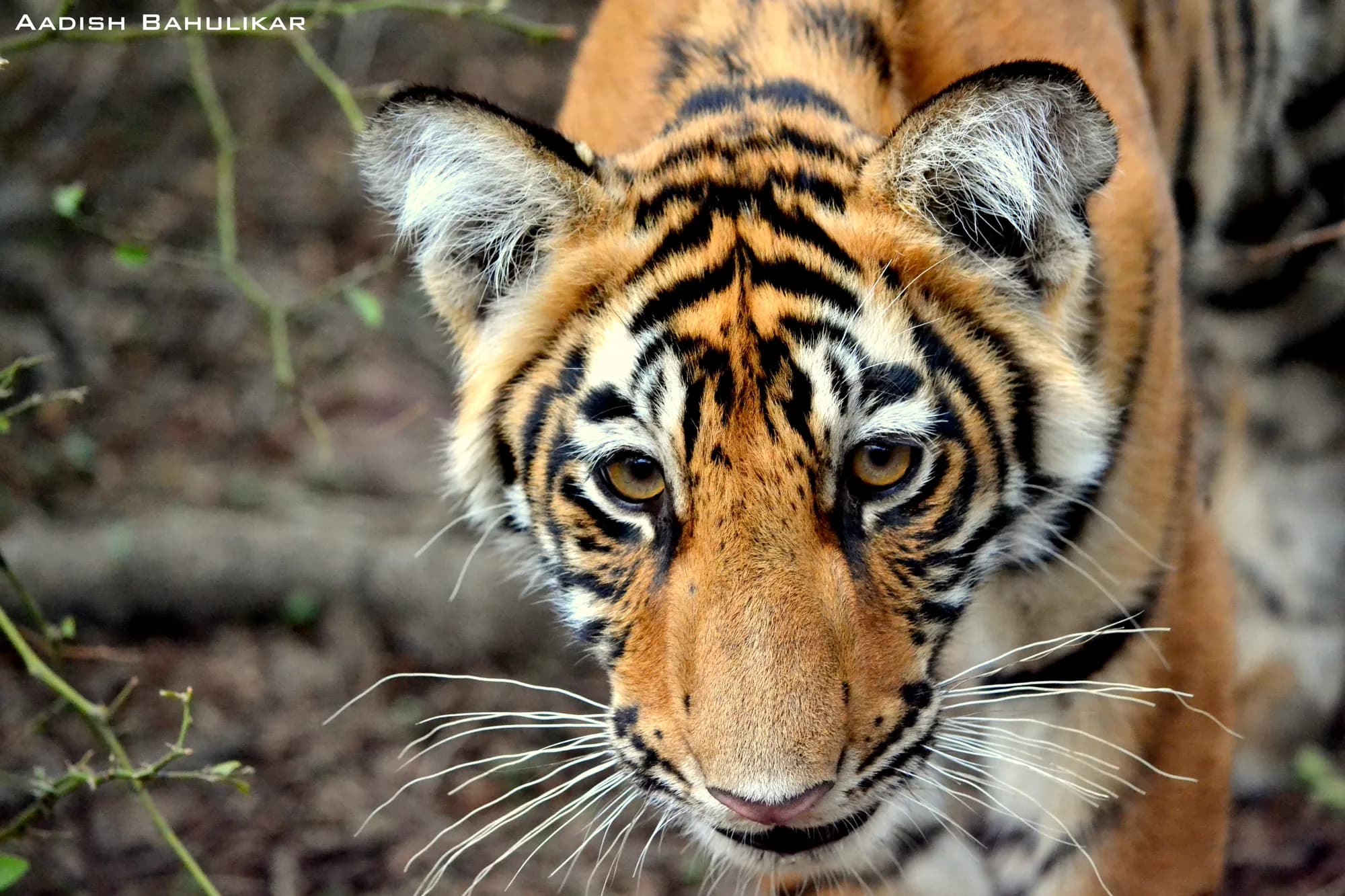
58 reserves, six worth the trip
Tiger — where and when
The animal most people come for, and the one most often missed. Where the odds actually are, and how they move by month and by zone.