
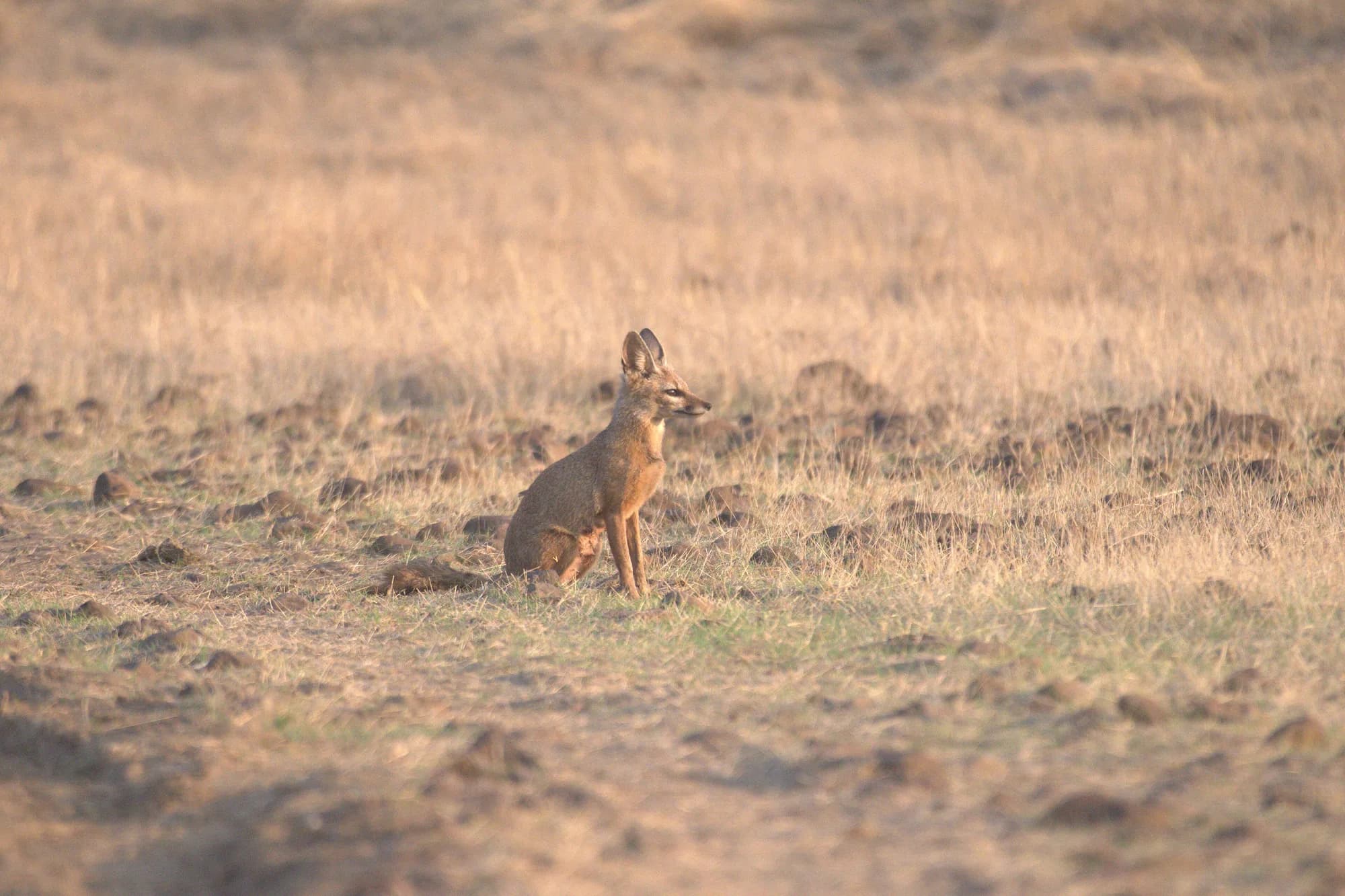
Species · Vulpes bengalensis
Indian fox
A small grassland fox with an enormous bushy black-tipped tail, endemic to the subcontinent, living on ground nobody protects.
Also called
- Lomri (लोमड़ी) · Hindi
- Lokdi · Gujarati
- Khokad · Marathi
Checked 30 Aug 2026
- Where
- Peninsular grassland
- Best months
- November–March
- Tail
- Black-tipped, always
- Note
- Endemic to the subcontinent
Short grassland, scrub and fallow farmland across peninsular India. Almost none of its best habitat sits inside a protected area.
Where it is
Where to actually go
Ranked, with the reason each — these are not interchangeable.
Where you will not see one
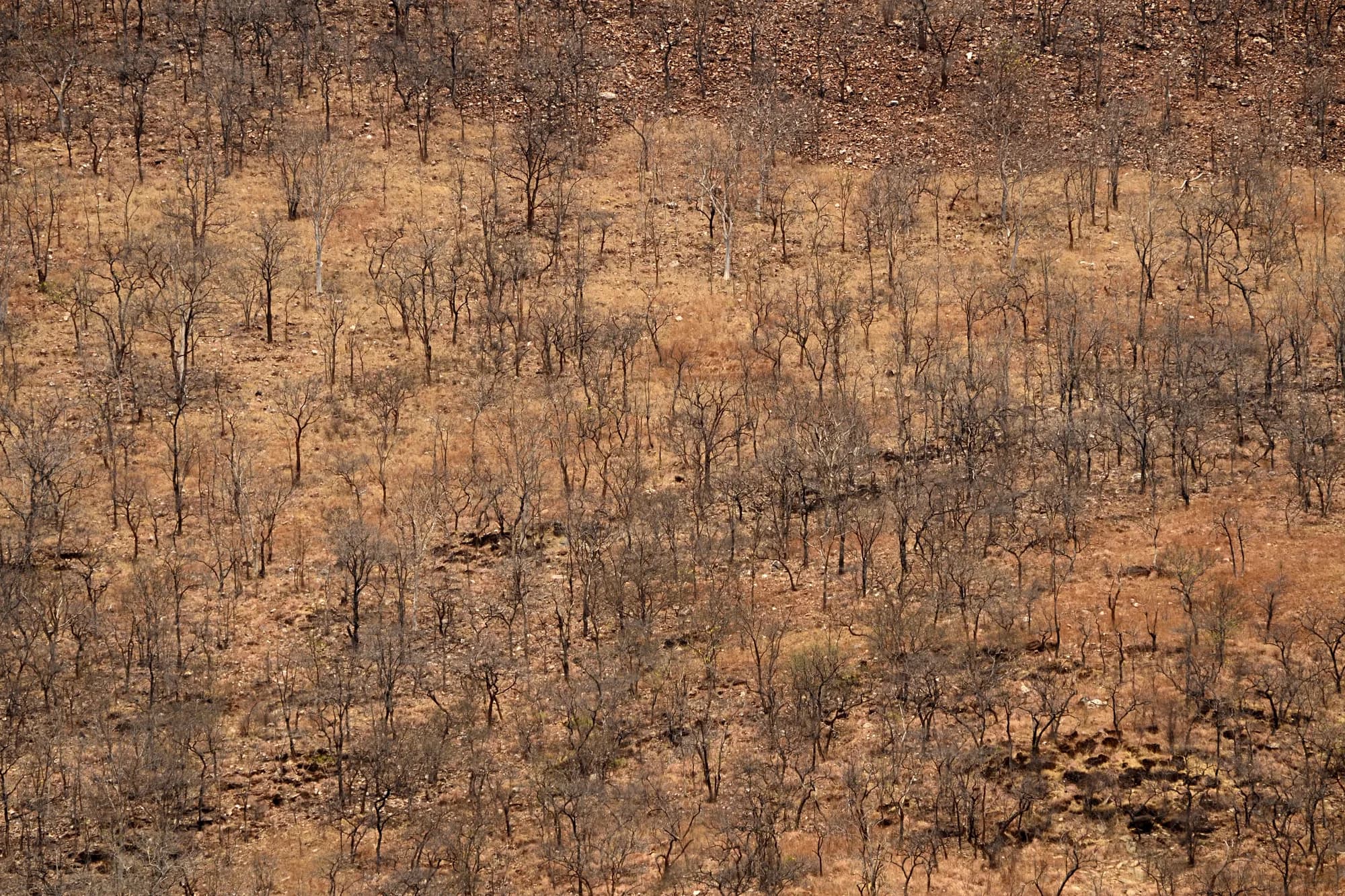
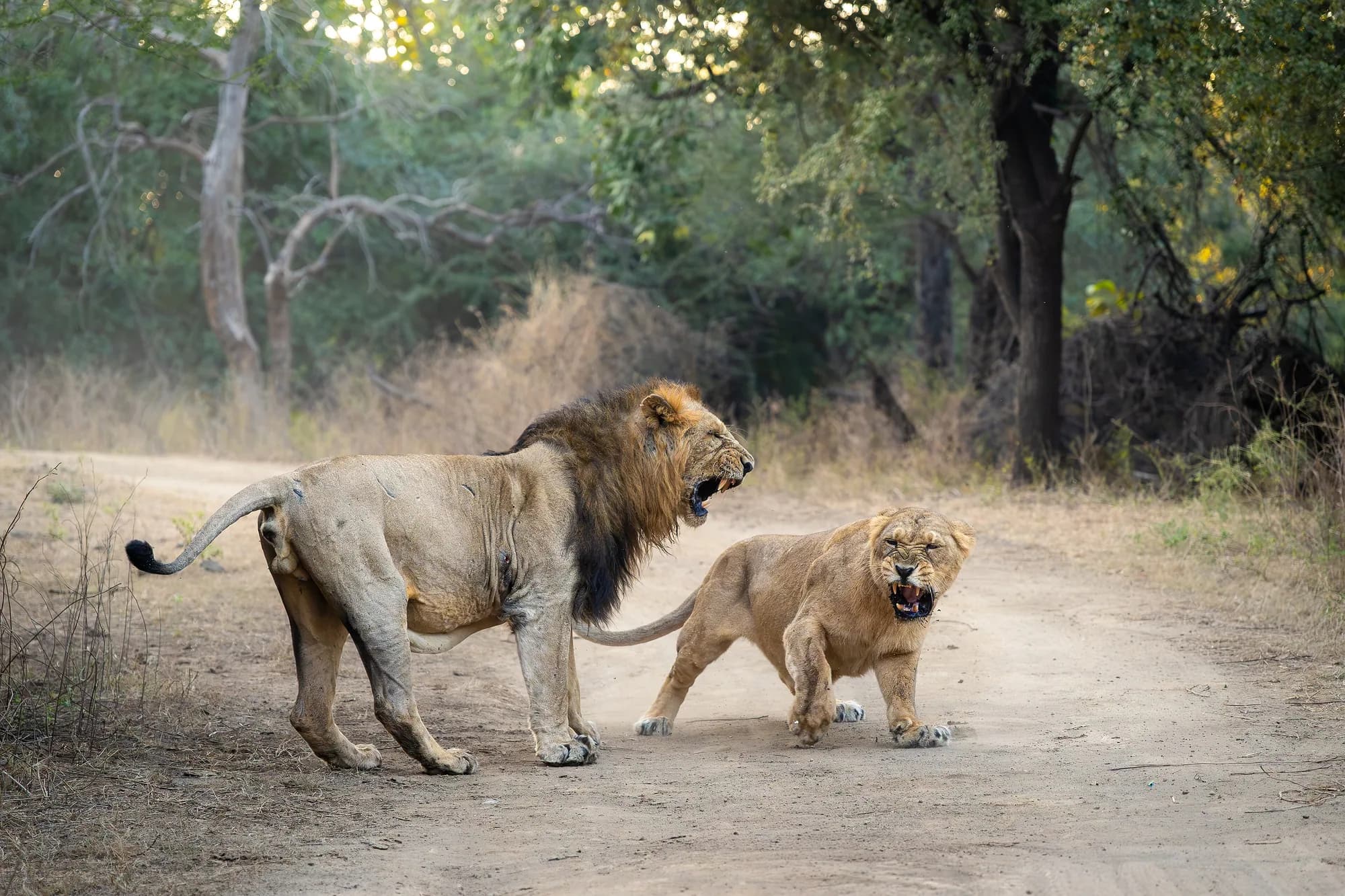
- Inside forestA grassland animal. Looking for one inside a tiger reserve's core is looking in the wrong ecosystem entirely.
- Confused with a jackalA jackal is twice the size and heavier, with a shorter tail carried low. The Indian fox's tail is nearly as long as its body and is always black-tipped.
When to go
When to go
- J
- F
- M
- A
- M
- J
- J
- A
- S
- O
- N
- D
January: best. February: best. March: best. April: good. May: marginal. June: marginal. July: closed or unproductive. August: closed or unproductive. September: marginal. October: good. November: best. December: best.
Through the day
- Dawn
- Morning
- Midday
- Afternoon
- Dusk
- Night
Dawn: most active. Morning: active. Midday: usually resting. Afternoon: active. Dusk: most active. Night: active.
What it looks like in the field
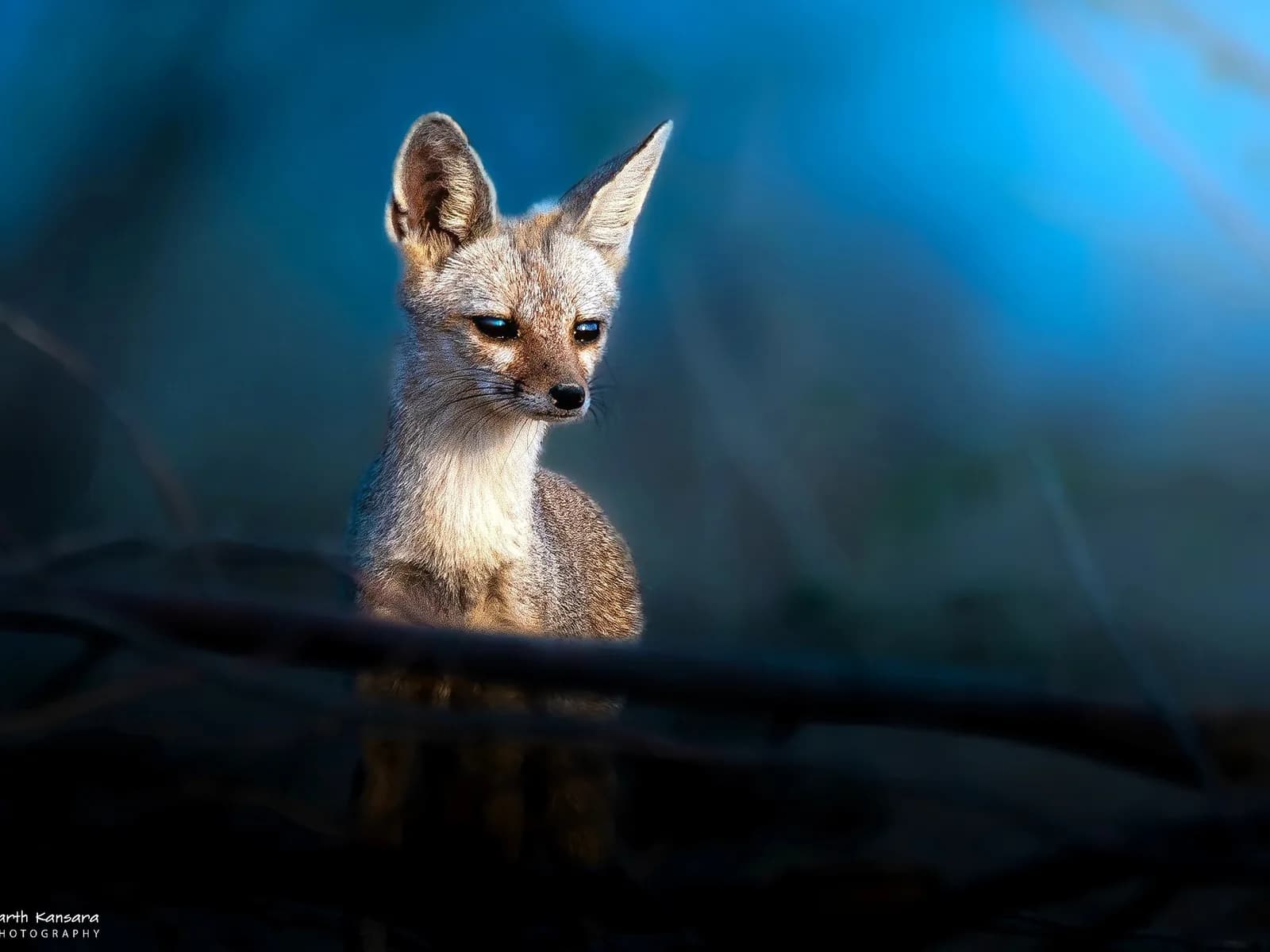
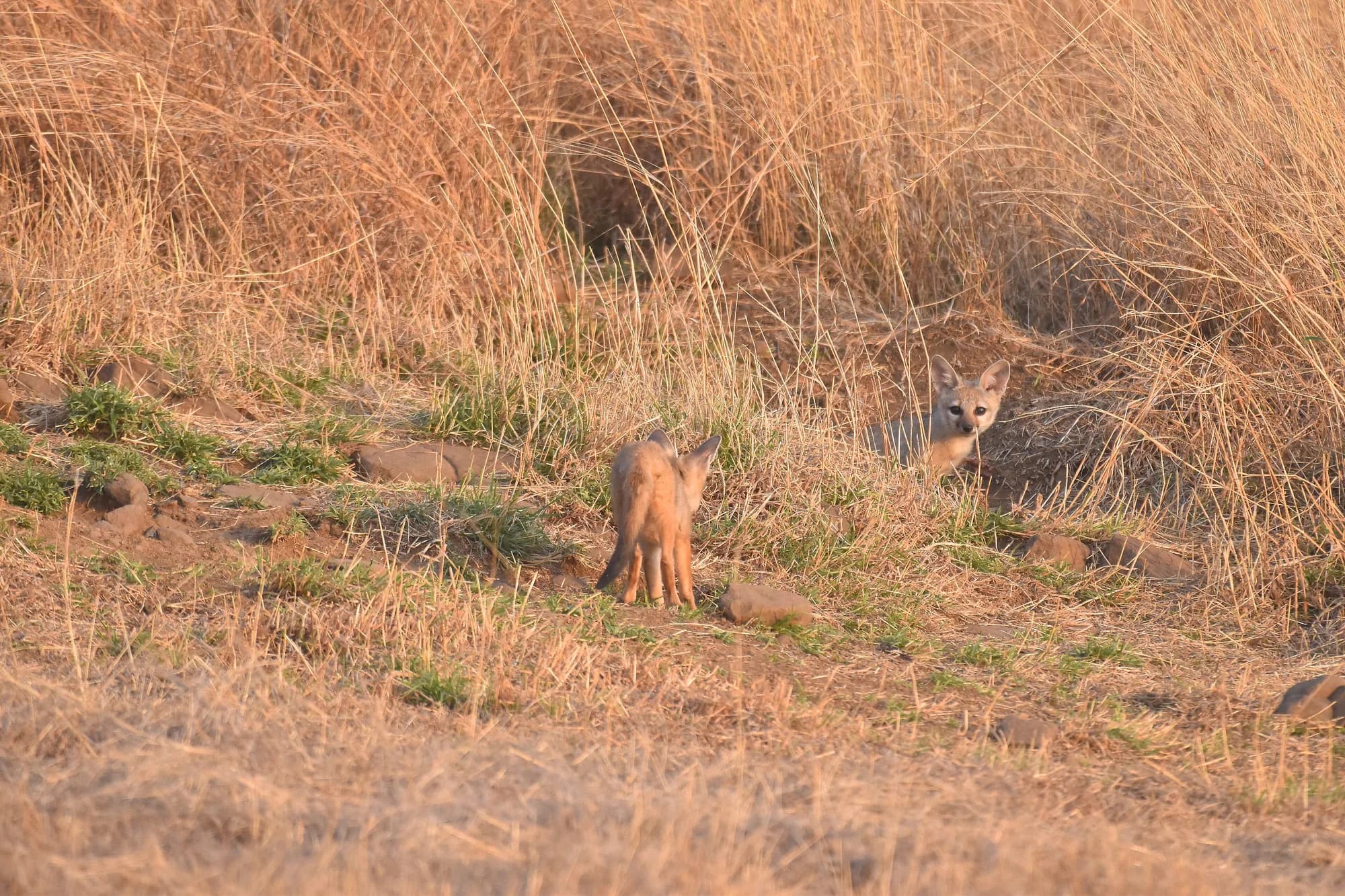
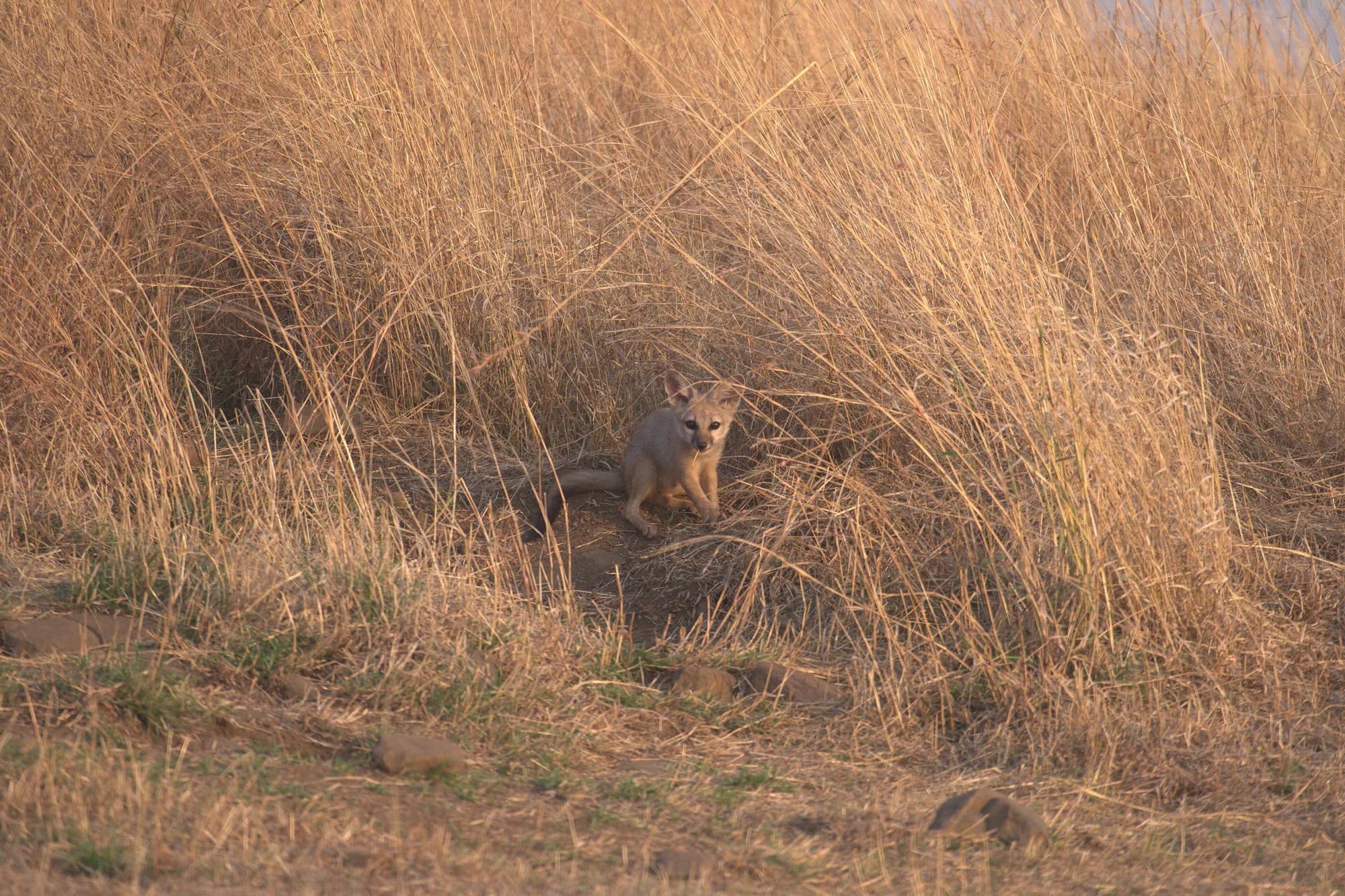
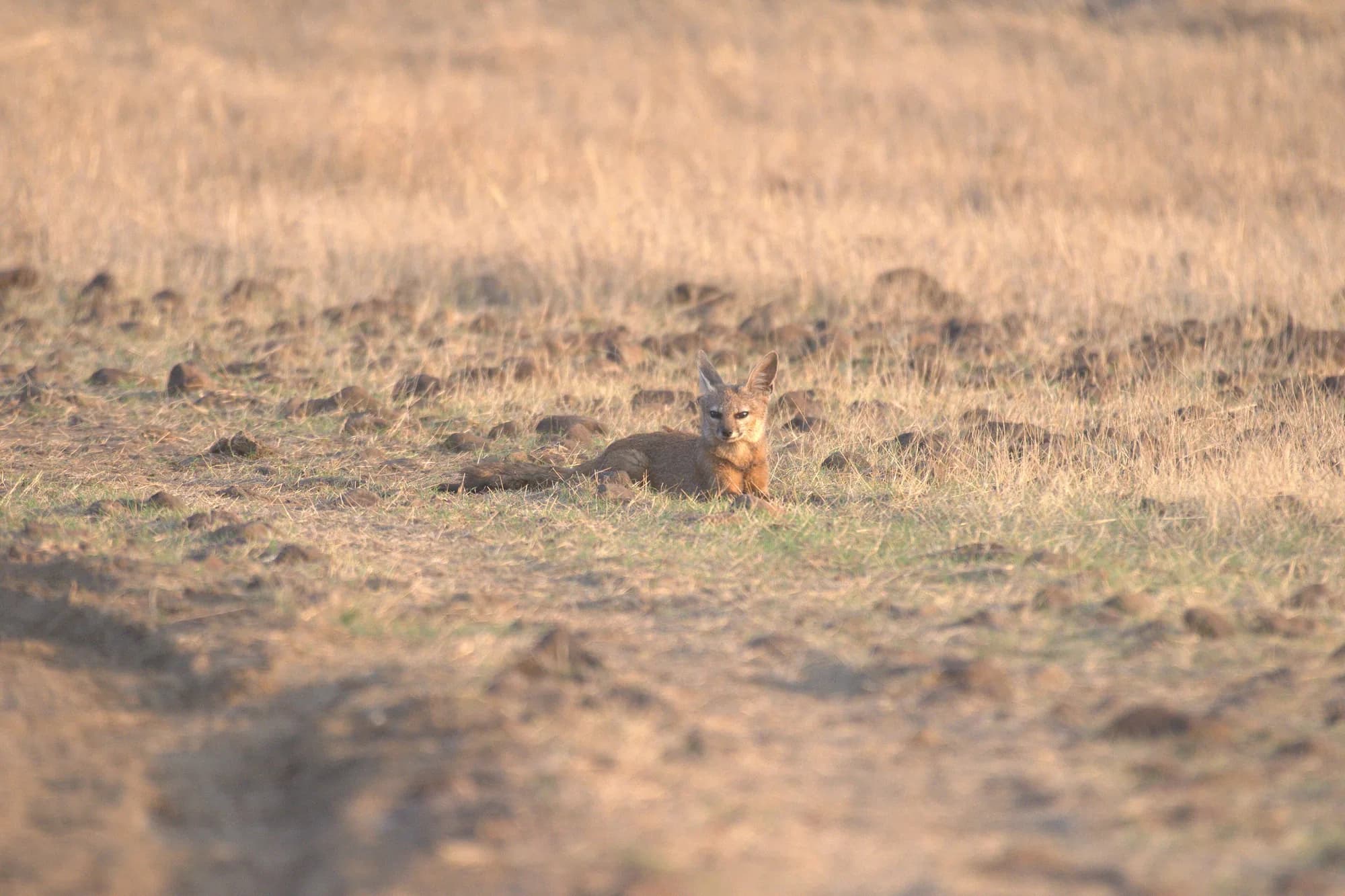
Photographs of Indian fox in the wild, in Indian reserves. We publish no captive, baited or digitally composited images, and no photograph whose licence we cannot show.
What a sighting is actually like
Brief and low to the ground. A small pale animal trotting across short grass with a disproportionately large tail streaming behind it, usually at the moment the light goes.
The tail is the identification and it is visible before anything else is.
The habitat problem
Indian grassland is still classified as wasteland in a good deal of policy, which is why so little of it is protected and why so much has gone to plantation, irrigation and solar.
Status and protection
Status and protection
- IUCN Red List
- Least Concern
- Population trend
- ↓ Decreasing
- Wildlife Protection Act 1972
- Schedule I
- CITES
- Appendix III
Assessment is for the full species Vulpes bengalensis, which is the binomial given. Global scope.
Assessed 2016 · IUCN Red List assessment
What to book to see one
What you would be booking
- How it is seen
- Any jeep drive in dry open country, weighted to dusk.
- Drives to book
- Two or three evenings in the right habitat.
The best fox ground in India is unprotected grassland and fallow outside the reserves, which is both why they are easy to see from a road and why they are in trouble.
Jawai — the park in fullQuestions people ask
How do I tell an Indian fox from a jackal?
Where can I see one?
Is it endangered?
Read next
Rajasthan
Jawai — the park in full
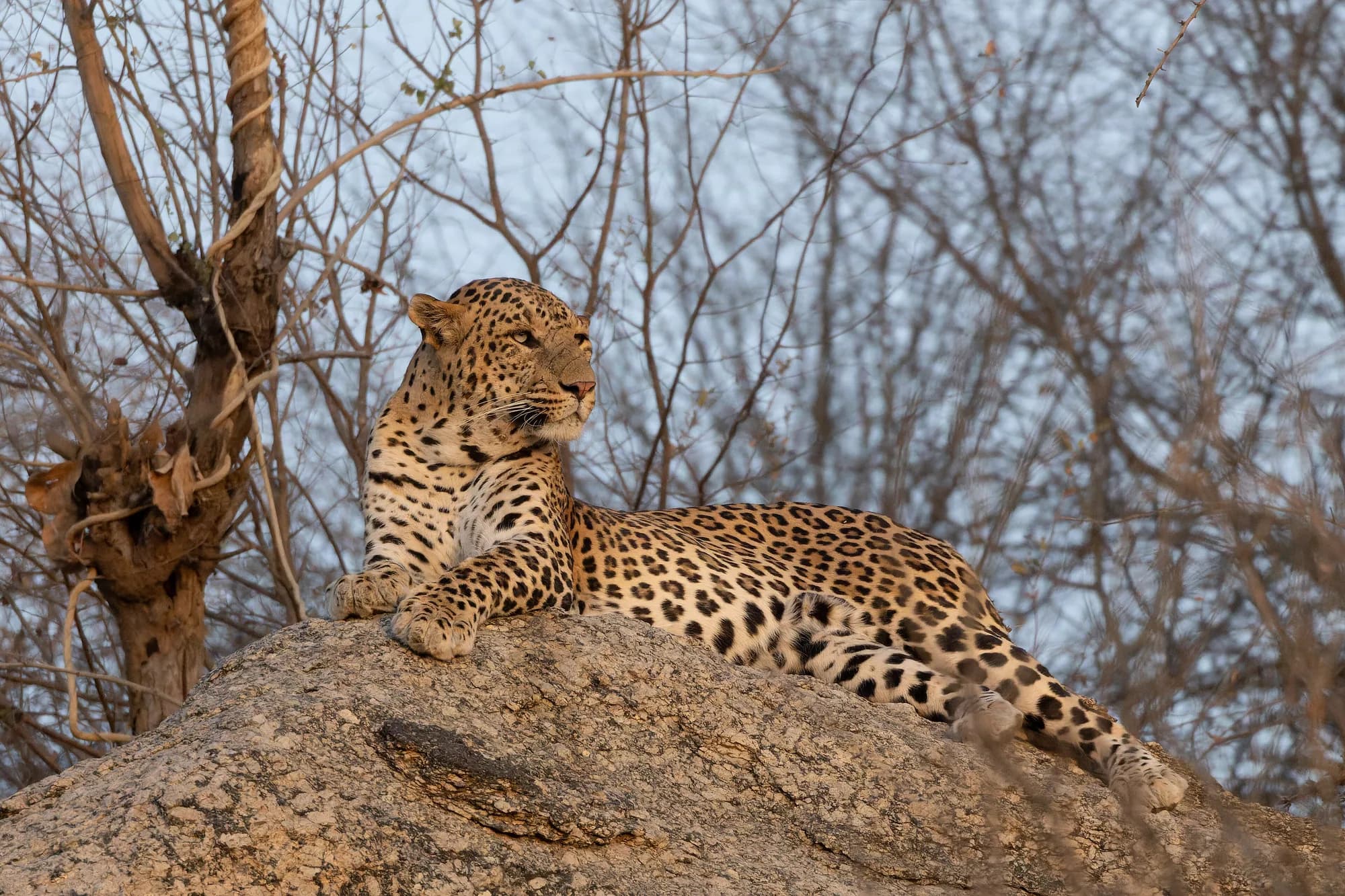
Granite hill country where leopards den in caves in full view. Not a national park — a working landscape that happens to hold them.
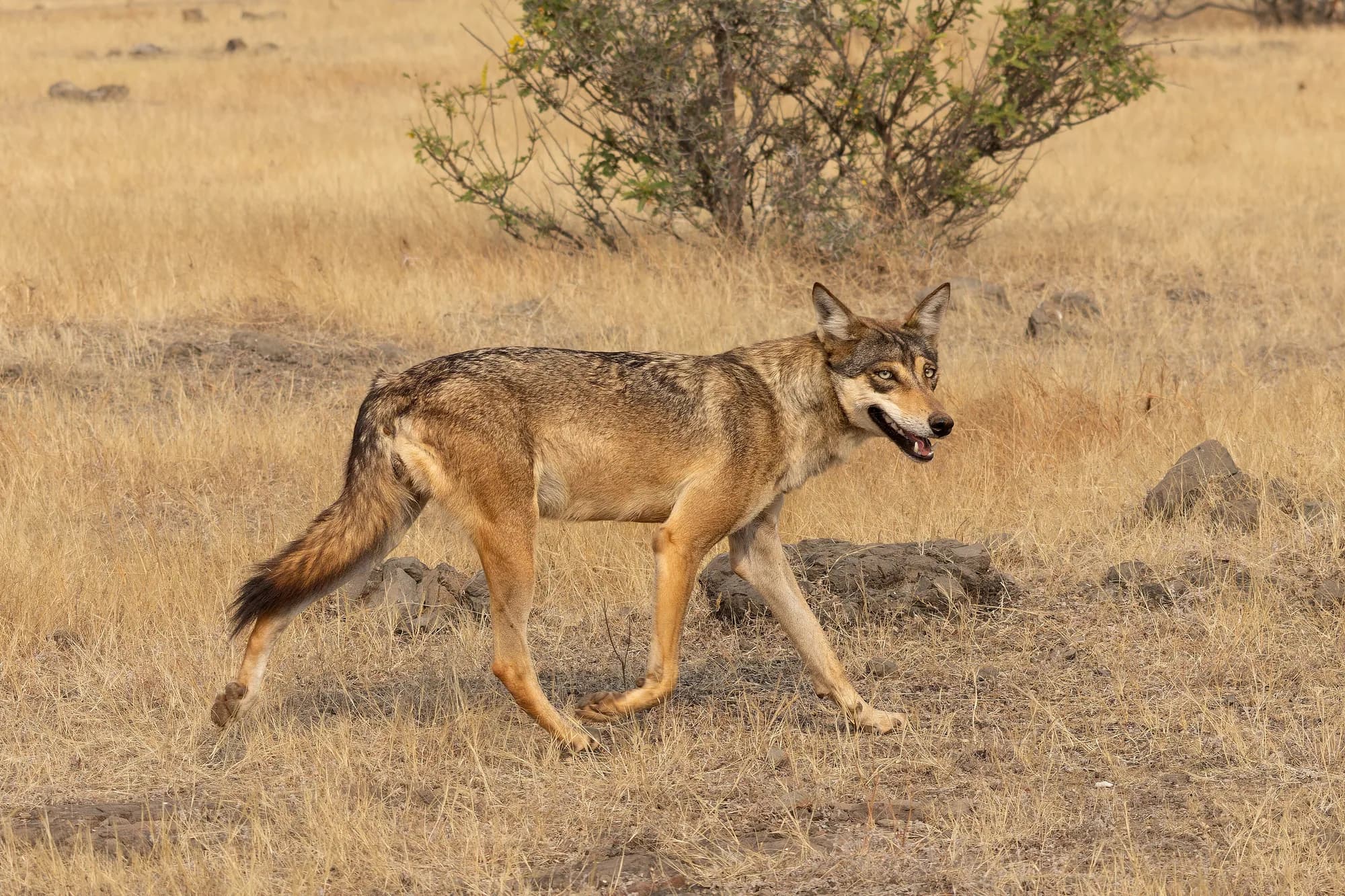
Grassland, not forest
Indian wolf — the same grassland
One of the oldest wolf lineages alive, hunting blackbuck across grassland that almost nobody protects. Rarer in India than the tiger, and with a fraction of the attention.
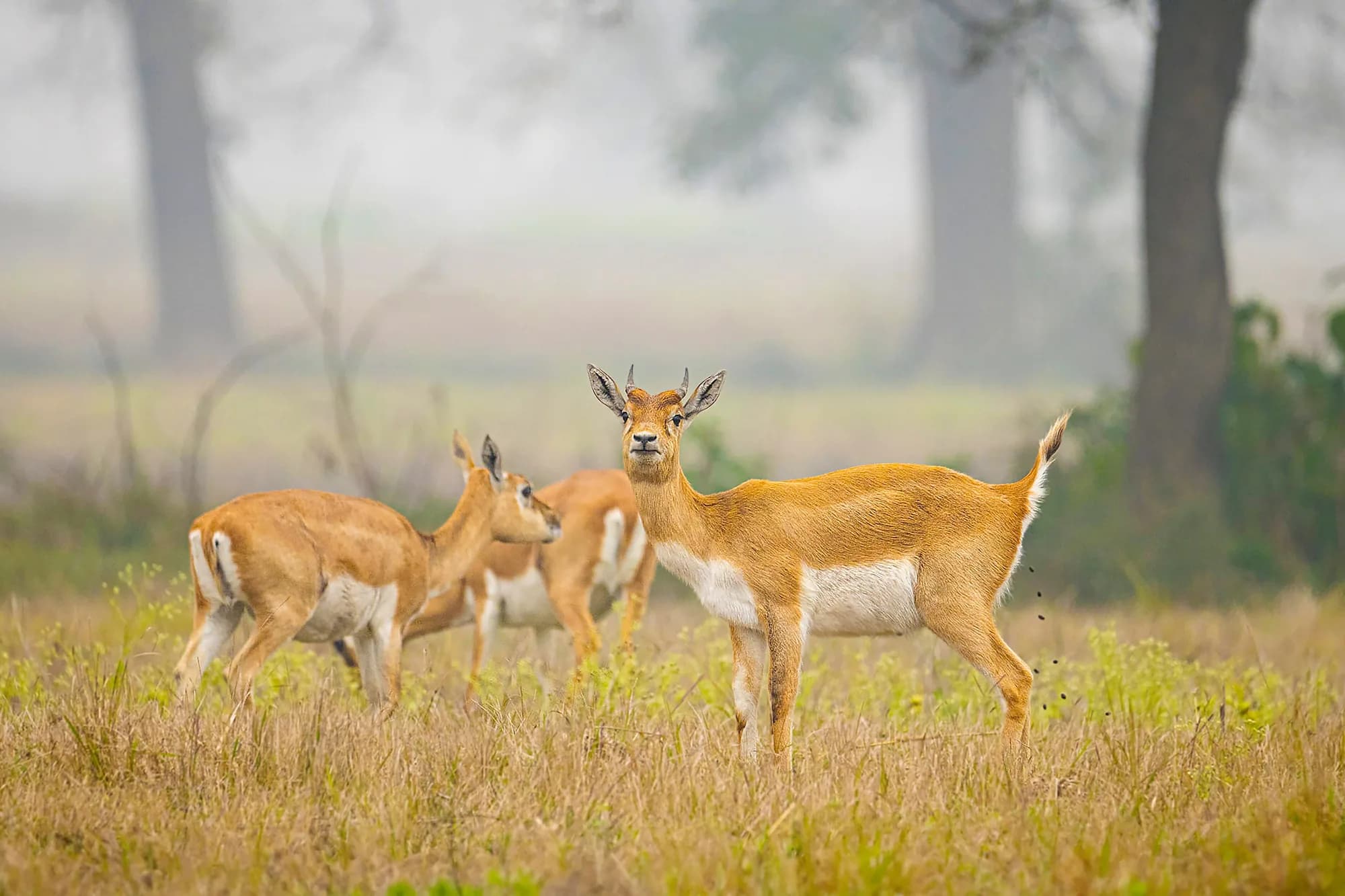
Grassland, and Velavadar above all
Blackbuck — the same ground
India's most striking antelope — spiral horns, a hard black-and-white male in the rut — on flat open grassland where you can watch a hundred at once.
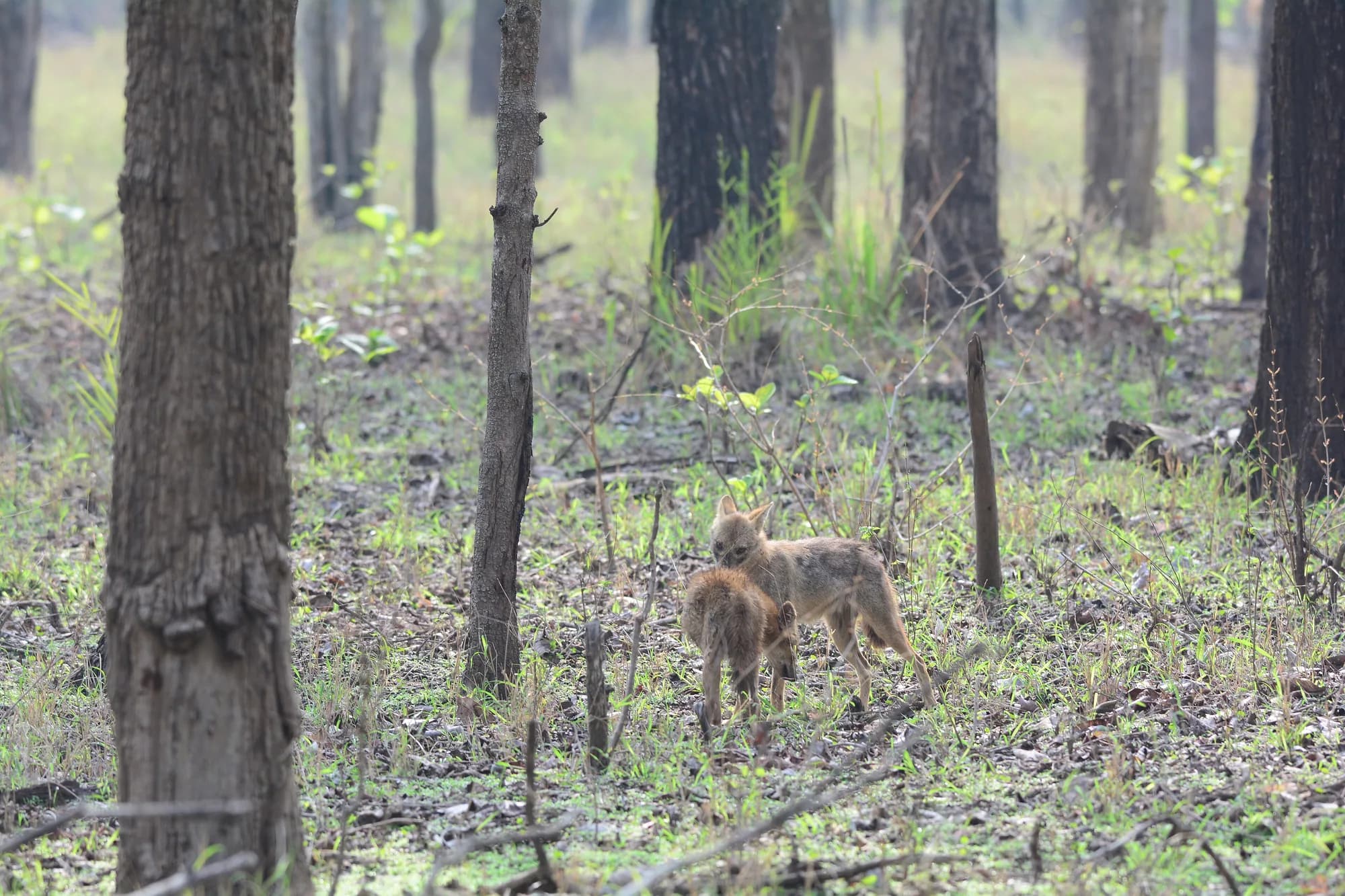
Every reserve, and the night chorus
Golden jackal — the confusion
The most widespread wild canid in India, seen on almost every drive and identified as almost everything else. The howling that wakes you at the lodge is this.