
Species · Canis lupus pallipes
Indian wolf
One of the oldest wolf lineages alive, hunting blackbuck across grassland that almost nobody protects. Rarer in India than the tiger, and with a fraction of the attention.
Also called
- Bheriya (भेड़िया) · Hindi
- Landga · Marathi
- Tola · Kannada
Checked 30 Aug 2026
- Where
- Peninsular grassland
- Best months
- November–March
- Habitat
- Grassland and fallow
- Note
- Not a forest animal
There is no subspecies-level range map from an acceptable source, and the grasslands this animal needs mostly sit outside the protected-area system entirely.
Where it is
Where to actually go
Ranked, with the reason each — these are not interchangeable.
Where you will not see one
- Inside forestThe single most common mistake. Wolves in India are grassland, scrub and farmland animals — looking for one inside a tiger reserve's core is looking in the wrong ecosystem.
- The HimalayaThat is the Tibetan wolf, a separate and much larger animal in cold desert. Ladakh wolves are not these wolves.
- Expecting a grey wolf from televisionIndian wolves are smaller, shorter-coated, sandier, and hunt in pairs or small groups rather than large packs. The animal in the documentaries is a different subspecies on another continent.
When to go
When to go
- J
- F
- M
- A
- M
- J
- J
- A
- S
- O
- N
- D
January: best. February: best. March: best. April: good. May: marginal. June: marginal. July: closed or unproductive. August: closed or unproductive. September: closed or unproductive. October: marginal. November: best. December: best.
Through the day
- Dawn
- Morning
- Midday
- Afternoon
- Dusk
- Night
Dawn: most active. Morning: active. Midday: usually resting. Afternoon: active. Dusk: most active. Night: usually resting.
Telling it apart
Told apart from
Golden jackal
Everywhere, constantly
Size and muzzle. A jackal is a third smaller with a sharper face and a more russet coat, and is far more common. Nearly every reported Indian wolf is a jackal.
Dry grassland at dusk
The hyena's back slopes steeply from high shoulders and its head is blunt; a wolf is level-backed with a narrow muzzle.
Feral dog
Grassland near villages
The genuinely hard one, and it matters — feral dogs both compete with and hybridise with wolves. Wolves carry the tail low and straight, have longer legs relative to the body, and do not linger near settlement.
Marks chosen to be usable from a moving vehicle — a indian wolf is rarely still and never close enough for anything subtler.
What it looks like in the field
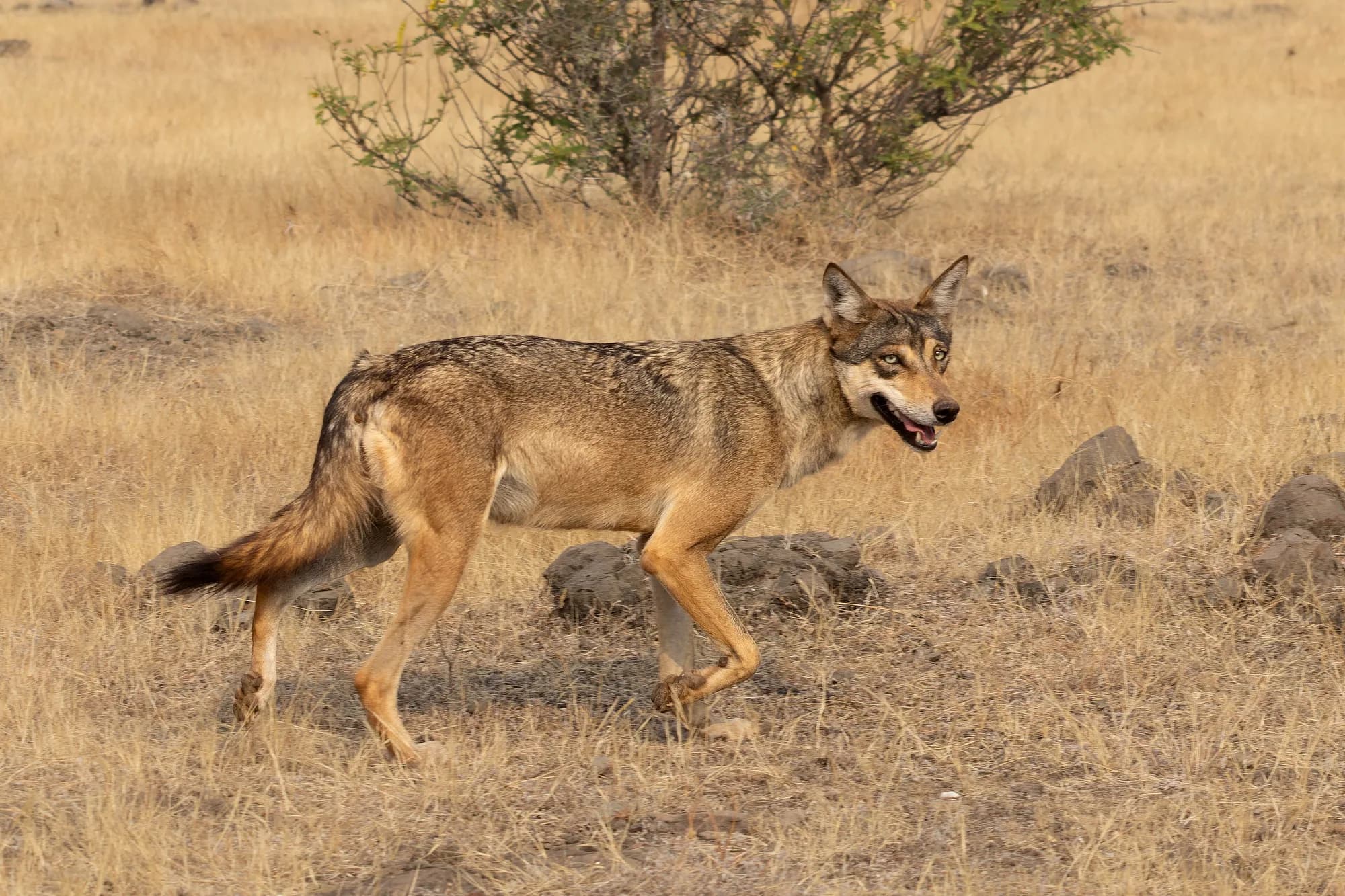
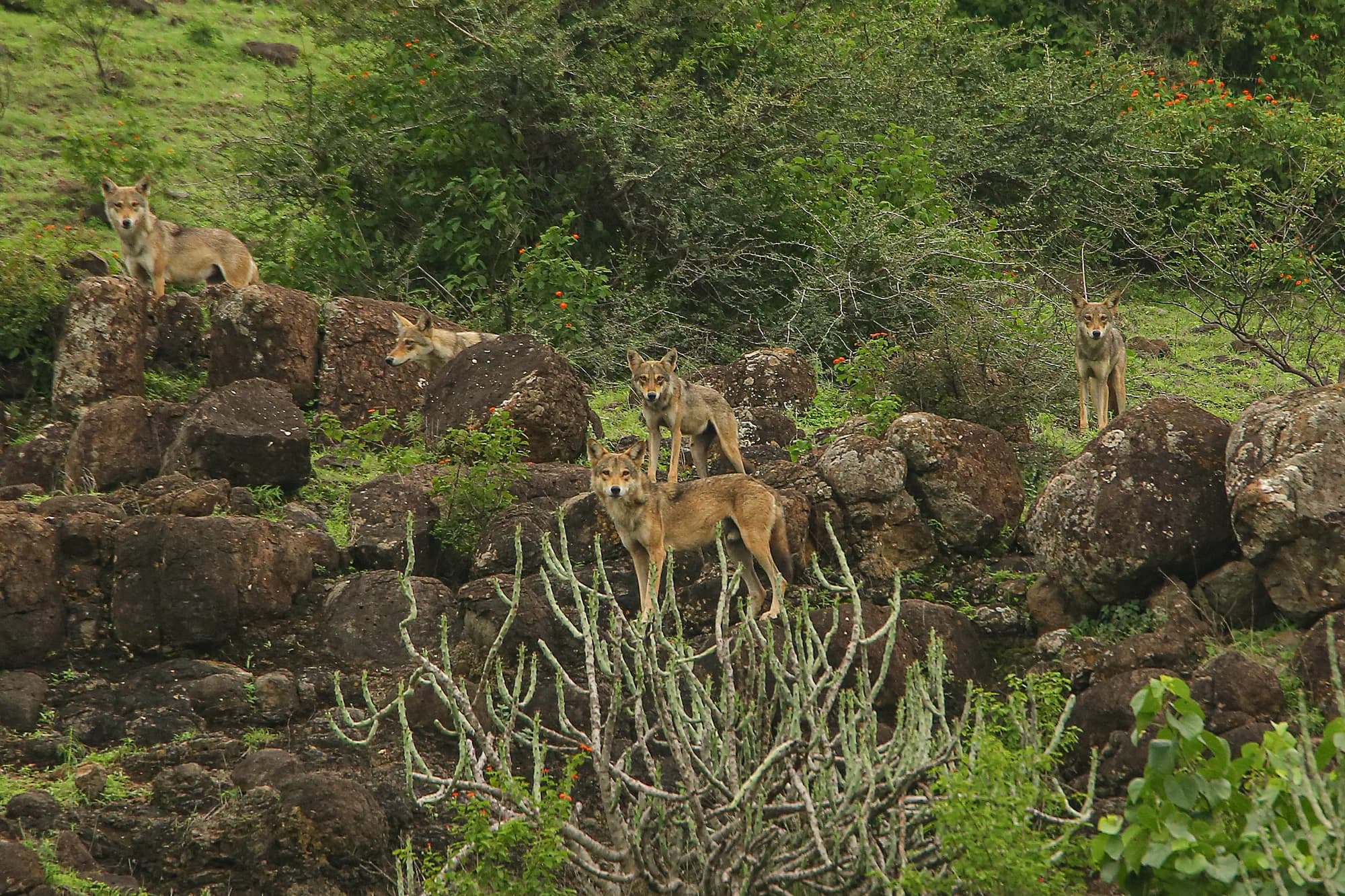
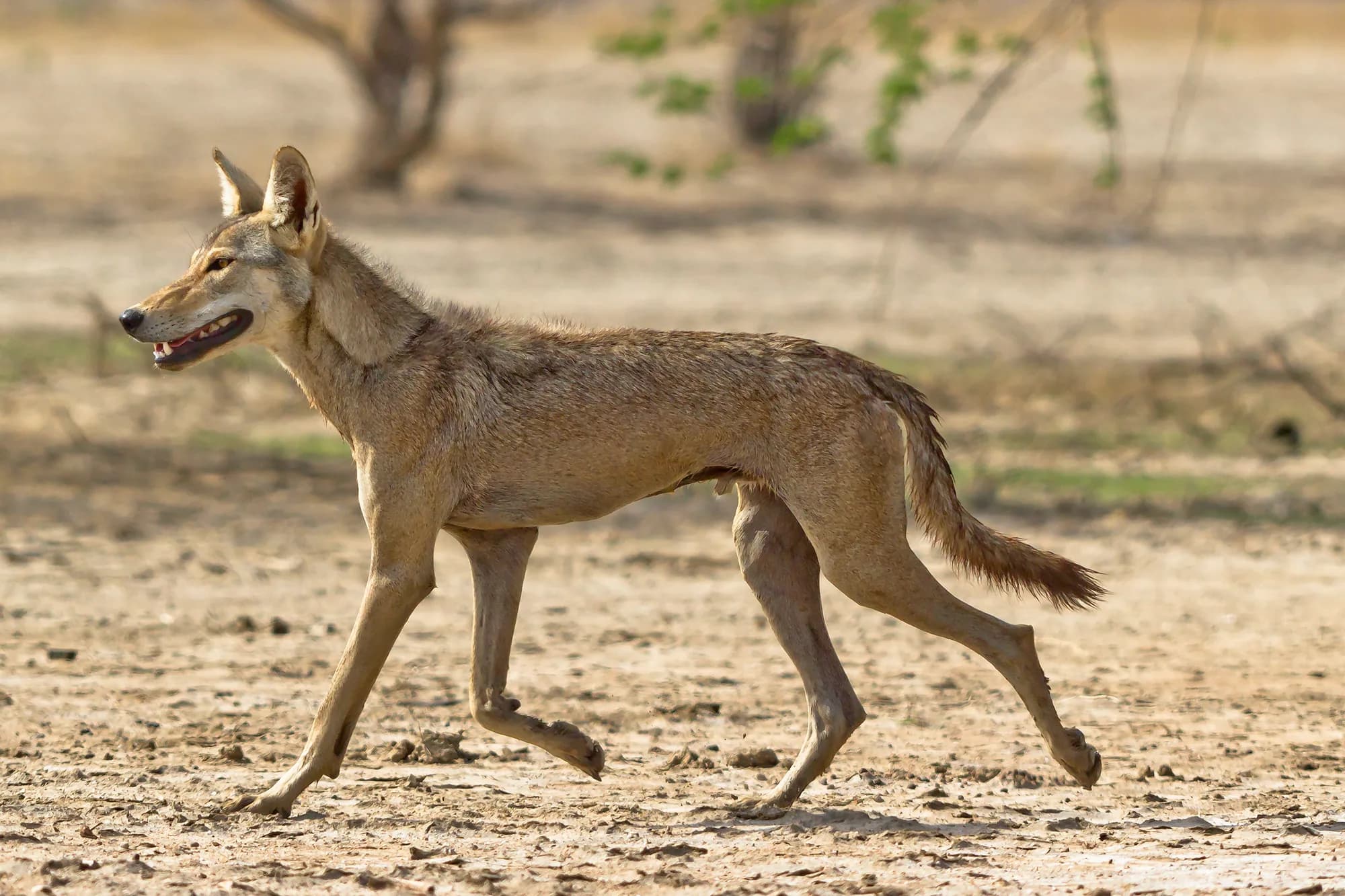
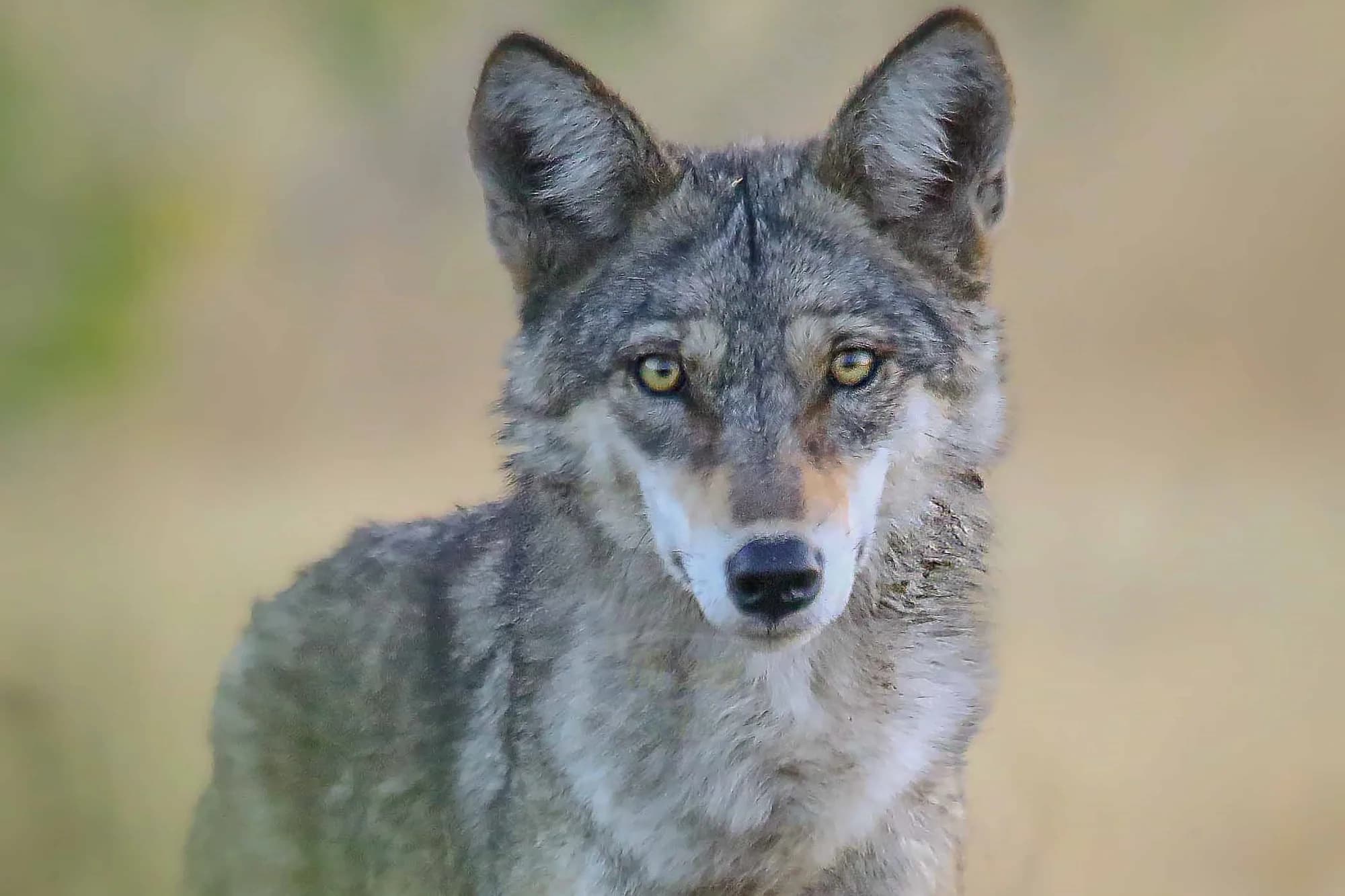
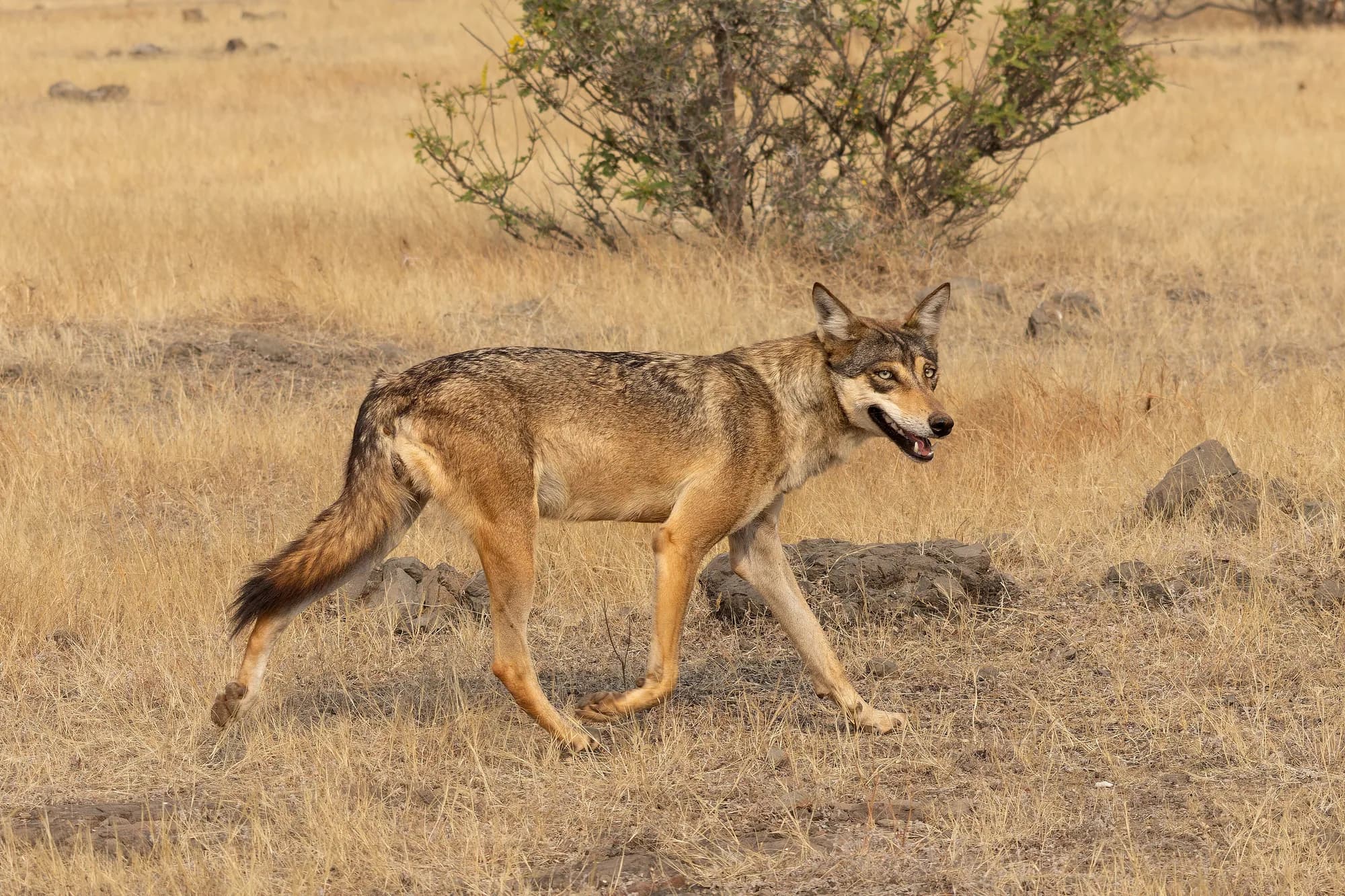
Photographs of Indian wolf in the wild, in Indian reserves. We publish no captive, baited or digitally composited images, and no photograph whose licence we cannot show.
What a sighting is actually like
Distant and quick. Wolves in open country see you a long way off and leave, so the usual sighting is two sandy shapes trotting away across a field with no urgency at all, which is somehow more impressive than a fast one would be.
They are hunting blackbuck on farmland, which is a wilder thing than it sounds.
The category on this page changed in 2025
For years there was no IUCN assessment of the Indian wolf as a subspecies at all, and this page carried the global grey wolf figure — Least Concern — with a warning attached, because it was the only number that existed and on its own it misled.
That gap closed. Canis lupus ssp. pallipes was assessed in March 2025 as Vulnerable, with a decreasing population, and that is what the status block above now shows. It is a subspecies assessment of this animal rather than a proxy for it, and the two say opposite things.
Status and protection
Status and protection
- IUCN Red List
- Vulnerable
- Population trend
- ↓ Decreasing
- Wildlife Protection Act 1972
- Schedule I (post-2022 amendment numbering)
- CITES
- Appendix I
A subspecies-level assessment exists and is what is reported here: Canis lupus ssp. pallipes (Indian Wolf), Vulnerable A2ae; C1, date assessed 24 March 2025, year published 2025.
Assessed 2025 · IUCN Red List assessment
What to book to see one
What you would be booking
- How it is seen
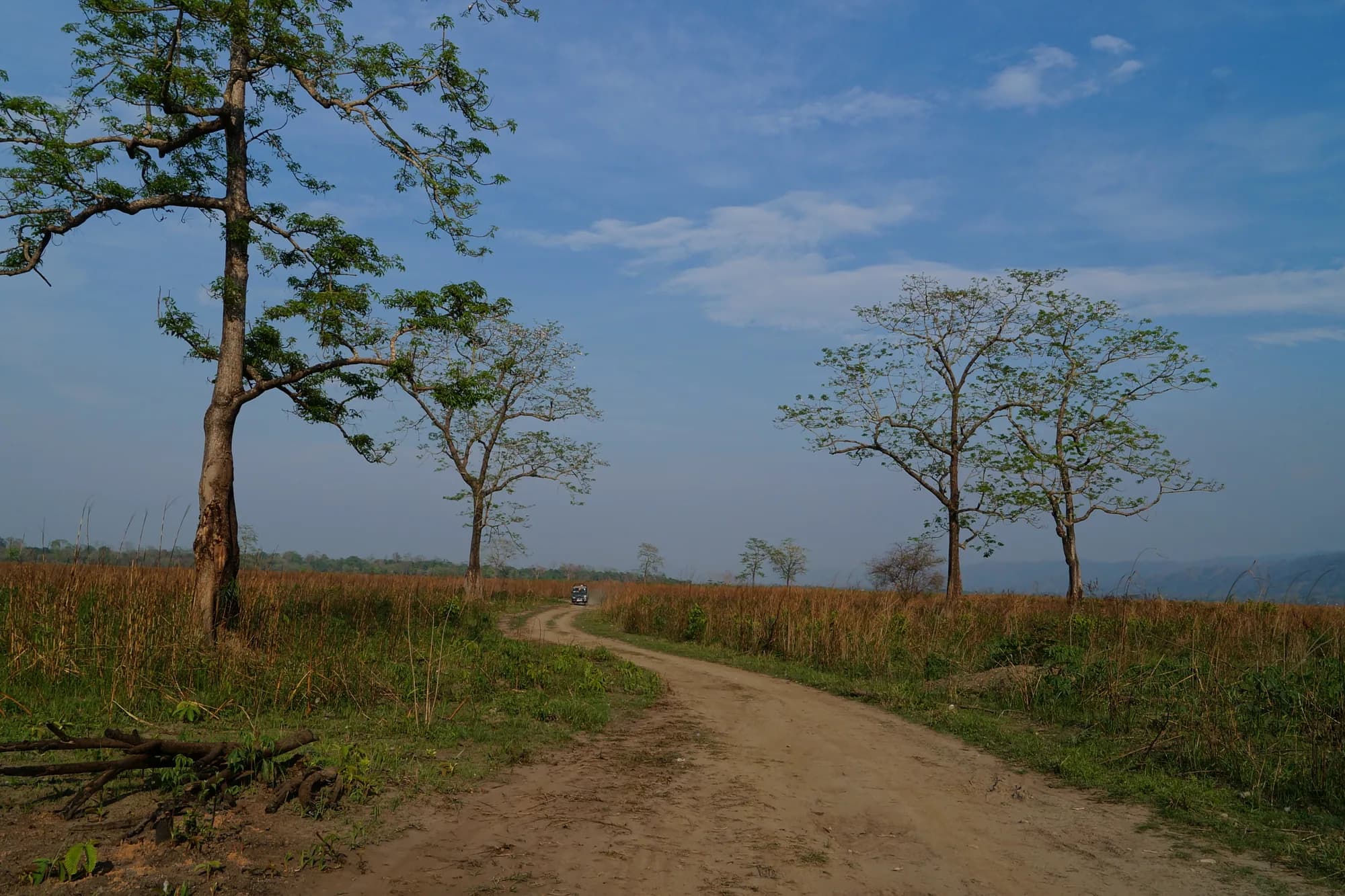
- Jeep or a vehicle on grassland tracks, usually in buffer zones or outside protected areas altogether.
- Drives to book
- Several early mornings in the right grassland. This is not a reserve-and-permit species.
The best wolf ground in India is unprotected grassland that no safari circuit visits. If this is the target, you are arranging something bespoke with someone local rather than booking a park.
Pench — the park in fullOn the same trip you would also get
- Blackbuck — the prey, on the same grassland
- Striped hyena — the same dusk, the same open country
- Indian fox — smaller, and on exactly the same ground
- Chinkara — the other dry-country grazer
Questions people ask
Where can I see an Indian wolf?
Is the Indian wolf endangered?
How do I tell one from a jackal?
Read next
Madhya Pradesh
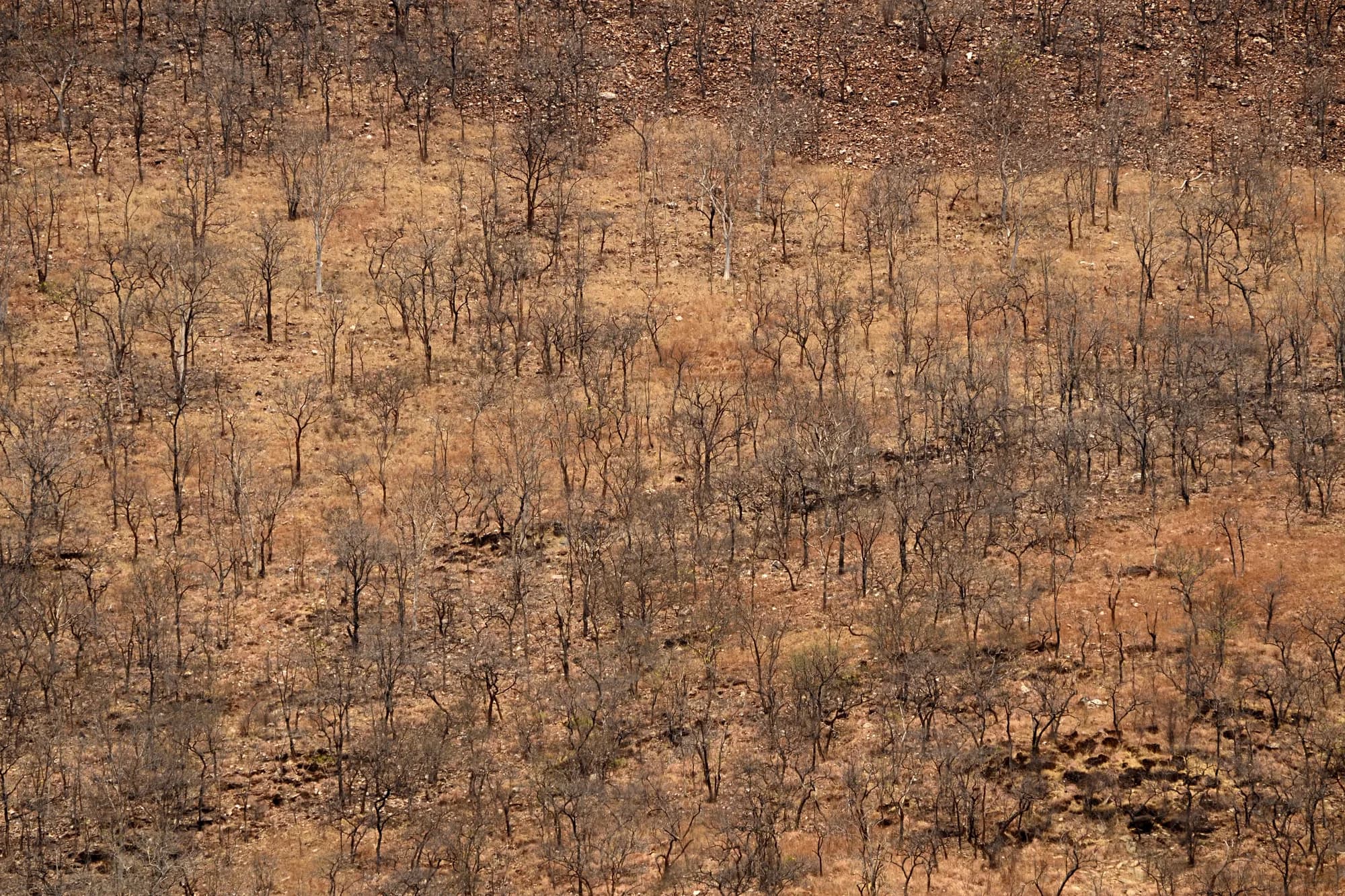
Pench — the park in full
Teak and open water, smaller and calmer than its neighbours, and the easiest of the Madhya Pradesh parks to combine with another.
Four reserves, at dusk, rarely looked for
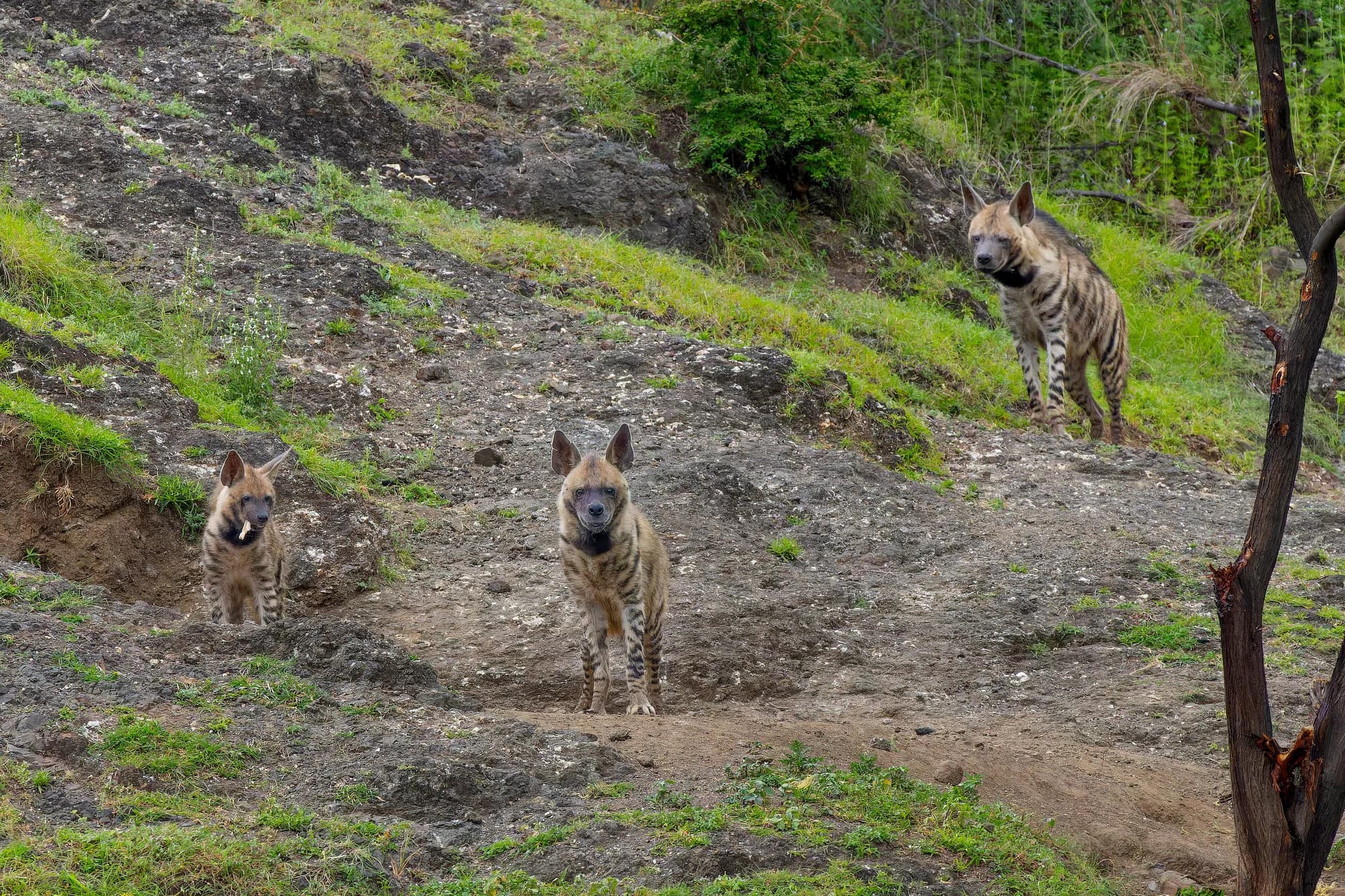
Striped hyena — the other dusk animal
A nocturnal scavenger with a mane it raises when alarmed, common across dry India and almost never on anyone's list. One of the best sightings you can have at Jawai.
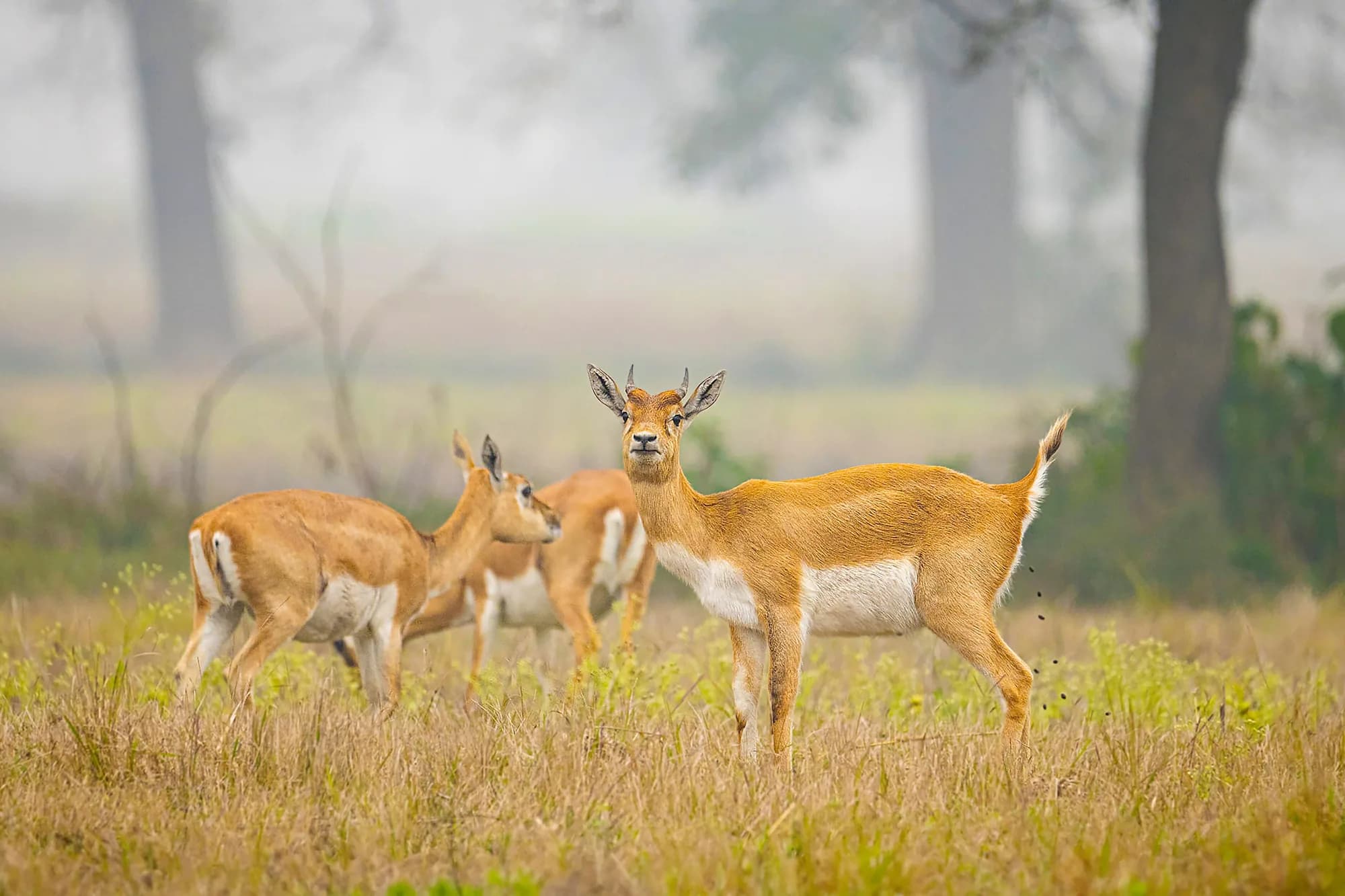
Grassland, and Velavadar above all
Blackbuck — the prey
India's most striking antelope — spiral horns, a hard black-and-white male in the rut — on flat open grassland where you can watch a hundred at once.
Our position
Travelling responsibly
Where we stand on vehicle crowding, baiting and playback — and what we will not link to, whoever is paying.