
Species · Equus hemionus khur
Indian wild ass
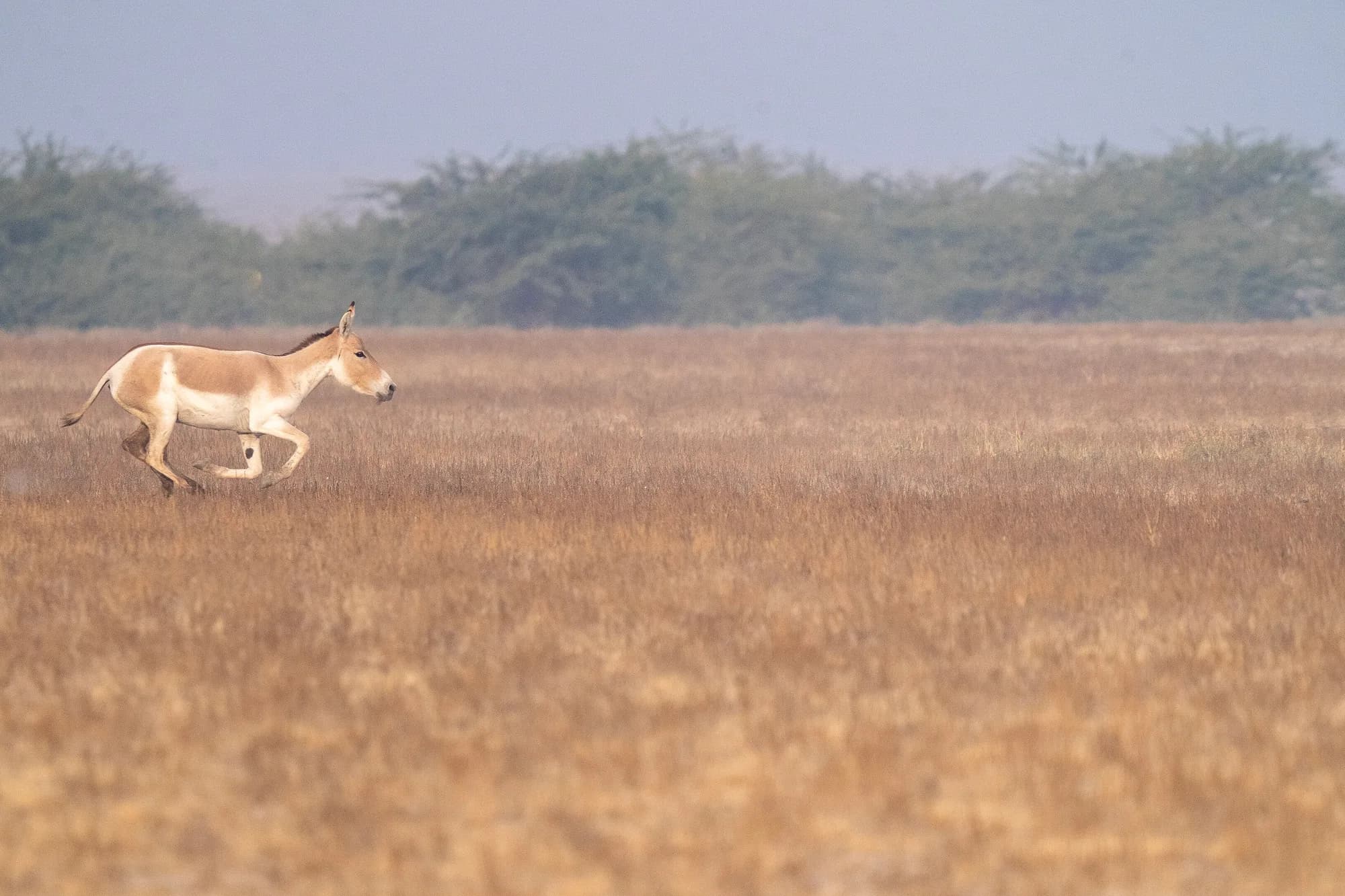
A wild equid running across a salt desert that floods every monsoon and bakes solid every summer. One of the few Indian populations whose numbers are genuinely going up.
Also called
- Ghudkhar · Gujarati
- Gorkhar (गोरखर) · Hindi
Checked 30 Aug 2026
- Where
- Gujarat
- Best months
- November–March
- Habitat
- Salt desert
- Trend
- Increasing
Effectively one landscape. The Little Rann of Kachchh holds the great majority of the world population of this subspecies.
Where it is
Where to actually go
Ranked, with the reason each — these are not interchangeable.
- 01Wild Ass Sanctuary, Little RannGujaratEssentially the entire world population, on a flat salt desert you drive across. Sightings are near-certain and the landscape is unlike anywhere else in India.November to March, and stay for the birds
- 02VelavadarGujaratTwo hours away, and the obvious pairing — blackbuck, harriers and a chance of Indian wolf.Do both in one trip
Where you will not see one
- Anywhere with treesThis is a salt-desert and scrub animal. No forest reserve in India holds one.
- LadakhThe wild equid there is the kiang, a separate and larger species. The two do not meet.
- Expecting a donkeyFeral donkeys are common across rural India and look superficially similar. Wild ass are larger, sandier, with a distinct dark dorsal stripe and a stiff erect mane, and they run rather than stand.
When to go
When to go
- J
- F
- M
- A
- M
- J
- J
- A
- S
- O
- N
- D
January: best. February: best. March: best. April: good. May: marginal. June: marginal. July: closed or unproductive. August: closed or unproductive. September: marginal. October: good. November: best. December: best.
Through the day
- Dawn
- Morning
- Midday
- Afternoon
- Dusk
- Night
Dawn: most active. Morning: most active. Midday: usually resting. Afternoon: active. Dusk: most active. Night: not normally seen.
What it looks like in the field
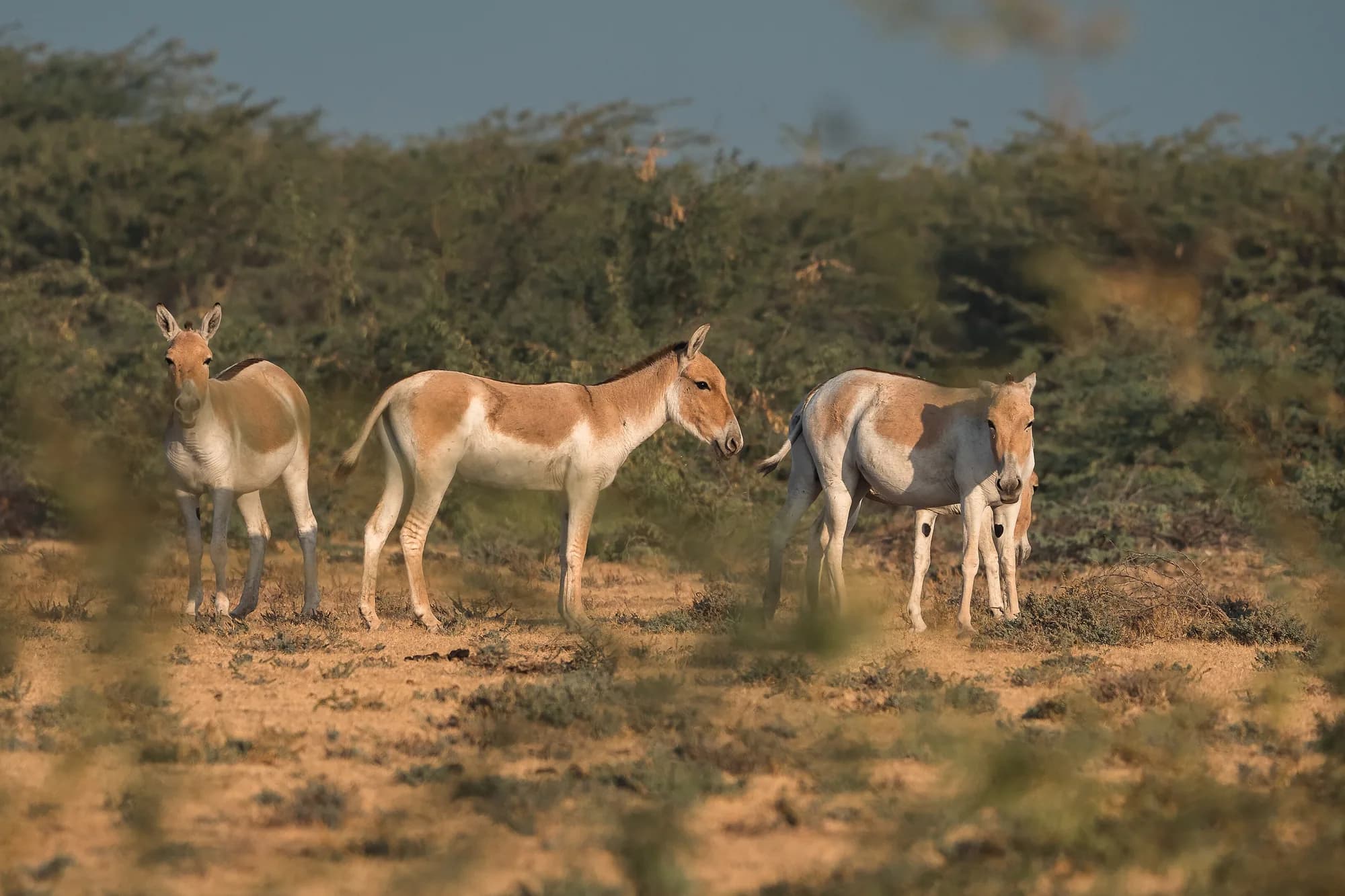
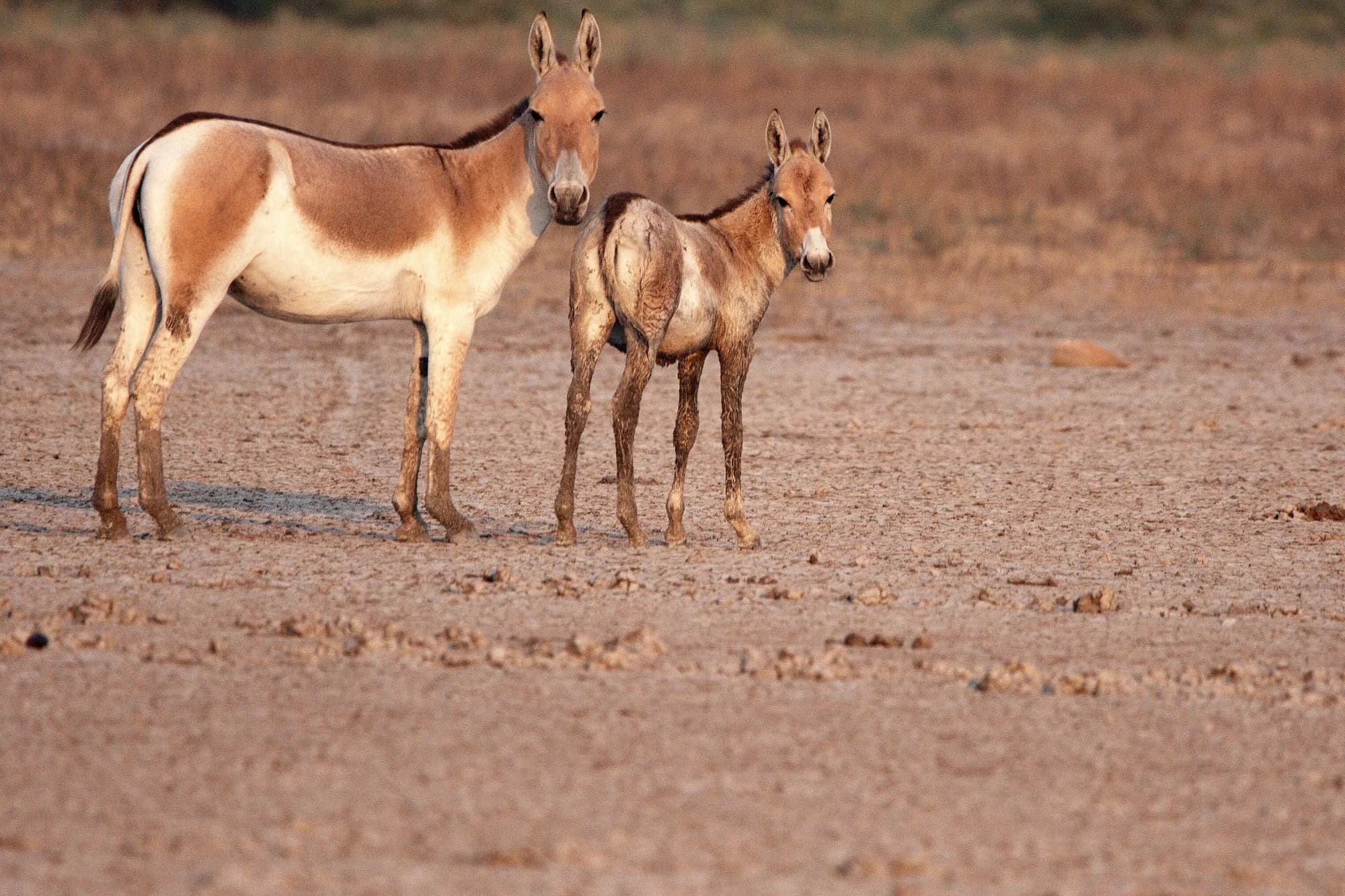
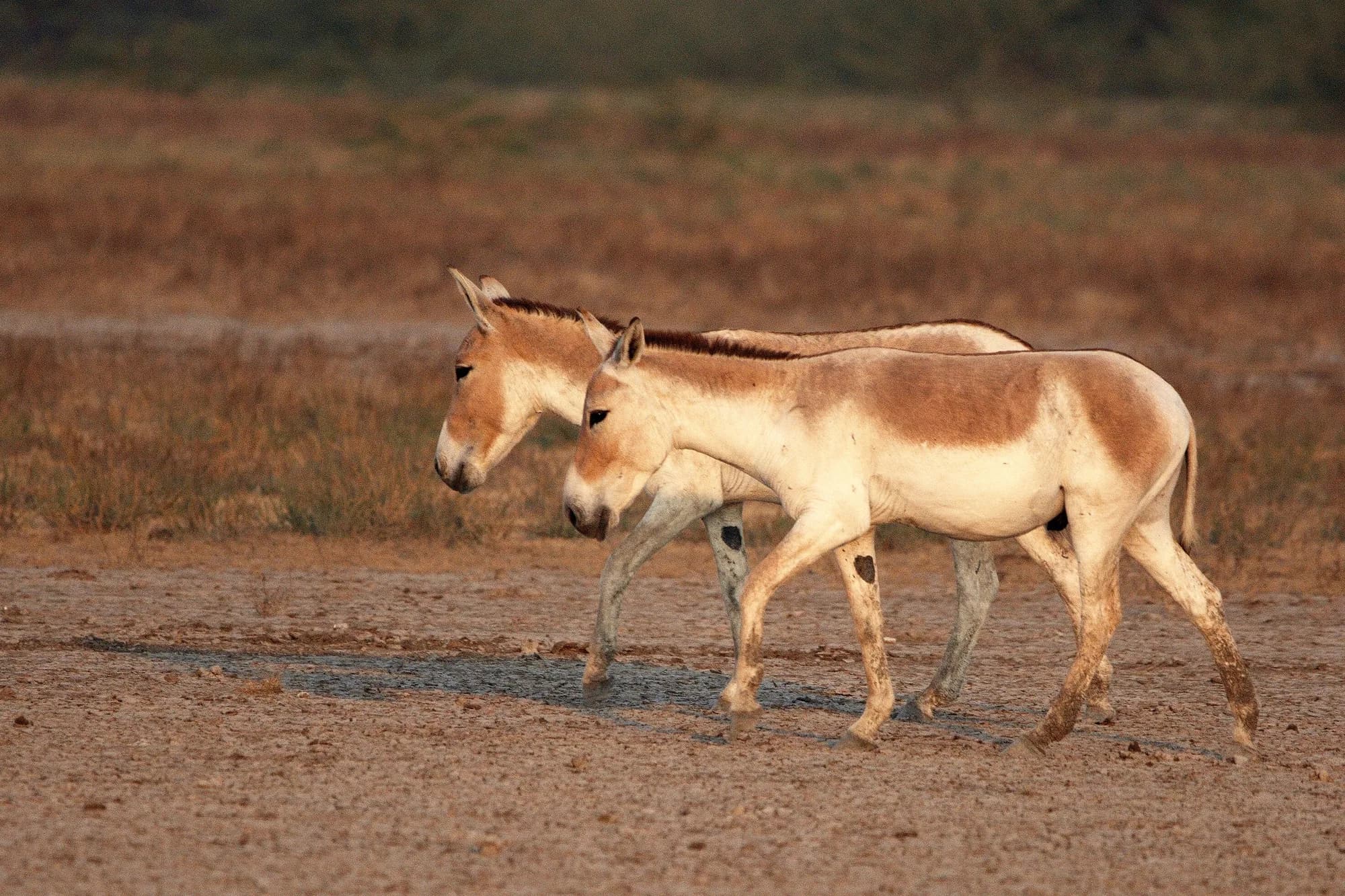
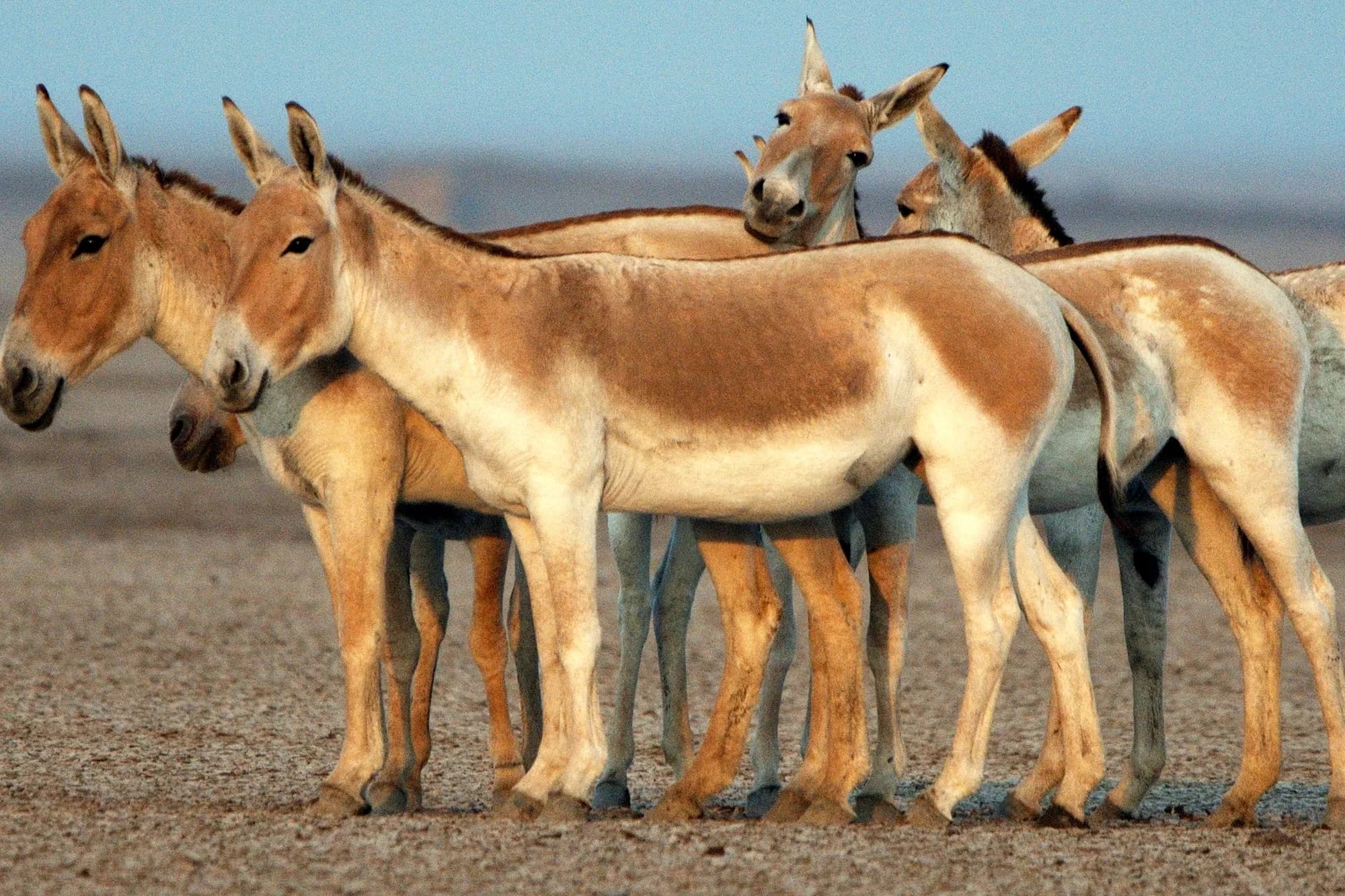
Photographs of Indian wild ass in the wild, in Indian reserves. We publish no captive, baited or digitally composited images, and no photograph whose licence we cannot show.
What a sighting is actually like
Wide and fast. A herd sees the vehicle from a kilometre off and runs — not in panic, just moving — and on ground that flat you watch the whole thing from start to finish with nothing interrupting the view.
There is no cover anywhere. It is the least obstructed wildlife watching in India.
A population going up
The status block above shows an increasing trend, and that is not a rounding error. Numbers were in the hundreds in the 1960s after disease and drought, and successive censuses have shown steady growth since.
Status and protection
Status and protection
- IUCN Red List
- Vulnerable
- Population trend
- ↑ Increasing
- Wildlife Protection Act 1972
- Schedule I (post-2022 amendment numbering)
- CITES
- Appendix I
A subspecies-level assessment exists and is what is reported here: Equus hemionus ssp. khur (Indian Wild Ass), Vulnerable A3bce;
Assessed 2025 · IUCN Red List assessment
What to book to see one
What you would be booking
- How it is seen
- Jeep across the Rann itself, from Dasada or Bajana. The vehicle drives on the salt flat rather than on tracks.
- Drives to book
- Two or three. Sightings are close to certain; the reason to stay longer is the birds and the light.
The Rann is impassable during and after the monsoon and brutal in summer. The workable window is roughly November to March, which is also when the flamingos and cranes are in.
Gir — the usual pairingOn the same trip you would also get
- Blackbuck — two hours away at Velavadar
- Indian wolf — the same grassland system
- Chinkara — on the Rann margins
- Indian fox — the same dry open country
Questions people ask
Where can I see the Indian wild ass?
When should I go?
Is it the same as the kiang in Ladakh?
Read next
Gujarat
Gir — the usual pairing
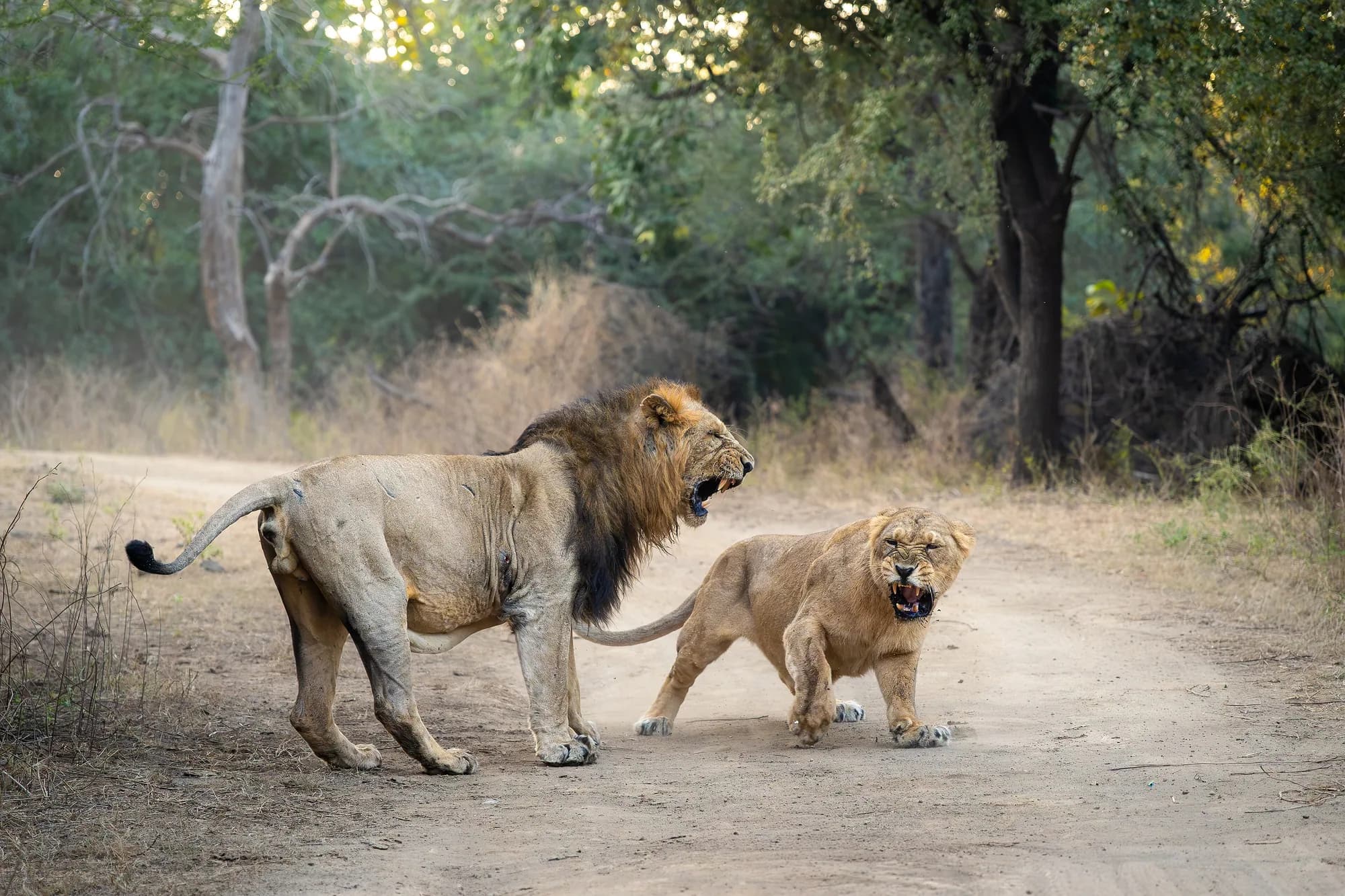
The only wild Asiatic lions on earth, in dry thorn scrub. Permits are the constraint here, not the animals.
Grassland, and Velavadar above all
Blackbuck — the same trip
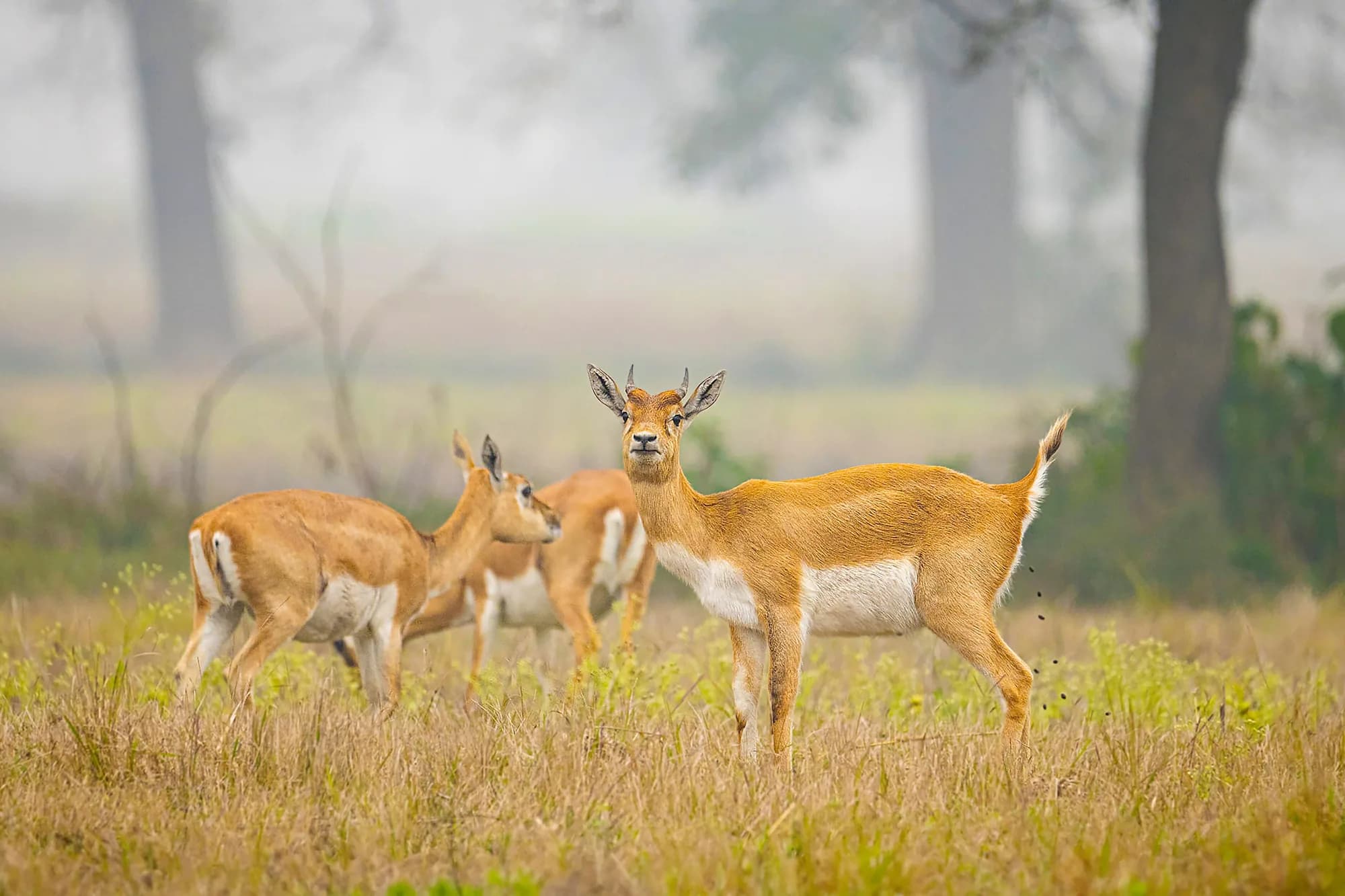
India's most striking antelope — spiral horns, a hard black-and-white male in the rut — on flat open grassland where you can watch a hundred at once.
Grassland, not forest
Indian wolf — the same grassland system
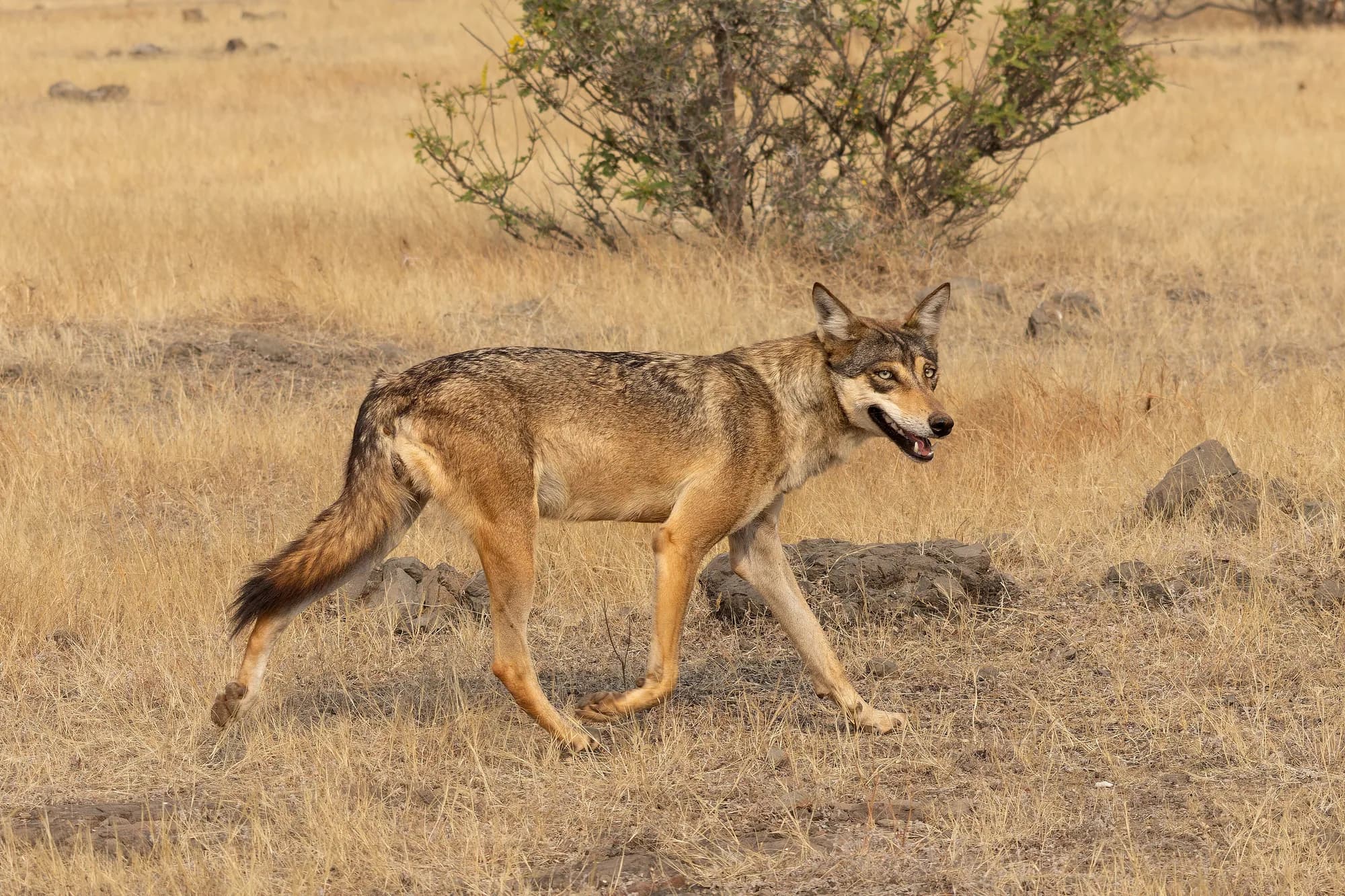
One of the oldest wolf lineages alive, hunting blackbuck across grassland that almost nobody protects. Rarer in India than the tiger, and with a fraction of the attention.
Twelve months, cross-park
When to go, month by month
The single decision that moves the odds most. Heat, crowds, closures and what is actually open, one page per month.