
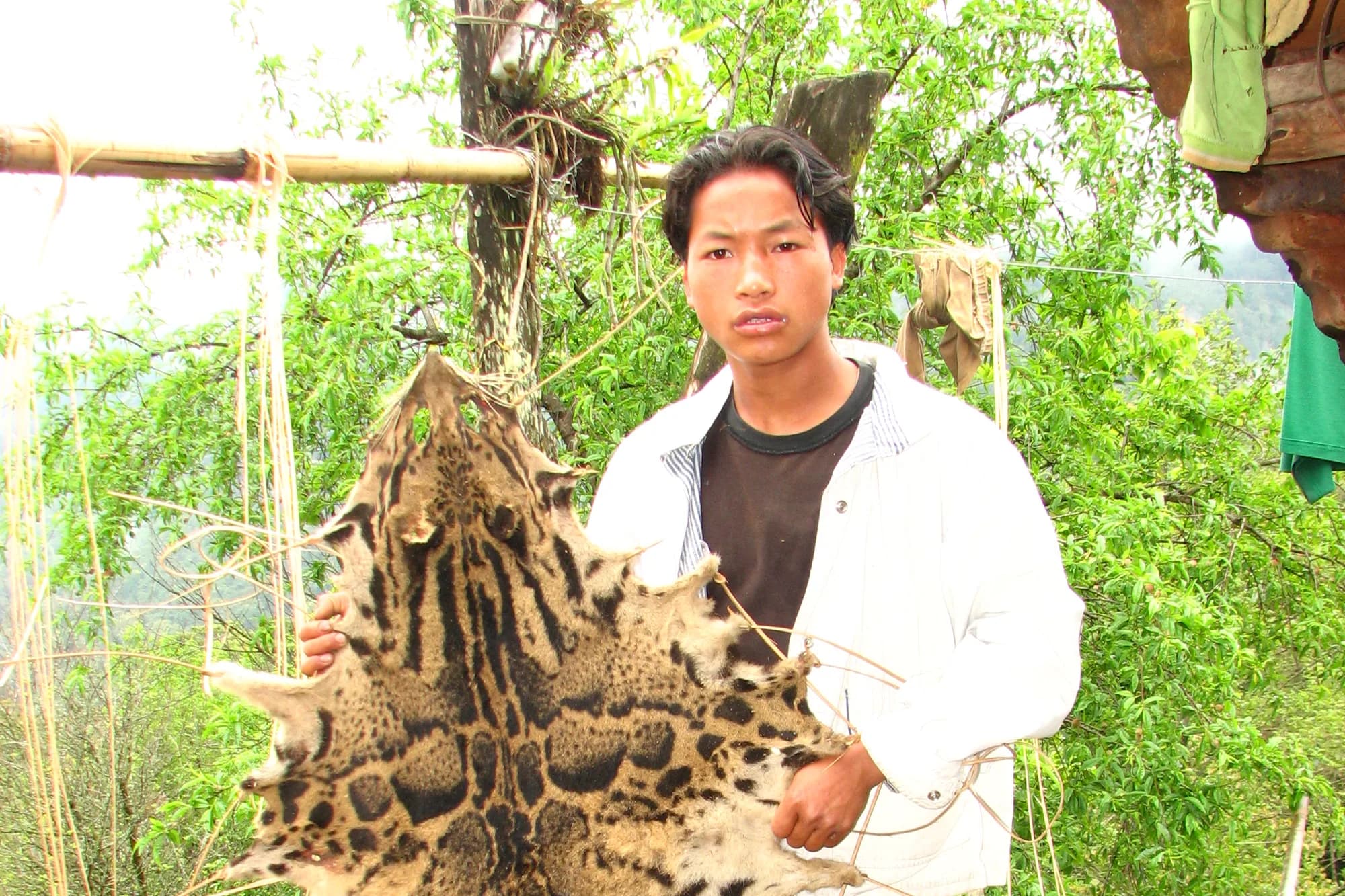
Species · Neofelis nebulosa
Clouded leopard
The most wanted cat in India and the least seen. A page whose main job is to be honest: there is no reserve, season or guide that will reliably show you one.
Also called
- Phun-ka bagh · Assamese
- Lakkad bagha — a name it shares confusingly with the hyena · Hindi
Checked 30 Aug 2026
- Where
- The Northeast
- Best months
- November–March
- Sighting odds
- Very low, honestly
- Tail
- As long as the body
Northeast evergreen and semi-evergreen forest, west as far as Valmiki in Bihar. The IUCN assessment names six states with recent protected-area records.
Where it is
- Manas
Where to actually go
Ranked, with the reason each — these are not interchangeable.
- 01ManasAssamCamera-trapped often enough to confirm a real population, in a reserve worth several days for everything else it holds. Your best combination of odds and reasons to be there.Go for Manas, not for this cat
- 02NamdaphaArunachal PradeshThe finest clouded leopard habitat in India and among the least accessible places in the country. Better cats, far worse logistics.An expedition
- 03DampaMizoramA known population in dense forest, and almost no visitor infrastructure. For people who already know what they are taking on.Specialist territory
Where you will not see one
- Every central and southern reserveBandhavgarh, Kanha, Tadoba, Kabini, Periyar — none. This is a Northeast animal with a western limit around Valmiki in Bihar.
- On any bookable safariThere is no drive that produces one. If an operator implies otherwise, they are selling a leopard sighting under a better name.
- Confused with a leopardA different genus, not a colour variant. Clouded leopards are much smaller, with large cloud-shaped blotches rather than rosettes and a proportionally enormous tail.
When to go
When to go
- J
- F
- M
- A
- M
- J
- J
- A
- S
- O
- N
- D
January: best. February: best. March: good. April: marginal. May: marginal. June: marginal. July: marginal. August: marginal. September: marginal. October: good. November: best. December: best.
Through the day
- Dawn
- Morning
- Midday
- Afternoon
- Dusk
- Night
Dawn: active. Morning: usually resting. Midday: usually resting. Afternoon: usually resting. Dusk: active. Night: most active.
Telling it apart
Told apart from
Only in reports, since ranges barely overlap in practice
Size and markings. A leopard is twice the weight with ring-shaped rosettes; a clouded leopard has large irregular cloud blotches with dark borders and pale centres, and a far longer tail relative to its body.
Marbled cat
Northeast evergreen forest
The real field confusion in the Northeast. A marbled cat is much smaller — house-cat sized — with similar blotching and an equally long tail. Nearly every brief Northeast sighting reported as a clouded leopard is this.
Leopard cat
Everywhere in the Northeast
Small, spotted rather than blotched, with bold white facial stripes and a short tail. Common and frequently seen on night drives, which is why it gets upgraded in the retelling.
Marks chosen to be usable from a moving vehicle — a clouded leopard is rarely still and never close enough for anything subtler.
What it looks like in the field


Photographs of Clouded leopard in the wild, in Indian reserves. We publish no captive, baited or digitally composited images, and no photograph whose licence we cannot show.
What a sighting is actually like
For nearly everybody, it is a camera-trap image on a researcher’s laptop. Direct sightings in India number in the handful, and most of those are a shape crossing a road at night that resolved into something with a very long tail.
The people who study this cat for a living mostly have not seen one either.
Why we publish this page anyway
Because the search demand is real and the honest answer is not available anywhere else. People plan Northeast trips around this animal on the strength of operator copy that implies it is findable, and it is not.
Status and protection
Status and protection
- IUCN Red List
- Vulnerable
- Population trend
- ↓ Decreasing
- Wildlife Protection Act 1972
- Schedule I (post-2022 amendment numbering)
- CITES
- Appendix I
Species-level assessment matching the binomial given (Neofelis nebulosa, Mainland Clouded Leopard). Criteria A2cd+4cd; date assessed 1 November 2020, year published 2021.
Assessed 2021 · IUCN Red List assessment
What to book to see one
What you would be booking
- How it is seen
- Nothing you can book for this animal specifically. Time in Northeast forest, and realistic expectations.
- Drives to book
- Not a numbers game. Manas and Namdapha are worth visiting on their own merits; treat this cat as a lottery ticket.
The honest advice is to go to Manas for the tigers, rhinos, hispid hare and pygmy hog, and to regard a clouded leopard as something that happens to a very small number of people.
Travelling responsiblyOn the same trip you would also get
- Hoolock gibbon — the same Northeast forest, and far more likely
- Golden langur — western Assam, on the same trip
- Leopard cat — what you probably actually saw
- Great hornbill — the same canopy, and reliable
Questions people ask
Can I see a clouded leopard in India?
Is it a kind of leopard?
What am I most likely to have actually seen?
Read next
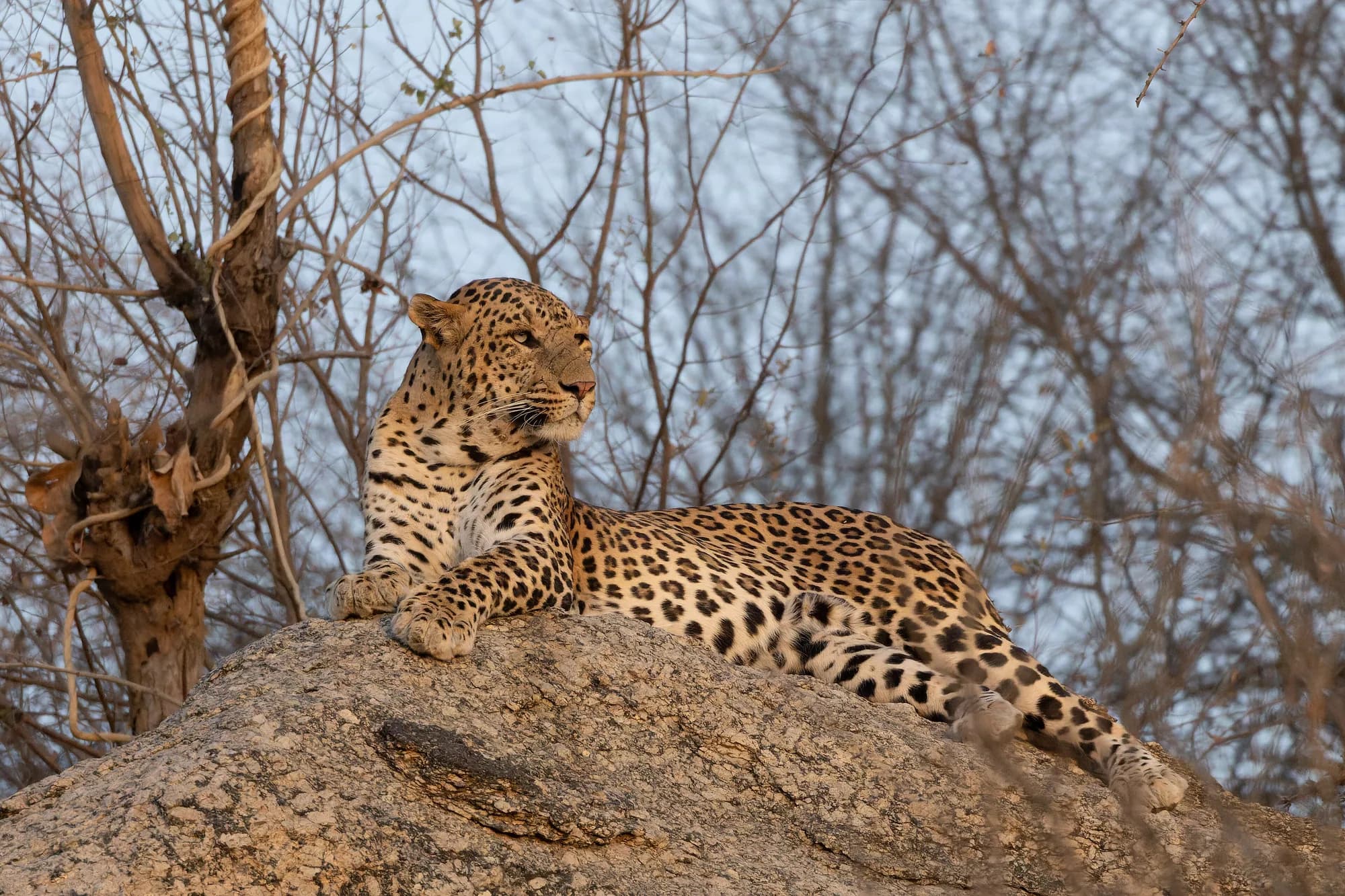
Everywhere, and reliably nowhere
Indian leopard — where and when
Present in almost every reserve on this site and reliably seen in almost none of them. The two landscapes that change that, and why they do.
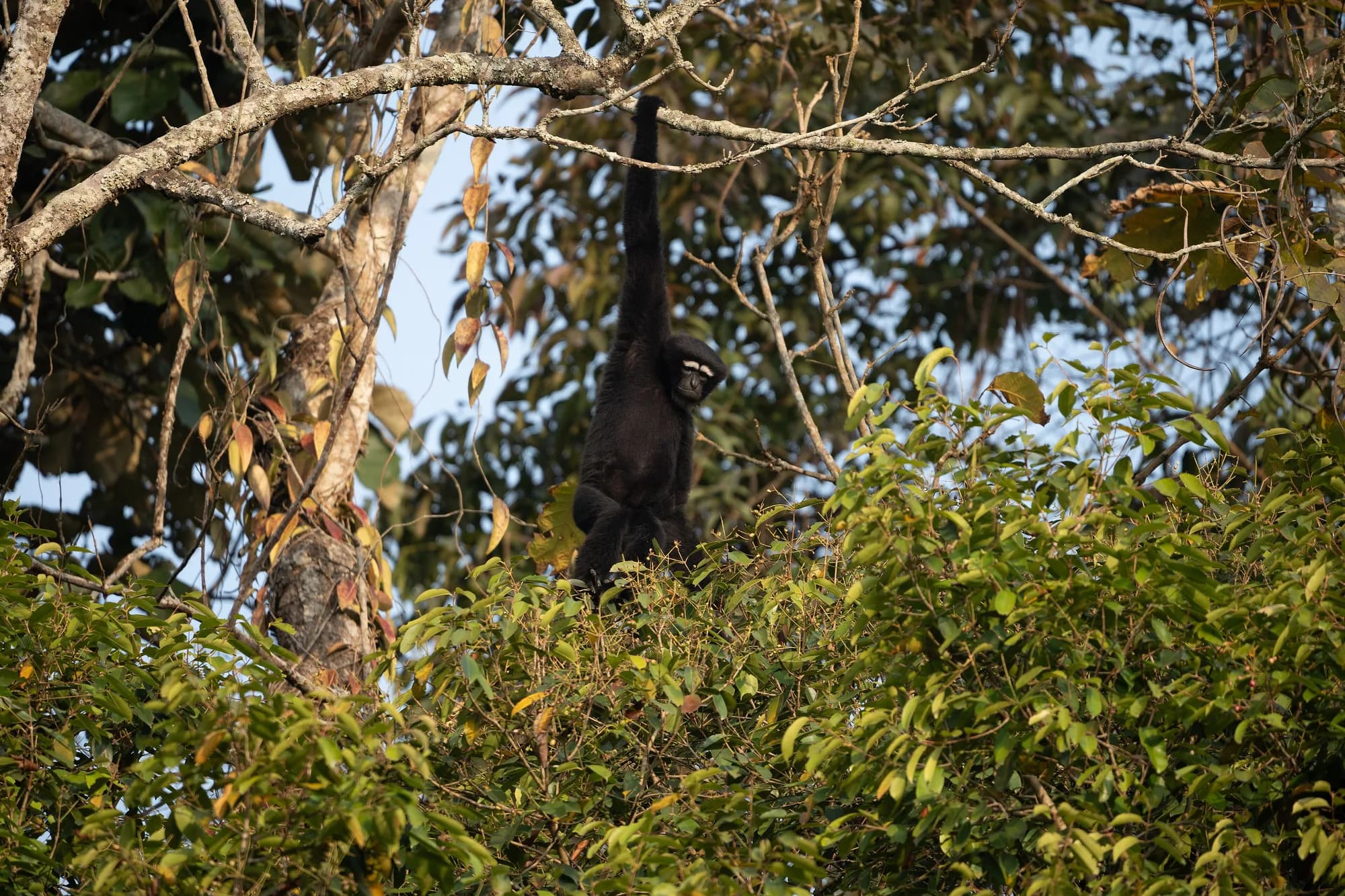
Assam, and India's only ape
Hoolock gibbon — the Assam trip
The only ape in India, in a forest island surrounded by tea. You will hear the pair duet across a kilometre of canopy before you have any idea where to look.
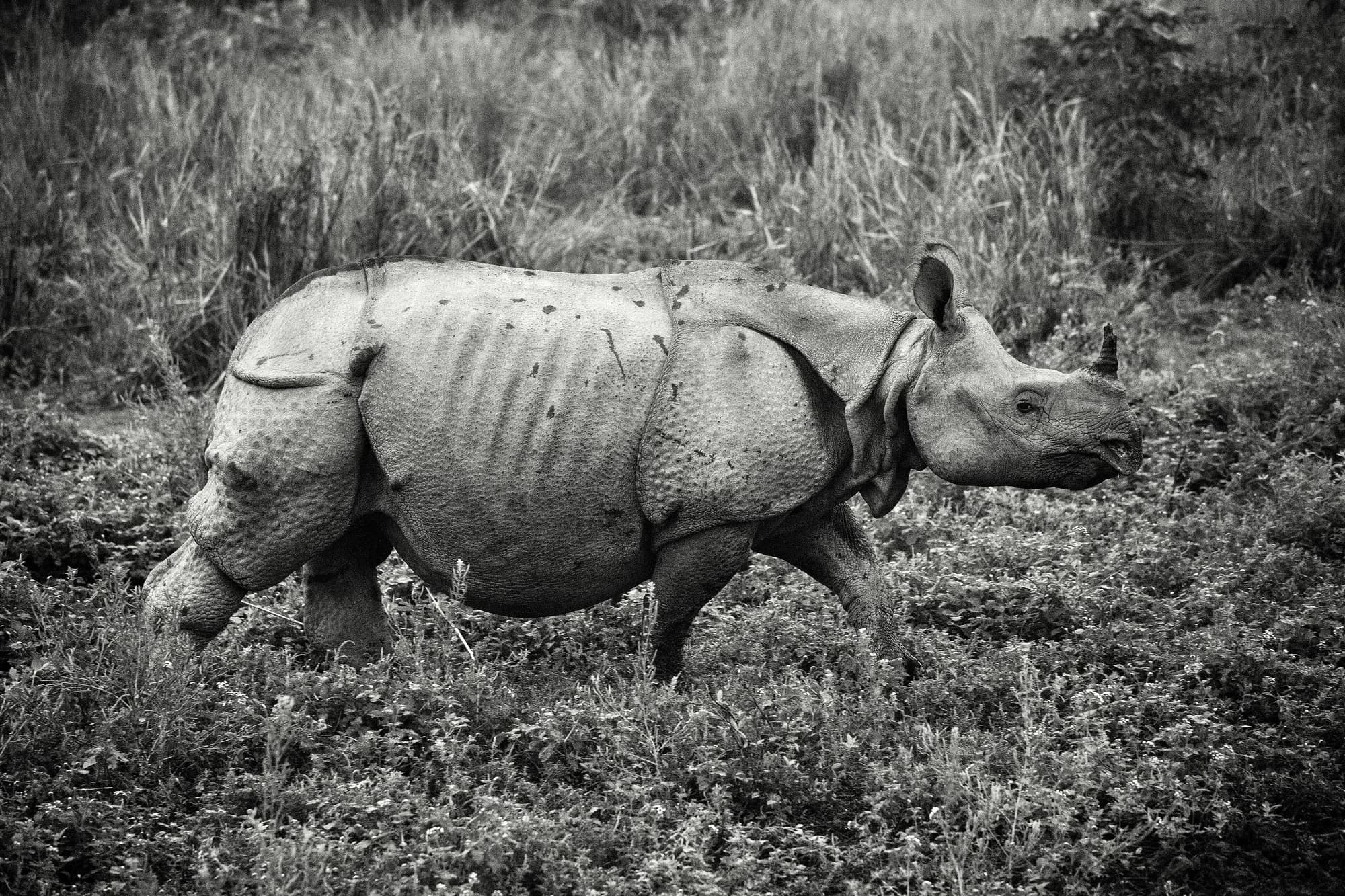
Assam
Kaziranga — the park in full
Floodplain grassland, one-horned rhino in daylight, and the one Indian park where the headline animal is close to certain.
Our position
Travelling responsibly
Where we stand on vehicle crowding, baiting and playback — and what we will not link to, whoever is paying.