
Species · Nilgiritragus hylocrius
Nilgiri tahr
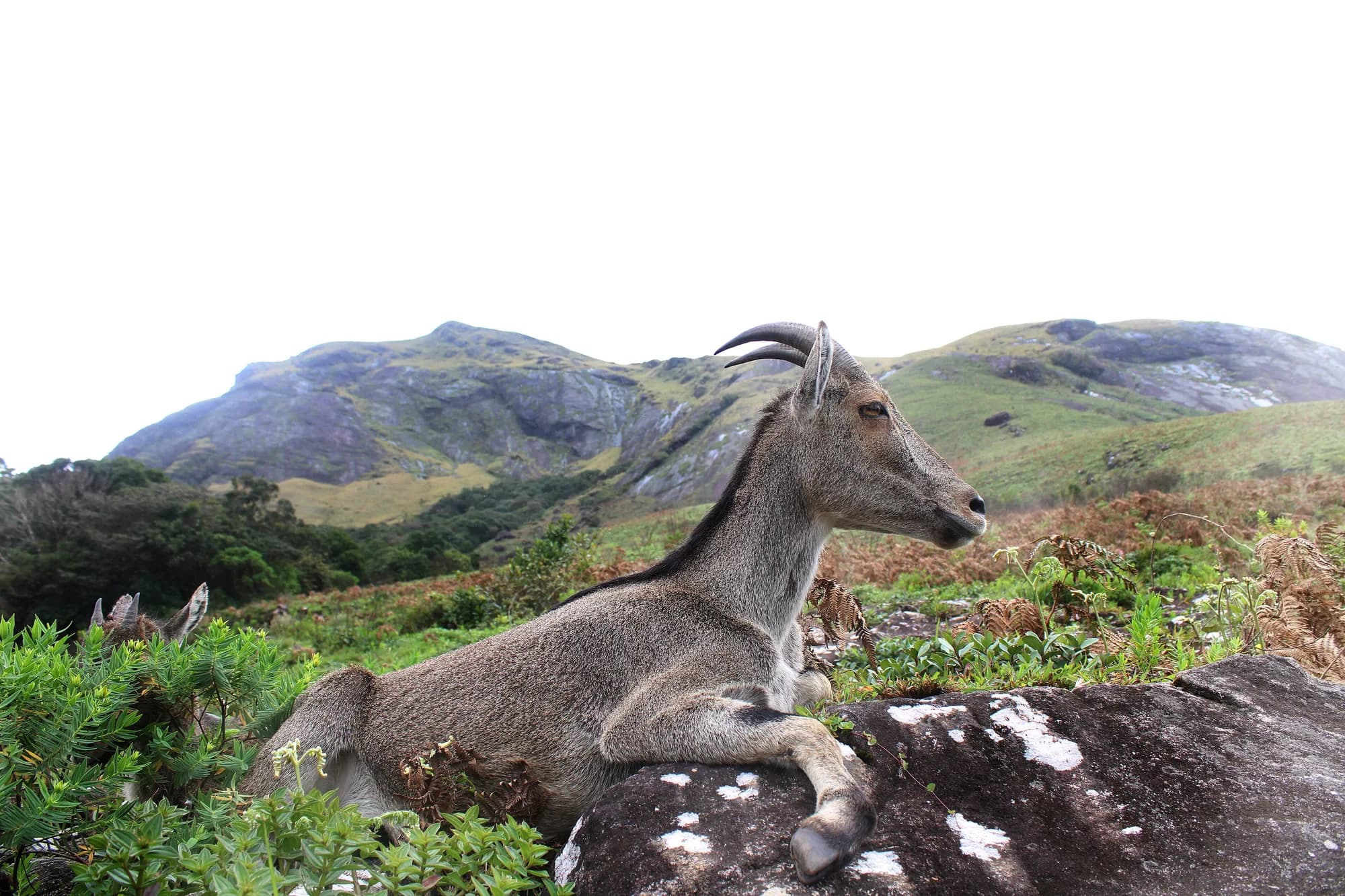
A wild goat on cliff grassland above two thousand metres, endemic to the Western Ghats, and the one endangered Indian endemic you can more or less count on seeing.
Also called
- Varayadu (വരയാട്) · Malayalam
- Varaiaadu · Tamil
Checked 30 Aug 2026
- Where
- Kerala & Tamil Nadu
- Best months
- September–January
- Altitude
- Above about 1,800 m
- Note
- Eravikulam closes for calving
A single mountain range and nothing else. The high grassland above the shola forest of the Western Ghats is the entire world range.
Where it is
Where to actually go
Ranked, with the reason each — these are not interchangeable.
- 01EravikulamKeralaThe largest population anywhere, on a slope you reach by shuttle bus and a short walk. It is the easiest reliable sighting of an endangered endemic in India.Go at opening, and never in the calving closure
- 02MukurthiTamil NaduHigh Nilgiris grassland, far quieter than Eravikulam, and a real walk rather than a walkway. Fewer animals, better setting.For people who would rather earn it
- 03PeriyarKeralaPresent in small numbers on the high ground, and a long way from the boat everyone comes for. Treat it as a bonus rather than a plan.Not the reason to book Periyar
Where you will not see one
- The HimalayaThat is the Himalayan tahr, a separate species two thousand kilometres north. The names cause a steady stream of people to look for this animal in Uttarakhand, where it has never occurred.
- Below the treeline in the GhatsNot a forest animal. Tahr are on open grassland above the shola, and no amount of time in Periyar's lower forest or Wayanad will produce one.
- Eravikulam in February and MarchThe park closes its tourism zone for the calving season. This is the single most common wasted journey for this species, and the dates move slightly year to year — check before booking flights.
When to go
When to go
- J
- F
- M
- A
- M
- J
- J
- A
- S
- O
- N
- D
January: good. February: marginal. March: marginal. April: marginal. May: marginal. June: marginal. July: marginal. August: marginal. September: best. October: best. November: best. December: best.
Through the day
- Dawn
- Morning
- Midday
- Afternoon
- Dusk
- Night
Dawn: most active. Morning: most active. Midday: usually resting. Afternoon: active. Dusk: active. Night: not normally seen.
Realistic odds on a three-day trip
- Near-certain
- Likely
- Lucky
- Expedition
Telling it apart
Told apart from
Himalayan tahr
Only in the planning
A naming problem rather than a field one — they do not share a mountain range, let alone a slope. Himalayan tahr are shaggier with a long mane; Nilgiri tahr are short-coated with a pale saddle on old males.
Sambar
Shola edges in the Ghats
At distance on a misty slope, a sambar reads as a large dark ungulate. It is far bigger, has no horns of this shape, and is a forest animal that would not be standing on open cliff grassland.
Feral goats
Grassland near hill settlements
A real issue at some Ghats sites. Domestic goats are variable in colour, often piebald, and stay near settlement. Tahr are uniform, thickset, and on ground a goatherd would not take stock.
Marks chosen to be usable from a moving vehicle — a nilgiri tahr is rarely still and never close enough for anything subtler.
What it looks like in the field
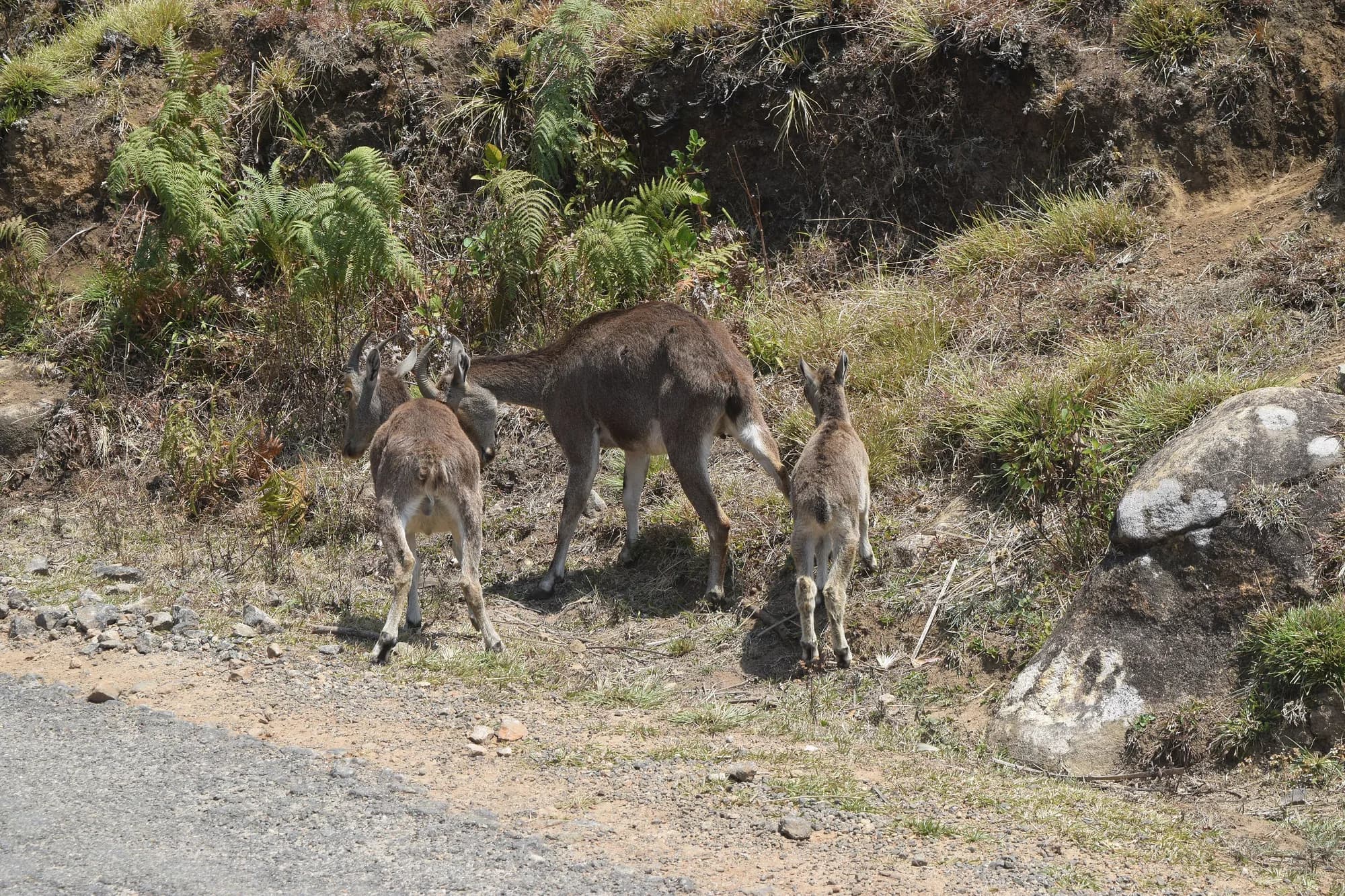
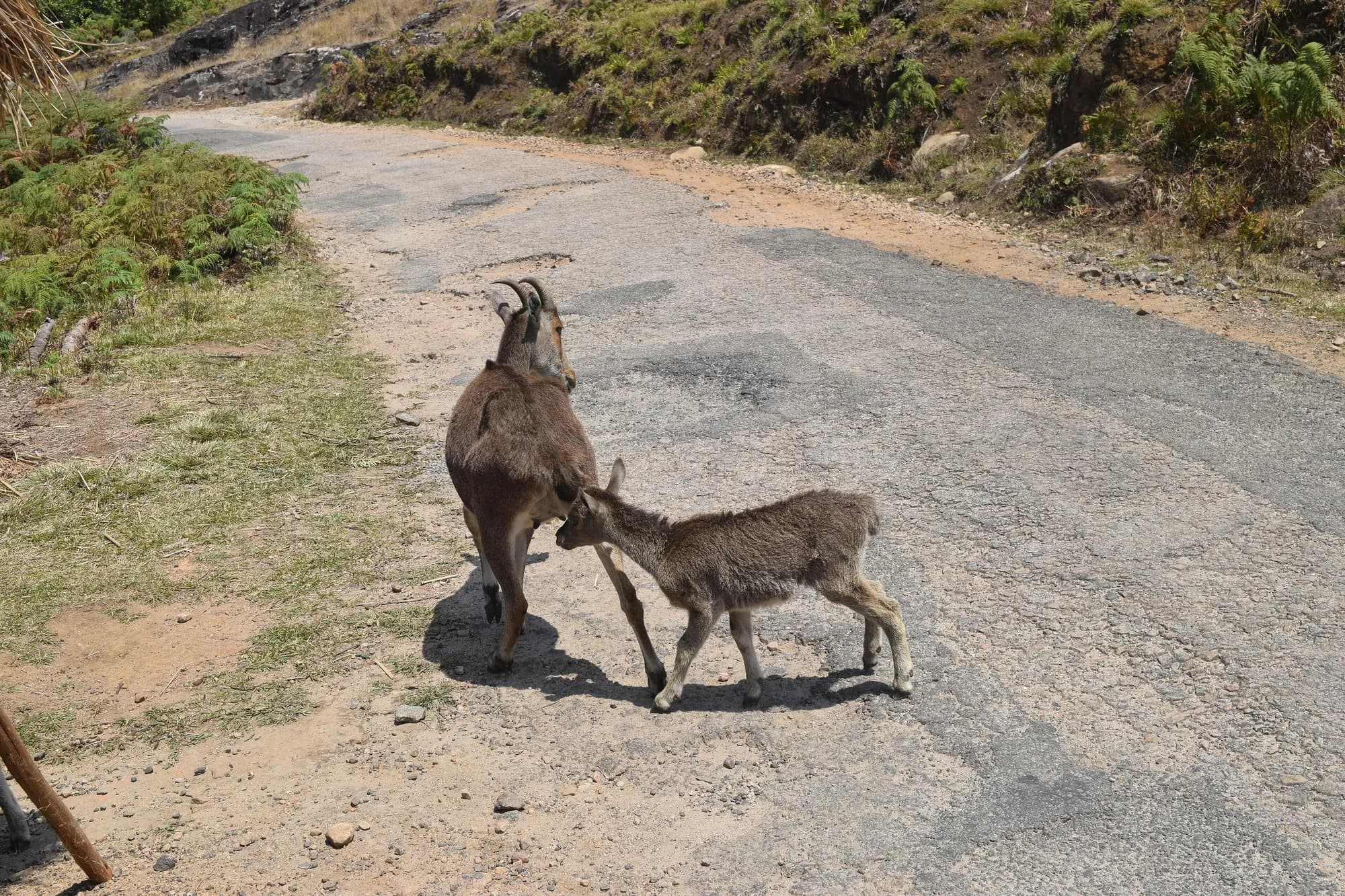
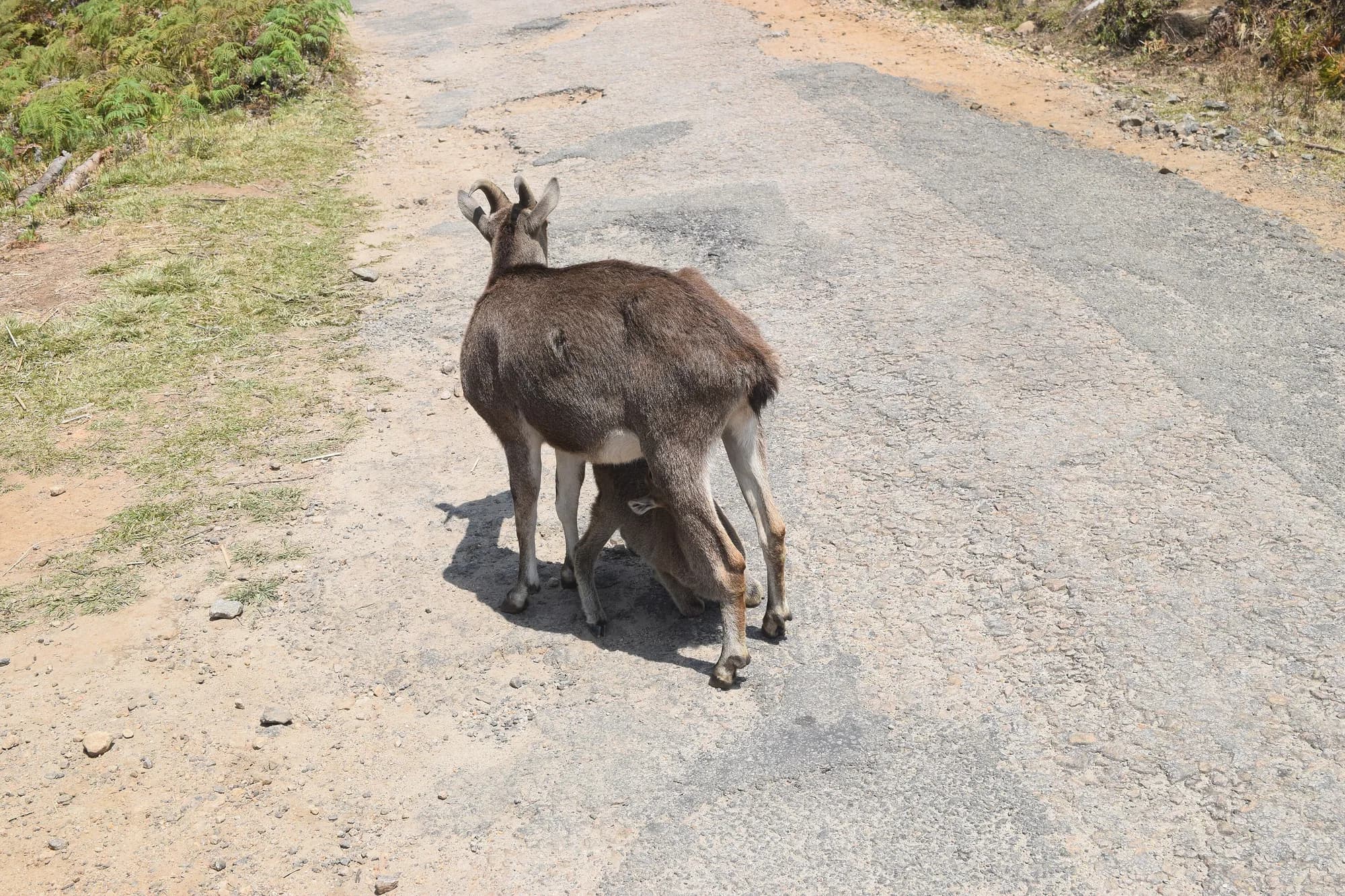
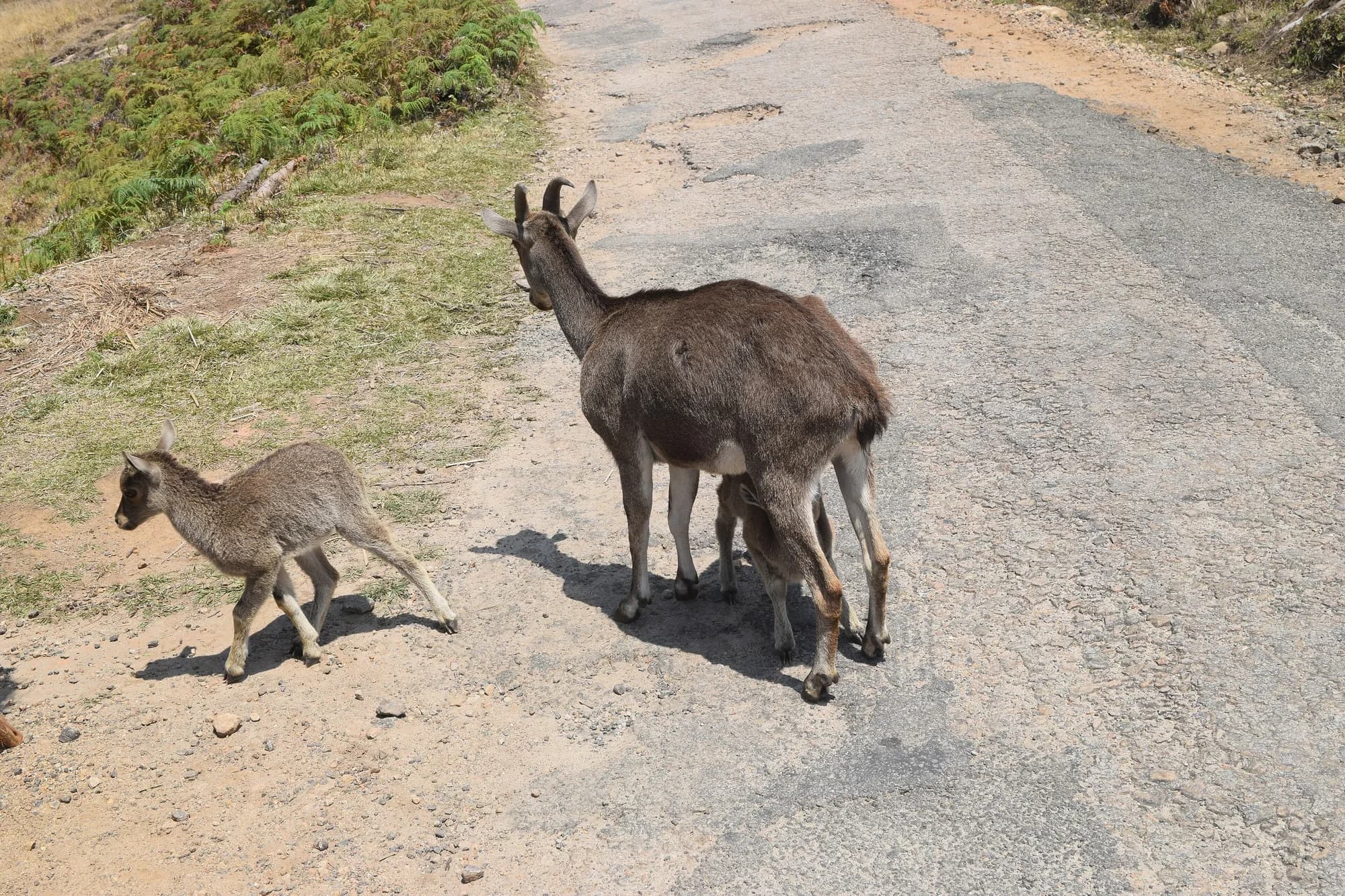
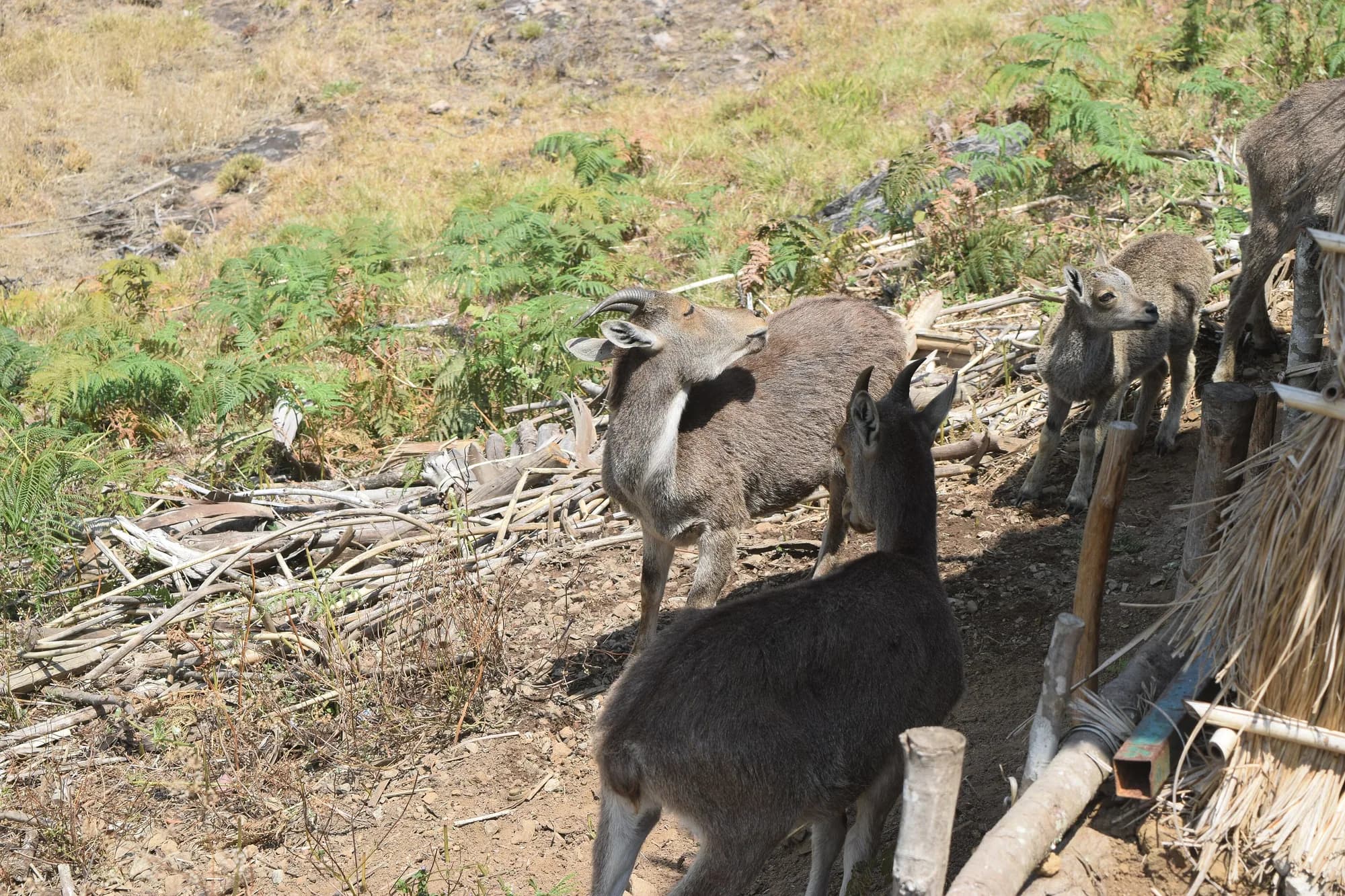
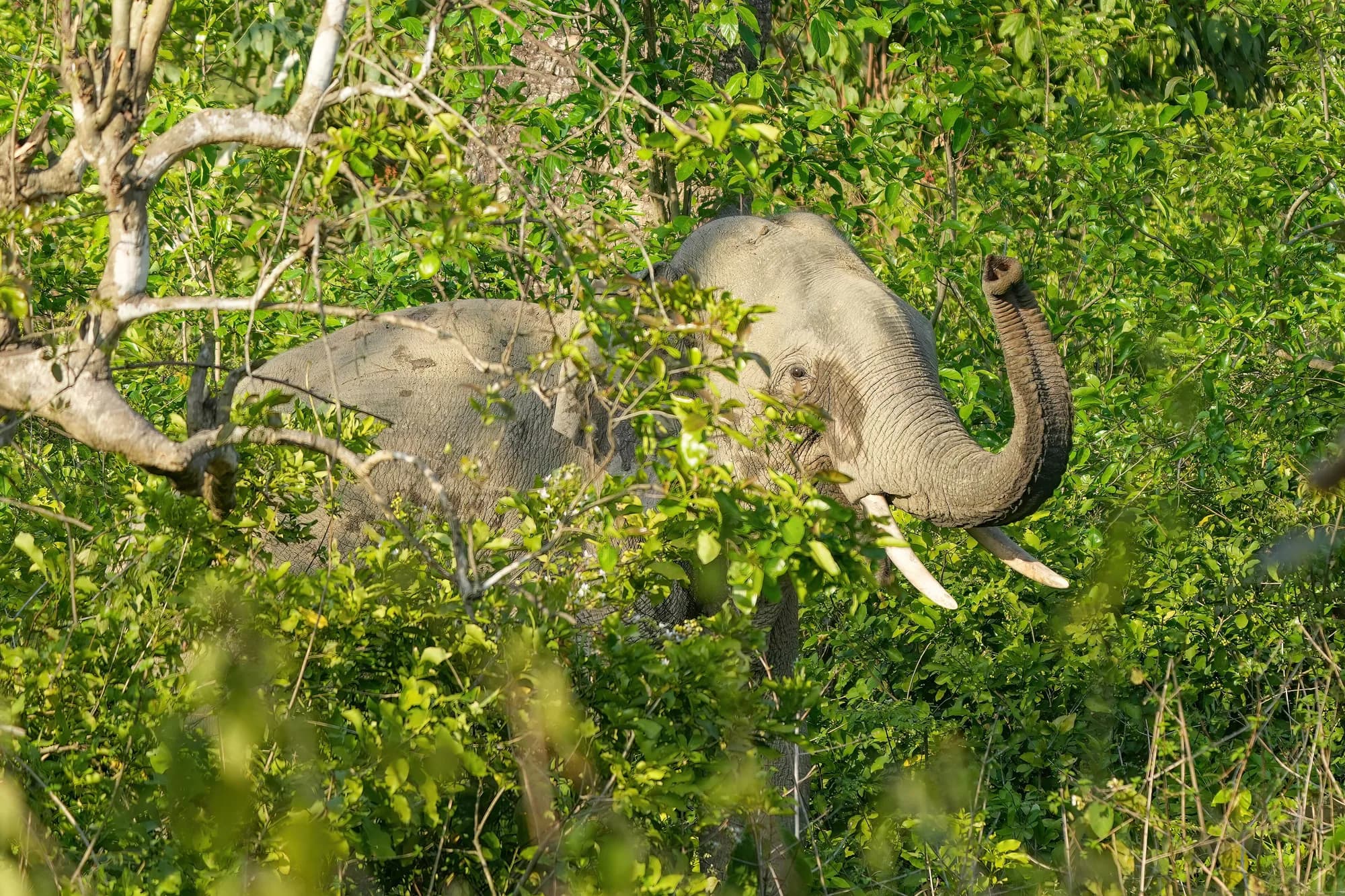
Photographs of Nilgiri tahr in the wild, in Indian reserves. We publish no captive, baited or digitally composited images, and no photograph whose licence we cannot show.
Photographing it
- Lens
- 300–400mm is ample from the Rajamalai path, and the wide habitat shot with the cliff and cloud is at least as good a photograph as any portrait.
- Typical distance
- Ten to eighty metres, depending entirely on how early you arrived.
- Light
- Cloud comes and goes fast at that altitude. Overcast is kinder than the harsh mid-morning sun, and mist spilling over the ridge behind a herd is the frame worth waiting for.
Where to stopStay on the path and do not feed them. The animals nearest the Rajamalai walkway are habituated, and the temptation to close the last ten metres for a phone photograph is exactly what turns a wild herd into a managed one.
Signs and calls
- Pellet groups
- Tight clusters of pellets on short grass, often concentrated at resting ledges. Distinguishable from sambar by size and by the ground they are on.
- Traverse trails
- Narrow worn paths cutting across steep slopes at a constant contour. Tahr reuse routes, and the trails are visible from a long way off in low sun.
- Alarm whistle
- A sharp single whistle from a sentinel animal, which puts the whole herd's heads up at once. Usually the first indication that the herd has seen you rather than the reverse.
What a sighting is actually like
Uncomplicated, which makes it unusual here. You take a bus, walk a few hundred metres, and there are tahr on the slope — sometimes within a few metres of the path, grazing while a hundred people photograph them.
The animal is easy. The setting is what you came for.
The old males are the ones to look for: much darker, with a pale grey saddle across the back that gives them their local name, and a heavier build than the females and young around them. In the winter rut they posture and clash, which is the best thing to see here.
A conservation story that worked
This is one of the few entries on this list whose population trend points the right way. Tahr were reduced to a few hundred animals in scattered pockets by the middle of the last century, and Eravikulam’s protection turned that around.
The habitat is the fragile part now, not the animal. High-altitude shola-grassland is a small and shrinking system, squeezed by plantations and by invasive wattle and eucalyptus, and it is the thing worth paying attention to while you are standing in it.
Status and protection
Status and protection
- IUCN Red List
- Endangered
- Population trend
- ↓ Decreasing
- Wildlife Protection Act 1972
- Schedule I (post-2022-amendment numbering)
Species-level assessment of Nilgiritragus hylocrius; the binomial given matches the assessed taxon (the assessment text and older literature also use Hemitragus hylocrius).
Assessed 2008 · IUCN Red List assessment
What to book to see one
What you would be booking
- How it is seen
- A shuttle bus from the Eravikulam gate to Rajamalai, then a short walk on a made path. No jeep, no permit lottery, and no early start required.
- Drives to book
- One visit is genuinely enough. This is the least demanding sighting on the flagship list, which is worth saying plainly.
- Zone or shift
- The Rajamalai tourism zone at Eravikulam. The rest of the park is closed to visitors and does not need to be open for this to work.
Go early in the day. The tahr are on the accessible slopes at opening and move higher as the crowds build, and by late morning you are looking at animals two hundred metres up rather than twenty.
Periyar — the natural pairingOn the same trip you would also get
- Indian elephant — Periyar is two hours away and works as the same trip
- Great hornbill — in the shola forest below the grassland
- Nilgiri langur — the glossy black Ghats endemic in the same forest belt
Questions people ask
Where is the best place to see Nilgiri tahr?
When is Eravikulam closed?
Is it the same as the Himalayan tahr?
Read next
Kerala
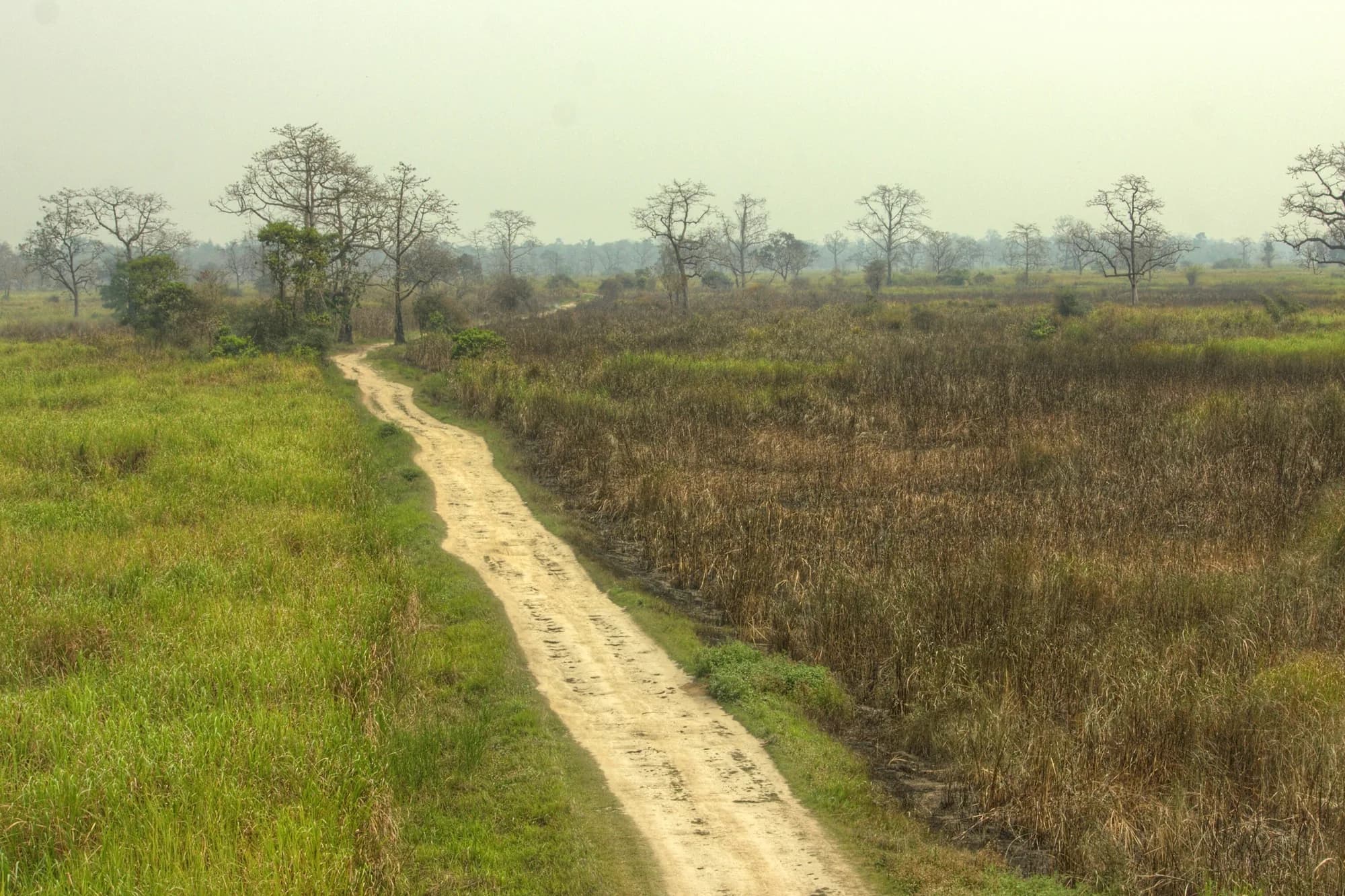
Periyar — the natural pairing
A lake in the Western Ghats, walked and boated rather than driven. Elephants, hornbills and rain — not a tiger destination in any practical sense.
Three reserves, and you hear it first
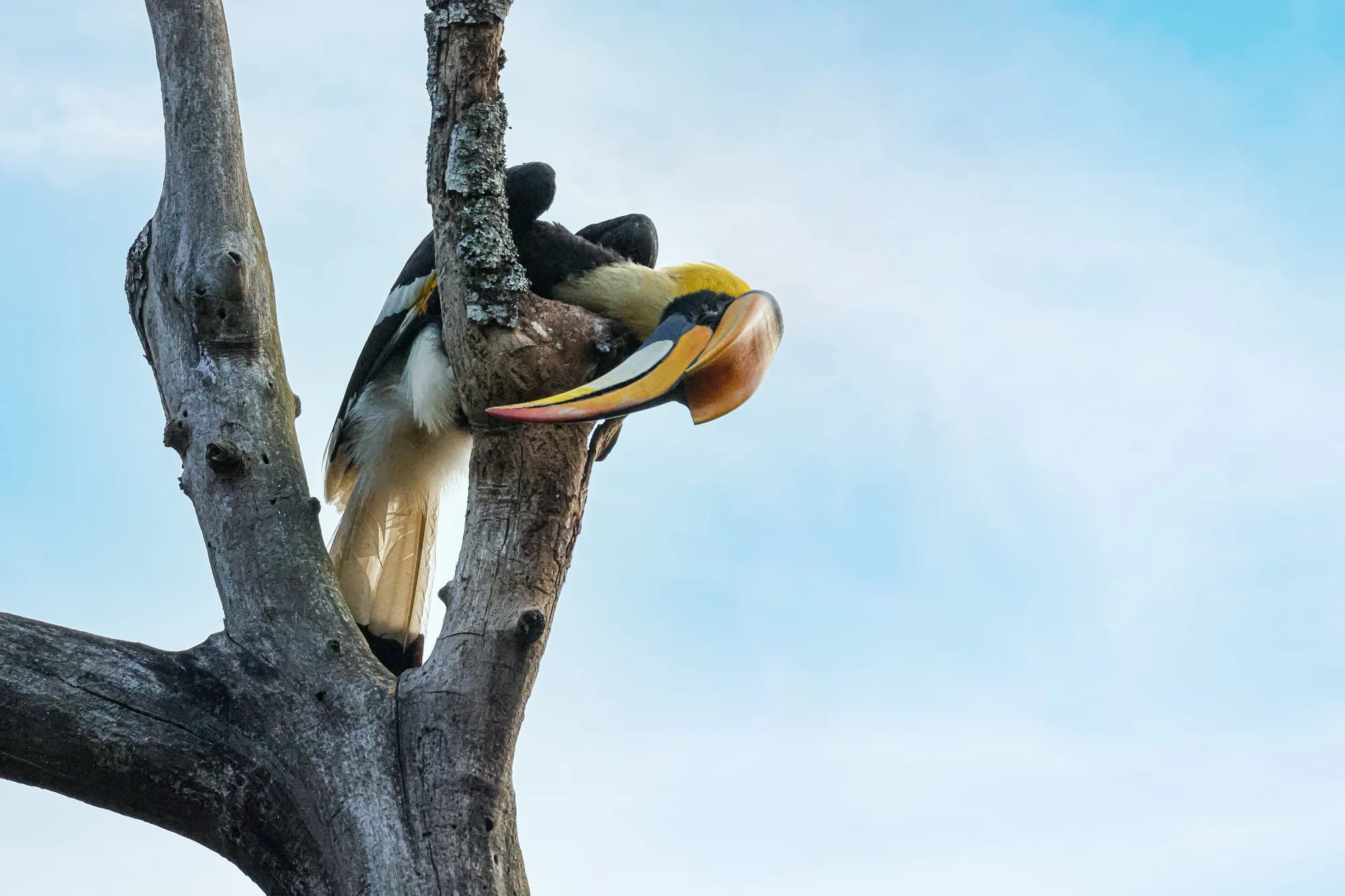
Great hornbill — where and when
The bird non-birders stop the vehicle for. You hear the wingbeats several hundred metres before you see it, and the nesting behaviour is stranger than anything a mammal in the same forest does.
Twelve months, cross-park
When to go, month by month
The single decision that moves the odds most. Heat, crowds, closures and what is actually open, one page per month.
Our position
Travelling responsibly
Where we stand on vehicle crowding, baiting and playback — and what we will not link to, whoever is paying.