
Species · Hippopotamus amphibius
Hippopotamus
Easy to find and almost always seen badly — a row of ears and nostrils in brown water. The trip worth planning is the one that puts you level with them from a boat, or at a pod out of the water after dark.
Also called
- Kiboko · Swahili
- Seekoei · Afrikaans
- Mvuu · Shona
Checked 27 Sept 2026
- Where
- Seven countries here
- Best months
- Dry season, when pools shrink
- Pod
- 10–100 in a dry-season pool
- Odds
- Near certain on any permanent river
Permanent rivers, lakes and floodplains across sub-Saharan Africa. Needs water deep enough to submerge in by day and grazing within a few kilometres of it by night, which is a narrower requirement than it sounds and is why hippos are absent from most of the dry parks here.
Where it is
HabitatPermanent water deep enough to submerge in by day, with grazing within a few kilometres of it by night.
Worth travelling for
The Kazinga Channel carries one of the densest concentrations anywhere, and the boat runs twice a day.
By October the Luangwa has shrunk to pools packed with hippos, and night drives show them out and grazing.
The riverfront boat is the best general water safari on this site.
Katavi's dry-season pools are the extreme case, with hundreds crowded into water meant for dozens.
Also occurs
KenyaSouth AfricaZimbabweNamibiaMozambiqueEthiopia
Present, but not where you would go to see one.
Gone from
EgyptAlgeriaMost of North Africa
Range this species has been lost from. It is the fact a map of where it currently lives cannot show you.
Where to actually go
Ranked, with the reason each — these are not interchangeable.
- 01Queen ElizabethUgandaThe Kazinga Channel carries one of the densest hippo concentrations anywhere, and the standard boat trip puts you alongside them for two hours.The Kazinga Channel launch
- 02South LuangwaZambiaBy October the Luangwa has shrunk to pools packed with hippos, and night drives show you the animals out and grazing.September–October, plus a night drive
- 03ChobeBotswanaThe riverfront boat is the best general water safari on this site, and hippos are a guaranteed part of it.Afternoon boat
- 04Lower ZambeziZambiaCanoeing among hippo pods with a guide who knows the channels — the most exposed way to see them, and strictly guided.Canoe, with a professional
- 05SerengetiTanzaniaThe Retina hippo pool is a fixed stop on most northern-circuit itineraries. Dense, smelly and entirely reliable.A stop, not a reason
Where you will not see one
- The desert and Karoo parksNo permanent water, no hippos. Kgalagadi, Namib-Naukluft, the Richtersveld, Karoo and Tankwa Karoo are all out.
- EtoshaA salt pan and pumped waterholes, not a river system. Etosha is excellent for a great many things and this is not one of them.
- The gorilla parksBwindi, Mgahinga and Volcanoes are montane forest. Uganda's hippos are on the Kazinga Channel and the Nile, several hours away.
When to go
When to go
- J
- F
- M
- A
- M
- J
- J
- A
- S
- O
- N
- D
January: marginal. February: marginal. March: marginal. April: good. May: good. June: best. July: best. August: best. September: best. October: best. November: good. December: marginal.
Through the day
- Dawn
- Morning
- Midday
- Afternoon
- Dusk
- Night
Dawn: active. Morning: usually resting. Midday: usually resting. Afternoon: usually resting. Dusk: active. Night: most active.
What it looks like in the field
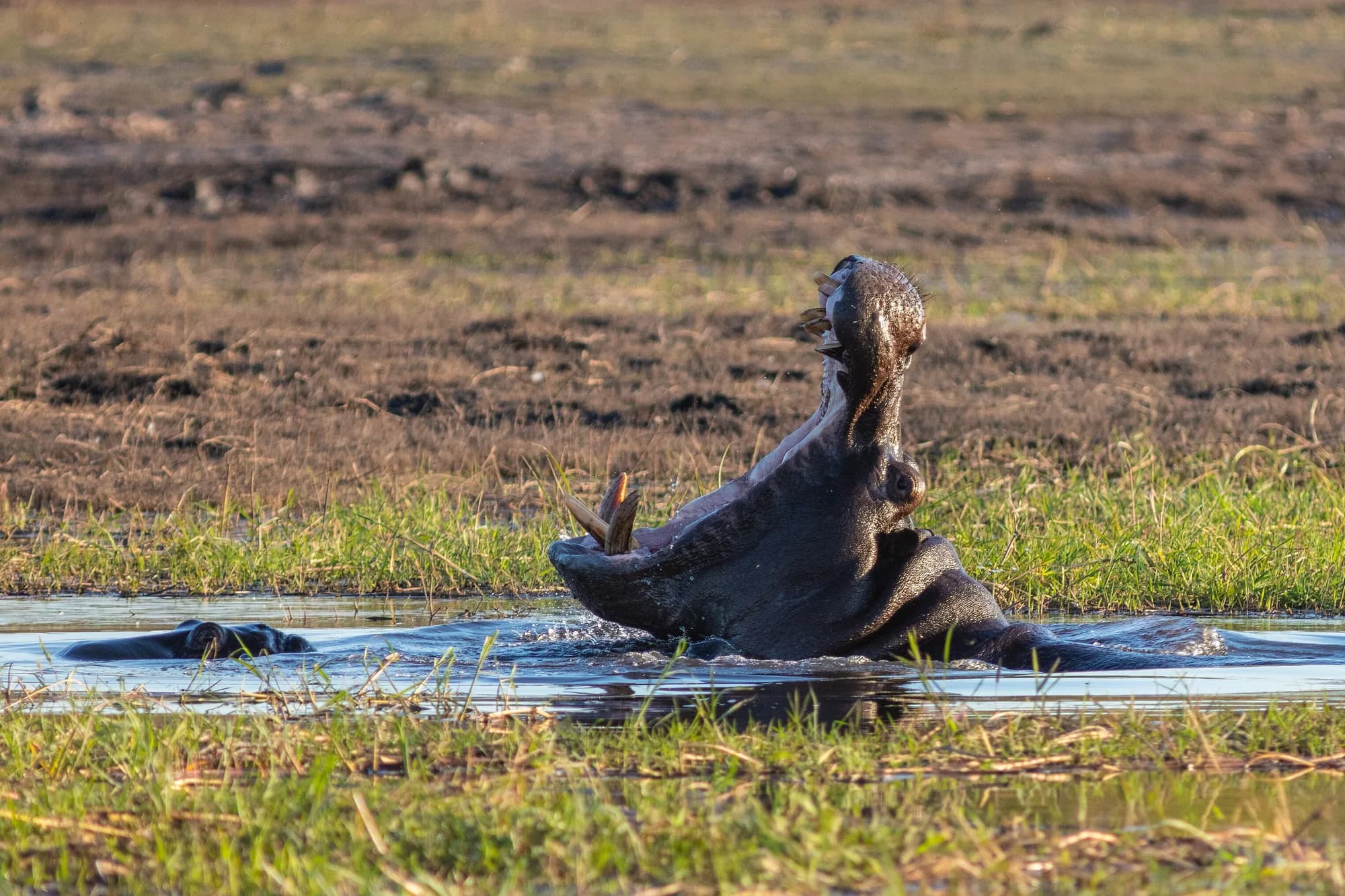
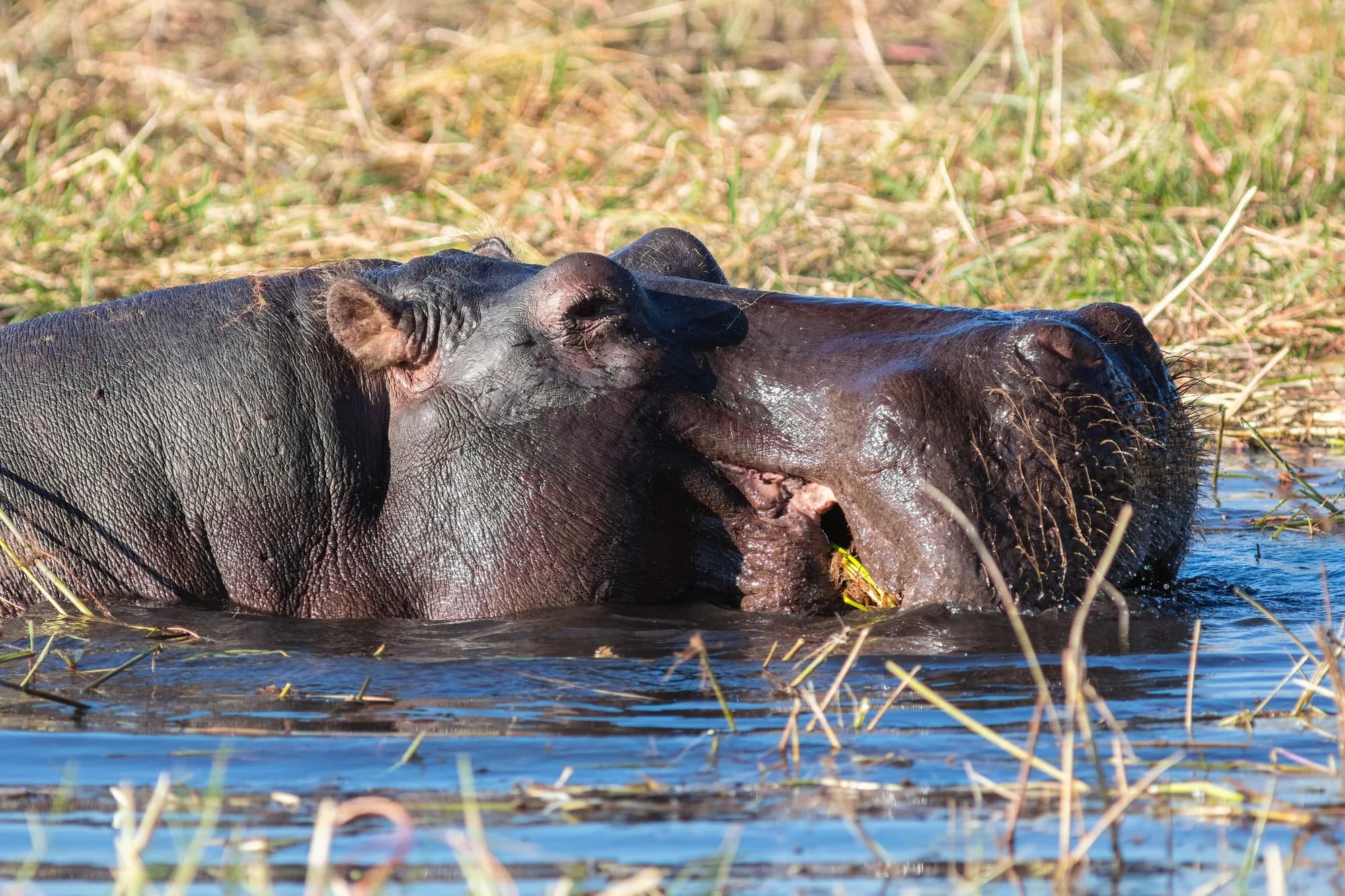
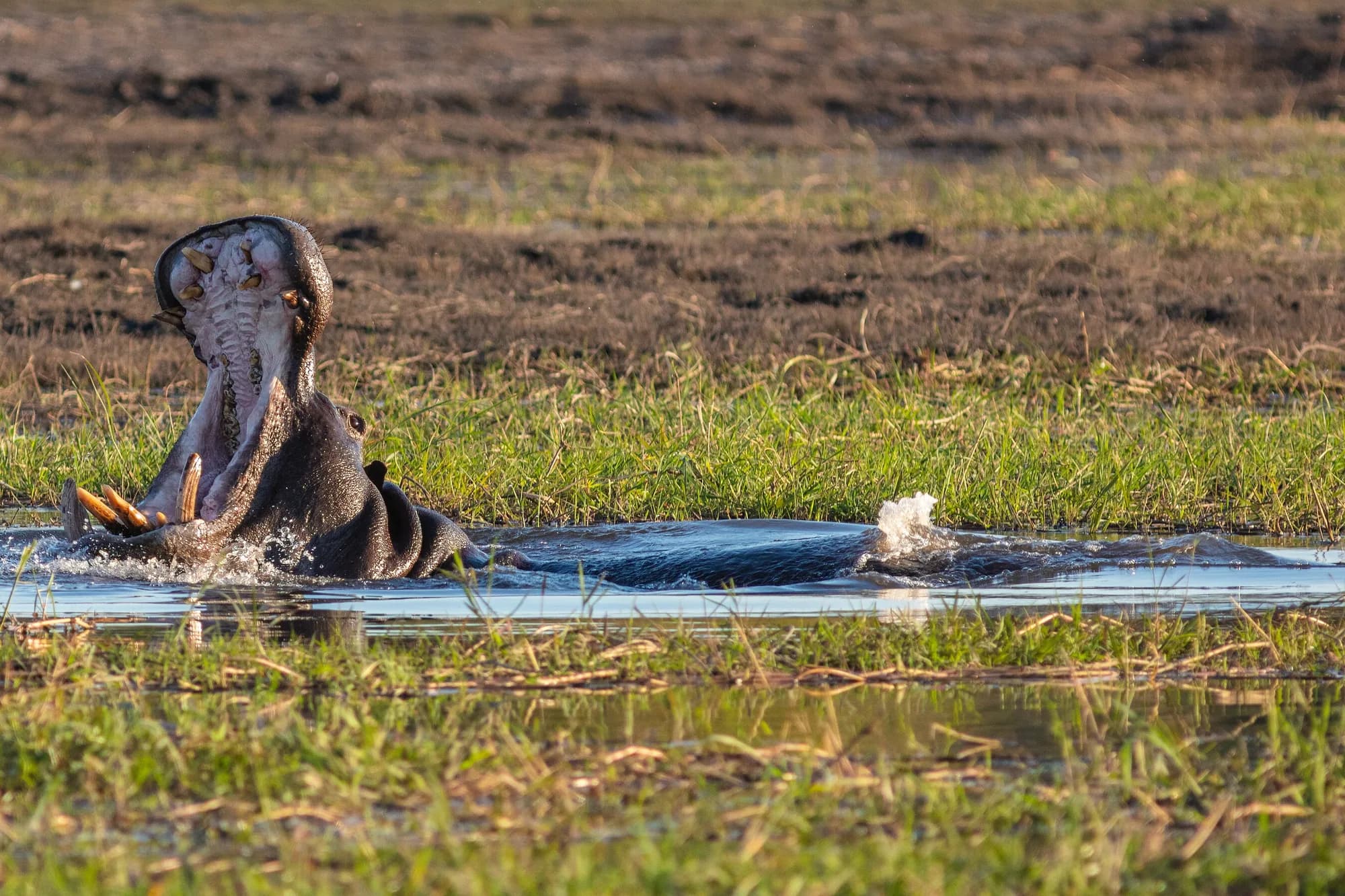
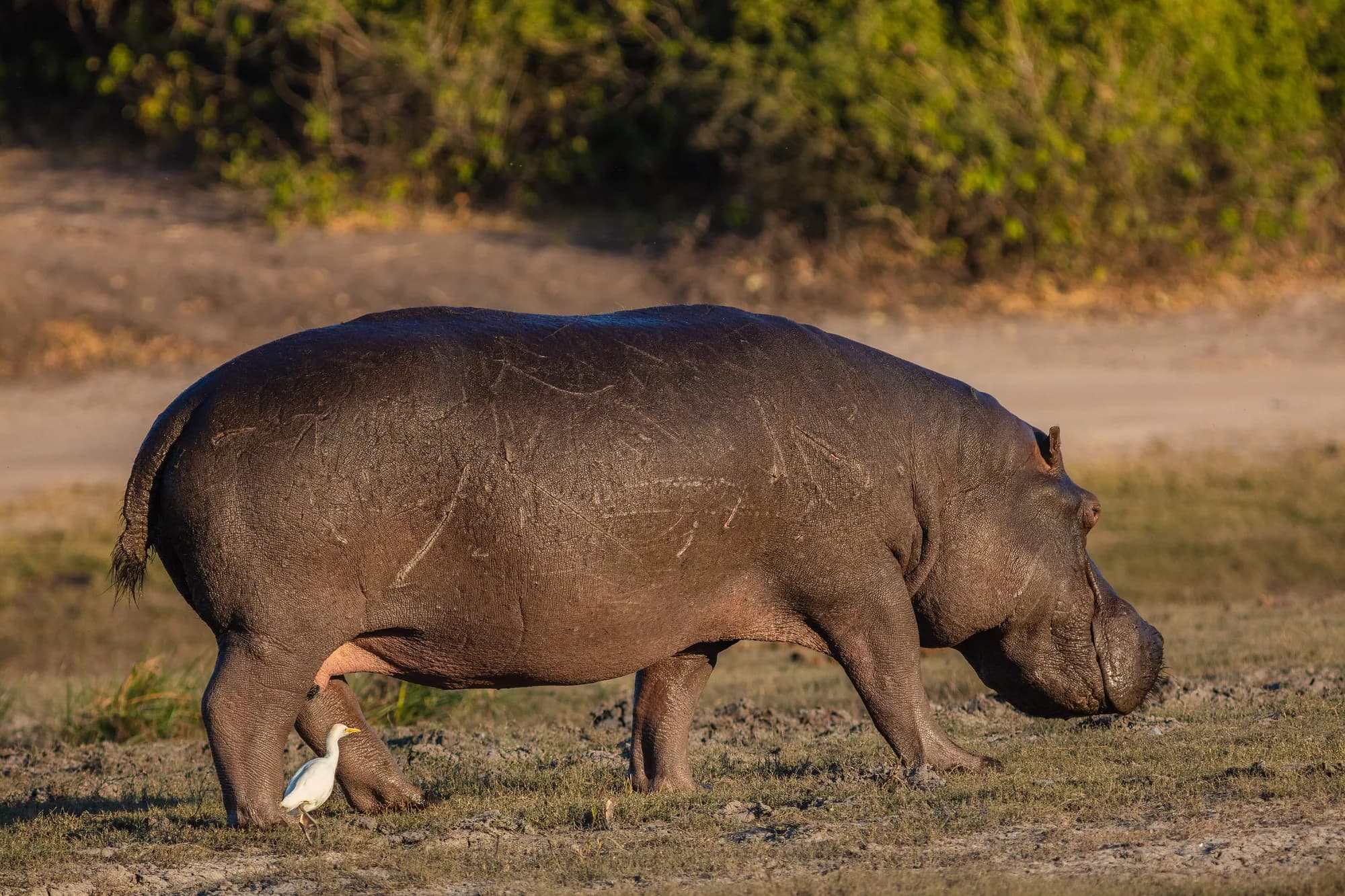
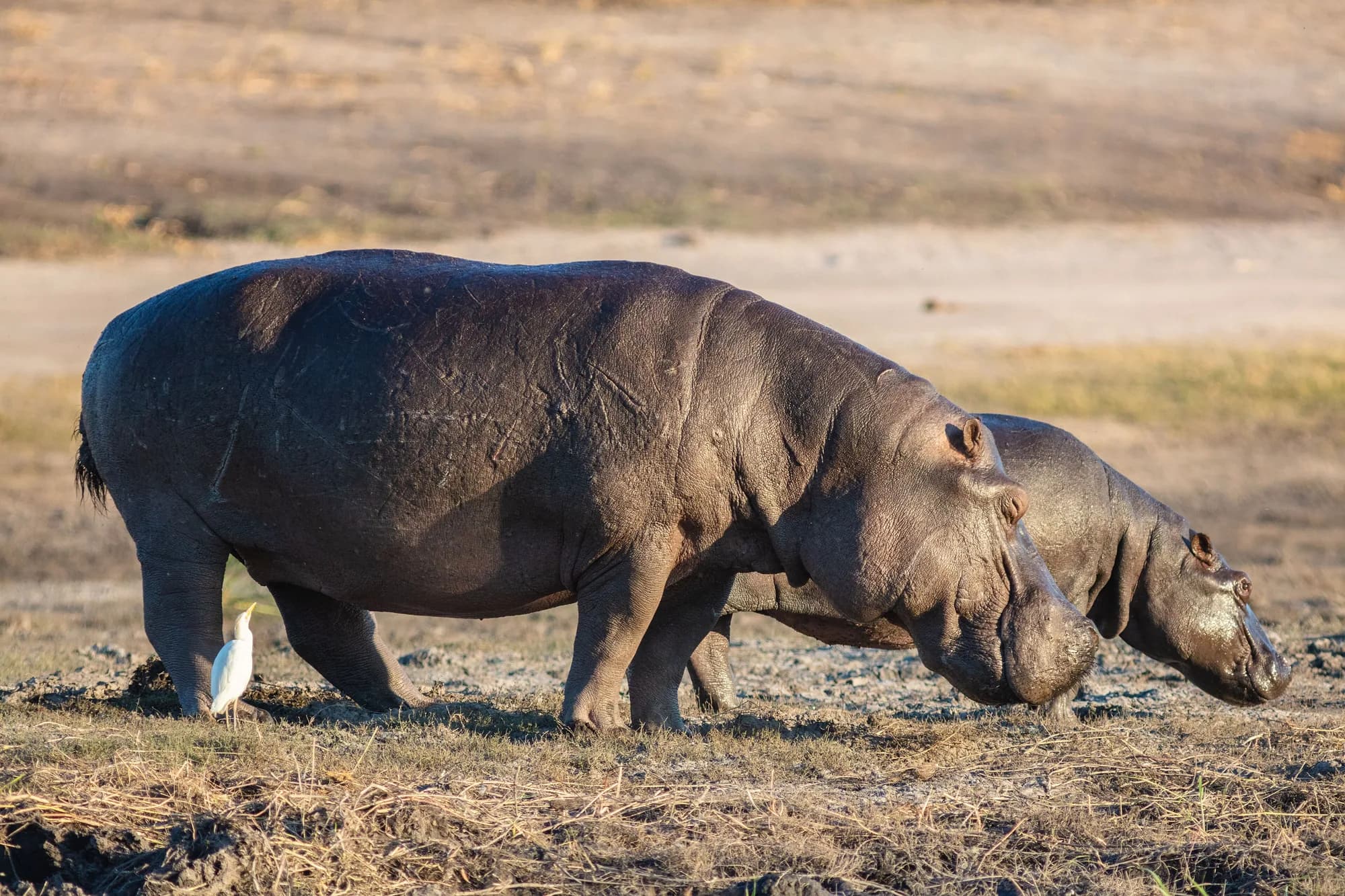
Photographs of Hippopotamus in the wild, in Indian reserves. We publish no captive, baited or digitally composited images, and no photograph whose licence we cannot show.
Why a boat changes it
From a vehicle a hippo is a distant grey lump that occasionally opens. From a boat you are at water level and within tens of metres, and the animal becomes enormous, expressive and obviously dangerous. The Kazinga Channel, the Chobe riverfront and the Lower Zambezi all run this as a standard product and it is the single best-value thing on most itineraries that include it.
A canoe is another category again. On the Lower Zambezi and parts of the Zambezi above Victoria Falls you can paddle past pods with a guide reading the water, and the reason it is tightly guided is that a hippo will upend a canoe. Do not book this as a scenic paddle.
Reading a pod
A pod is a dominant bull and a group of females and young. The yawn everybody photographs is not a yawn — it is a threat display, and the size of the canines is the message. Bulls mark territory by spinning the tail while defecating, which is unmistakable and happens constantly.
Fights between bulls are serious and leave long scars across the flanks and shoulders. Late dry season, when a pool holds several times the hippos it should, is when you see them.
Status and protection
Status and protection
- IUCN Red List
- Vulnerable
- Population trend
- → Stable
- CITES
- Appendix II
Species-level assessment for Hippopotamus amphibius, matching the binomial on the page.
Assessed 2017 · IUCN Red List assessment
What to book to see one
What you would be booking
- How it is seen
- A boat, if the park has one. Otherwise any river or channel viewpoint in the late afternoon.
- Drives to book
- Not the right unit. One boat trip is worth five game drives for this animal.
- Zone or shift
- The Kazinga Channel in Queen Elizabeth, the Chobe river, the Lower Zambezi, the Luangwa's dry-season pools and the St Lucia estuary.
Hippos kill more people in Africa than any other large mammal, almost always by being between someone and water or by being surprised on a path at night. Camps in hippo country brief you on this for a reason.
Safaris from the waterOn the same trip you would also get
- Nile crocodile — the same sandbank, always
- African elephant — the same river, at the same hour
Questions people ask
Where is the best place to see hippos?
Are hippos dangerous?
Why do hippos stay in the water all day?
Read next
Five countries here, on every permanent river
Nile crocodile — the same sandbank
The animal you will see on every sandbank and think nothing of, and the one that kills more people in Africa than any predator except the hippopotamus. A big male is five metres and eighty years old, and the Mara crossings are the only time most visitors take one seriously.
Queen Elizabeth — the Kazinga Channel
South Luangwa