
Species · Syncerus caffer
African buffalo
The Big Five animal nobody books for and every guide respects. A herd of a thousand moving to water at dusk is one of the genuine spectacles of a dry-season safari, and a lone old bull in long grass is the reason walking safaris are led by someone armed.
Also called
- Nyati, or mbogo · Swahili
- Buffel · Afrikaans
- Nyati · Shona
Checked 27 Sept 2026
- Where
- Eight countries here
- Best months
- Dry season, June–October
- Herd
- 50–2,000; bulls alone or in small groups
- Odds
- High in any well-watered park
Savanna, woodland and floodplain wherever there is water and grazing within reach of it. The Cape buffalo of southern and eastern Africa is the subspecies most visitors see; the forest buffalo of West and Central Africa is smaller, redder, and outside the scope of this site.
Where it is
HabitatSavanna, woodland and floodplain with daily access to water and grazing.
Worth travelling for
Dry-season herds in the low thousands on the Katisunga floodplain, with a handful of vehicles in the park.
Big riverfront herds coming to water every evening, visible from a boat as well as a vehicle.
Large herds, and the lion prides that follow them.
Common throughout and easily seen on a self-drive; the north holds the biggest herds.
Also occurs
KenyaUgandaZimbabweNamibiaRwandaMozambiqueEthiopia
Present, but not where you would go to see one.
Gone from
Much of the Sahel
Range this species has been lost from. It is the fact a map of where it currently lives cannot show you.
Where to actually go
Ranked, with the reason each — these are not interchangeable.
- 01KataviTanzaniaDry-season herds in the low thousands on the Katisunga floodplain, with a handful of vehicles in the whole park. The best buffalo spectacle on this site.September–October
- 02ChobeBotswanaBig riverfront herds coming to water every evening, and visible from a boat as well as a vehicle.The riverfront at dusk
- 03South LuangwaZambiaLarge herds and the lion prides that follow them, which is the pairing that makes buffalo worth watching.Dry season, with the prides
- 04KrugerSouth AfricaCommon throughout and easily seen on a self-drive. The northern section holds the biggest herds.Reliable, self-drivable
- 05NgorongoroTanzaniaResident on the crater floor and part of the reason the crater is a one-day Big Five proposition.Guaranteed, if unremarkable
Where you will not see one
- The desert parksBuffalo need to drink daily. Kgalagadi, Namib-Naukluft, the Richtersveld and the Karoo parks have none.
- Most of the CapeAddo has them. Table Mountain, Garden Route, Bontebok and Agulhas do not, so a Cape trip is not a Big Five trip.
- The montane forestsBwindi, Volcanoes and Mgahinga are the wrong habitat and the wrong altitude.
When to go
When to go
- J
- F
- M
- A
- M
- J
- J
- A
- S
- O
- N
- D
January: marginal. February: marginal. March: marginal. April: good. May: good. June: best. July: best. August: best. September: best. October: best. November: good. December: marginal.
Through the day
- Dawn
- Morning
- Midday
- Afternoon
- Dusk
- Night
Dawn: most active. Morning: active. Midday: usually resting. Afternoon: active. Dusk: most active. Night: most active.
What it looks like in the field
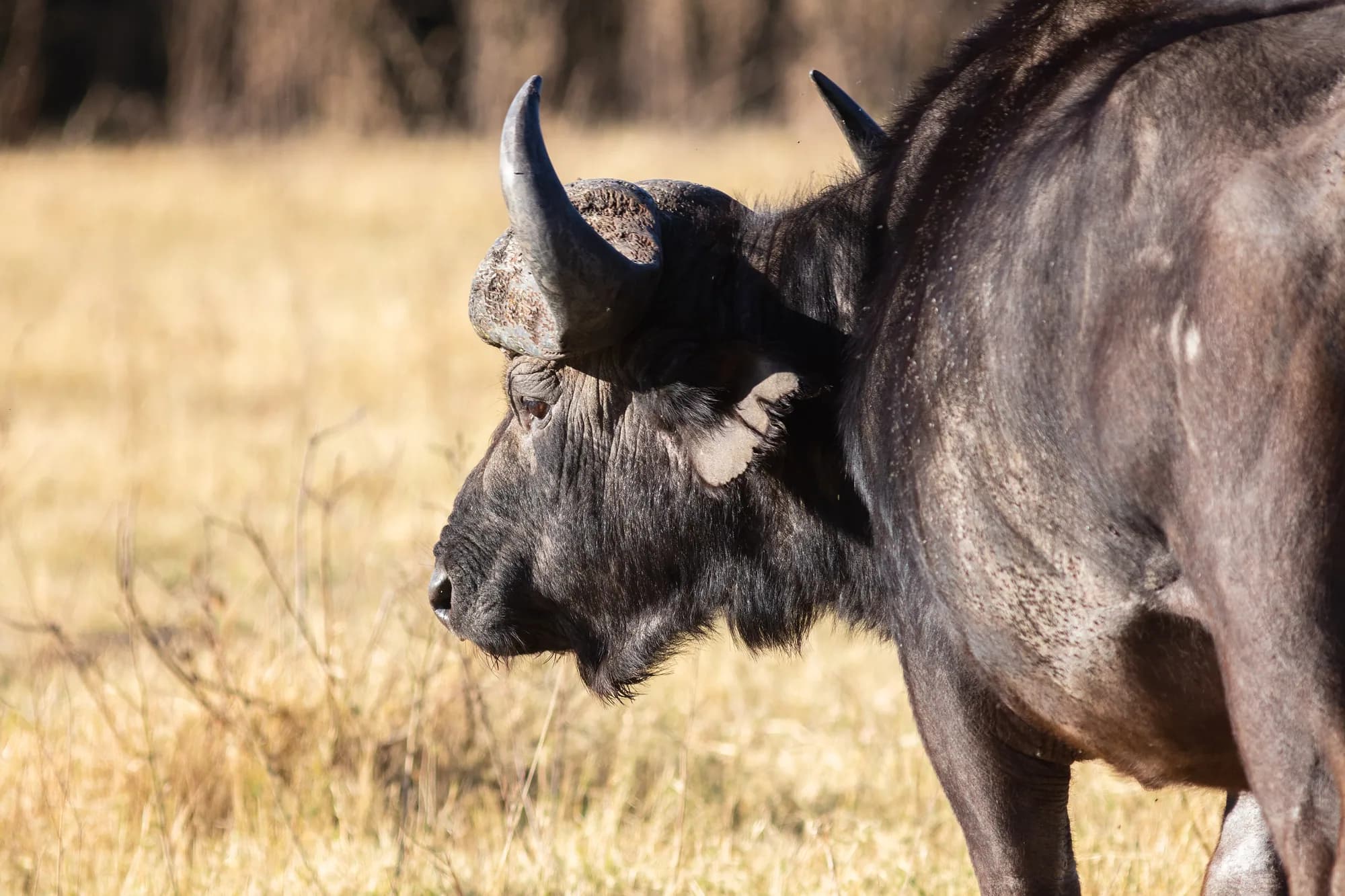
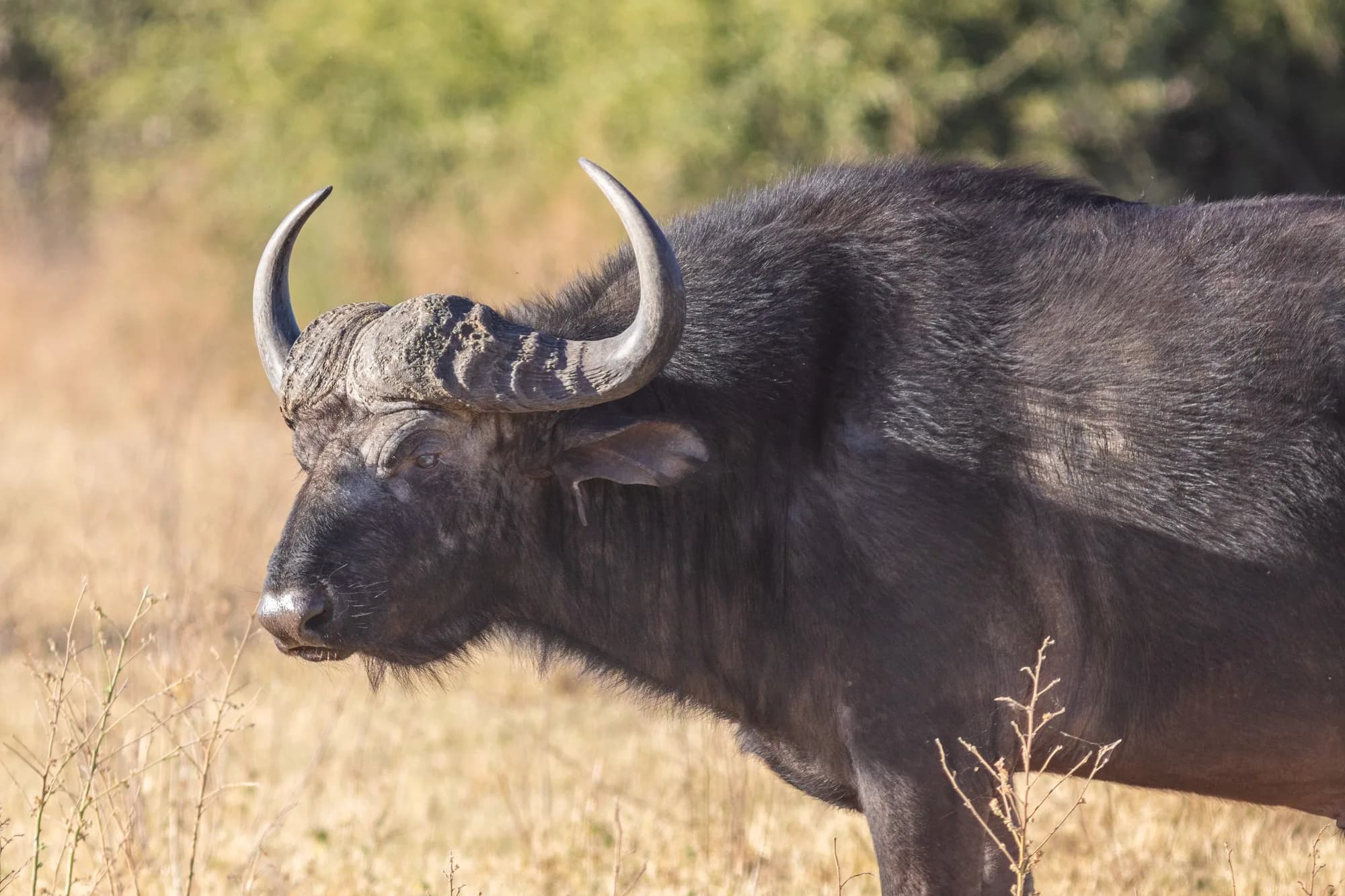
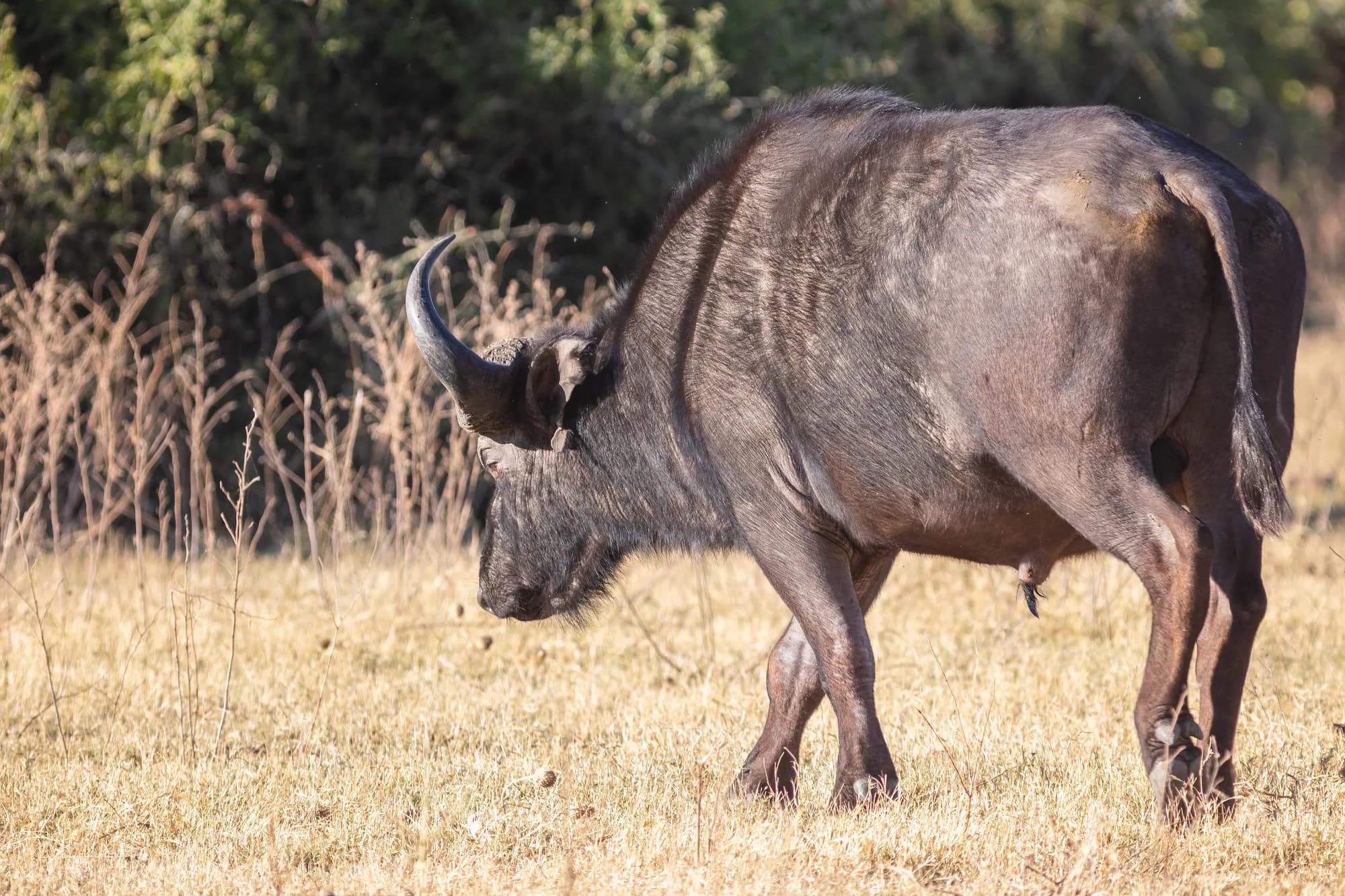
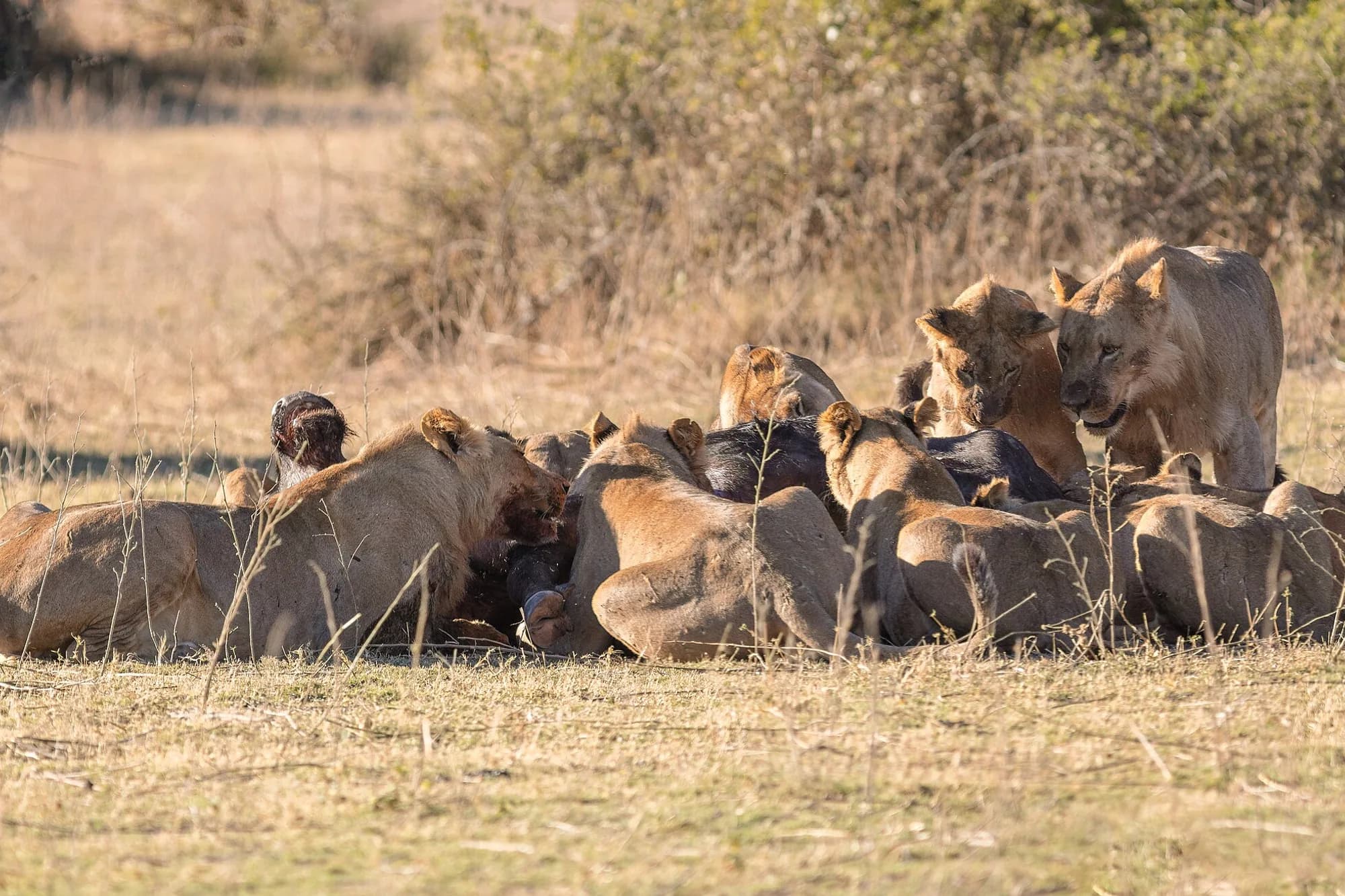
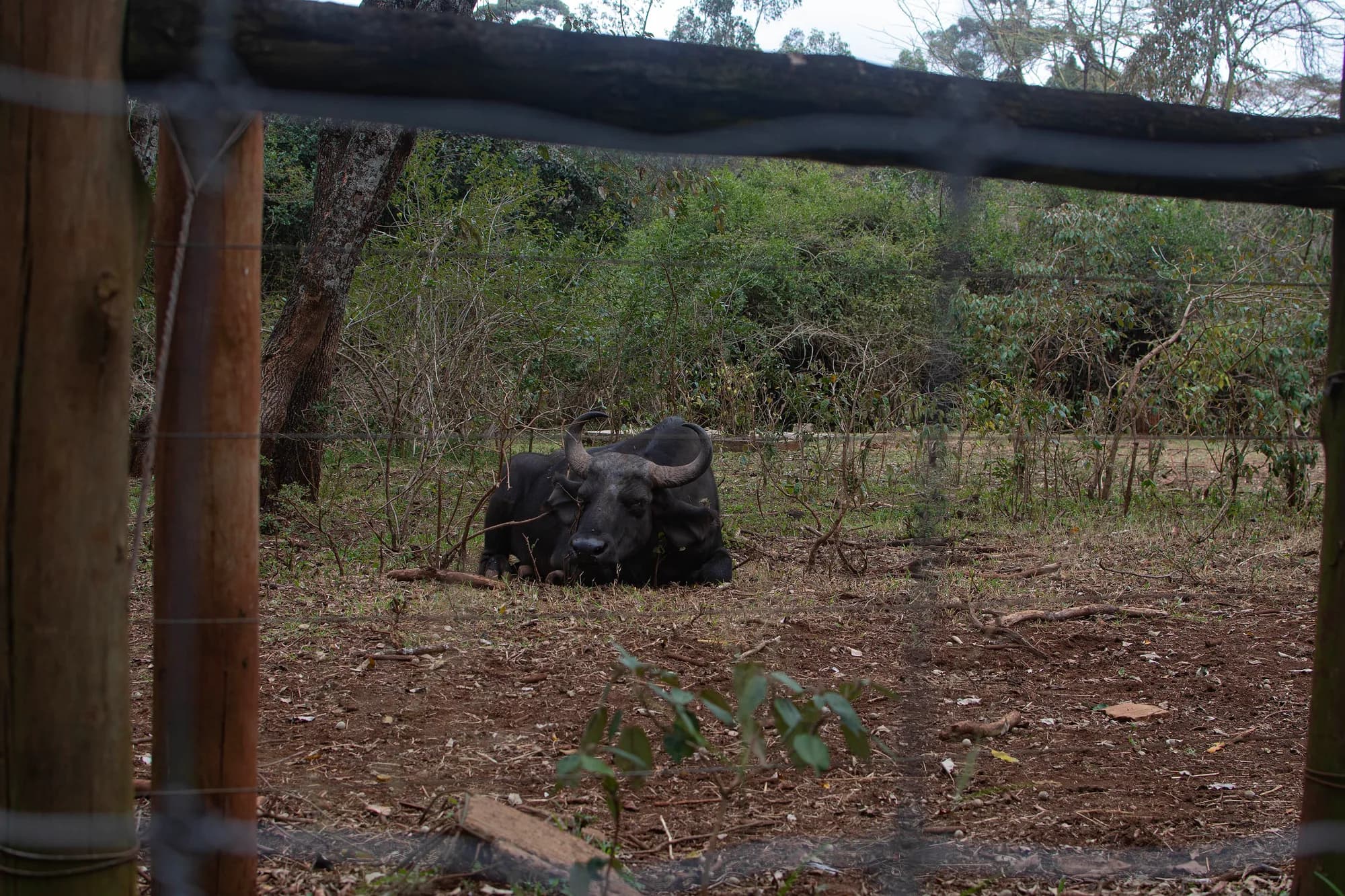
Photographs of African buffalo in the wild, in Indian reserves. We publish no captive, baited or digitally composited images, and no photograph whose licence we cannot show.
Herds, and the old bulls
Buffalo come in two forms and they are worth telling apart. A breeding herd is dozens to thousands of cows, calves and younger bulls, moving as a mass and fairly relaxed about vehicles. An old bull past breeding — often two or three together, known in southern Africa as dagga boys for the mud they wallow in — is solitary, short-tempered and effectively blind to the difference between a threat and a person.
The boss, the fused horn base across the forehead, tells you age and sex at a glance: heavy and joined on a mature bull, lighter and separated on a cow. It is the single most useful field mark on the animal.
Buffalo and lions
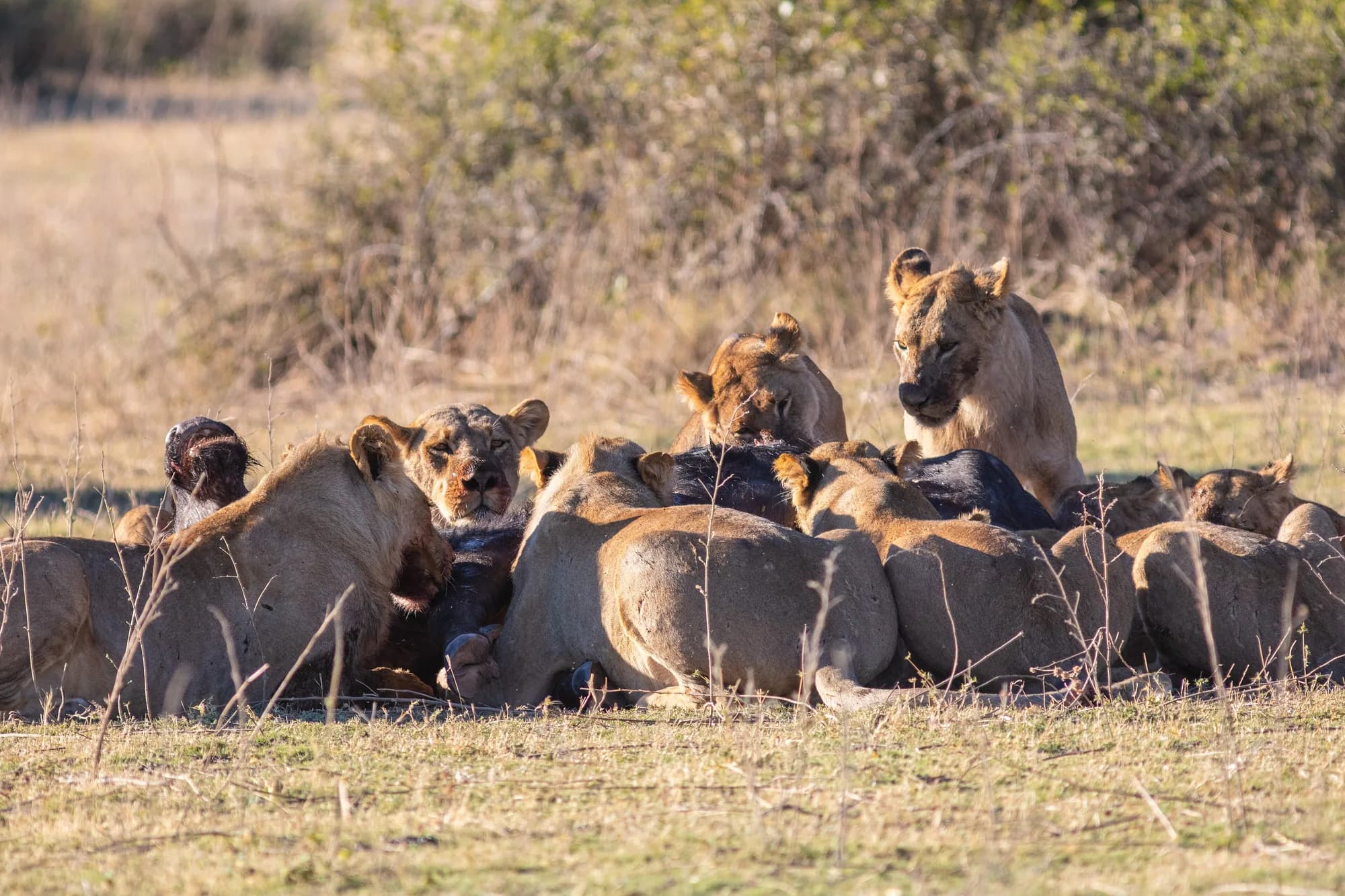
Buffalo are the main prey of lions in much of southern Africa, and it is not a one-sided relationship. A herd will mob and kill lions, and prides that specialise in buffalo tend to be large, heavy and led by females who have done it before. The Duba Plains prides in the Okavango and the Savuti lions of Chobe are the best-known examples.
If you find a large buffalo herd in the late dry season, it is worth staying with it. Lion prides follow buffalo herds, and the guides who know that spend more time on buffalo than the clients expect.
Status and protection
Status and protection
- IUCN Red List
- Near Threatened
- Population trend
- ↓ Decreasing
Species-level assessment for Syncerus caffer, matching the binomial on the page.
Assessed 2019 · IUCN Red List assessment
What to book to see one
What you would be booking
- How it is seen
- Any game drive in a well-watered park; the herds are not hard to find.
- Drives to book
- One or two. This is among the easiest of the Big Five once you are in the right country.
- Zone or shift
- Floodplain and river frontage in the late afternoon. Chobe, the Luangwa, Katavi and Kruger's north all deliver.
Buffalo are the animal walking-safari guides plan around. If a walking safari is part of your trip, expect the route to be chosen partly to avoid putting you in thick cover with a lone bull.
Walking safarisOn the same trip you would also get
- African lion — the prey that kills lions back
- Oxpecker — on every animal in the herd
Questions people ask
Where is the best place to see buffalo herds?
Why is the buffalo one of the Big Five?
What is a dagga boy?
Read next
Nine countries here, and thinner on the ground than it looks
African lion — the pairing that matters
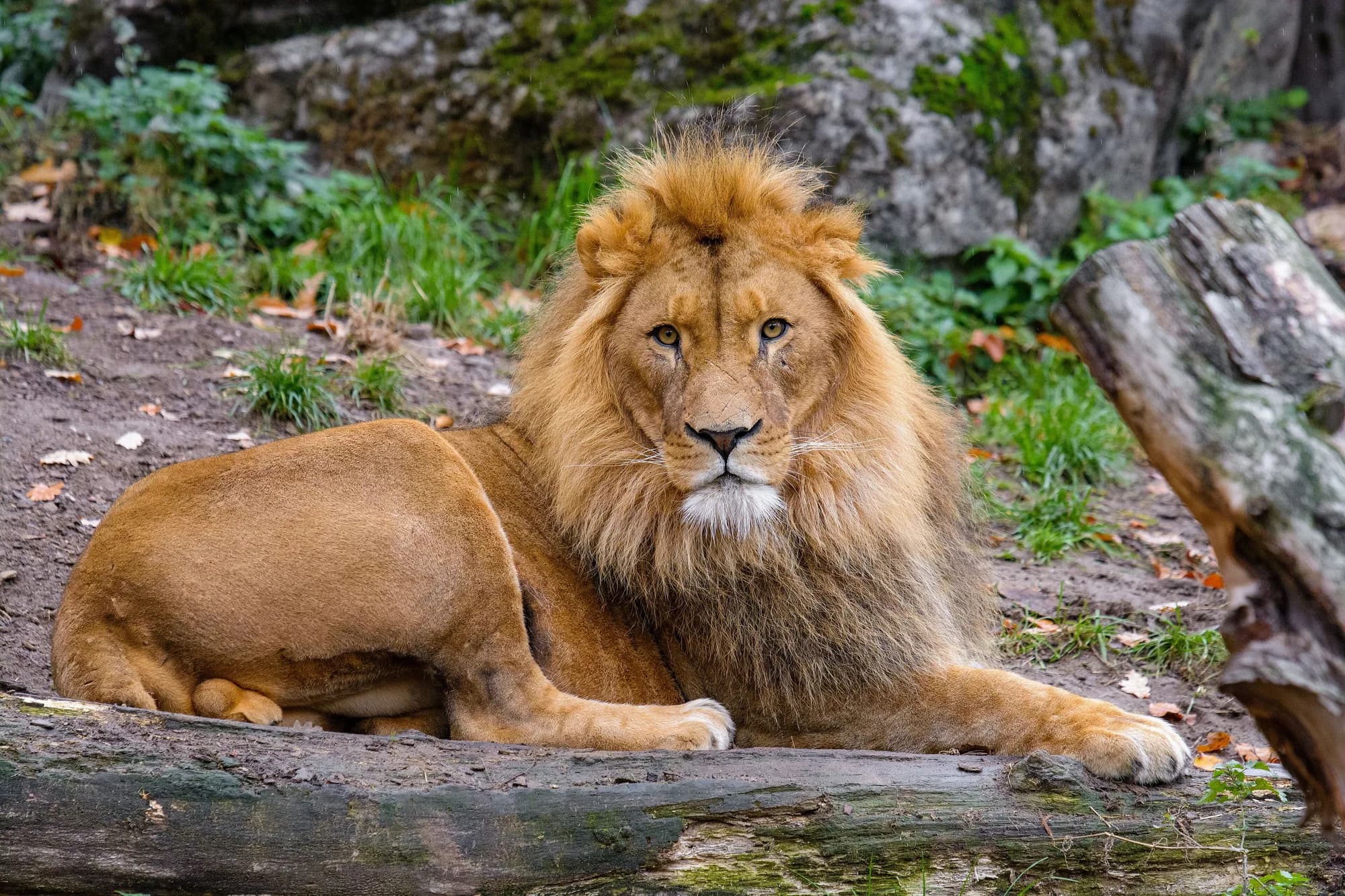
The animal everyone books the trip for, and the one most often seen asleep. Lions are not hard to find in a good park — they are hard to find doing anything, and the difference between those two sentences is most of what separates a good lion trip from a disappointing one.
Katavi — the floodplain herds
Satpura, and few others
Walking safaris
You see less and understand more. Tracks, scat, alarm calls — the things a vehicle passes at speed.