
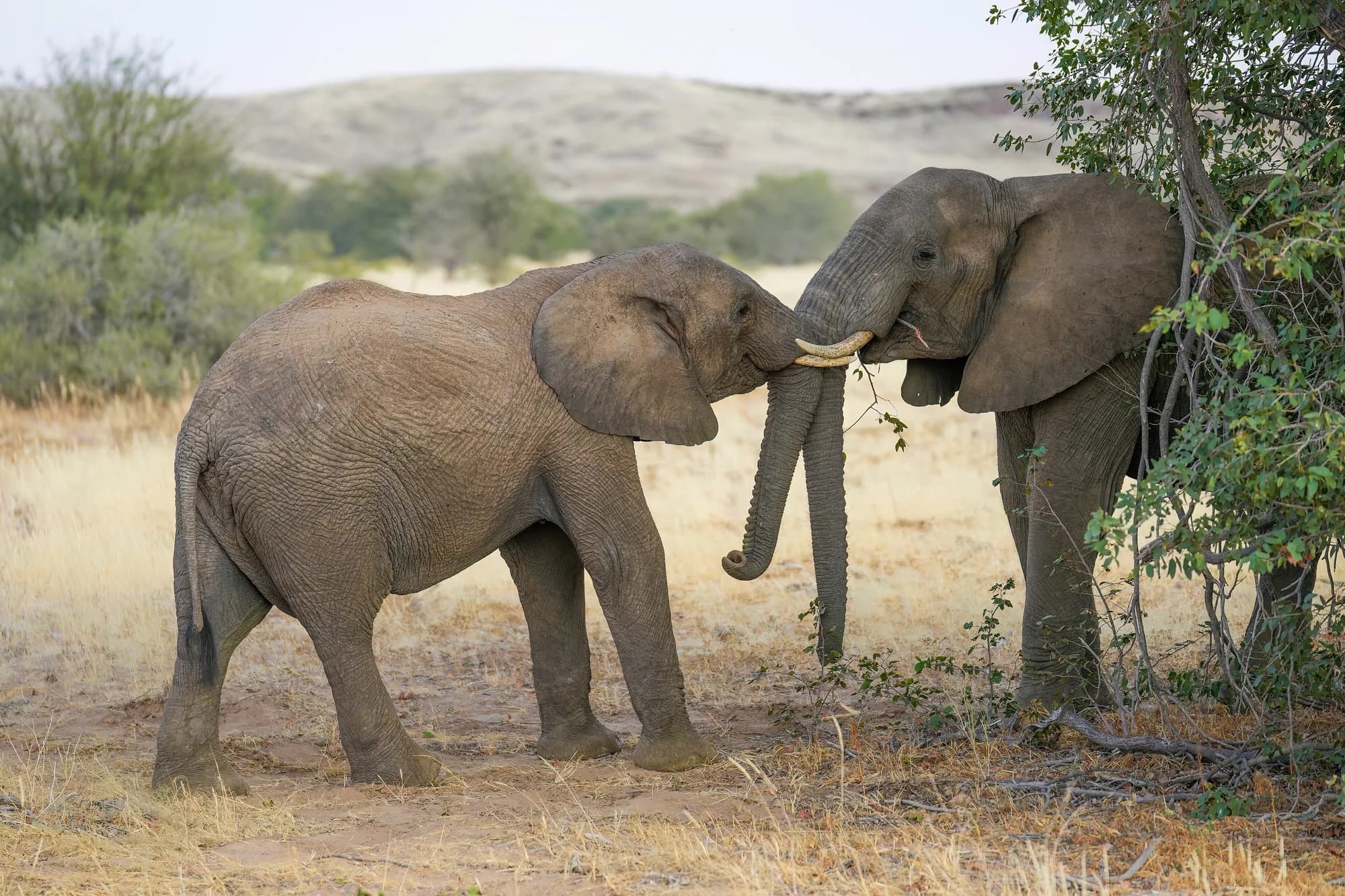
Species · Loxodonta africana
African savanna elephant
The animal most people have already seen by lunchtime on day one, which is exactly why it is worth reading about. The question on an African trip is almost never whether you will see elephants — it is whether you will see the thing that makes a herd worth two hours of your time.
Also called
- Tembo, or ndovu · Swahili
- Olifant · Afrikaans
- Nzou · Shona
- Tlou · Setswana
Checked 27 Sept 2026
- Where
- Nine countries here
- Best months
- The dry season, everywhere
- Herd
- Matriarchal, 8–100
- Odds
- Near certain in the right park
Savanna, woodland, floodplain and desert margin across eastern and southern Africa. Present in every African country on this site. The forest elephant of the Congo basin is a separate species and is not covered here.
Where it is
HabitatSavanna, woodland, floodplain and desert margin — anywhere with browse and water within a day's walk.
Worth travelling for
The largest population on the continent, concentrated on the Chobe river in the dry season.
Pumped waterholes in a park with no permanent natural water, which makes the dry season predictable.
Tarangire holds the northern circuit's big herds; the southern parks are emptier and just as good.
Amboseli's are the best-studied elephants anywhere, and carry the biggest remaining tusks.
Kruger for numbers, Addo for certainty within two hours of a city.
Etosha's waterholes, and the desert-adapted elephants of the north-west.
Also occurs
ZambiaUgandaMozambiqueAngolaMalawiEthiopiaChadSouth Sudan
Present, but not where you would go to see one.
Gone from
BurundiThe GambiaMauritaniaMost of West Africa
Range this species has been lost from. It is the fact a map of where it currently lives cannot show you.
Where to actually go
Ranked, with the reason each — these are not interchangeable.
- 01ChobeBotswanaThe largest elephant concentration in Africa on the river in the dry season. Hundreds of animals a day is normal, not a good day.Go by boat, not by road
- 02HwangeZimbabwePumped waterholes in a park with no permanent natural water, so the dry season delivers hundreds of elephants to a known point at a known hour.September and October, at a pan hide
- 03TarangireTanzaniaThe northern circuit's elephant park, and consistently underbooked because people go to the Serengeti instead. Baobabs and big herds.The dry season, when the Maasai Steppe empties into it
- 04AmboseliKenyaThe best-studied elephants on earth, with big tuskers and Kilimanjaro behind them. Small park, so the photograph is the reason to come.For the picture everyone knows
- 05Addo ElephantSouth AfricaMalaria-free, self-drivable, and dense. The practical answer for a family or a first trip rather than the best elephants in Africa.The one Cape option
Where you will not see one
- Ngorongoro Crater floorBig bulls, and almost no breeding herds. The crater is famous and it is the wrong place to watch elephant family behaviour — the herds are up in the forest on the rim.
- Most of the CapeThere are no elephants in Table Mountain, the Garden Route parks or the Karoo. In the Western and Northern Cape the elephant park is Addo, and that is it.
- The gorilla parksBwindi and Volcanoes have forest elephants in principle and you will not see one. Do not book a gorilla trip expecting a safari animal.
When to go
When to go
- J
- F
- M
- A
- M
- J
- J
- A
- S
- O
- N
- D
January: good. February: good. March: marginal. April: marginal. May: good. June: best. July: best. August: best. September: best. October: best. November: good. December: good.
Through the day
- Dawn
- Morning
- Midday
- Afternoon
- Dusk
- Night
Dawn: active. Morning: most active. Midday: active. Afternoon: most active. Dusk: most active. Night: usually resting.
What it looks like in the field
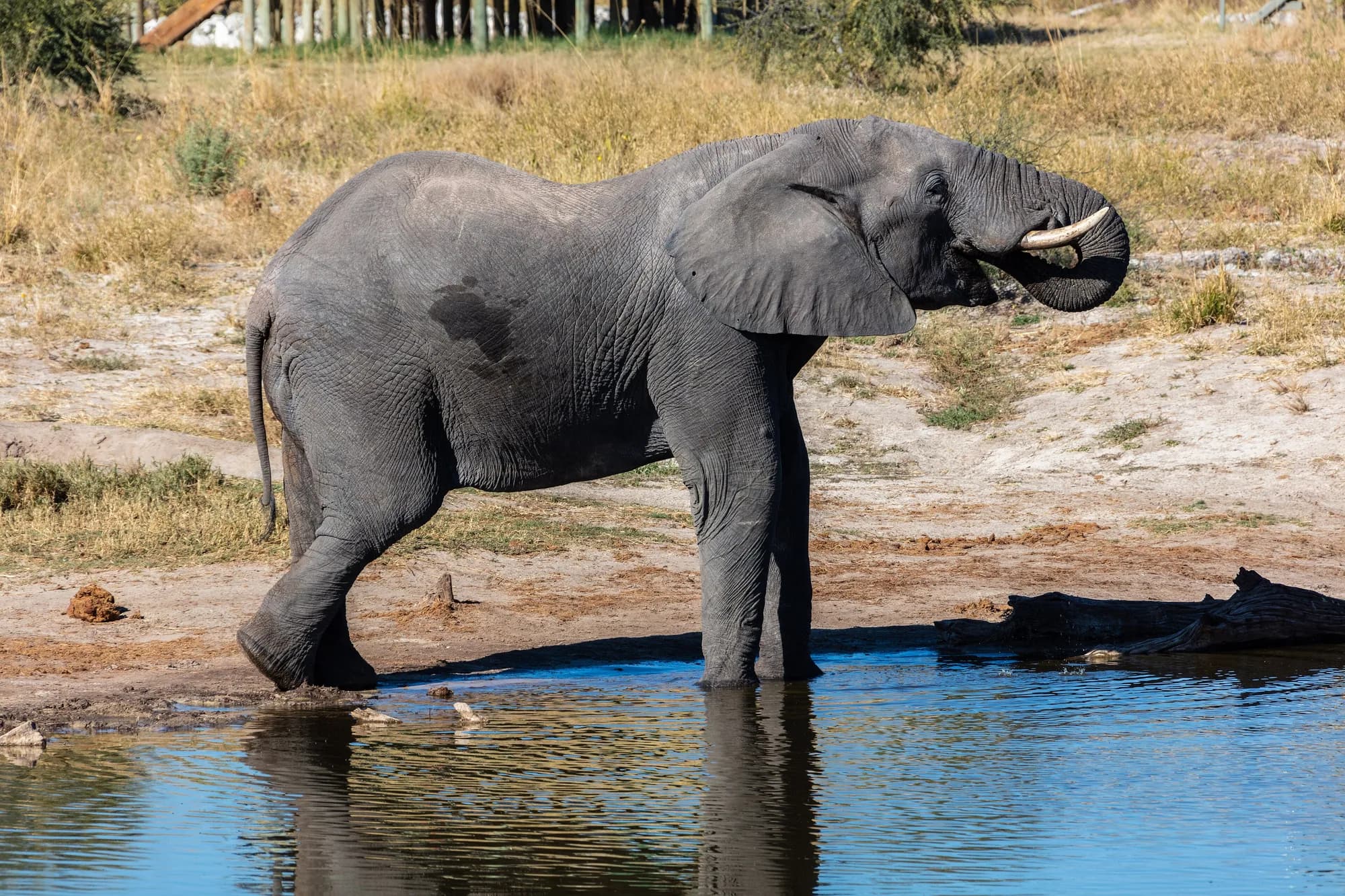
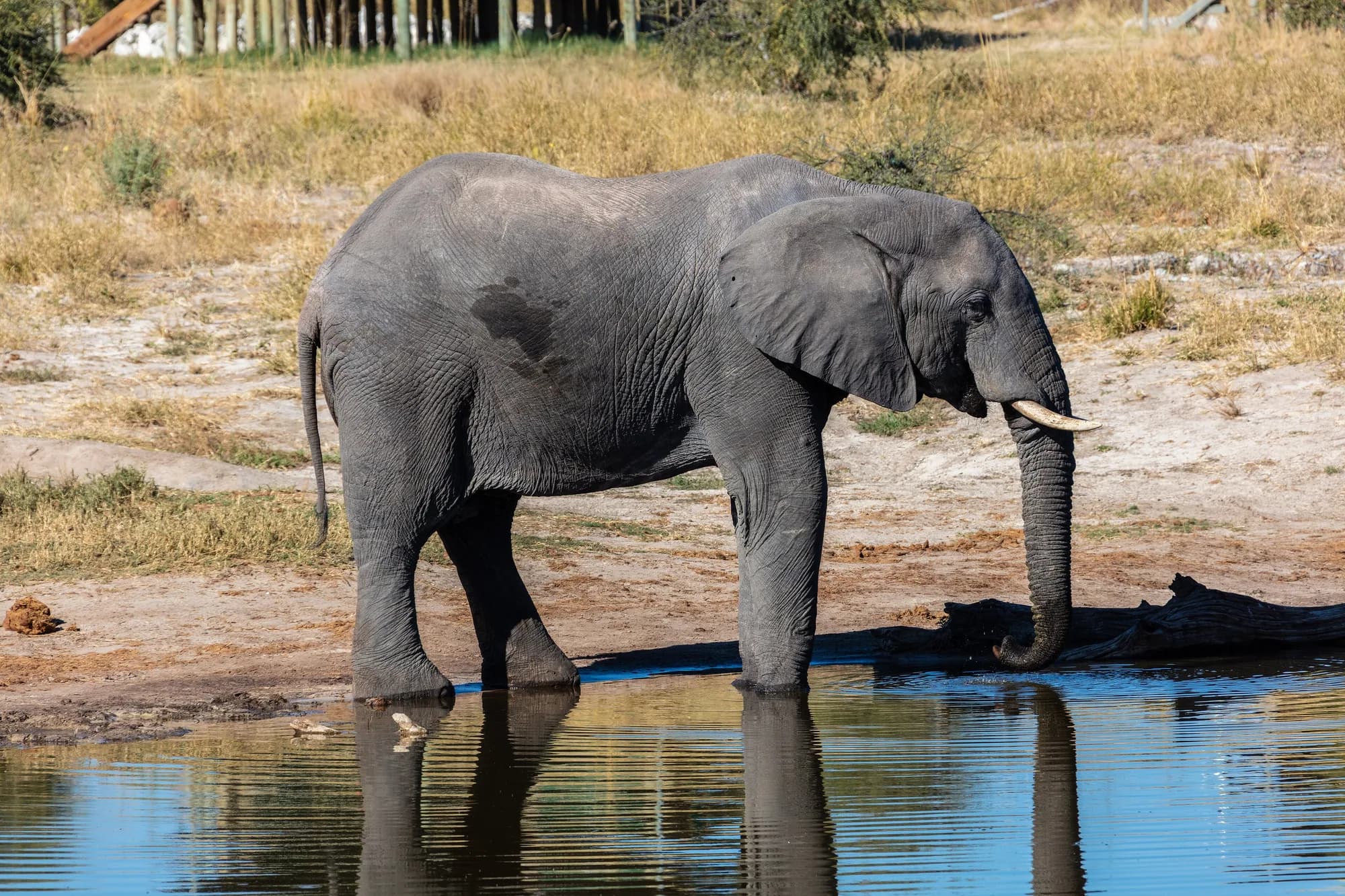
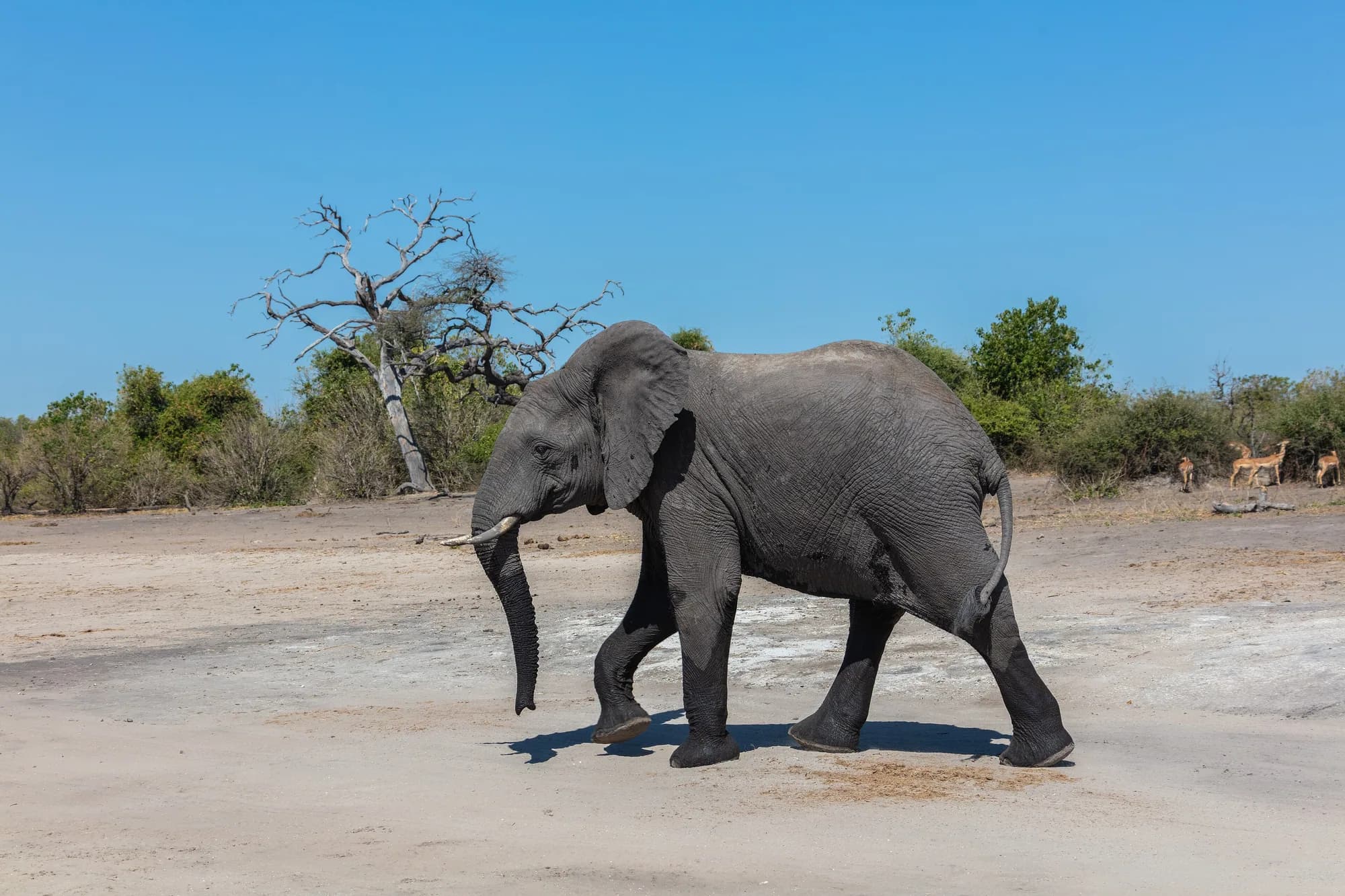
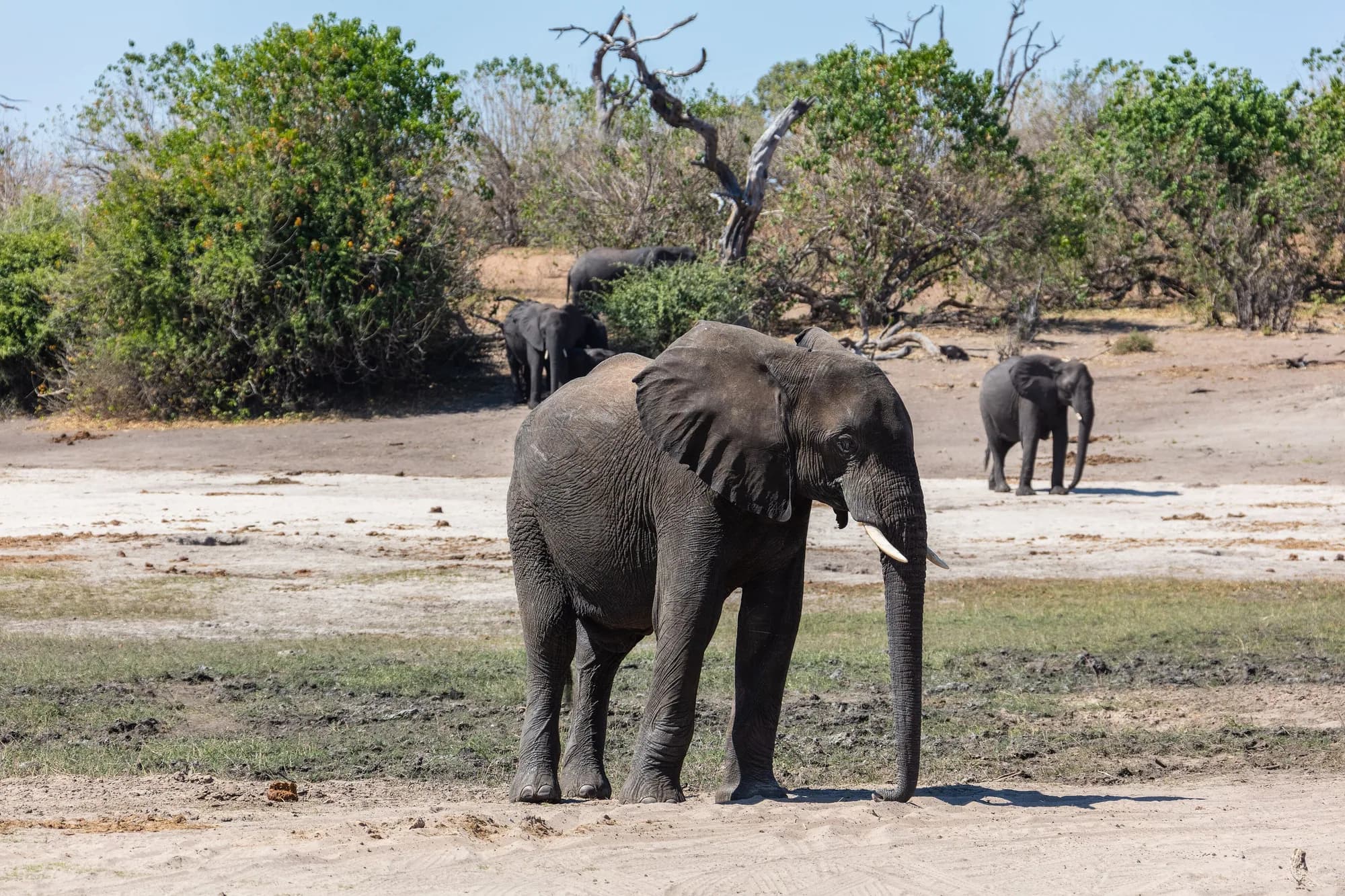
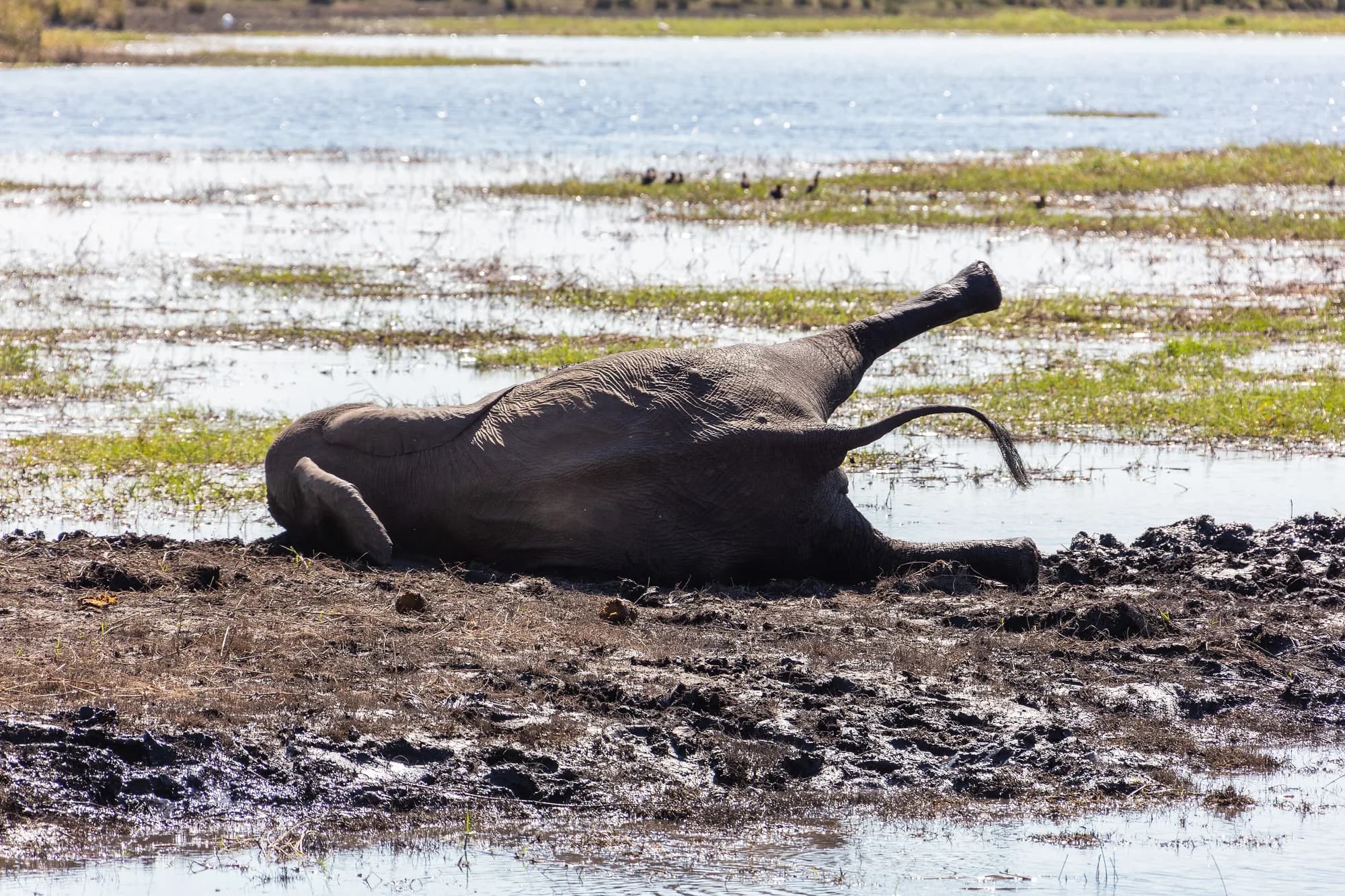
Photographs of African savanna elephant in the wild, in Indian reserves. We publish no captive, baited or digitally composited images, and no photograph whose licence we cannot show.
Which park, and why
Elephants are close to guaranteed in most of the parks on this site, so choosing a park for elephants means choosing what kind of elephant experience you want. Chobe and Hwange give you number — the sense of an animal in a landscape at a scale that does not photograph. Amboseli and Tarangire give you individuals, big tuskers and a herd you can watch for an hour. Addo gives you certainty within a two-hour drive of Port Elizabeth.
These are genuinely different trips, and the mistake is to treat a high count as the better one. Three hundred elephants at a Chobe crossing is a spectacle you will remember and it is not a sighting you learn anything from. One Amboseli family at a swamp edge for ninety minutes is the other thing.
What to actually watch
A breeding herd is a matriarch and her descendants, and everything in it is legible once you know that. The oldest female decides when the herd drinks and which way it leaves. Watch who the calves are parked next to when the adults are feeding, and which adult moves when a calf squeals — the answer is usually not the mother.
Bulls are a separate animal socially. A bull in musth — temporal glands streaming, a continuous dribble of urine, and a walk every guide recognises at distance — is dangerous and will be given a wide berth by your driver and by every other elephant present. If you see a breeding herd break away from water for no visible reason, look for the bull.
Status and protection
Status and protection
- IUCN Red List
- Endangered
- Population trend
- ↓ Decreasing
- CITES
- Appendix I
Species-level assessment for Loxodonta africana, the savanna elephant, split from the forest elephant L. cyclotis in the 2021 reassessment. The two now carry different categories.
Assessed 2022 · IUCN Red List assessment
What to book to see one
What you would be booking
- How it is seen
- Any game drive. The choice that matters is the park, not the vehicle.
- Drives to book
- One, in a good park. Two if you want a big bull rather than a herd — old bulls keep their own company and turn up on their own schedule.
- Zone or shift
- Water is the whole answer in the dry season. Chobe riverfront, Hwange's pumped pans, the Tarangire river, Addo's Hapoor waterhole.
A boat changes what you see. On the Chobe and the Lower Zambezi elephants swim and cross in front of you at eye level from the water, which no vehicle can offer.
Safaris from the waterOn the same trip you would also get
- African buffalo — the same water, the same hour
- Hippopotamus — wherever the river is permanent
- African lion — in Savuti and Ruaha, a real predator on them
Questions people ask
Where is the best place to see elephants in Africa?
Are African and Asian elephants the same animal?
When is the best time of year for elephants?
Is it safe to be close to elephants on a game drive?
Read next
Eight countries here, and the least glamorous of the five
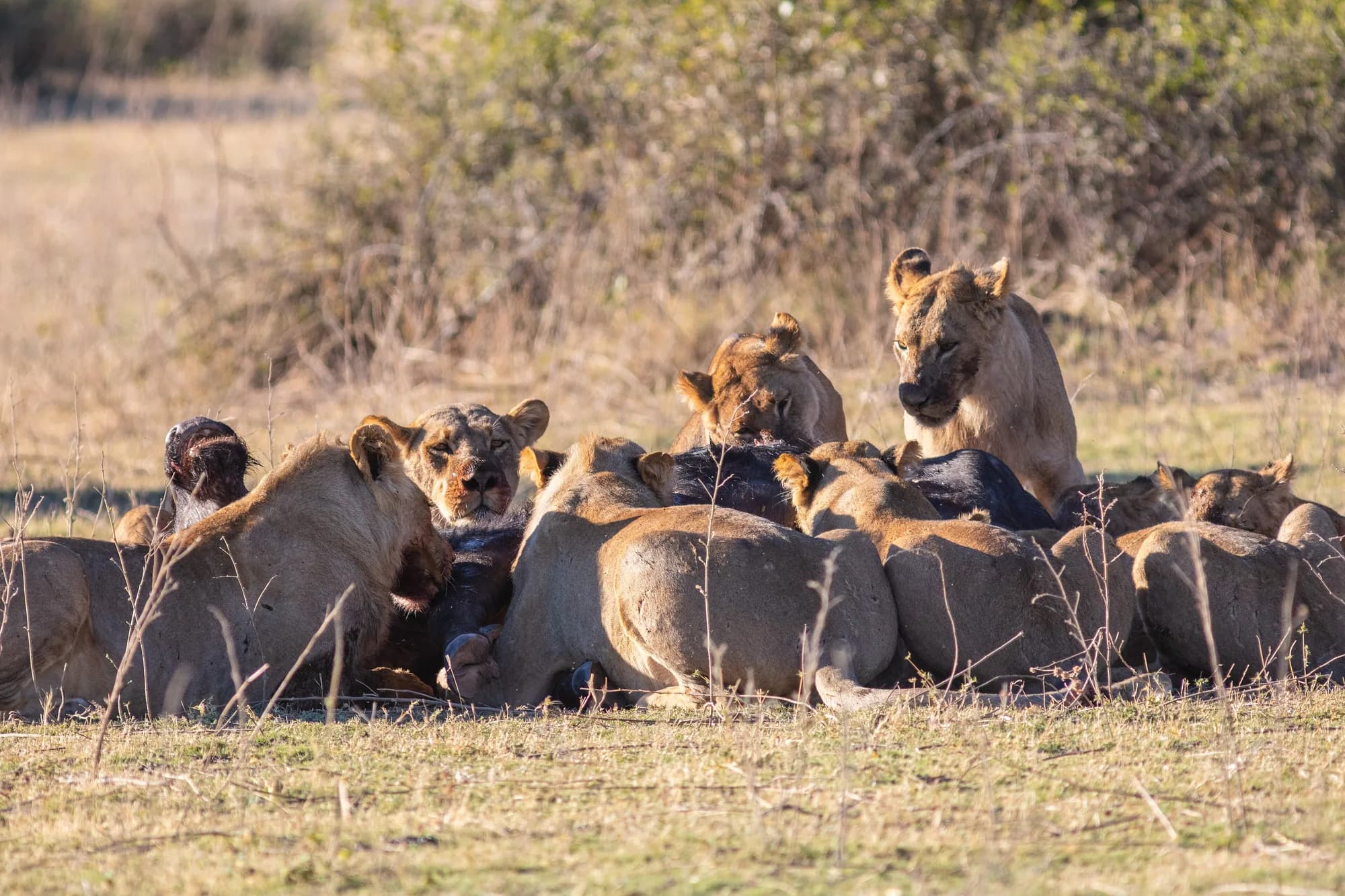
African buffalo — the other one at the water
The Big Five animal nobody books for and every guide respects. A herd of a thousand moving to water at dusk is one of the genuine spectacles of a dry-season safari, and a lone old bull in long grass is the reason walking safaris are led by someone armed.
Seven countries here, wherever the water is permanent
Hippopotamus
Easy to find and almost always seen badly — a row of ears and nostrils in brown water. The trip worth planning is the one that puts you level with them from a boat, or at a pod out of the water after dark.
Chobe — the elephant river
Hwange — the pumped pans