
Species · Axis porcinus
Hog deer
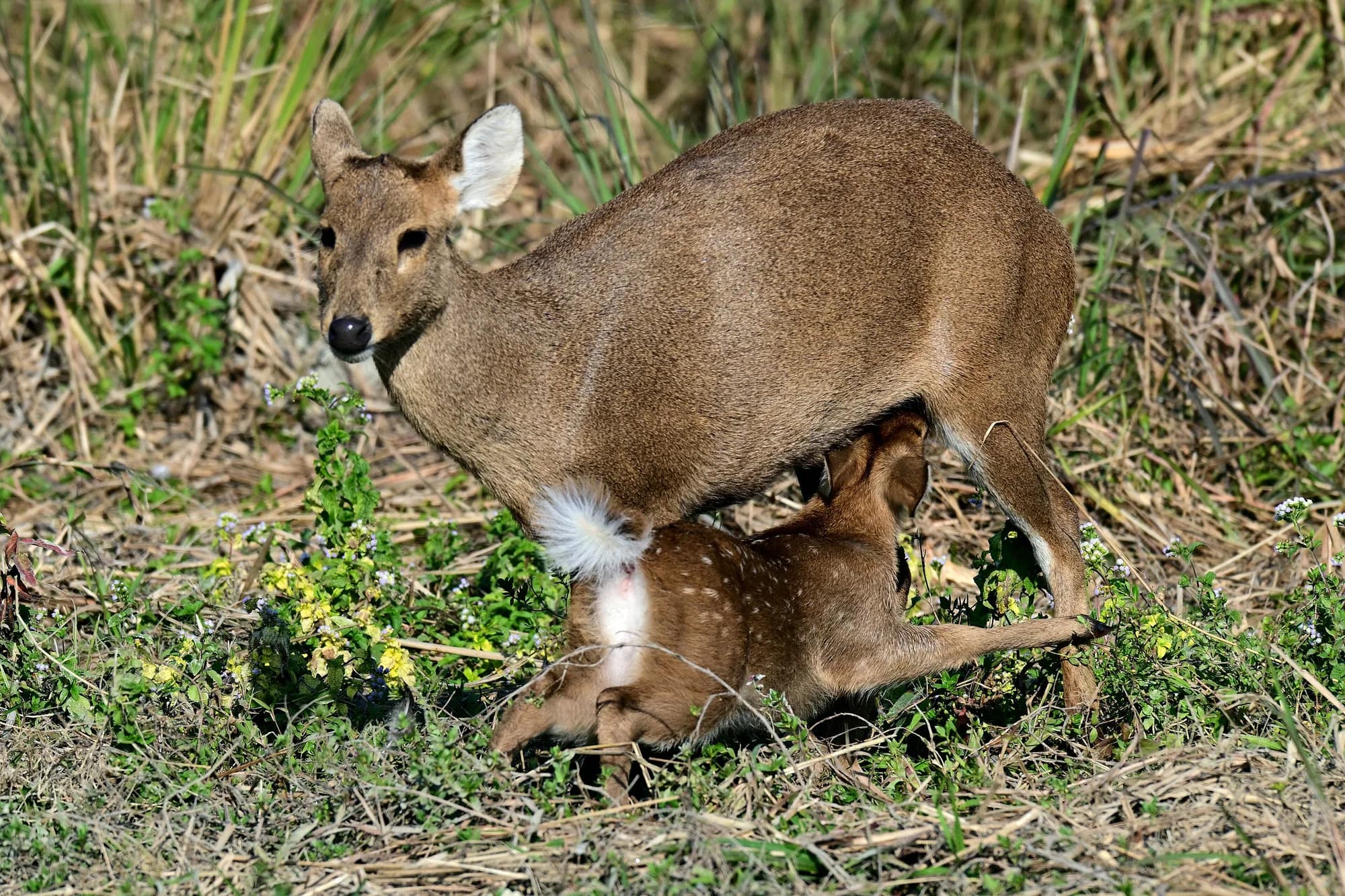
A small, heavy-bodied deer that runs with its head down instead of leaping. It is endangered, it is common where it survives, and in Kaziranga it is the animal chital gets called by mistake.
Also called
- Para (पाड़ा) · Hindi
- Xoru pohu · Assamese
- Para harin · Bengali
Checked 31 Aug 2026
- Where
- Terai and Brahmaputra floodplain
- Best months
- November–April
- Habit
- Solitary or in loose pairs
- Note
- Runs under obstacles, not over
Alluvial grassland on floodplains, and effectively nothing else. The species has gone from most of its former range because that habitat has gone; where the grassland survives, so do very high densities.
Where it is
Where to actually go
Ranked, with the reason each — these are not interchangeable.
- 01KazirangaAssamThe highest density of hog deer anywhere. Seen on essentially every drive, and in numbers that make the confusion with chital obvious once you look.Central range, after the burn
- 02CorbettUttarakhandThe Dhikala chaurs hold them, and early morning on the grassland is reliable.Dhikala at first light
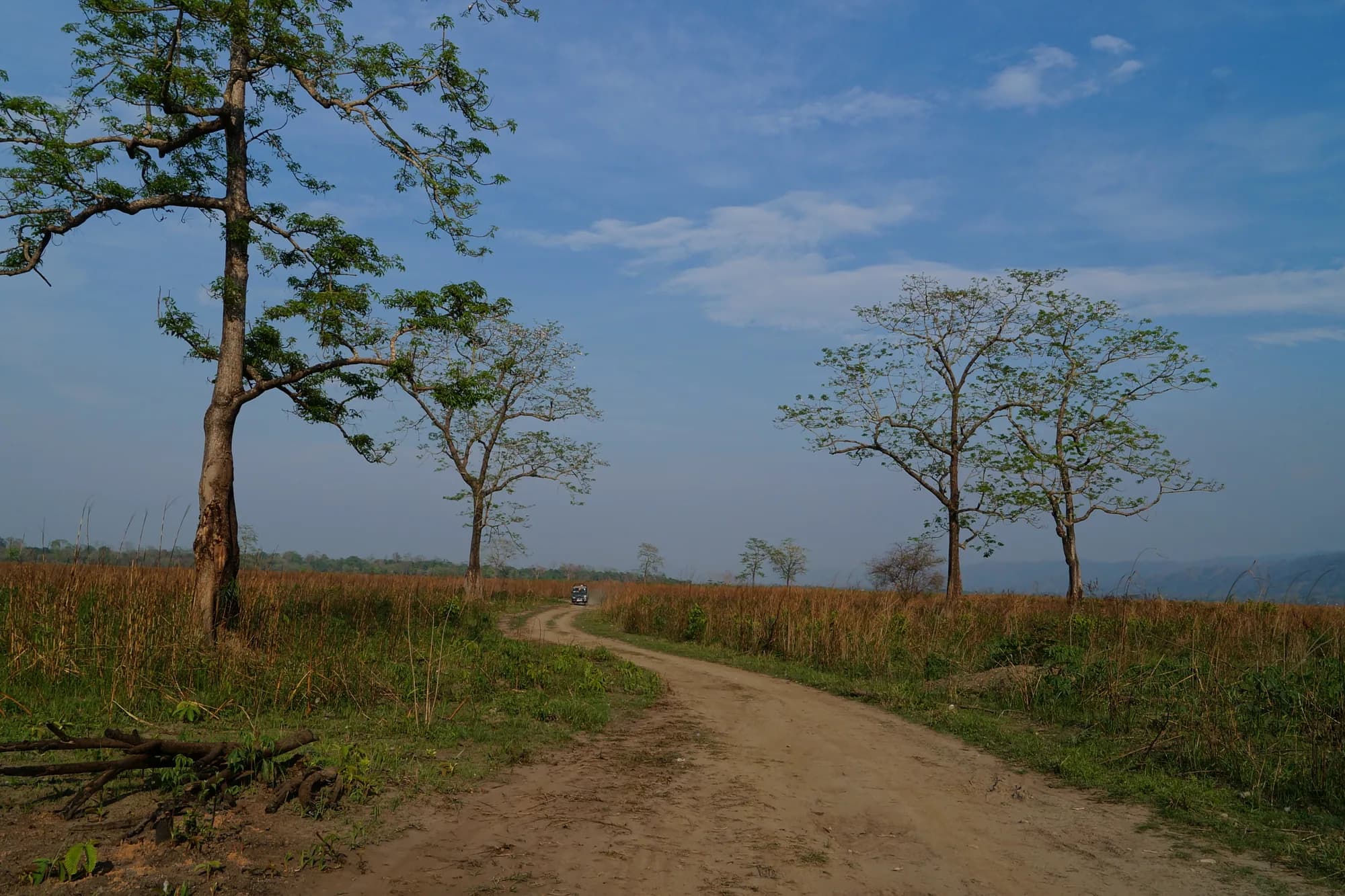
- 03ManasAssamFloodplain grassland with a recovering population, and far fewer vehicles than Kaziranga.Quieter
Where you will not see one
- Central and southern IndiaThere are no hog deer in Kanha, Bandhavgarh, Tadoba, Nagarhole or anywhere on the Deccan. The small deer there is a chital, a barking deer or a chousingha.
- Forest interiorThis is a grassland animal. Inside closed canopy you are looking at the wrong habitat entirely.
When to go
When to go
- J
- F
- M
- A
- M
- J
- J
- A
- S
- O
- N
- D
January: best. February: best. March: best. April: good. May: marginal. June: closed or unproductive. July: closed or unproductive. August: closed or unproductive. September: closed or unproductive. October: marginal. November: best. December: best.
Through the day
- Dawn
- Morning
- Midday
- Afternoon
- Dusk
- Night
Dawn: most active. Morning: active. Midday: usually resting. Afternoon: active. Dusk: most active. Night: usually resting.
Telling it apart
Told apart from
Kaziranga and Corbett, constantly
Spots and build. Chital keep clear white spots for life and are taller, longer-legged and in herds; hog deer are stocky and low, and adults are near-uniform brown with at most faint spotting in summer.
The forest–grassland edge
Habitat and face. Barking deer are richer red with dark facial ridges and live in forest undergrowth; hog deer are duller brown and out on open grass.
Marks chosen to be usable from a moving vehicle — a hog deer is rarely still and never close enough for anything subtler.
What it looks like in the field
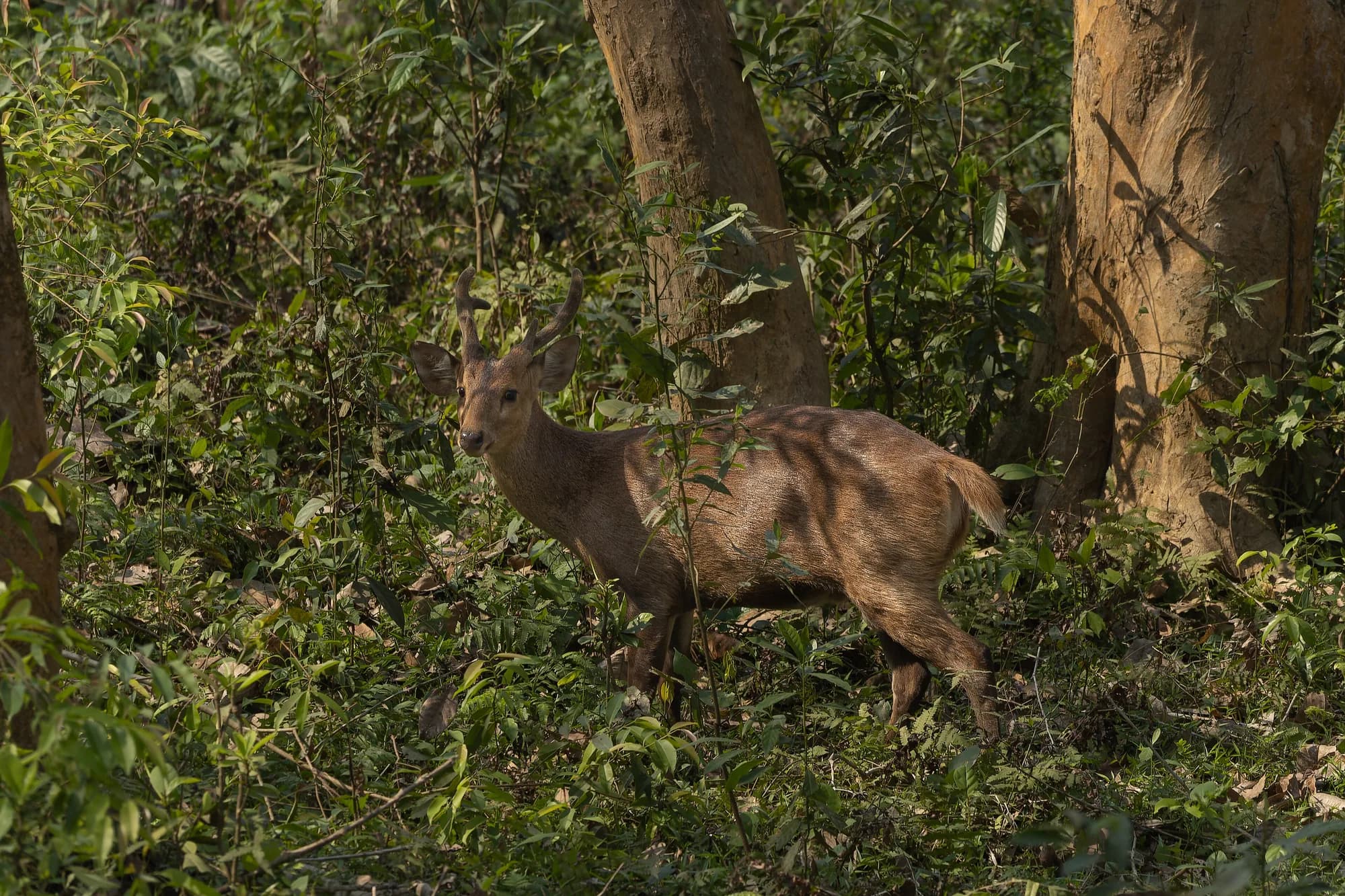
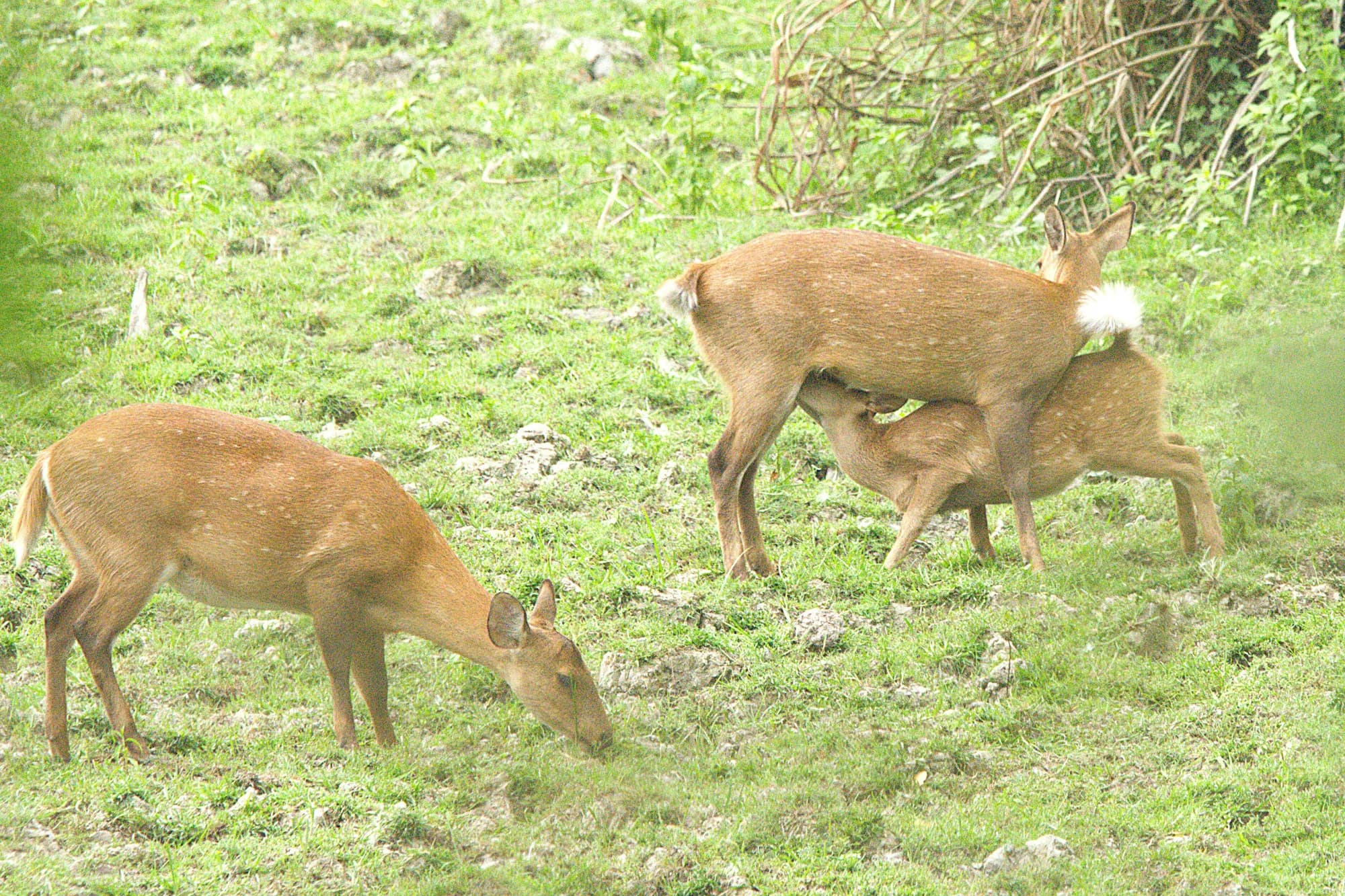
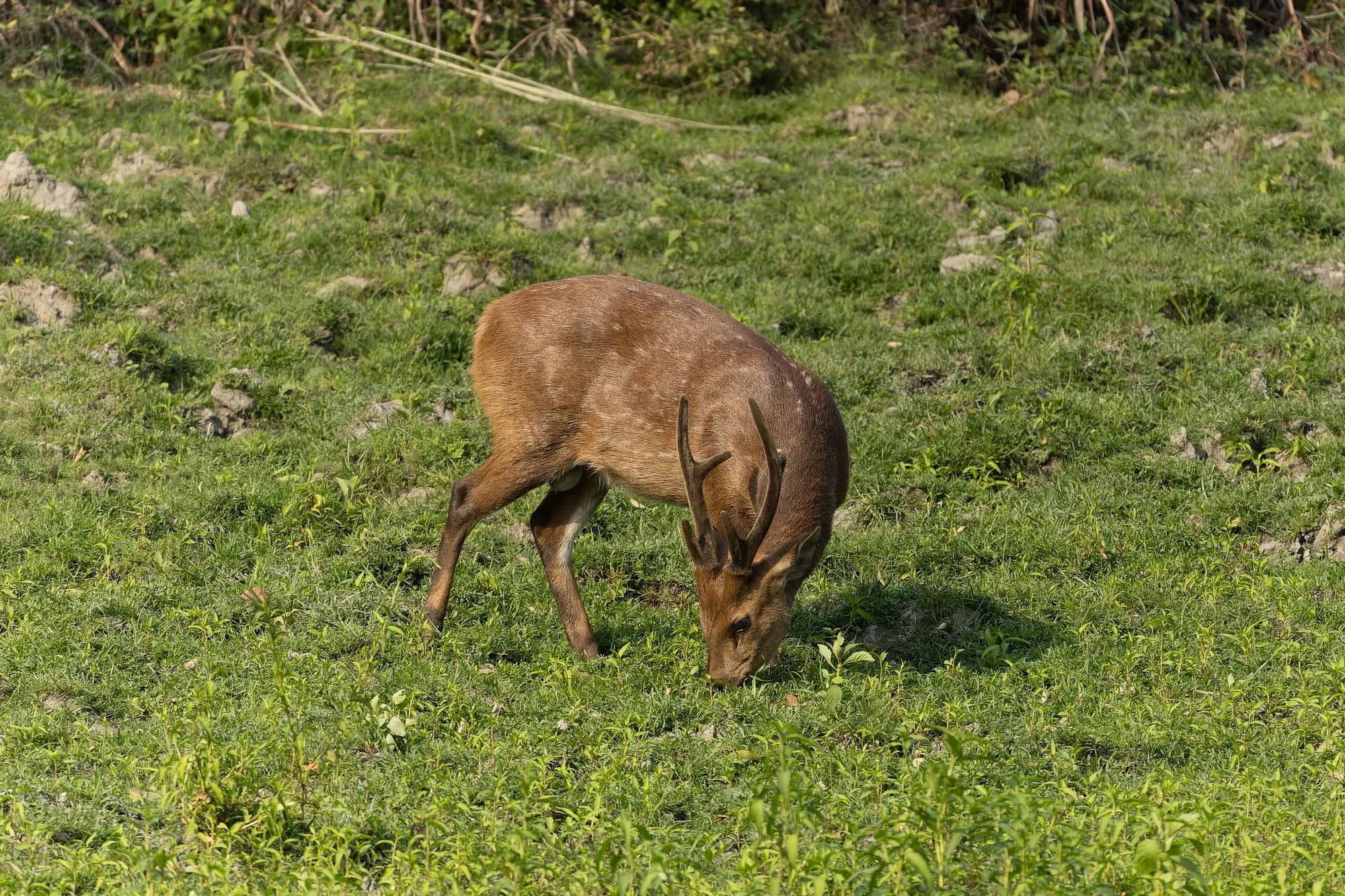
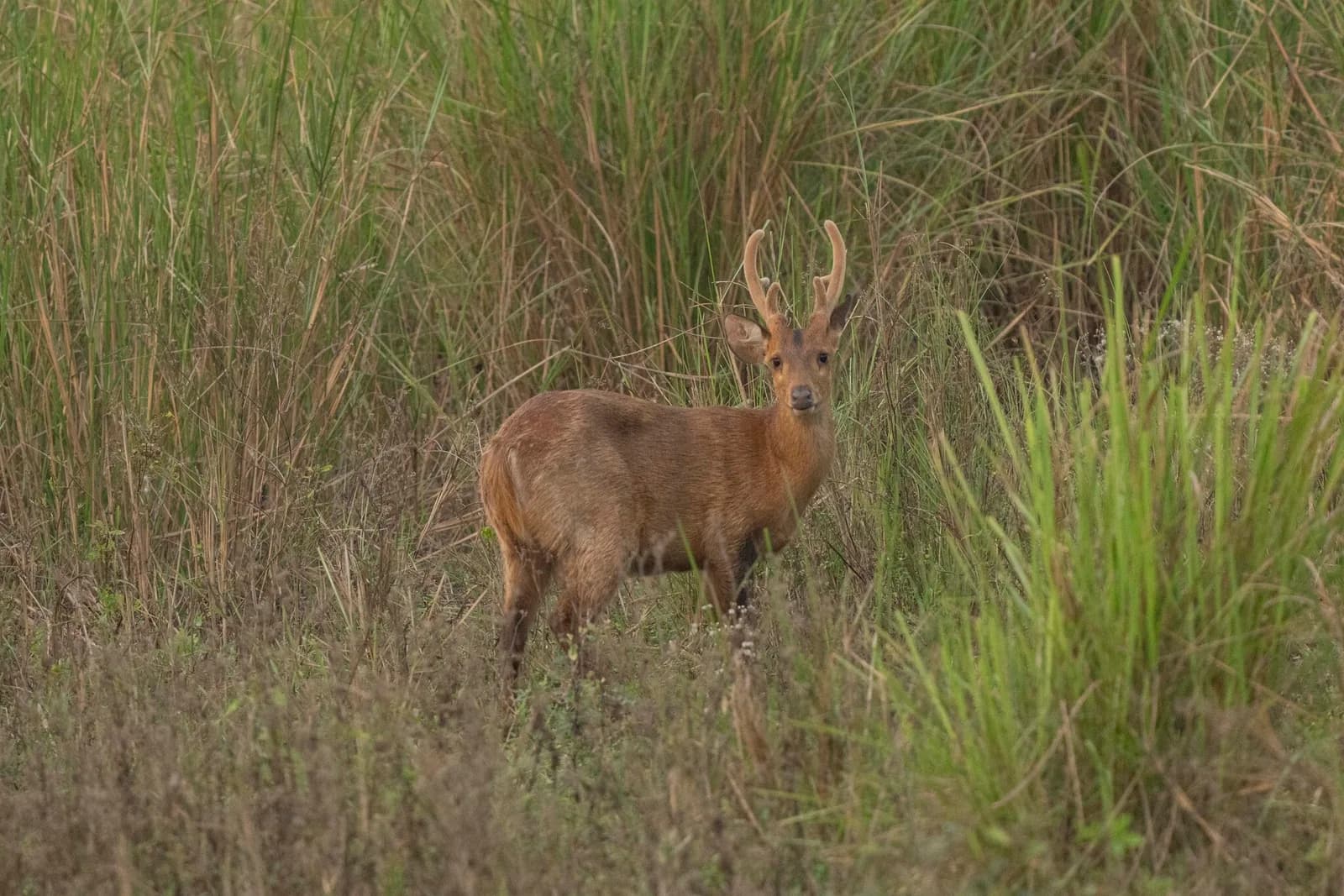
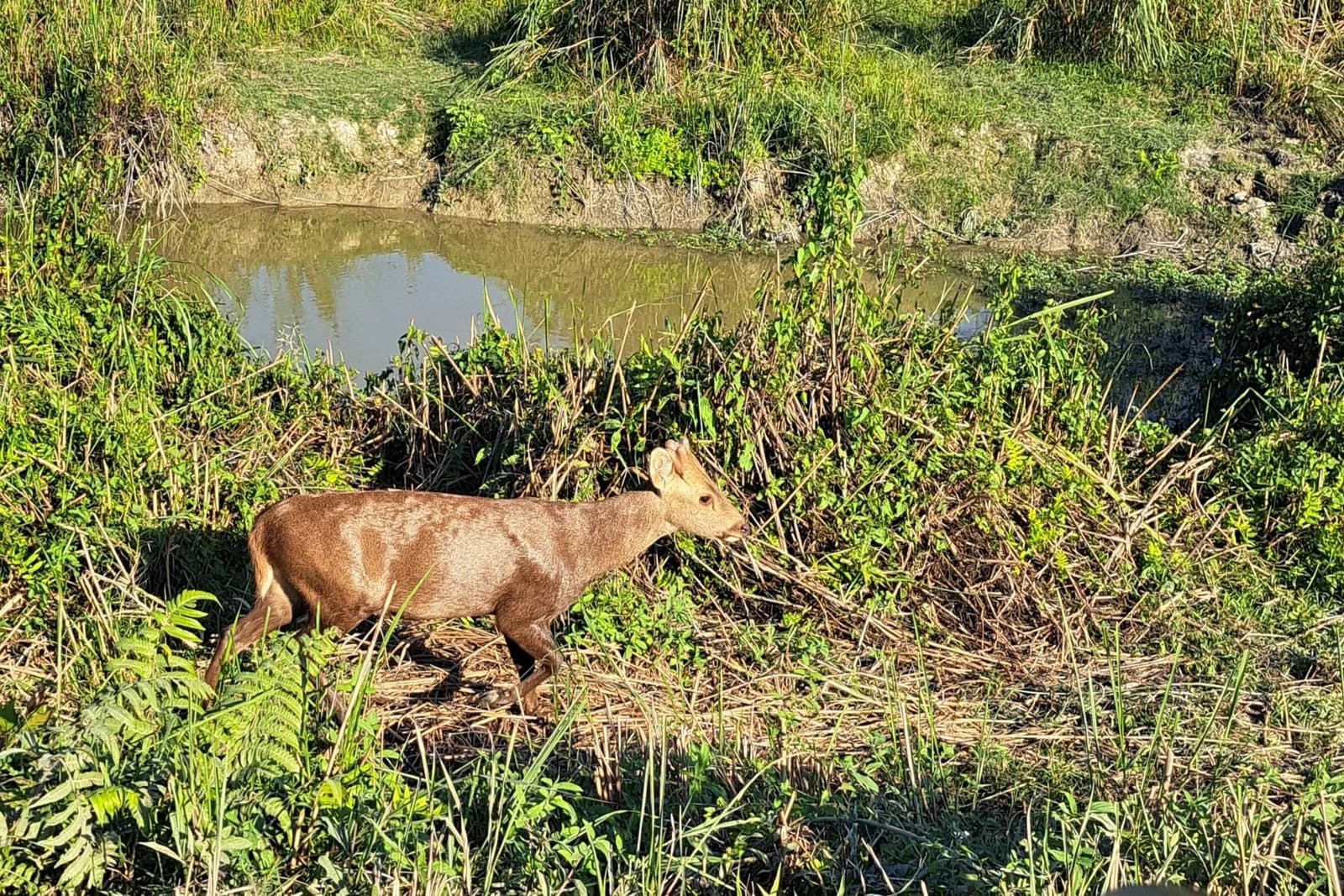
Photographs of Hog deer in the wild, in Indian reserves. We publish no captive, baited or digitally composited images, and no photograph whose licence we cannot show.
The gait that names it
A chital under pressure bounds. A hog deer puts its head down and runs flat out under the grass, pushing through obstacles rather than jumping them — which is what a startled pig does, and where the name comes from.
Grassland burning, and why it matters
Kaziranga burns its grassland in patches through late winter. For a few weeks afterwards the cover is short, the new growth is what everything wants to eat, and hog deer are out in the open in numbers you cannot see at any other time of year.
If you want grassland species rather than rhino photographs, book after the burn and not before it.
Status and protection
Status and protection
- IUCN Red List
- Endangered
- Population trend
- ↓ Decreasing
- Wildlife Protection Act 1972
- Schedule I (post-2022 amendment numbering)
- CITES
- Appendix III (listed by Pakistan, 24/06/2014), 'except the subspecies included in Appendix I'
Species-level global assessment for Axis porcinus; binomial matches exactly. Criteria A2bcd.
Assessed 2015 · IUCN Red List assessment
What to book to see one
What you would be booking
- How it is seen
- Any jeep safari in a floodplain reserve. In Kaziranga they are seen on almost every drive in the central and western ranges.
- Drives to book
- One or two drives is enough at Kaziranga. At Corbett, the Dhikala grasslands in the early morning.
Late February and March, after the grassland has been burnt, is by far the best time to see them: the cover is gone and the animals are out on the new growth.
Kaziranga — the park in fullQuestions people ask
Where can I see hog deer in India?
How do I tell a hog deer from a chital?
Why is a common-looking deer endangered?
Read next
Every reserve, in very large numbers
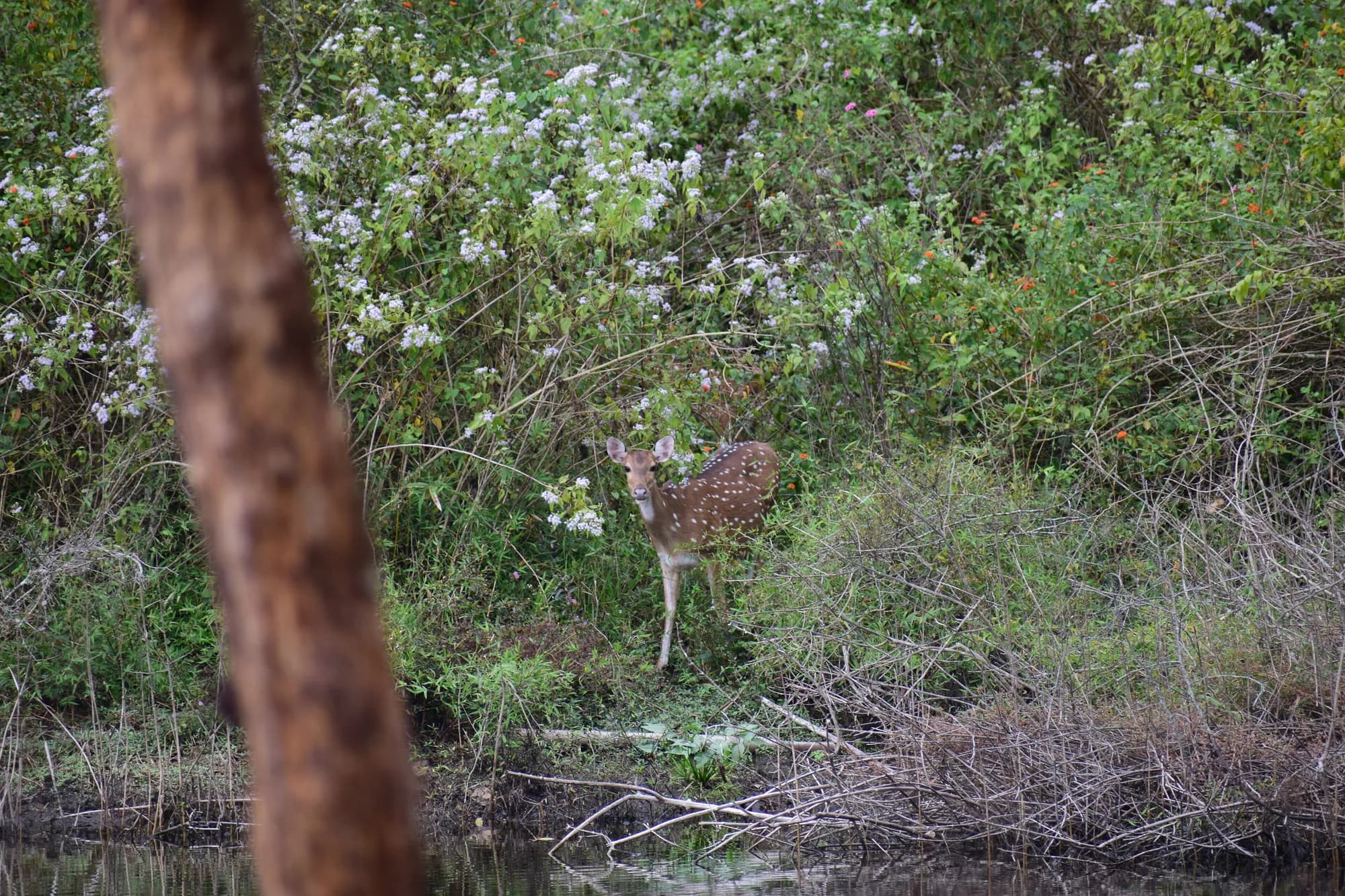
Chital — the confusion pair
The spotted deer everyone sees within ten minutes and stops noticing by the second drive. Also the most common alarm call in central India, and the main reason tigers eat.
Assam floodplain, near-certain
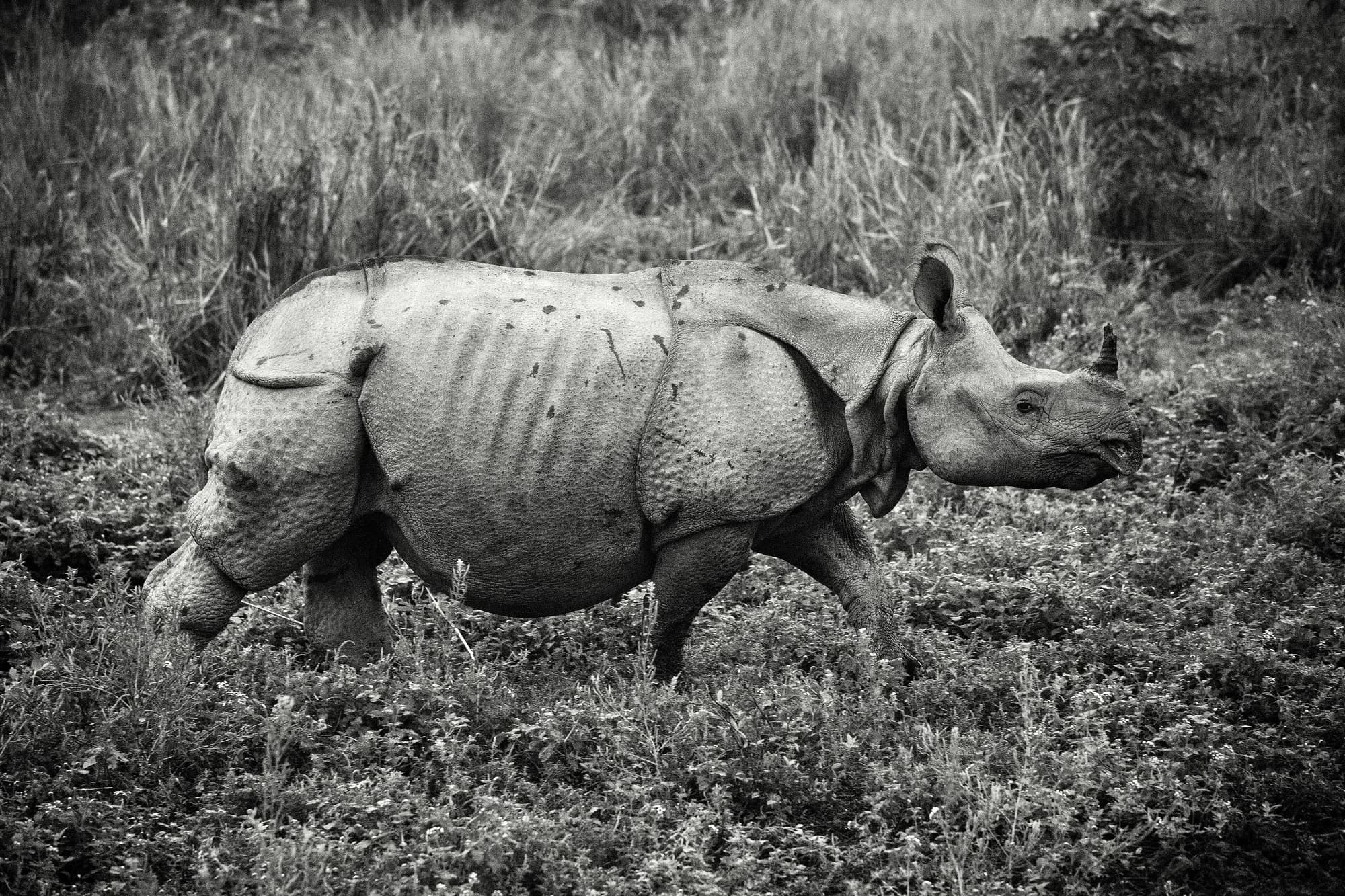
One-horned rhino — the same grassland
The easiest large mammal in India to see well. Two-thirds of the world's population stands in open grass, in daylight, in one Assam floodplain.
Terai wetland, in Dudhwa and Kishanpur
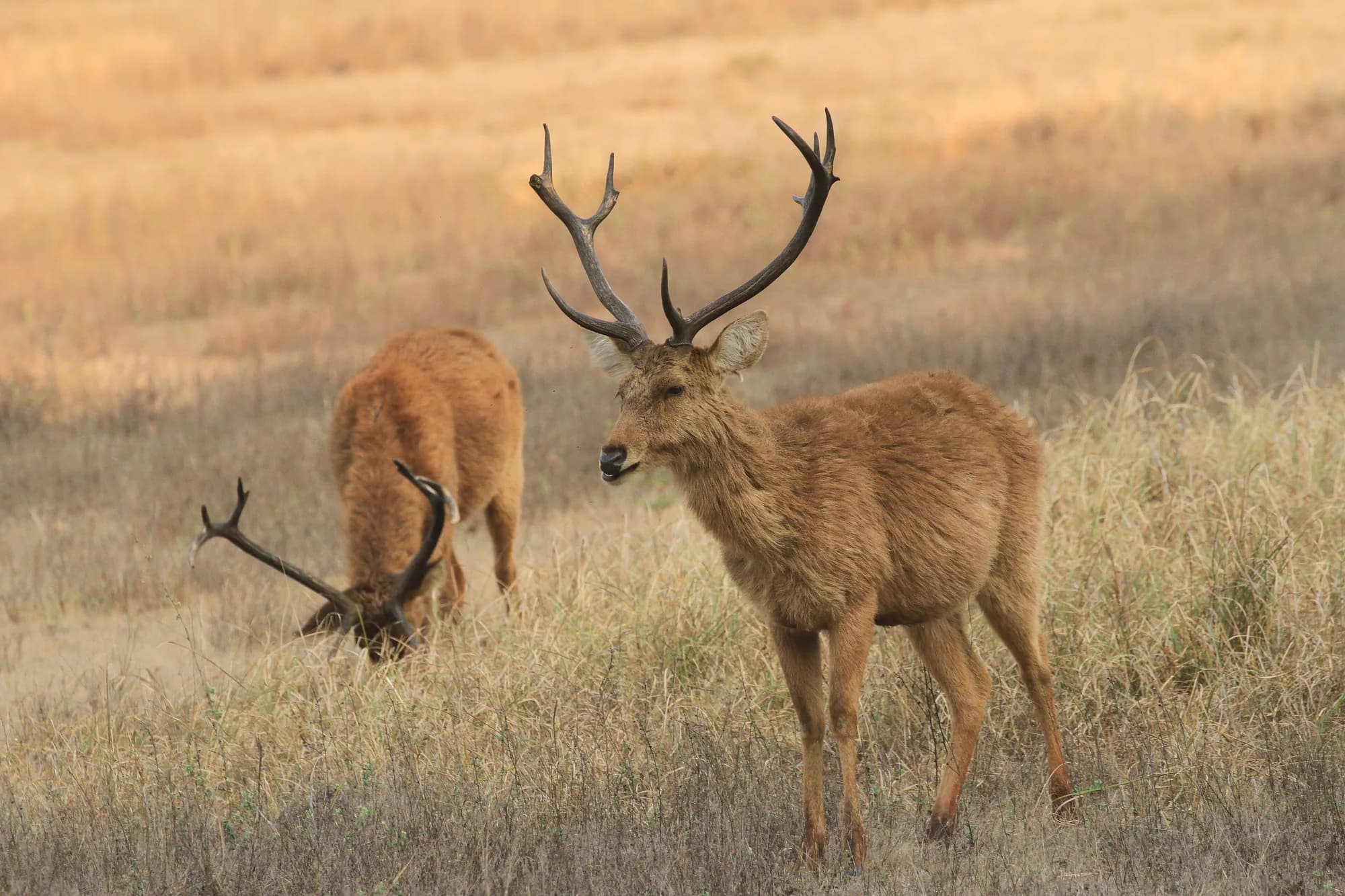
Northern swamp deer — the other floodplain deer
The wetland barasingha — splay-hoofed, stag-antlered, standing in water. It is one of three subspecies that get called barasingha interchangeably, and the differences decide which park you should book.
Assam
Kaziranga — the park in full
Floodplain grassland, one-horned rhino in daylight, and the one Indian park where the headline animal is close to certain.