
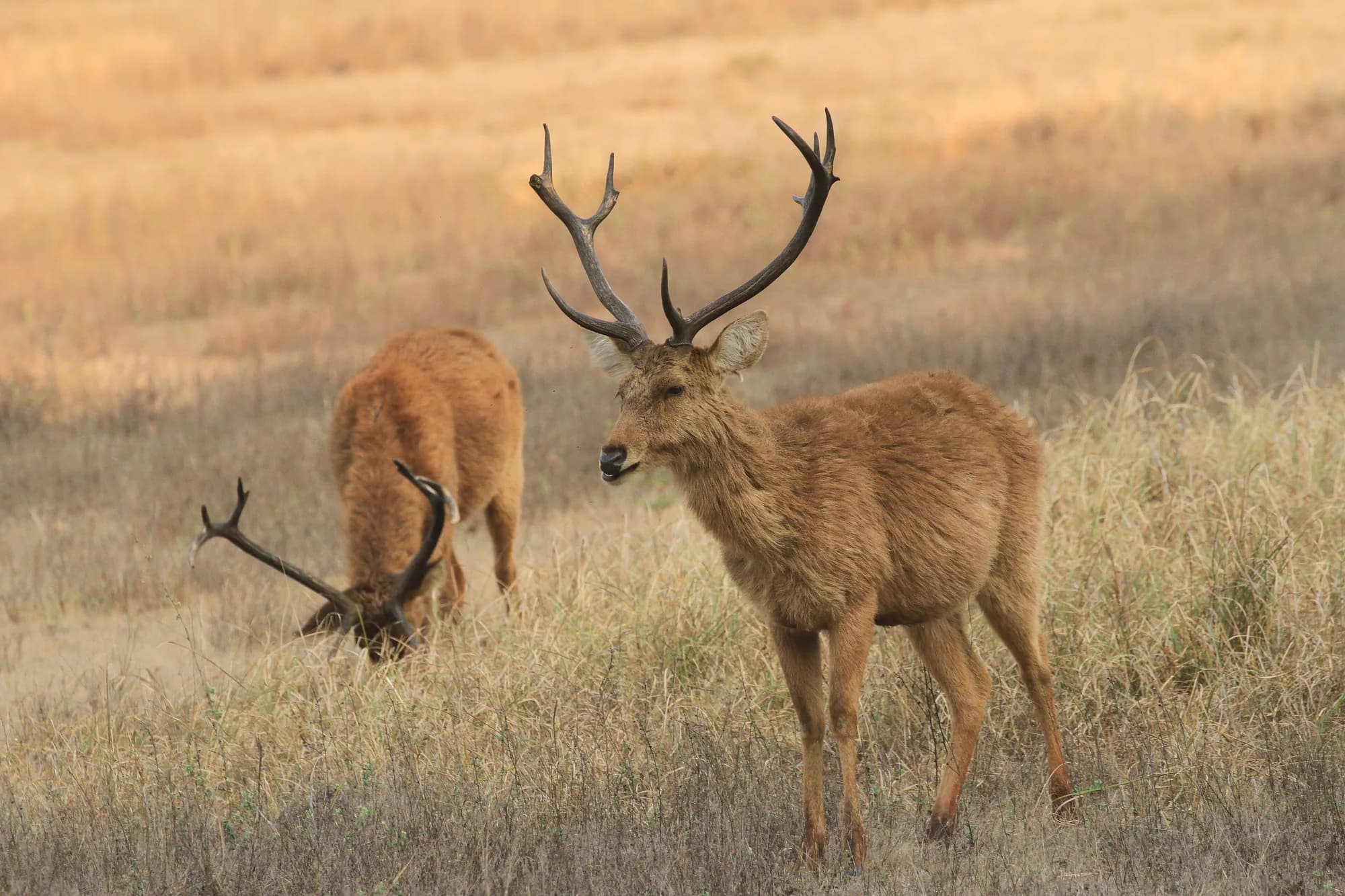
Species · Rucervus duvaucelii duvaucelii
Northern swamp deer
The wetland barasingha — splay-hoofed, stag-antlered, standing in water. It is one of three subspecies that get called barasingha interchangeably, and the differences decide which park you should book.
Also called
- Barasingha (बारहसिंगा) · Hindi
- Gond · Awadhi
Checked 31 Aug 2026
- Where
- Terai wetlands of Uttar Pradesh
- Best months
- November–March
- Antlers
- Twelve or more tines on a mature stag
- Note
- Three subspecies, three habitats
Swamp and wet grassland in the terai belt of Uttar Pradesh — Dudhwa, Kishanpur, Katarniaghat, Jhilmil Jheel and Pilibhit. The largest population in the world is at Kishanpur, and the subspecies is functionally confined to this belt.
Where it is
Where to actually go
Ranked, with the reason each — these are not interchangeable.
- 01KishanpurUttar PradeshThe largest population of this subspecies anywhere, in herds of hundreds on open wet grassland.Book Kishanpur specifically
- 02DudhwaUttar PradeshLarge terai grasslands with swamp deer through them, and a far quieter park than the central Indian reserves.Space, and no crowds
- 03KatarniaghatUttar PradeshWet grassland along the Girwa, with gharial and swamp deer in the same morning.Pairs with the river
Where you will not see one
- KanhaKanha's barasingha are the hard-ground subspecies, Rucervus duvaucelii branderi, which lives on dry meadow rather than in water. It is the same species and a genuinely different animal to watch.
- KazirangaAssam's swamp deer are the eastern subspecies, Rucervus duvaucelii ranjitsinhi. They are not northern swamp deer, and a trip report that says otherwise has merged two populations a thousand kilometres apart.
When to go
When to go
- J
- F
- M
- A
- M
- J
- J
- A
- S
- O
- N
- D
January: best. February: best. March: best. April: good. May: marginal. June: closed or unproductive. July: closed or unproductive. August: closed or unproductive. September: closed or unproductive. October: marginal. November: best. December: best.
Through the day
- Dawn
- Morning
- Midday
- Afternoon
- Dusk
- Night
Dawn: most active. Morning: active. Midday: usually resting. Afternoon: active. Dusk: most active. Night: usually resting.
Telling it apart
Told apart from
Central India versus the terai
Ground, not the animal. The hard-ground subspecies stands on dry Kanha meadow with compact hooves; this one stands in water on wide splayed ones.
Terai forest edge
Antlers and colour. Sambar are darker, coarser-coated and carry only three tines a side; a swamp deer stag carries six or more.
Marks chosen to be usable from a moving vehicle — a northern swamp deer is rarely still and never close enough for anything subtler.
What it looks like in the field
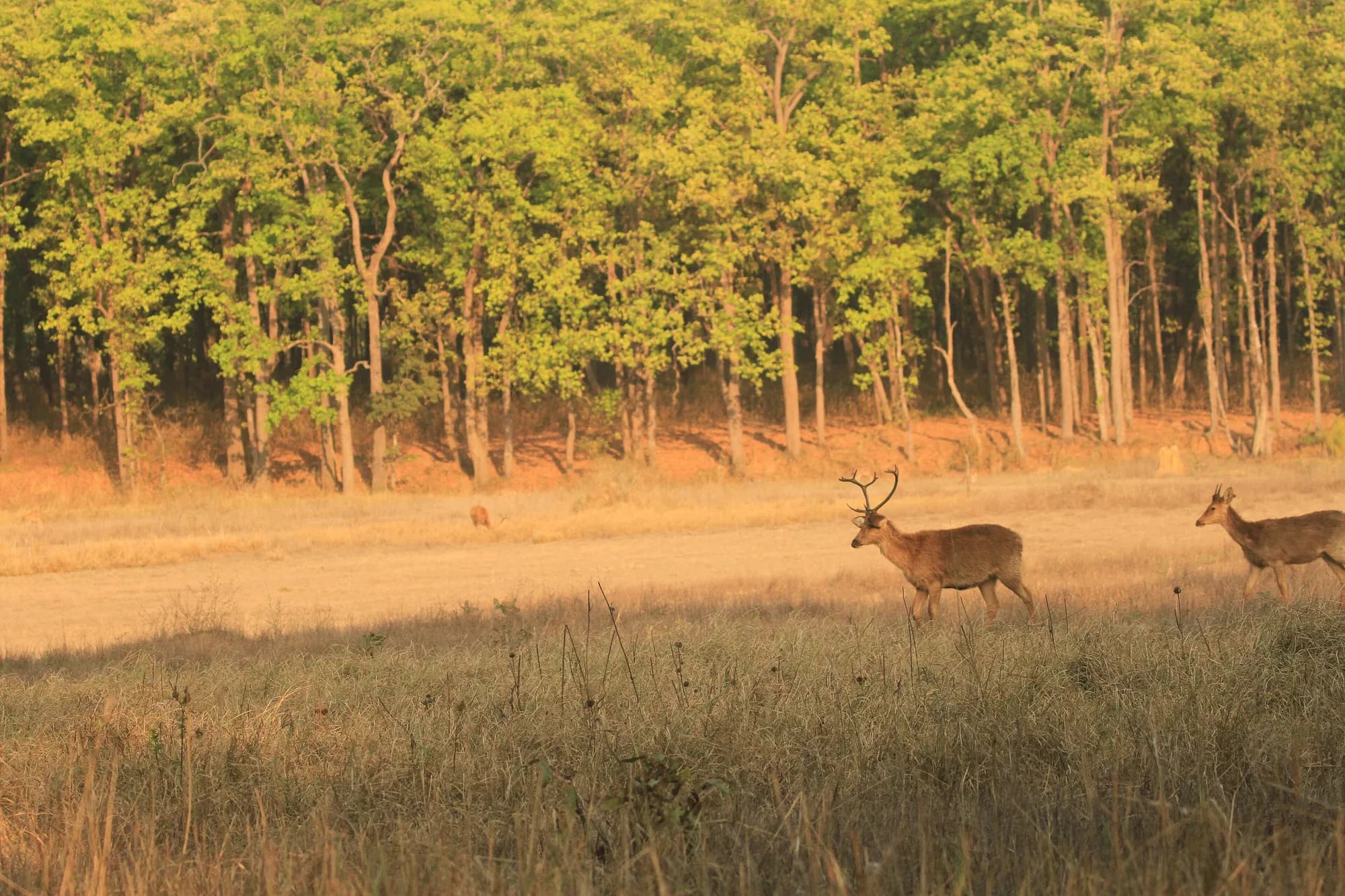
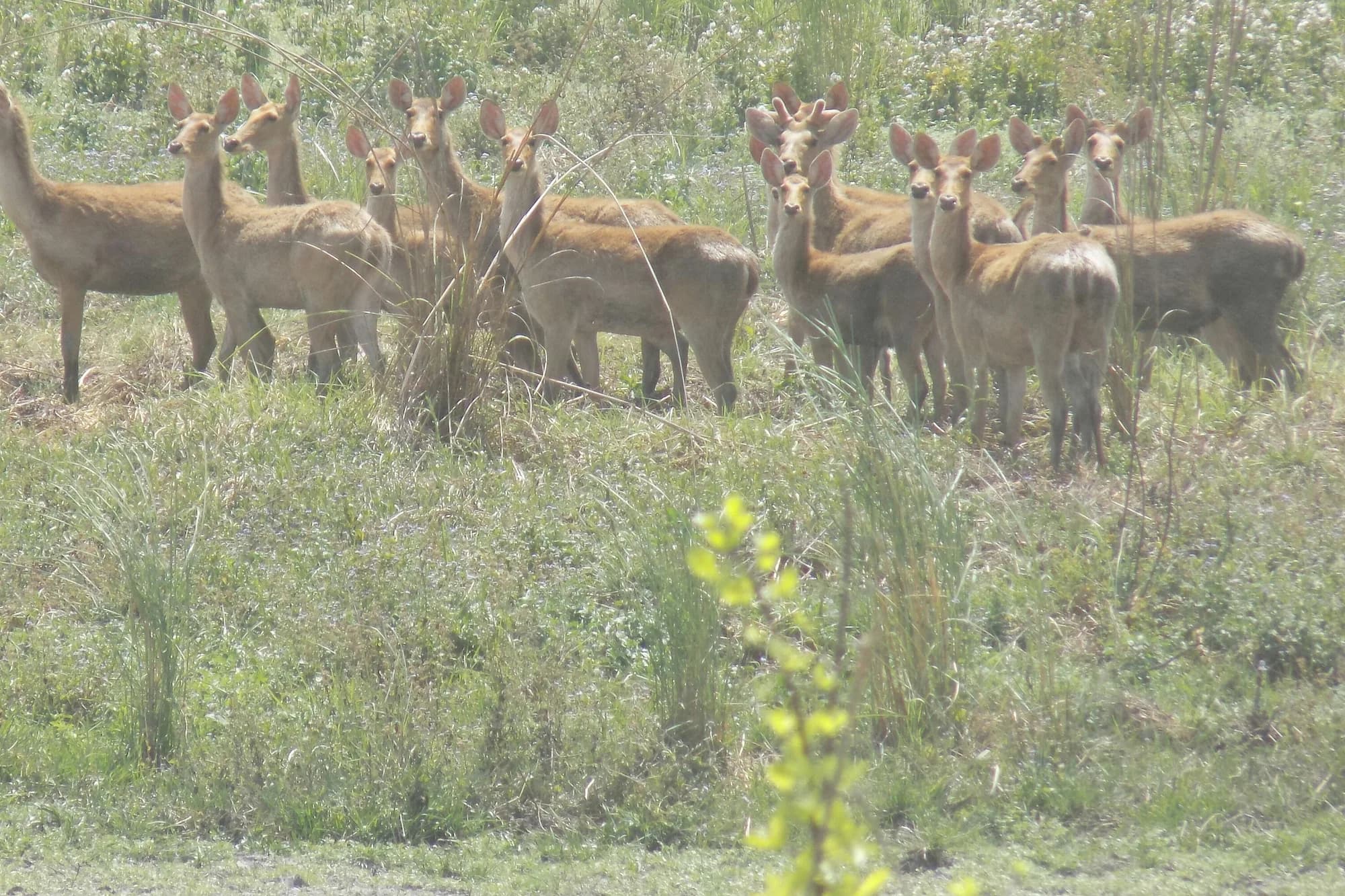
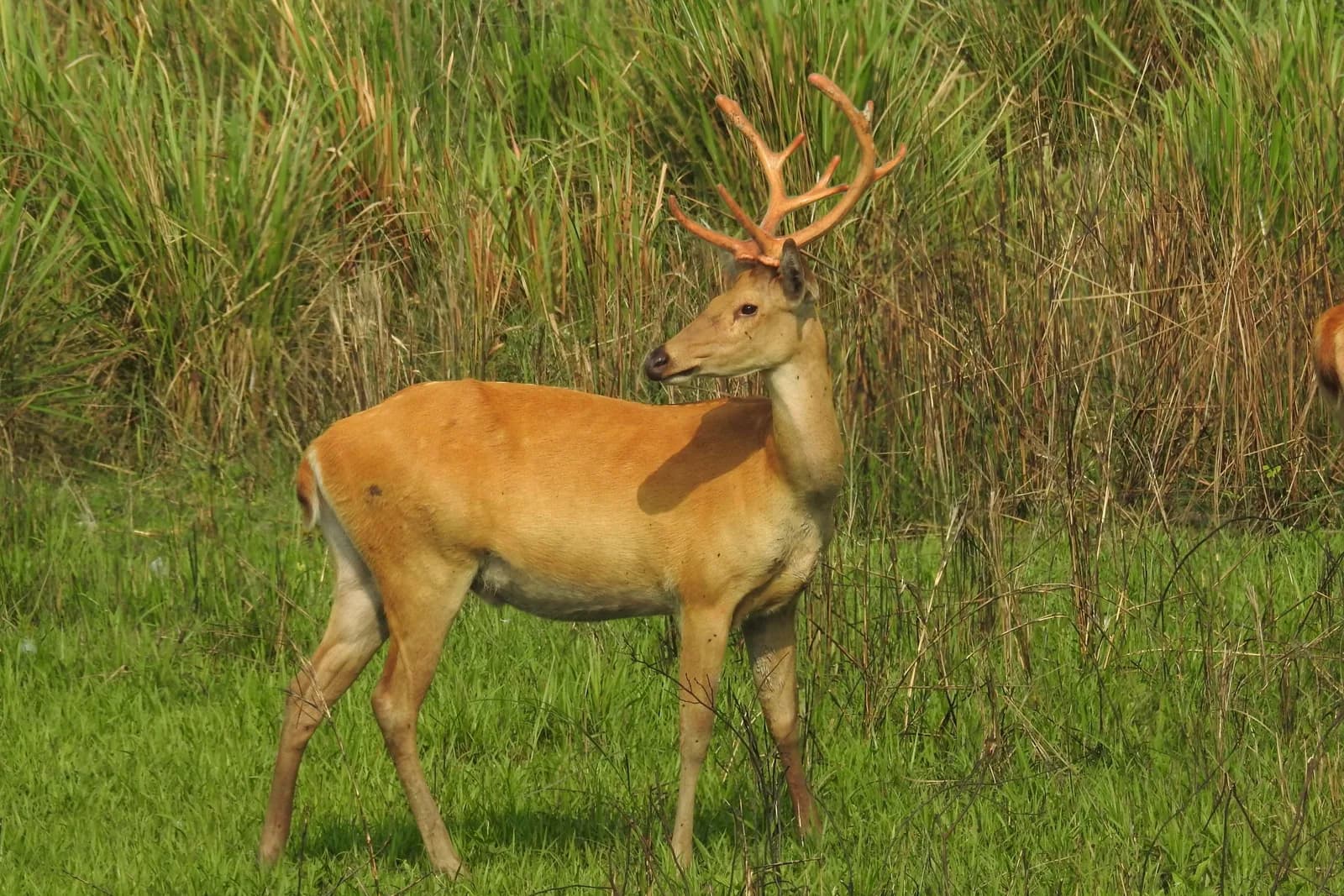
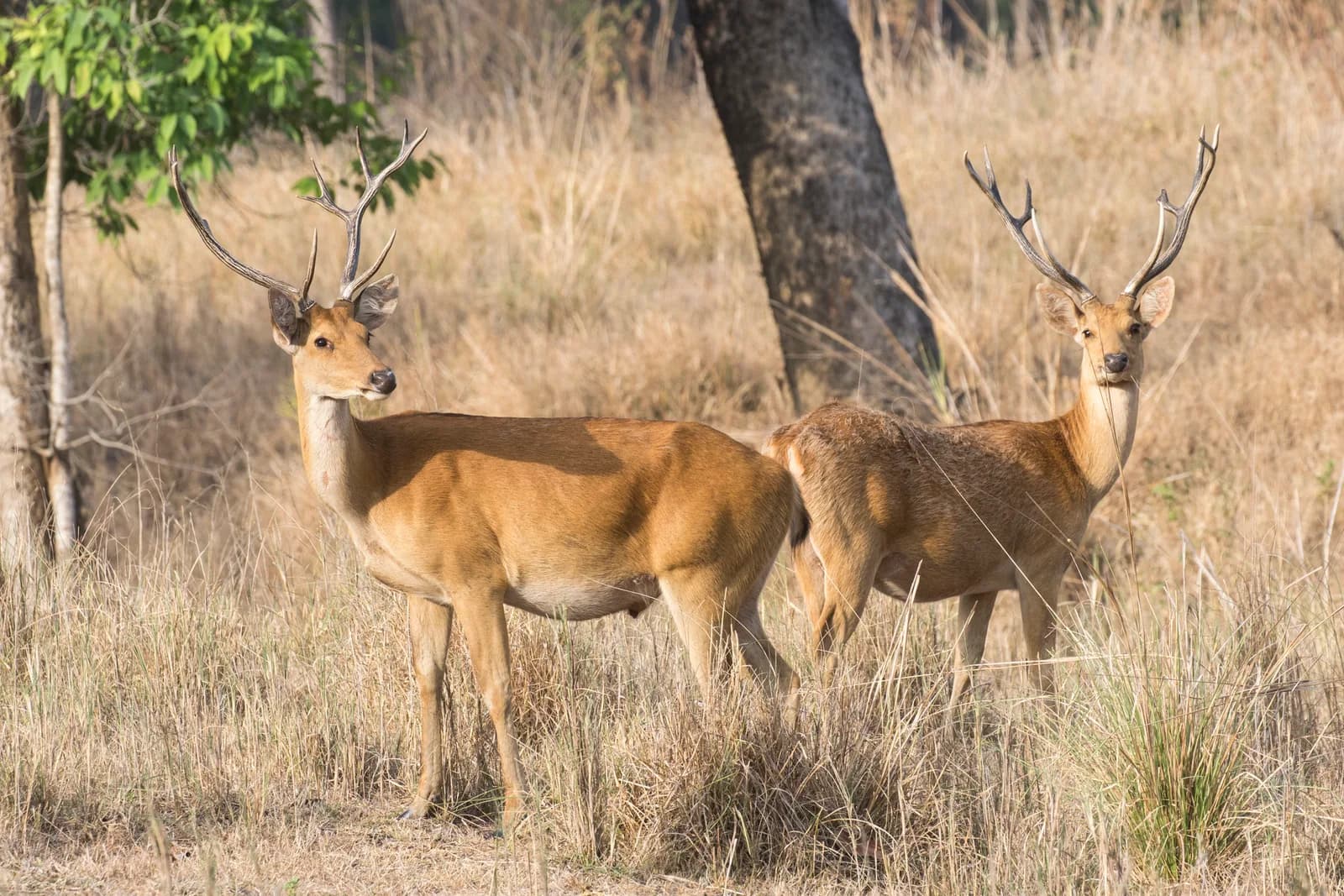
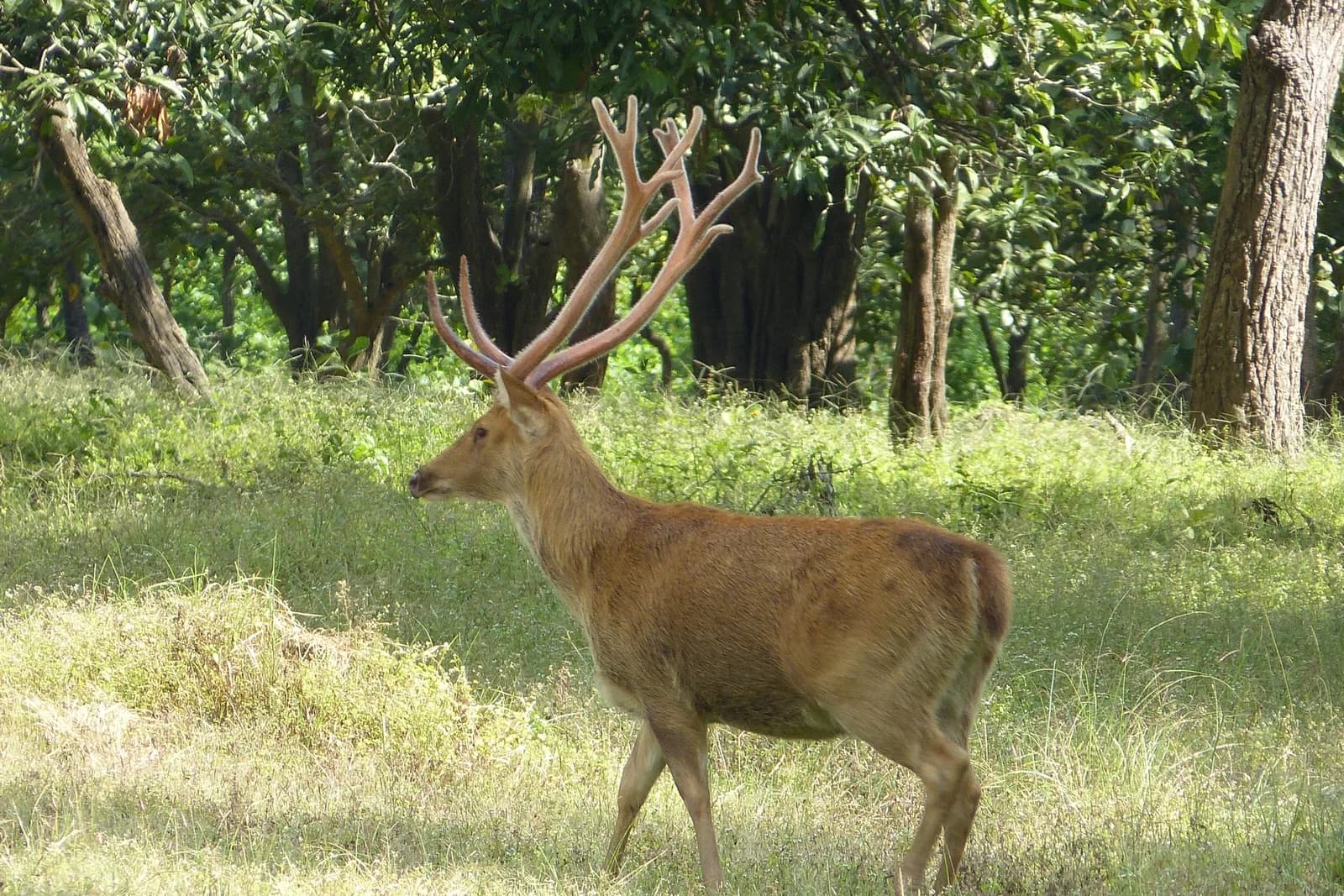
Photographs of Northern swamp deer in the wild, in Indian reserves. We publish no captive, baited or digitally composited images, and no photograph whose licence we cannot show.
Three barasingha, three plans
The species splits into three subspecies in India and they do not live the same way. The northern animal wades in terai marsh. The hard-ground animal at Kanha stands on dry meadow. The eastern animal in Assam is on Brahmaputra floodplain.
Why the hooves are the story
A northern swamp deer’s hooves splay wide under load, spreading its weight across soft marsh the way a snowshoe does. The Kanha population lost that adaptation as its habitat dried, and its hooves are compact and hard.
One species, two answers to the same question about ground. It is the clearest piece of visible evolution on any Indian safari.
Status and protection
Status and protection
- IUCN Red List
- Vulnerable
- Population trend
- ↓ Decreasing
- Wildlife Protection Act 1972
- Schedule I
- CITES
- Appendix I
SPECIES-LEVEL ASSESSMENT. The binomial supplied (Rucervus duvaucelii duvaucelii) is the nominate 'wetland' subspecies; it has no separate Red List assessment.
Assessed 2015 · IUCN Red List assessment
What to book to see one
What you would be booking
- How it is seen
- A jeep safari at Dudhwa or Kishanpur, out on the wet grassland at first light.
- Drives to book
- Two drives at Kishanpur will normally produce large herds. Dudhwa is bigger and needs a little more time.
Kishanpur is a sanctuary within the Dudhwa tiger reserve and is booked separately from the main park. Ask specifically for Kishanpur if the swamp deer is what you came for.
Dudhwa — the park in fullQuestions people ask
Where can I see northern swamp deer?
Is it the same as the barasingha at Kanha?
When is the best time to go?
Read next
Kanha, and nowhere else on earth
Barasingha — the hard-ground subspecies
The hard-ground swamp deer was down to about sixty-six animals in the early 1970s. It survives in one reserve, and its recovery is the best thing that has happened in an Indian national park.
Tall grassland of the terai and Assam
Hog deer — the other floodplain deer
A small, heavy-bodied deer that runs with its head down instead of leaping. It is endangered, it is common where it survives, and in Kaziranga it is the animal chital gets called by mistake.
The Chambal, above all
Gharial — the same terai rivers
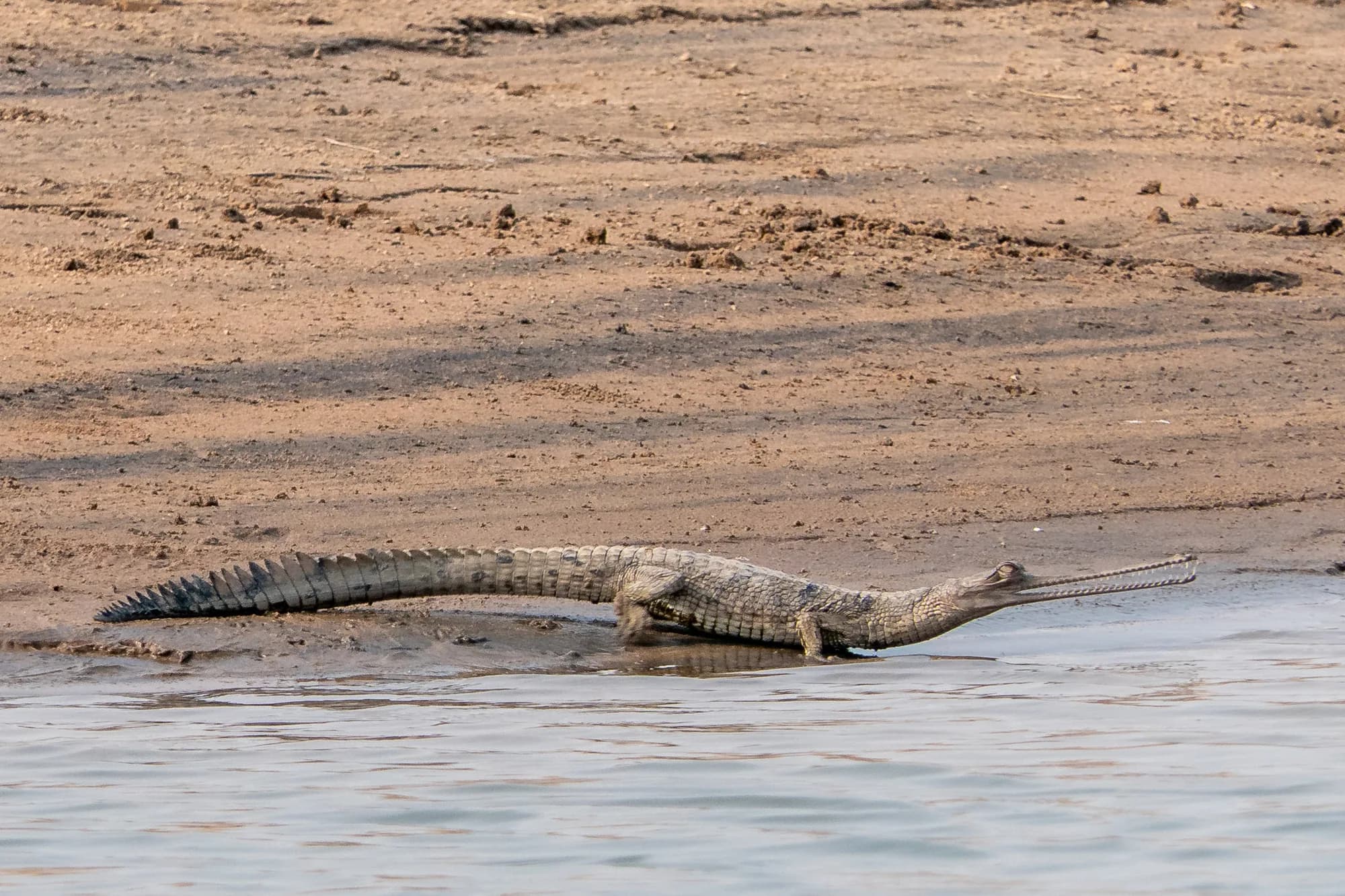
A fish-eating crocodilian with a snout like a pair of tongs, down to a few hundred breeding adults, and hauled out on Chambal sandbanks in winter in numbers that make it look common.
Dudhwa — the park in full