
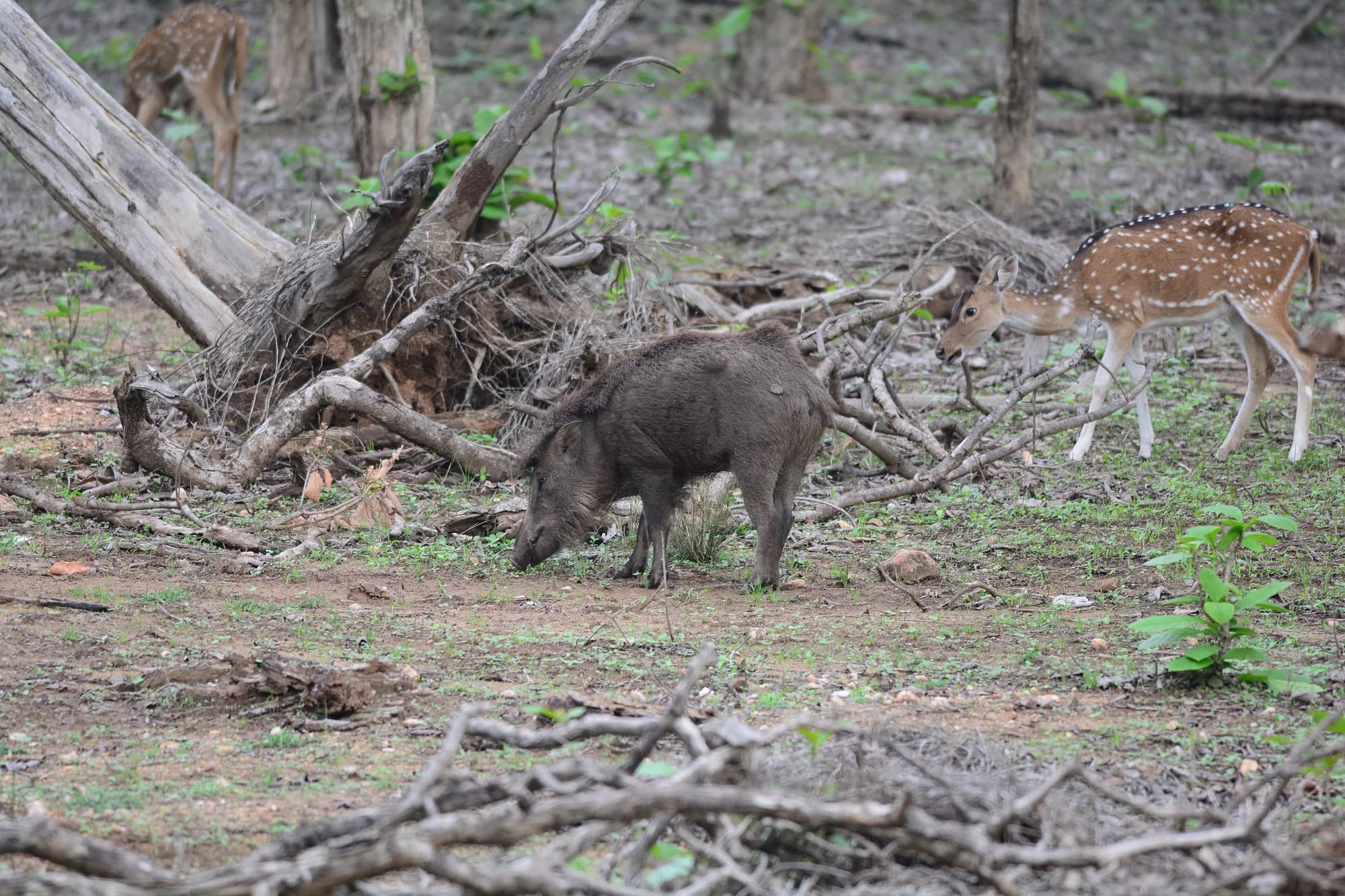
Species · Sus scrofa cristatus
Indian wild boar
Seen on every drive, respected by every guide, and the animal that most often explains an alarm call that was not about a cat.
Also called
- Jangli suar (जंगली सूअर) · Hindi
- Ran dukkar · Marathi
- Kaadu handi · Kannada
Checked 30 Aug 2026
- Where
- Every reserve in this list
- Best months
- November–June
- Groups
- Sounders of 5–20
- Note
- Major tiger prey
Forest, grassland, scrub and farmland across almost the whole country, and one of the most adaptable large mammals here.
Where it is
Where to actually go
Ranked, with the reason each — these are not interchangeable.
Where you will not see one
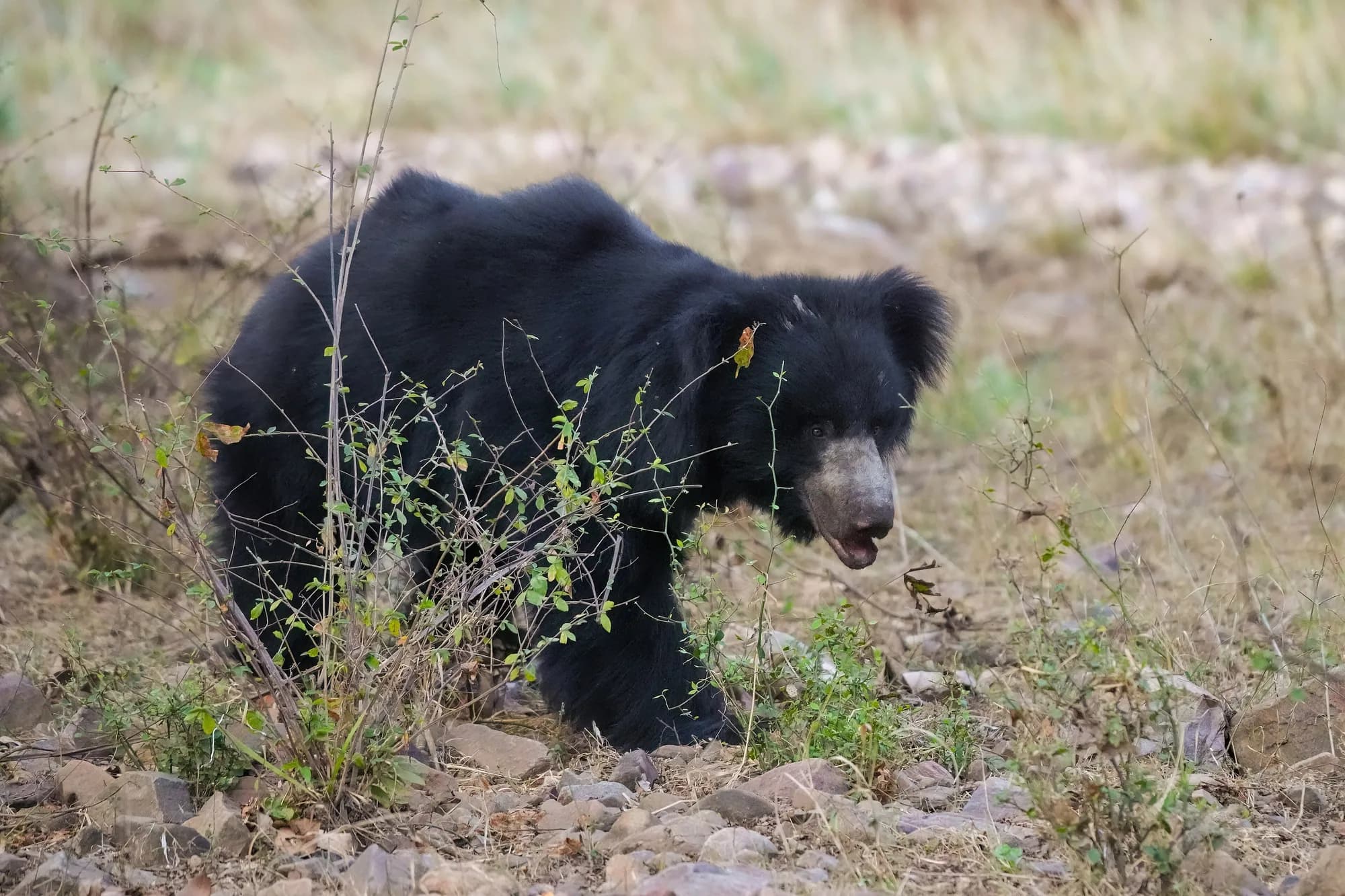
- Confused with a sloth bear at duskThe commonest low-light mix-up in central India. A boar trots with the head low and level; a sloth bear shambles with a visible shoulder hump.
- Assumed to be domestic pigsWild boar are grey-black and bristled with a pronounced dorsal crest and a straight tail. Village pigs are usually smaller, patchier and near settlement.
When to go
When to go
- J
- F
- M
- A
- M
- J
- J
- A
- S
- O
- N
- D
January: good. February: good. March: best. April: best. May: best. June: best. July: closed or unproductive. August: closed or unproductive. September: closed or unproductive. October: marginal. November: good. December: good.
Through the day
- Dawn
- Morning
- Midday
- Afternoon
- Dusk
- Night
Dawn: most active. Morning: active. Midday: usually resting. Afternoon: active. Dusk: most active. Night: active.
What it looks like in the field
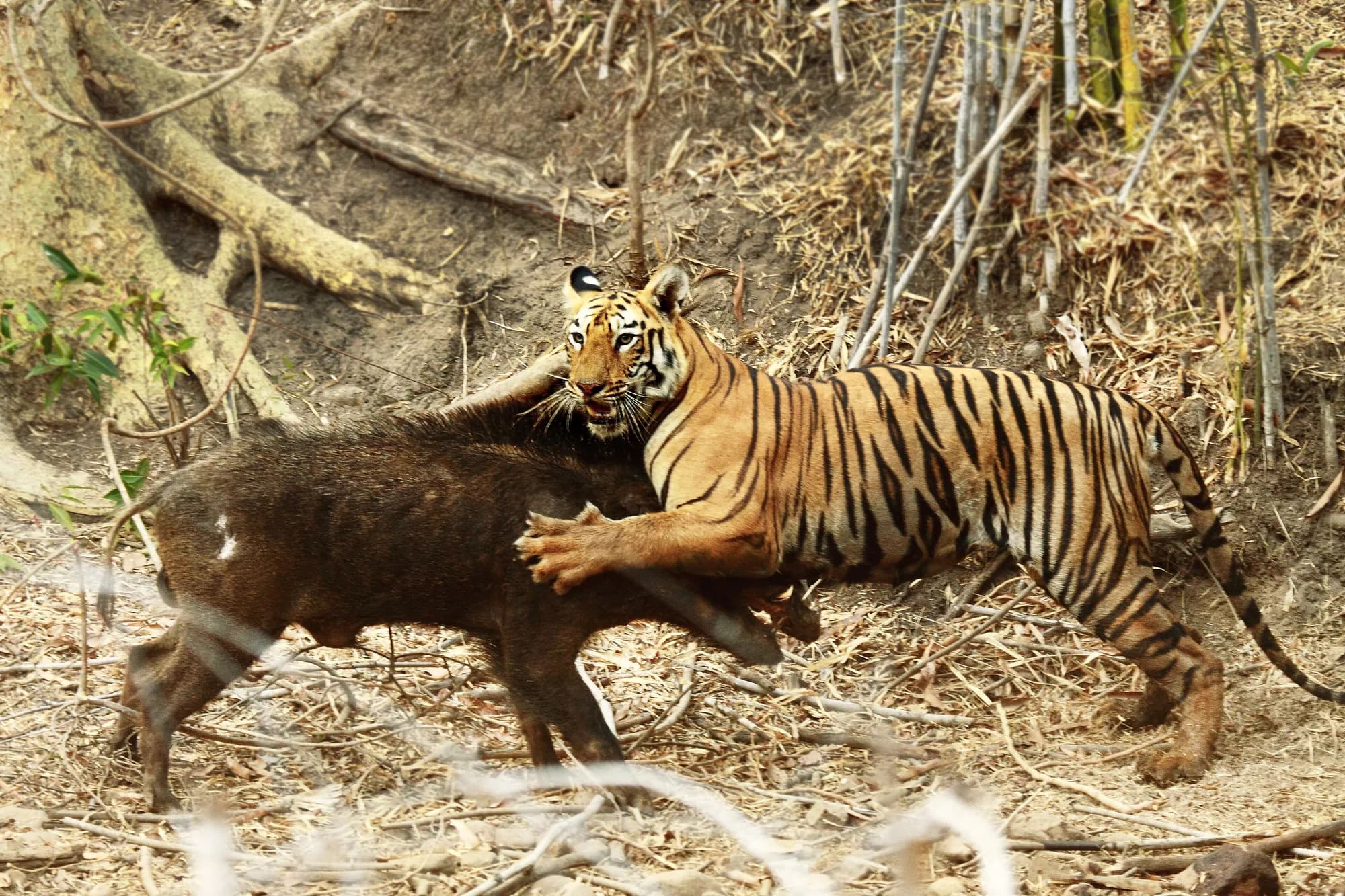
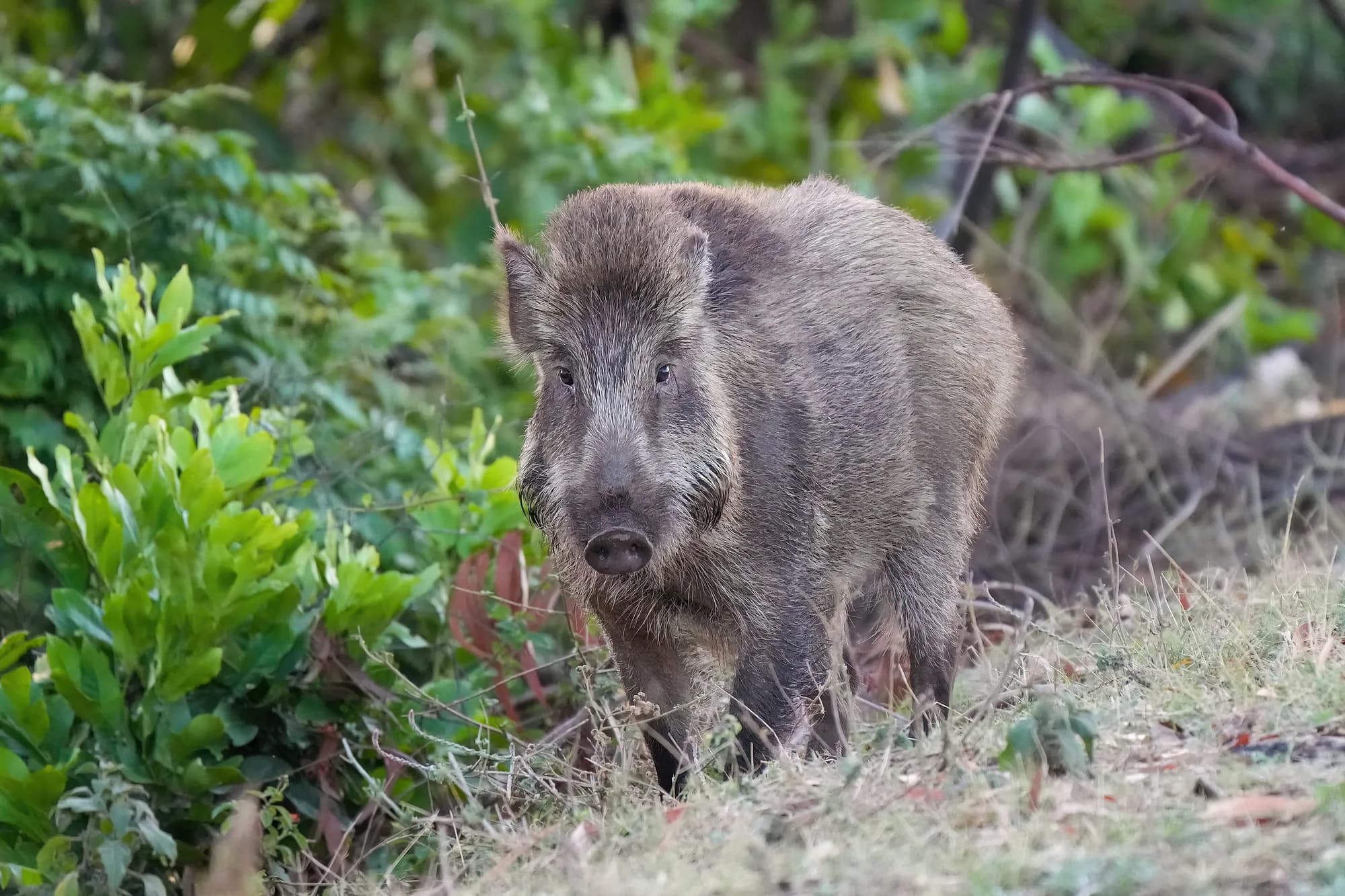
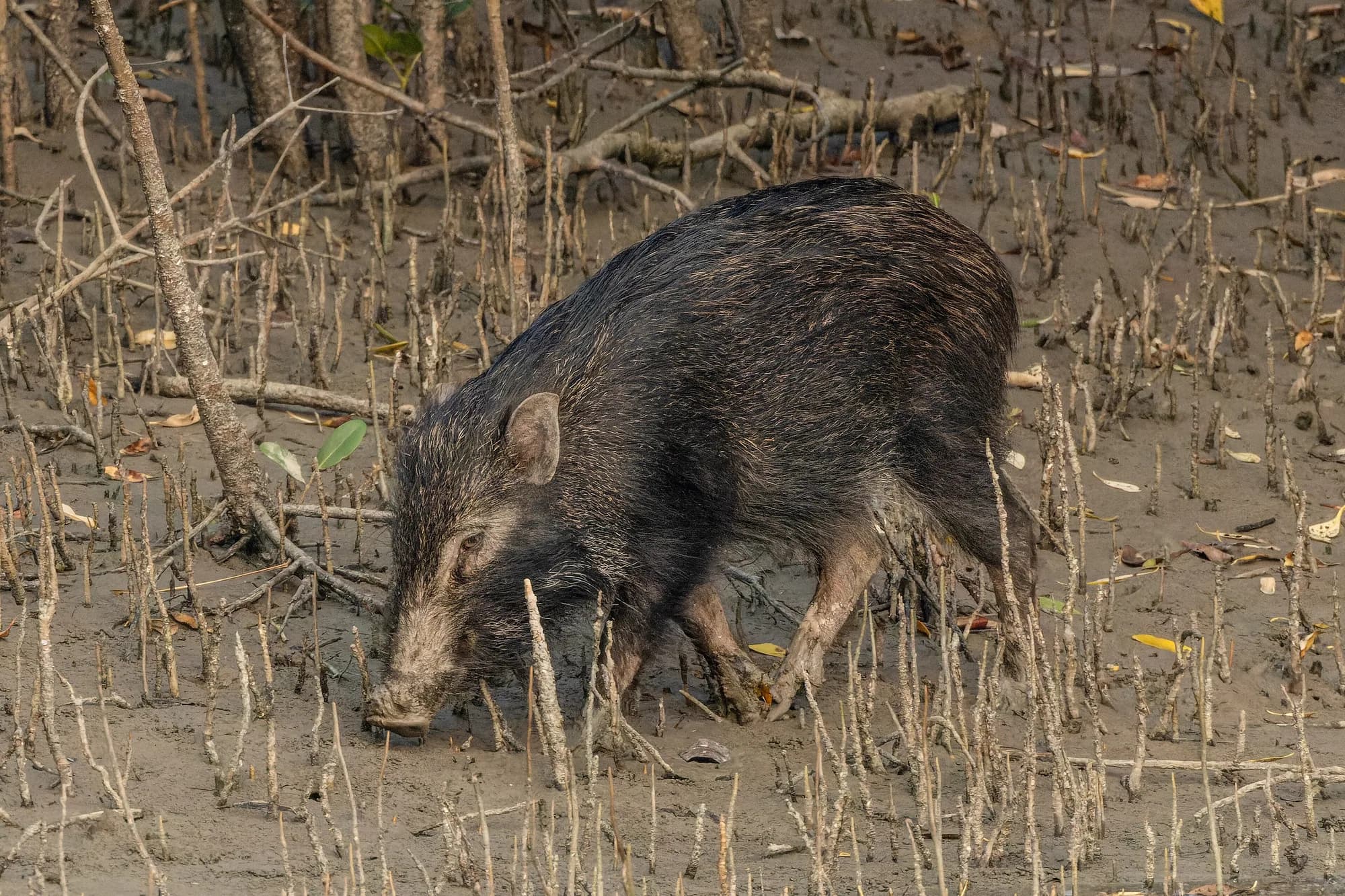
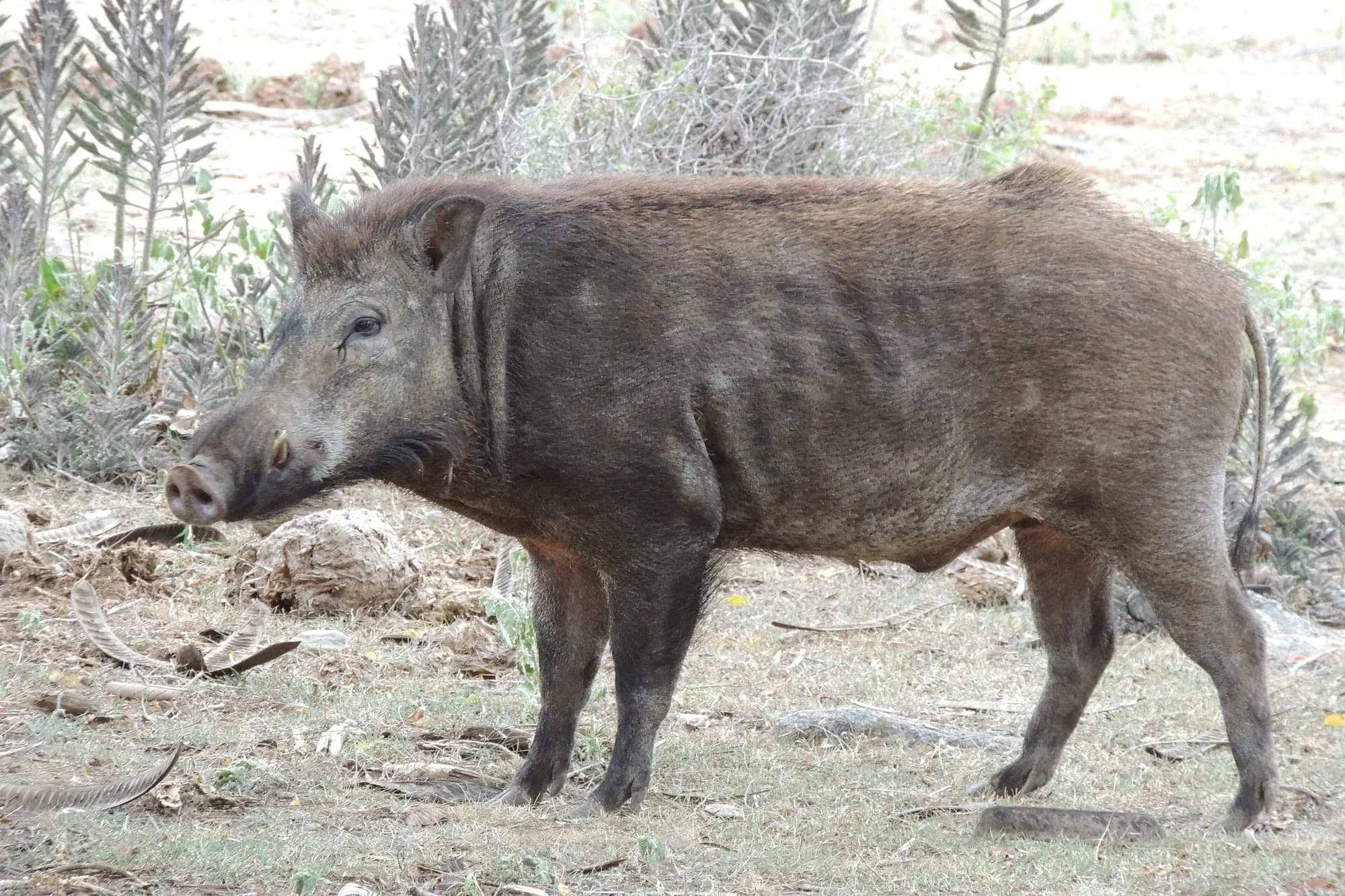
Photographs of Indian wild boar in the wild, in Indian reserves. We publish no captive, baited or digitally composited images, and no photograph whose licence we cannot show.
What a sighting is actually like
Noisy and quick. A sounder crosses in a line with the piglets in the middle, and the whole group is gone in about four seconds — boar rarely stand and look at you the way deer do.
The striped piglets are the sighting worth waiting for. They lose the stripes by autumn.
Prey, and the alarm problem
Wild boar are a major prey species for tigers and leopards, and a substantial part of what keeps predator density high in the central reserves.
Status and protection
Status and protection
- IUCN Red List
- Least Concern
- Population trend
- · Unknown
- Wildlife Protection Act 1972
- Schedule II
- CITES
- Not listed
SPECIES-LEVEL ASSESSMENT. The binomial supplied (Sus scrofa cristatus) is the Indian subspecies; there is no separate Red List assessment for it.
Assessed 2018 · IUCN Red List assessment
What to book to see one
What you would be booking
- How it is seen
- Any jeep safari. You will not need to look.
- Drives to book
- None required.
Give a sounder with piglets room. Boar are among the more genuinely defensive animals in an Indian forest and a cornered one is taken seriously by anyone on foot.
Bandhavgarh — the park in fullQuestions people ask
Where will I see wild boar?
Are they dangerous?
Why do deer alarm at boar?
Read next
58 reserves, six worth the trip
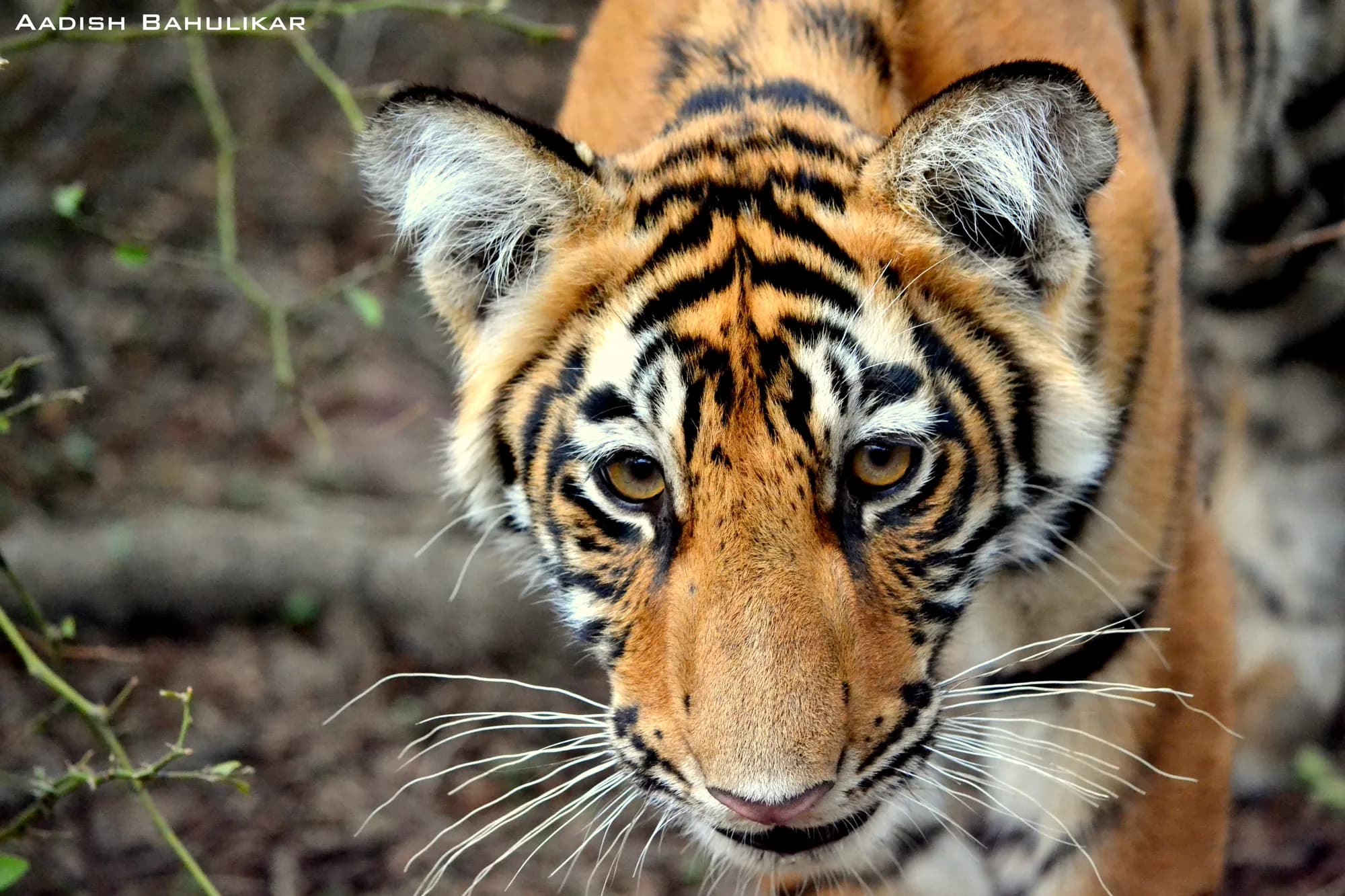
Tiger — the predator
The animal most people come for, and the one most often missed. Where the odds actually are, and how they move by month and by zone.
Every reserve, in very large numbers
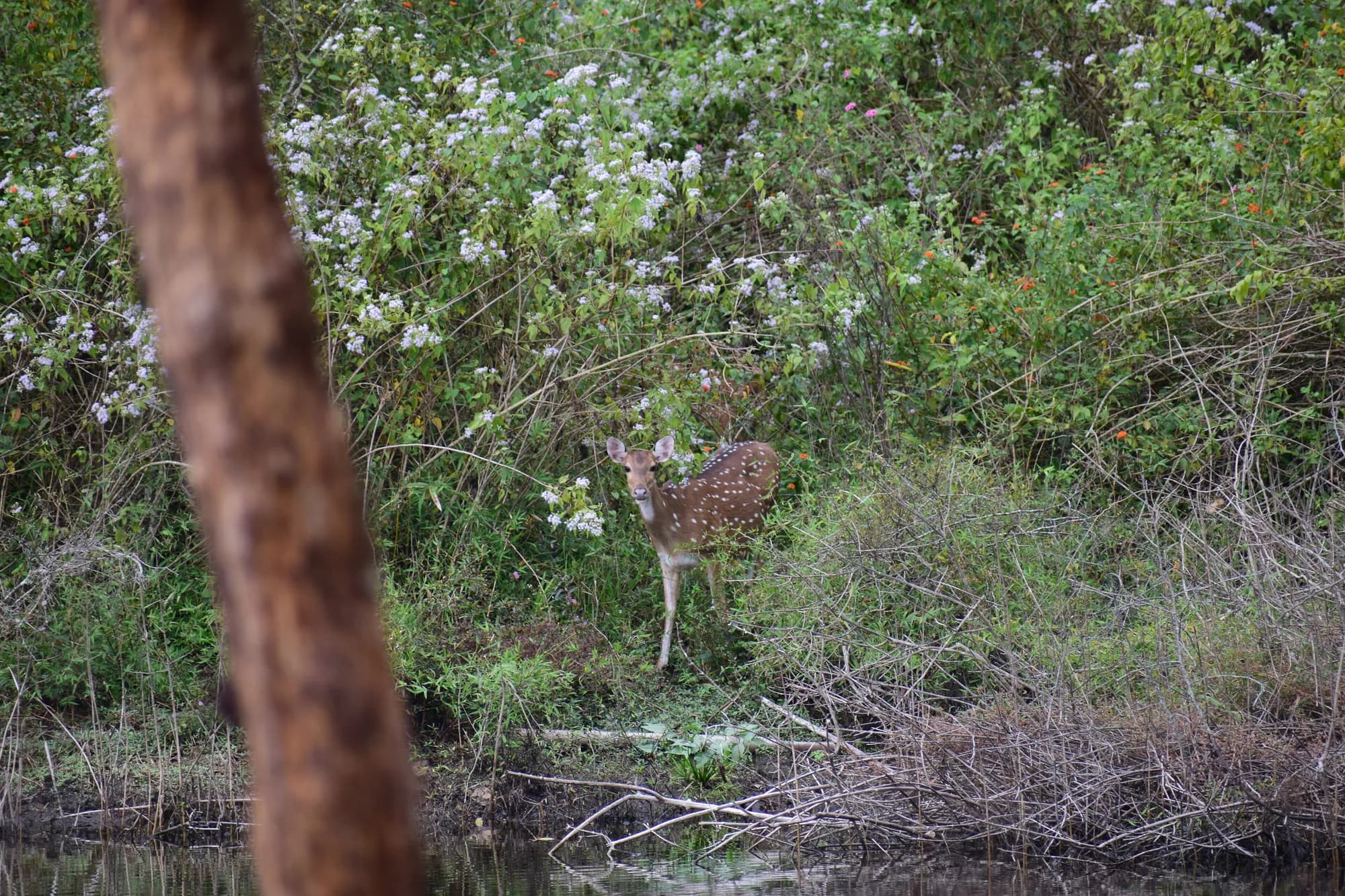
Chital — the other alarm caller
The spotted deer everyone sees within ten minutes and stops noticing by the second drive. Also the most common alarm call in central India, and the main reason tigers eat.
Madhya Pradesh
Bandhavgarh — the park in full
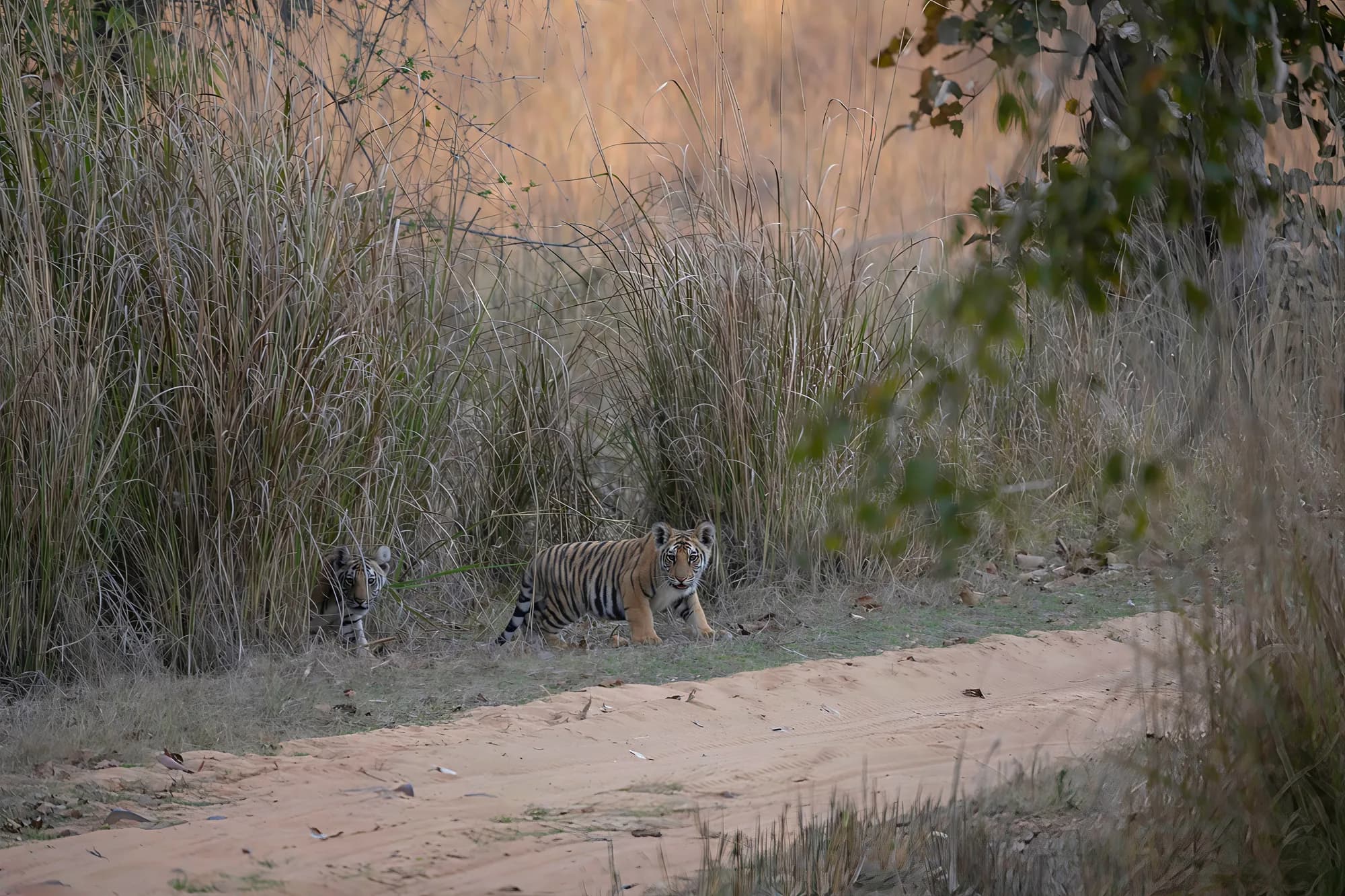
The highest tiger density in India in a compact area — which is why it is the reserve most often recommended for a first trip.
Nine reserves, and Satpura above all
Sloth bear — the dusk confusion
The animal most guides would rather show you than a tiger, and the one most likely to be walked past in the dark. Where the diggings are, and why the odds are better on foot.