
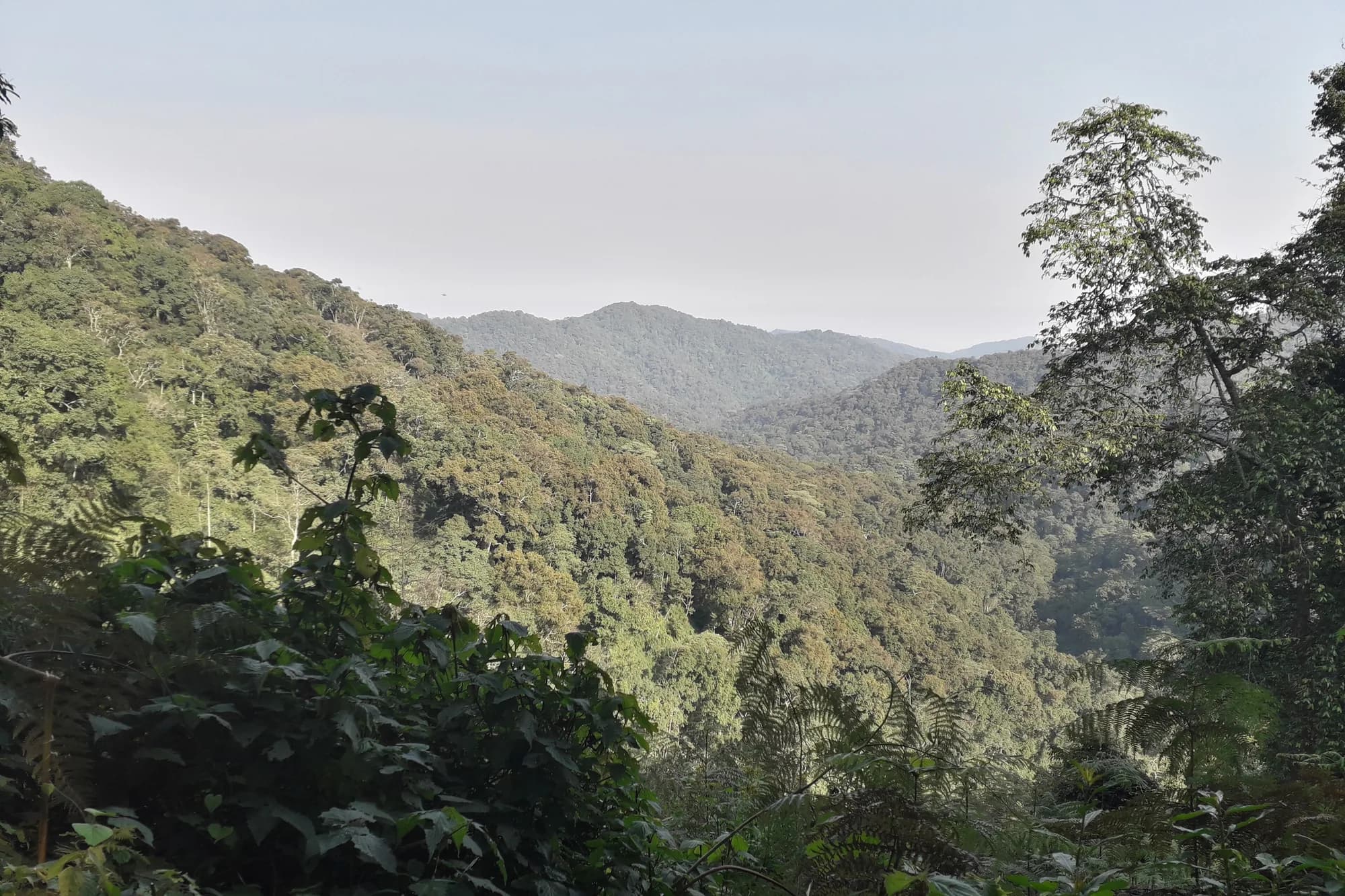
Uganda / Bwindi Impenetrable / Where to stay — Bwindi Impenetrable
Where to stay — Bwindi Impenetrable
There is one rule here and it outranks every other consideration: sleep in the sector your permit is for.
The sector rule
Match the lodge to the permit, not the other way round
Trekking briefings start around 07:00 at the sector headquarters. A lodge in the wrong sector means leaving at 03:00 to drive around the forest on rough road, arriving tired for a walk that can last all day. This is the commonest and most avoidable Bwindi mistake, and it is usually caused by booking a lodge before securing the permit.
Accommodation by sector
| Sector | Choice | Character |
|---|---|---|
| Buhoma | Widest, all tiers | The established sector; village walks nearby |
| Ruhija | Limited, simpler | High and cold; birders' base |
| Rushaga | Growing, mid-range | Most habituated groups; habituation experience |
| Nkuringo | Few, some excellent | Steep ground, and the best views in Bwindi |
What to look for beyond the sector
- Distance to the trailhead in minutes, not kilometres. The roads are slow.
- Hot water and a drying room. You will come back wet and muddy in any month.
- Whether the lodge is community-owned or contributes directly to the parishes around the park — several are, and it is the clearest way your money reaches the people living with the gorillas.
- Altitude. Ruhija is high and cold at night; Buhoma is markedly warmer.
Two more that people only learn afterwards. Power: several lodges run on solar with limited inverter hours, which matters when you have four camera batteries to charge before a trek. And food timing: you will want breakfast at 05:30 or 06:00 on the trekking morning and a real meal at an unpredictable hour in the afternoon, and a lodge that cannot flex on both is a lodge that will send you up the hill on tea and toast.
How the sector trap actually springs
It rarely looks like a mistake while it is happening. Someone reads about Bwindi, finds a lodge at Buhoma because Buhoma has the most lodges and therefore the most search results, and books it on a refundable rate in November for a trip in July. In February they instruct an operator to get permits. Buhoma permits for those dates are long gone. Rushaga has availability, so Rushaga is what they get.
Now there are three bad options and no good one. Move the lodge, and the refundable rate has usually lapsed by then. Drive it, which means a 03:00 start on murram for a briefing at 07:00 and a trek that can run seven hours after that. Or turn up at Buhoma and try to track there, which is a named offence in UWA's fines table at 50 per cent of the permit fee — USD 400 on a foreign non-resident permit. Rescheduling the permit late is 25 per cent, USD 200. And since 1 March 2026 there is no unpaid reservation to quietly release, so the money is already with UWA.
The fix costs nothing and takes one email
Get the permit first. It is the scarce item, it is the expensive item, and it is the one that cannot be moved without a penalty. Lodges are the abundant item. Reversing the order turns a USD 400 risk into an afternoon of searching for a bed, which is not a real problem in any of the four sectors outside Christmas.
Uganda Wildlife Authority — Conservation Tariff 2024–2026
Read 27 September 2026. Read alongside the Executive Director's circular of 26 February 2026, which adds low-season gorilla permits for April, May and November and suspends the seven-day unpaid reservation window. The tariff is printed "subject to change without prior notice".
https://ugandawildlife.org/wp-content/uploads/2024/03/UWA-Conservation-Tariff-July-2024-June-2026.pdfBuhoma and Ruhija — the northern pair
Buhoma is the original. Gorilla tourism in Uganda started here in April 1993 with the Mubare group, and thirty-three years of infrastructure has accumulated around that fact — the widest range of lodges at every tier, a village with craft shops and a community walk, and the shortest average transfer from the trailhead. It is the sector for a first gorilla trek and for anyone travelling with people who are not entirely sold on the idea.
Ruhija is the opposite proposition. It is high, cold, cloudy and thinly served, and it is where the birds are. Lodges are simpler and fewer, nights need a fleece, and the compensation is that a birder can walk out of the door towards Mubwindi Swamp and be among Albertine Rift endemics before breakfast. Nobody accidentally ends up at Ruhija, which is part of its appeal.
- Both are reached through Kihihi airstrip, or by road from Kabale — 95 kilometres of murram and four hours on UWA's own figure.
- Buhoma is 64 kilometres from Ishasha and 160 from Mweya, which makes it the natural continuation of a Queen Elizabeth leg.
- Ruhija sits between the two: it is on the Kabale–Buhoma road, so a Ruhija night is easy to slot in on the way to or from Buhoma.
- Nights at Ruhija are materially colder than at Buhoma. The park runs to 2,607 metres and Ruhija is near the top of it.
Uganda Wildlife Authority — Bwindi Impenetrable National Park
UWA's own park page. Read 28 September 2026. The source here for the park's area and altitude, the gorilla population figure, the species counts, the number of habituated groups, and UWA's own published road distances and routes.
https://ugandawildlife.org/national-parks/bwindi-impenetrable-national-park/Rushaga and Nkuringo — the southern pair
The south has been catching up with the north for a decade and now beats it on two counts. Rushaga has the most habituated groups of any sector, which means the most permits issued each day and the best chance of getting one at short notice, and it is where the habituation experience runs. Nkuringo has the hardest walking and, by common consent, the best views in the park.
The practical case for both is Kisoro. Kisoro is 35 kilometres and an hour or so from Nkuringo on UWA's figures, it has the airstrip, it is the gateway to Mgahinga and golden monkey tracking, and it is the Ugandan town nearest the Cyanika crossing from Rwanda. A southern-sector trip that flies into Kigali and out of Kigali is a genuinely shorter holiday than the Entebbe version, and the lodges have been built accordingly.
- Rushaga: mid-range and growing, with the habituation experience as the sector's distinctive product at USD 1,500 rising to USD 1,800 in 2027.
- Nkuringo: few lodges, several of them very good, on an escarpment above the forest. The walk down into the park is steep and the walk back out is steeper.
- Kabale to Nkuringo is 105 kilometres and four hours. Kisoro to Nkuringo is 35 kilometres and an hour or so. Check which town your transfer actually starts from.
- The Rushaga to Nyabaremura guided long walk is a Rushaga-specific activity at USD 60, rising to USD 80 in 2027.
Uganda Wildlife Authority — Bwindi Impenetrable National Park
UWA's own park page. Read 28 September 2026. The source here for the park's area and altitude, the gorilla population figure, the species counts, the number of habituated groups, and UWA's own published road distances and routes.
https://ugandawildlife.org/national-parks/bwindi-impenetrable-national-park/UWA — Introduction of low season gorilla and chimpanzee permit rates, 26 February 2026
The Executive Director's circular, reference TDO 93/04, signed by Dr James Musinguzi. A scanned two-page letter. It introduces the April, May and November rates with immediate effect, publishes the structure taking effect 1 January 2027, and suspends the seven-day reservation window from 1 March 2026. Read 28 September 2026.
https://ugandawildlife.org/wp-content/uploads/2026/03/Tariff-changes-2026-2027.pdfCamping, and UWA's own rates
The cheapest legitimate bed at Bwindi is a tent, and UWA prices camping in the tariff rather than leaving it to the lodges. It is the one accommodation figure on this page that comes from an official document rather than from a booking site, and it is per person per night.
UWA camp site categories, per person per night
| Category | What it is | Rate |
|---|---|---|
| A | Wilderness camping, maximum 16 persons | USD 40 |
| B | Private, advance booking, maximum 20 persons including non-paying workers | USD 30 |
| C | Public, with pit latrine, firewood, rubbish pit, water, fireplace and thatched shelter, security included | UGX 40,000 |
| Students | — | UGX 3,000 |
Prior booking is required for all categories, the charges are per person per night, and the rates are exclusive of local tax and levy. Camping does not include park entrance, which is the separate USD 40 a day for a foreign non-resident — though on your trekking day the permit covers it.
This does not make Bwindi a budget trip
A foreign non-resident camping for three nights pays USD 120 in camp fees against a USD 800 permit. Even at zero for the bed, the trip is still dominated by one line you cannot discount, which is the whole economic shape of Bwindi and the thing that makes it different from a self-drive park. Camping saves real money on the second-largest line, not on the largest.
Uganda Wildlife Authority — Conservation Tariff 2024–2026
Read 27 September 2026. Read alongside the Executive Director's circular of 26 February 2026, which adds low-season gorilla permits for April, May and November and suspends the seven-day unpaid reservation window. The tariff is printed "subject to change without prior notice".
https://ugandawildlife.org/wp-content/uploads/2024/03/UWA-Conservation-Tariff-July-2024-June-2026.pdf