
Uganda / Lake Mburo / Sightings log — Lake Mburo
Sightings log — Lake Mburo
No authority publishes odds for this park. What UWA does publish is a careful set of words about which animals are here and how rare they are, and read closely those words are more useful than a percentage.
There is no success rate here, and that is worth saying first
At Kibale, UWA publishes a chimpanzee sighting rate of over 90 per cent in two separate documents. At Lake Mburo it publishes no figure of any kind — no percentage, no frequency, no count for any species. That absence is not an oversight; it is what a park without a single target species looks like.
The strongest language UWA uses for each animal, and what it commits to
| Animal | UWA's wording | What that is a claim about |
|---|---|---|
| Impala | "Uganda's only population of impalas" | Exclusivity, not frequency |
| Zebra | "one of Uganda's best places to see zebras" | Comparison, not probability |
| Eland | "frequently spotted here" | The strongest frequency claim on the page |
| Buffalo, waterbuck, reedbuck | "roam the open savanna" | Presence and habitat |
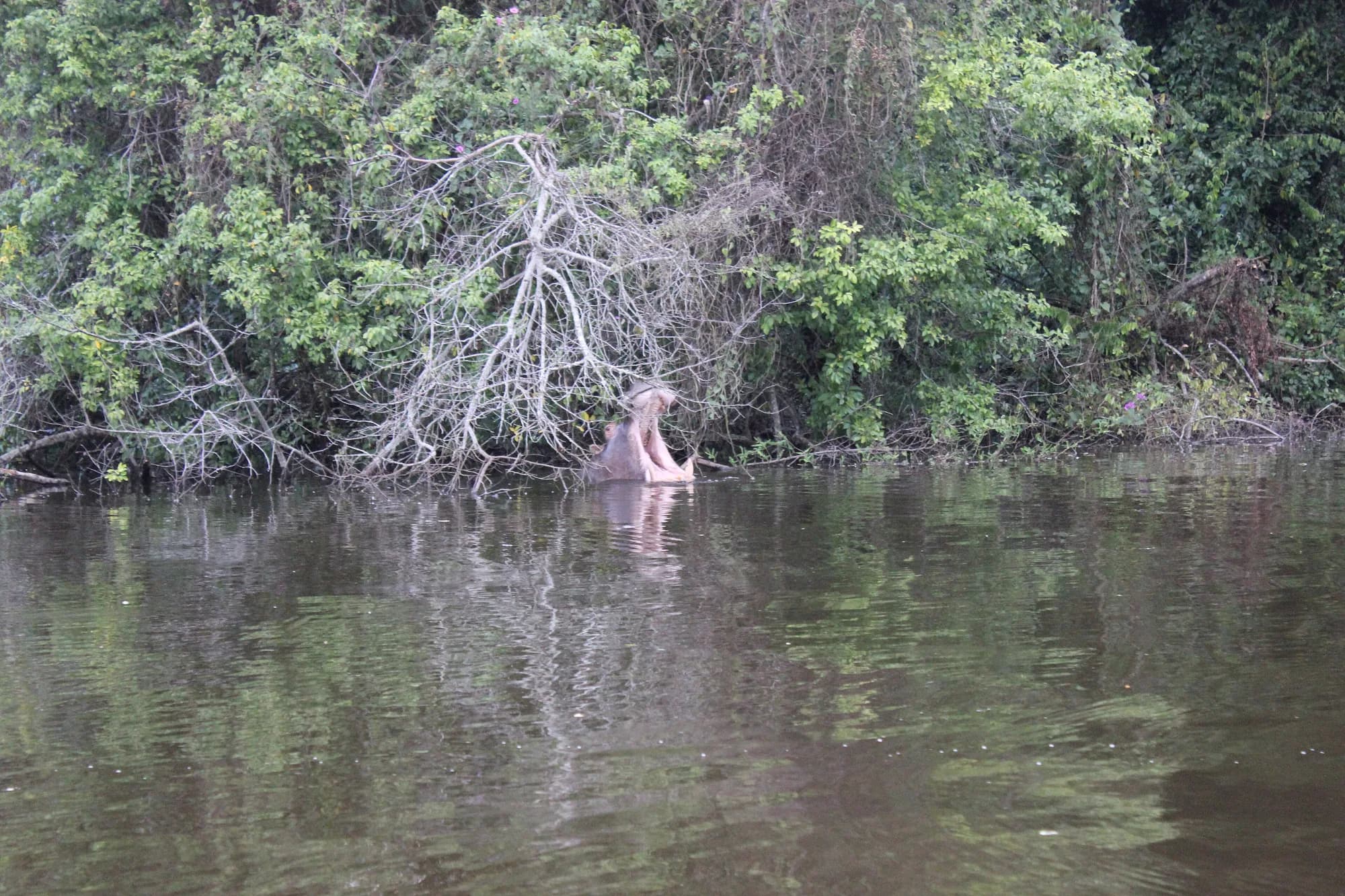
| Hippo and crocodile | "dominate the lakeshores" | Presence, and where |
| Leopard and hyena | "lurk in the woodlands, though sightings are rare" | Presence, with an explicit warning |
| Lion | No mention on the current park page; excluded from lion range by UWA's 2026 report | An absence, stated by the most recent authority |
"Frequently spotted" for eland and "sightings are rare" for leopard are the two ends of UWA's vocabulary for this park, and they are the only two frequency statements it makes. Everything else is a claim that an animal is present. A site that converts any of these into a percentage has invented the percentage.
Why a grazer park does not need odds
A gorilla permit buys one attempt at one group, so a success rate is the only honest way to describe it. Lake Mburo sells entrance to a 20-per-cent-wetland savanna holding 69 mammal species, where the headline animals are resident, non-migratory, diurnal grazers on open ground. You are not attempting anything. The question is not whether you will see zebra and impala — on a morning drive on the eastern tracks you will — but what else the day gives you, and that is the question the rest of this page answers.
Uganda Wildlife Authority — Lake Mburo National Park
UWA's own Lake Mburo park page, read 14 October 2026. Note the path: the page lives at /national-parks/lake-mburo/, and the longer /national-parks/lake-mburo-national-park/ that matches most of UWA's other parks returns a 404. The source here for the park-size infobox, the district, the 50 km wetland system, the three historical causes of wildlife loss, the revenue-share percentage, the species list, the absence of elephants, the bird count of over 315, the two-gate access description and the charter-flight routing.
https://ugandawildlife.org/national-parks/lake-mburo/Uganda Wildlife Authority — Lake Mburo National Park park brochure, 2018
UWA's own two-page park brochure, linked from the download button at the foot of its Lake Mburo page and hosted on ugandawildlife.org. An 11.6 MB file with a text layer; read 14 October 2026. It is the only UWA document that names the third gate, gives the gate road distances, names the tracks and the two viewpoints, describes the salt lick platform and Rubanga forest, sets out the rainfall months, names the lodges, and states who operates horseback riding and mountain biking here. It disagrees with UWA's own park page on the park's area, its bird count, the number of gates and the status of lion — and in one case it disagrees with itself. Every one of those disagreements is published on this page rather than resolved silently.
https://ugandawildlife.org/wp-content/uploads/2024/05/LMNP-2018-4.pdfWhat a morning on the eastern tracks gives you
UWA locates the game viewing precisely and in two places that agree: the brochure's "network of game tracks explores the eastern hinterland of Lake Mburo", and its placement of the productive ground in "the lightly wooded grassland valleys east of Lake Mburo". That is where the grazers are and it is a few minutes from Rwonyo.
The realistic morning, by confidence
| Confidence | Animals | Why |
|---|---|---|
| Expect | Burchell's zebra, impala, warthog | The species the park is built on; open grassland, diurnal, resident |
| Likely | Eland, buffalo, Defassa waterbuck, reedbuck | UWA names eland as "frequently spotted" and the others as roaming the open savanna |
| Listed, but not counted in 2024 | Topi | UWA lists Mburo as topi range, but its 2024 census recorded none in the park or the ranches |
| Possible | Giraffe, bushpig | Fifteen giraffe were introduced in 2015 and UWA puts the population at about 52 by 2025 |
| Unlikely by day | Leopard, hyena | UWA: "sightings are rare"; both are largely nocturnal |
| Treat as absent | Lion | UWA's 2026 report restricts lion to Queen Elizabeth, Kidepo Valley and Murchison Falls |
| Not present | Elephant, rhino | UWA states the park "lacks elephants"; no rhino claim anywhere |
This table is our reading of UWA's own frequency language, not a UWA table, and it contains no numbers because UWA publishes none. The two rows that carry direct UWA quotes — eland and leopard — are the two we are most confident about.
The sightlines are shorter than you expect
Because there are no elephants, the acacia woodland here is dense — UWA's own explanation is that the woodlands "thrive without being tamed". That makes Lake Mburo a park of fifty-metre encounters in bush and wooded valley rather than kilometre views across plain. It is why the open valleys east of the lake matter so much, and why a ranger guide at USD 20 earns the money: on this ground, knowing which valley held the topi yesterday is worth more than it is on an open plain where you can simply look.
Uganda Wildlife Authority — Lake Mburo National Park park brochure, 2018
UWA's own two-page park brochure, linked from the download button at the foot of its Lake Mburo page and hosted on ugandawildlife.org. An 11.6 MB file with a text layer; read 14 October 2026. It is the only UWA document that names the third gate, gives the gate road distances, names the tracks and the two viewpoints, describes the salt lick platform and Rubanga forest, sets out the rainfall months, names the lodges, and states who operates horseback riding and mountain biking here. It disagrees with UWA's own park page on the park's area, its bird count, the number of gates and the status of lion — and in one case it disagrees with itself. Every one of those disagreements is published on this page rather than resolved silently.
https://ugandawildlife.org/wp-content/uploads/2024/05/LMNP-2018-4.pdfUganda Wildlife Authority — Lake Mburo National Park
UWA's own Lake Mburo park page, read 14 October 2026. Note the path: the page lives at /national-parks/lake-mburo/, and the longer /national-parks/lake-mburo-national-park/ that matches most of UWA's other parks returns a 404. The source here for the park-size infobox, the district, the 50 km wetland system, the three historical causes of wildlife loss, the revenue-share percentage, the species list, the absence of elephants, the bird count of over 315, the two-gate access description and the charter-flight routing.
https://ugandawildlife.org/national-parks/lake-mburo/The salt lick: the only place animals come to you
Every other sighting at Lake Mburo depends on you finding an animal. One does not. UWA's brochure: "Guided walks explore the park around Rwonyo, culminating in a visit to a natural salt lake where wildlife can be viewed from a timber observation platform."
- It is a fixed resource. Animals come to mineral ground on their own schedule, which inverts the usual problem of intercepting moving herds.
- It has a built platform, and it is the only wildlife-viewing structure UWA names anywhere at Lake Mburo.
- The platform puts you above the animals, which is why this works on foot in a park with buffalo in it.
- It is reached on a guided walk from Rwonyo, so it costs the nature-walk rate of USD 25 / 20 / UGX 20,000 rather than a game-drive rate.
- It is close to headquarters, which makes it the one Lake Mburo activity that fits into a gap rather than needing a slot.
What UWA does and does not say about it
UWA names the salt lick, describes the platform and says wildlife can be viewed from it. It does not say which species use it, at what time of day they come, how long a visit lasts, or how often the walk runs. We are not going to fill those gaps — the species list at a salt lick is the sort of specific, checkable claim that operator copy invents freely. What we will say is that the structure of the activity is unusually favourable: a fixed point, a platform, a guide, and a low price, on a park whose other sightings all depend on luck and light.
Note UWA's own inconsistency in naming it
The brochure's heading is "Salt Lick Walk" and its text calls the destination "a natural salt lake". A salt lick and a salt lake are different things, and UWA uses both words for the same place in the same panel. We mention it because a reader searching for either term should know they are looking for the same walk, and because it is one more small reminder that this park's documentation is loose in ways worth checking at the gate.
Uganda Wildlife Authority — Lake Mburo National Park park brochure, 2018
UWA's own two-page park brochure, linked from the download button at the foot of its Lake Mburo page and hosted on ugandawildlife.org. An 11.6 MB file with a text layer; read 14 October 2026. It is the only UWA document that names the third gate, gives the gate road distances, names the tracks and the two viewpoints, describes the salt lick platform and Rubanga forest, sets out the rainfall months, names the lodges, and states who operates horseback riding and mountain biking here. It disagrees with UWA's own park page on the park's area, its bird count, the number of gates and the status of lion — and in one case it disagrees with itself. Every one of those disagreements is published on this page rather than resolved silently.
https://ugandawildlife.org/wp-content/uploads/2024/05/LMNP-2018-4.pdfUganda Wildlife Authority — Conservation Tariff 2024–2026
Read page by page on 14 October 2026. The 24-page tariff covering entrance, vehicles, boats, aircraft, game drives, walks, camping, UWA accommodation, sport fishing, research fees, fines and a per-park fees summary. Lake Mburo appears in six separate places in it — the Category A entrance band, the launch-cruise table, the nature-walk band, the sport-fishing permit table, the accommodation table and its own one-page summary on document page 22 — and those six places do not always agree with each other. The tariff is printed "subject to change without prior notice" and its cover period, July 2024 to June 2026, expired on 30 June 2026 without a successor appearing anywhere on UWA's site.
https://ugandawildlife.org/wp-content/uploads/2024/03/UWA-Conservation-Tariff-July-2024-June-2026.pdfFrom the water, and from the ridges
A fifth of this park is wetland and the game tracks do not reach it. Two of UWA's three named prime birding areas are only accessible from the boat, and the species that go with them are not available from any vehicle.
Where each group of species actually is
| Vantage | What UWA places there |
|---|---|
| The boat, eastern shores | Crocodile, hippopotamus, pelican, heron, fish eagle; "perhaps the rare finfoot and shoebill" |
| The wooded shores from the Rwonyo launch | "Ideal territory for the African finfoot" |
| The lake's northern papyrus fringe | Papyrus gonolek, papyrus yellow warbler, white-winged warbler, shoebill |
| The fringing swamps | Sitatunga — "secretive wetland creatures" |
| Acacia and Research tracks | The acacia woodland bird list, and the grazers |
| Rubanga forest, western side | "A variety of forest bird species" |
| Kazuma Lookout | This lake and seven more — a view rather than a sighting |
The boat is a two-hour trip by UWA's own note and it is the only access to roughly a fifth of the park's habitat. For anyone whose target list includes finfoot, sitatunga, shoebill or the papyrus warblers, the USD 120 minimum boat charge is not an optional extra — it is the entire cost of seeing those species at all.
The honest line on the shoebill
UWA names shoebill twice for Lake Mburo and attaches the word "perhaps" to it in the boat-trip description. It publishes no frequency, no season and no reliable site beyond the northern papyrus fringe. The comparison that settles the expectation is commercial: UWA sells a dedicated "View shoebill by Boat" product at Semuliki and at Toro-Semliki Wildlife Reserve for USD 100, and sells nothing of the kind here. Where UWA believes a shoebill sighting can be sold, it sells it. Come to Lake Mburo for the papyrus warblers and the finfoot and treat a shoebill as a very good day.
Uganda Wildlife Authority — Lake Mburo National Park park brochure, 2018
UWA's own two-page park brochure, linked from the download button at the foot of its Lake Mburo page and hosted on ugandawildlife.org. An 11.6 MB file with a text layer; read 14 October 2026. It is the only UWA document that names the third gate, gives the gate road distances, names the tracks and the two viewpoints, describes the salt lick platform and Rubanga forest, sets out the rainfall months, names the lodges, and states who operates horseback riding and mountain biking here. It disagrees with UWA's own park page on the park's area, its bird count, the number of gates and the status of lion — and in one case it disagrees with itself. Every one of those disagreements is published on this page rather than resolved silently.
https://ugandawildlife.org/wp-content/uploads/2024/05/LMNP-2018-4.pdfUganda Wildlife Authority — Conservation Tariff 2024–2026
Read page by page on 14 October 2026. The 24-page tariff covering entrance, vehicles, boats, aircraft, game drives, walks, camping, UWA accommodation, sport fishing, research fees, fines and a per-park fees summary. Lake Mburo appears in six separate places in it — the Category A entrance band, the launch-cruise table, the nature-walk band, the sport-fishing permit table, the accommodation table and its own one-page summary on document page 22 — and those six places do not always agree with each other. The tariff is printed "subject to change without prior notice" and its cover period, July 2024 to June 2026, expired on 30 June 2026 without a successor appearing anywhere on UWA's site.
https://ugandawildlife.org/wp-content/uploads/2024/03/UWA-Conservation-Tariff-July-2024-June-2026.pdfNight, and the only predator product this park has
The night drive is the single activity at Lake Mburo that changes the species list rather than improving your odds on it, and UWA says exactly what it is for: "Night drives with a ranger guide provide the chance to see nocturnal animals such as bushbabys, pottos and perhaps even a leopard."
What the night drive requires and what it offers
| Element | Detail |
|---|---|
| Cost | USD 30 FNR / USD 15 FR / UGX 50,000 EAC, per person |
| Guide | "Use of UWA guides is mandatory for night game drive" |
| Eligibility | "Night game drives are restricted to tourists sleeping within the park" |
| Named species | Bushbaby, potto, "perhaps even a leopard" |
| Alternative | Night Nature Walk at USD 50 / 30 / UGX 20,000, with no sleeping-inside condition printed |
Note the foreign resident rate. Lake Mburo prints USD 15 for a night drive where Kidepo Valley prints USD 20 and UWA's own general table prints USD 20 for the same named activity. Lake Mburo is the outlier against both, by USD 5, and the document offers no reason for the difference. We report that it gives none.
Bushbaby and potto are the realistic target, not leopard
Read UWA's sentence in the order it is written: bushbabies and pottos are named as the nocturnal animals you may see, and leopard arrives attached to "perhaps even". Set that against the park page's separate statement that leopard sightings here are rare, and the honest expectation for a night drive at Lake Mburo is small nocturnal primates in a spotlight, with a leopard as the outside chance that would make the trip. That is still worth USD 30 — bushbaby and potto are animals you will not see on any daytime drive anywhere in this park — but it should not be sold to you as a leopard drive.
This is where the bed decision cashes out
The eligibility row is the one that matters. A reader who books a lodge outside the boundary cannot buy this at any price, and it is the only activity at Lake Mburo of which that is true — the boat, the walks, the game drives and cycling are all open to anyone who comes through a gate. If the nocturnal species are why you are stopping here, the bed and the sighting are the same decision, and it is made weeks before you arrive.
Uganda Wildlife Authority — Conservation Tariff 2024–2026
Read page by page on 14 October 2026. The 24-page tariff covering entrance, vehicles, boats, aircraft, game drives, walks, camping, UWA accommodation, sport fishing, research fees, fines and a per-park fees summary. Lake Mburo appears in six separate places in it — the Category A entrance band, the launch-cruise table, the nature-walk band, the sport-fishing permit table, the accommodation table and its own one-page summary on document page 22 — and those six places do not always agree with each other. The tariff is printed "subject to change without prior notice" and its cover period, July 2024 to June 2026, expired on 30 June 2026 without a successor appearing anywhere on UWA's site.
https://ugandawildlife.org/wp-content/uploads/2024/03/UWA-Conservation-Tariff-July-2024-June-2026.pdfUganda Wildlife Authority — Lake Mburo National Park park brochure, 2018
UWA's own two-page park brochure, linked from the download button at the foot of its Lake Mburo page and hosted on ugandawildlife.org. An 11.6 MB file with a text layer; read 14 October 2026. It is the only UWA document that names the third gate, gives the gate road distances, names the tracks and the two viewpoints, describes the salt lick platform and Rubanga forest, sets out the rainfall months, names the lodges, and states who operates horseback riding and mountain biking here. It disagrees with UWA's own park page on the park's area, its bird count, the number of gates and the status of lion — and in one case it disagrees with itself. Every one of those disagreements is published on this page rather than resolved silently.
https://ugandawildlife.org/wp-content/uploads/2024/05/LMNP-2018-4.pdfOn foot and on two wheels, and what that does to the odds
Lake Mburo is the Ugandan savanna park that lets you out of the vehicle, and getting out changes what you see in both directions. This is the part of the experience no percentage would capture.
The trade, by mode
| Mode | What improves | What gets worse |
|---|---|---|
| Vehicle on the eastern tracks | Ground covered; animals tolerant of vehicles at close range | Capped at 40 km/h; confined to tracks; nothing small or quiet |
| Guided walk to the salt lick | A fixed point animals come to; a platform above them; small things — birds, tracks, insects | Slow; one destination; large mammals keep more distance from a person than from a car |
| Bicycle | Silence and range together; the track network at a speed you can stop at | Exposure; no roof; you are the slowest thing on the track |
| Horseback | UWA says the grassy ridges in the east; game is reputed to tolerate a horse closely | A lodge product with no published terms; we can verify nothing about it |
| Boat | A fifth of the park's habitat and all of its wetland species | USD 120 minimum for under four people; nothing terrestrial |
The cycling permit is USD 30 / 25 / UGX 30,000 and the bicycles come from Rwakobo Rock or Leopard Tail Rest Camp, both of which UWA says operate into the park at Nshara Gate. The horseback row carries no figure because UWA publishes none and because the activity is operated by Mihingo Lodge rather than by the park.
Why this is safe here and not at the other savanna parks
The answer is the same one that runs through this whole park: no elephants. UWA states it outright, and it is why UWA can sell a bicycle permit and a walking product on open savanna at Lake Mburo and cannot at Murchison Falls or Queen Elizabeth. Buffalo are present and are not harmless, which is why the walks are guided and the salt lick is viewed from a platform. But the single animal that makes unescorted movement on foot unthinkable in most African savanna is absent here, and that absence is the product.
The last word on expectations
Come to Lake Mburo expecting zebra, impala, eland, topi, warthog and buffalo in good numbers on open ground near the lake; hippo and crocodile from the boat; a serious acacia and papyrus bird list across two habitats; and a reasonable chance at something nocturnal if you sleep inside. Do not come expecting elephant, rhino or lion, and do not come expecting leopard — UWA's own current page says its leopard sightings are rare, and we would rather you were pleasantly surprised than told something no authority supports.
Uganda Wildlife Authority — Lake Mburo National Park
UWA's own Lake Mburo park page, read 14 October 2026. Note the path: the page lives at /national-parks/lake-mburo/, and the longer /national-parks/lake-mburo-national-park/ that matches most of UWA's other parks returns a 404. The source here for the park-size infobox, the district, the 50 km wetland system, the three historical causes of wildlife loss, the revenue-share percentage, the species list, the absence of elephants, the bird count of over 315, the two-gate access description and the charter-flight routing.
https://ugandawildlife.org/national-parks/lake-mburo/Uganda Wildlife Authority — Lake Mburo National Park park brochure, 2018
UWA's own two-page park brochure, linked from the download button at the foot of its Lake Mburo page and hosted on ugandawildlife.org. An 11.6 MB file with a text layer; read 14 October 2026. It is the only UWA document that names the third gate, gives the gate road distances, names the tracks and the two viewpoints, describes the salt lick platform and Rubanga forest, sets out the rainfall months, names the lodges, and states who operates horseback riding and mountain biking here. It disagrees with UWA's own park page on the park's area, its bird count, the number of gates and the status of lion — and in one case it disagrees with itself. Every one of those disagreements is published on this page rather than resolved silently.
https://ugandawildlife.org/wp-content/uploads/2024/05/LMNP-2018-4.pdfUganda Wildlife Authority — Conservation Tariff 2024–2026
Read page by page on 14 October 2026. The 24-page tariff covering entrance, vehicles, boats, aircraft, game drives, walks, camping, UWA accommodation, sport fishing, research fees, fines and a per-park fees summary. Lake Mburo appears in six separate places in it — the Category A entrance band, the launch-cruise table, the nature-walk band, the sport-fishing permit table, the accommodation table and its own one-page summary on document page 22 — and those six places do not always agree with each other. The tariff is printed "subject to change without prior notice" and its cover period, July 2024 to June 2026, expired on 30 June 2026 without a successor appearing anywhere on UWA's site.
https://ugandawildlife.org/wp-content/uploads/2024/03/UWA-Conservation-Tariff-July-2024-June-2026.pdf