
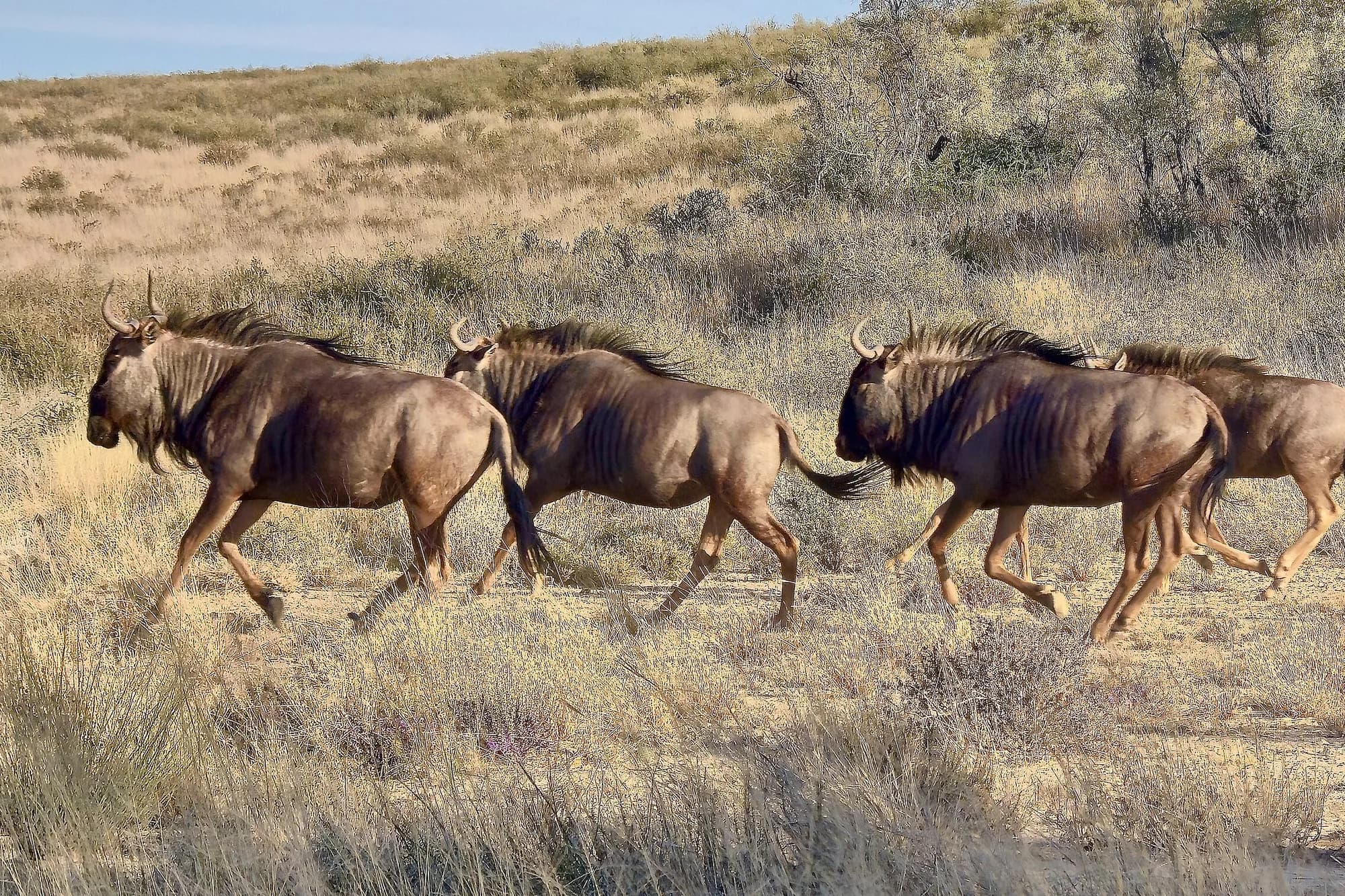
Species · Connochaetes taurinus
Blue wildebeest
Roughly 1.3 million of them make the Serengeti–Mara migration, which is the largest movement of land mammals on earth and the reason most people book East Africa at all. Away from it, a wildebeest is the animal everyone drives past.
Also called
- Nyumbu · Swahili
- Blouwildebees · Afrikaans
- Kgokong · Setswana
Checked 27 Sept 2026
- Where
- East and southern savanna
- Best months
- Calving Jan–Mar; crossings Aug–Oct
- Migration
- About 1.3 million animals
- Odds
- Certain on any savanna drive
Open short-grass plain and light savanna from Kenya to northern South Africa. The Serengeti–Mara population is the migratory one; most other populations, including all of the southern African ones, are resident and much smaller.
Where it is
HabitatOpen short-grass plain and light savanna. The Serengeti-Mara population migrates; the rest are resident.
Worth travelling for
Holds the migration for most of the year, including calving in the south and the northern river crossings.
The Mara river crossings between August and October.
The second-largest wildebeest movement in Africa, in November and December, with almost no vehicles.
Also occurs
BotswanaSouth AfricaNamibiaZimbabweMozambiqueAngola
Present, but not where you would go to see one.
Gone from
Much of the historic southern African range, cut by veterinary fencing
Range this species has been lost from. It is the fact a map of where it currently lives cannot show you.
Where to actually go
Ranked, with the reason each — these are not interchangeable.
- 01SerengetiTanzaniaHolds the migration for most of the year, including calving in the south and the northern Mara river crossings. The one park that works in any month.Any month, if you pick the sector
- 02Maasai MaraKenyaThe Mara river crossings between August and October, which is the sequence everyone has seen on film.August–October only
- 03NgorongoroTanzaniaA resident non-migratory population on the crater floor, present every day of the year.Guaranteed, not migratory
- 04Liuwa PlainZambiaThe second-largest wildebeest movement in Africa, in November and December, with almost no vehicles anywhere near it.For no crowds at all
- 05MikumiTanzaniaA resident population on the Mkata floodplain, four hours from Dar es Salaam. Accessible rather than spectacular.The easy option
Where you will not see one
- The Mara in MarchThe single commonest migration mistake. The herds are in the southern Serengeti calving then, not in Kenya. The Mara crossings are roughly August to October.
- Forest and woodland parksWildebeest need open grass. Not in Bwindi, Kibale, Mahale, Nyungwe or the thick miombo.
- The desert parksKgalagadi and Etosha have the black wildebeest or none at all — a separate, smaller, South African species with a different face.
When to go
When to go
- J
- F
- M
- A
- M
- J
- J
- A
- S
- O
- N
- D
January: best. February: best. March: best. April: good. May: marginal. June: good. July: best. August: best. September: best. October: best. November: good. December: good.
Through the day
- Dawn
- Morning
- Midday
- Afternoon
- Dusk
- Night
Dawn: active. Morning: most active. Midday: active. Afternoon: most active. Dusk: active. Night: usually resting.
What it looks like in the field
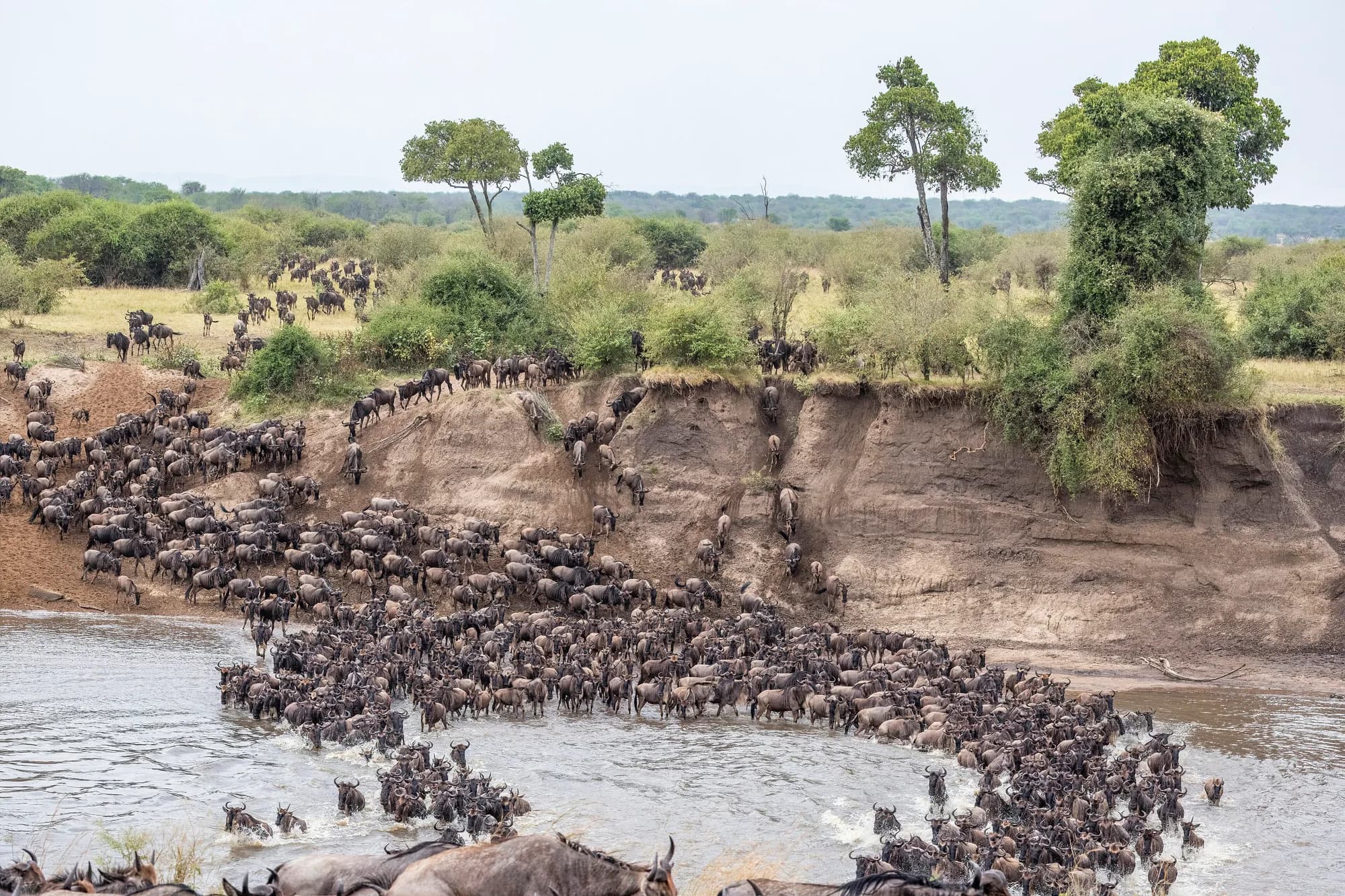
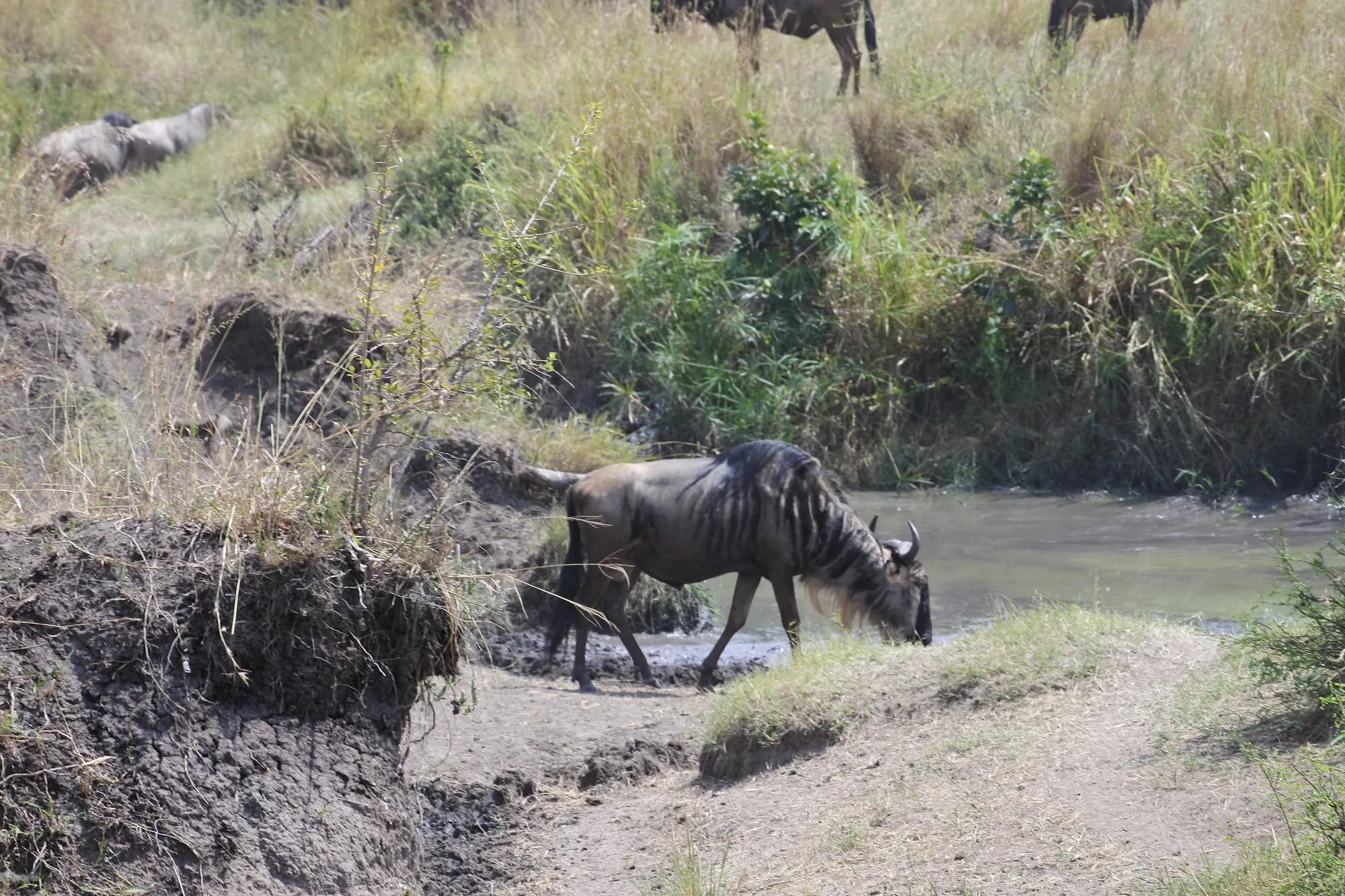
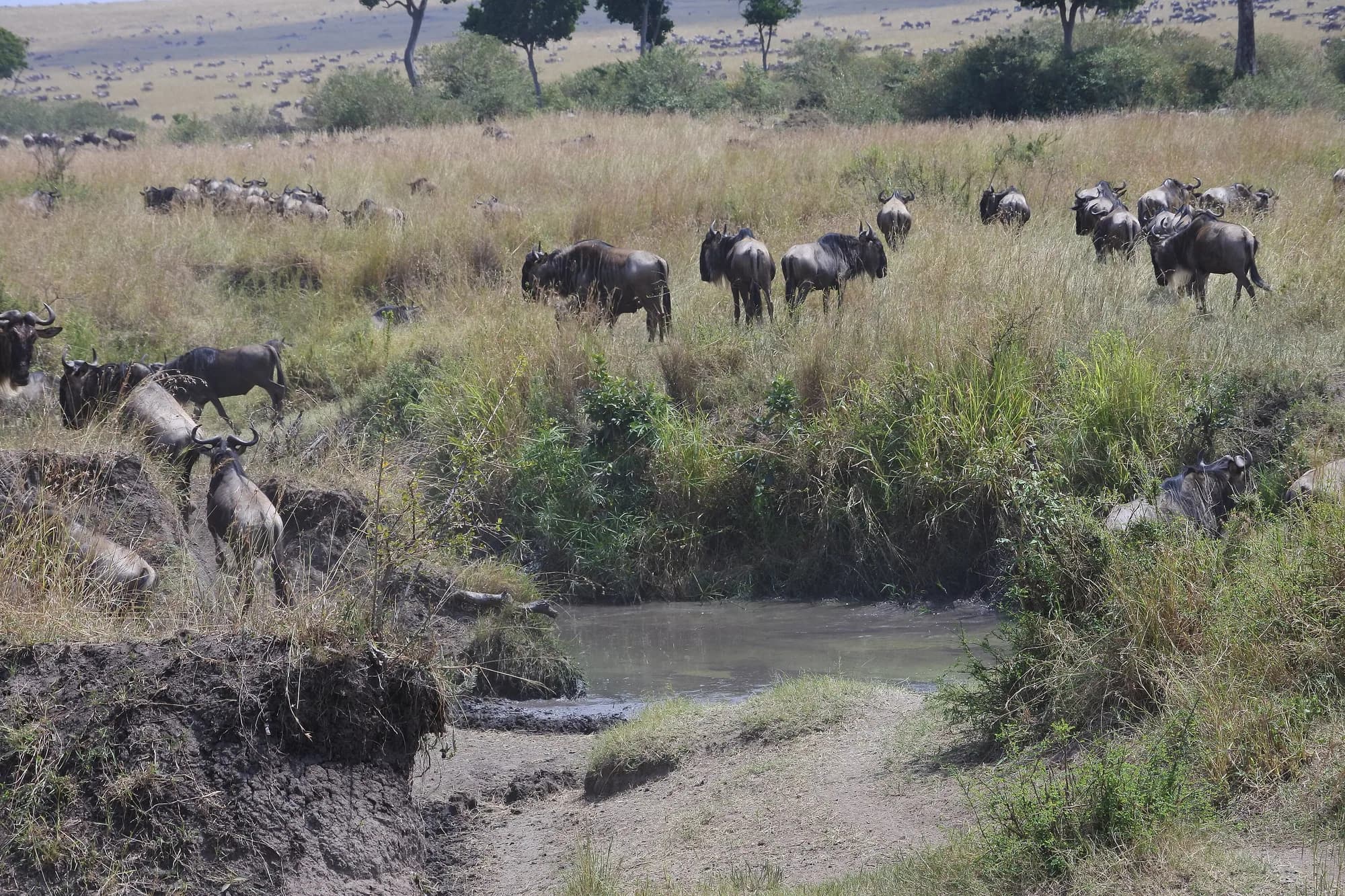
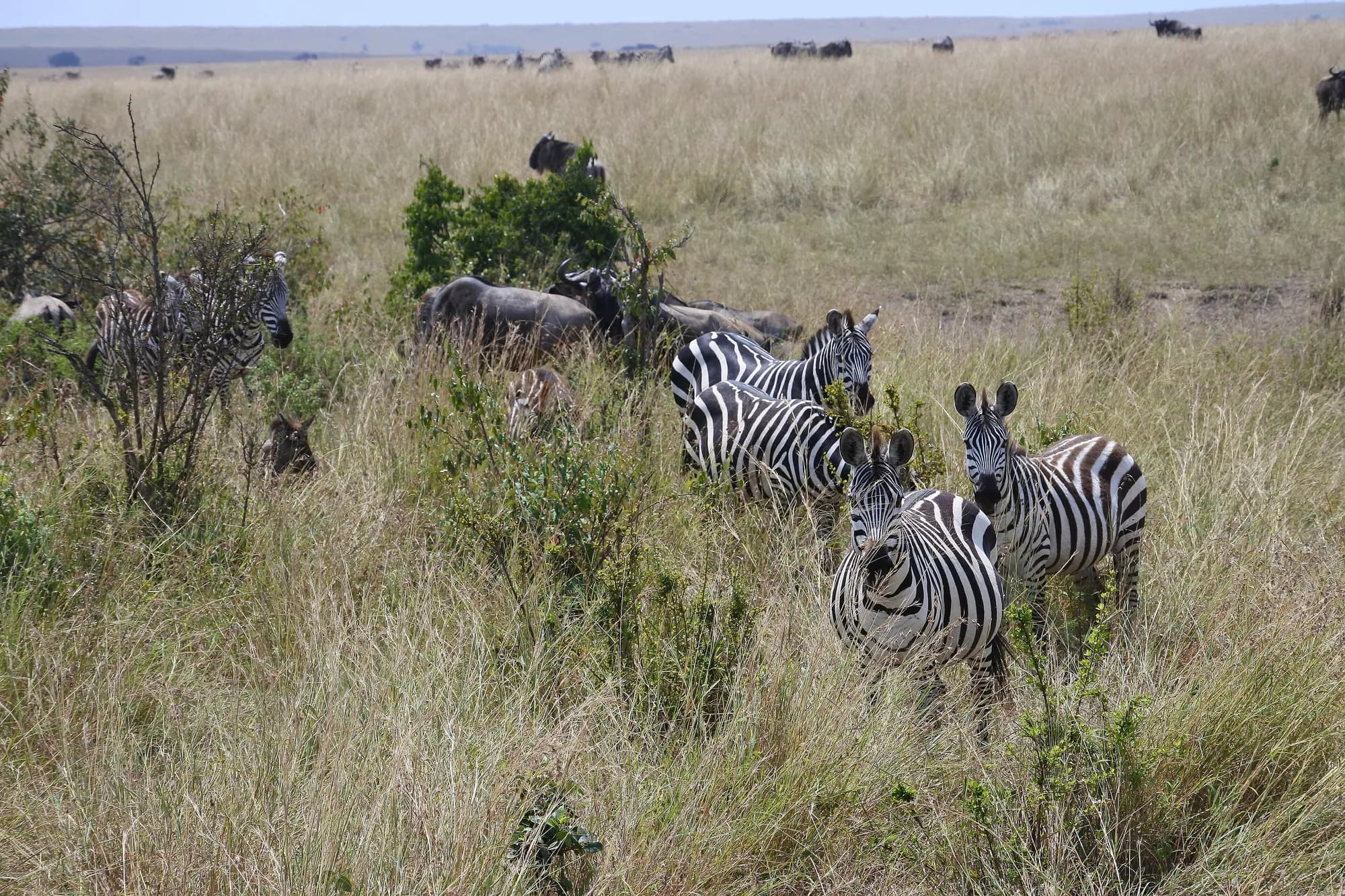
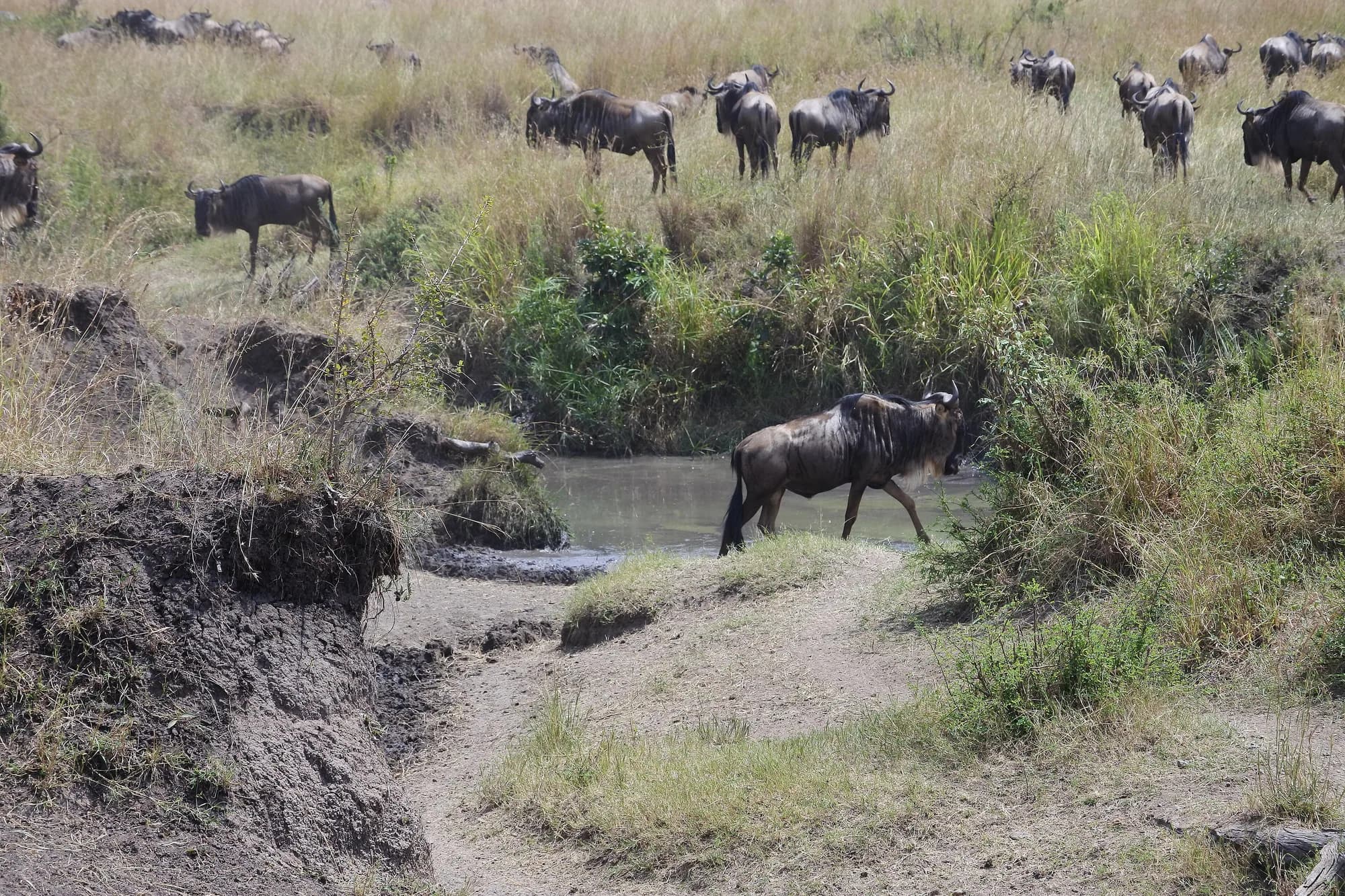
Photographs of Blue wildebeest in the wild, in Indian reserves. We publish no captive, baited or digitally composited images, and no photograph whose licence we cannot show.
Where they are, month by month
The migration is a year-round circuit, not an event, and the single most expensive mistake a first-time visitor makes is booking the right park in the wrong month. Roughly: January to March on the southern Serengeti plains and Ndutu, calving. April and May moving north-west through the central and western corridor. June and July at the Grumeti. August to October in the northern Serengeti and the Maasai Mara, crossing the Mara river. November and December moving back south.
Rain drives it and rain is not a timetable, so those windows shift by weeks. Anybody selling you a guaranteed crossing on a fixed date is selling you something they cannot deliver.
Calving, and why it is the better half
Around half a million calves are born on the southern plains across a few weeks in February, and the synchrony is the point: so many at once that predators cannot take a meaningful share. A calf is on its feet within minutes and running with the herd the same day.
For a visitor this is the more rewarding half of the migration and the less booked one. Predator activity is at its highest, the grass is short so you can see, the country is green, and there are far fewer vehicles than at a river crossing in September.
Status and protection
Status and protection
- IUCN Red List
- Least Concern
- Population trend
- → Stable
Species-level assessment for Connochaetes taurinus, matching the binomial on the page.
Assessed 2016 · IUCN Red List assessment
What to book to see one
What you would be booking
- How it is seen
- Any savanna game drive. For the migration, the question is which month and therefore which country.
- Drives to book
- For a crossing, budget three or four days at the river. Crossings are unpredictable and a single day is a gamble.
- Zone or shift
- January–March: Ndutu and the southern Serengeti plains, for calving. August–October: the Mara river, in the northern Serengeti and the Maasai Mara.
A crossing can involve hours of waiting at a bank while thousands of animals refuse to move, then ninety seconds of chaos. Balloon flights over the southern plains in the calving season are the other way to see the scale of it.
SerengetiOn the same trip you would also get
- Plains zebra — the other half of the migration
- Nile crocodile — waiting at the crossing
Questions people ask
When is the great migration, and where?
Can I see the migration in the Maasai Mara in March?
Is the calving season worth going for?
Read next
Five countries here, and half the migration
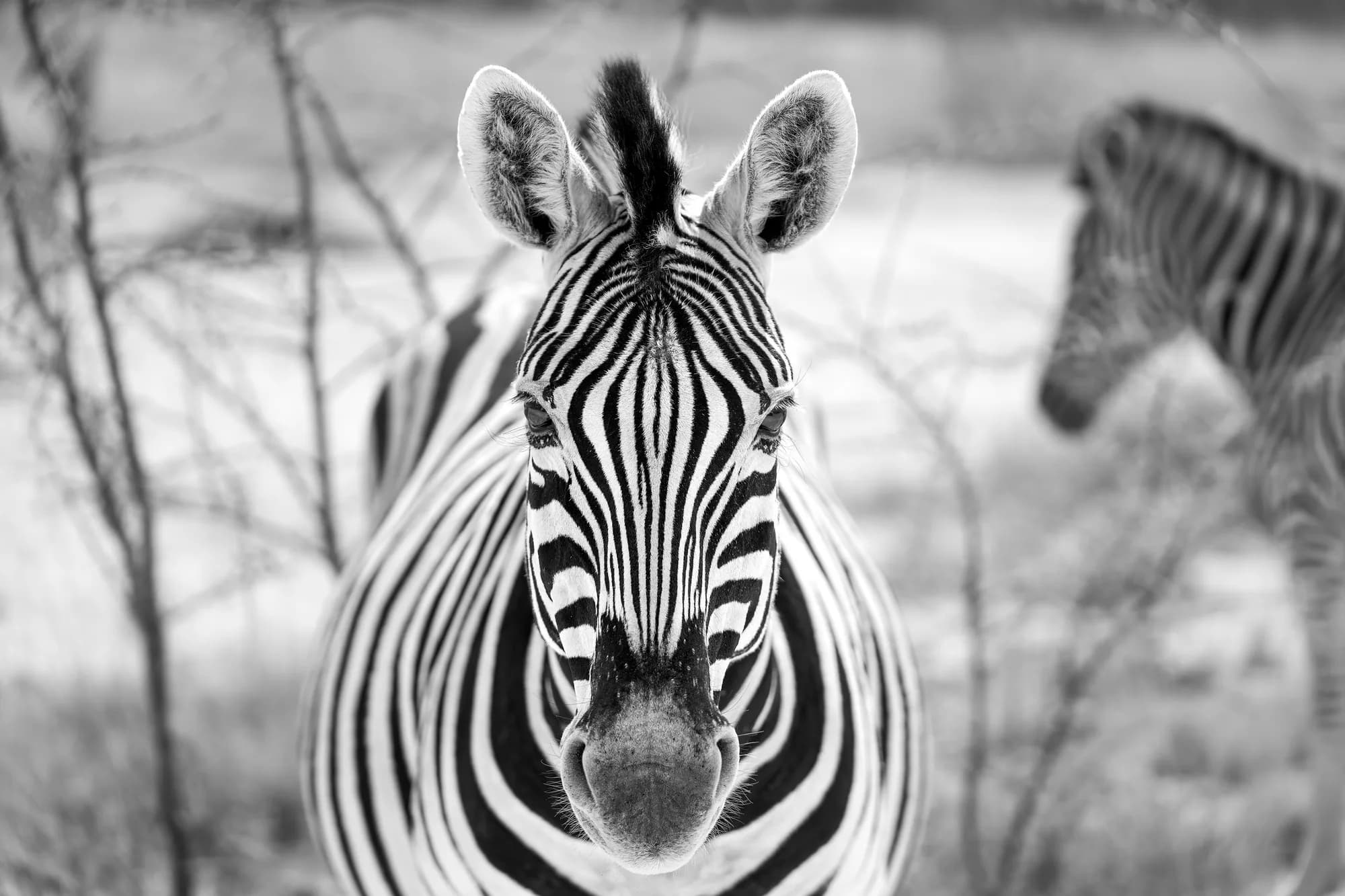
Plains zebra — the other half
Seen on the first morning of every trip and worth more attention than it gets. Zebra make up a large part of the great migration, they are the reason the wildebeest can eat, and the three zebra species on this site are not interchangeable.
Serengeti
Maasai Mara