
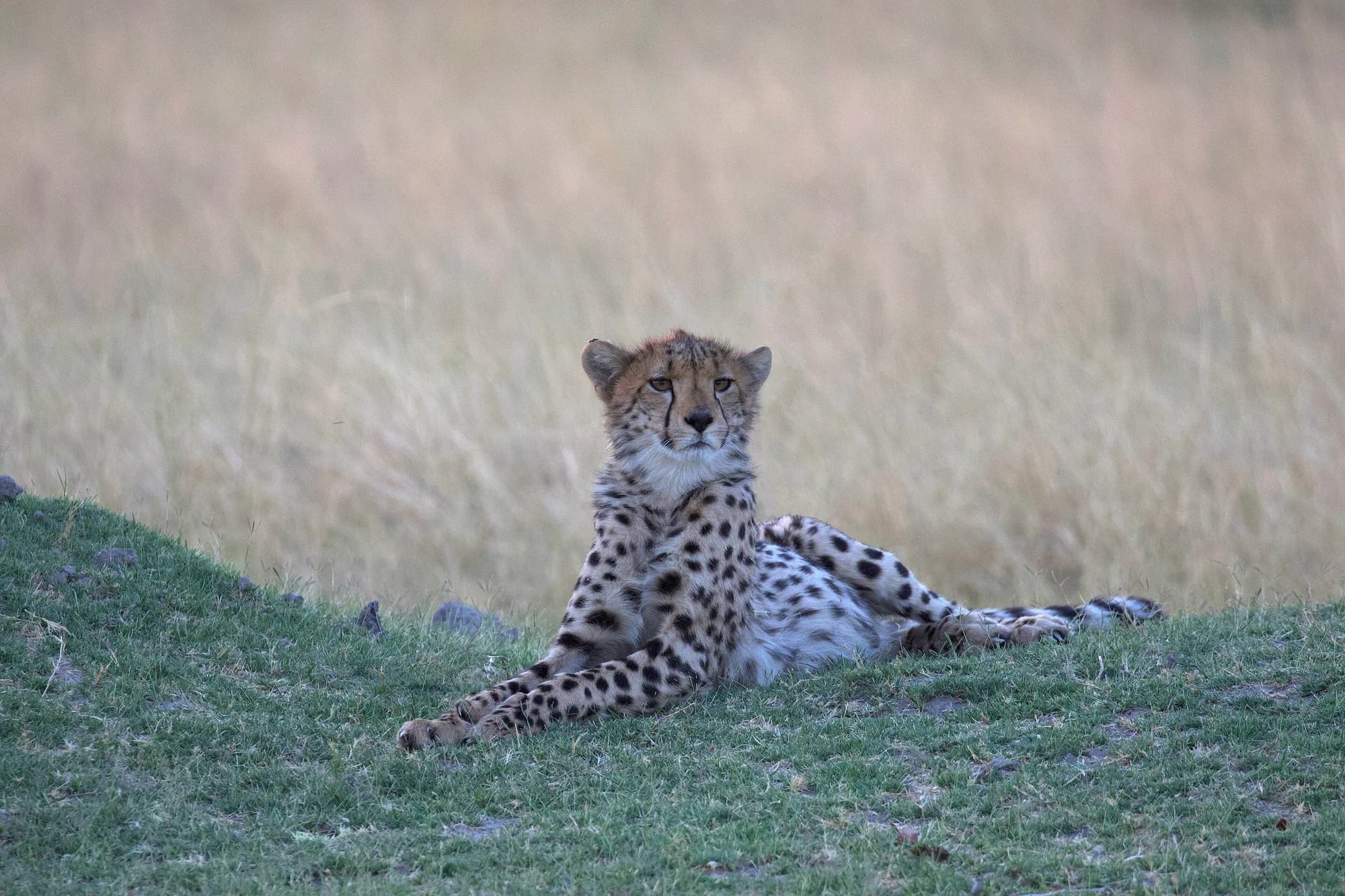
Species · Acinonyx jubatus
Cheetah
The one large African predator that hunts in daylight, which makes it the most watchable and the most photographed. It is also the rarest of the big cats on this site, and it loses kills to almost everything.
Also called
- Duma · Swahili
- Jagluiperd · Afrikaans
- Lengau · Setswana
Checked 27 Sept 2026
- Where
- Six countries here
- Best months
- Dry season; Ndutu Jan–Mar
- Hunts
- Daylight, mostly morning
- Odds
- Good in the Mara and Serengeti only
Open grassland and light savanna. The cheetah needs room and sight lines, which is why it is absent or nearly so from the woodland and forest parks and why its range has contracted faster than the other big cats'. Most of the remaining population lives outside protected areas.
Where it is
HabitatOpen grassland and light savanna with sight lines and running room. Absent from woodland and forest.
Worth travelling for
Open country, habituated animals and decades of research presence.
The southern short-grass plains in the calving season are the best cheetah hunting ground in Africa.
Low density, wide open riverbeds and almost no vehicles — a sighting here is yours alone.
Genuine wilderness with cheetahs in it and very little else.
Also occurs
NamibiaZambiaZimbabweUgandaIran
Present, but not where you would go to see one.
Gone from
IndiaMost of AsiaMost of North and West Africa
Range this species has been lost from. It is the fact a map of where it currently lives cannot show you.
Where to actually go
Ranked, with the reason each — these are not interchangeable.
- 01Maasai MaraKenyaOpen country, habituated animals, and a decades-long research presence. The most reliable cheetah on this site, and the most likely to be watched by ten vehicles.Mornings, in the open west
- 02SerengetiTanzaniaThe southern short-grass plains in the calving season are the best cheetah hunting ground in Africa, and Ndutu in February is the specialist's answer.Ndutu, January–March
- 03Kgalagadi TransfrontierSouth AfricaLow density but wide open riverbeds and almost no vehicles. A sighting here is yours alone, which is not true in East Africa.The Nossob and Auob riverbeds
- 04Central KalahariBotswanaGenuine wilderness with cheetahs in it and very little else. For people who would rather have one sighting alone than five shared.Green season, after the rains
- 05Tsavo EastKenyaOpen red country on a scale nothing else in Kenya matches, at much lower density than the Mara.For space, not for odds
Where you will not see one
- Woodland and forest parksCheetahs need sight lines and running room. Mana Pools, Kibale, Bwindi, Mahale, Udzungwa and the riverine parks are the wrong habitat entirely.
- Ngorongoro CraterLion and hyena density on the crater floor is high enough that cheetahs do badly there. It is not a cheetah park despite being open grassland.
- Kruger, realisticallyThey are present and thinly spread in the eastern grasslands. Most Kruger visitors do not see one and should not plan to.
When to go
When to go
- J
- F
- M
- A
- M
- J
- J
- A
- S
- O
- N
- D
January: good. February: best. March: best. April: marginal. May: marginal. June: good. July: best. August: best. September: best. October: best. November: good. December: good.
Through the day
- Dawn
- Morning
- Midday
- Afternoon
- Dusk
- Night
Dawn: most active. Morning: most active. Midday: usually resting. Afternoon: active. Dusk: active. Night: not normally seen.
What it looks like in the field
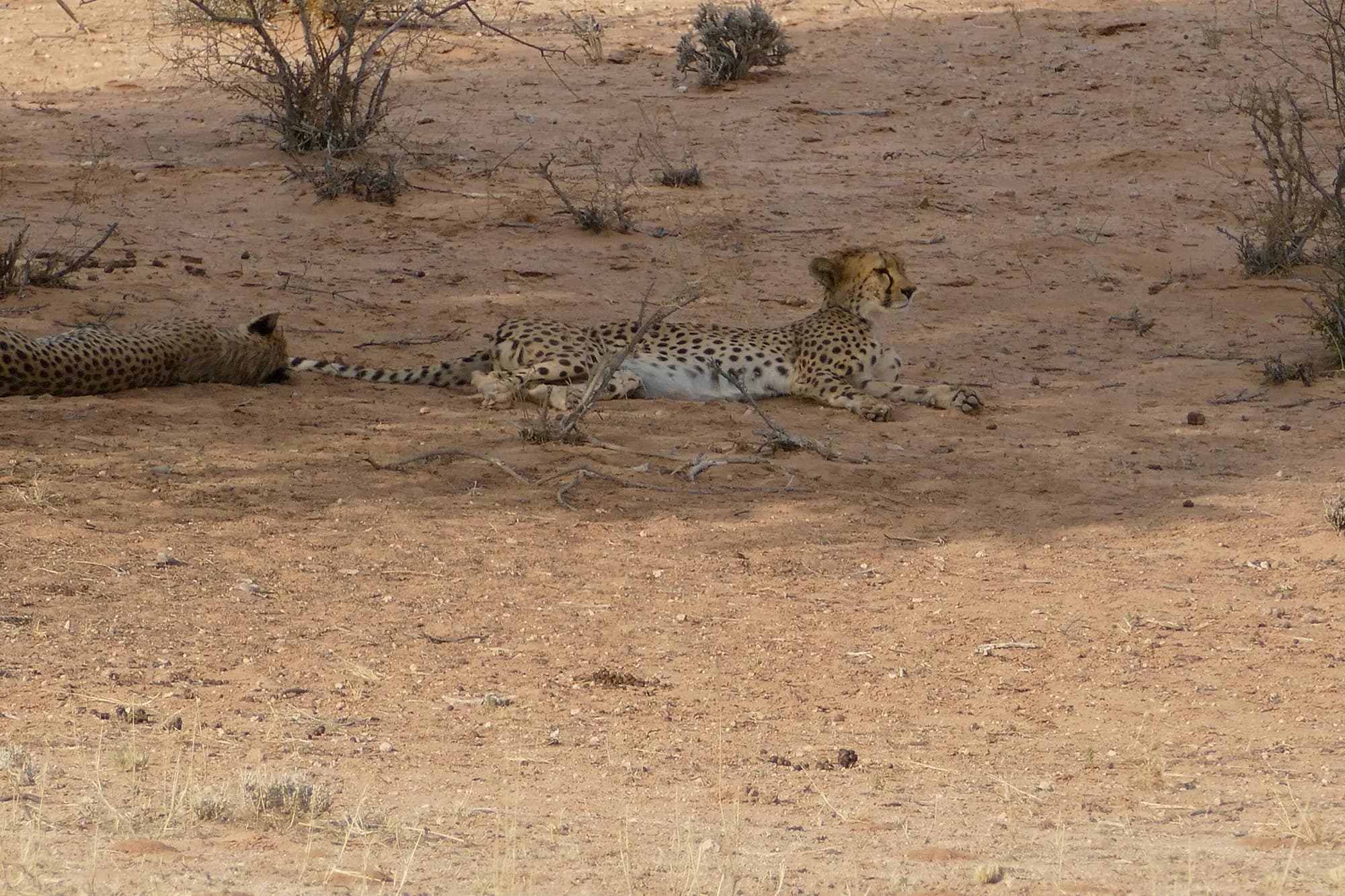
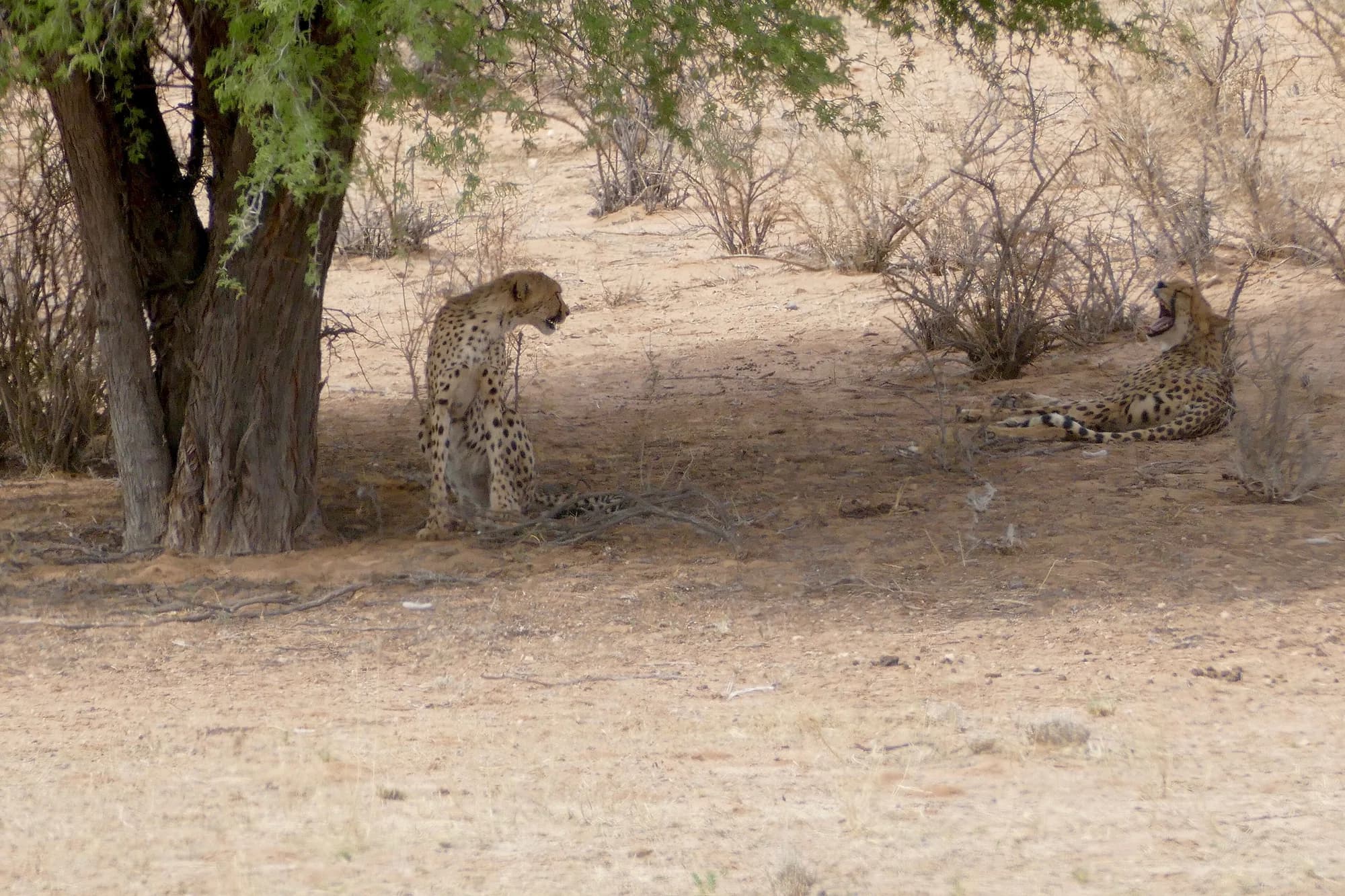
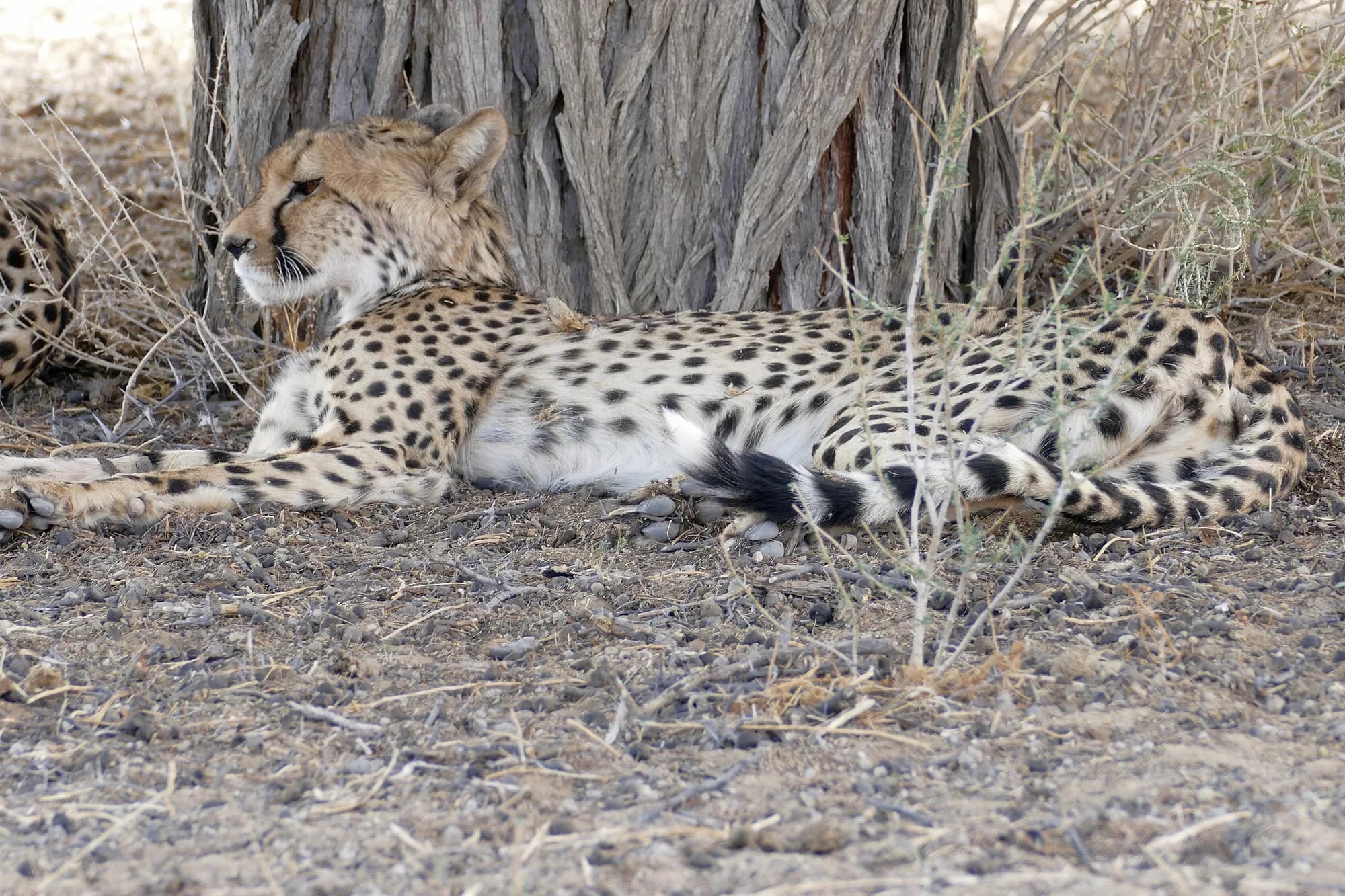
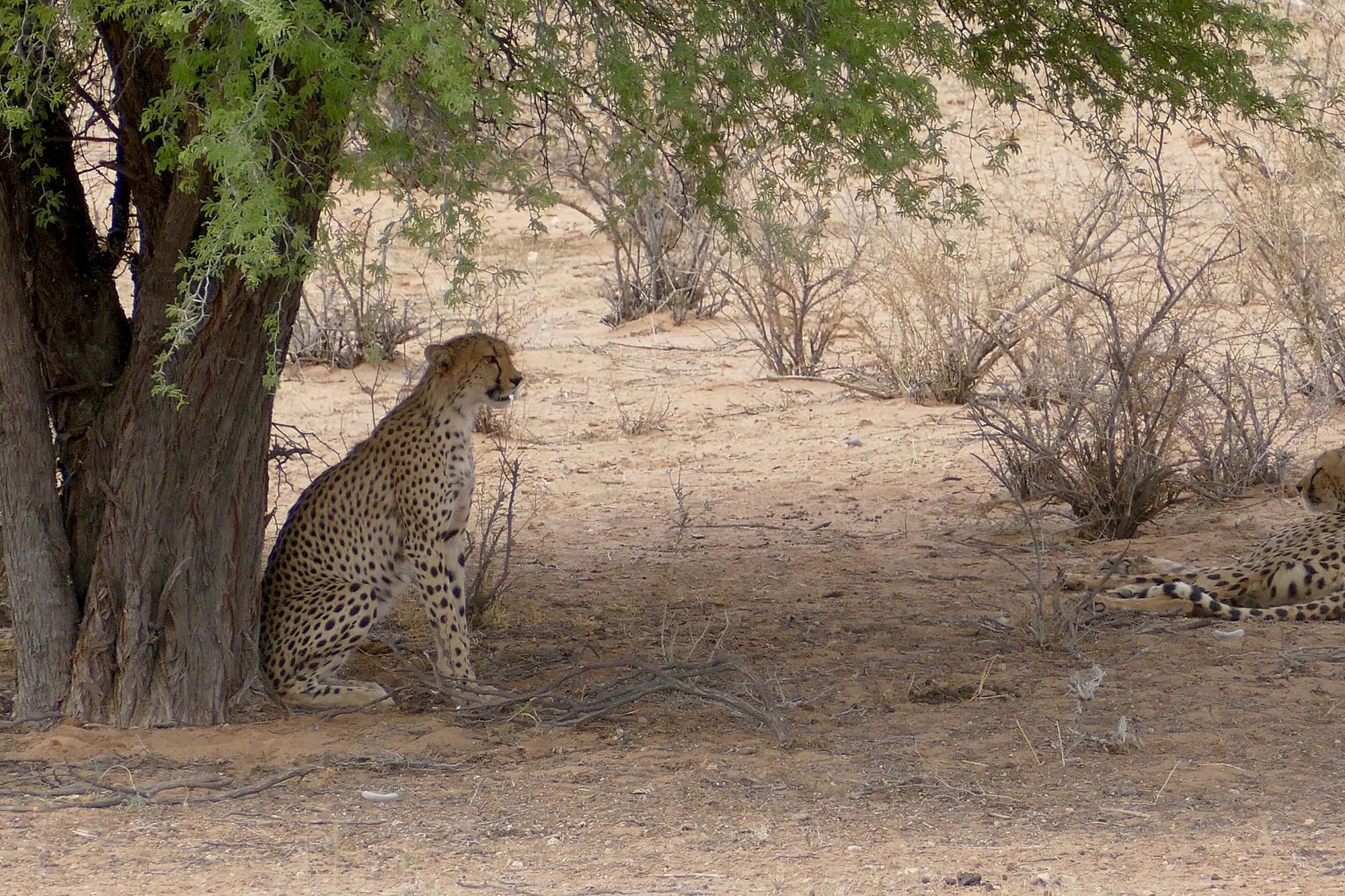
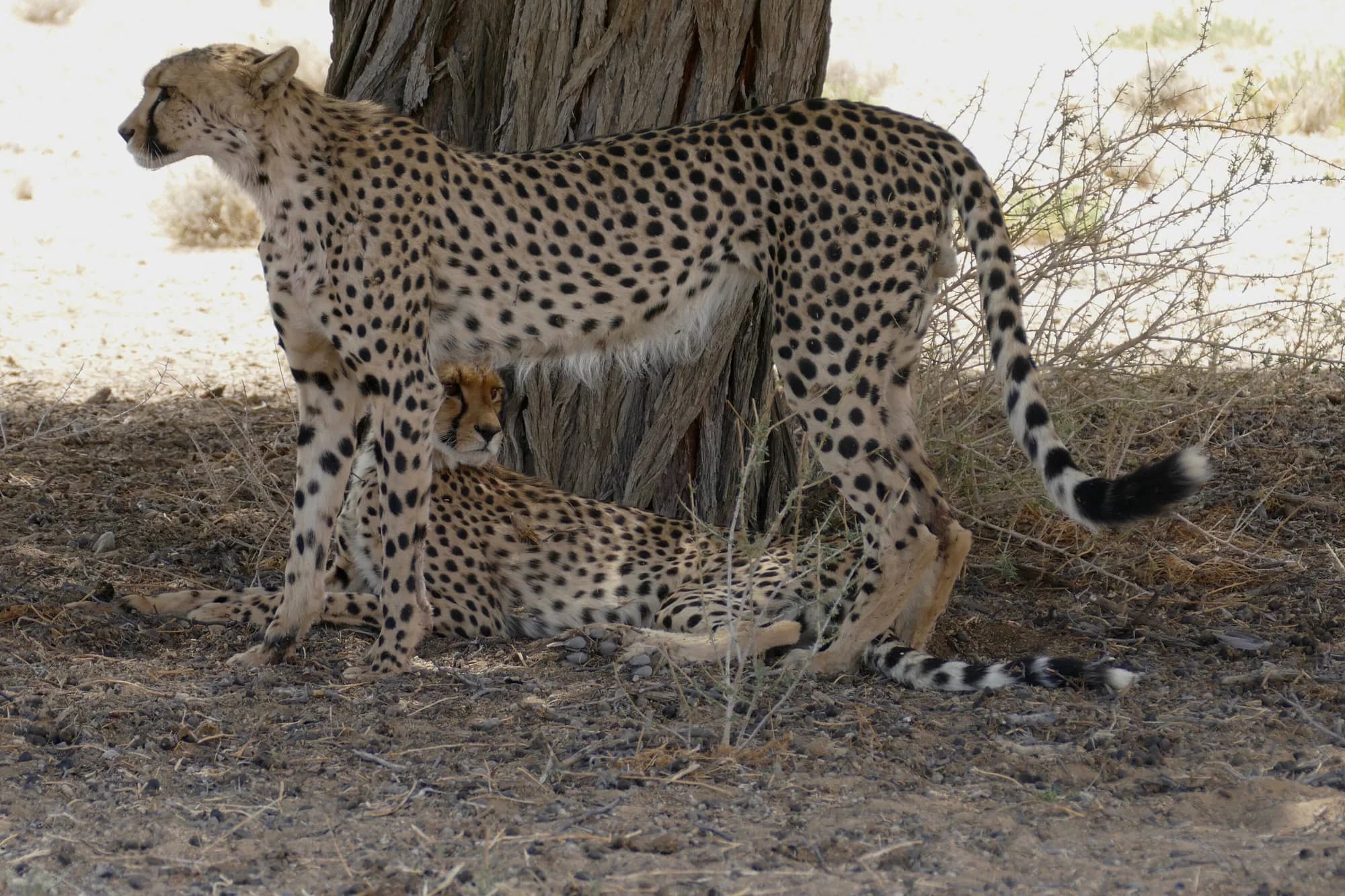
Photographs of Cheetah in the wild, in Indian reserves. We publish no captive, baited or digitally composited images, and no photograph whose licence we cannot show.
Where it is worth planning for
Two places on this site justify booking a trip around a cheetah: the Maasai Mara and the southern Serengeti, the latter especially at Ndutu between January and March when the wildebeest are calving on short grass. Everywhere else the cheetah is something you may encounter, and the honest framing is that Kgalagadi and the Central Kalahari trade odds for solitude.
Density is the constraint and it is not a marketing problem. Cheetahs need open country that lions and hyenas also want, and they lose. Where lion density is high, cheetah density is low — which is why the crater floor and much of Kruger disappoint.
Watching a hunt
A cheetah about to hunt gets high — a termite mound, a fallen tree, the bonnet of a stationary vehicle if you are unlucky — and scans for several minutes. Then it comes down and walks, low and directly, at nothing you can see. The stalk is longer than the chase and is the part most people talk over.
The chase lasts under a minute. What follows is the part worth understanding: the animal is overheated and cannot eat until it has recovered, and it is badly outmatched by anything that arrives. A cheetah eating with its head up every few seconds is doing the arithmetic on how long it has.
Status and protection
Status and protection
- IUCN Red List
- Vulnerable
- Population trend
- ↓ Decreasing
- CITES
- Appendix I
Species-level assessment for Acinonyx jubatus, matching the binomial on the page.
Assessed 2024 · IUCN Red List assessment
What to book to see one
What you would be booking
- How it is seen
- Morning game drives in open grassland. This is the one big cat where the first three hours matter more than the park's reputation.
- Drives to book
- Three or four in the Mara or Serengeti. Elsewhere, treat it as a bonus rather than a plan.
- Zone or shift
- Short-grass plains. In the Serengeti, the southern plains and Ndutu in the calving season; in the Mara, the open country toward the Siria escarpment.
Ask before the drive whether your guide will get close to a hunt. Cheetahs frequently lose kills to hyenas and lions, and vehicles crowding a kill make that more likely — some operators hold back on purpose and it is worth knowing which.
Maasai MaraOn the same trip you would also get
- Spotted hyena — the reason a cheetah eats fast
- Blue wildebeest — the Ndutu calving season
Questions people ask
Where is the best place to see a cheetah?
What is the difference between a cheetah and a leopard?
Are cheetahs endangered?
Read next
Six countries here, and three parks worth booking for
African leopard — the one it gets confused with
Present in almost every park on this site and seen in very few of them. Leopards are the one big cat where the park choice is not a preference but the whole answer — outside a handful of reserves with habituated animals, a sighting is luck.
Nine countries here, and thinner on the ground than it looks
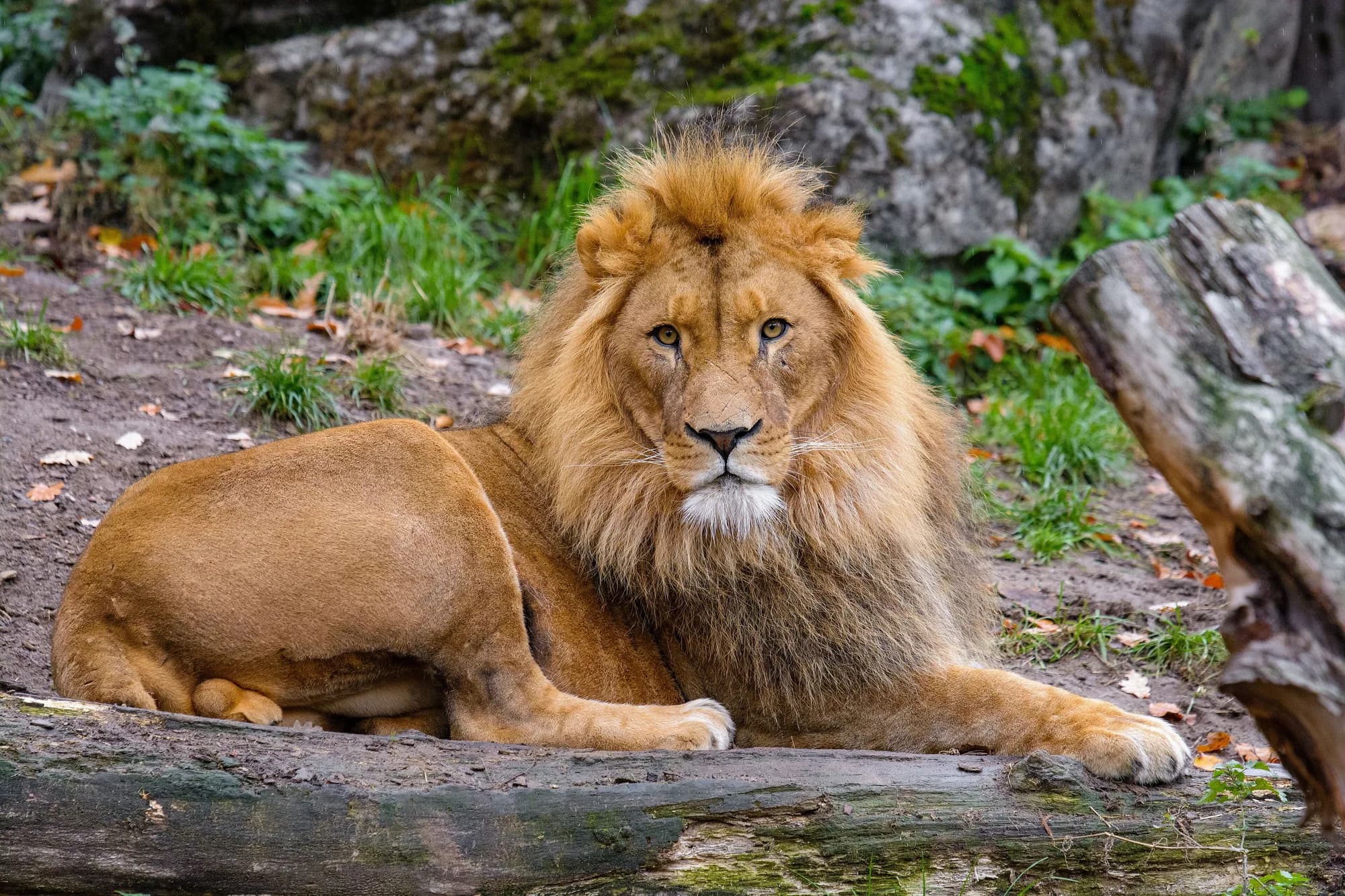
African lion
The animal everyone books the trip for, and the one most often seen asleep. Lions are not hard to find in a good park — they are hard to find doing anything, and the difference between those two sentences is most of what separates a good lion trip from a disappointing one.
Serengeti — the southern plains