
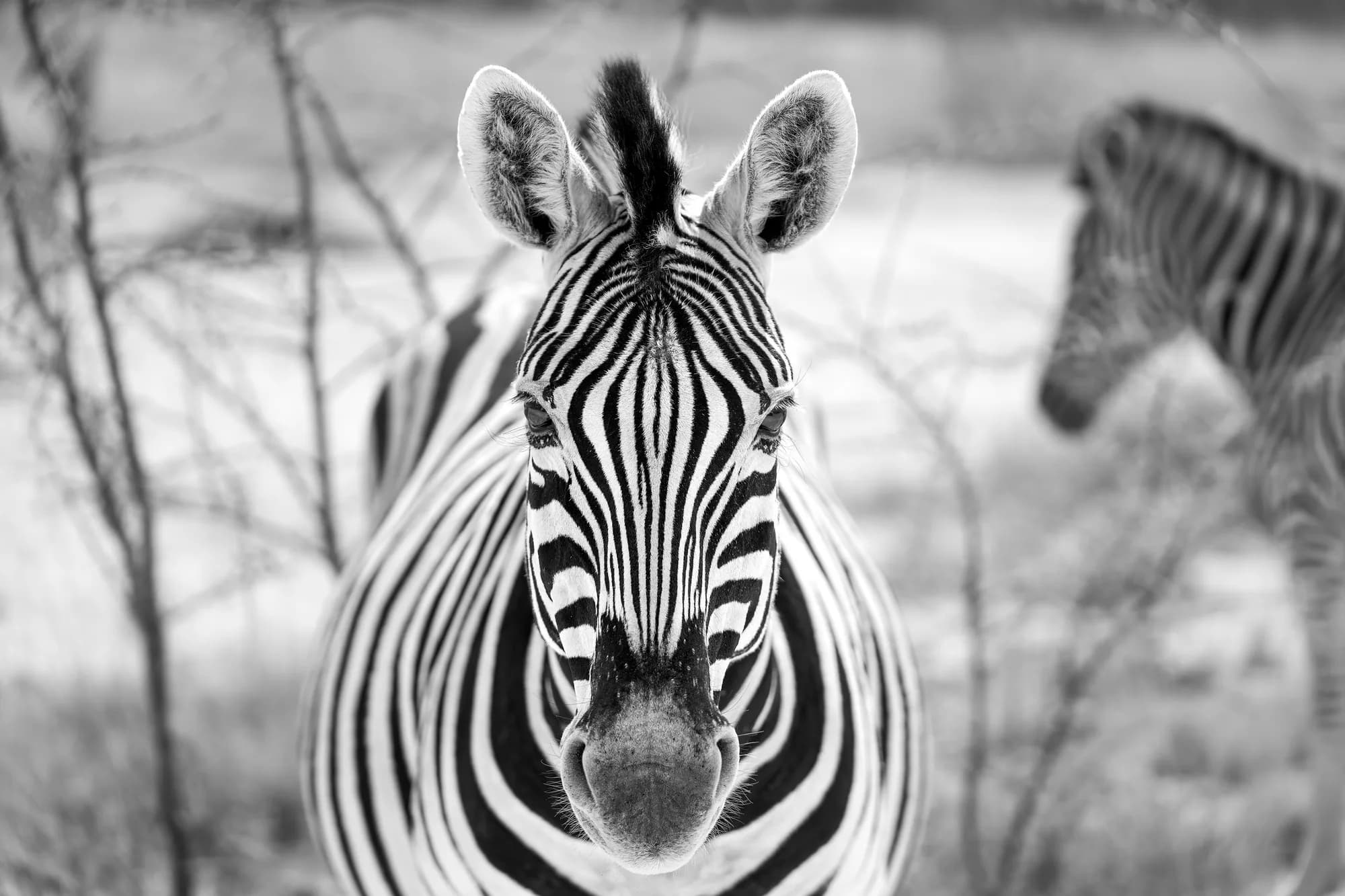
Species · Equus quagga
Plains zebra
Seen on the first morning of every trip and worth more attention than it gets. Zebra make up a large part of the great migration, they are the reason the wildebeest can eat, and the three zebra species on this site are not interchangeable.
Also called
- Punda milia · Swahili
- Bontsebra · Afrikaans
- Pitse ya naga · Setswana
Checked 27 Sept 2026
- Where
- Five countries here
- Best months
- Year-round; Mara crossings Aug–Oct
- Group
- Harems of a stallion and several mares
- Odds
- Near certain on any savanna drive
Grassland and open savanna from southern Sudan to northern South Africa. Common and widespread, which is exactly why the two other zebras on this site — Grévy's in northern Kenya and the mountain zebras of Namibia and the Cape — are worth going out of your way for.
Where it is
HabitatGrassland and open savanna. Common and widespread, which is why the other two zebras are worth the detour.
Worth travelling for
Hundreds of thousands move with the migration, and the southern plains in calving season is the largest grazing gathering anywhere.
The Mara river crossings between August and October.
Large herds at the dry-season waterholes, with lions hunting them in the open.
A large and almost entirely unvisited wildebeest and zebra movement in November and December.
Also occurs
BotswanaSouth AfricaZimbabweUgandaMalawiMozambiqueAngola
Present, but not where you would go to see one.
Gone from
BurundiThe quagga, the southernmost population, shot out by 1883
Range this species has been lost from. It is the fact a map of where it currently lives cannot show you.
Where to actually go
Ranked, with the reason each — these are not interchangeable.
- 01SerengetiTanzaniaHundreds of thousands of zebra move with the migration, and the southern plains in the calving season is the largest gathering of grazing animals you can see anywhere.With the migration
- 02Maasai MaraKenyaThe Mara river crossings between August and October, which is the sequence everybody has seen on film.August–October, at the river
- 03NgorongoroTanzaniaResident on the crater floor year-round and utterly reliable, if not dramatic.Guaranteed
- 04EtoshaNamibiaLarge herds at the waterholes in the dry season, with lions hunting them in the open.Waterholes, dry season
- 05Liuwa PlainZambiaA large and almost entirely unvisited wildebeest and zebra movement on open plain in November and December.For no other vehicles
Where you will not see one
- Northern Kenya, for this speciesSamburu, Marsabit and Meru hold Grévy's zebra — a different, larger, narrowly striped and endangered species. Plains zebra occur there too, and telling them apart is the point of going.
- Namibia's escarpment and the CapeThose are Hartmann's mountain zebra and Cape mountain zebra, again separate species with a dewlap and an unstriped belly.
- The forest parksNo zebra in Bwindi, Kibale, Nyungwe, Mahale or Udzungwa.
When to go
When to go
- J
- F
- M
- A
- M
- J
- J
- A
- S
- O
- N
- D
January: good. February: good. March: good. April: good. May: good. June: best. July: best. August: best. September: best. October: best. November: good. December: good.
Through the day
- Dawn
- Morning
- Midday
- Afternoon
- Dusk
- Night
Dawn: active. Morning: most active. Midday: active. Afternoon: most active. Dusk: active. Night: usually resting.
What it looks like in the field
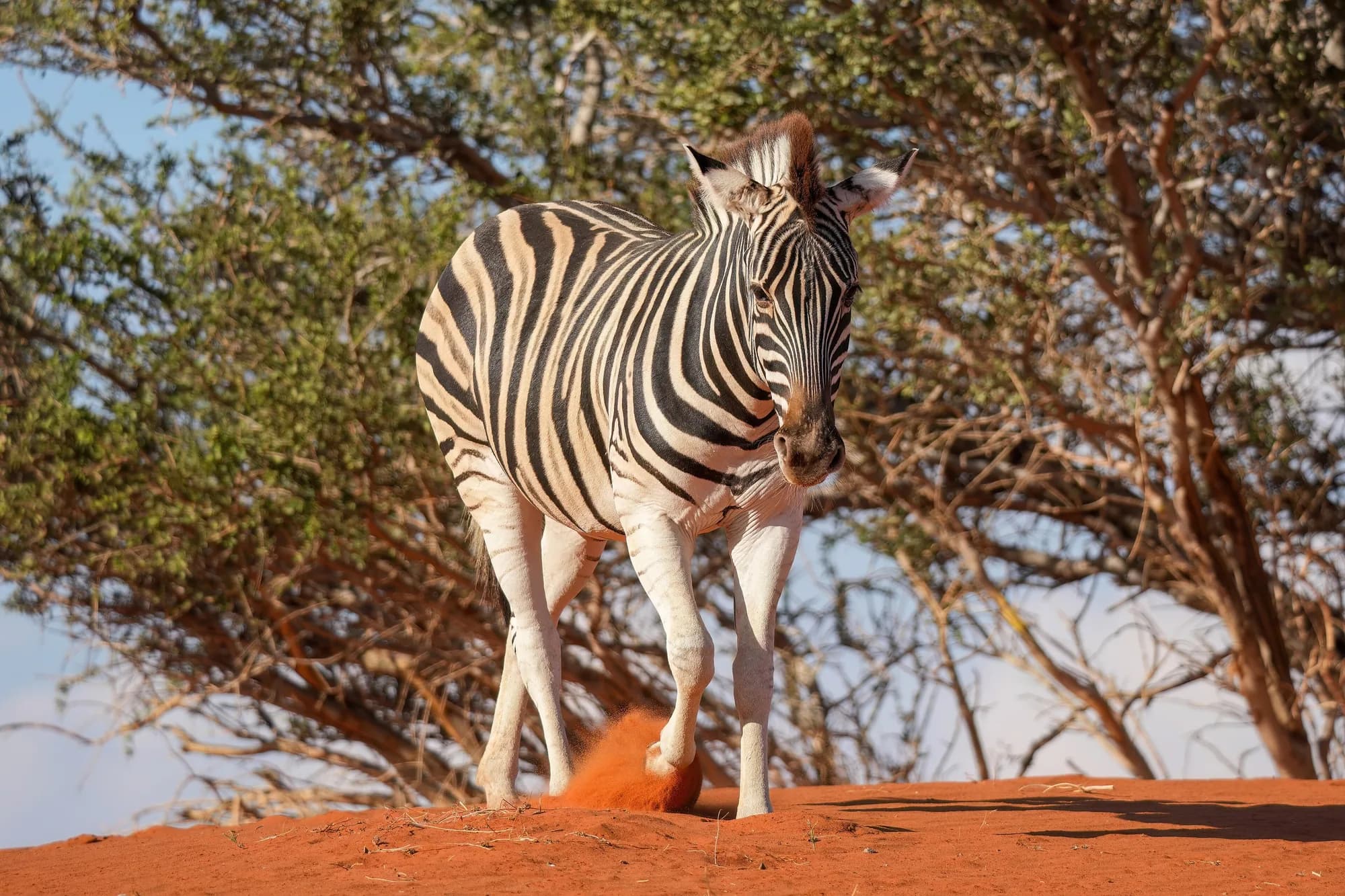
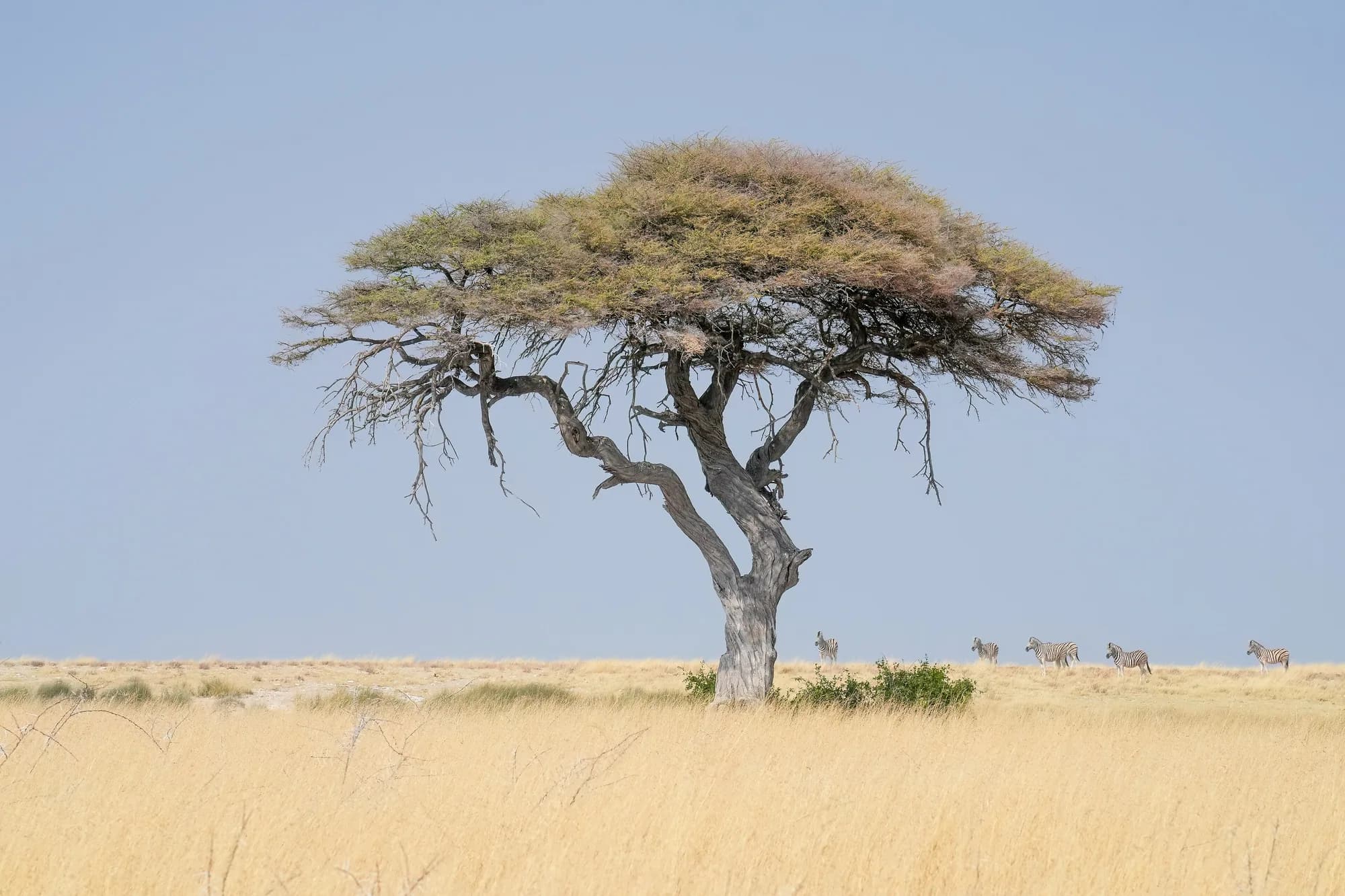
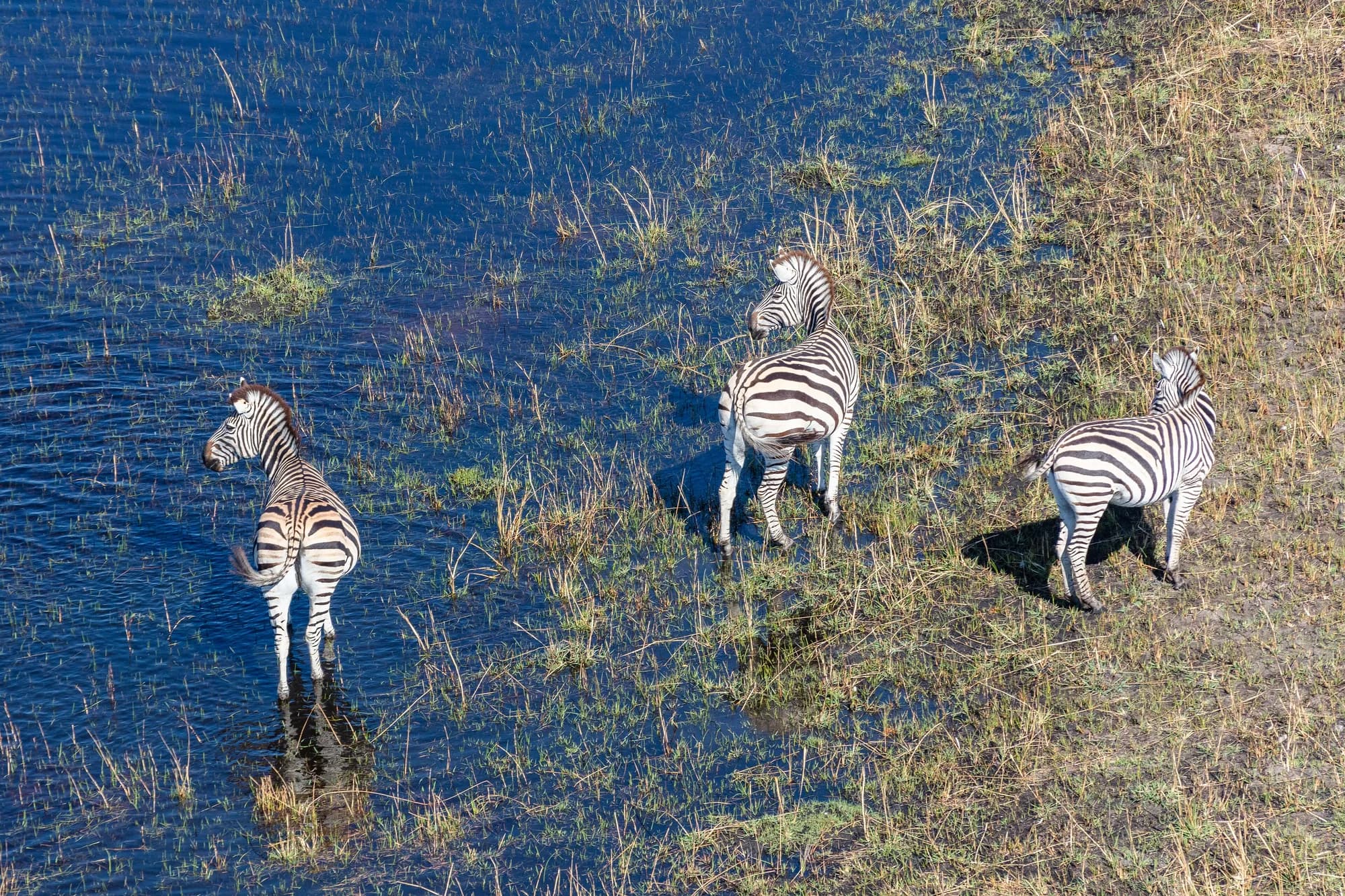
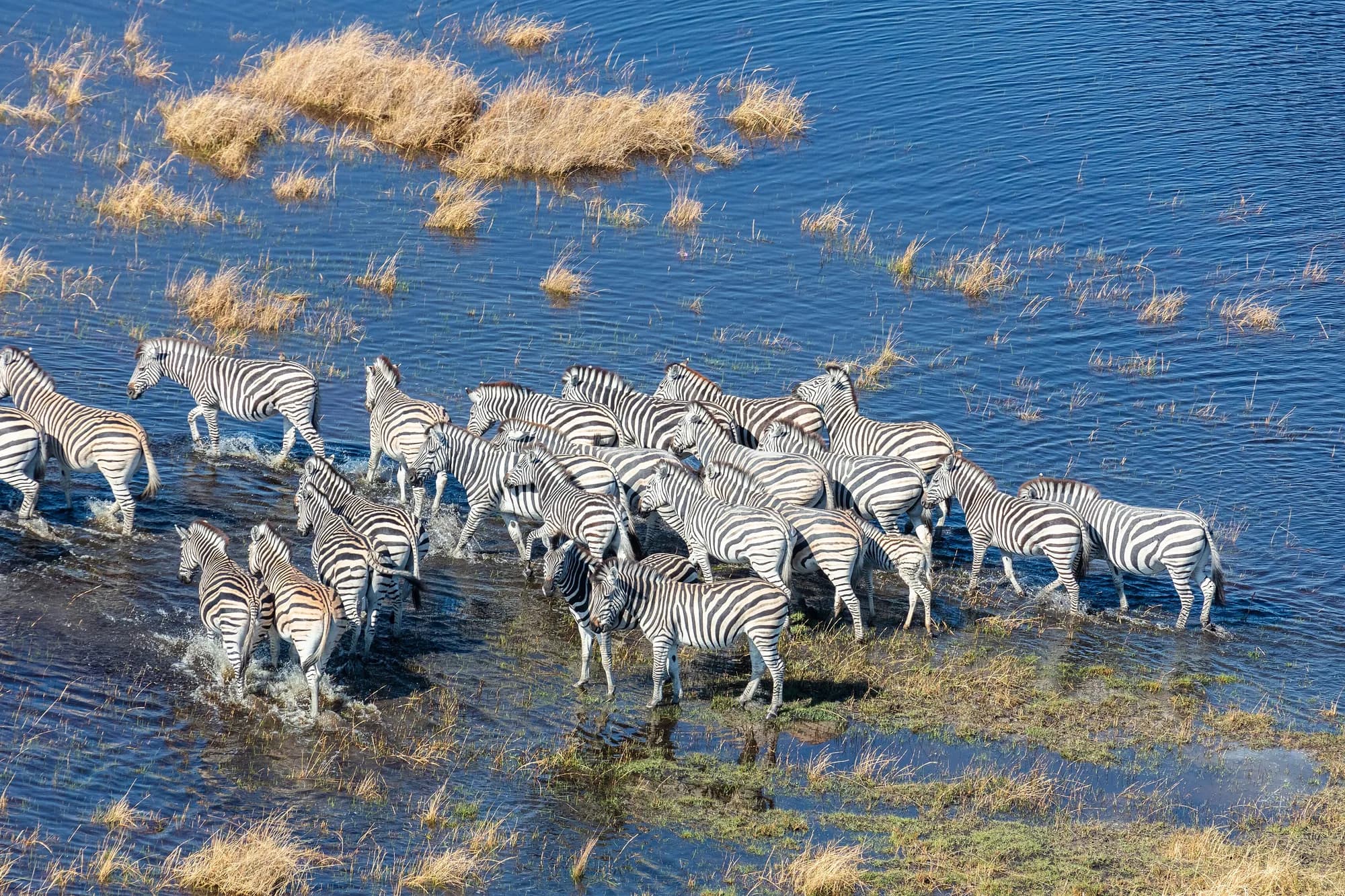
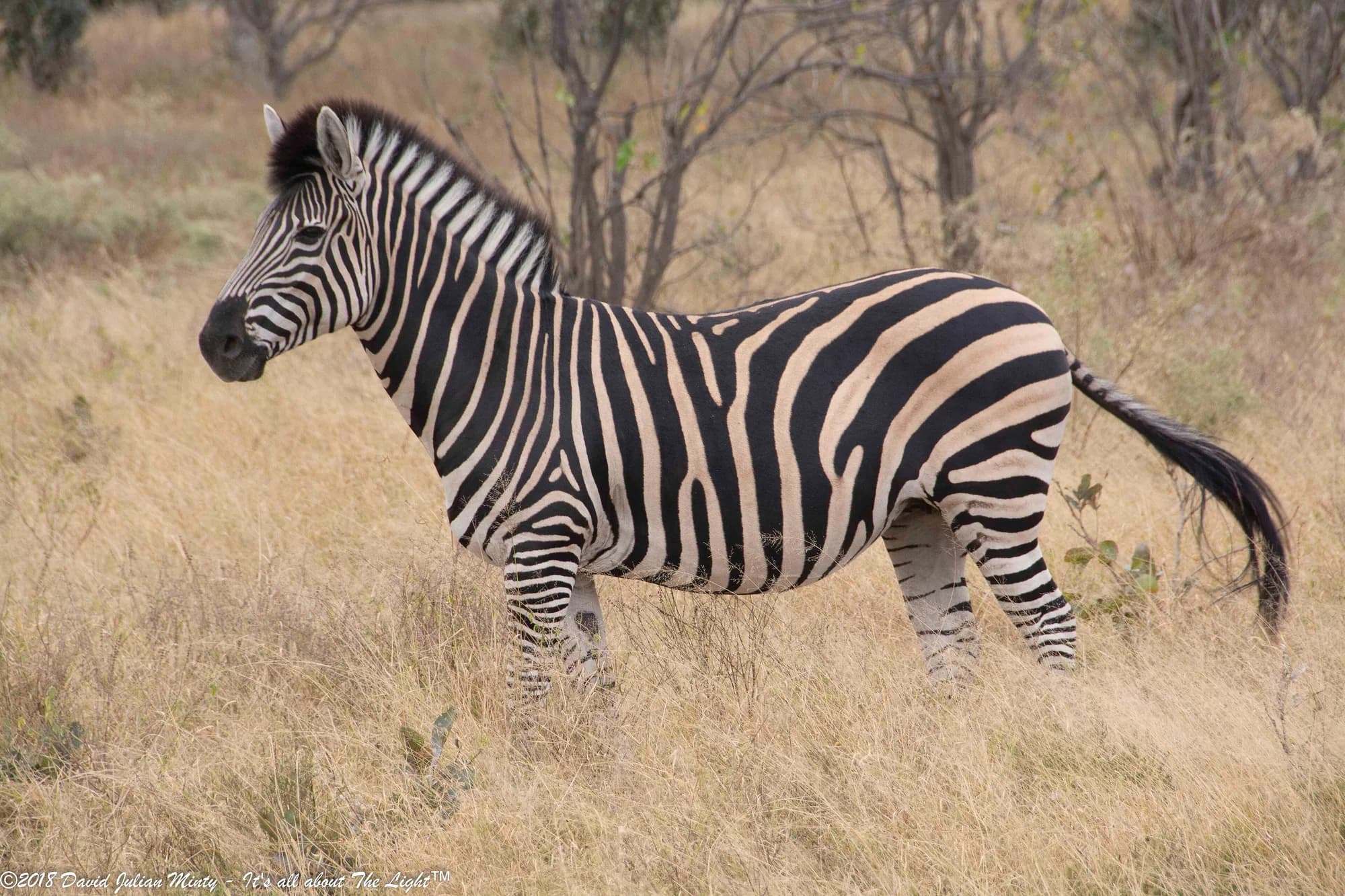
Photographs of Plains zebra in the wild, in Indian reserves. We publish no captive, baited or digitally composited images, and no photograph whose licence we cannot show.
Three zebras, not one
This site covers three species and people routinely photograph all three believing they have seen the same animal. Plains zebra is the common one: broad stripes that continue under the belly, often with faint brown shadow stripes between them. Grévy’s zebra of northern Kenya is noticeably larger, with narrow close-set stripes, a white belly and huge rounded ears — and it is endangered, with the population concentrated in Samburu and Meru.
The mountain zebras are the third group: Hartmann’s in Namibia and the Cape mountain zebra in South Africa, both with an unstriped white belly, a dewlap under the throat, and a gridiron pattern of short bars across the rump. If you are driving Namibia’s escarpment or the Eastern Cape, look at the belly and the throat.
Zebra and the migration
The migration is not only wildebeest. Several hundred thousand zebra move with it, and they go first — zebra can digest the tall, coarse, low-protein grass that wildebeest cannot, and grazing it down exposes the shorter growth underneath. The wildebeest follow into ground the zebra have prepared.
Socially they are organised quite differently from the herd around them. A zebra group is a harem: one stallion, a few mares with a stable rank order, and their foals. When you see a crossing, you are watching many small family units making individual decisions, which is why it happens in fits and starts rather than as one mass.
Status and protection
Status and protection
- IUCN Red List
- Near Threatened
- Population trend
- ↓ Decreasing
Species-level assessment for Equus quagga, matching the binomial on the page.
Assessed 2016 · IUCN Red List assessment
What to book to see one
What you would be booking
- How it is seen
- Any savanna game drive. No planning required for the animal itself.
- Drives to book
- One. The planning question is the migration, not the zebra.
- Zone or shift
- For crossings, the Mara river in the Maasai Mara and northern Serengeti, August to October.
Zebra move ahead of the wildebeest on the migration, eating the coarse upper grass and exposing the shorter growth the wildebeest need. If you are watching a crossing, the zebra usually went first.
SerengetiOn the same trip you would also get
- Blue wildebeest — the other half of the migration
- Grévy's zebra — the rare one, in the north
Questions people ask
Where is the best place to see zebra?
What is the difference between plains, Grévy's and mountain zebra?
Why do zebra have stripes?
Read next
Northern Kenya, and a remnant in Ethiopia
Grévy's zebra — the endangered one
The largest wild equid alive and the rarest of the three zebras — narrow stripes, a white belly and enormous rounded ears. Fewer than three thousand remain, most of them in northern Kenya, and Samburu is where you go.
The migration, and most southern savanna
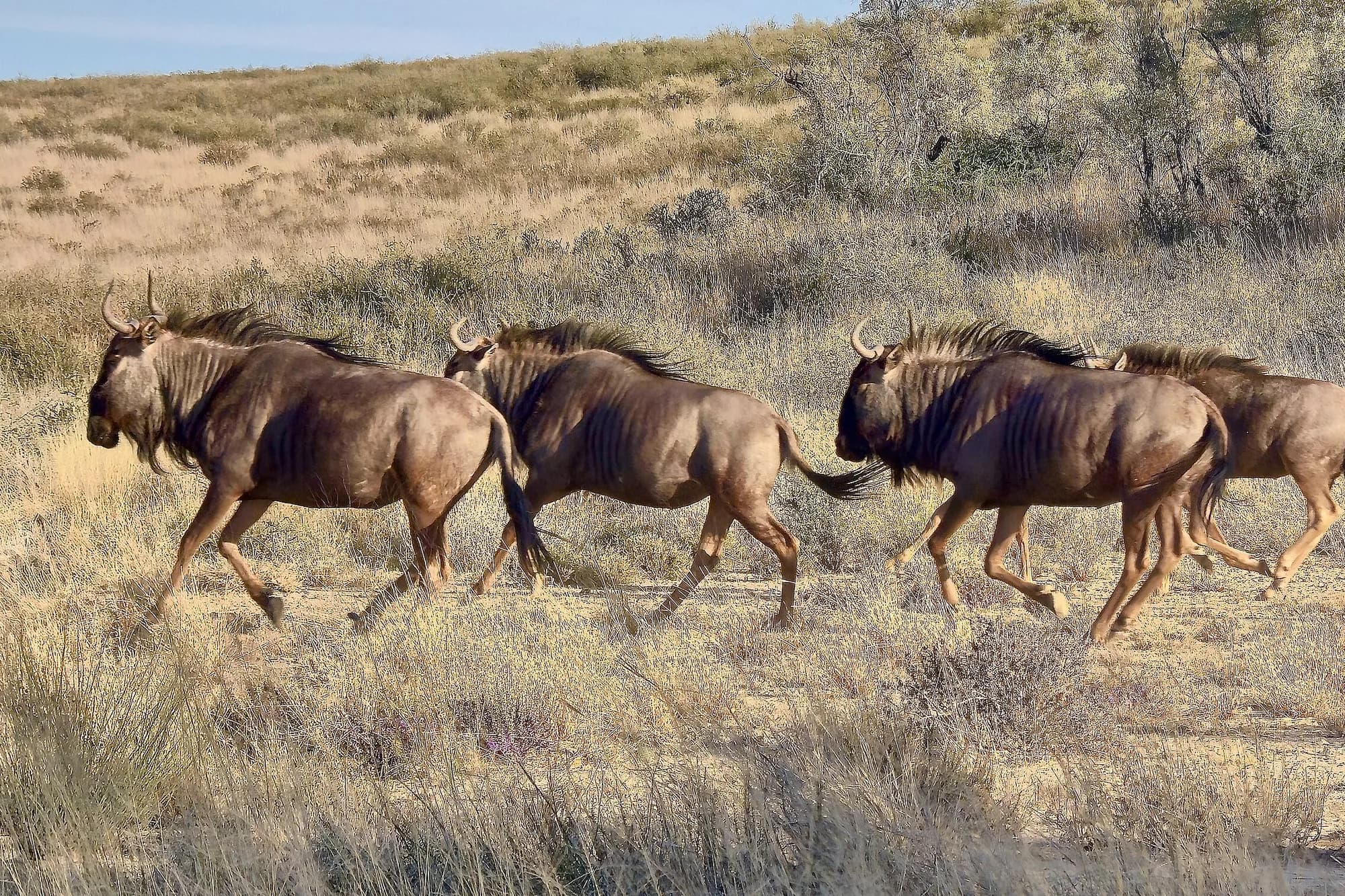
Blue wildebeest
Roughly 1.3 million of them make the Serengeti–Mara migration, which is the largest movement of land mammals on earth and the reason most people book East Africa at all. Away from it, a wildebeest is the animal everyone drives past.
Serengeti