
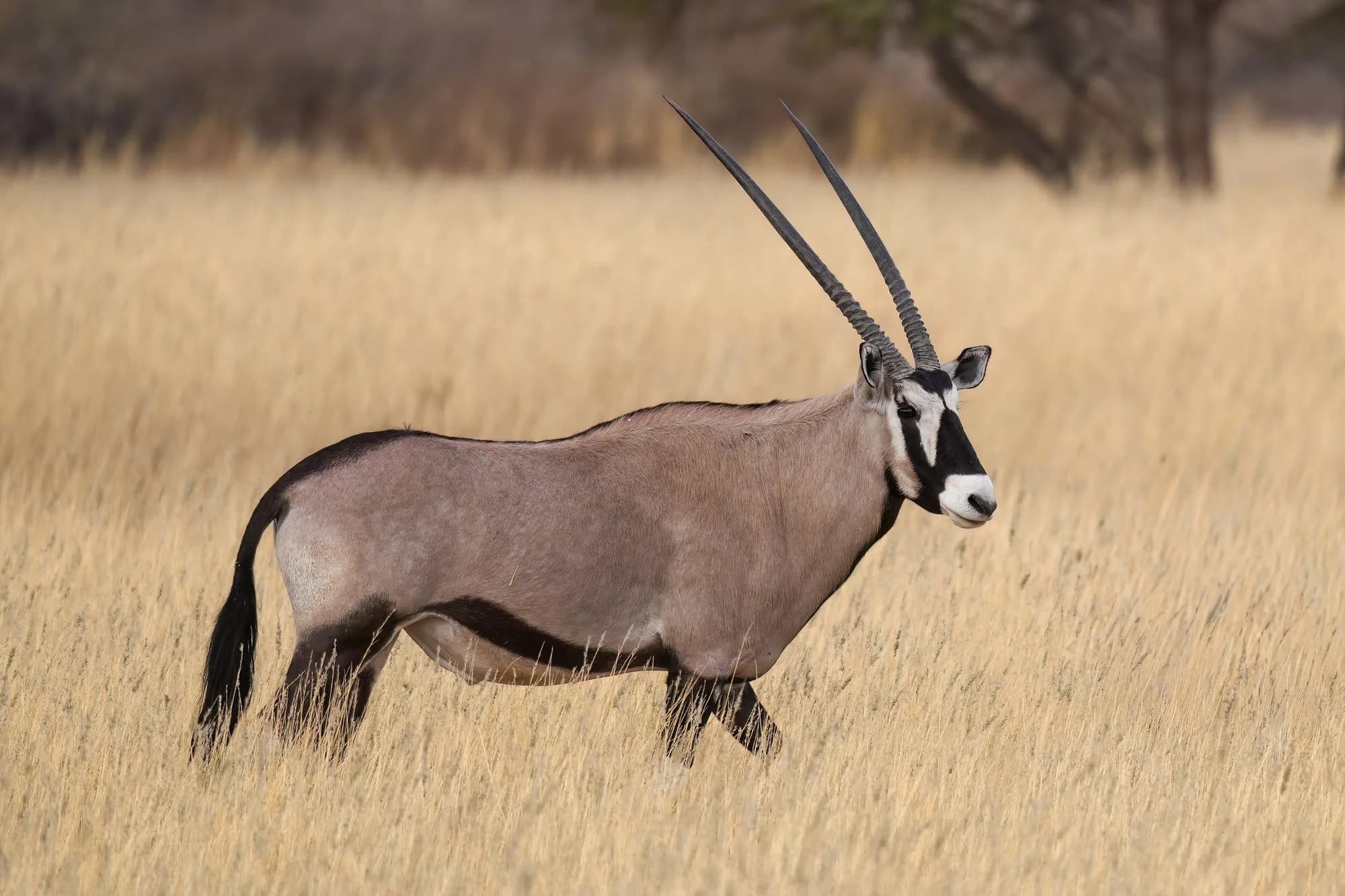
Species · Oryx gazella
Gemsbok
The desert antelope on the red dunes, with a black-and-white face mask and rapier horns, and the animal that makes the arid parks worth the drive. It can go for long periods without drinking, which is why it is standing in country where nothing else is.
Also called
- Gemsbok · Afrikaans
- ǀGaeb · Khoekhoegowab
- Kukama · Setswana
Checked 27 Sept 2026
- Where
- Kalahari and Namib
- Best months
- May–September, for cool days
- Horns
- Both sexes, straight, to about 85 cm
- Odds
- Near certain in Kgalagadi or Etosha
Arid and semi-arid country — the Kalahari, the Namib and the Karoo fringe — across Namibia, Botswana and South Africa's Northern Cape. This is the southern African oryx; the beisa and fringe-eared oryx of East Africa are separate species.
Where it is
HabitatArid and semi-arid country: the Kalahari, the Namib and the Karoo fringe.
Worth travelling for
Red dunes, dry riverbeds and gemsbok everywhere, in the park this animal is the emblem of.
Common around the Etosha pan, and the defining image against the Sossusvlei dunes.
Vast, empty and full of gemsbok, especially after the rains bring the pans to life.
Also occurs
AngolaZimbabwe
Present, but not where you would go to see one.
Where to actually go
Ranked, with the reason each — these are not interchangeable.
- 01Kgalagadi TransfrontierSouth AfricaRed dunes, dry riverbeds and gemsbok everywhere, in the park this animal is the emblem of. Self-drive and superb.The Auob and Nossob roads
- 02EtoshaNamibiaCommon around the pan and at the waterholes, alongside almost everything else Namibia has.Waterholes, dry season
- 03Namib-NaukluftNamibiaGemsbok against the Sossusvlei dunes is the defining Namibian image, and the animals are genuinely there.First light at Sossusvlei
- 04Central KalahariBotswanaVast, empty and full of gemsbok, especially after the rains bring the pans to life.Green season, Deception Valley
- 05Augrabies FallsSouth AfricaRocky gorge country on the Orange River with gemsbok, klipspringer and very few people.A short stop on the way
Where you will not see one
- East AfricaThose are different species. Kenya and Tanzania have beisa and fringe-eared oryx, not gemsbok.
- The lowveld and the bushveldKruger, Hluhluwe and the eastern parks are the wrong habitat. Gemsbok are an arid-country animal.
- The Cape winelands parksTable Mountain, Garden Route and Agulhas have none. For gemsbok in South Africa you go to the Northern Cape.
When to go
When to go
- J
- F
- M
- A
- M
- J
- J
- A
- S
- O
- N
- D
January: marginal. February: marginal. March: good. April: good. May: best. June: best. July: best. August: best. September: best. October: good. November: marginal. December: marginal.
Through the day
- Dawn
- Morning
- Midday
- Afternoon
- Dusk
- Night
Dawn: most active. Morning: active. Midday: active. Afternoon: active. Dusk: most active. Night: usually resting.
What it looks like in the field
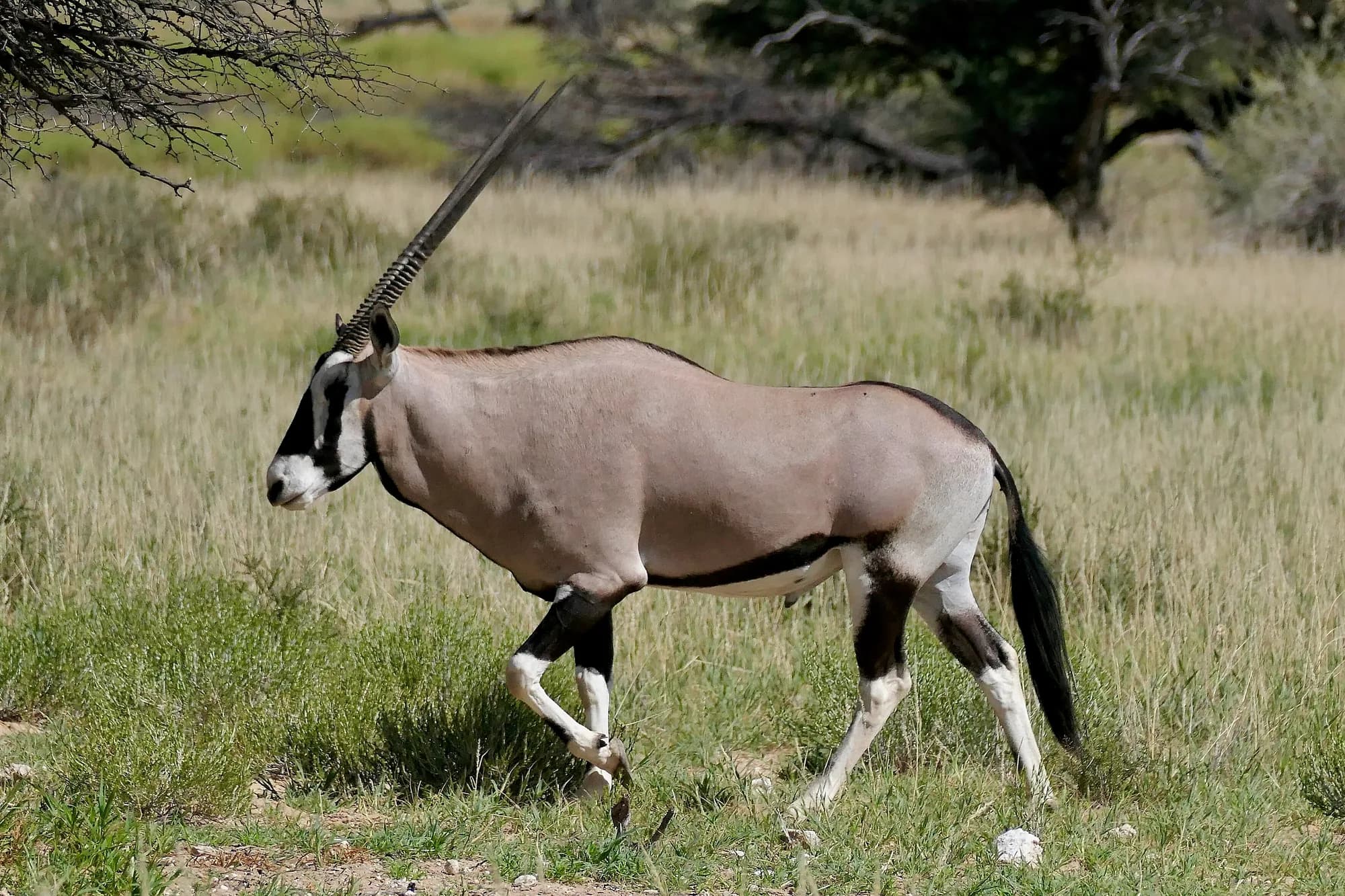
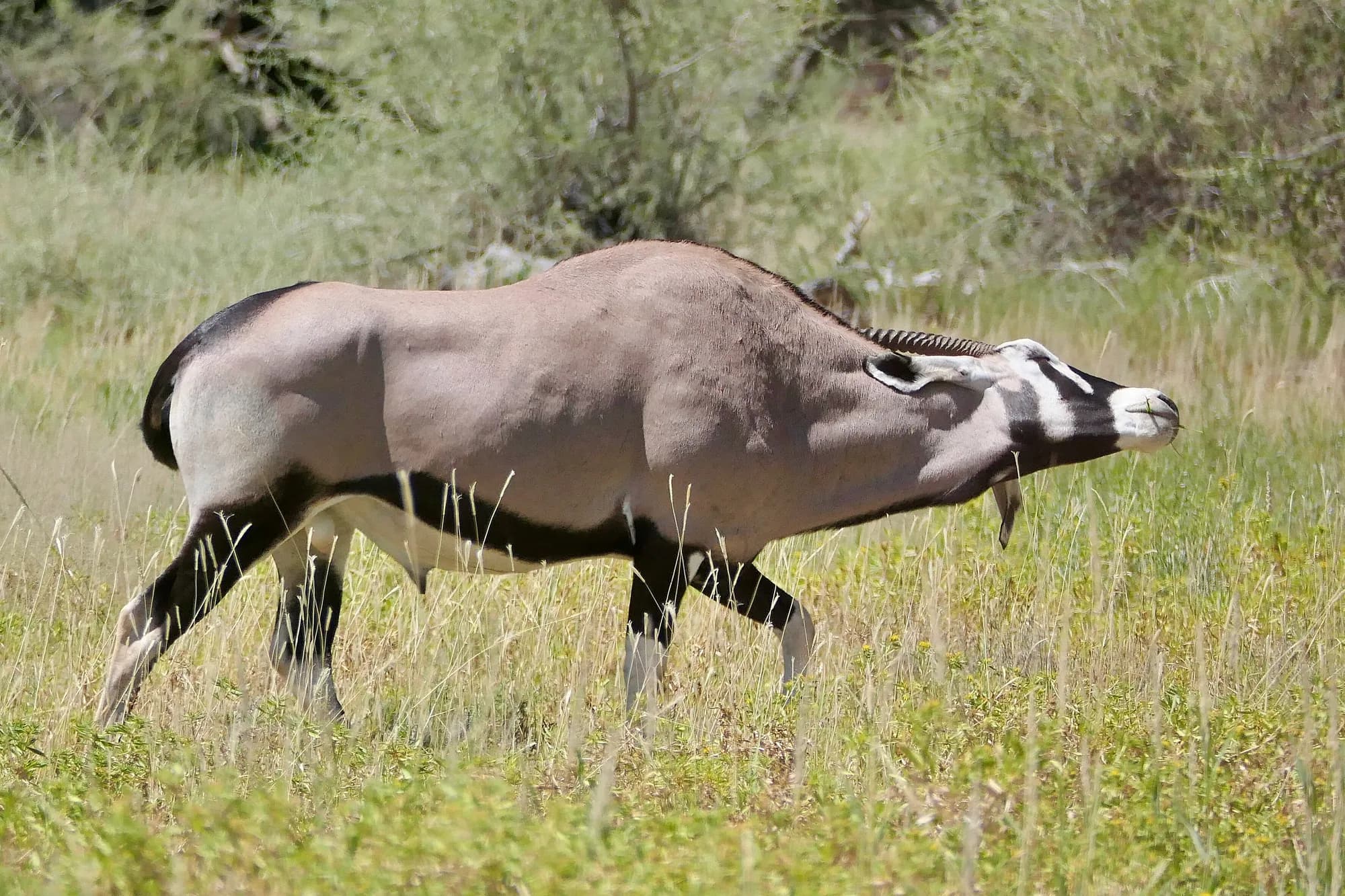
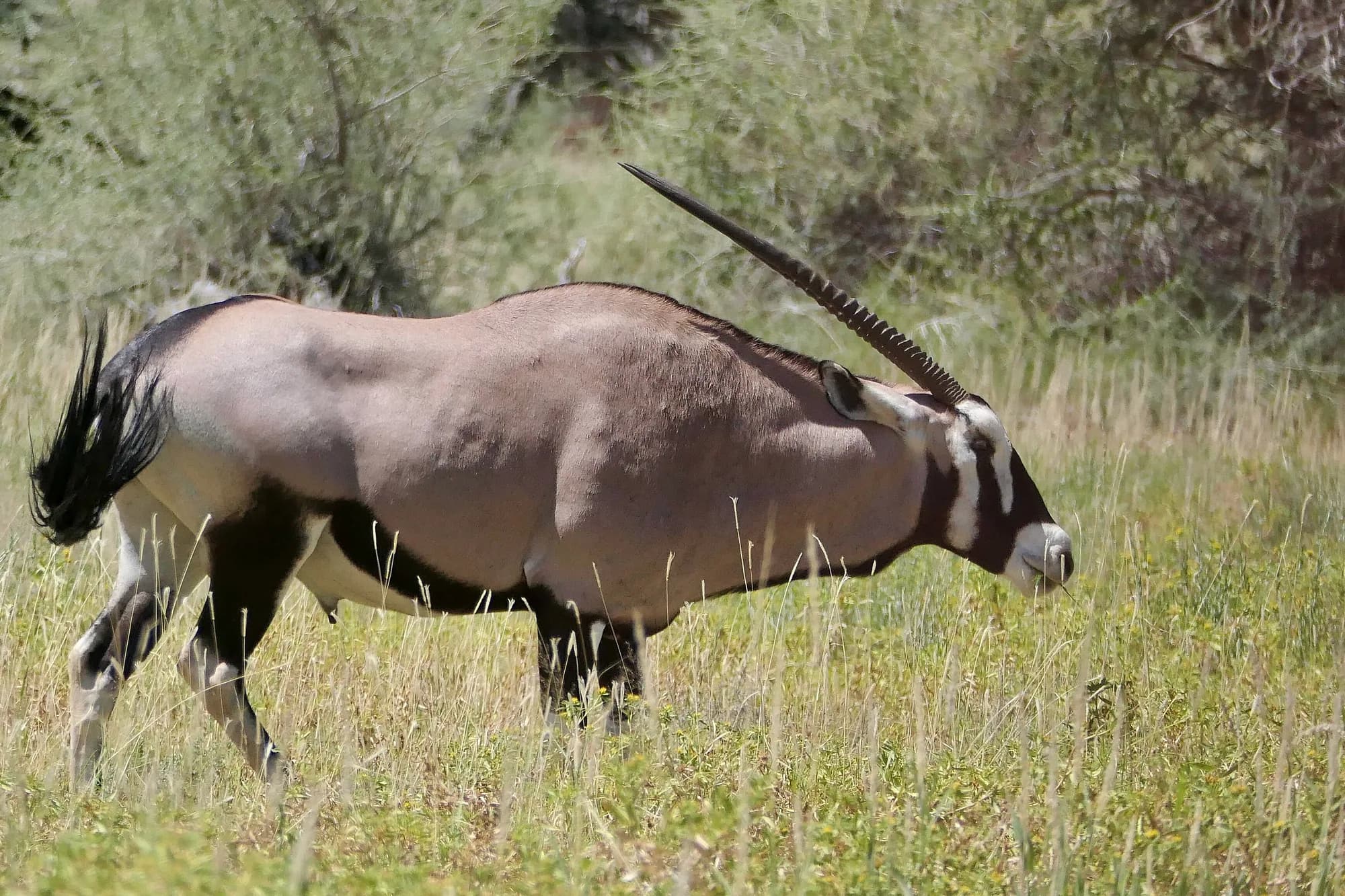
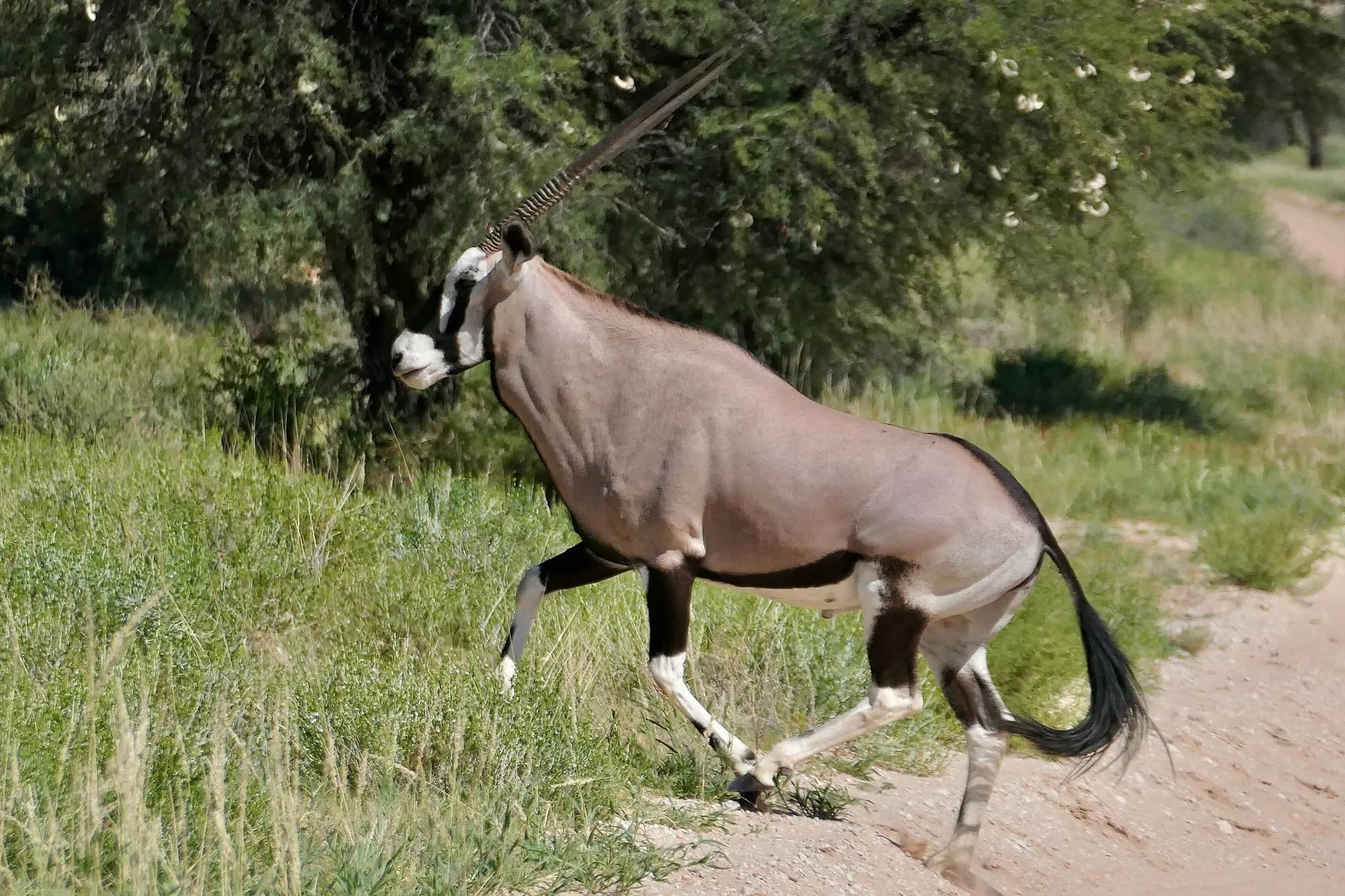
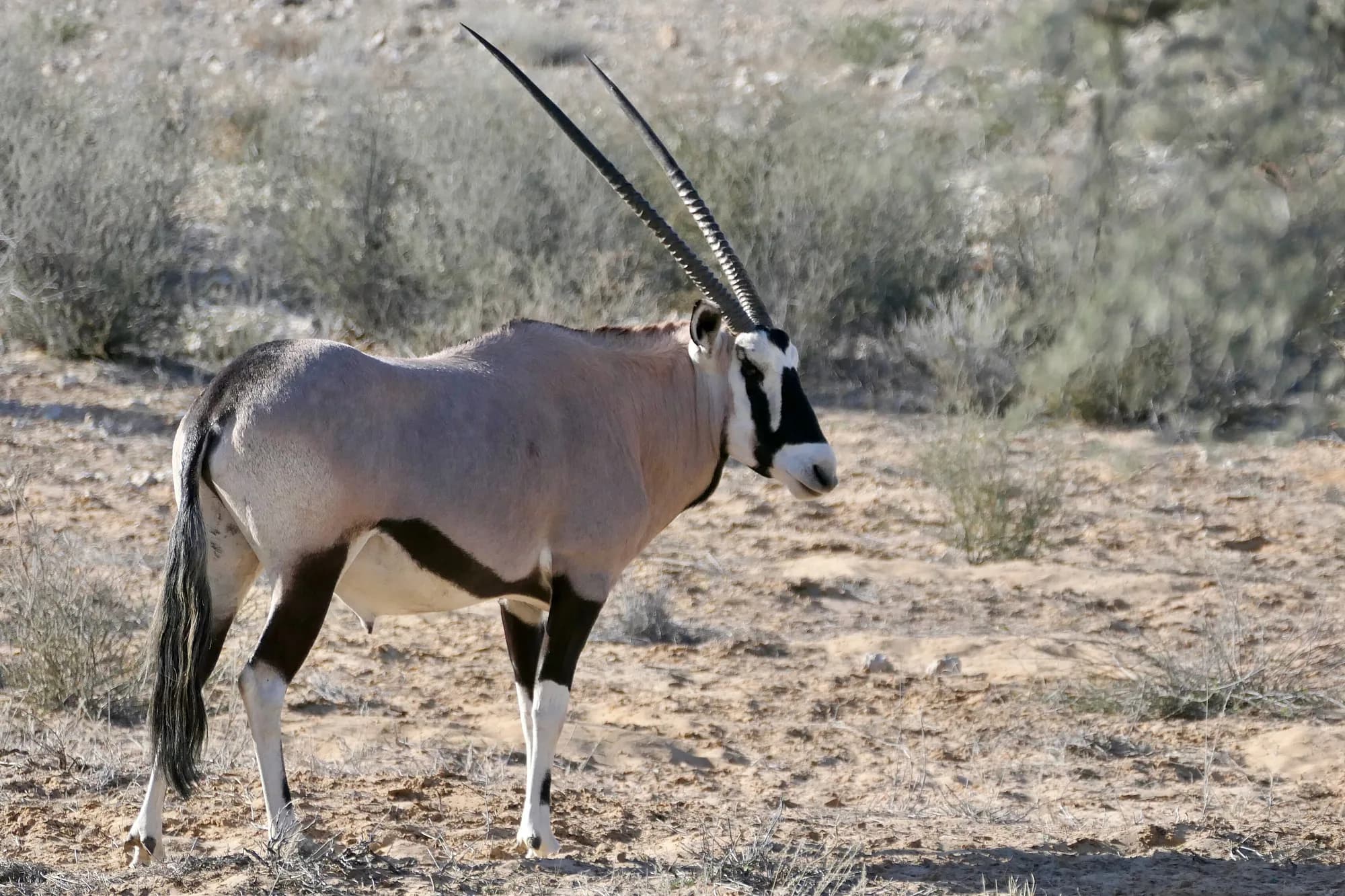
Photographs of Gemsbok in the wild, in Indian reserves. We publish no captive, baited or digitally composited images, and no photograph whose licence we cannot show.
How it survives out there
Gemsbok can go without drinking for long periods, taking water from melons, tubers and moisture condensed on plants overnight. The more remarkable adaptation is thermal: they let body temperature climb through the day rather than spending water on sweating, and cool the blood going to the brain through a network in the nasal passages. That is why a gemsbok stands in full sun at midday while everything else is under a tree.
Both sexes carry the long straight horns, and cows’ are often the longer and thinner of the two — so horn length is a poor guide to sex here. The horns are used, and gemsbok have killed lions with them.
Status and protection
Status and protection
- IUCN Red List
- Least Concern
- Population trend
- → Stable
Species-level assessment for Oryx gazella, matching the binomial on the page.
Assessed 2020 · IUCN Red List assessment
What to book to see one
What you would be booking
- How it is seen
- Self-drive. Kgalagadi and Etosha are both built for it and gemsbok are along the roads.
- Drives to book
- One. This is one of the easiest animals in the arid parks.
- Zone or shift
- The Auob and Nossob riverbeds in Kgalagadi; the pan edge in Etosha; Sossusvlei's dune country.
The photograph most people want — a gemsbok on a red dune crest against clean sky — is a Kgalagadi and Sossusvlei picture, taken in the first hour of light. In the middle of the day the light kills it.
Kgalagadi TransfrontierOn the same trip you would also get
- Springbok — the same red dunes
- Black-backed jackal — at every Kalahari waterhole
Questions people ask
Where is the best place to see gemsbok?
Is a gemsbok the same as an oryx?
How does a gemsbok survive without water?
Read next
The Kalahari, the Karoo and the Namibian plains
Springbok — the other Kalahari one
South Africa's national animal, and the one antelope that does something no other antelope does — pronking, a stiff-legged vertical bounce with the back arched and a fan of white hair thrown open along the rump. It is also the only gazelle in southern Africa.
Kgalagadi Transfrontier
Namib-Naukluft