
Species · Antidorcas marsupialis
Springbok
South Africa's national animal, and the one antelope that does something no other antelope does — pronking, a stiff-legged vertical bounce with the back arched and a fan of white hair thrown open along the rump. It is also the only gazelle in southern Africa.
Also called
- Springbok · Afrikaans
- Tshephe · Setswana
- ǁGûb · Khoekhoegowab
Checked 28 Sept 2026
- Where
- Botswana, Namibia, South Africa
- Best months
- Year-round; lambing after rain
- Trick
- Pronking — up to two metres
- Odds
- Certain in the arid parks
Open arid plains in southern Africa only. It is the sole gazelle south of the Zambezi, which is why it looks subtly wrong to anyone who has spent time with Thomson's and Grant's gazelles in East Africa.
Where it is
HabitatOpen arid and semi-arid plains — Kalahari sand, Karoo scrub and the Namibian gravel plains. It needs open ground and short grass, and it is one of the few antelope that thrives where there is no permanent water.
Worth travelling for
The national animal, and common across the Northern Cape and Karoo parks. Kgalagadi is where it looks best, on red sand.
Across the gravel plains and at the Etosha waterholes, often in the same frame as gemsbok.
The Central Kalahari and the pans, where big herds gather after rain.
Also occurs
Angola
Present, but not where you would go to see one.
Gone from
The historic treks — herds of hundreds of thousands that crossed the Karoo into the 1890s and no longer exist in any form
Range this species has been lost from. It is the fact a map of where it currently lives cannot show you.
Where to actually go
Ranked, with the reason each — these are not interchangeable.
- 01Kgalagadi TransfrontierSouth AfricaSpringbok on red sand with a clean sky behind is the photograph, and the dry riverbeds put them at the roadside.The Auob and Nossob roads
- 02EtoshaNamibiaLarge numbers at the waterholes, frequently with gemsbok and predators in the same view.Waterholes, dry season
- 03Central KalahariBotswanaAfter the rains, Deception Valley fills with springbok and the cheetahs that follow them.Green season
- 04Tankwa KarooSouth AfricaEmpty Karoo plains where springbok are most of what moves, and almost nobody visits.For the emptiness
- 05Nxai PanBotswanaOpen pan with springbok, zebra and the baobabs, in the green season.After the rains
Where you will not see one
- East AfricaThere are none. The gazelles of Kenya and Tanzania are Thomson's and Grant's — similar in build, different animals, and no pronking.
- The bushveld and lowveldKruger, Hluhluwe and the eastern parks are too wooded and too wet. Springbok want open, dry and short.
- Anywhere as a trek spectacleThe historic migrations of hundreds of thousands across the Karoo ended in the nineteenth century and cannot be seen. Nothing on this site reproduces them.
When to go
When to go
- J
- F
- M
- A
- M
- J
- J
- A
- S
- O
- N
- D
January: good. February: best. March: best. April: good. May: good. June: best. July: best. August: best. September: best. October: good. November: good. December: good.
Through the day
- Dawn
- Morning
- Midday
- Afternoon
- Dusk
- Night
Dawn: most active. Morning: most active. Midday: active. Afternoon: most active. Dusk: most active. Night: usually resting.
What it looks like in the field
Photographs of Springbok in the wild, in Indian reserves. We publish no captive, baited or digitally composited images, and no photograph whose licence we cannot show.
Pronking, and why
A pronking springbok launches straight up with all four legs stiff and the back arched, and opens a hidden fan of long white hair along the rump — a crest that stays folded into a skin pocket the rest of the time. It can clear two metres and it will do it repeatedly.
Nobody is certain why. The most-supported explanation is honest signalling to a predator: an animal fit enough to waste energy bouncing is an animal not worth chasing, and cheetahs do appear to break off pursuits of pronking springbok. Competing suggestions — confusing a predator, warning the herd, simply seeing further over scrub — are not mutually exclusive. Lambs also pronk when nothing is threatening them at all.
Status and protection
Status and protection
- IUCN Red List
- Pending
- Population trend
- · Unknown
Not yet verified against the source. These four values are written from knowledge and are awaiting a checked IUCN assessment, schedule and appendix — treat them as indicative until this line disappears.
Assessed not yet retrieved
What to book to see one
What you would be booking
- How it is seen
- Self-drive. Kgalagadi and Etosha are both built for it and springbok are along every road.
- Drives to book
- One. This is among the easiest animals in the arid parks.
- Zone or shift
- The Auob and Nossob riverbeds in Kgalagadi for the red-sand photograph; the pans in Botswana after rain for numbers.
Lambing is triggered by rain rather than by a calendar month, so the green season in the Kalahari — roughly January to April — is when you see lambs and the predators that follow them.
Kgalagadi TransfrontierQuestions people ask
Where is the best place to see springbok?
What is pronking?
Are there springbok in East Africa?
Read next
Botswana, Namibia and the Northern Cape
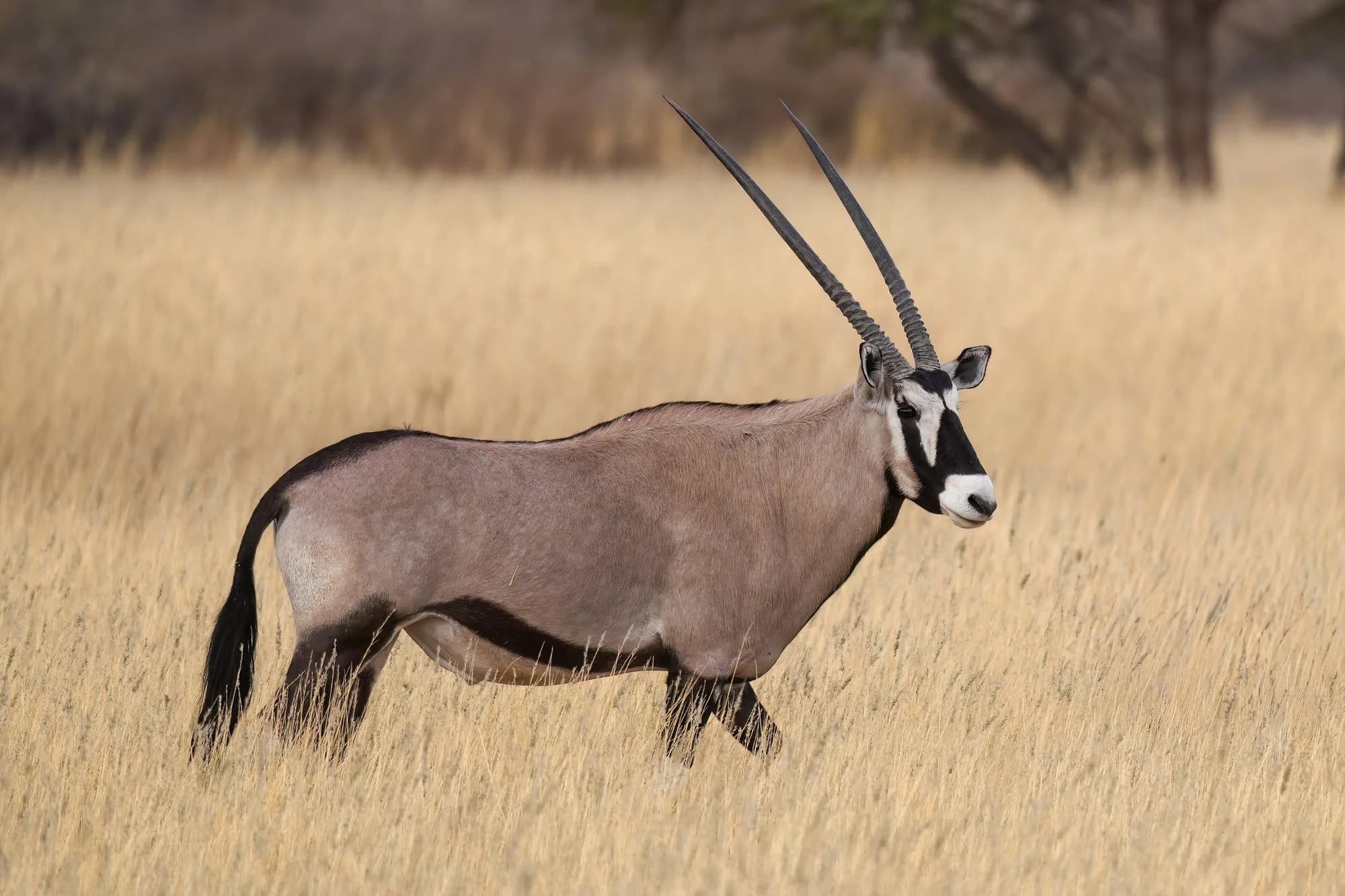
Gemsbok — the same dunes
The desert antelope on the red dunes, with a black-and-white face mask and rapier horns, and the animal that makes the arid parks worth the drive. It can go for long periods without drinking, which is why it is standing in country where nothing else is.
Six countries here, and it needs open country
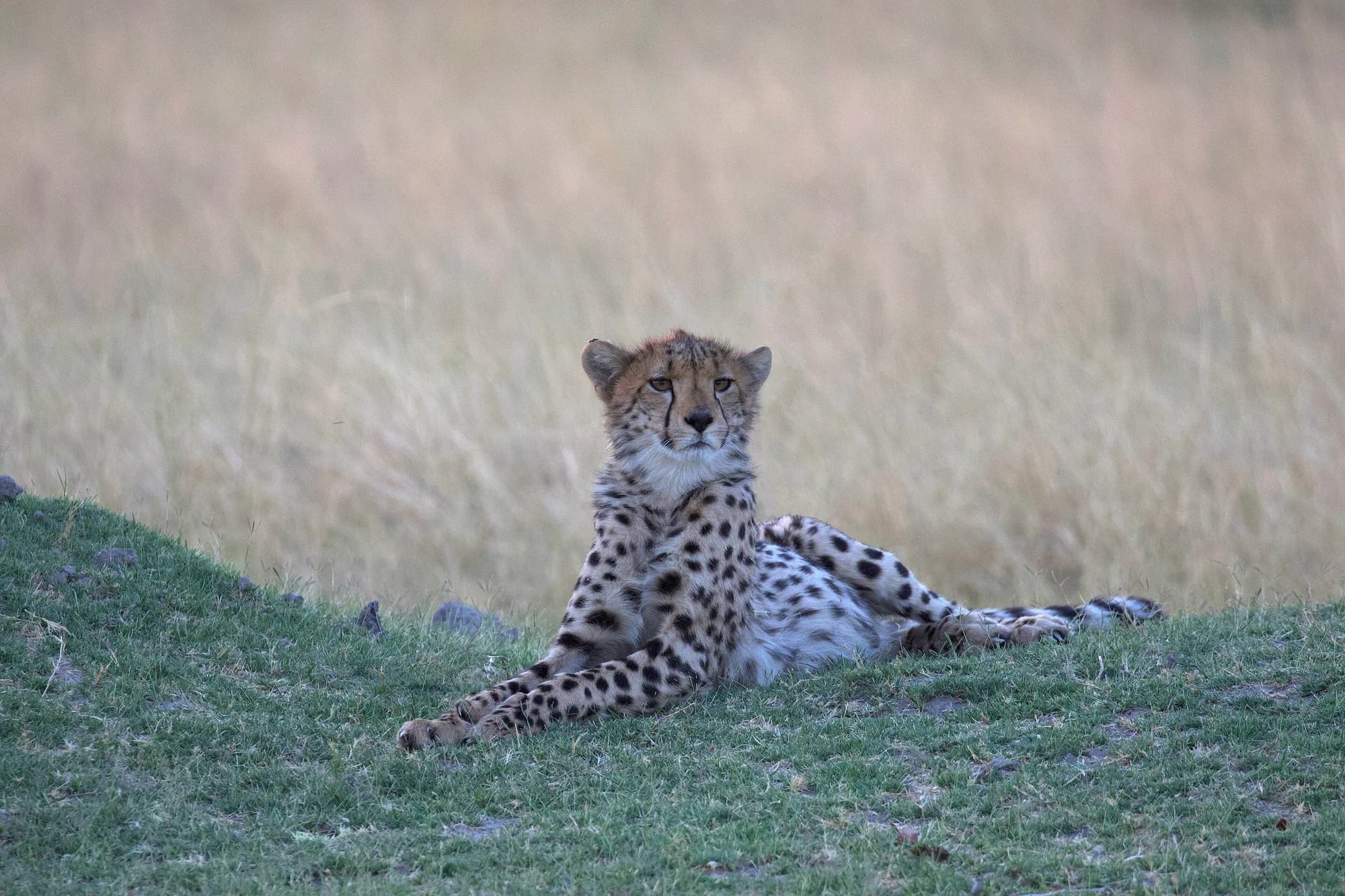
Cheetah
The one large African predator that hunts in daylight, which makes it the most watchable and the most photographed. It is also the rarest of the big cats on this site, and it loses kills to almost everything.
Kgalagadi Transfrontier