
Species · Cercopithecus kandti
Golden monkey
An orange-gold monkey confined to the bamboo of the Virunga volcanoes, and the best-value permit in the region. It costs a fraction of a gorilla trek, takes half a morning, and most people who go for the gorillas never hear of it.
Also called
- Inkima y'umuhondo · Kinyarwanda
- Tumbili wa dhahabu · Swahili
Checked 28 Sept 2026
- Where
- Virunga volcanoes only
- Best months
- June–Sept, Dec–Feb
- Your time
- One hour, same as the gorillas
- Odds
- Very high — troops are habituated
The Virunga volcanoes of Rwanda, Uganda and the DRC, plus a small population in Nyungwe. It was long treated as a subspecies of the blue monkey and is now generally recognised as its own species.
Where it is
HabitatBamboo forest on the Virunga volcanoes between roughly 2,400 and 3,000 m, plus a remnant in Nyungwe. Its whole world range is a handful of mountains on one border, which is why it is Endangered despite being easy to see.
Worth travelling for
Volcanoes National Park sells a golden monkey permit alongside the gorilla one, and the troops there are well habituated.
Mgahinga is the specialist's choice — far fewer visitors, and it also offers a full-day habituation experience with the researchers.
DR Congo
The third Virunga park, and not covered on this site.
Gone from
Much of the bamboo belt cleared below the park boundaries, which is the whole reason the range is now this small
Range this species has been lost from. It is the fact a map of where it currently lives cannot show you.
Where to actually go
Ranked, with the reason each — these are not interchangeable.
- 01Mgahinga GorillaUgandaFar fewer visitors than Volcanoes, and the only place offering a full-day golden monkey habituation experience alongside the researchers.Habituation experience, and quiet
- 02VolcanoesRwandaWell-habituated troops and the easiest logistics — two hours from Kigali, and it fits the afternoon after a gorilla trek.Pairs with the gorillas
Where you will not see one
- BwindiBwindi has gorillas and no golden monkeys — it is the wrong forest and the wrong altitude. The golden monkey parks are Mgahinga and Volcanoes.
- Any savanna parkThe Serengeti, the Mara, Akagera, Queen Elizabeth. This is a bamboo specialist on three volcanoes.
- Standing stillUnlike gorillas, a golden monkey troop moves constantly and fast. Expect flashes of orange through bamboo rather than a settled subject — a fast lens matters more than a long one.
When to go
When to go
- J
- F
- M
- A
- M
- J
- J
- A
- S
- O
- N
- D
January: good. February: good. March: marginal. April: marginal. May: marginal. June: best. July: best. August: best. September: good. October: marginal. November: marginal. December: good.
Through the day
- Dawn
- Morning
- Midday
- Afternoon
- Dusk
- Night
Dawn: active. Morning: most active. Midday: usually resting. Afternoon: active. Dusk: active. Night: not normally seen.
What it looks like in the field
Photographs of Golden monkey in the wild, in Indian reserves. We publish no captive, baited or digitally composited images, and no photograph whose licence we cannot show.
The spare half-day
Almost every gorilla itinerary has a gap in it. The trek finishes by early afternoon, permits are for one day, and people spend the rest of it at the lodge. The golden monkey permit exists for exactly that gap: a separate trek, a fraction of the cost, and an animal you cannot see anywhere outside these mountains.
It is also a completely different hour. Gorillas are large, slow and settled; you sit and watch. Golden monkeys are fast, high and constantly moving, and the hour is spent following a troop through bamboo rather than observing one. People who have just done a gorilla trek often find the contrast the most interesting part.
Why bamboo decides everything
Golden monkeys eat bamboo — shoots, leaves and the young growth — supplemented with fruit and invertebrates. That single dependency explains the range, the rarity and the conservation problem. Bamboo grows in a narrow altitude band on these volcanoes, the band below the park boundary was cleared for farmland, and there is nowhere for the species to go.
It also explains the movement. Bamboo shoots come in flushes rather than continuously, so troops range widely and their whereabouts change week to week. Trackers find them each morning the same way they find gorillas, which is why the permit is reliable despite the animal not being.
Status and protection
Status and protection
- IUCN Red List
- Pending
- Population trend
- · Unknown
Not yet verified against the source. These four values are written from knowledge and are awaiting a checked IUCN assessment, schedule and appendix — treat them as indicative until this line disappears.
Assessed not yet retrieved
What to book to see one
What you would be booking
- How it is seen
- A permit and a guided trek from the park headquarters, usually a morning. Sold separately from the gorilla permit.
- Drives to book
- One trek. Two if you want the Mgahinga habituation experience, which is a full day rather than an hour.
- Zone or shift
- Volcanoes for convenience alongside a gorilla trek; Mgahinga for quiet and for the habituation option.
UWA's published tariff prices golden monkey tracking at USD 100 for a foreign non-resident — against USD 800 for gorillas. On a per-hour basis it is the cheapest primate experience in the region, and it slots into the spare half-day most gorilla itineraries already have.
Mgahinga GorillaOn the same trip you would also get
- Mountain gorilla — the same two parks, the same morning
- Blue monkey — the species it was long lumped with
Questions people ask
Where can I see golden monkeys?
Is a golden monkey permit worth it alongside gorillas?
How is it different from a gorilla trek?
Read next
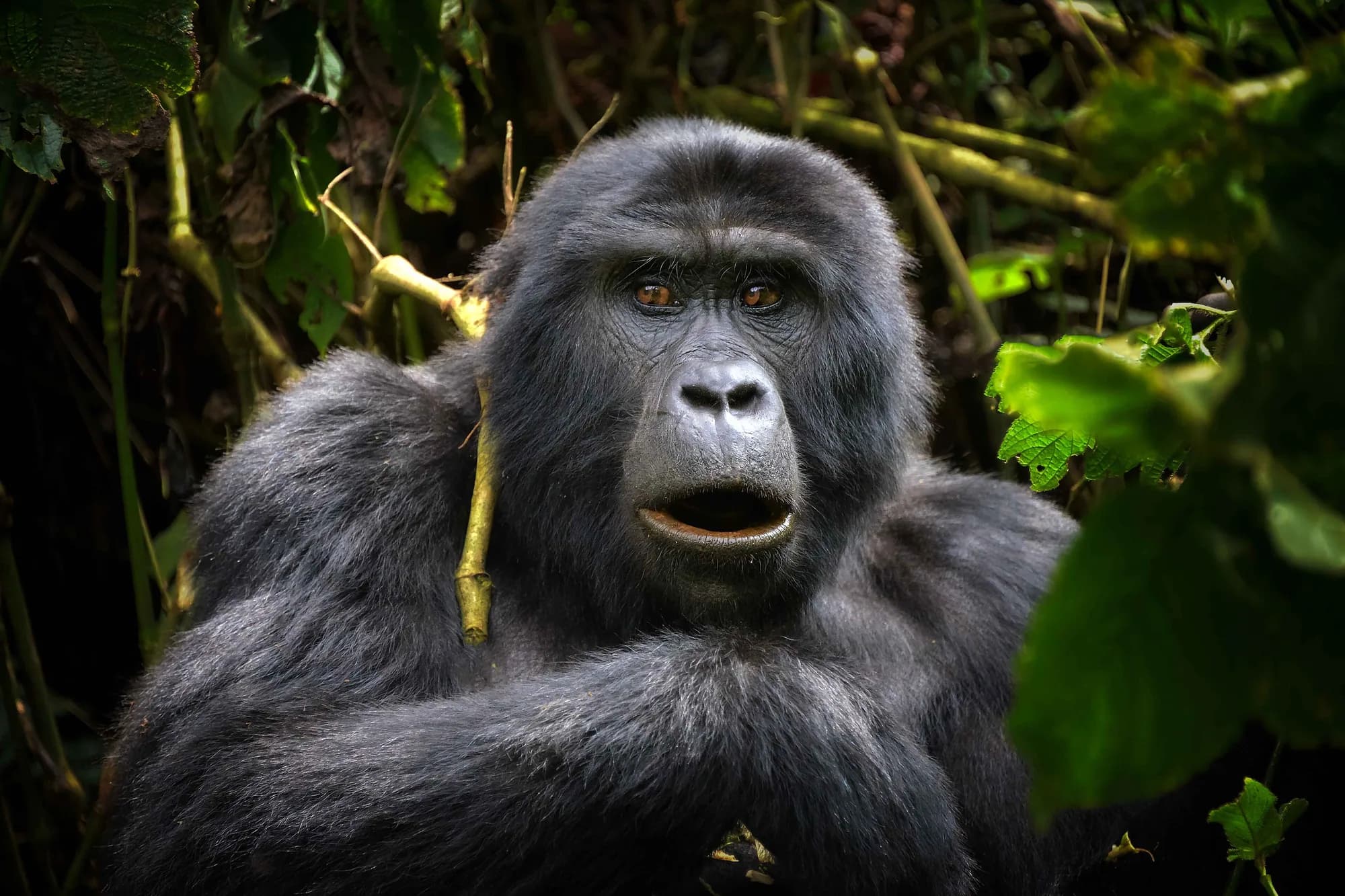
Bwindi, Mgahinga, Volcanoes — and nowhere else on earth
Mountain gorilla — the same parks
Three national parks on this site hold the entire world population, and one hour with a habituated group is the most expensive and most reliably delivered wildlife encounter in Africa. It is also the rare conservation story that has gone the right way.
Mgahinga Gorilla
Volcanoes