Species · Gorilla beringei beringei
Mountain gorilla
Three national parks on this site hold the entire world population, and one hour with a habituated group is the most expensive and most reliably delivered wildlife encounter in Africa. It is also the rare conservation story that has gone the right way.
Also called
- Ngagi · Swahili
- Ingagi · Kinyarwanda
- Esiro · Rukiga
Checked 27 Sept 2026
- Where
- Uganda, Rwanda, DRC
- Best months
- June–Aug, Dec–Feb
- Your time
- One hour, strictly
- Odds
- Very high — groups are tracked daily
Two populations, both tiny and both entirely within this site's range: the Virunga massif shared by Volcanoes in Rwanda, Mgahinga in Uganda and Virunga in the DRC, and the separate population in Bwindi Impenetrable Forest. There is no mountain gorilla anywhere else, and none in any zoo.
Where it is
HabitatMontane forest above roughly 1,500 m. Two populations, and nothing between them.
Worth travelling for
Roughly half the world population, more habituated groups than anywhere, and the cheapest permit of the three countries.
Two hours from Kigali on tarmac, so it fits a short trip. The most expensive permit in the world, deliberately.
DR Congo
The third Virunga park. Not covered on this site, and access depends on a security situation that changes.
Gone from
Nowhere — the range has never been larger than this, and it is currently growing
Range this species has been lost from. It is the fact a map of where it currently lives cannot show you.
Where to actually go
Ranked, with the reason each — these are not interchangeable.
- 01Bwindi ImpenetrableUgandaRoughly half the world population, more habituated groups than anywhere else, and the cheapest permit of the three countries. Steep, wet, and worth it.Most groups, lowest permit
- 02VolcanoesRwandaTwo hours from Kigali on good roads, so it fits a short trip in a way Bwindi does not. The most expensive permit anywhere, deliberately.Easiest logistics, highest price
- 03Mgahinga GorillaUgandaOne habituated group, far fewer visitors, and golden monkeys in the same forest. The quiet alternative, with less certainty.One group, almost nobody there
Where you will not see one
- Any savanna parkThe Serengeti, the Mara, Kruger, Queen Elizabeth, Akagera — none of them. Mountain gorillas live in montane forest above roughly 1,500 m and there are three places to see them.
- Any zooNo mountain gorilla has ever survived in captivity. Every gorilla in a zoo is a western lowland gorilla, a different species.
- On a spare afternoonA permit is bought months ahead, the trek can take eight hours round trip, and the parks are a long drive or a charter flight from anywhere else on an itinerary.
When to go
When to go
- J
- F
- M
- A
- M
- J
- J
- A
- S
- O
- N
- D
January: good. February: good. March: marginal. April: marginal. May: marginal. June: best. July: best. August: best. September: good. October: marginal. November: marginal. December: good.
Through the day
- Dawn
- Morning
- Midday
- Afternoon
- Dusk
- Night
Dawn: active. Morning: most active. Midday: active. Afternoon: usually resting. Dusk: not normally seen. Night: not normally seen.
What it looks like in the field
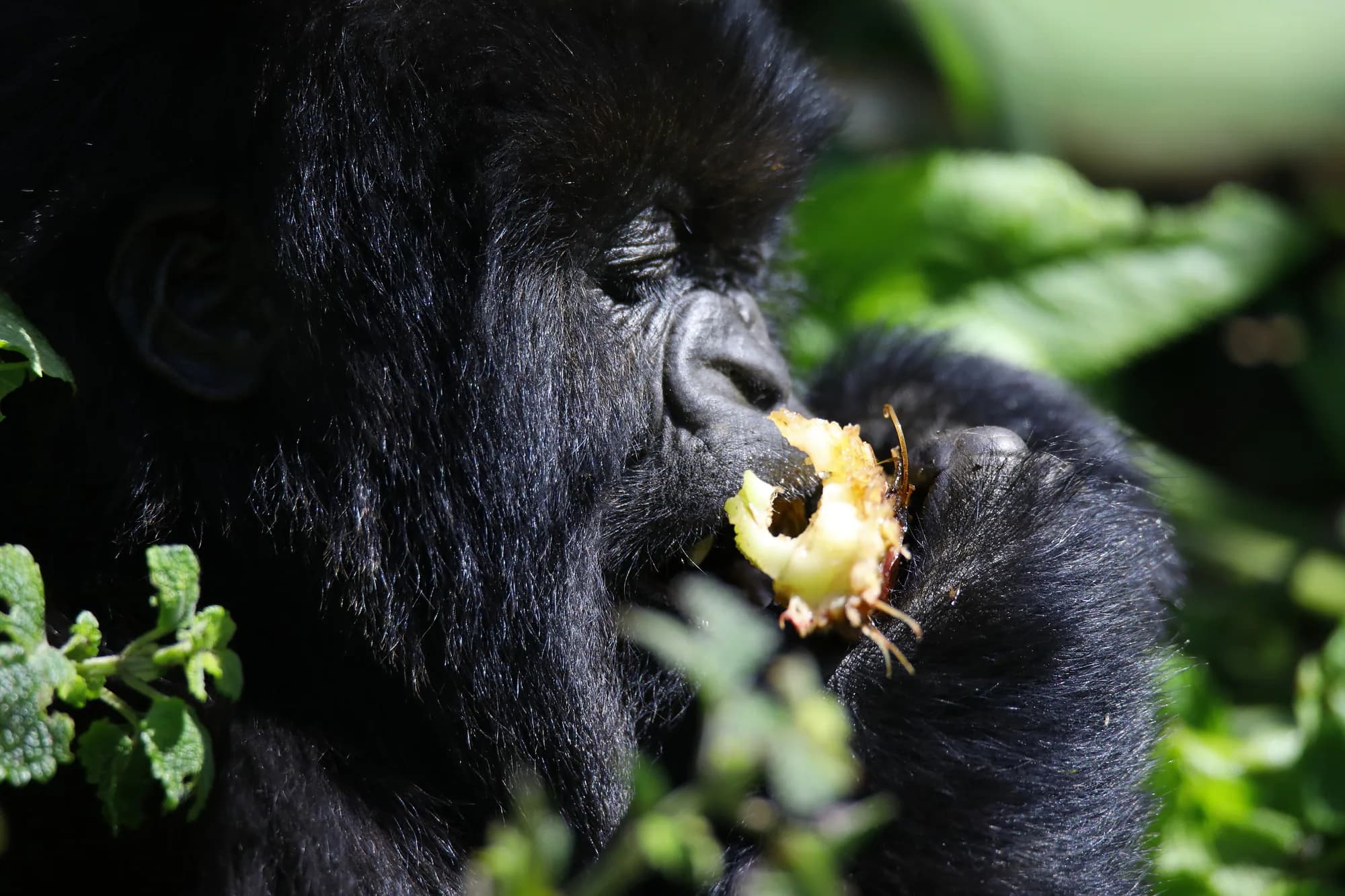
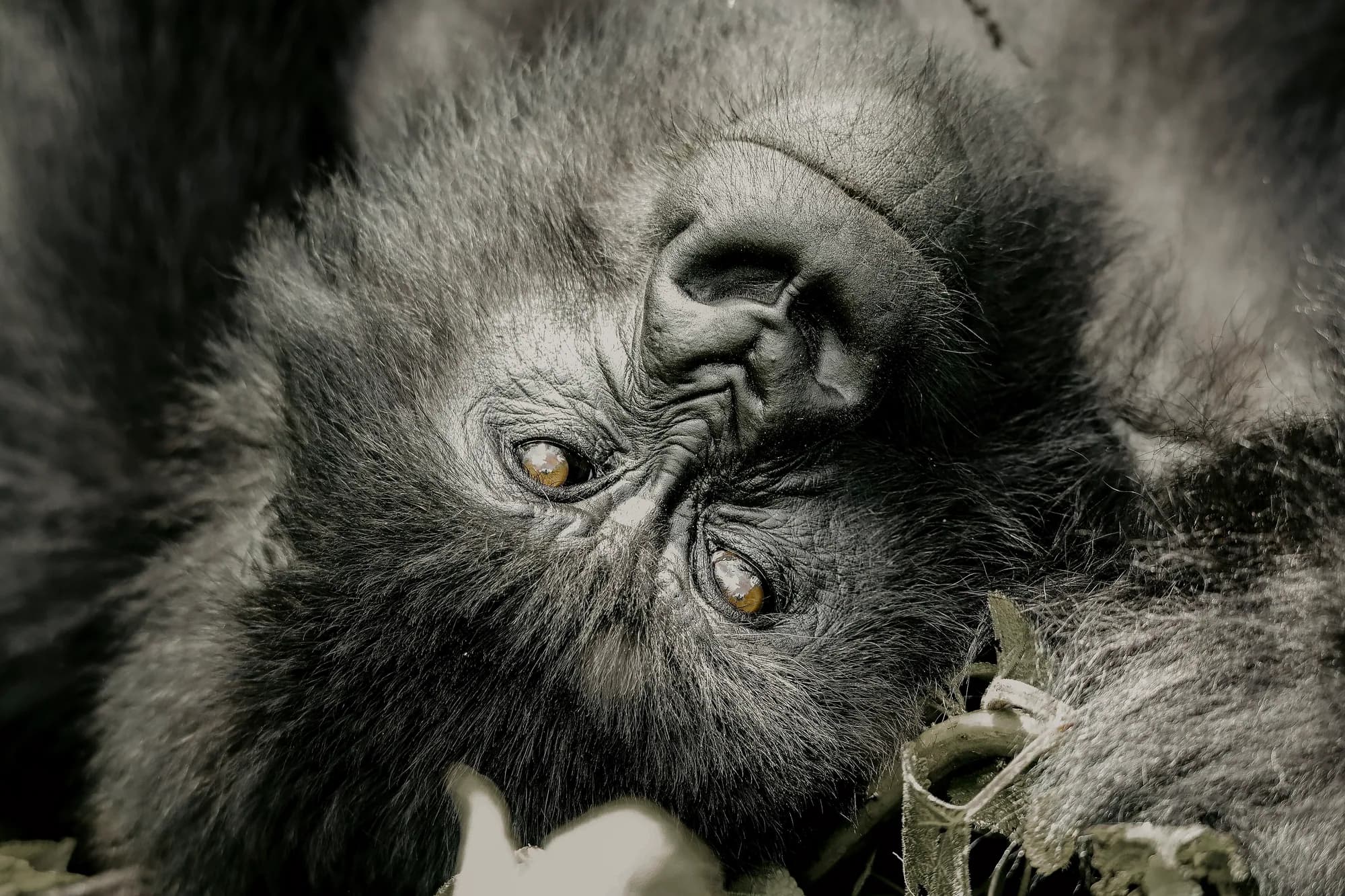
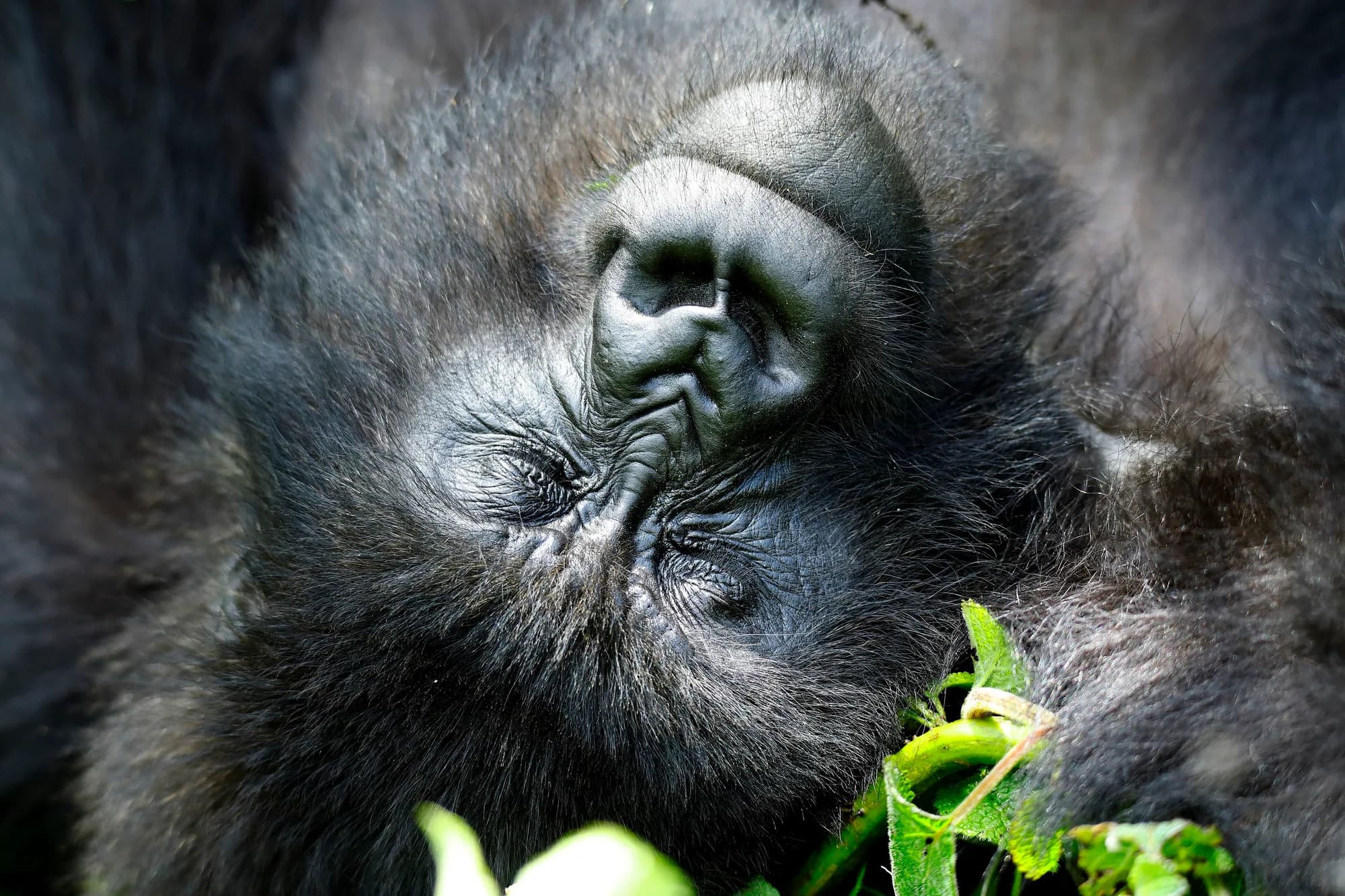
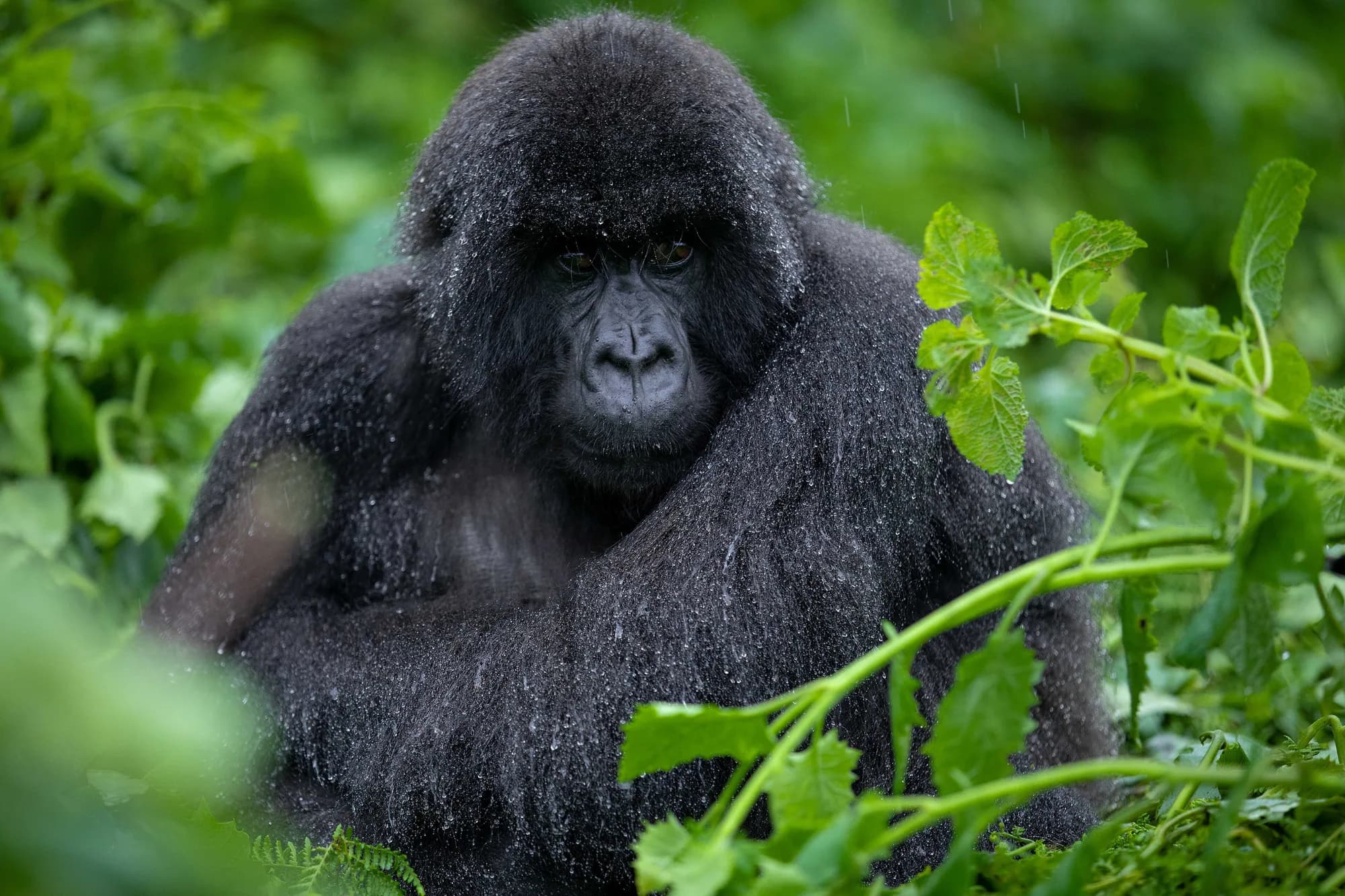
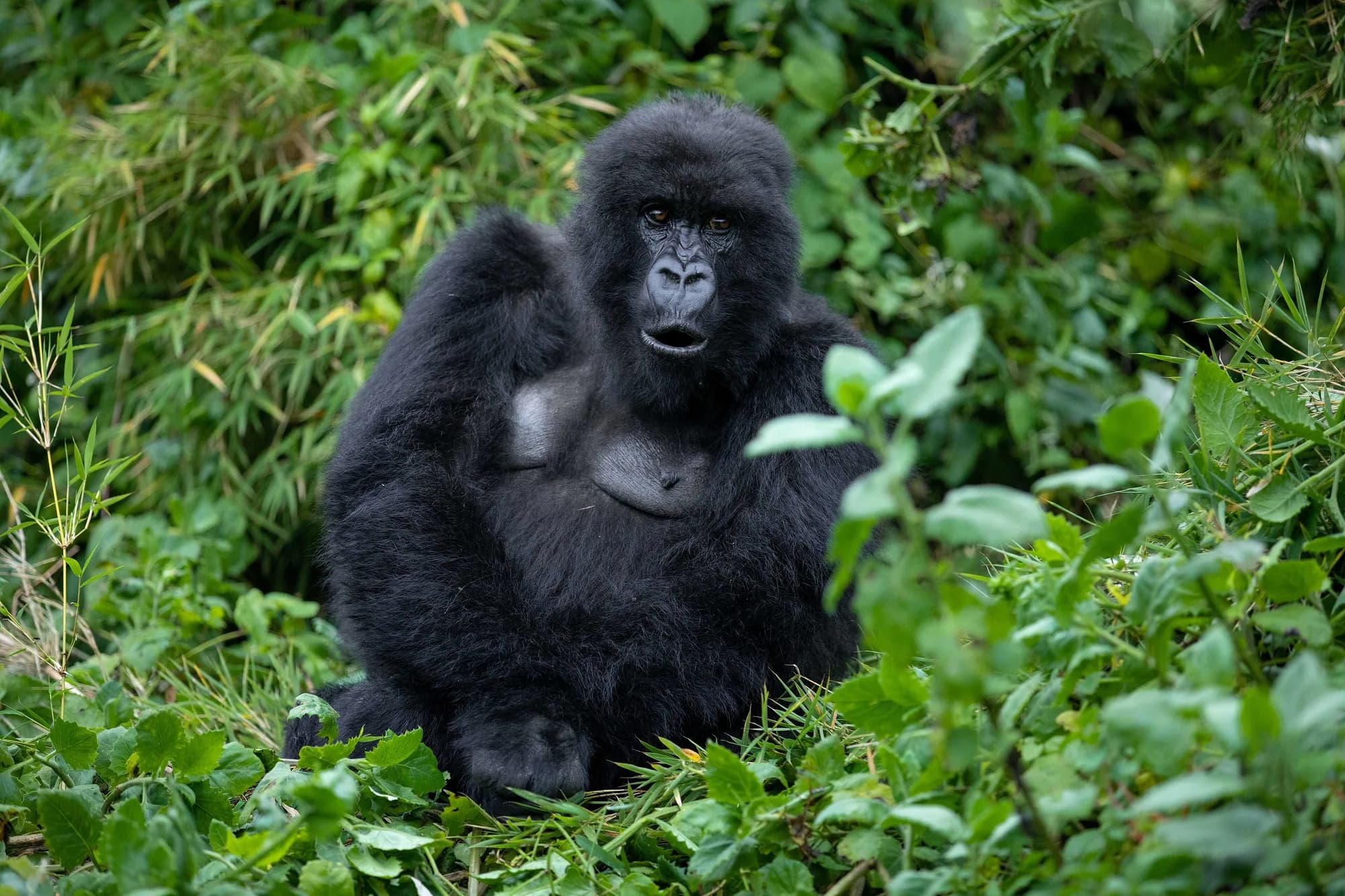
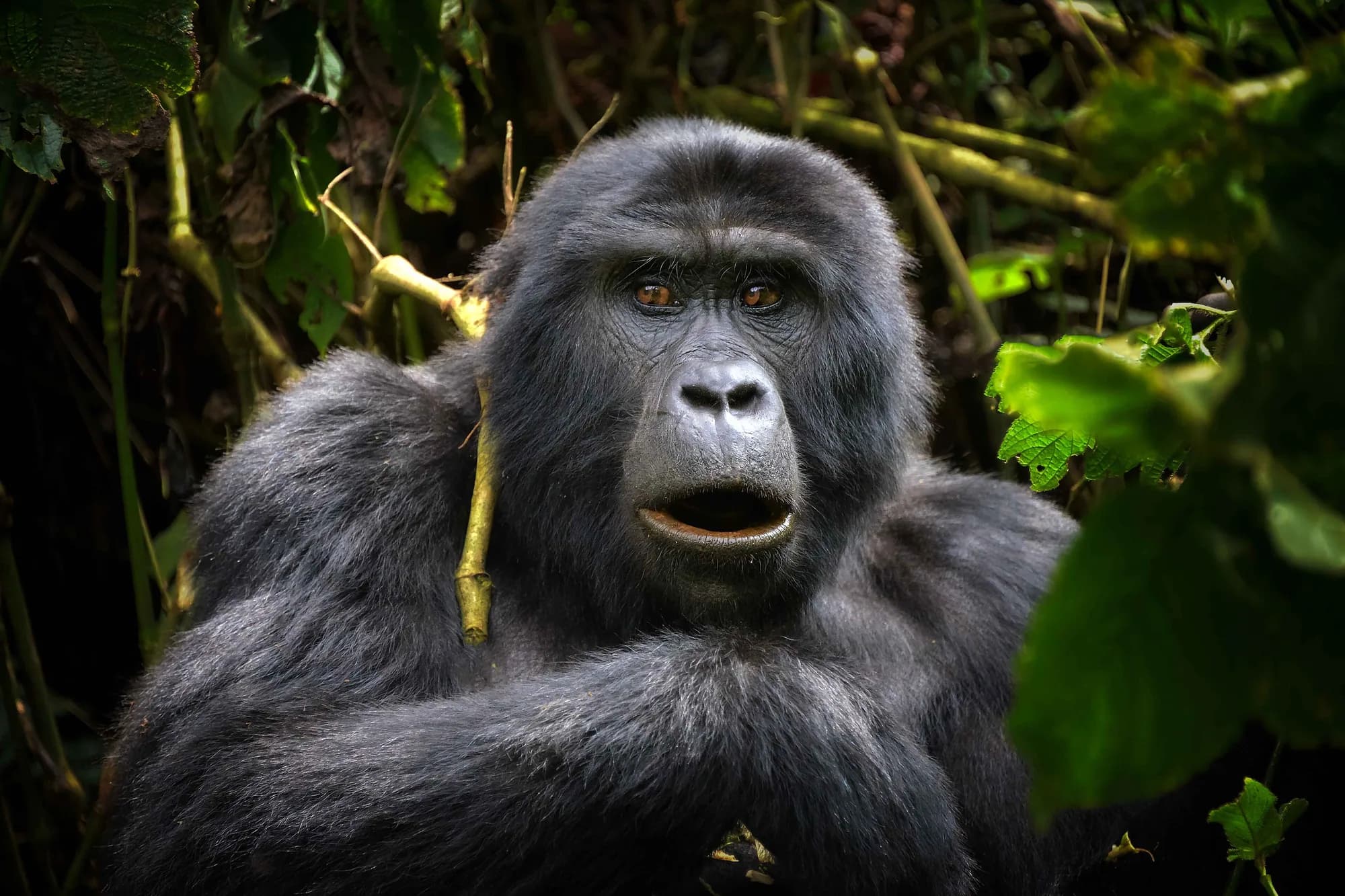
Photographs of Mountain gorilla in the wild, in Indian reserves. We publish no captive, baited or digitally composited images, and no photograph whose licence we cannot show.
Uganda or Rwanda
The same animal, and a genuinely different trip. Rwanda is the short one: Kigali to Volcanoes is a couple of hours on tarmac, the permit is the most expensive in the world, and you can do the whole thing in three days from Europe. Uganda is the cheaper permit and the longer journey — Bwindi is a full day’s drive from Entebbe or a charter flight, and it holds roughly half the world population across four sectors.
The choice is usually decided by budget and by time, and both are legitimate. What should not decide it is any claim that one country’s gorillas are better. They are the same population group in the Virungas, and Bwindi’s is separate but not lesser.
What the hour is like
Trackers locate the group from where it nested the night before, and you walk to them — anywhere from forty minutes to most of a day, on steep ground, through vegetation that gives Bwindi its name. Then the hour starts, and it is timed.
You stay several metres back, keep your voice down, and do not eat or use flash. Most of the hour is undramatic: animals feeding, a juvenile doing something ridiculous, a silverback entirely uninterested in you. The thing people are unprepared for is being looked at directly and at close range by something that is obviously assessing you.
Status and protection
Status and protection
- IUCN Red List
- Endangered
- Population trend
- ↑ Increasing
- CITES
- Appendix I
Subspecies-level assessment for Gorilla beringei ssp. beringei, the mountain gorilla, distinct from the species-level Gorilla beringei figure.
Assessed 2020 · IUCN Red List assessment
What to book to see one
What you would be booking
- How it is seen
- A permit, booked well in advance, then a guided trek from a park headquarters at dawn.
- Drives to book
- Not drives — permits. Buy two on separate days if you can afford it: the second trek is usually the better one, because you know what you are looking at.
- Zone or shift
- In Uganda, Bwindi has four trekking sectors — Buhoma, Ruhija, Rushaga and Nkuringo — and they are hours apart by road. Book the lodge to match the sector on the permit, not the other way round.
Widely quoted 2026 operator pricing puts a Uganda permit at USD 800, dropping to USD 600 in April, May and November, and a Rwanda permit at USD 1,500. Those are operator-quoted figures, not a tariff document this site has read — check with UWA or the RDB before budgeting.
Bwindi ImpenetrableOn the same trip you would also get
- Golden monkey — the same two parks, half a day
- Chimpanzee — Kibale, and a very different animal