
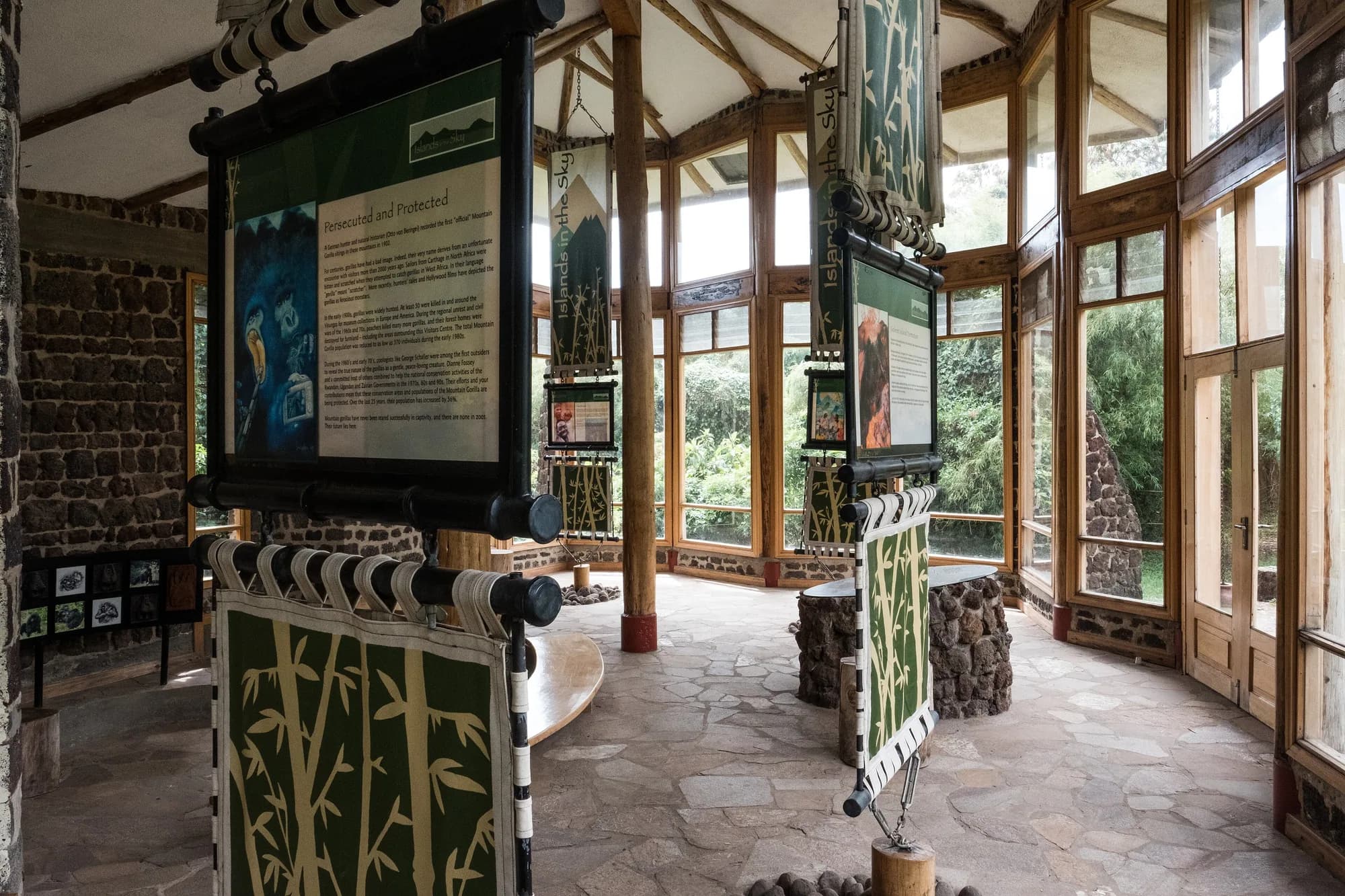
Mgahinga Gorilla
Golden monkeys, and gorillas without the crowd
Thirty-three point seven square kilometres on the shoulders of three volcanoes, Uganda's smallest park and the only place in the country with golden monkeys — one habituated gorilla group that crosses into Rwanda, and far fewer people than Bwindi.
Mgahinga Gorilla at a glance
- District
- Kisoro
- Area
- Not publishedNot recorded
- Safari zones
- Not publishedNot verified from the department yet
Permit data last verified .
When to go
- J
- F
- M
- A
- M
- J
- J
- A
- S
- O
- N
- D
January: best. February: best. March: marginal. April: marginal. May: marginal. June: best. July: best. August: best. September: best. October: best. November: best. December: best.
Everything on Mgahinga Gorilla
Safari booking
How to book, which portal, when slots open
Know morePermits & fees
Fee table by nationality, with the source and date
Know moreZones
Every zone, its gate, and what people actually see
Know moreBest time to visit
Month by month, closures and sighting patterns
Know moreWhere to stay
Lodges and camps by tier, and what each is near
Know moreWildlife
Species present, populations, realistic odds
Know moreHow to reach
Rail, air and road, with verified transfer times
Know moreItineraries
Two, three and five night trips a partner can deliver
Know moreSafari cost
The full trip budget, not the headline number
Know moreSightings log
What guests reported, and when
Know more
What Mgahinga Gorilla is a destination for

Questions people ask about Mgahinga Gorilla
What is the best time to visit Mgahinga Gorilla?
June–August and December–February. That is our reading of when the park rewards a trip. Its official closure window is not something we have verified from the department, so confirm the dates before you book.
How much does a safari at Mgahinga Gorilla cost?
Park entrance, charged per person per twenty-four hours. UWA publishes four columns: FNR (foreign non-resident), FR (foreign resident), ROA (rest of Africa) and EAC (East African Community citizens, in shillings). This park is Category A: an FNR adult pays USD 40, an FR adult USD 30, a rest-of-Africa adult USD 25, and an EAC citizen UGX 20,000. Children are USD 20 / 10 / 5 and UGX 5,000. Gorilla tracking in Bwindi and Mgahinga is a separate permit: USD 800 for a foreign non-resident, USD 700 foreign resident, USD 500 rest of Africa, UGX 300,000 for an EAC citizen. That rate includes the guide, park entrance for the day and the community development contribution. The gorilla habituation experience — four hours rather than one — is USD 1,500 / 1,000 / 1,000 / UGX 750,000. Mgahinga is also the only place in Uganda that sells golden monkeys, and they are the reason to come here rather than to Bwindi: tracking is USD 60 foreign non-resident, USD 50 foreign resident and UGX 40,000 EAC, and the Golden Monkey Habituation Experience — a full day rather than an hour — is USD 100 / 80 / UGX 100,000. Both are printed "excludes entrance fees", so entrance is payable on top, unlike the gorilla permit. Neither carries a rest-of-Africa rate, so a rest-of-Africa visitor pays the foreign non-resident price. UWA's own Mgahinga block prints no park entrance row at all — the USD 40 above comes from the Category A table elsewhere in the tariff. Other Mgahinga lines: the Batwa Trail at USD 80 / 70 / UGX 50,000, the only one of UWA's three Batwa products printed as including entrance; the gorge walk at USD 30 / 15 / UGX 15,000; volcano climbing at USD 100 / 80 / UGX 50,000 a day; and platform viewing at USD 10 / 10 / UGX 10,000. Whether gorilla HABITUATION is sold here at all is unresolved: the tariff's activities table is headed "gorilla tracking in BINP and MGNP" and lists habituation under it, but Mgahinga's own fees summary has no habituation row where Bwindi's does, and UWA's management plan says Nyakagezi is the only habituated group — leaving nothing to habituate. Do not present the 1 January 2027 habituation rise as a Mgahinga story until that is settled. Two changes dated 26 February 2026 matter and are easy to miss: UWA introduced LOW SEASON permits for April, May and November at USD 600 (FNR) and USD 500 (FR) with immediate effect, and it has published a revised structure taking effect 1 January 2027 under which gorilla tracking stays at USD 800 but habituation rises to USD 1,800. Separately, the seven-day unpaid reservation window was suspended on 1 March 2026 — a permit is now only held once it is paid for in full. A day's ticket is valid for twenty-four hours from the time of entry and any longer stay is charged as another day. Children are 5 to 15; under-fives are free. Entrance is separate from every package activity — gorilla tracking, chimpanzee tracking, mountaineering and birding all carry their own fee on top. The tariff is printed "subject to change without prior notice", and its cover period ended on 30 June 2026. Re-checked on 14 October 2026: UWA publishes no successor — the only tariff linked anywhere on ugandawildlife.org is still this one, fifteen weeks after it ran out. These are the rates the authority publishes today, not rates it guarantees. Source: Uganda Wildlife Authority — Conservation Tariff 2024–2026, read 27 September 2026.
How do I book a safari at Mgahinga Gorilla?
Through UWA e-Services. UWA sells entrance and activity permits through its own e-Services portal. Gorilla and chimpanzee permits for foreign non-residents and rest-of-Africa visitors must be booked through a licensed Ugandan tour operator rather than direct, and since 1 March 2026 a permit is only held once paid in full — the old seven-day unpaid reservation window is gone, so a peak-season gorilla permit is genuinely first-paid, first-served. Book direct: we take no payment from travellers and earn nothing from this answer.