
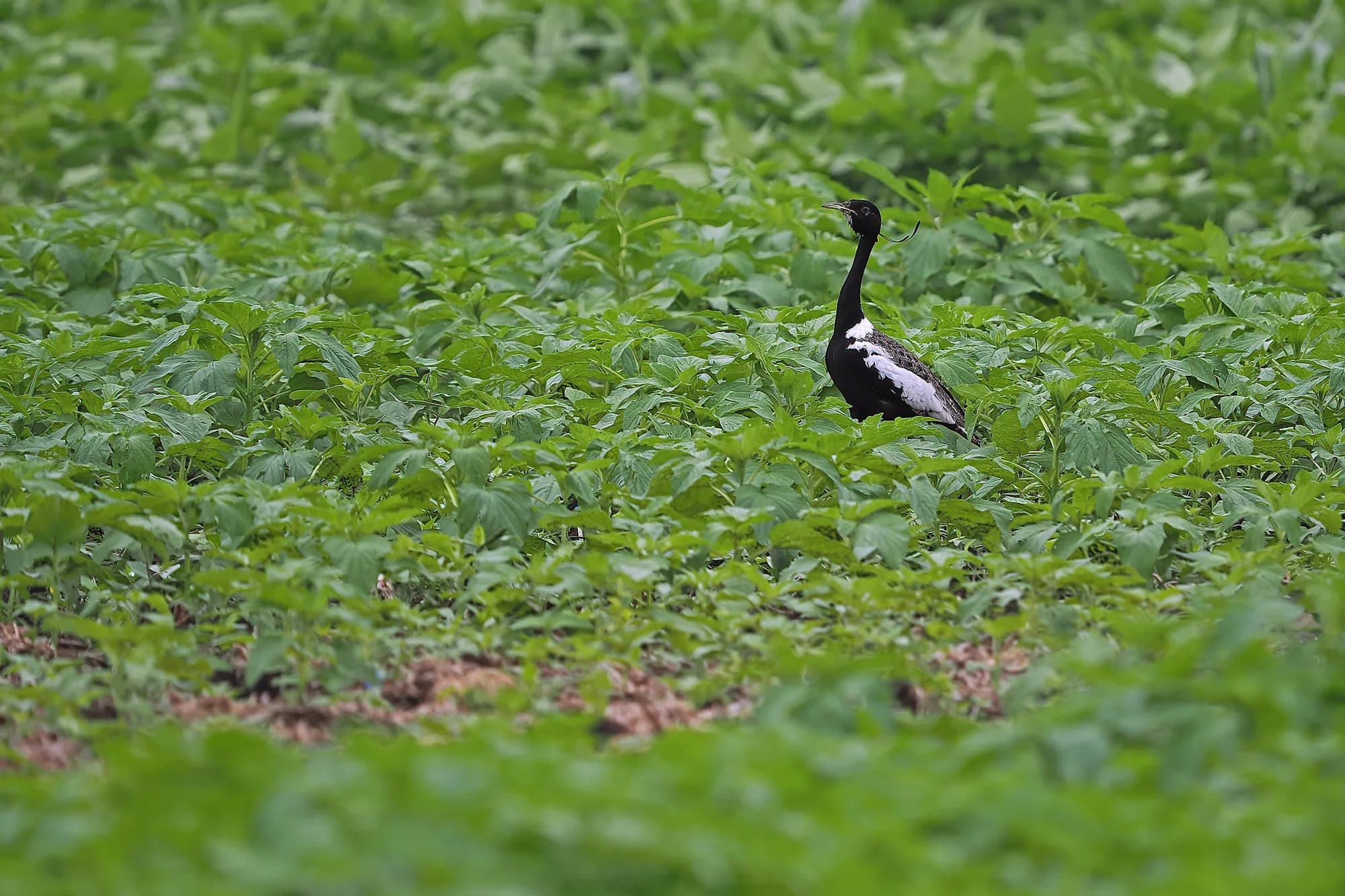
Species · Sypheotides indicus
Lesser florican
A small bustard whose male leaps two metres out of tall grass, several hundred times a day, for about eight weeks a year. Outside those weeks it is functionally invisible.
Also called
- Likh (लिख) · Hindi
- Khadmor · Gujarati
- Tanamor · Marathi
Checked 31 Aug 2026
- Where
- Gujarat, Rajasthan, Madhya Pradesh
- Best months
- July–September only
- Display
- A leap of about two metres
- Outside the monsoon
- Effectively unfindable
Breeds in scattered grassland pockets across western and central India, most of them outside protected areas on farmland that floods green in the monsoon.
Where it is
Where to actually go
Ranked, with the reason each — these are not interchangeable.
Where you will not see one
- Any park in the dry seasonThe birds disperse and stop displaying. A grassland that held twenty leaping males in August shows nothing at all in February.
- Confused with the Bengal floricanDifferent range and season. Bengal florican is a north-eastern and terai grassland bird, larger, and displays in spring.
When to go
When to go
- J
- F
- M
- A
- M
- J
- J
- A
- S
- O
- N
- D
January: closed or unproductive. February: closed or unproductive. March: closed or unproductive. April: closed or unproductive. May: closed or unproductive. June: marginal. July: best. August: best. September: good. October: closed or unproductive. November: closed or unproductive. December: closed or unproductive.
Through the day
- Dawn
- Morning
- Midday
- Afternoon
- Dusk
- Night
Dawn: active. Morning: most active. Midday: active. Afternoon: most active. Dusk: active. Night: not normally seen.
What it looks like in the field


Photographs of Lesser florican in the wild, in Indian reserves. We publish no captive, baited or digitally composited images, and no photograph whose licence we cannot show.
Why the season is inverted
Almost everything else on this site is written for the dry months, when water is scarce, the grass is down and animals are visible. This bird works the other way. It needs standing grass to display in and it breeds when the grass is high, which is exactly when the roads are worst and most parks are shut.
If you are planning one trip to India for wildlife, this is not the animal to plan it around. If you already come in the monsoon, or you can take a week in August, it is one of the few genuinely spectacular things happening while everyone else is waiting for October.
What a sighting is actually like
Long stretches of looking at grass, and then a black-and-white bird fires vertically out of it, hangs for a moment at the top with its plumes up, and drops back in. It lasts about a second. Then it happens again a few minutes later, from roughly the same spot, several hundred times before dark.
Status and protection
Status and protection
- IUCN Red List
- Critically Endangered
- Population trend
- ↓ Decreasing
- Wildlife Protection Act 1972
- Schedule I
- CITES
- Appendix II
Species-level assessment; monotypic and effectively endemic to the Indian subcontinent, so the global assessment is in practice the Indian one. Taxon id 22692024.
Assessed 2021 · IUCN Red List assessment
What to book to see one
What you would be booking
- How it is seen
- A dedicated monsoon trip, with a local guide who knows this year's arenas.
- Drives to book
- Early morning and late afternoon from a vehicle on farm tracks, not a park drive.
Most of the population displays on private farmland rather than inside a reserve, so this is arranged with a local guide and the landowner's goodwill, not booked through a park.
Velavadar — the park in fullQuestions people ask
When can I see a lesser florican?
Where is the best place?
Is it inside a national park?
Read next
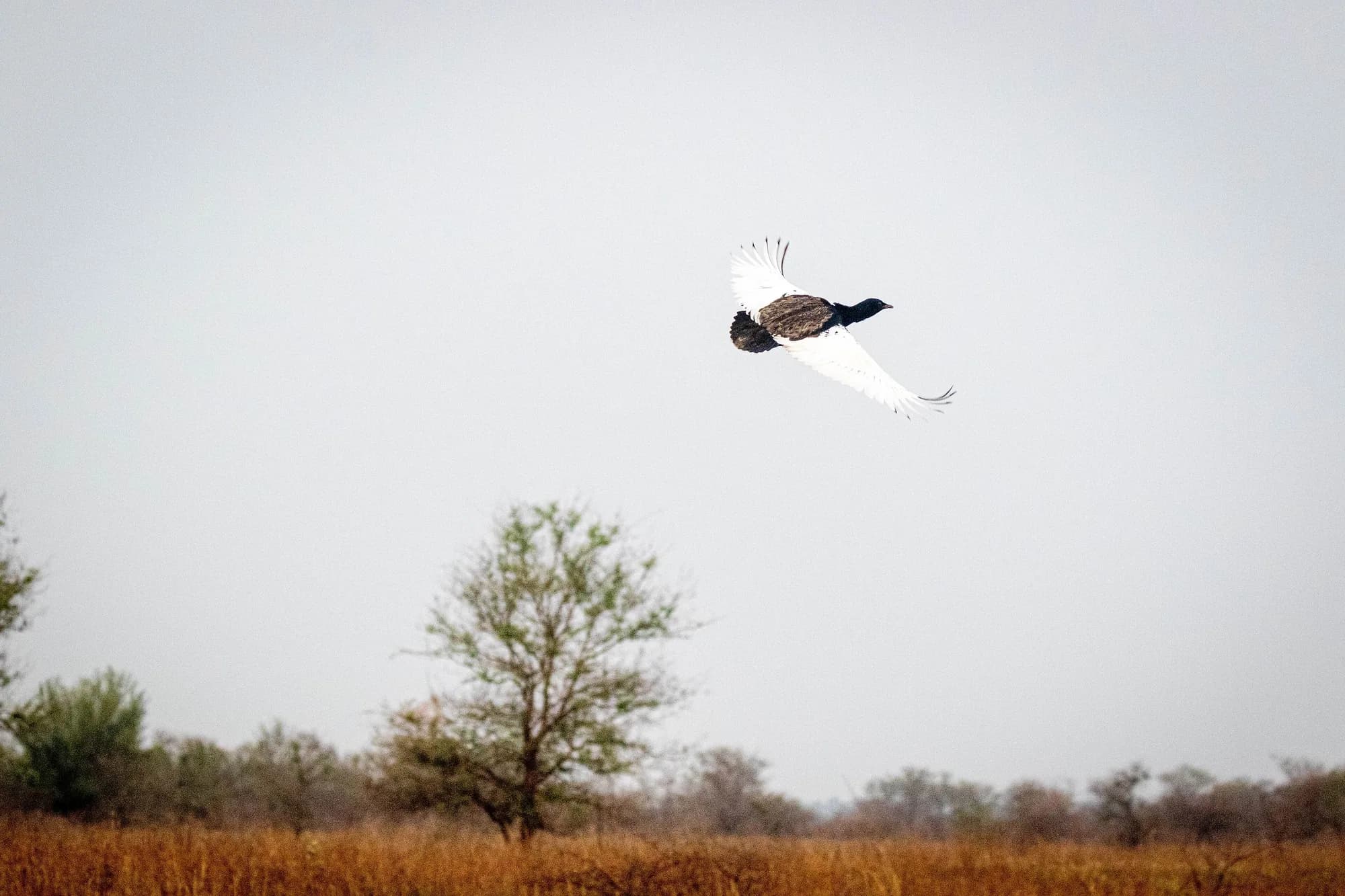
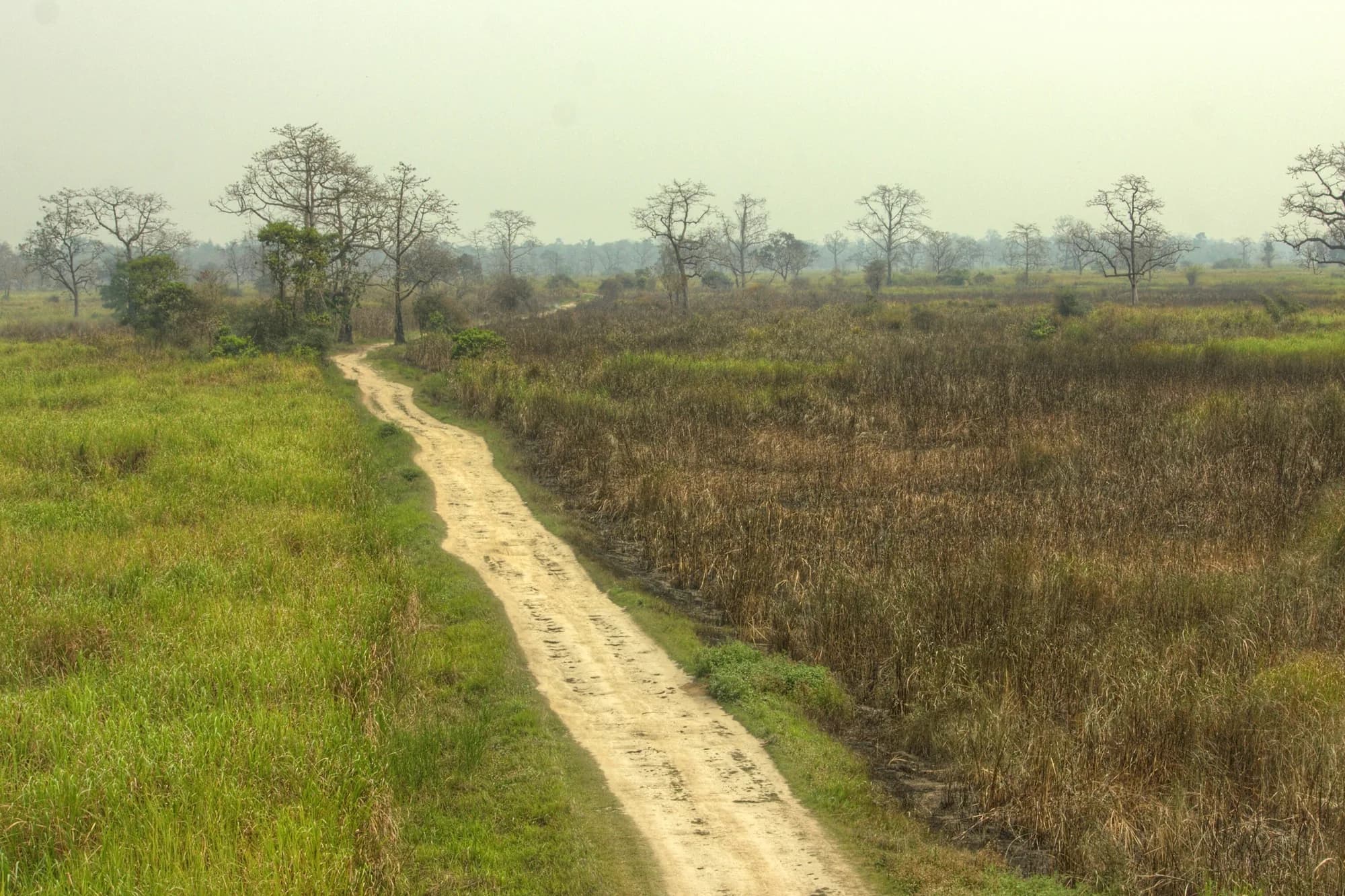
Tall terai grassland, from an elephant
Bengal florican — the other one
One of the rarest birds anyone reading this will realistically see. A few hundred remain in India, almost all of them in a handful of grasslands that are burned and cut on a schedule the bird depends on.
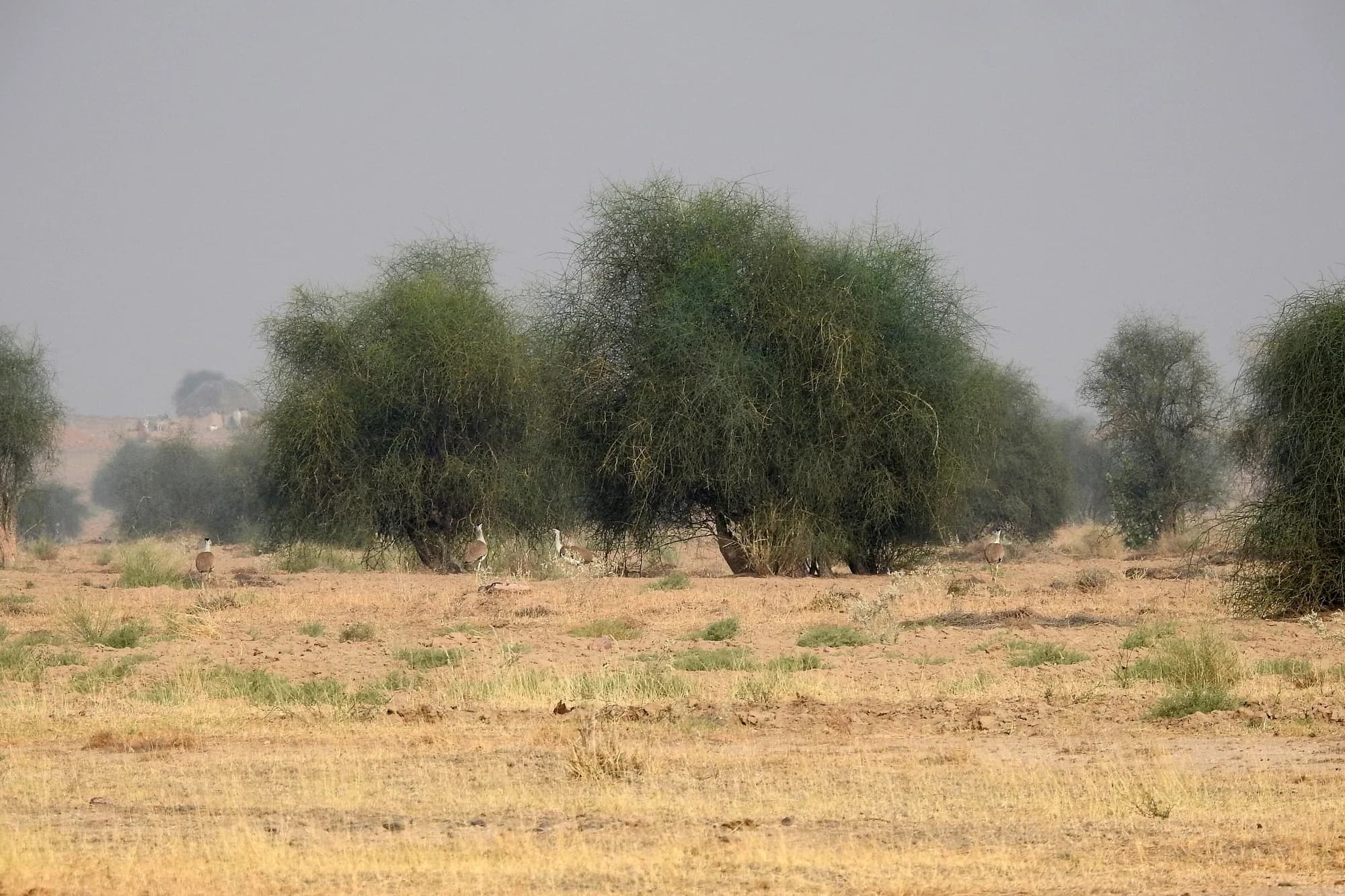
The Thar, and almost nowhere else now
Great Indian bustard — the same grasslands
A metre-tall grassland bird down to double figures in the wild, killed mainly by power lines. The most urgent conservation emergency in Indian birding, and a sighting that will not be available much longer.
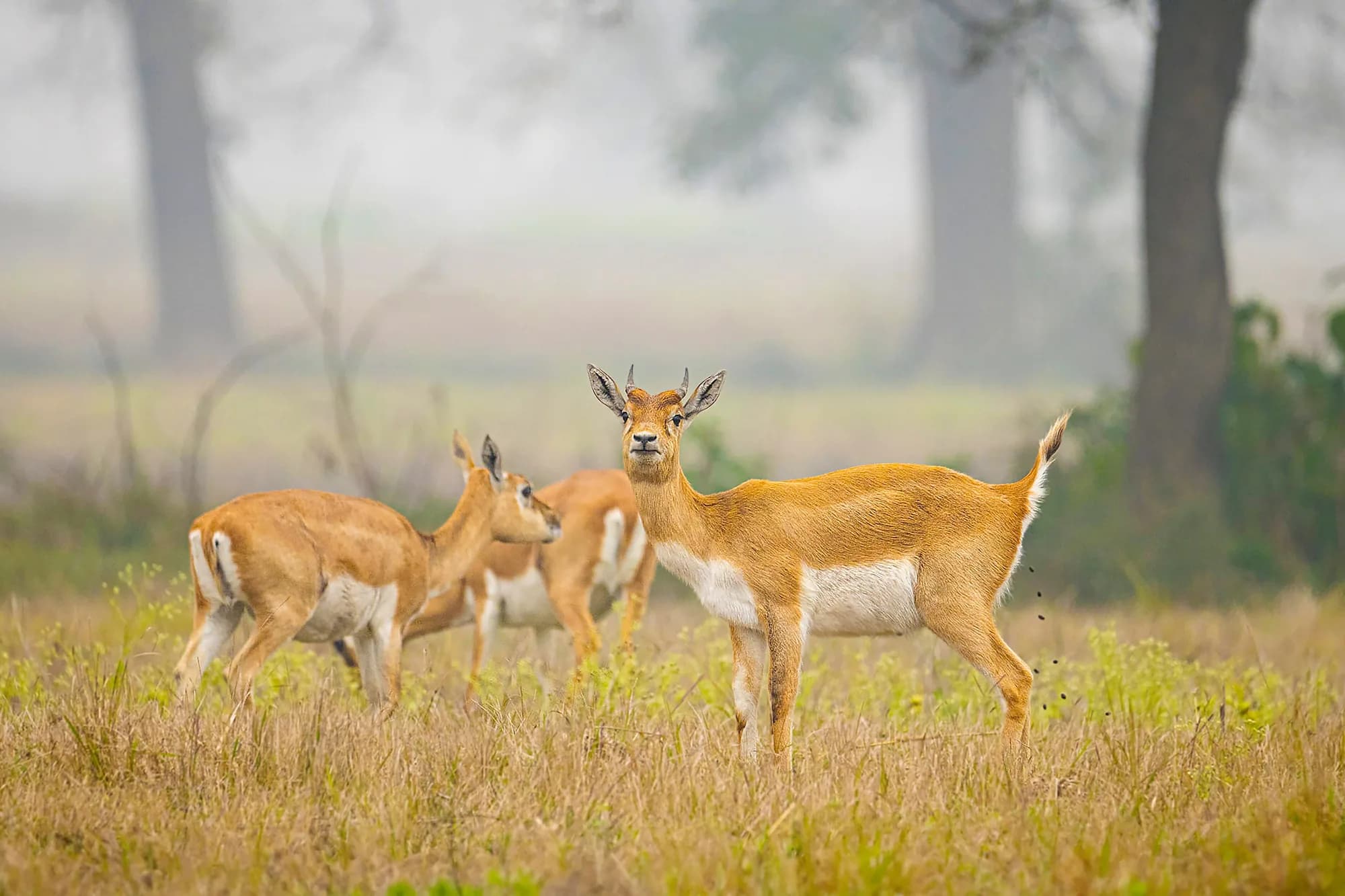
Grassland, and Velavadar above all
Blackbuck — shares Velavadar
India's most striking antelope — spiral horns, a hard black-and-white male in the rut — on flat open grassland where you can watch a hundred at once.
Twelve months, cross-park
When to go, month by month
The single decision that moves the odds most. Heat, crowds, closures and what is actually open, one page per month.