
Species · Equus grevyi
Grévy's zebra
The largest wild equid alive and the rarest of the three zebras — narrow stripes, a white belly and enormous rounded ears. Fewer than three thousand remain, most of them in northern Kenya, and Samburu is where you go.
Also called
- Punda milia ya Grevy · Swahili
- Loiborkurum · Samburu
Checked 28 Sept 2026
- Where
- Northern Kenya; Ethiopia remnant
- Best months
- Dry season, June–October
- Population
- Under 3,000 in the wild
- Odds
- High in Samburu, nil elsewhere
Semi-arid northern Kenya and a remnant in southern Ethiopia. Grévy's has lost roughly nine-tenths of its historic range in about a century, and is gone entirely from Somalia, Djibouti and Eritrea.
Where it is
HabitatSemi-arid grassland and acacia scrub north of the equator — drier country than the plains zebra will use, and it can go several days without drinking. The range has contracted to a fraction of what it was within living memory.
Worth travelling for
Gone from
SomaliaDjiboutiEritreaMost of its Ethiopian rangeEverything south of the equator in Kenya — the species has lost around nine-tenths of its historic range
Range this species has been lost from. It is the fact a map of where it currently lives cannot show you.
Where to actually go
Ranked, with the reason each — these are not interchangeable.
- 01SamburuKenyaThe stronghold. Grévy's along the Ewaso Nyiro, with the rest of the northern specials in the same drive.Along the river
- 02MeruKenyaSmaller numbers in a park most itineraries skip, which means you get them without other vehicles.Quieter than Samburu
- 03MarsabitKenyaFar north, a forested mountain in desert, with Grévy's in the surrounding country. A long way for a specialist.For the journey
- 04SibiloiKenyaLake Turkana's eastern shore — remote, hot and almost unvisited, with Grévy's among the desert fauna.The far end of Kenya
Where you will not see one
- The Maasai Mara and the SerengetiThose are plains zebra, in vast numbers. Grévy's does not occur south of about the equator in Kenya and has never been part of the migration.
- Southern AfricaNone at all. Every zebra in Botswana, Namibia, Zimbabwe and South Africa is a plains or mountain zebra.
- In large herdsGrévy's does not form the stable harems plains zebra do. Groups are loose and change daily, so a big stable family group is a plains zebra.
When to go
When to go
- J
- F
- M
- A
- M
- J
- J
- A
- S
- O
- N
- D
January: marginal. February: marginal. March: marginal. April: marginal. May: good. June: best. July: best. August: best. September: best. October: best. November: good. December: marginal.
Through the day
- Dawn
- Morning
- Midday
- Afternoon
- Dusk
- Night
Dawn: active. Morning: most active. Midday: active. Afternoon: most active. Dusk: active. Night: usually resting.
What it looks like in the field
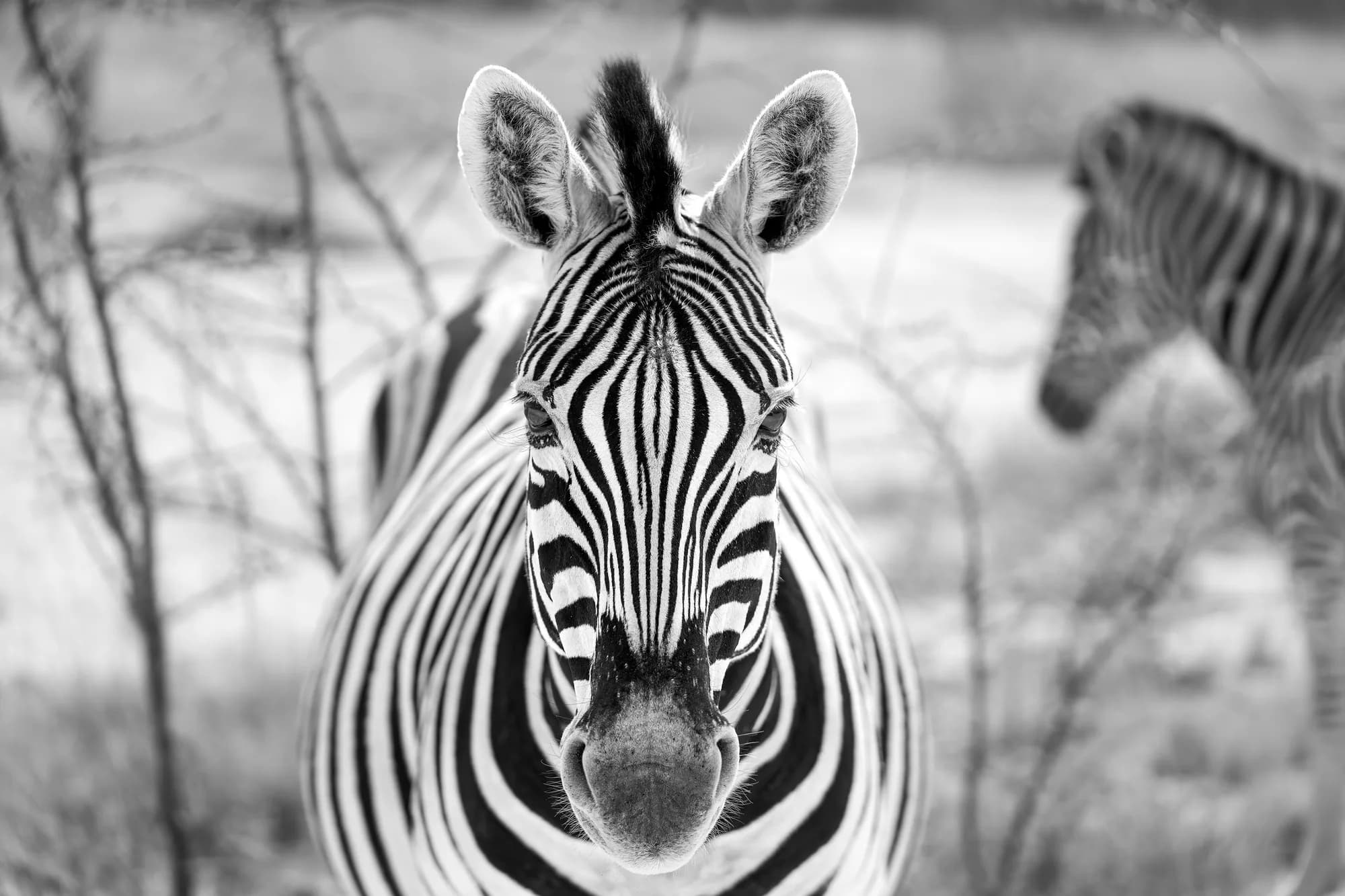
Photographs of Grévy's zebra in the wild, in Indian reserves. We publish no captive, baited or digitally composited images, and no photograph whose licence we cannot show.
Telling it from a plains zebra
Three things, and any one of them settles it. The stripes are narrower and much more closely set, and they run right up onto the muzzle. The belly is plain white, with the stripes stopping cleanly rather than wrapping underneath. And the ears are enormous and rounded, where a plains zebra’s are pointed.
Size follows: Grévy’s is the largest wild equid, noticeably taller and longer-headed than a plains zebra, more mule-like in build. The two do overlap in parts of northern Kenya, so the comparison can occasionally be made directly, which is the best way to learn it.
Why there are so few
Fewer than three thousand remain, down from an estimated fifteen thousand in the 1970s. The causes are unglamorous and mostly about water: competition with livestock for grazing and for the few permanent water points, which concentrates disease and pushes zebra off the springs during droughts. Hunting for skins removed a great many earlier in the century.
Unusually for an endangered large mammal, the great majority live outside national parks — on community land and private conservancies in Laikipia and Samburu — so the species’ future rests on community conservation rather than on protected areas. That is why so many conservancies in northern Kenya carry its name.
Status and protection
Status and protection
- IUCN Red List
- Pending
- Population trend
- · Unknown
Not yet verified against the source. These four values are written from knowledge and are awaiting a checked IUCN assessment, schedule and appendix — treat them as indicative until this line disappears.
Assessed not yet retrieved
What to book to see one
What you would be booking
- How it is seen
- Game drives in Samburu. It is one of the easier endangered animals to see, provided you are in the right 200 kilometres of Kenya.
- Drives to book
- Two. In Samburu they are common along the river.
- Zone or shift
- The Ewaso Nyiro river in Samburu and Buffalo Springs; the Laikipia conservancies for research access.
Samburu is the classic trip for the northern specials — Grévy's zebra, reticulated giraffe, Beisa oryx, gerenuk and Somali ostrich, none of which occur in the southern parks. Guides call them the Samburu Special Five and it is a real reason to add the north to a Kenya itinerary.
SamburuOn the same trip you would also get
- Reticulated giraffe — the same northern circuit
- Gerenuk — another of the Samburu specials
Questions people ask
Where can I see Grévy's zebra?
How do I tell Grévy's zebra from a plains zebra?
How many Grévy's zebra are left?
Read next
Five countries here, and half the migration
Plains zebra — the common one
Seen on the first morning of every trip and worth more attention than it gets. Zebra make up a large part of the great migration, they are the reason the wildebeest can eat, and the three zebra species on this site are not interchangeable.
Northern Kenya, and almost nowhere else
Reticulated giraffe
The giraffe with the clean white lines — large liver-red panels separated by sharp pale seams, as if drawn with a ruler. It is confined to northern Kenya and fragments of Somalia and Ethiopia, and there are fewer than sixteen thousand left.
Samburu