
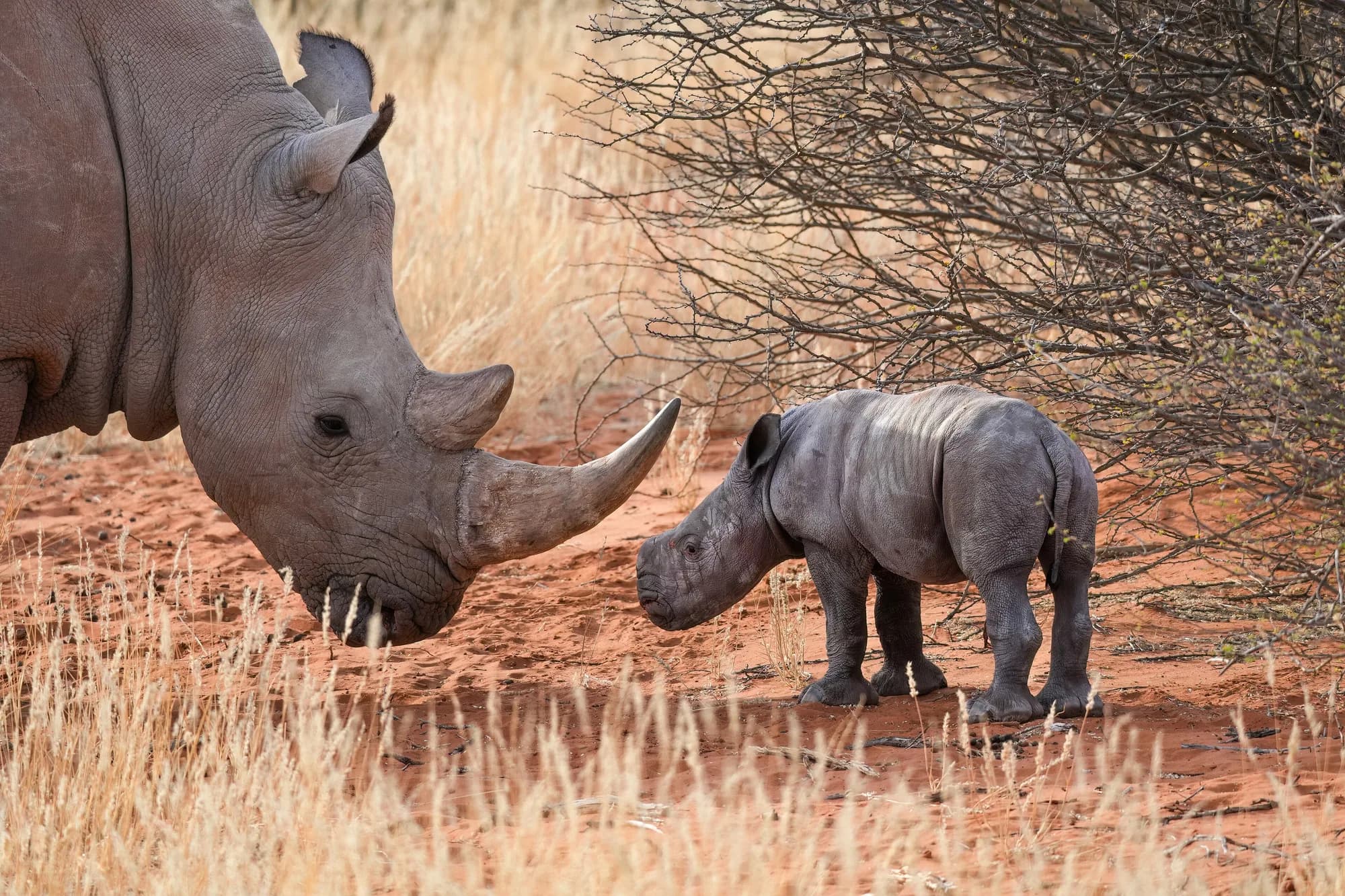
Species · Ceratotherium simum
White rhinoceros
The bigger, calmer, grass-eating rhino, and the one most visitors actually see. About 15,750 remain — more than twice the black rhino — but the number fell roughly 11 per cent in a single year, and the northern subspecies is down to two animals.
Also called
- Kifaru · Swahili
- Witrenoster · Afrikaans
- Ubhejane (black) / umkhombe (white) · isiZulu
Checked 27 Sept 2026
- Where
- Five countries here
- Best months
- Dry season, June–October
- Wild population
- About 15,750
- Odds
- Good in the right South African park
Open and lightly wooded grassland — grazing country. The southern white rhino is concentrated overwhelmingly in South Africa, with reintroduced populations in Namibia, Zimbabwe, Zambia, Kenya and elsewhere. The northern white rhino survives as two non-breeding females in Kenya.
Where it is
HabitatOpen and lightly wooded grassland — grazing country.
Worth travelling for
Historically the largest wild population anywhere, and the one that has absorbed most of the poaching losses.
A fenced sanctuary with both rhino species in a small area, plus the last two northern whites at Ol Pejeta.
Rhino tracking on foot among granite kopjes, which beats seeing one from a vehicle.
A small guarded population beside Victoria Falls, usually visited on foot with a ranger.
Also occurs
NamibiaBotswanaUgandaEswatini
Present, but not where you would go to see one.
Gone from
The northern subspecies across Sudan, Chad, CAR, DRC and Uganda — two non-breeding females remain
Range this species has been lost from. It is the fact a map of where it currently lives cannot show you.
Where to actually go
Ranked, with the reason each — these are not interchangeable.
- 01KrugerSouth AfricaHistorically the largest wild population anywhere, in a park you can drive yourself. Numbers here have taken the worst of the poaching losses.The south, self-drive
- 02Lake NakuruKenyaA fenced sanctuary holding both species at density. The most efficient way to see both rhinos in one morning.Both species, small area
- 03Mosi-oa-TunyaZambiaA small reintroduced and guarded population beside Victoria Falls, often visited on foot with a ranger.On foot, beside the falls
- 04MatoboZimbabweRhino tracking on foot among granite kopjes, which is a far better experience than seeing one from a vehicle.Tracking on foot
- 05MokalaSouth AfricaA quiet SANParks reserve built substantially around rhino protection, with almost no visitors.Empty, and low-key
Where you will not see one
- Most of East AfricaSmall reintroduced and sanctuaried groups in Kenya aside, this is a southern African animal. It is not part of a standard Tanzanian or Ugandan itinerary.
- Thick bushWrong habitat — that is the black rhino. White rhinos are on open short grass with their heads down.
- Ol Pejeta, for a wild sightingThe two remaining northern white rhinos there are under permanent armed guard in an enclosure. It is worth seeing and it is not a safari sighting.
When to go
When to go
- J
- F
- M
- A
- M
- J
- J
- A
- S
- O
- N
- D
January: marginal. February: marginal. March: marginal. April: good. May: good. June: best. July: best. August: best. September: best. October: best. November: good. December: marginal.
Through the day
- Dawn
- Morning
- Midday
- Afternoon
- Dusk
- Night
Dawn: most active. Morning: most active. Midday: usually resting. Afternoon: active. Dusk: most active. Night: active.
What it looks like in the field
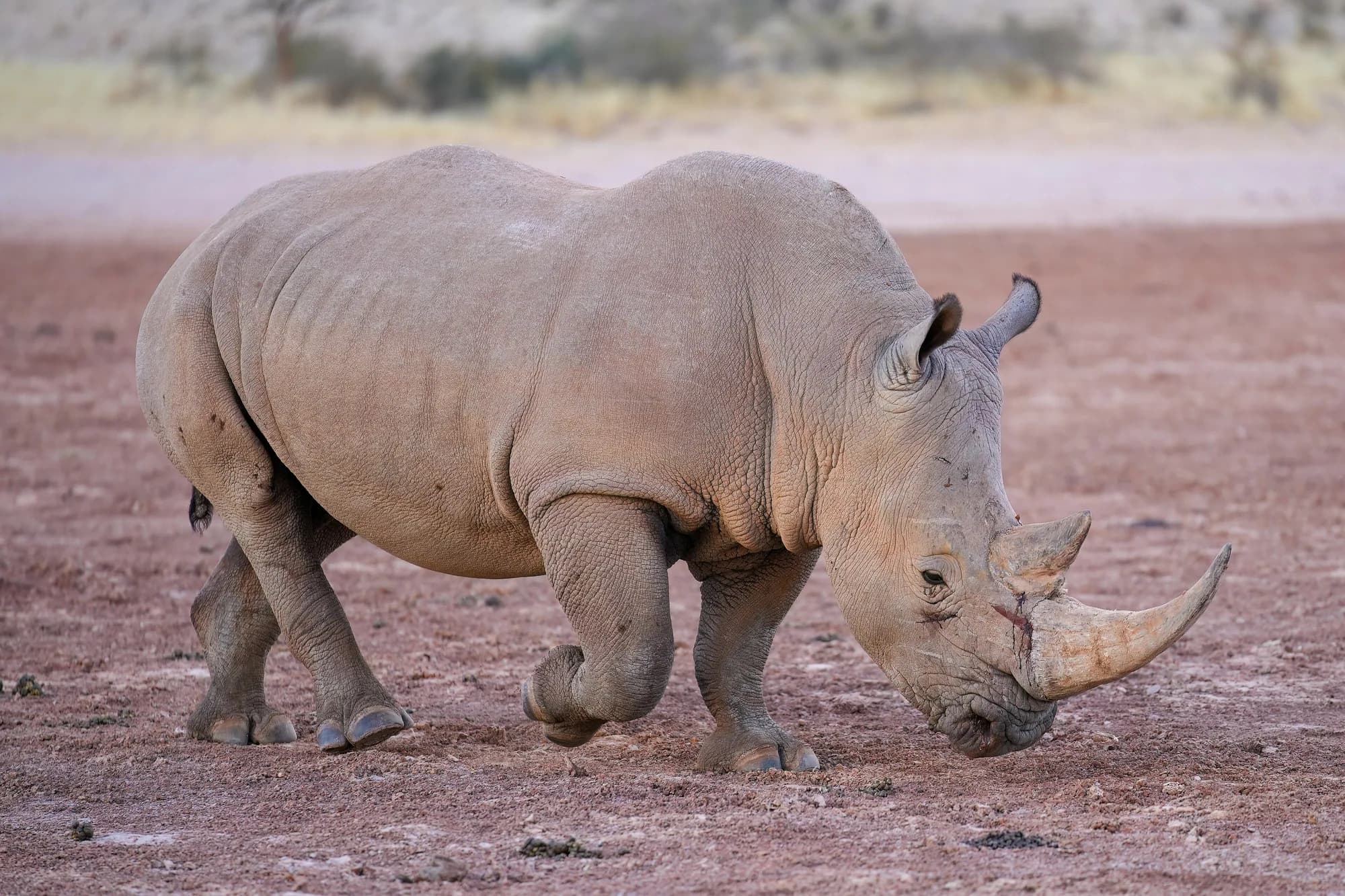
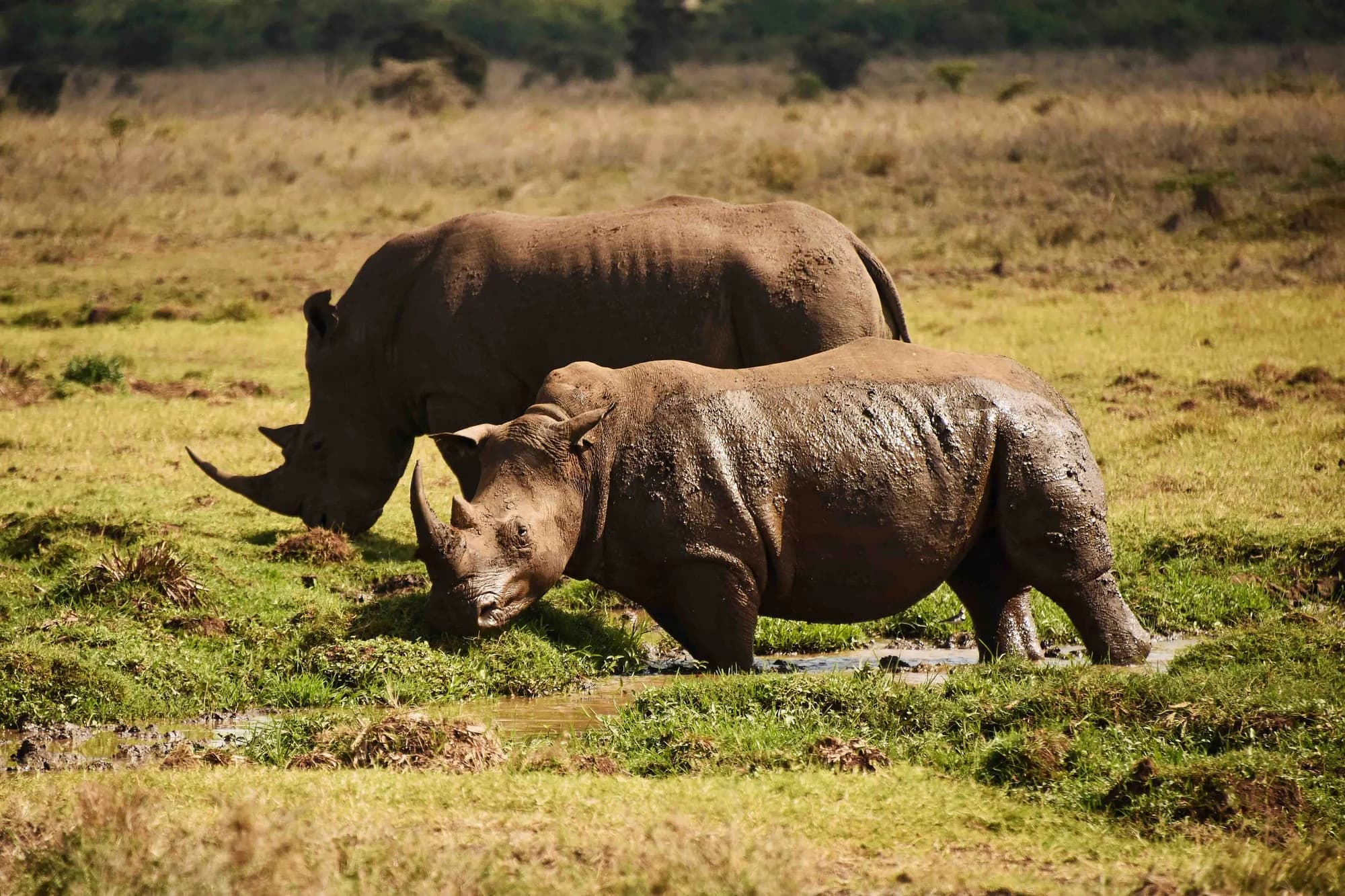
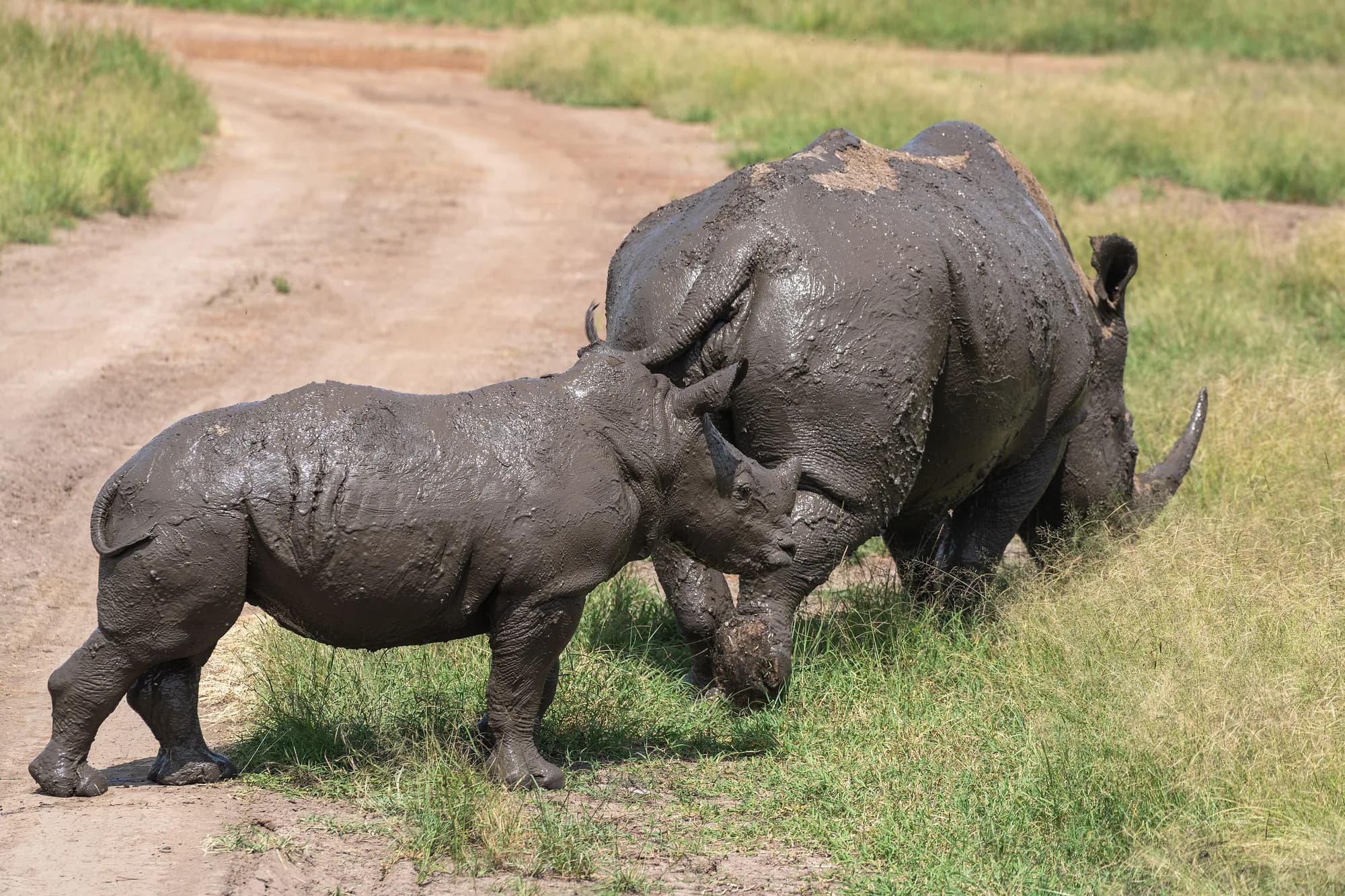
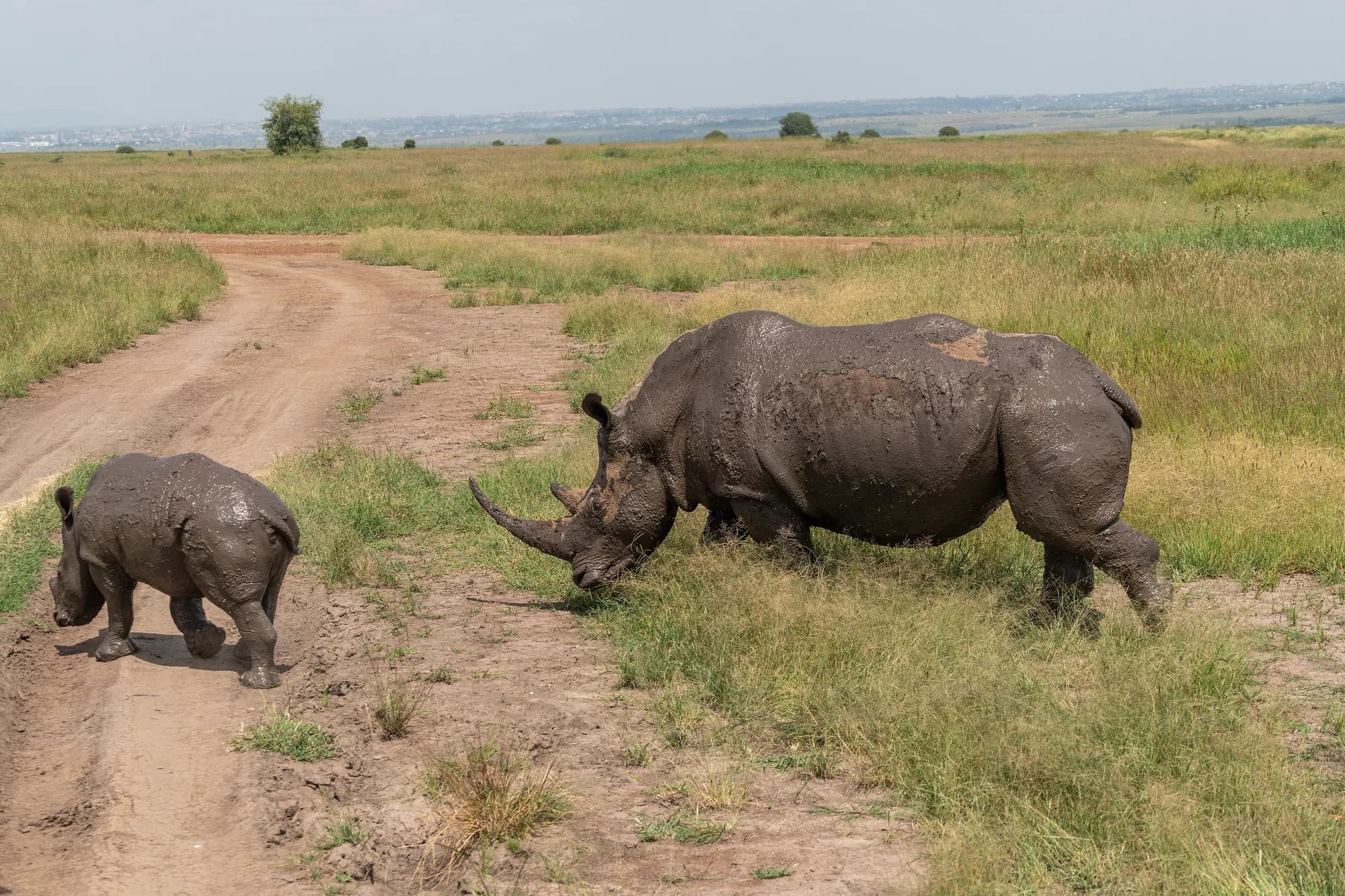
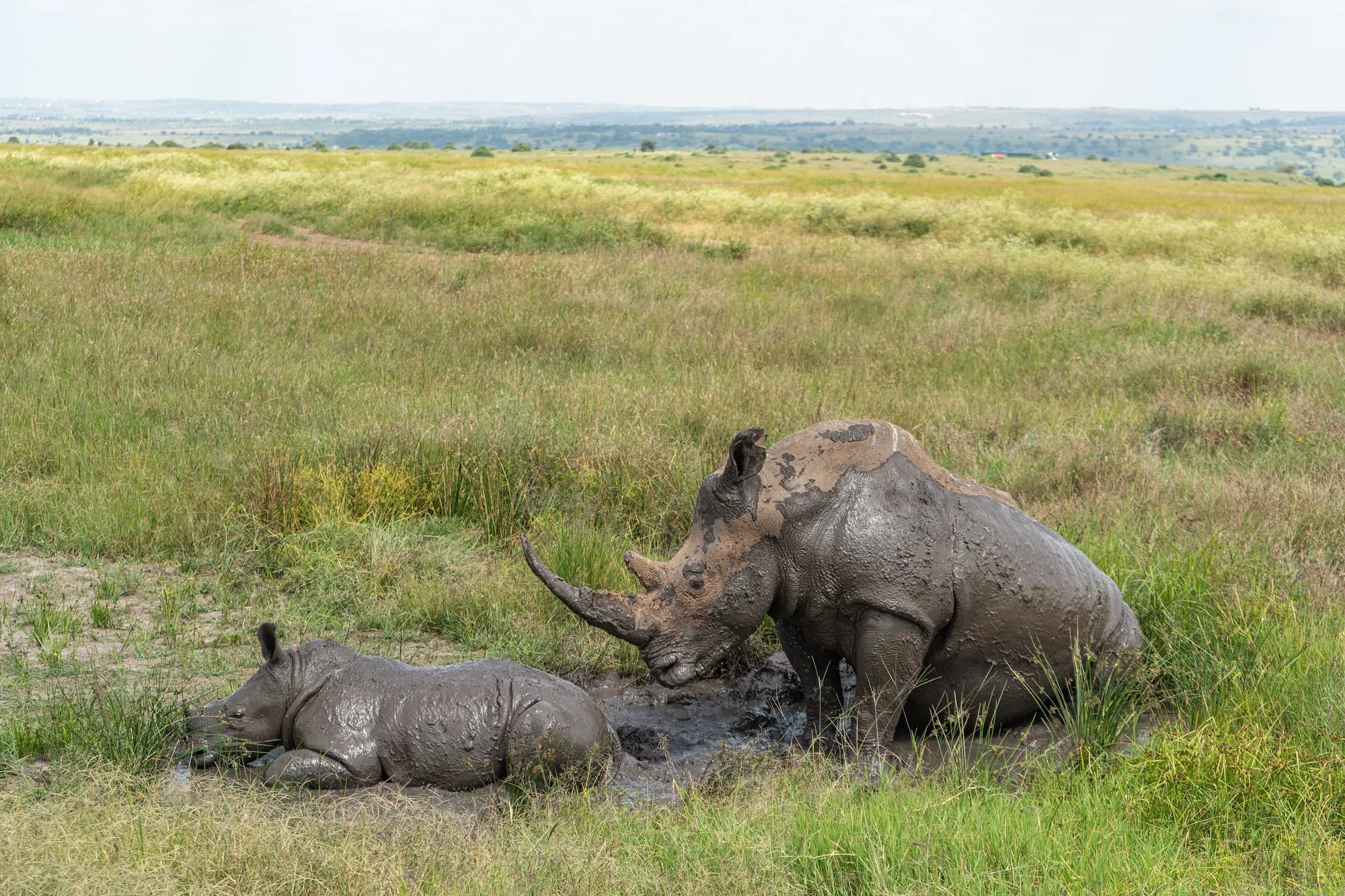
Photographs of White rhinoceros in the wild, in Indian reserves. We publish no captive, baited or digitally composited images, and no photograph whose licence we cannot show.
Telling it from a black rhino
Not the colour — neither animal is either. The white rhino grazes and has a broad square upper lip for cropping grass; the black rhino browses and has a hooked prehensile one for pulling branches. The name is most likely a corruption of Afrikaans wyd, wide, describing that mouth.
In the field: white rhinos are bigger, carry the head low with a pronounced neck hump, are often in small groups on open grass, and are placid. Black rhinos are smaller, carry the head higher, are almost always alone in thick bush, and are not.
Why the number is falling
At the end of 2024 there were about 15,752 white rhinos in Africa, against 6,788 black, according to the status report produced for CITES by the IUCN African Rhino Specialist Group with TRAFFIC. Over that year black rhino numbers rose about 5 per cent and white rhino numbers fell about 11 per cent.
The commoner animal is the one going backwards, because it is the one poaching reaches: it lives in open country, in groups, is diurnal, and does not hide. Kruger’s population has absorbed a large share of those losses. It is the reason so much white rhino viewing has shifted into fenced reserves, and the reason a sighting in an open national park is worth more than it looks.
Status and protection
Status and protection
- IUCN Red List
- Near Threatened
- Population trend
- ↓ Decreasing
- CITES
- Appendix I
Species-level assessment for Ceratotherium simum, covering both the southern and northern subspecies. The northern white rhino C. s.
Assessed 2020 · IUCN Red List assessment
What to book to see one
What you would be booking
- How it is seen
- Game drives in open grassland, or a guided rhino-tracking walk, which several South African reserves run specifically.
- Drives to book
- Two in a park that holds them. This is the more findable of the two rhinos by a wide margin.
- Zone or shift
- Kruger's south, Lake Nakuru, Mosi-oa-Tunya, and the Namibian reserves.
As with black rhino, do not publish locations or geotagged photographs. Several reserves ask you to wait until you have left, and the request is an anti-poaching measure.
Walking and tracking safarisOn the same trip you would also get
- Black rhinoceros — the rarer one, in thicker cover
- Plains zebra — the same short grass
Questions people ask
Why is it called a white rhino if it is not white?
Where is the best place to see a white rhino?
How many white rhinos are left?
Read next
Seven countries here, and genuinely rare in all of them
Black rhinoceros — the rarer one
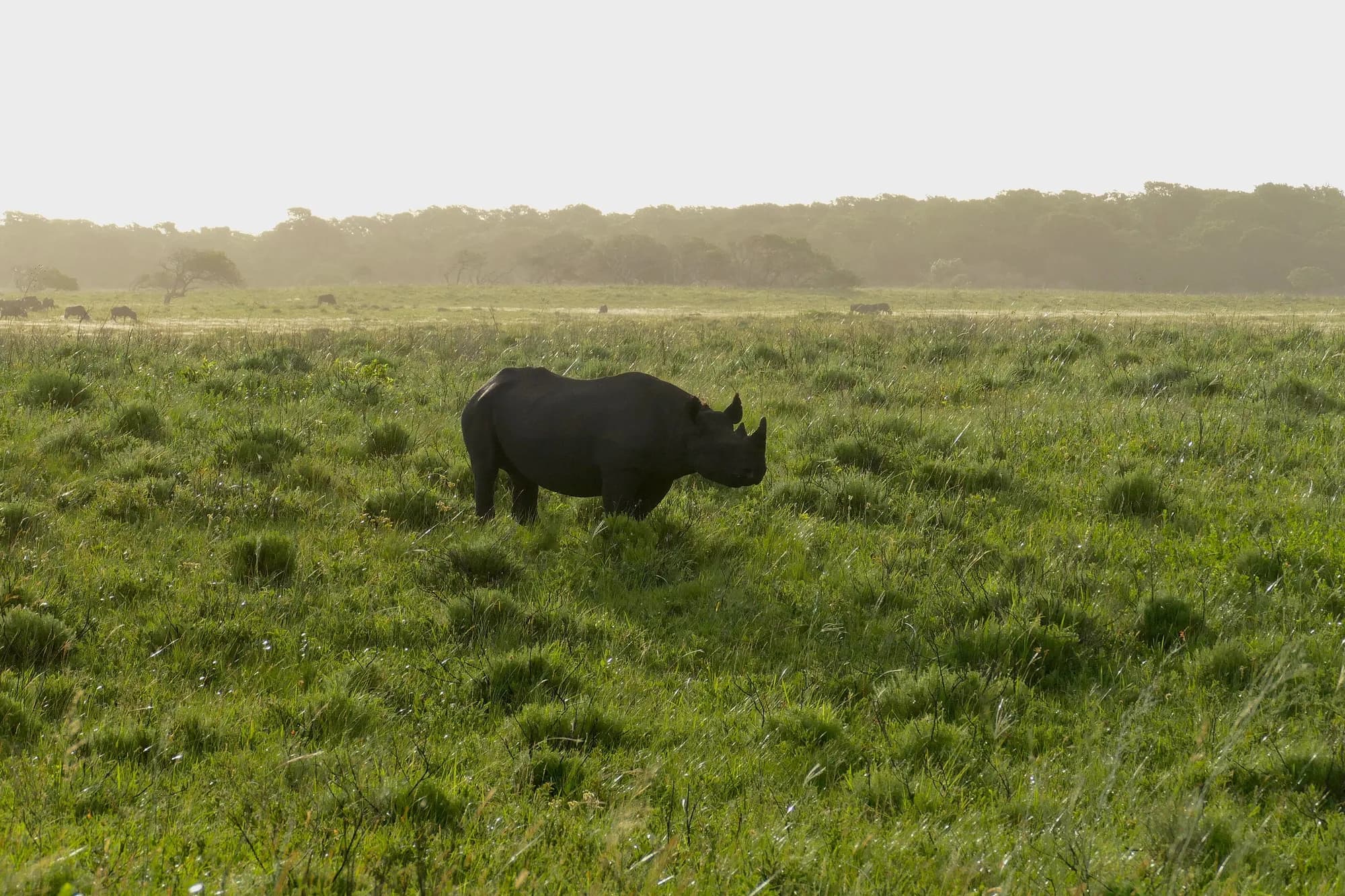
A browser, usually alone, usually in thick bush, and the hardest of the Big Five to see well. Roughly 6,800 remain in the wild — fewer than the white rhino by a factor of two, and the two animals are told apart by the shape of the mouth, not the colour.
Kruger
Matobo — tracking on foot