
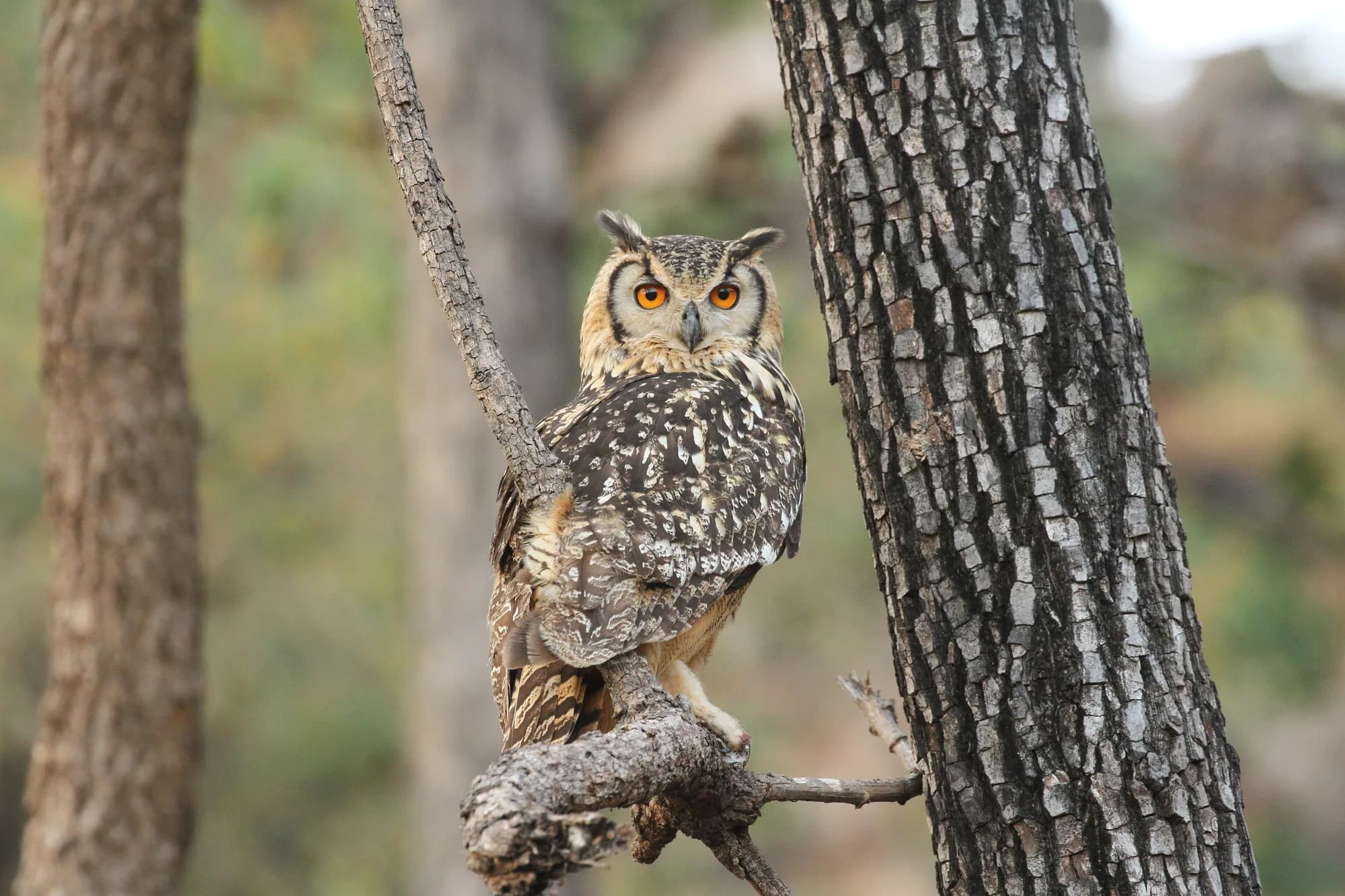
Species · Bubo bengalensis
Indian eagle-owl
A large horned owl of ravines and rocky ground, frequently found roosting in the open in daylight — which makes it the easiest big owl in India to see properly.
Also called
- Ghubad (घुबद) · Hindi
- Ullu · Hindi
- Gubad · Marathi
Checked 30 Aug 2026
- Where
- Across most of India
- Best months
- November–April
- Seen
- In daylight, at roost
- Habitat
- Ravines and rock
Rocky ravines, cliffs, quarries and scrub across most of India, avoiding dense forest and the wet Northeast.
Where it is
Where to actually go
Ranked, with the reason each — these are not interchangeable.
Where you will not see one
- In dense forestA rock and ravine bird. Look at cliffs, quarry faces and fort walls rather than into the canopy.
- Confused with a brown fish owlFish owls are on water, browner and with sideways-splayed tufts. Eagle-owls are on rock, greyer-mottled, with erect tufts and deeper orange eyes.
When to go
When to go
- J
- F
- M
- A
- M
- J
- J
- A
- S
- O
- N
- D
January: best. February: best. March: best. April: good. May: marginal. June: marginal. July: closed or unproductive. August: closed or unproductive. September: closed or unproductive. October: marginal. November: best. December: best.
Through the day
- Dawn
- Morning
- Midday
- Afternoon
- Dusk
- Night
Dawn: active. Morning: usually resting. Midday: usually resting. Afternoon: usually resting. Dusk: most active. Night: most active.
What it looks like in the field
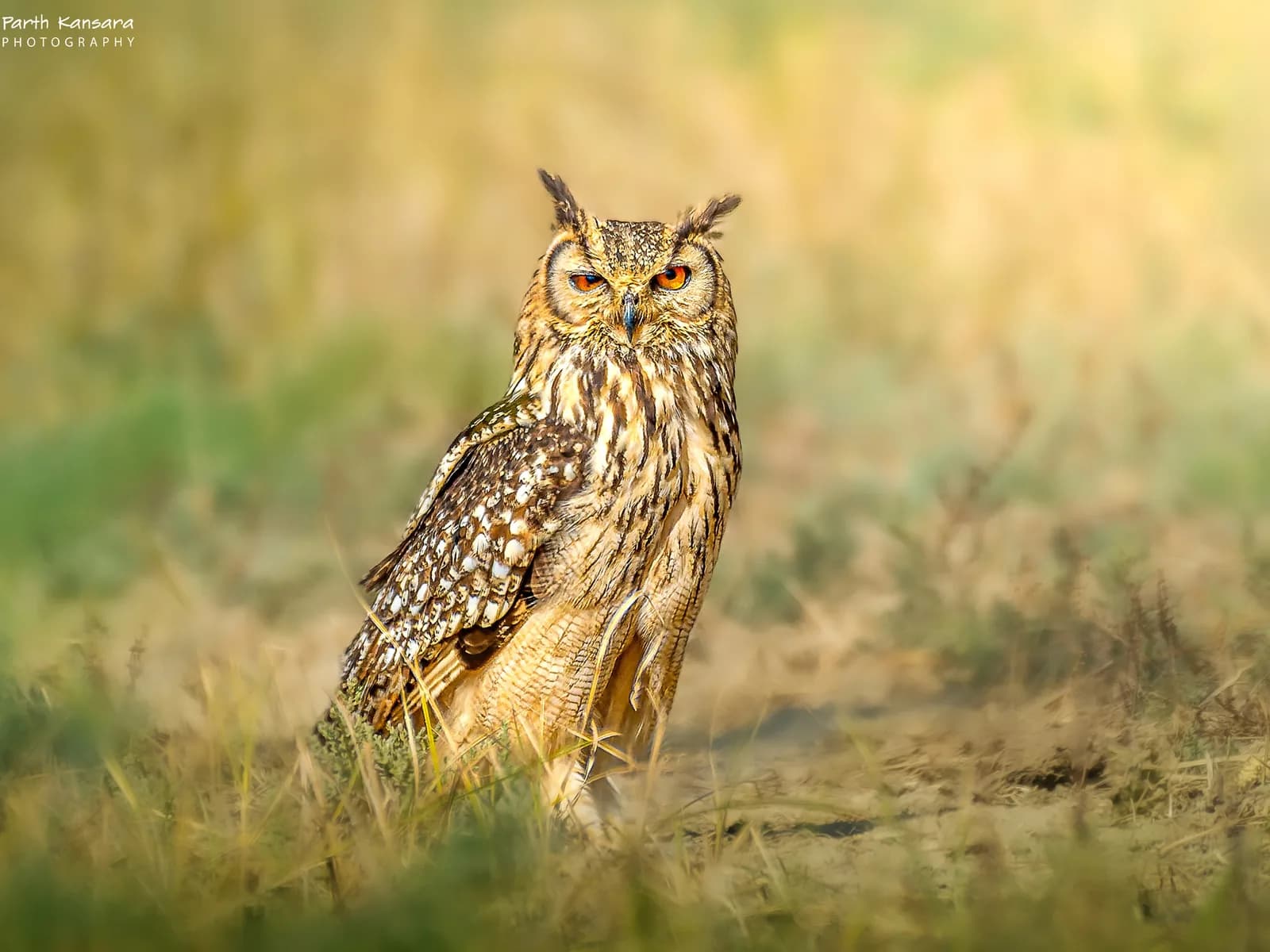
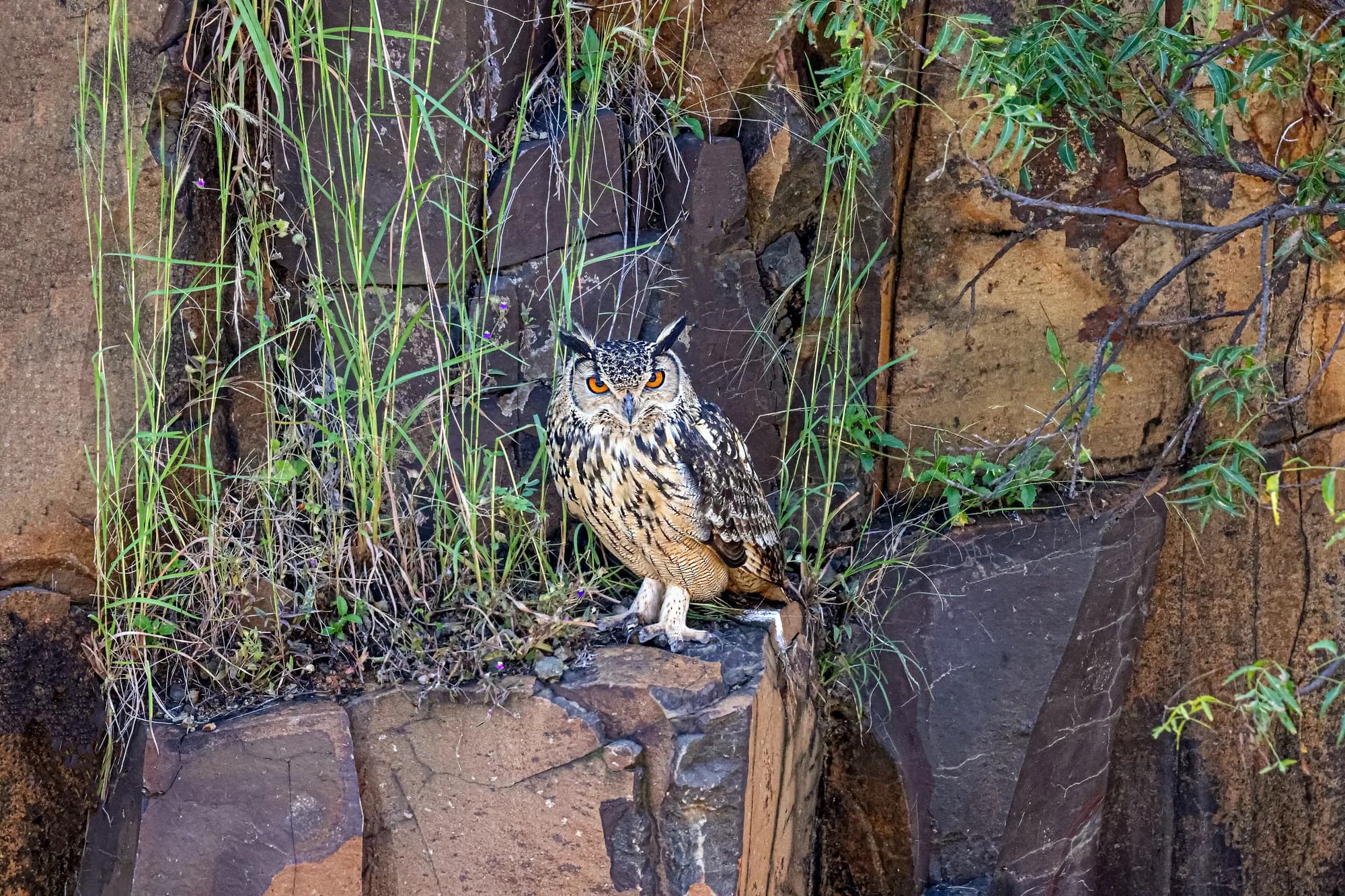
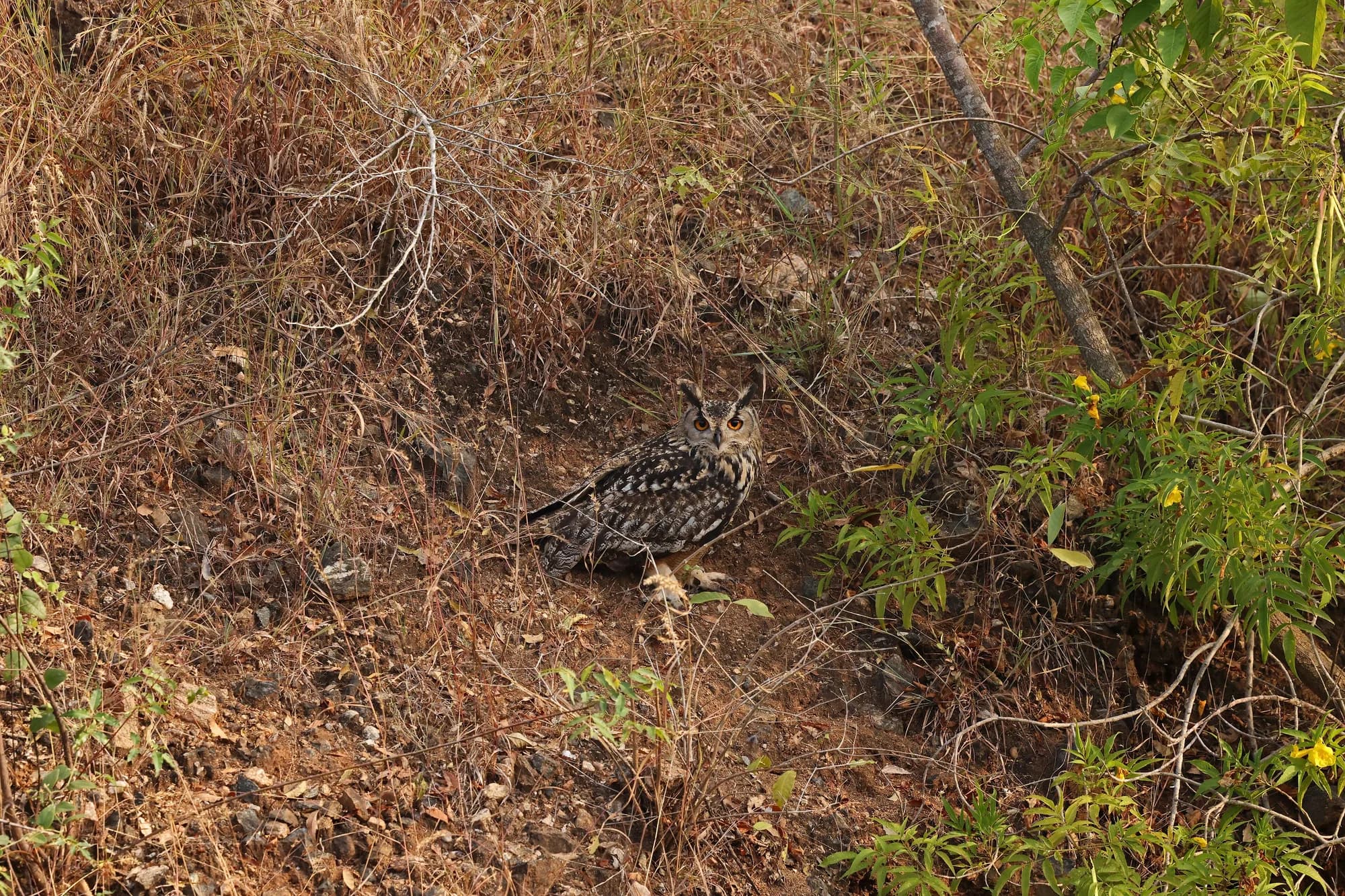
Photographs of Indian eagle-owl in the wild, in Indian reserves. We publish no captive, baited or digitally composited images, and no photograph whose licence we cannot show.
What a sighting is actually like
Static and much larger than expected. A mottled brown owl on a ledge with its ear tufts up and orange eyes half open, tolerating the vehicle at surprisingly close range.
Status and protection
Status and protection
- IUCN Red List
- Least Concern
- Population trend
- ↓ Decreasing
- Wildlife Protection Act 1972
- Schedule I
- CITES
- Appendix II
Species-level assessment for Bubo bengalensis; binomial matches exactly.
Assessed 2024 · IUCN Red List assessment
What to book to see one
What you would be booking
- How it is seen
- Any drive past rocky ground. Guides know the regular roost ledges.
- Drives to book
- Ask specifically — a roosting owl is easy to drive past.
Owls carry heavy superstition in parts of India and are trapped for it around Diwali. A guide showing you a roost is trusting you not to spread the location, which is worth respecting.
Ranthambore — the park in fullQuestions people ask
Where can I see an Indian eagle-owl?
Can I see one in daylight?
How do I tell it from a brown fish owl?
Read next
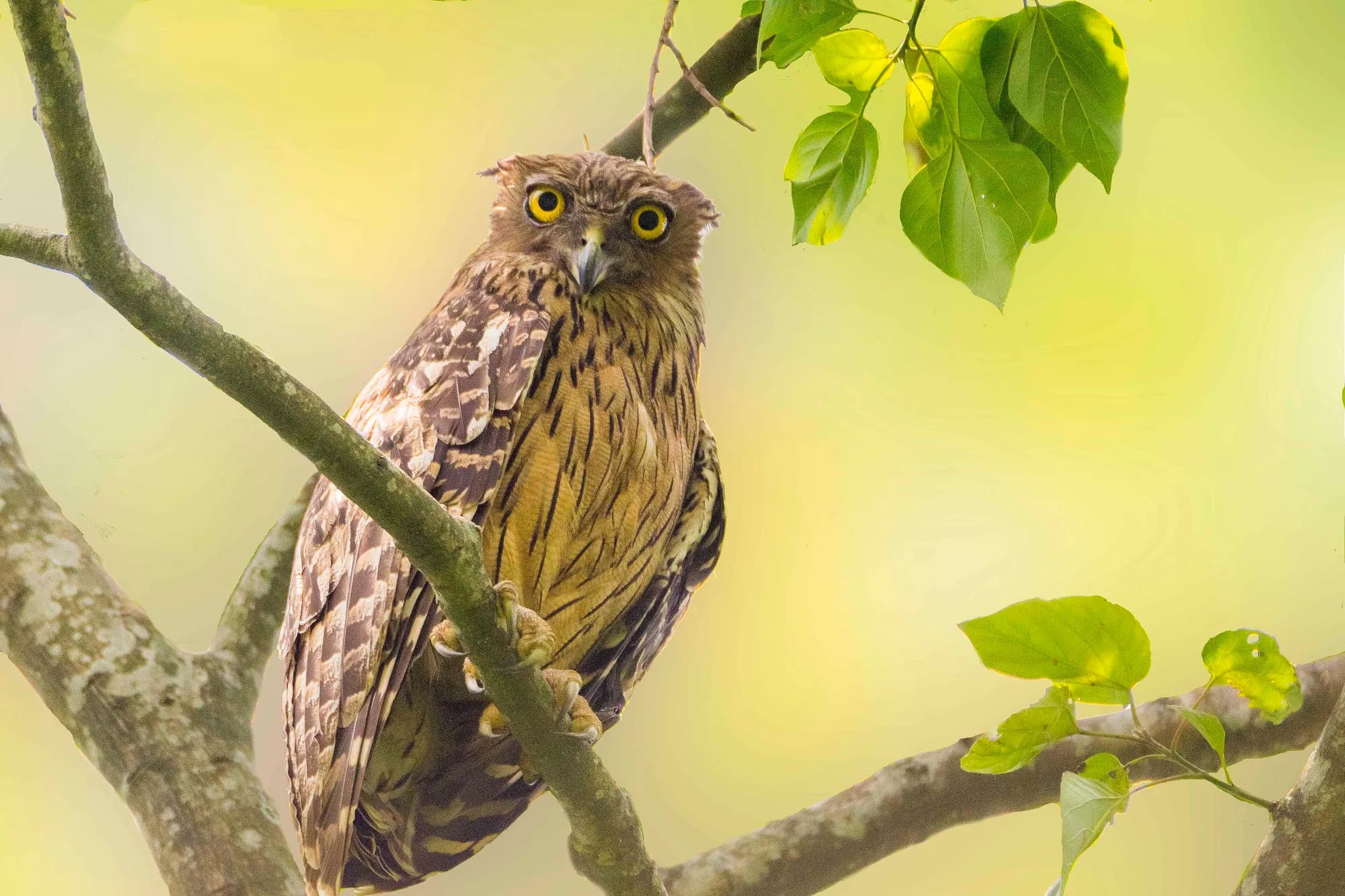
Over a river crossing, in plain sight
Brown fish owl — the water one
A large owl that hunts fish from riverside branches and roosts above the crossings every vehicle drives through. Regularly overhead, and almost always missed.
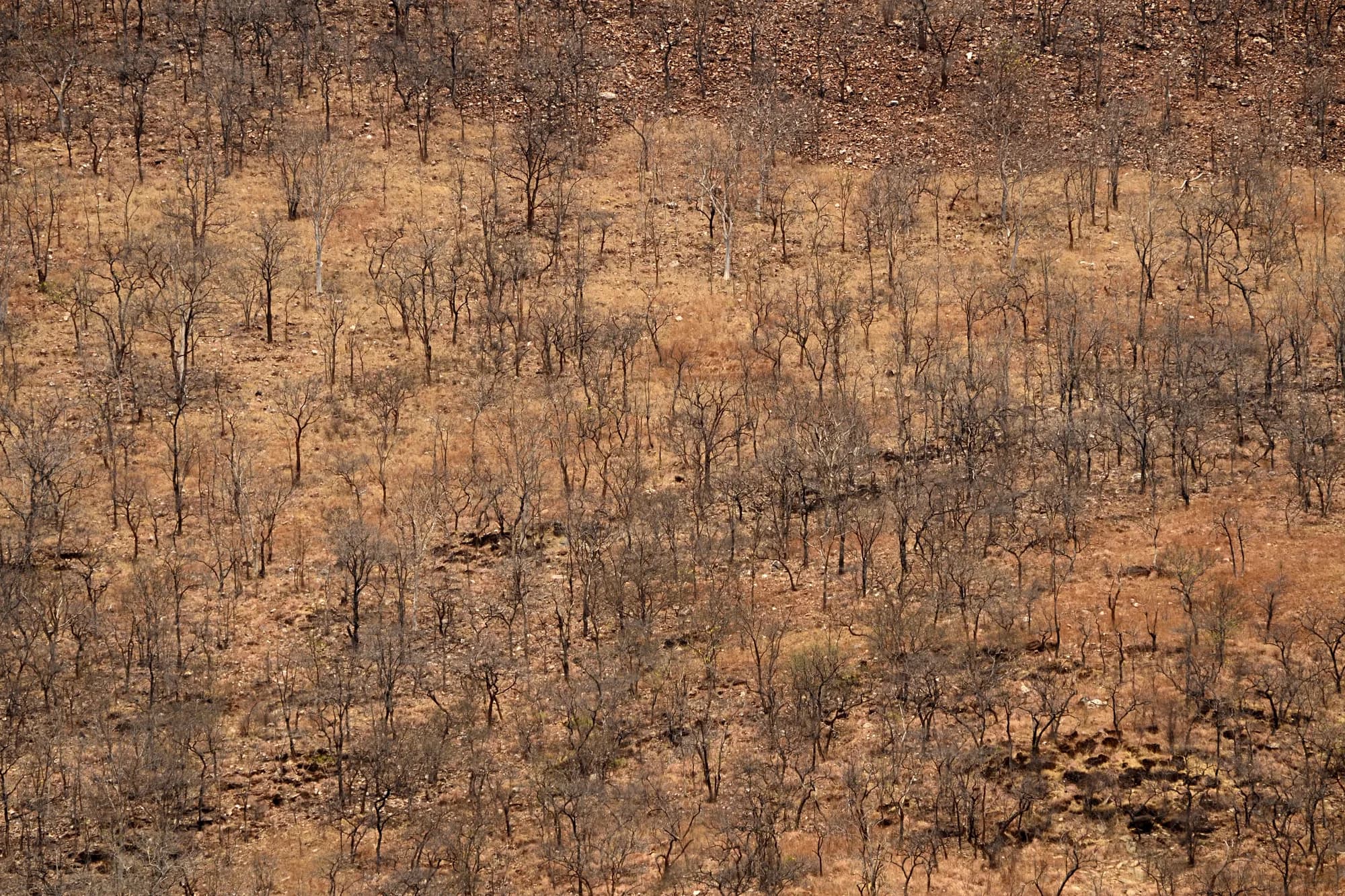
Rajasthan
Ranthambore — the park in full
Dry forest around a fort, and the easiest reserve to reach from Delhi — which is exactly why it is the busiest.
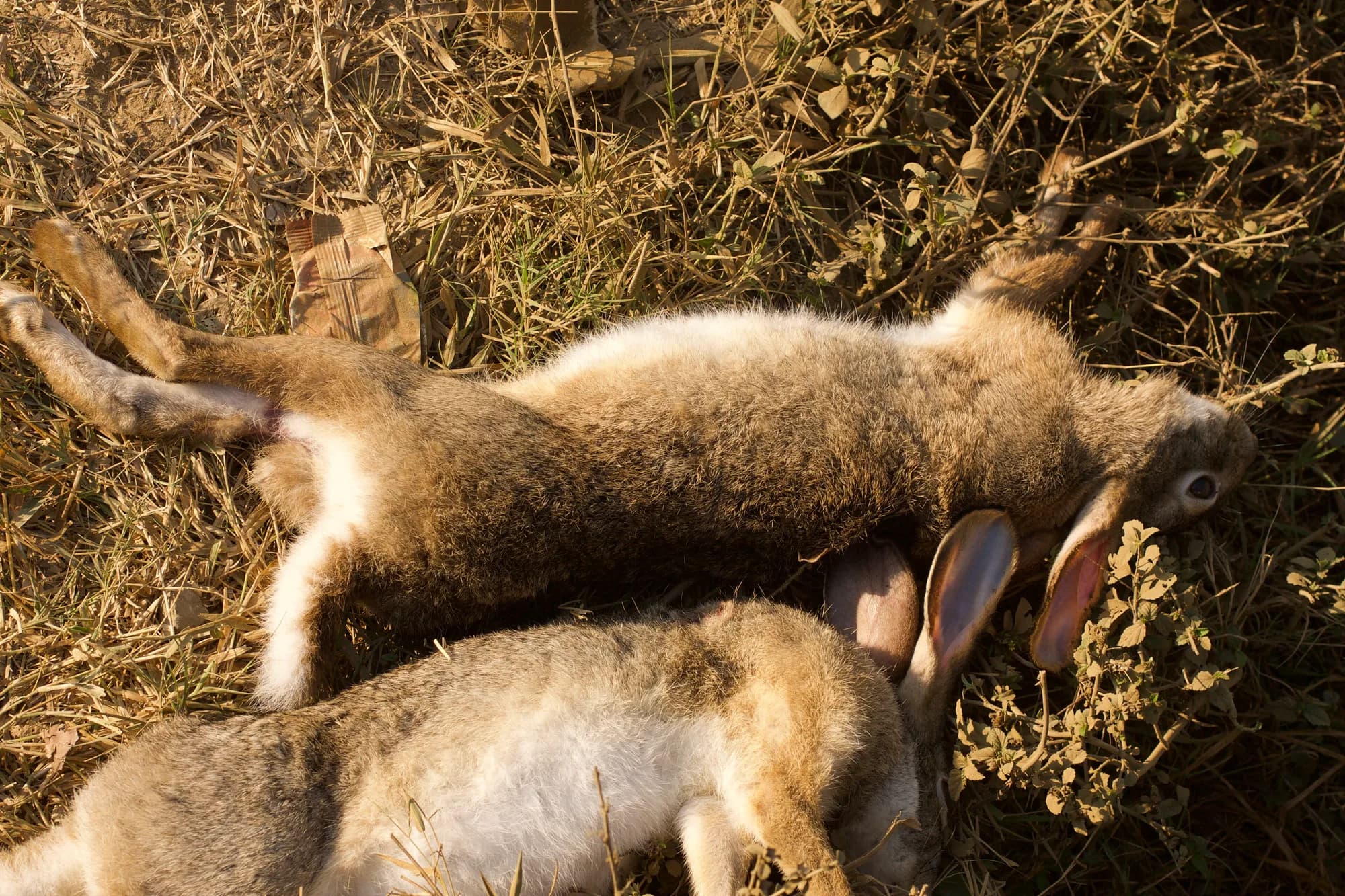
Evening drives, in the headlights
Indian hare — the prey
The most-seen mammal on an evening drive after the deer, and prey for almost everything with teeth. Worth a look for the black nape that names it.
November to February
Birding on an Indian safari
Every reserve here is a birding destination whether or not it is sold as one. Say so when you book.