
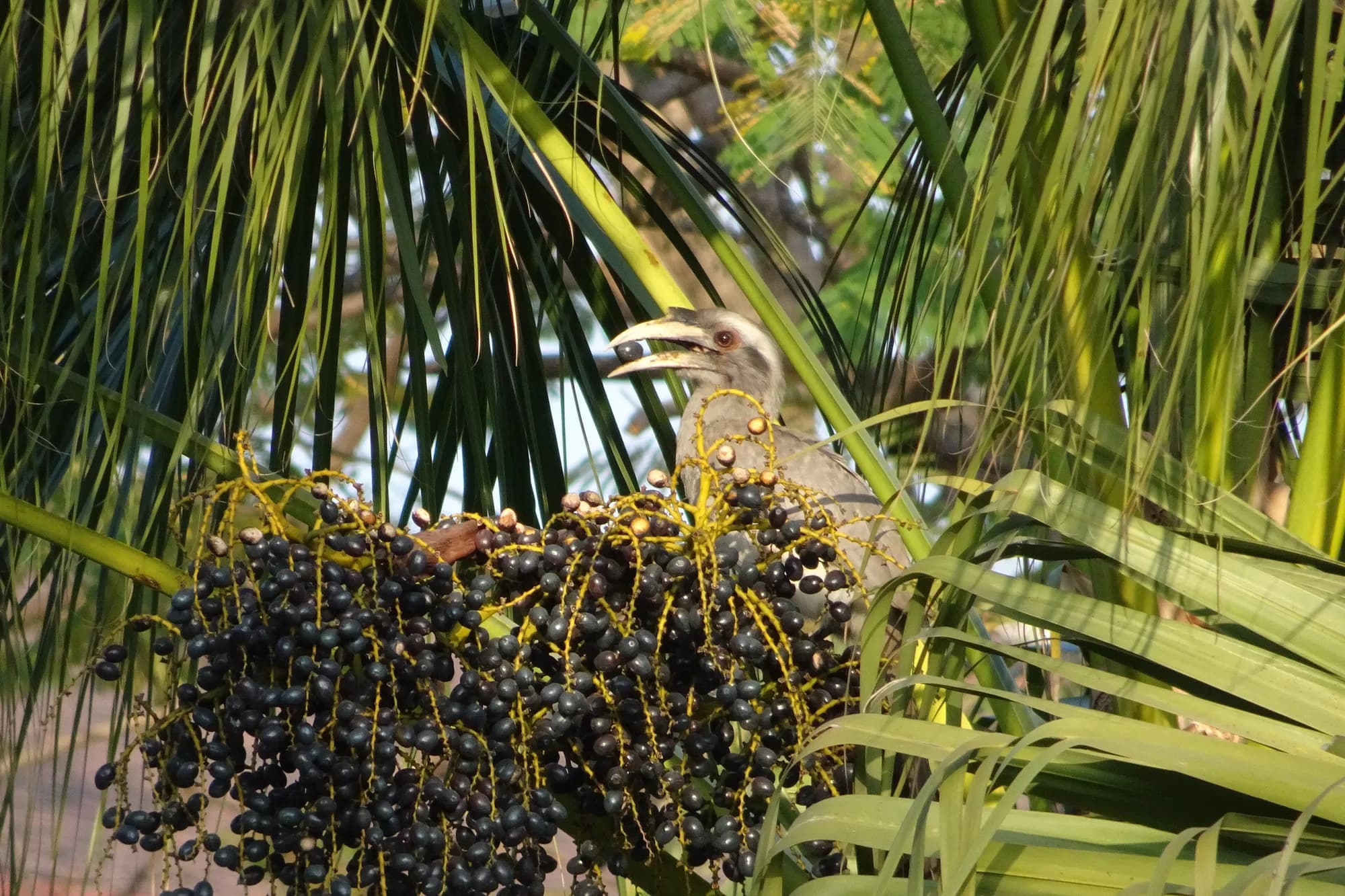
Species · Ocyceros birostris
Indian grey hornbill
The hornbill that turns up on the first morning of almost any north or central Indian safari, and in the trees outside the lodge. Small, grey, undramatic, and the one people actually photograph.
Also called
- Dhanchidi (धनचिड़ी) · Hindi
- Dhanesh · Marathi
- Chilotro · Gujarati
Checked 31 Aug 2026
- Where
- Most of north and central India
- Best months
- October–April
- Find it by
- The undulating flight and the nasal call
- Also in
- Town gardens and roadside trees
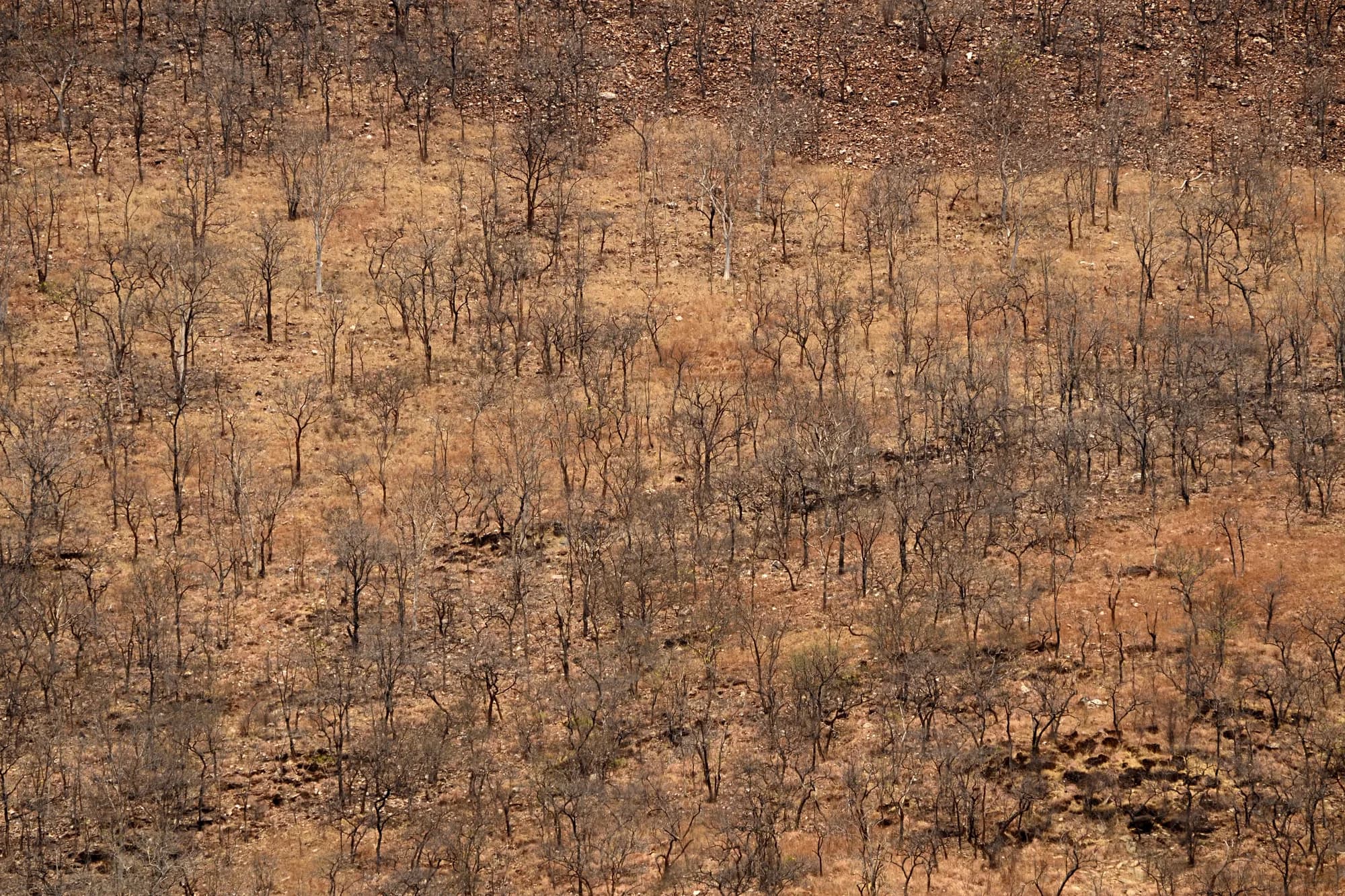
Across the dry deciduous belt of northern and central India, and comfortable close to people. One of the few large birds that has held its ground as forest has thinned.
Where it is
Where to actually go
Ranked, with the reason each — these are not interchangeable.
Where you will not see one
- Wet evergreen forestA dry-forest bird. In the Western Ghats and the north-east it is replaced by the Malabar pied and the great hornbill.
- Dismissed as commonIt is common, and it is still a hornbill nesting in a sealed tree hollow. It is the easiest place in India to actually watch that behaviour.
When to go
When to go
- J
- F
- M
- A
- M
- J
- J
- A
- S
- O
- N
- D
January: best. February: best. March: good. April: good. May: marginal. June: closed or unproductive. July: closed or unproductive. August: closed or unproductive. September: closed or unproductive. October: good. November: best. December: best.
Through the day
- Dawn
- Morning
- Midday
- Afternoon
- Dusk
- Night
Dawn: active. Morning: most active. Midday: usually resting. Afternoon: active. Dusk: active. Night: not normally seen.
What it looks like in the field
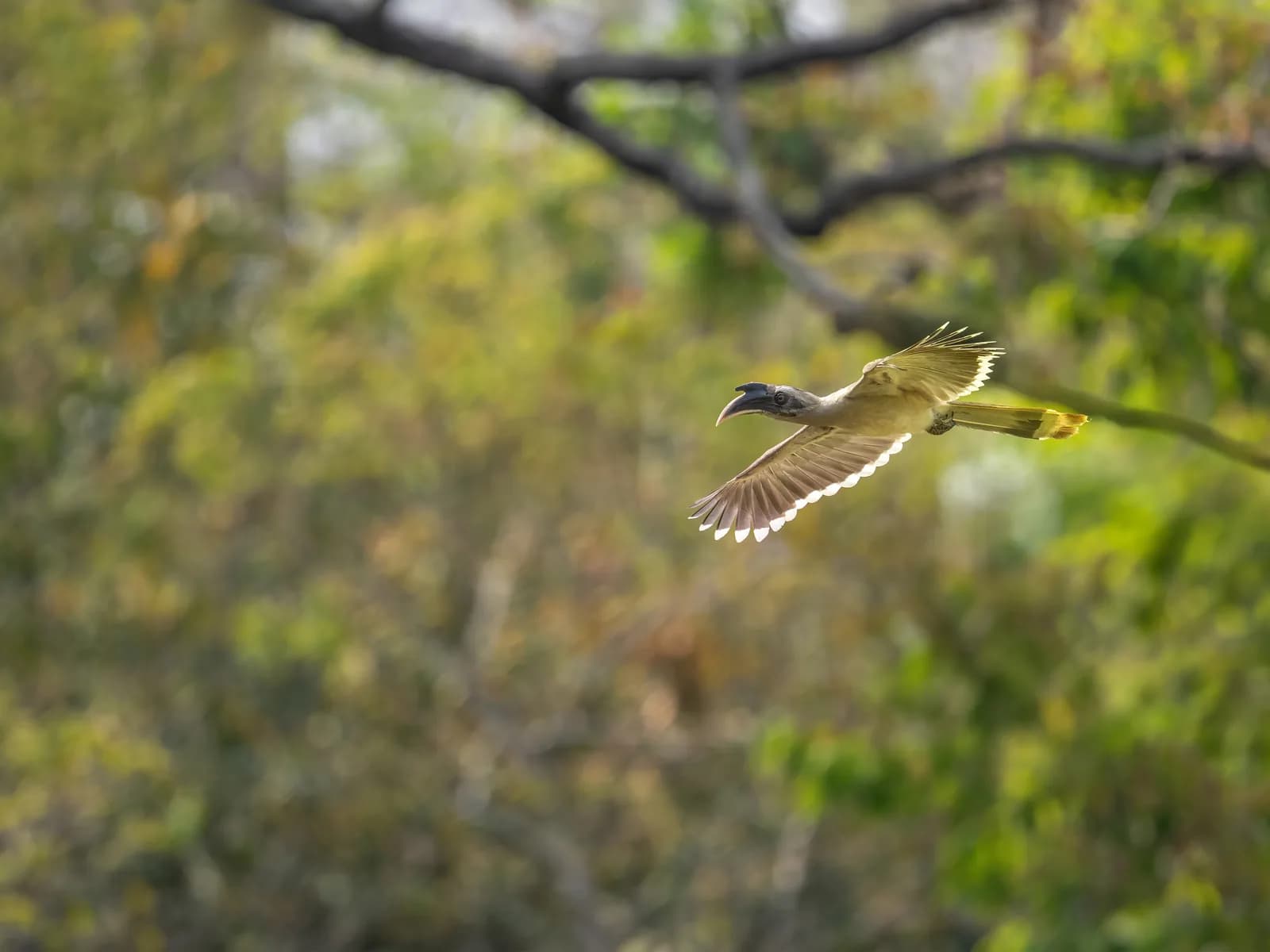
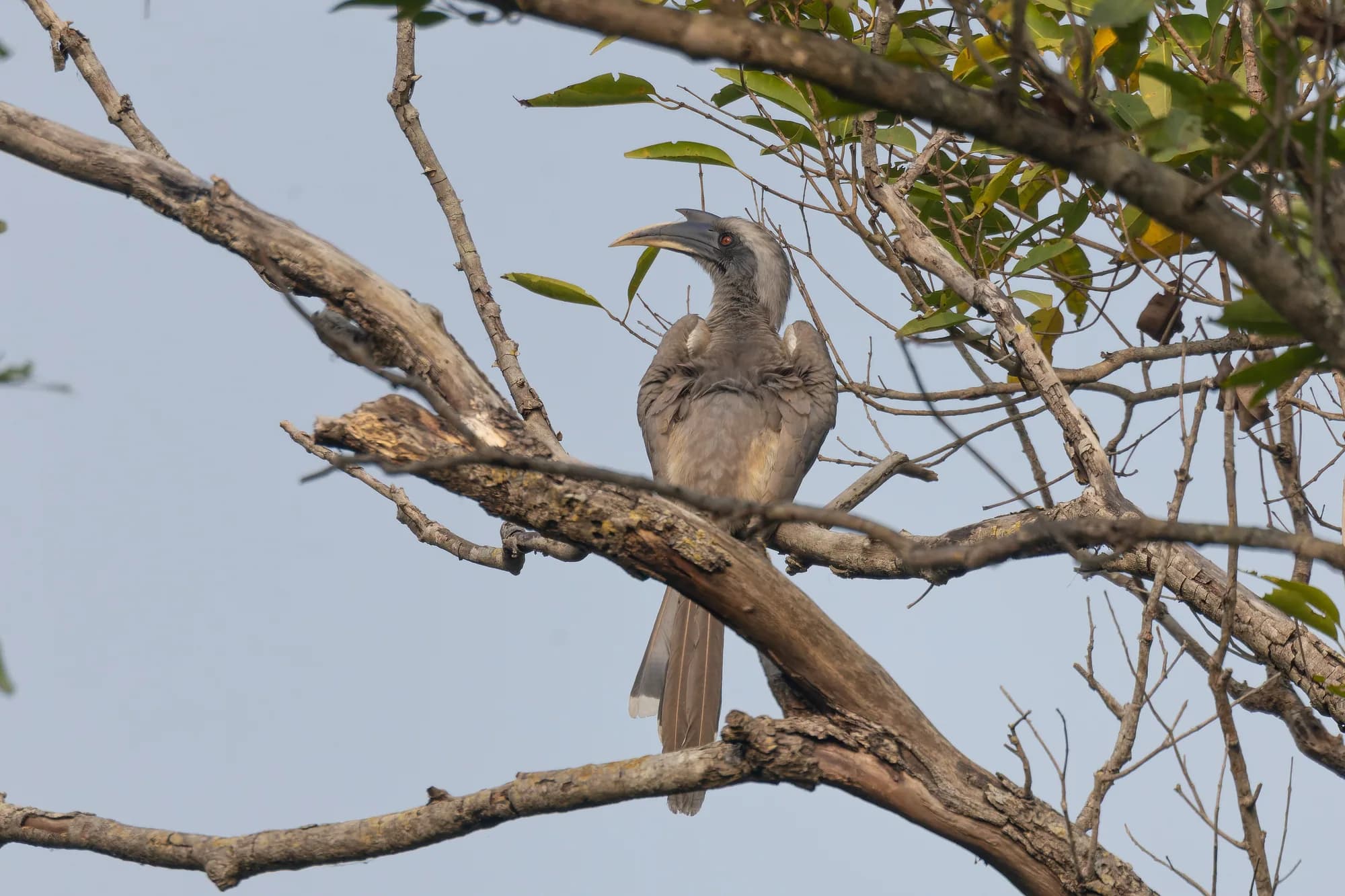
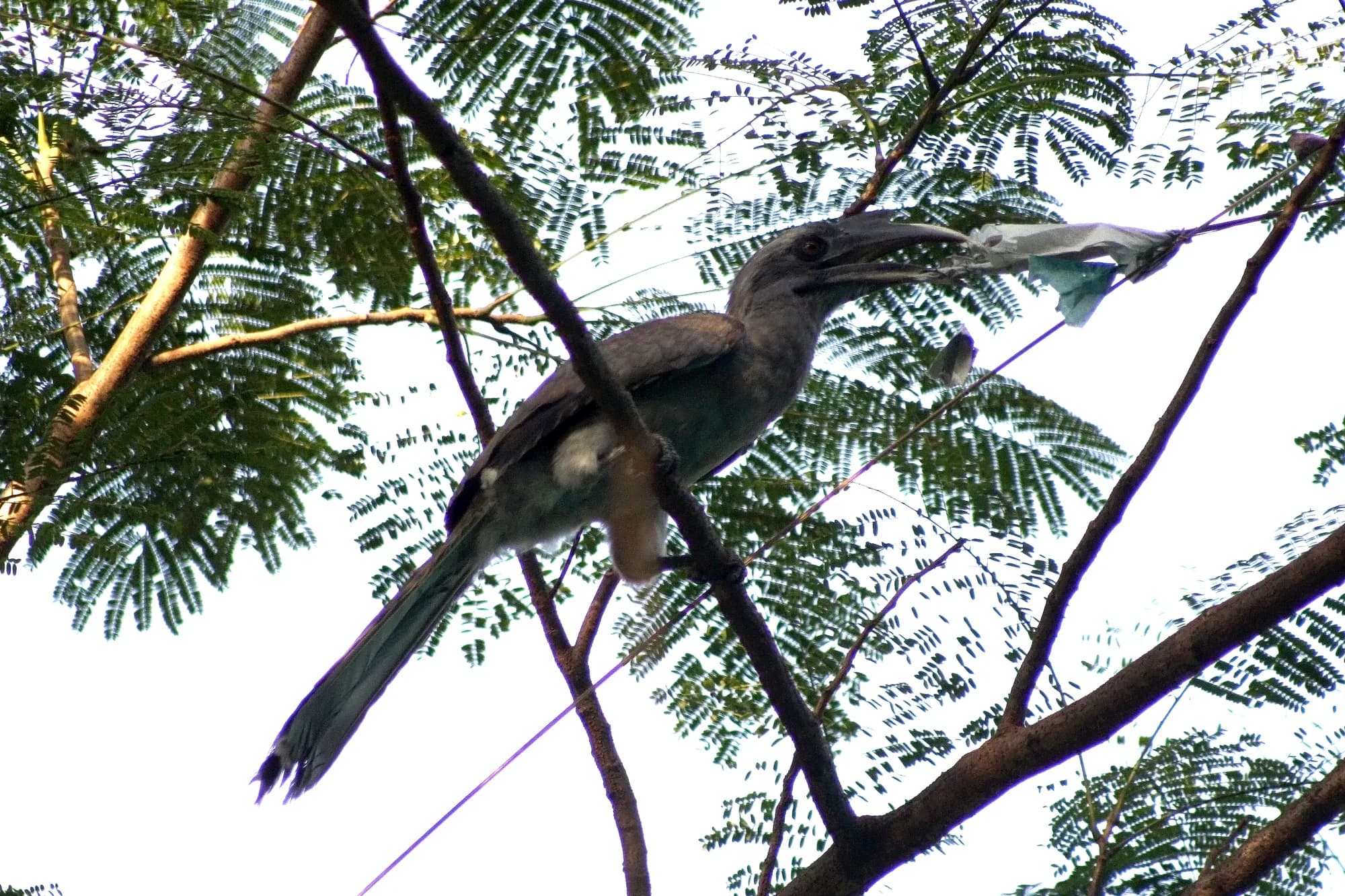
Photographs of Indian grey hornbill in the wild, in Indian reserves. We publish no captive, baited or digitally composited images, and no photograph whose licence we cannot show.
The value of a common bird
Nobody plans a trip around this one, and that is exactly why it earns a page. It is the bird that teaches you what a hornbill looks like in flight, at a distance, in bad light — and having learned it here, you will pick out the rarer ones elsewhere without thinking.
It is also the most accessible place in India to watch the sealed-nest behaviour the family is known for, because it will do it in a tree by a lodge wall.
What a sighting is actually like
A grey bird with a long tail and an oversized bill crossing a track ahead of the vehicle in a deep, dipping flight — several quick flaps, then a closed-wing glide, then flaps again. It lands high, sits still, and calls: a nasal, complaining squeal that carries further than it should.
Status and protection
Status and protection
- IUCN Red List
- Least Concern
- Population trend
- → Stable
- Wildlife Protection Act 1972
- Schedule II
- CITES
- Not listed (no CITES Appendix)
Global, species-level assessment of Ocyceros birostris; binomial matches exactly. Last assessed 14 September 2020; no more recent assessment (page carries no superseded banner).
Assessed 2020 · IUCN Red List assessment
What to book to see one
What you would be booking
- How it is seen
- No planning needed. It appears on ordinary drives at almost every central Indian park.
- Drives to book
- Any. Morning is better, and the lodge garden often does as well as the park.
This is the hornbill to learn first. Once you know its flight — flap, flap, glide — you will pick out every hornbill in India by shape rather than by colour.
Bandhavgarh — the park in fullQuestions people ask
Where can I see an Indian grey hornbill?
Is it hard to see?
How is it different from the Malabar pied hornbill?
Read next
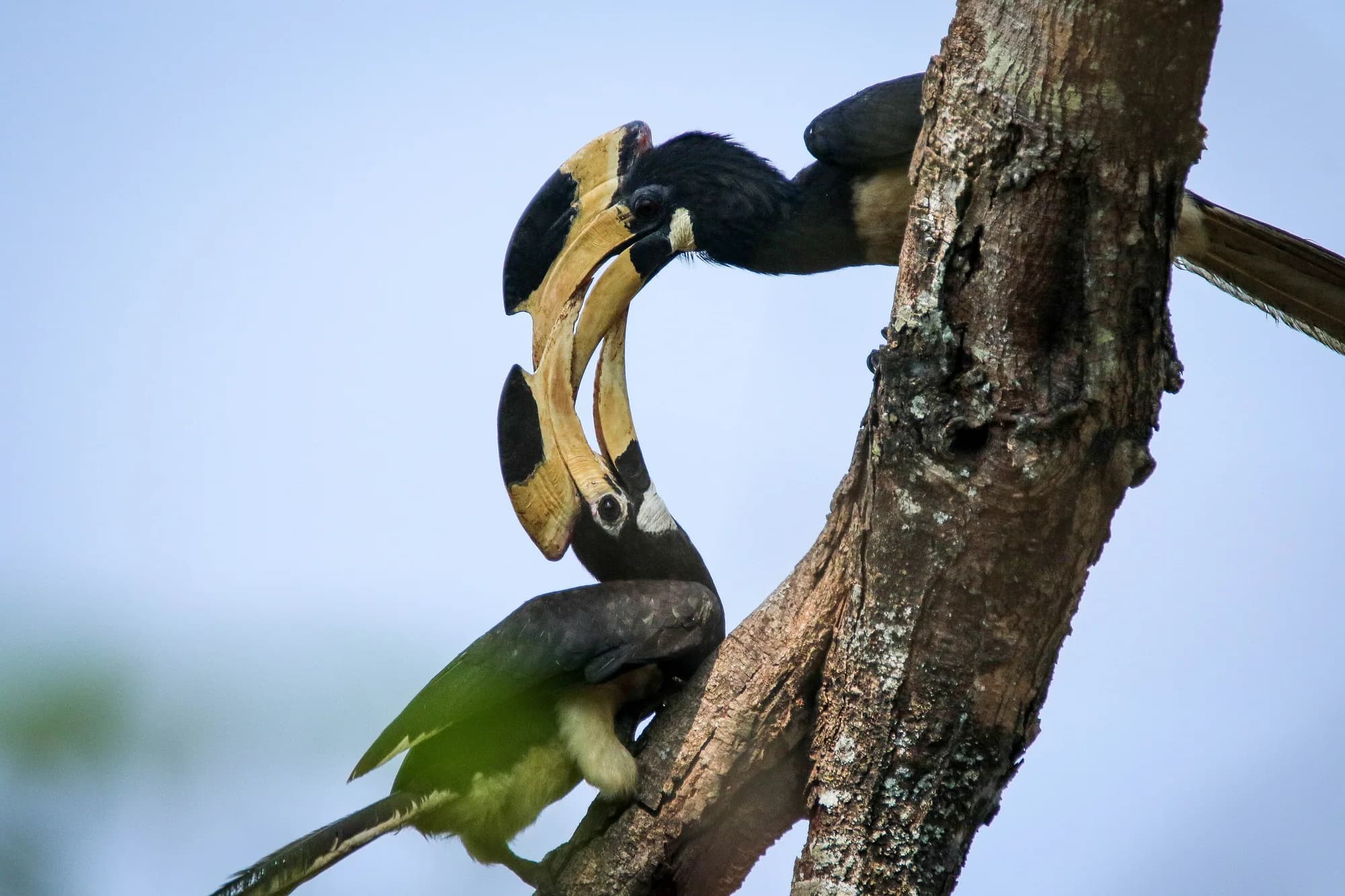
Fruiting figs along a river
Malabar pied hornbill — the river one
The hornbill most people actually see. Black and white, loudly present, and tied to fruiting fig trees along watercourses in the Western Ghats and central India.
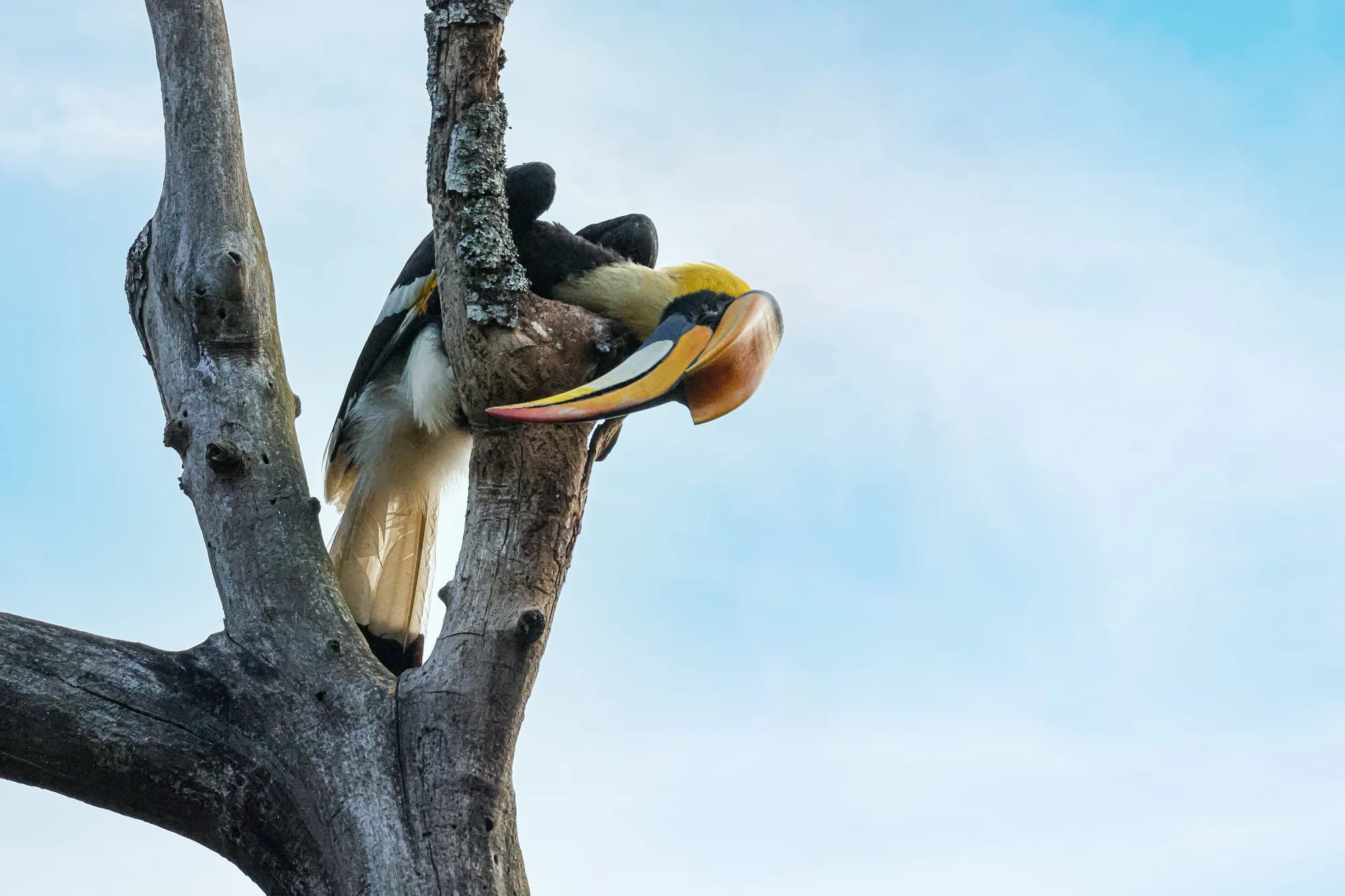
Three reserves, and you hear it first
Great hornbill — the big one
The bird non-birders stop the vehicle for. You hear the wingbeats several hundred metres before you see it, and the nesting behaviour is stranger than anything a mammal in the same forest does.
Every reserve, and an alarm caller
Indian peafowl — the other one everyone sees
The national bird, in every reserve and most villages, and a genuine part of the alarm-call system that finds you a leopard.
November to February
Birding on an Indian safari
Every reserve here is a birding destination whether or not it is sold as one. Say so when you book.