
Species · Pteropus medius
Indian flying fox
One of the largest bats in the world, hanging in hundreds from a single roost tree in broad daylight. The mammal most visitors photograph without meaning to.
Also called
- Chamgadar (चमगादड़) · Hindi
- Vaghul · Marathi
- Vevvaal · Tamil
Checked 30 Aug 2026
- Where
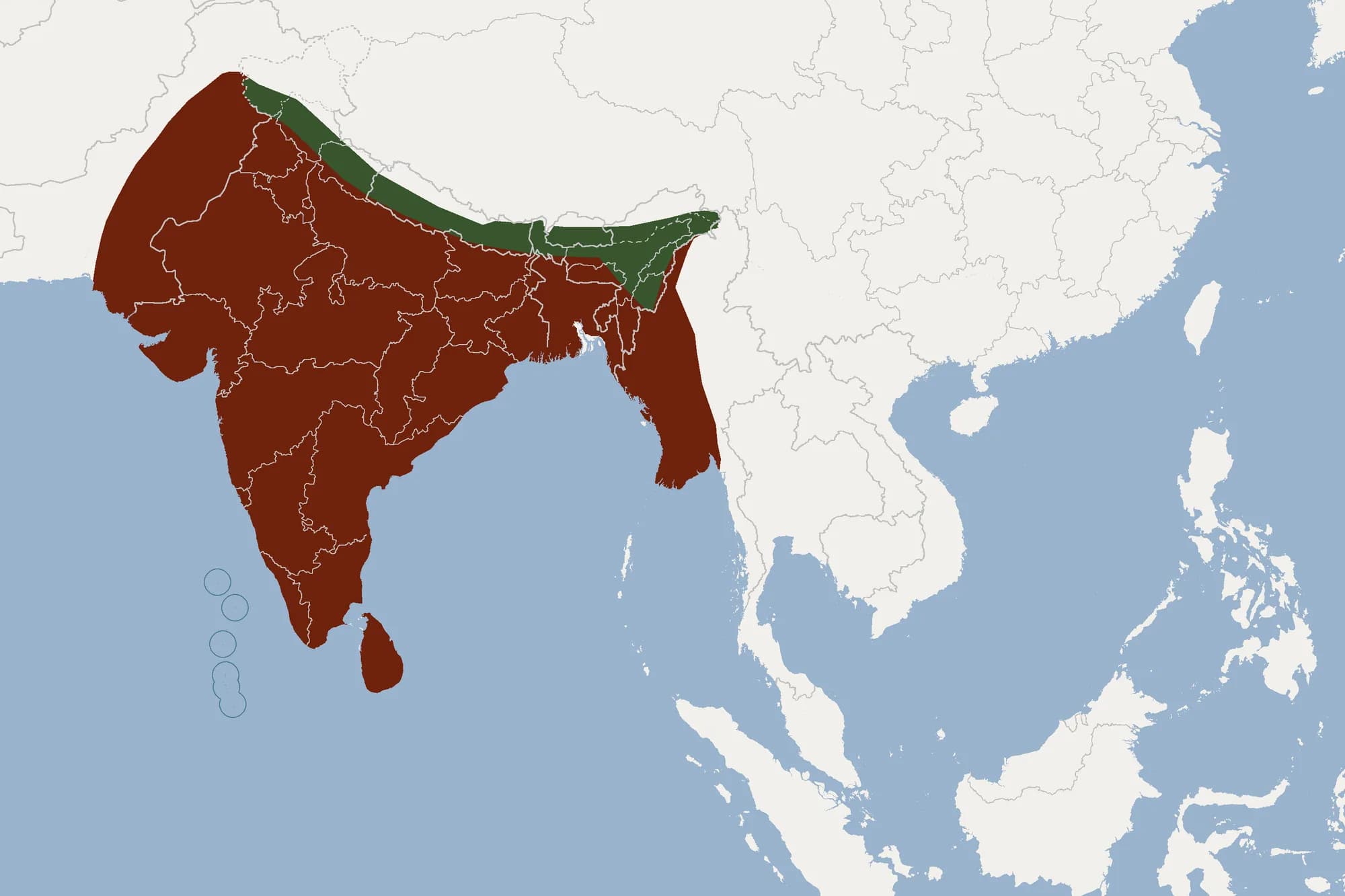
- Across most of India
- Best months
- All year
- Wingspan
- Up to about 1.2 m
- Seen
- In daylight, roosting
Roosts in large open-crowned trees across most of India, often in villages and temple grounds rather than deep forest.
Where it is
Where to actually go
Ranked, with the reason each — these are not interchangeable.
Where you will not see one
- Confused with insect-eating batsCompletely different. Flying foxes are fruit-eaters with large eyes and no echolocation, roosting openly in daylight; the small bats leaving a building at dusk are a different suborder entirely.
- Assumed to be a disease risk worth avoidingWorth being calm and accurate: do not handle bats, ever, and do not disturb a roost. Watching one from thirty metres is not a hazard, and roosts are a routine part of Indian towns.
When to go
When to go
- J
- F
- M
- A
- M
- J
- J
- A
- S
- O
- N
- D
January: best. February: best. March: best. April: best. May: best. June: best. July: good. August: good. September: good. October: best. November: best. December: best.
Through the day
- Dawn
- Morning
- Midday
- Afternoon
- Dusk
- Night
Dawn: usually resting. Morning: active. Midday: active. Afternoon: active. Dusk: most active. Night: most active.
What it looks like in the field
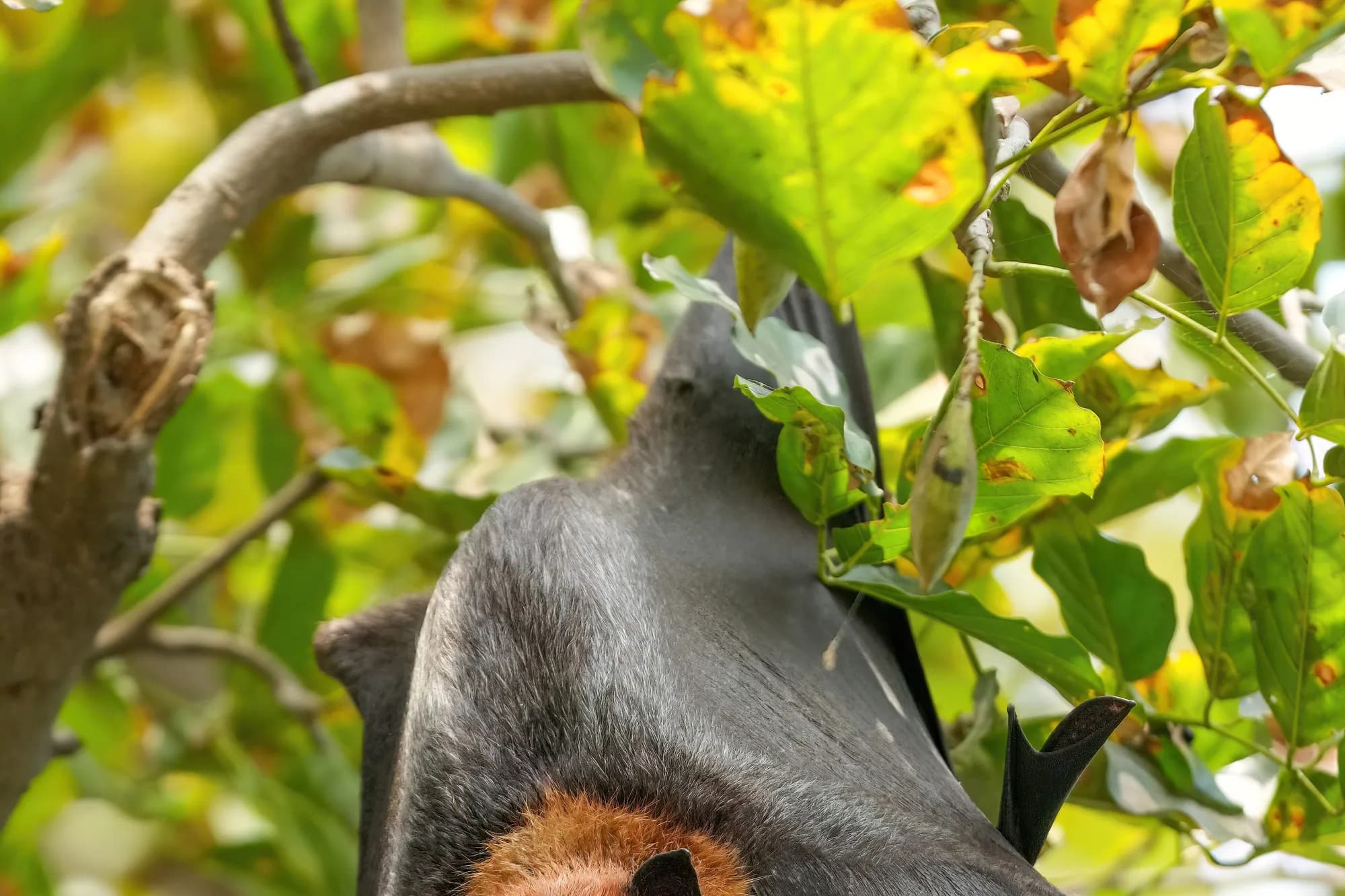
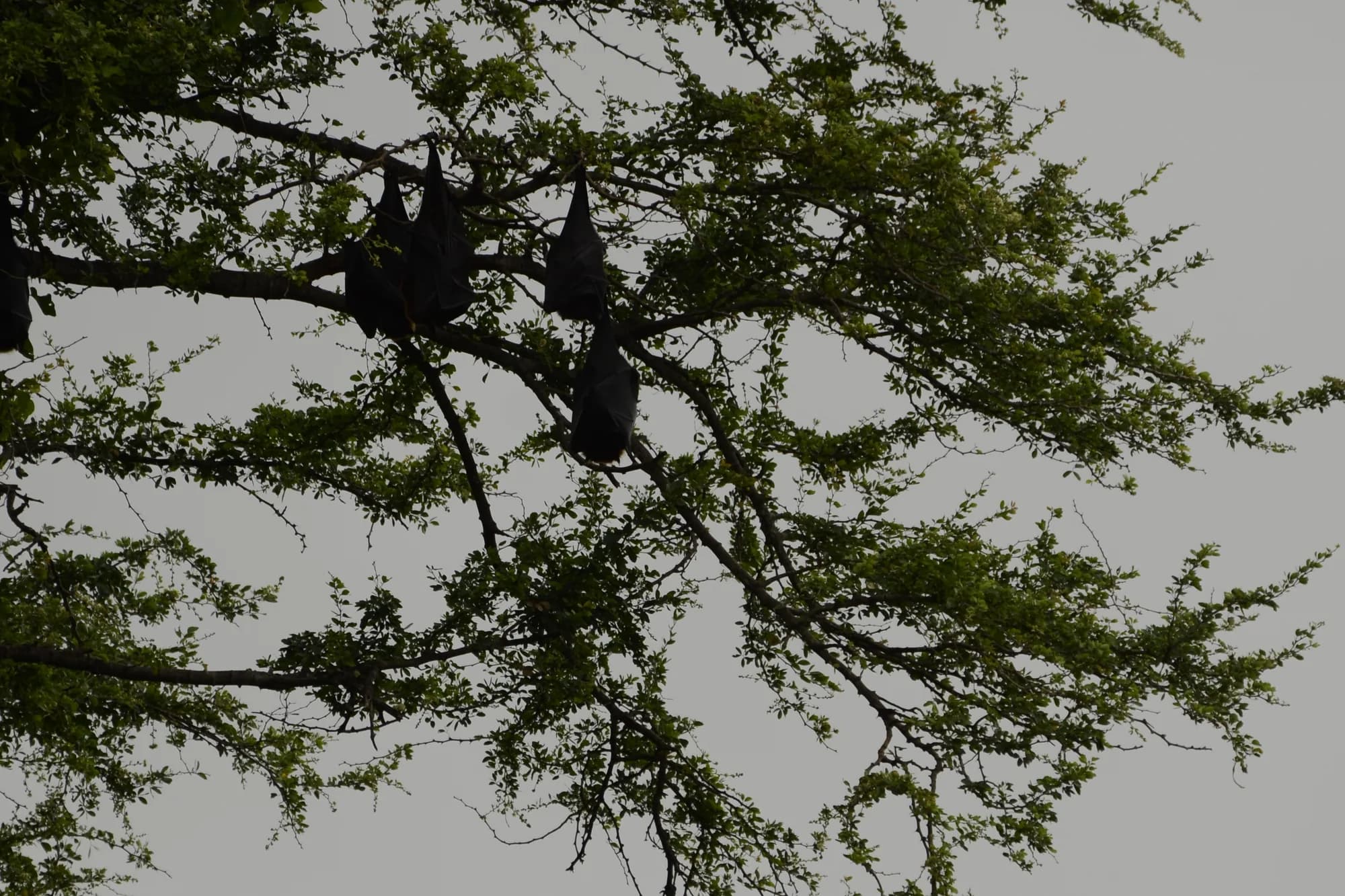
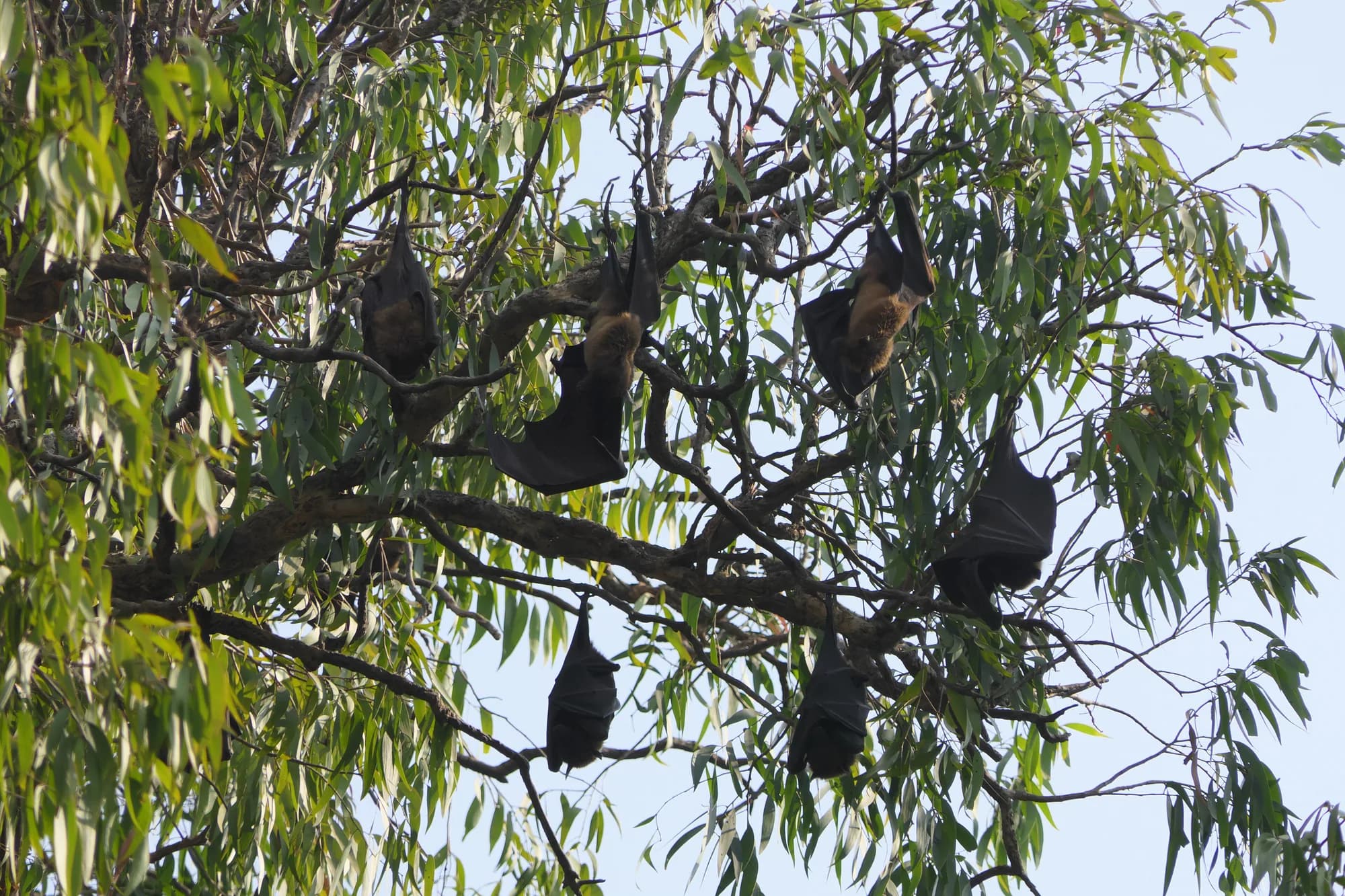
Photographs of Indian flying fox in the wild, in Indian reserves. We publish no captive, baited or digitally composited images, and no photograph whose licence we cannot show.
What a sighting is actually like
Loud, and much bigger than expected. A roost tree is in constant motion — animals shifting, squabbling and fanning their wings — and audible from a long way off.
The fly-out at dusk is the best free wildlife spectacle in India.
The work they do
Flying foxes are major pollinators and seed dispersers, moving seed far further than birds do — which matters a great deal for forest regeneration.
Status and protection
Status and protection
- IUCN Red List
- Near Threatened
- Population trend
- ↓ Decreasing
- Wildlife Protection Act 1972
- Schedule II
- CITES
- Appendix II
Species-level assessment of Pteropus medius, matching the binomial given. Criteria A4acd; date assessed 11 June 2024;
Assessed 2024 · IUCN Red List assessment
What to book to see one
What you would be booking
- How it is seen
- No arrangement. Ask your guide or lodge where the local roost tree is — they always know.
- Drives to book
- None. This is a stop, not a drive.
Go at dusk for the fly-out. Hundreds of animals leaving a single tree in sequence against a coloured sky is one of the better wildlife spectacles in India and costs nothing.
Ranthambore — the park in fullQuestions people ask
How big is an Indian flying fox?
Where can I see them?
Are they dangerous?
Read next
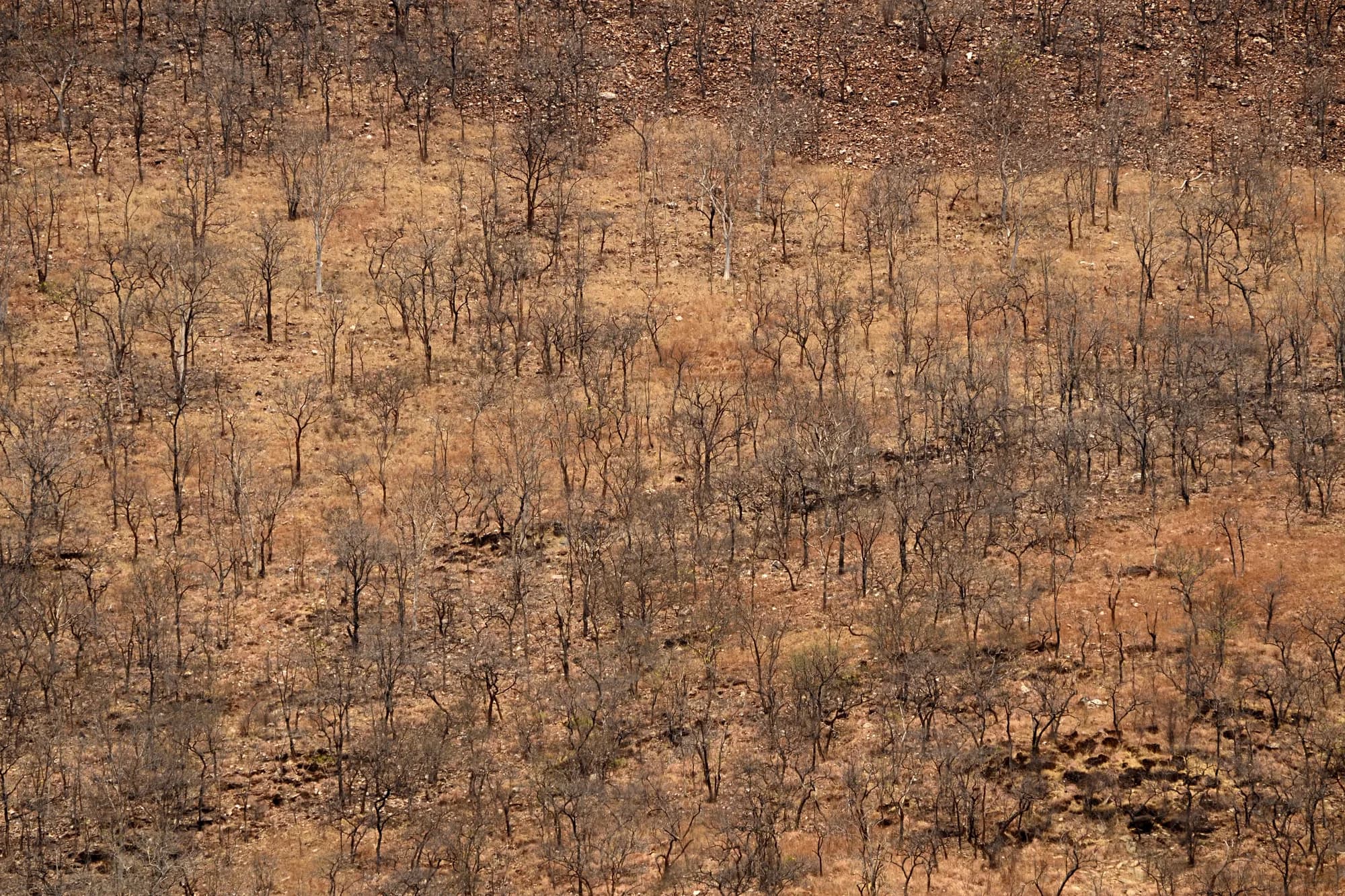
Rajasthan
Ranthambore — the park in full
Dry forest around a fort, and the easiest reserve to reach from Delhi — which is exactly why it is the busiest.
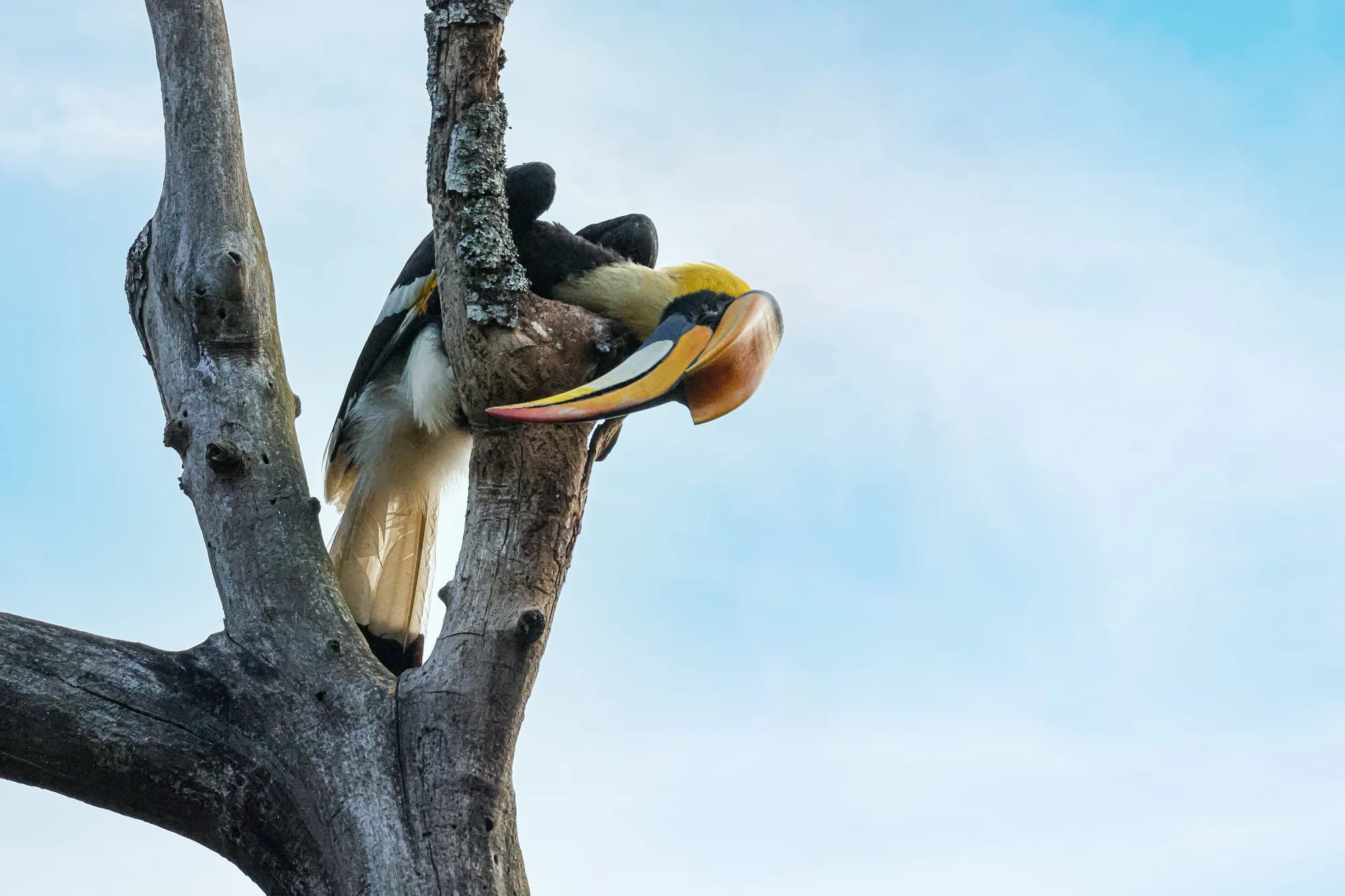
Three reserves, and you hear it first
Great hornbill — the other seed disperser
The bird non-birders stop the vehicle for. You hear the wingbeats several hundred metres before you see it, and the nesting behaviour is stranger than anything a mammal in the same forest does.
Our position
Travelling responsibly
Where we stand on vehicle crowding, baiting and playback — and what we will not link to, whoever is paying.
Six reserves, and always overhead
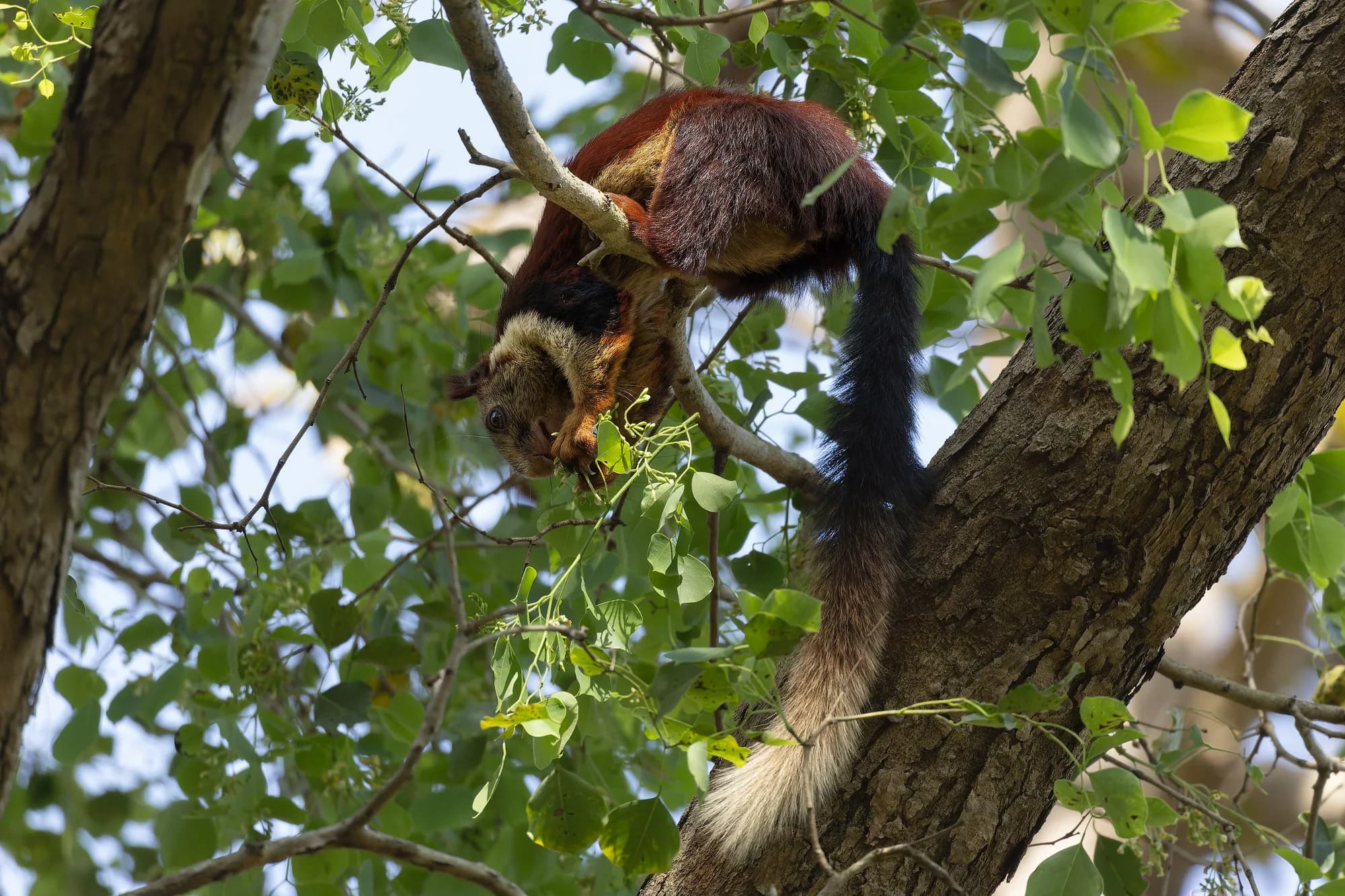
Giant squirrel — the same canopy
A squirrel the length of your arm, in maroon and cream, that leaps six metres between trees. The animal that most reliably delights people who came for a tiger and did not get one.