
Species · Pitta brachyura
Indian pitta
A ground bird in nine colours that most people hear and never see. The two-note dusk call is one of the defining sounds of the Indian monsoon.
Also called
- Naurang (नौरंग) — nine colours · Hindi
- Navrang · Marathi
- Kavi · Malayalam
Checked 30 Aug 2026
- Where
- Across much of India
- Best months
- June–September
- Call
- Two notes, at dusk
- Note
- Nine colours, hence the names
Breeds in central and northern forest through the monsoon and winters largely in the Western Ghats and Sri Lanka — a genuine internal migrant.
Where it is
Where to actually go
Ranked, with the reason each — these are not interchangeable.
Where you will not see one
- In the openA shade and leaf-litter bird. It will not be on a meadow or a track edge in sunlight.
- In central India in winterMost breeding birds move to the Ghats and Sri Lanka after the monsoon, so a Bandhavgarh trip in January is the wrong season for it.
When to go
When to go
- J
- F
- M
- A
- M
- J
- J
- A
- S
- O
- N
- D
January: marginal. February: marginal. March: marginal. April: good. May: best. June: best. July: best. August: best. September: good. October: good. November: marginal. December: marginal.
Through the day
- Dawn
- Morning
- Midday
- Afternoon
- Dusk
- Night
Dawn: most active. Morning: active. Midday: usually resting. Afternoon: active. Dusk: most active. Night: not normally seen.
What it looks like in the field
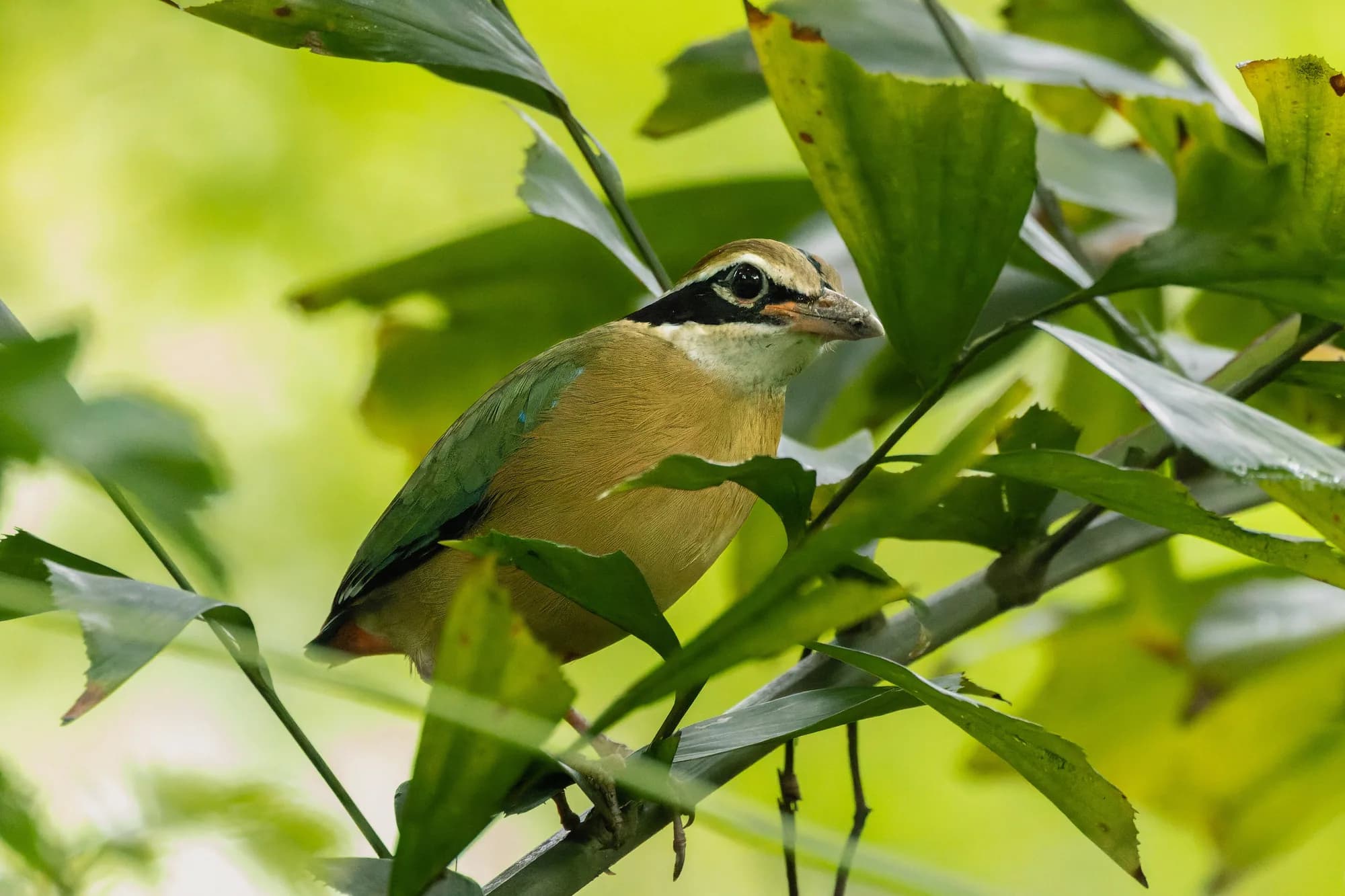
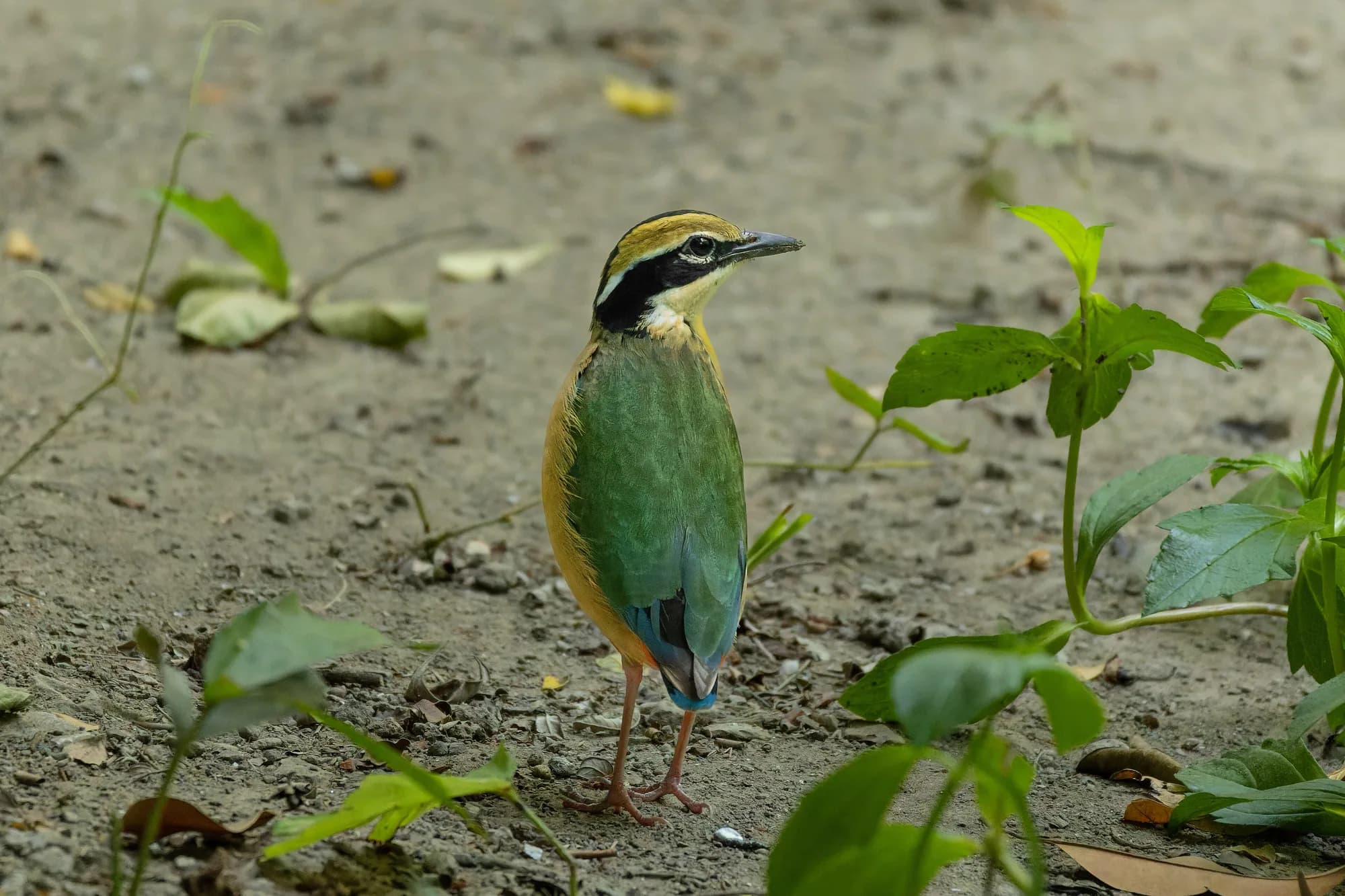
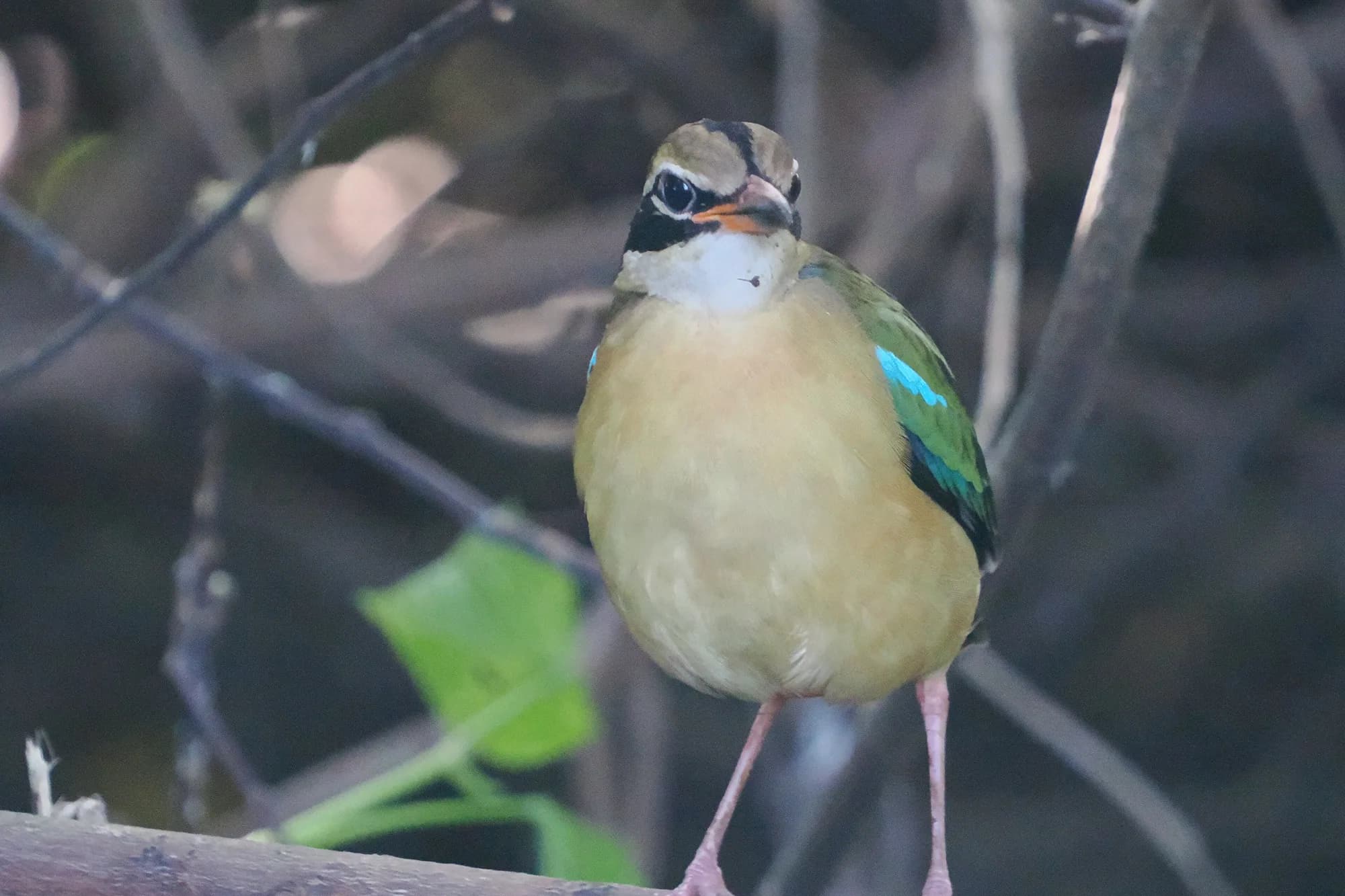
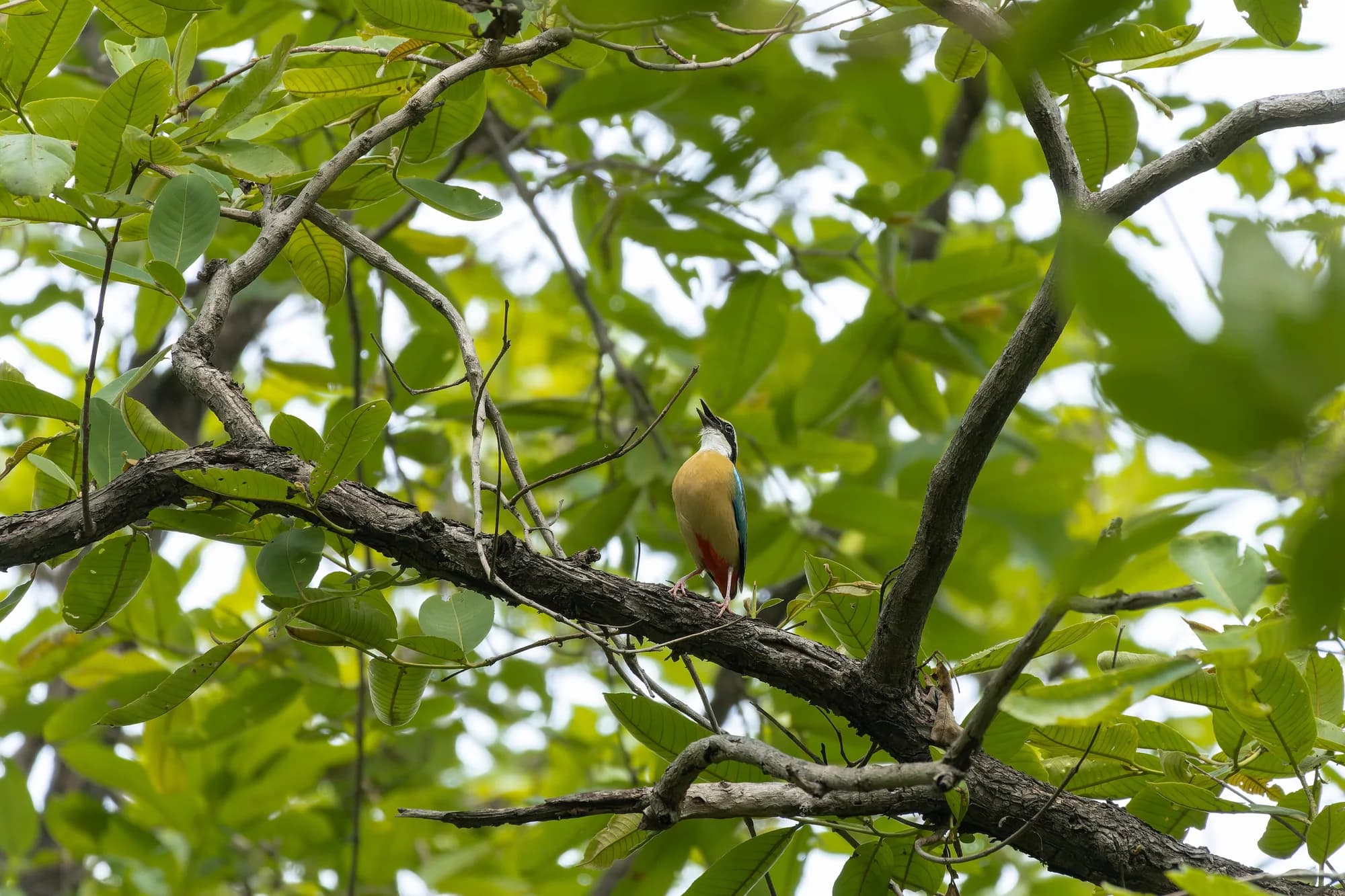
Photographs of Indian pitta in the wild, in Indian reserves. We publish no captive, baited or digitally composited images, and no photograph whose licence we cannot show.
What a sighting is actually like
Heard, then a long search, then a startlingly coloured bird hopping in shade fifteen metres away that you cannot believe you failed to see. They are small, quiet on the ground, and very good at being behind things.
Status and protection
Status and protection
- IUCN Red List
- Least Concern
- Population trend
- ↓ Decreasing
- Wildlife Protection Act 1972
- Schedule II
- CITES
- Not listed in the CITES Appendices
Species-level assessment for Pitta brachyura; binomial matches exactly. Assessor BirdLife International 2024, last assessed 12 June 2024.
Assessed 2024 · IUCN Red List assessment
What to book to see one
What you would be booking
- How it is seen
- A walk or a slow drive on shaded forest tracks, at dawn or dusk.
- Drives to book
- Monsoon and shoulder months. Many central Indian parks close in the peak monsoon, which is the awkward part of this species.
The local name naurang means nine colours, and counting them is a genuinely good way to get a first-time birder to look properly at a bird.
Birding on an Indian safariQuestions people ask
Why is it called naurang?
When can I see one?
How do I find one?
Read next
November to February
Birding on an Indian safari
Every reserve here is a birding destination whether or not it is sold as one. Say so when you book.
Madhya Pradesh
Satpura — the park in full
The one central Indian reserve that permits walking and boat safaris. You see less and understand considerably more.
The white ribbon through the forest
Paradise flycatcher — the other forest jewel
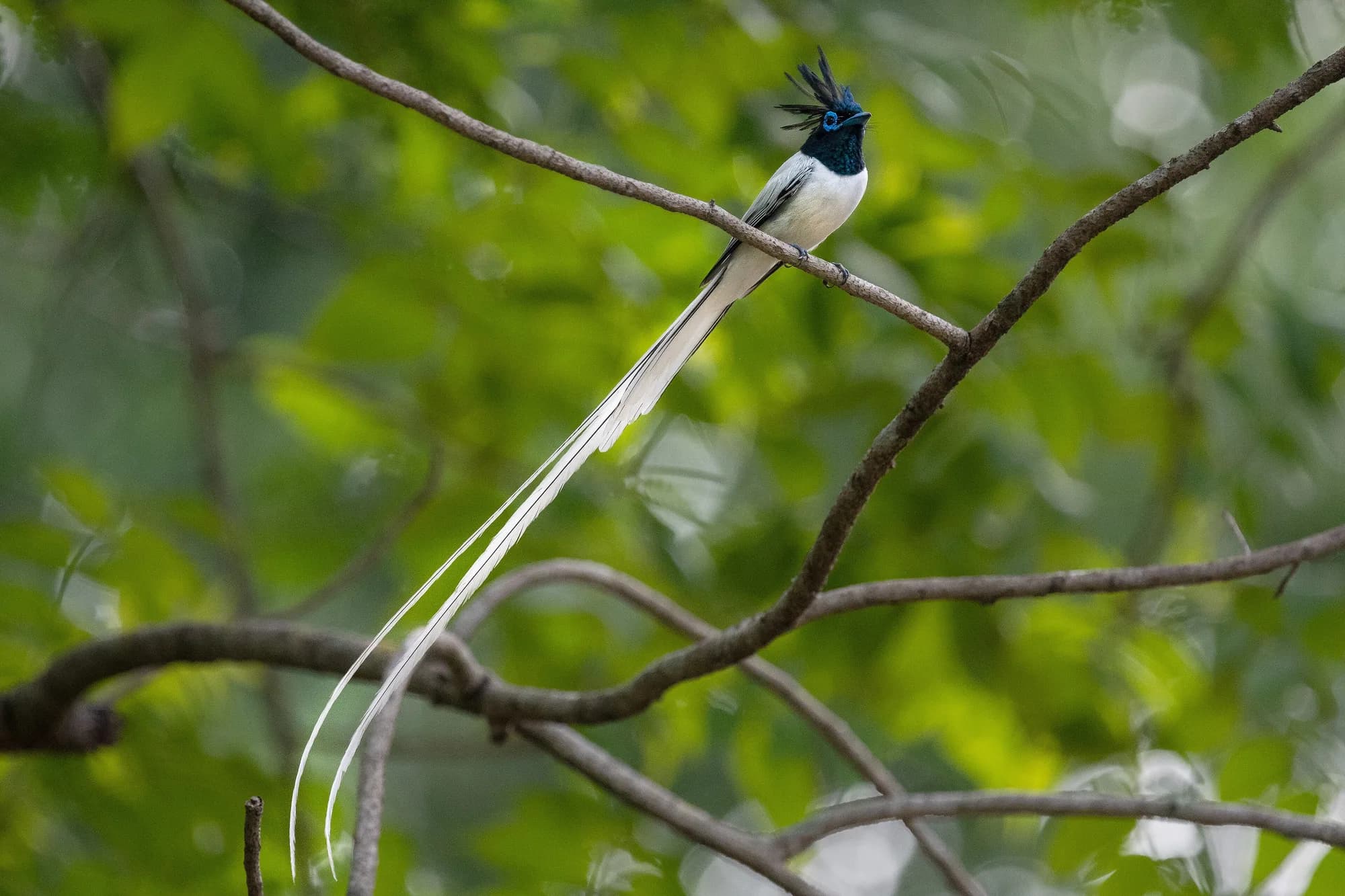
The male trails two tail streamers twice his body length and turns white with age. The most photographed small bird in Indian reserves, and worth the frames.
Twelve months, cross-park
When to go, month by month
The single decision that moves the odds most. Heat, crowds, closures and what is actually open, one page per month.