
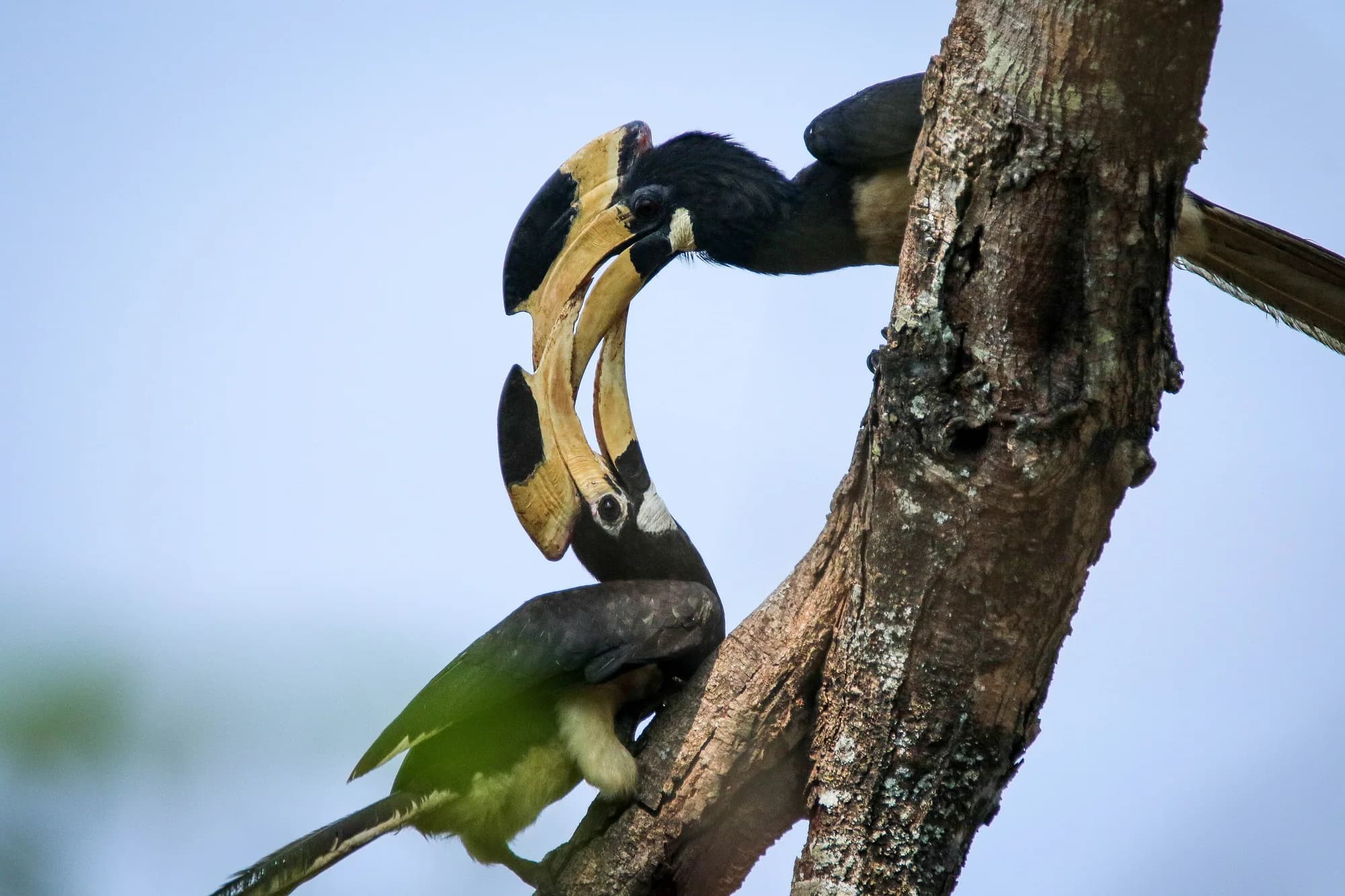
Species · Anthracoceros coronatus
Malabar pied hornbill
The hornbill most people actually see. Black and white, loudly present, and tied to fruiting fig trees along watercourses in the Western Ghats and central India.
Also called
- Kadu kudubale · Kannada
- Dhanesh · Marathi
- Vezhambal · Malayalam
Checked 31 Aug 2026
- Where
- Western Ghats and central India
- Best months
- December–April
- Find it by
- Fruiting figs, and the wingbeat noise
- Nesting
- Female sealed into a tree hollow
Follows large fruiting trees along rivers through the Western Ghats and into the central Indian hill forests. Absent from dry open country entirely.
Where it is
Where to actually go
Ranked, with the reason each — these are not interchangeable.
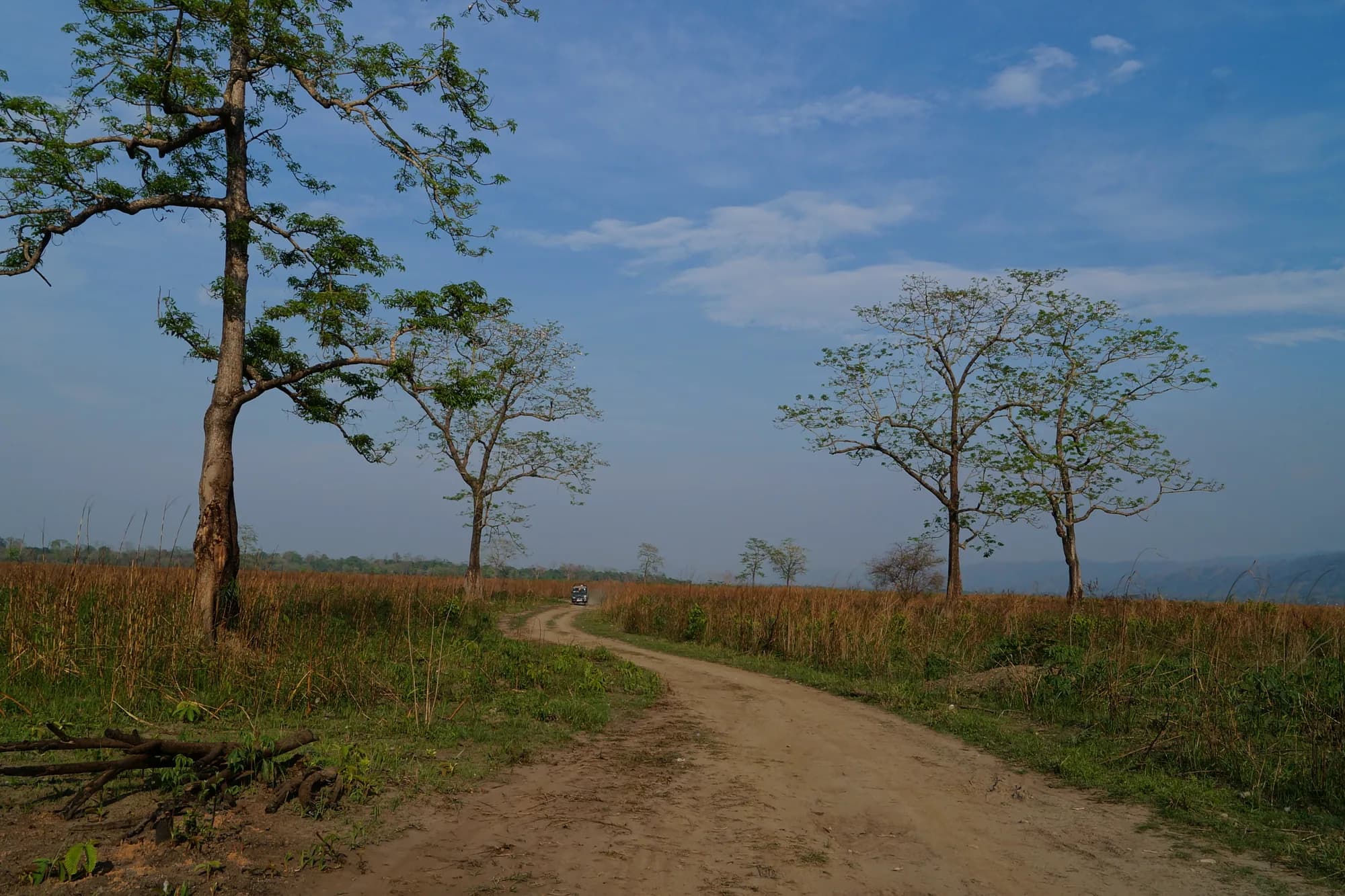
Where you will not see one
- Dry open forestNeeds big fruiting trees and water. The dry-forest hornbill is the Indian grey, which is a different, smaller, browner bird.
- Confused with the great hornbillSize and colour of the casque. Great hornbill is enormous with a yellow-and-black banana of a casque; this one is smaller, cleanly black and white.
When to go
When to go
- J
- F
- M
- A
- M
- J
- J
- A
- S
- O
- N
- D
January: best. February: best. March: good. April: good. May: marginal. June: closed or unproductive. July: closed or unproductive. August: closed or unproductive. September: closed or unproductive. October: marginal. November: good. December: best.
Through the day
- Dawn
- Morning
- Midday
- Afternoon
- Dusk
- Night
Dawn: active. Morning: most active. Midday: usually resting. Afternoon: active. Dusk: active. Night: not normally seen.
What it looks like in the field
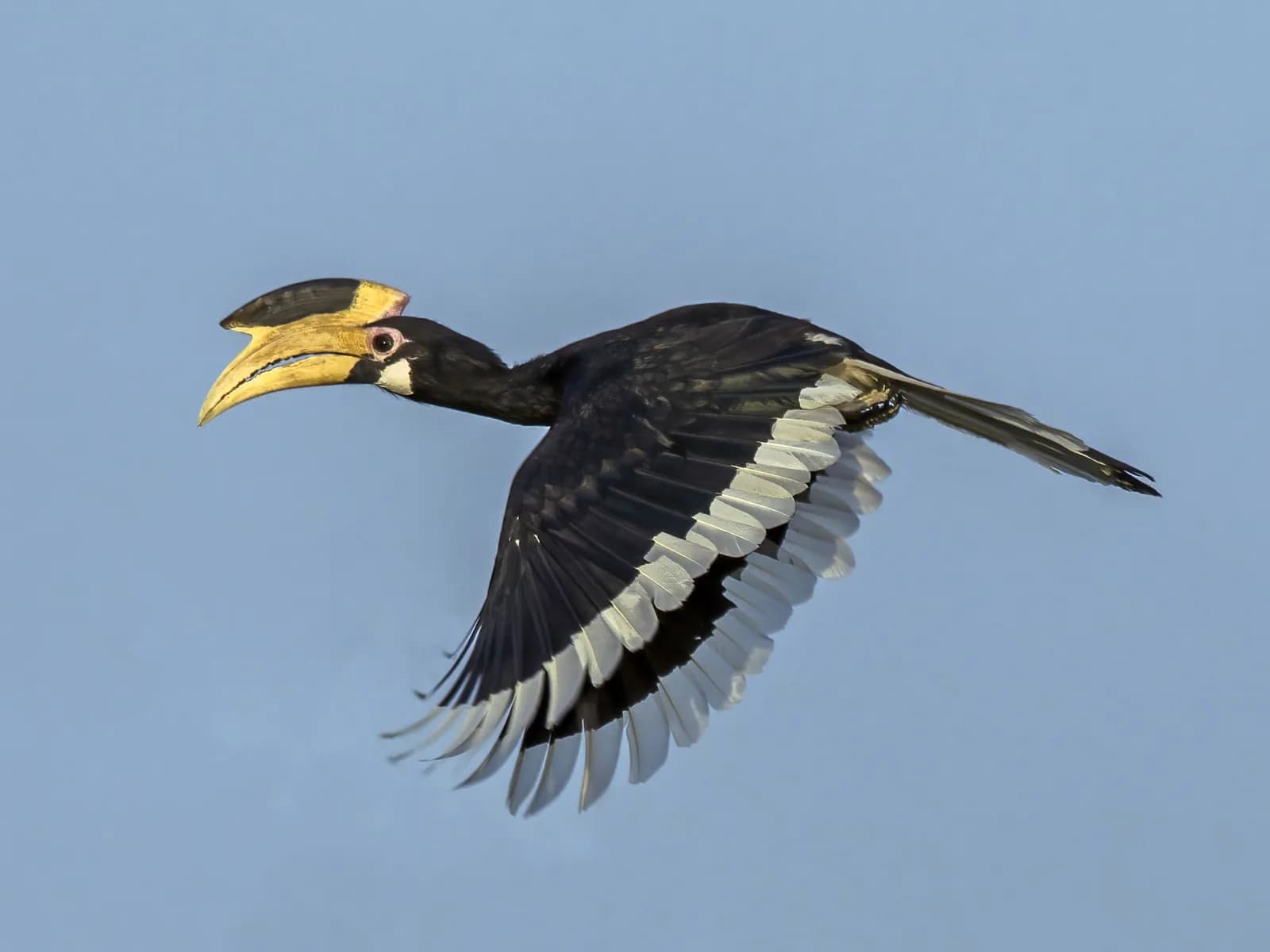
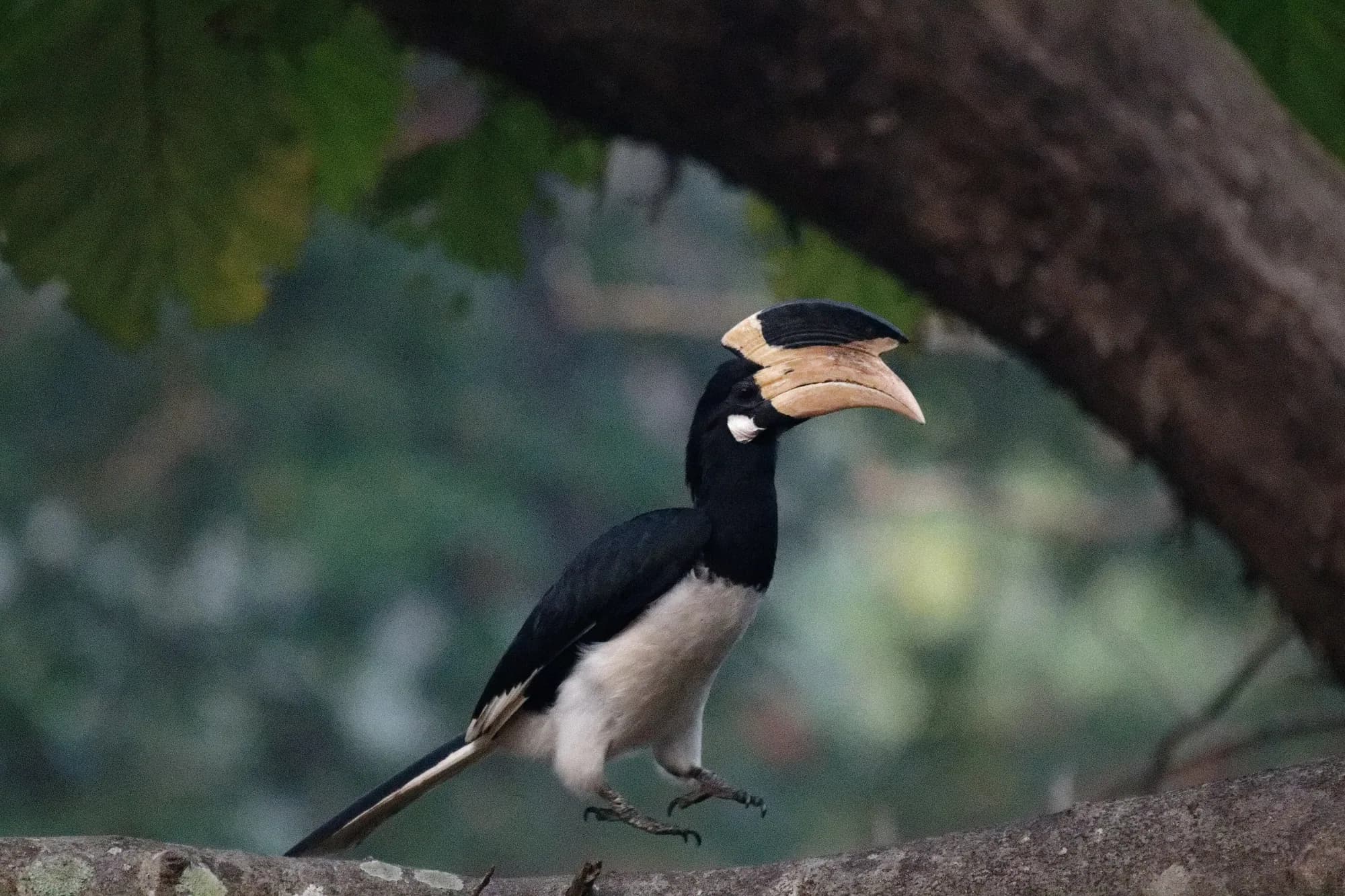
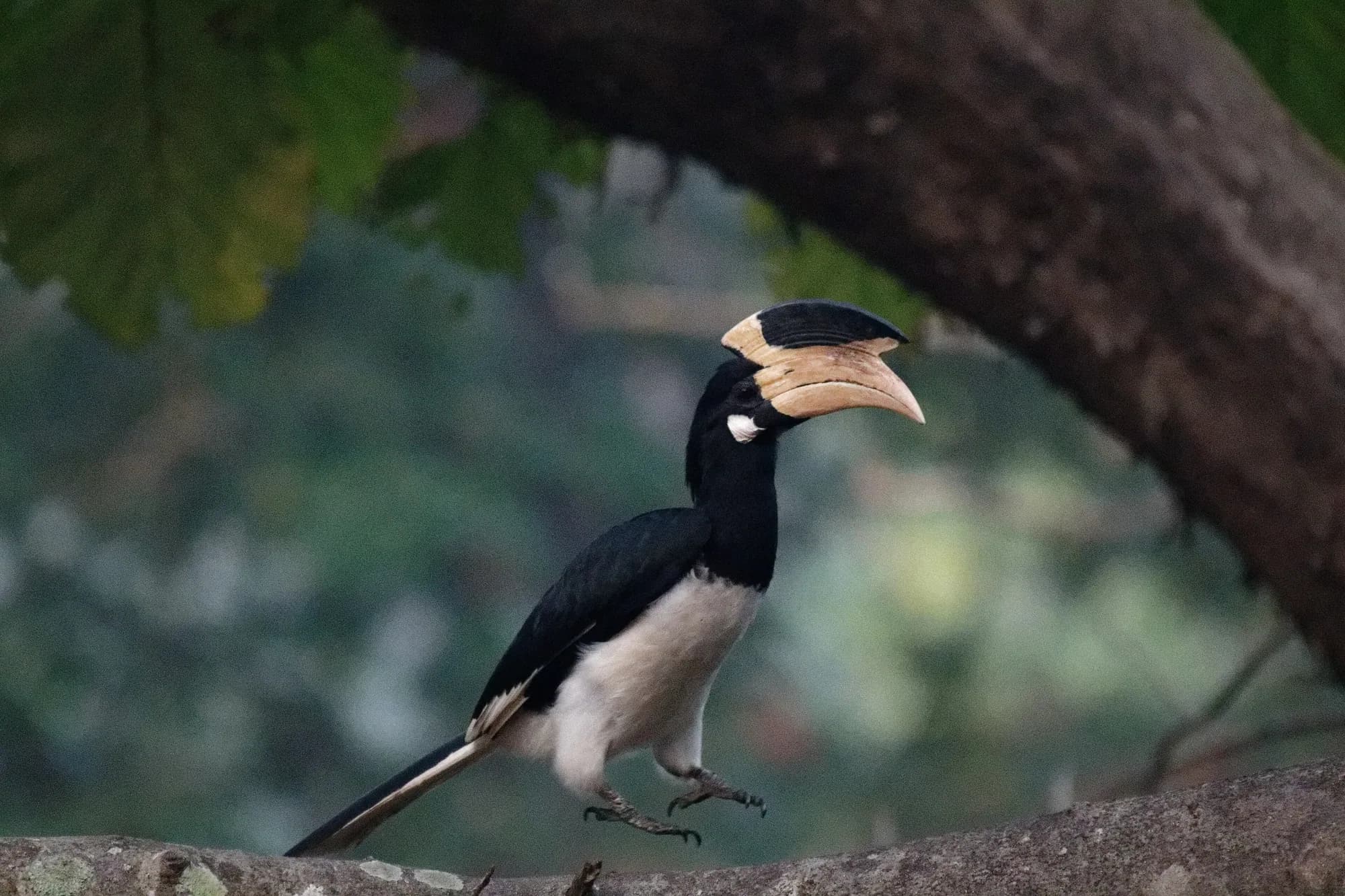
Photographs of Malabar pied hornbill in the wild, in Indian reserves. We publish no captive, baited or digitally composited images, and no photograph whose licence we cannot show.
Find the tree, not the bird
A fruiting fig is a hornbill magnet and an unfruiting one is empty. Which trees are in fruit changes month to month and a local guide knows; a visitor cannot work it out from a map. That single question — which figs are fruiting — is worth more than any amount of driving.
What a sighting is actually like
You hear it first. The wingbeats are audible from a long way off — a heavy, rhythmic whooshing that carries — and then a large black-and-white bird lands in the canopy and starts working through fruit, tossing each fig back to swallow it.
Status and protection
Status and protection
- IUCN Red List
- Near Threatened
- Population trend
- ↓ Decreasing
- Wildlife Protection Act 1972
- Schedule I
- CITES
- Appendix II
Global, species-level assessment of Anthracoceros coronatus; binomial matches exactly. Criteria A2cd+3cd+4cd; C1.
Assessed 2024 · IUCN Red List assessment
What to book to see one
What you would be booking
- How it is seen
- Any drive or boat that follows a river through fruiting forest.
- Drives to book
- Morning. Ask the guide which figs are in fruit this month — that is the whole game.
Hornbills are a tree question, not a park question. A guide who knows which trees are fruiting will find them in an hour; one who does not may not find them all week.
Kali — the park in fullQuestions people ask
Where is the best place for Malabar pied hornbill?
How do I tell it from a great hornbill?
When should I go?
Read next
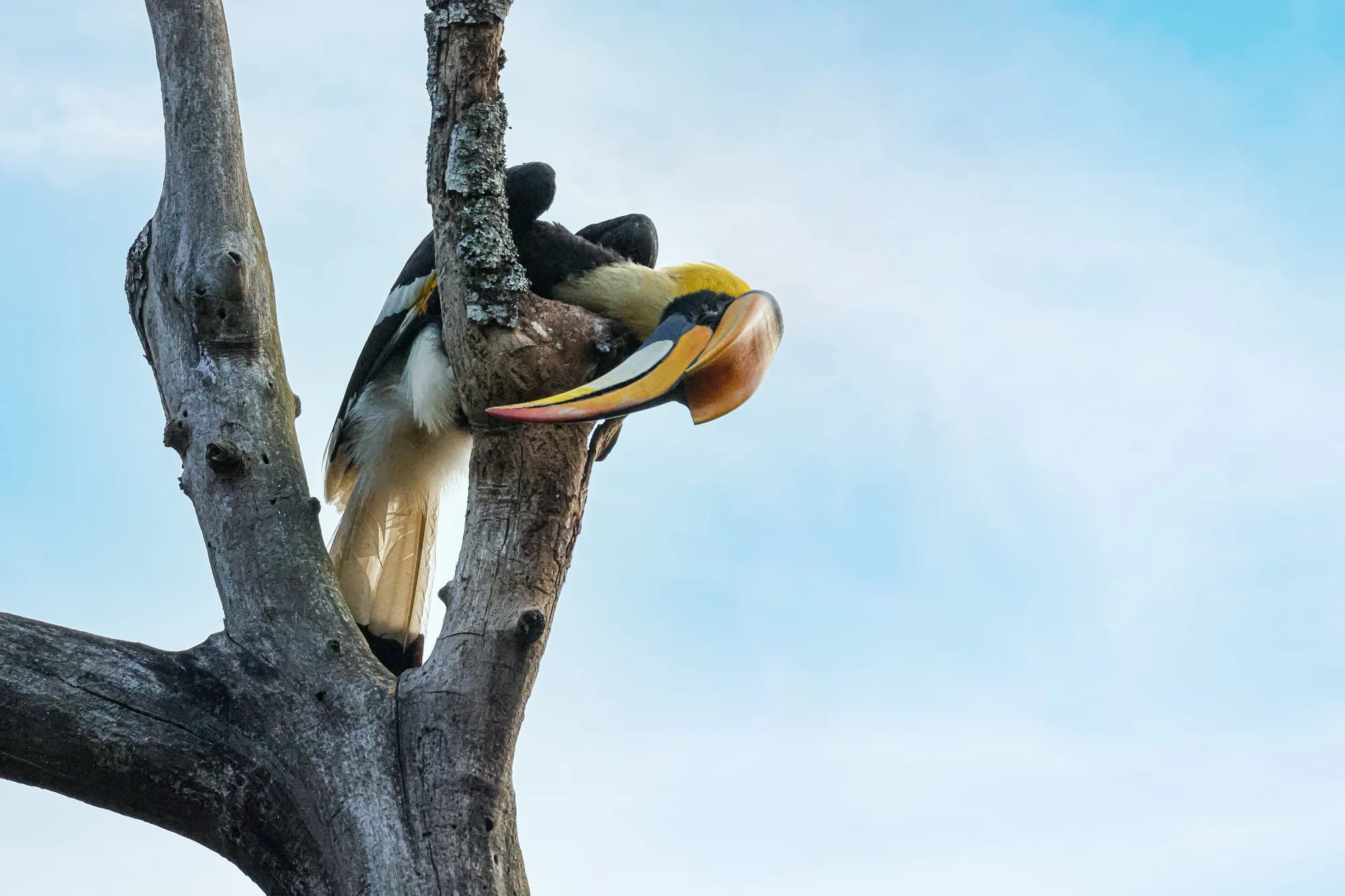
Three reserves, and you hear it first
Great hornbill — the big one
The bird non-birders stop the vehicle for. You hear the wingbeats several hundred metres before you see it, and the nesting behaviour is stranger than anything a mammal in the same forest does.
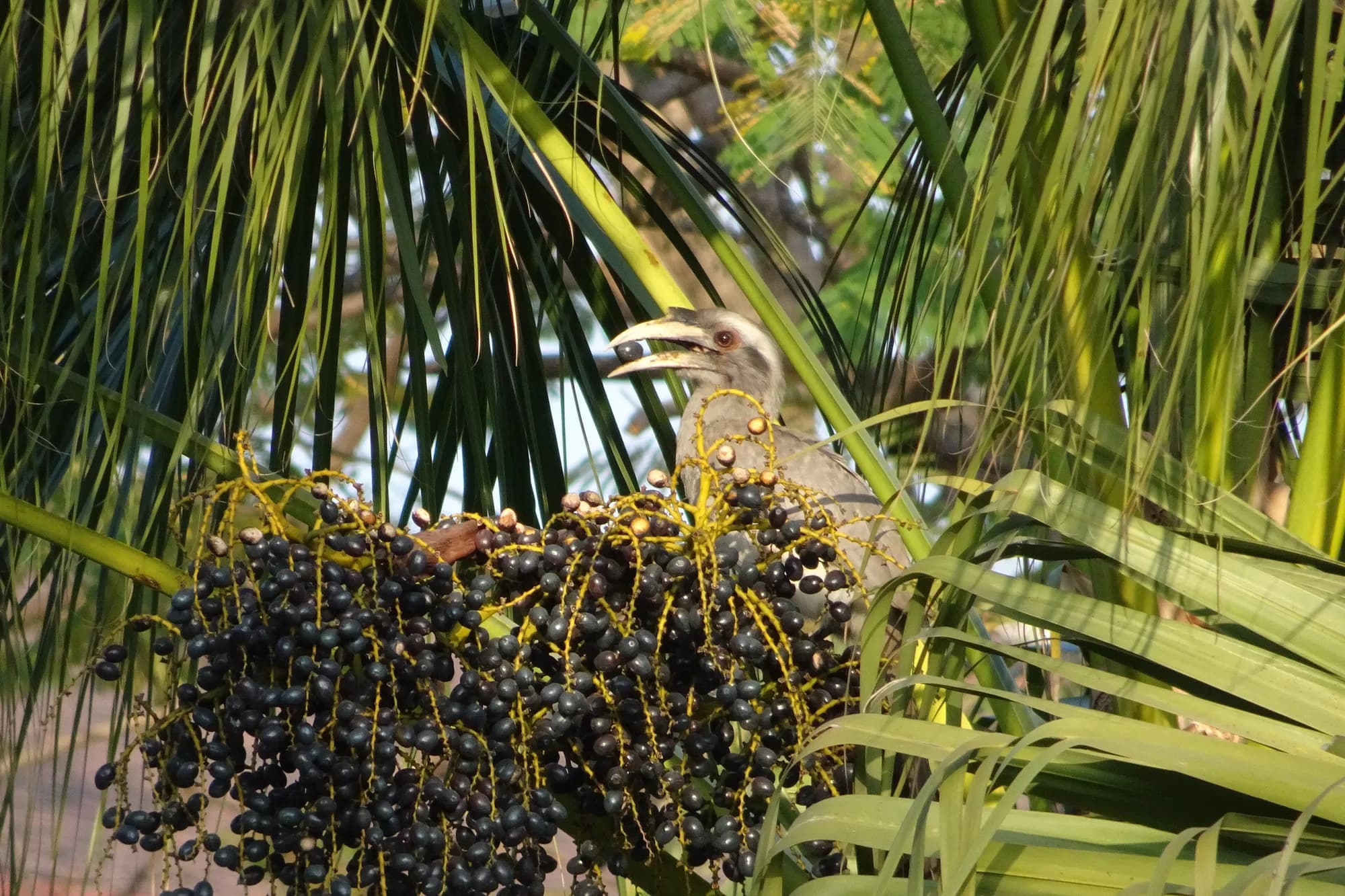
Dry forest, and the edges of towns
Indian grey hornbill — the dry-forest one
The hornbill that turns up on the first morning of almost any north or central Indian safari, and in the trees outside the lodge. Small, grey, undramatic, and the one people actually photograph.
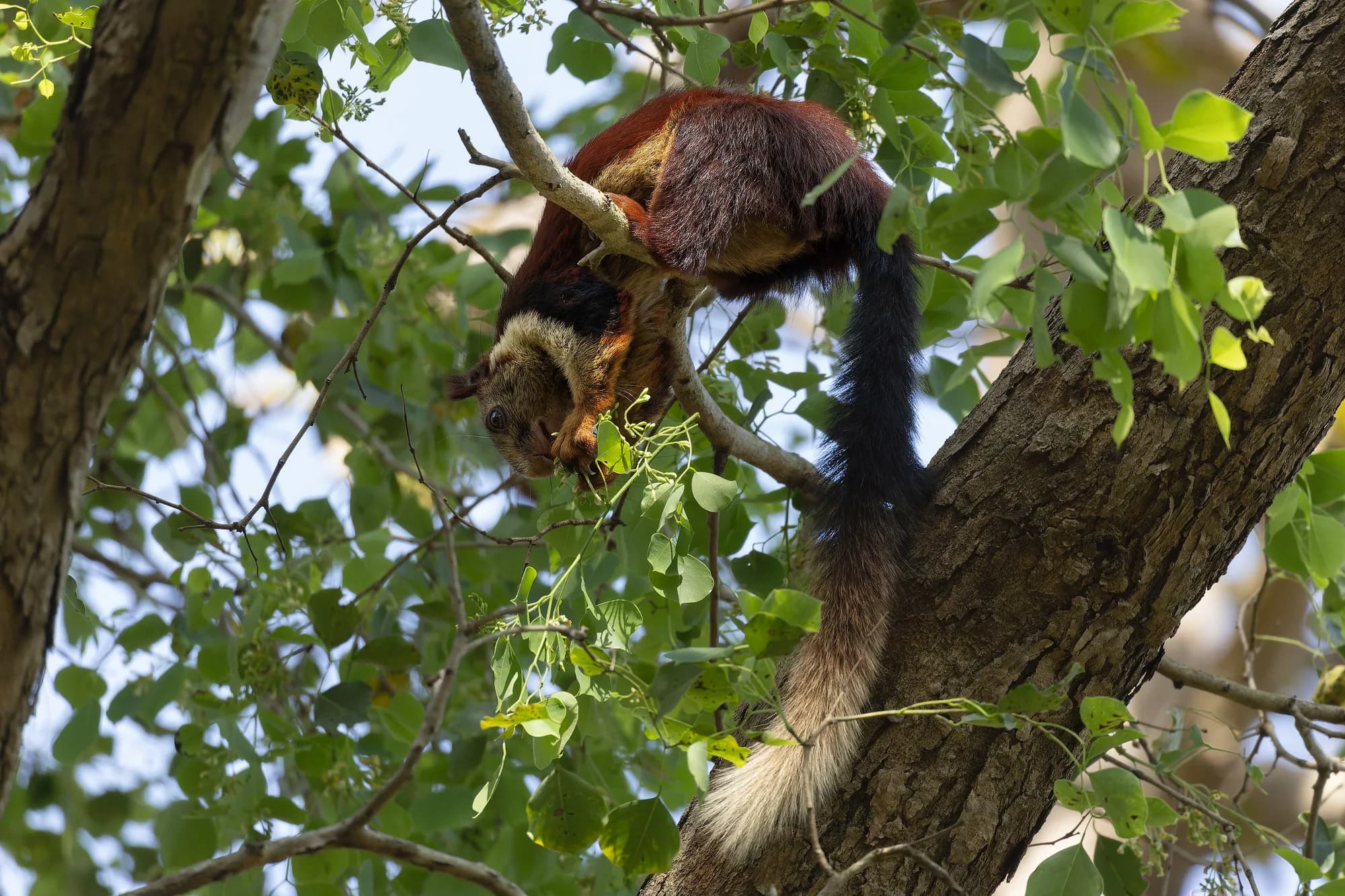
Six reserves, and always overhead
Indian giant squirrel — the same canopy
A squirrel the length of your arm, in maroon and cream, that leaps six metres between trees. The animal that most reliably delights people who came for a tiger and did not get one.
November to February
Birding on an Indian safari
Every reserve here is a birding destination whether or not it is sold as one. Say so when you book.