
Species · Terpsiphone paradisi
Indian paradise flycatcher
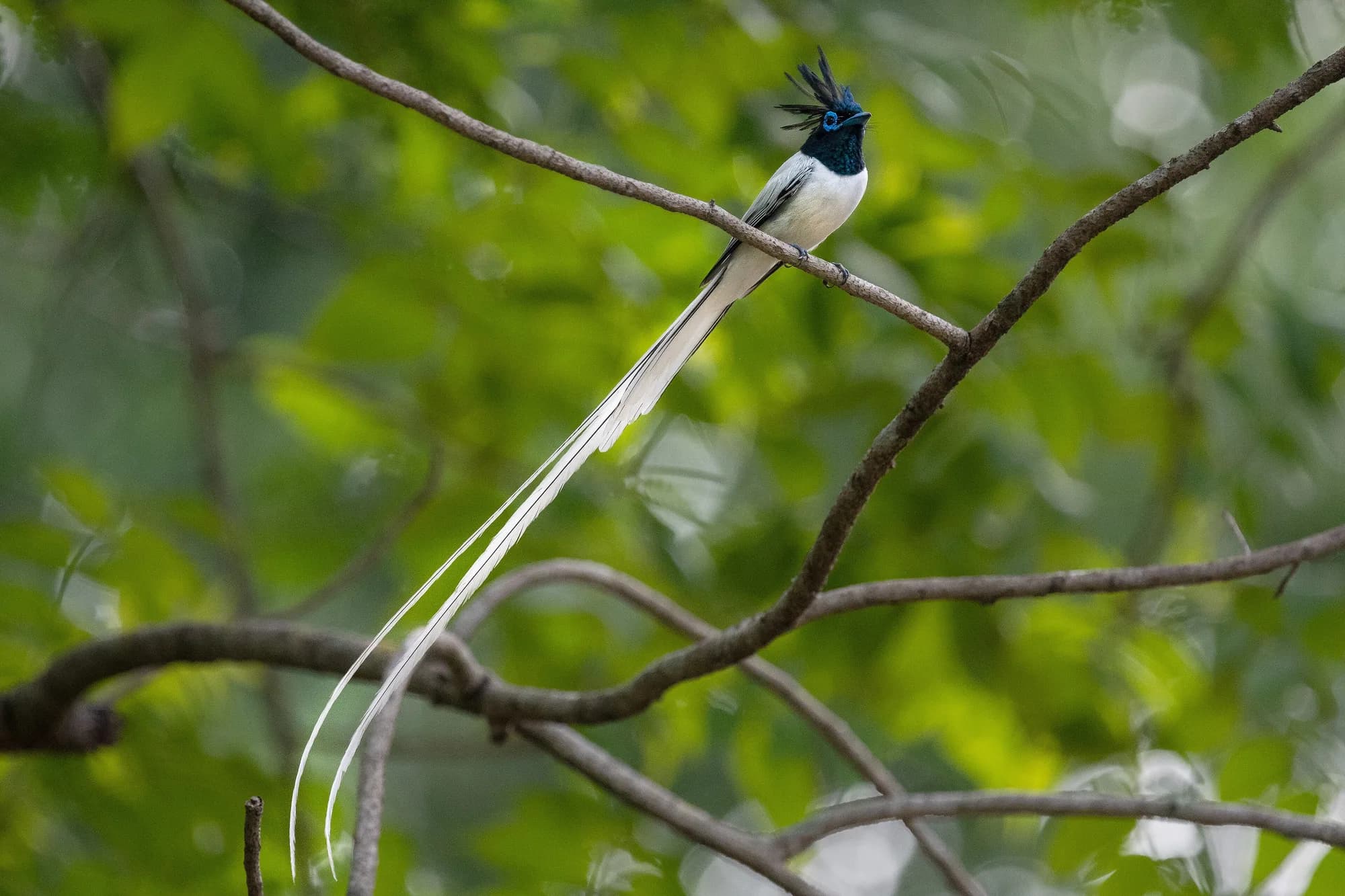
The male trails two tail streamers twice his body length and turns white with age. The most photographed small bird in Indian reserves, and worth the frames.
Also called
- Doodhraj (दूधराज) · Hindi
- Sultana bulbul · Hindi
- Swarga nartak · Marathi
Checked 30 Aug 2026
- Where
- Across most of India
- Best months
- March–August
- Streamers
- Males only
- Note
- Rufous, then white
Shaded forest, riverine strips and well-wooded gardens across most of India, moving seasonally within the country.
Where it is
Where to actually go
Ranked, with the reason each — these are not interchangeable.
Where you will not see one
- Expecting all males to be whiteMales start rufous and become white with age, so a rufous long-tailed bird is a younger male, not a different species.
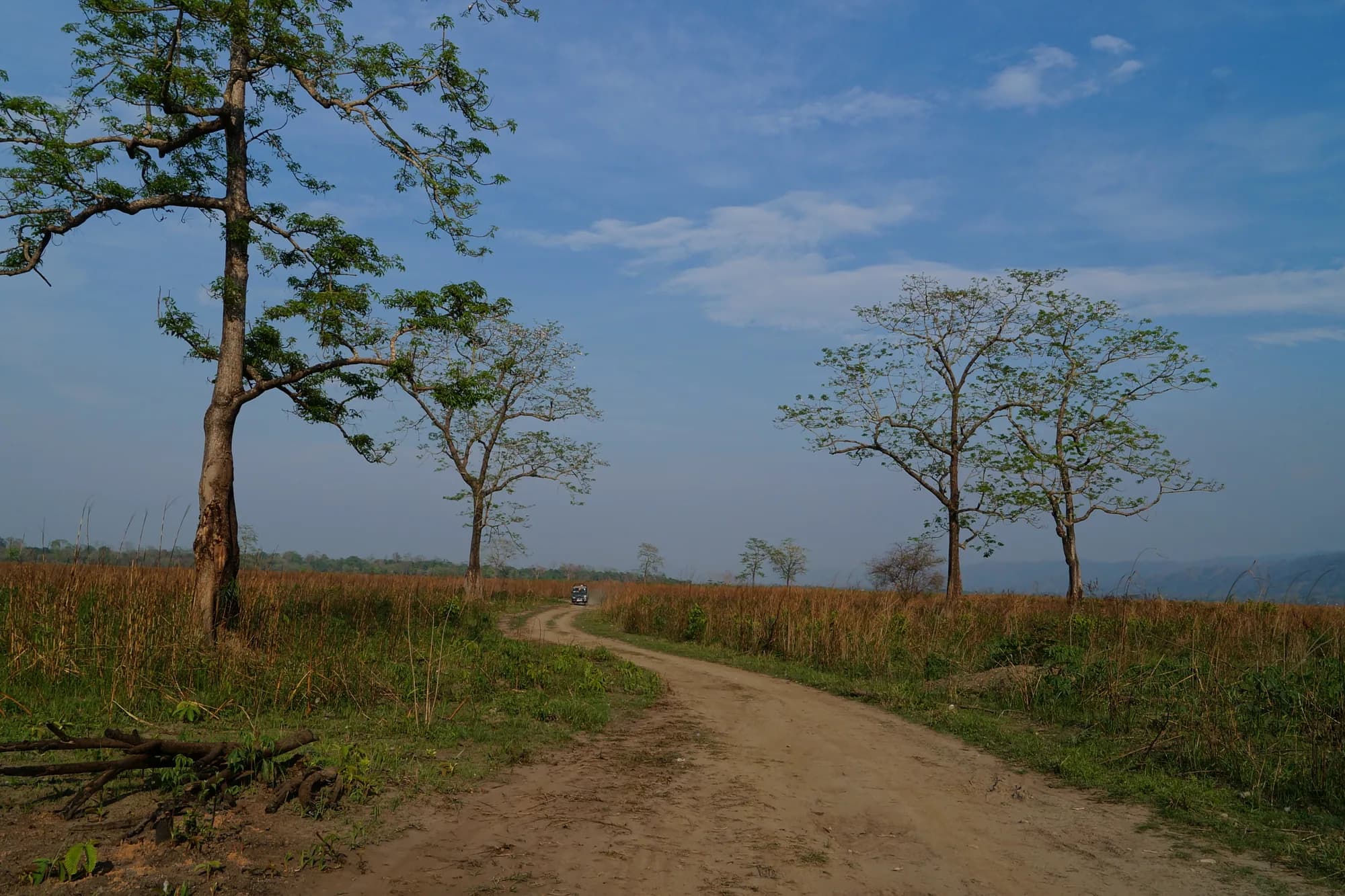
- In the openA shade bird. Look along shaded nalas and riverine strips rather than in meadow or scrub.
When to go
When to go
- J
- F
- M
- A
- M
- J
- J
- A
- S
- O
- N
- D
January: marginal. February: marginal. March: best. April: best. May: best. June: best. July: best. August: best. September: good. October: good. November: marginal. December: marginal.
Through the day
- Dawn
- Morning
- Midday
- Afternoon
- Dusk
- Night
Dawn: most active. Morning: most active. Midday: active. Afternoon: active. Dusk: most active. Night: not normally seen.
What it looks like in the field
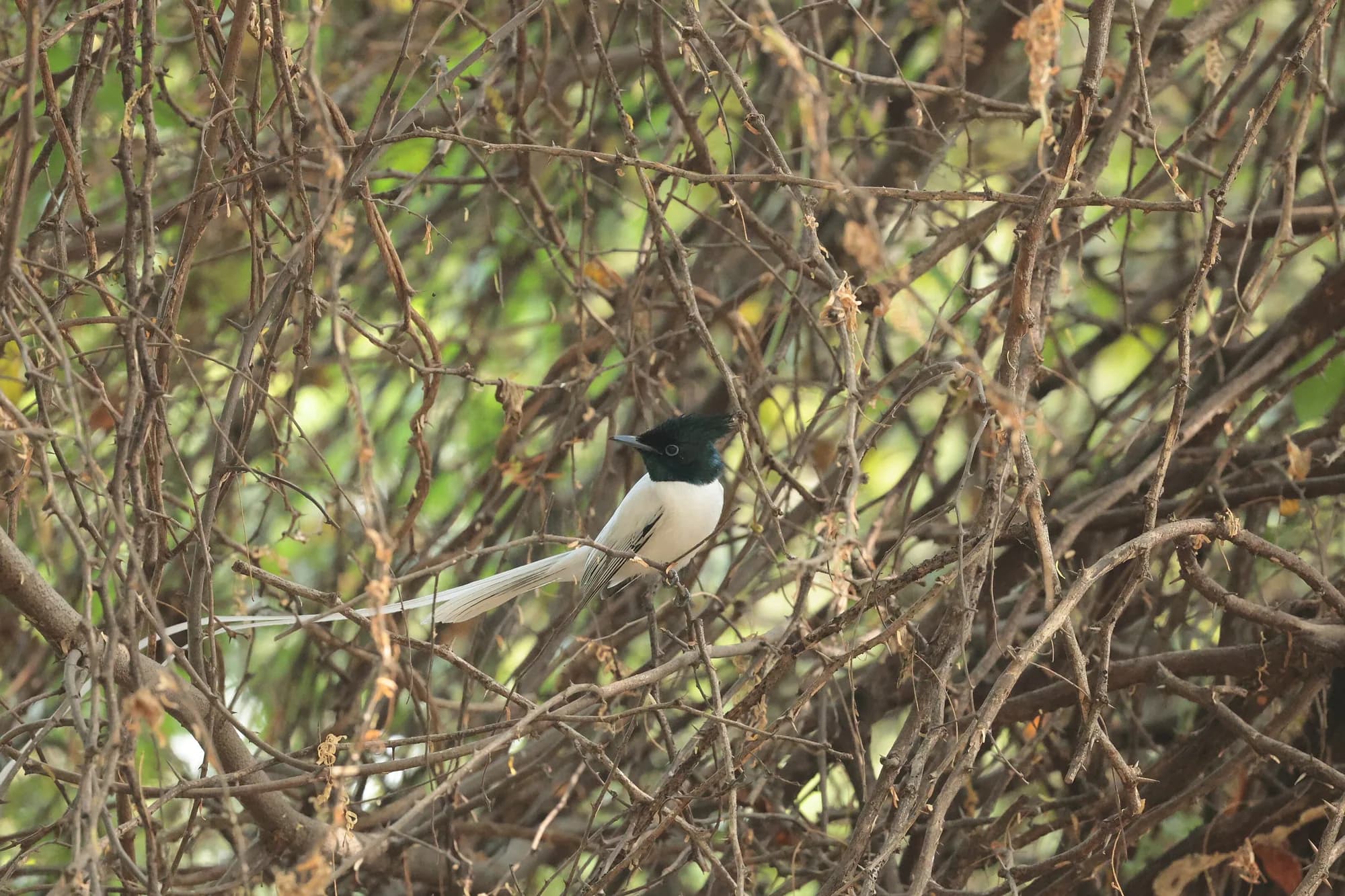
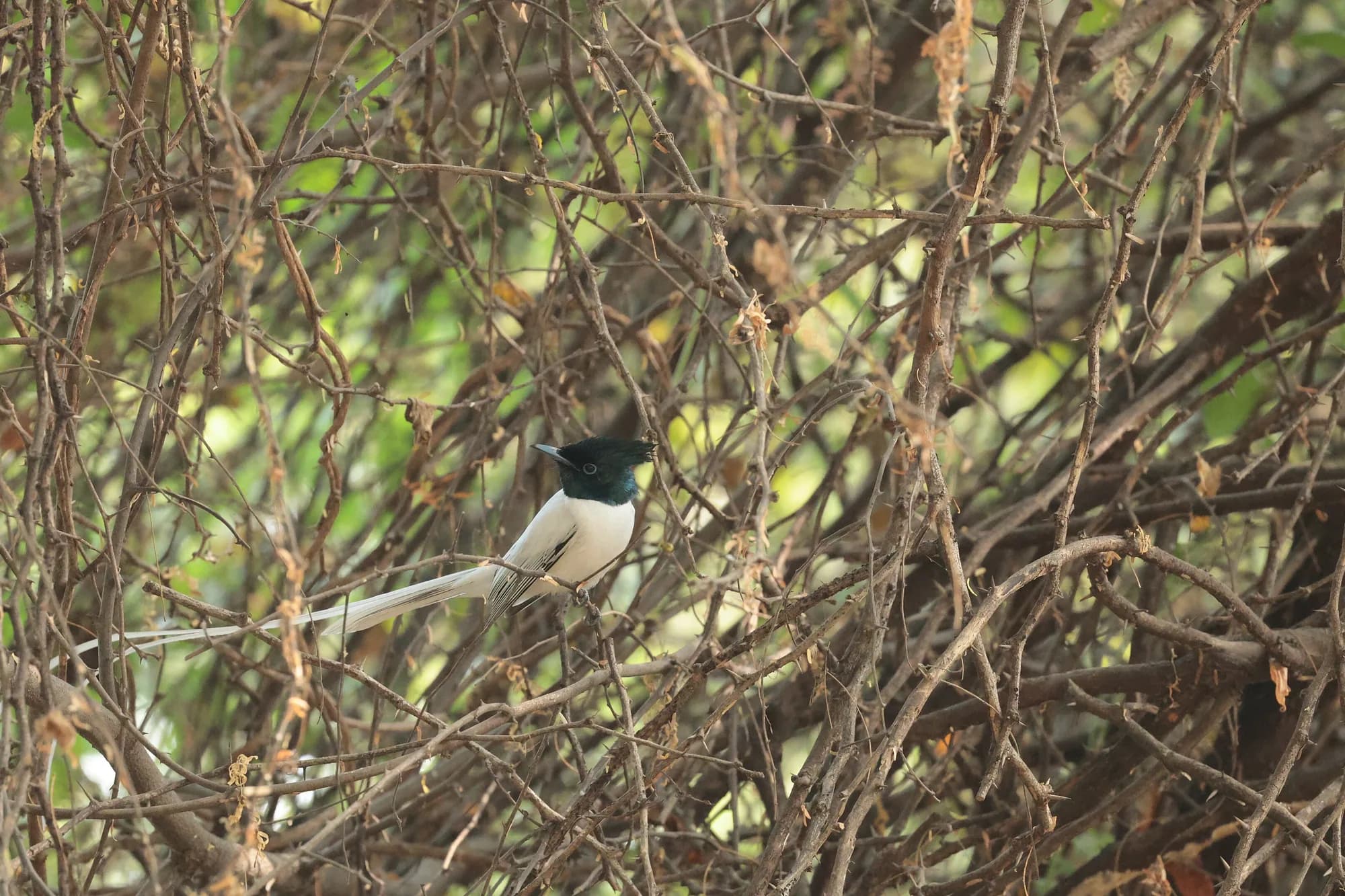
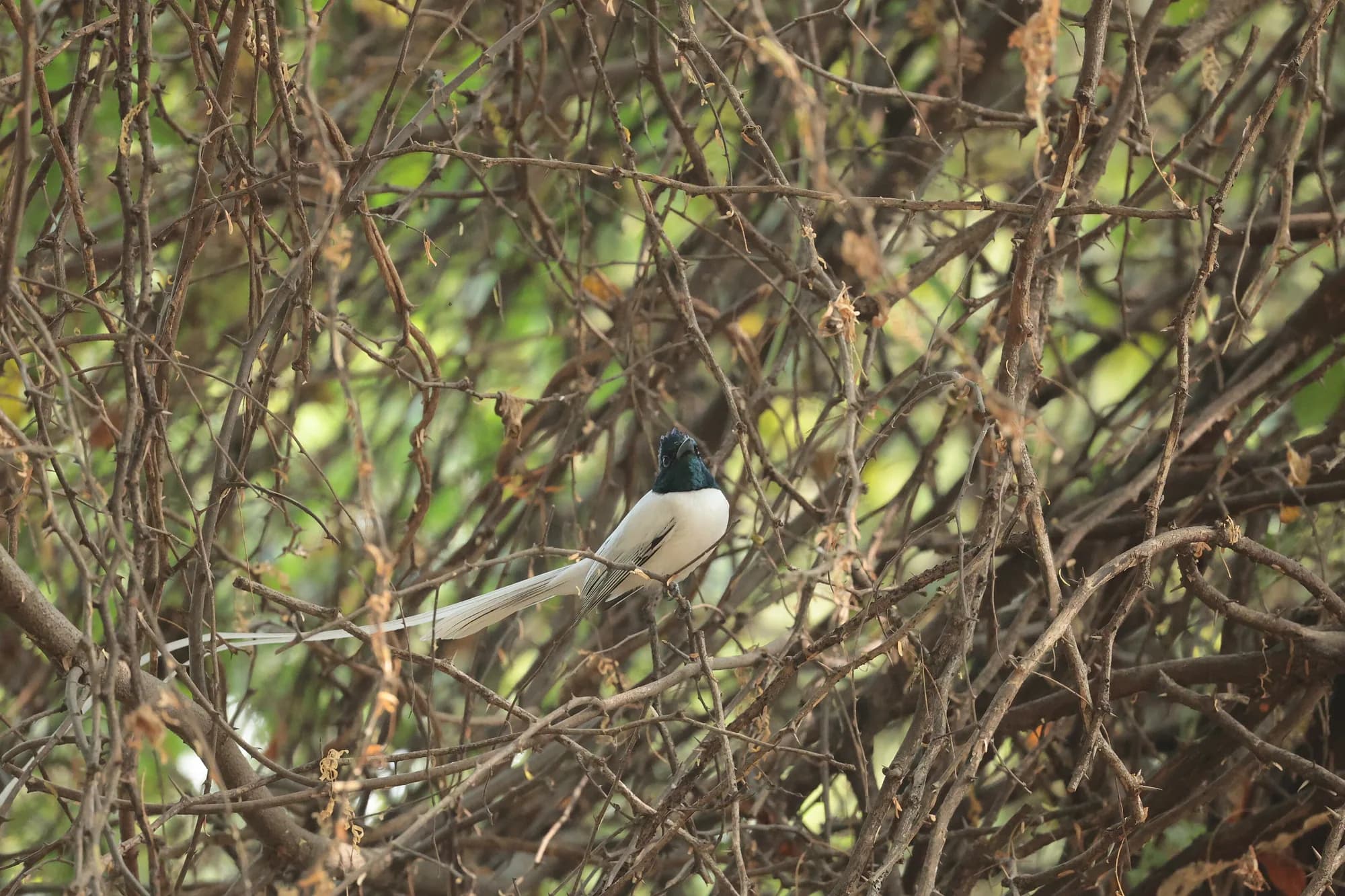
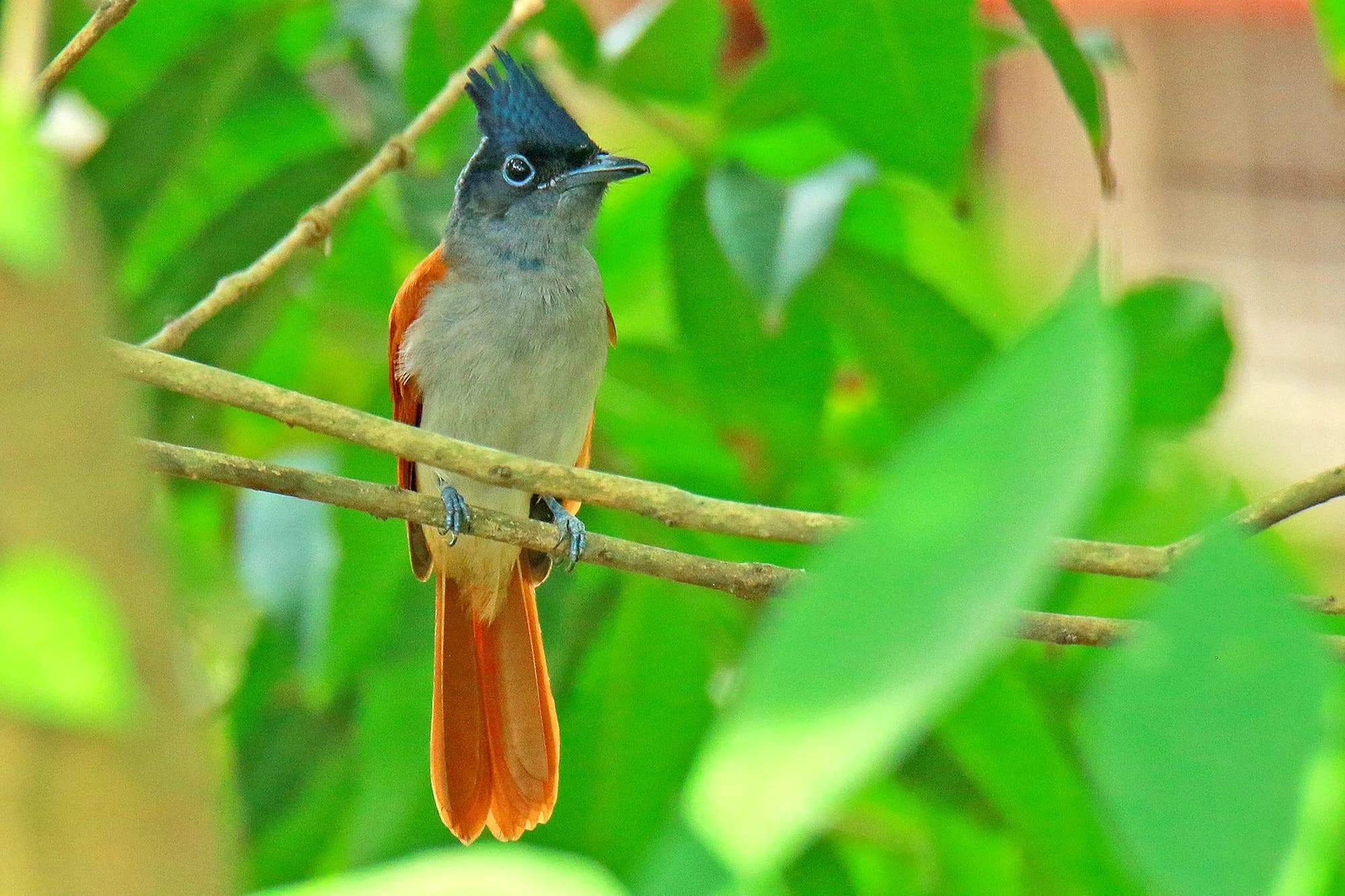
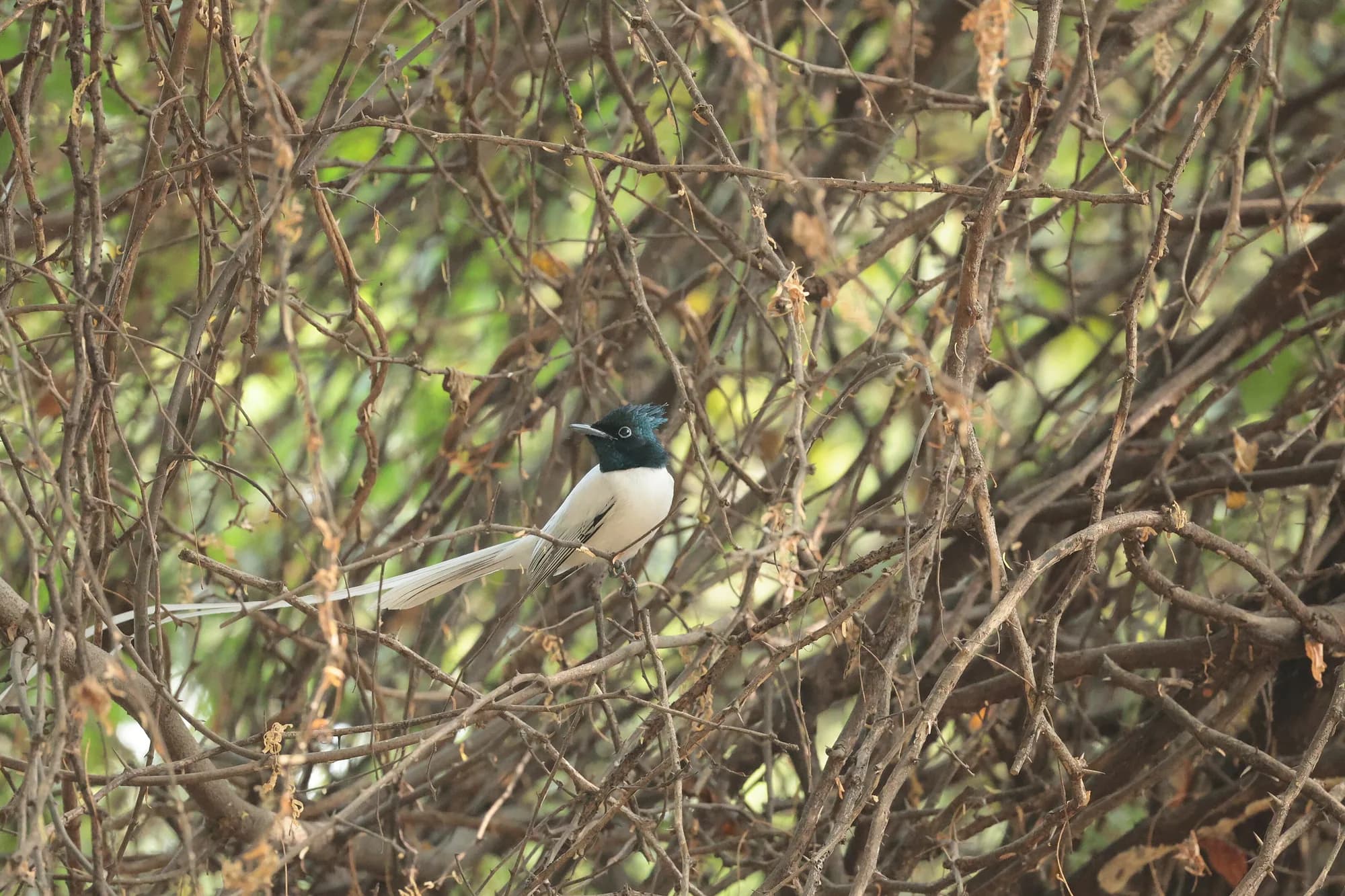
Photographs of Indian paradise flycatcher in the wild, in Indian reserves. We publish no captive, baited or digitally composited images, and no photograph whose licence we cannot show.
What a sighting is actually like
A white ribbon crossing a shaded gap, faster than you can follow. Then the bird lands, the streamers settle, and it is briefly the most improbable thing in the forest.
Status and protection
Status and protection
- IUCN Red List
- Least Concern
- Population trend
- → Stable
- Wildlife Protection Act 1972
- Schedule II
- CITES
- Not listed in the CITES Appendices
Species-level assessment for Terpsiphone paradisi; binomial matches exactly. Assessor BirdLife International 2024, last assessed 12 June 2024.
Assessed 2024 · IUCN Red List assessment
What to book to see one
What you would be booking
- How it is seen
- Any drive or walk on shaded forest tracks.
- Drives to book
- None specific. Ask the guide to slow along wooded watercourses.
Females and young males are rufous with no streamers and are constantly logged as a different bird. One species, three appearances.
Kanha — the park in fullQuestions people ask
Why are some rufous and some white?
When are the tail streamers longest?
Where will I see one?
Read next
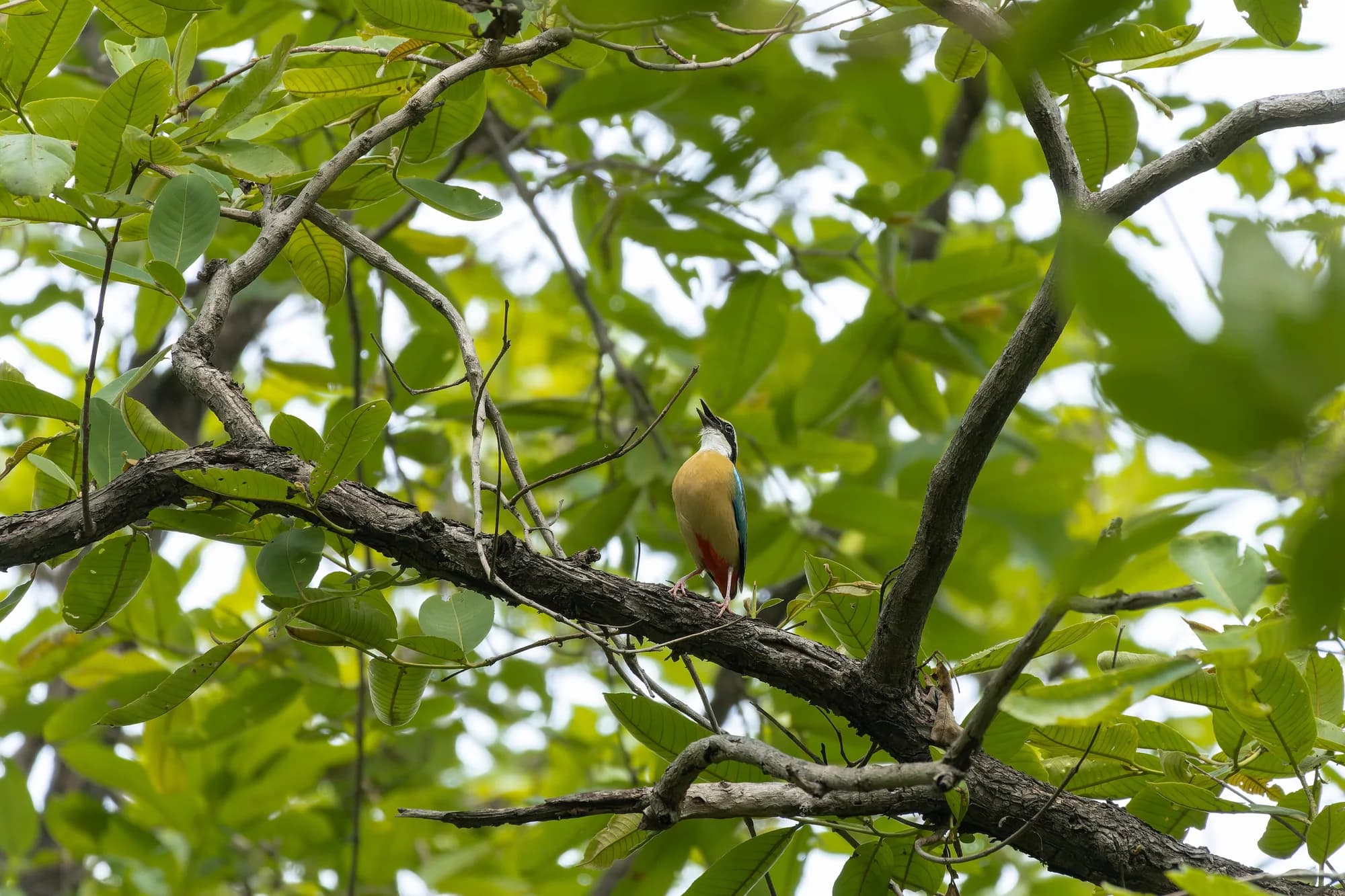
Nine colours, two notes, and a monsoon arrival
Indian pitta — the other forest jewel
A ground bird in nine colours that most people hear and never see. The two-note dusk call is one of the defining sounds of the Indian monsoon.
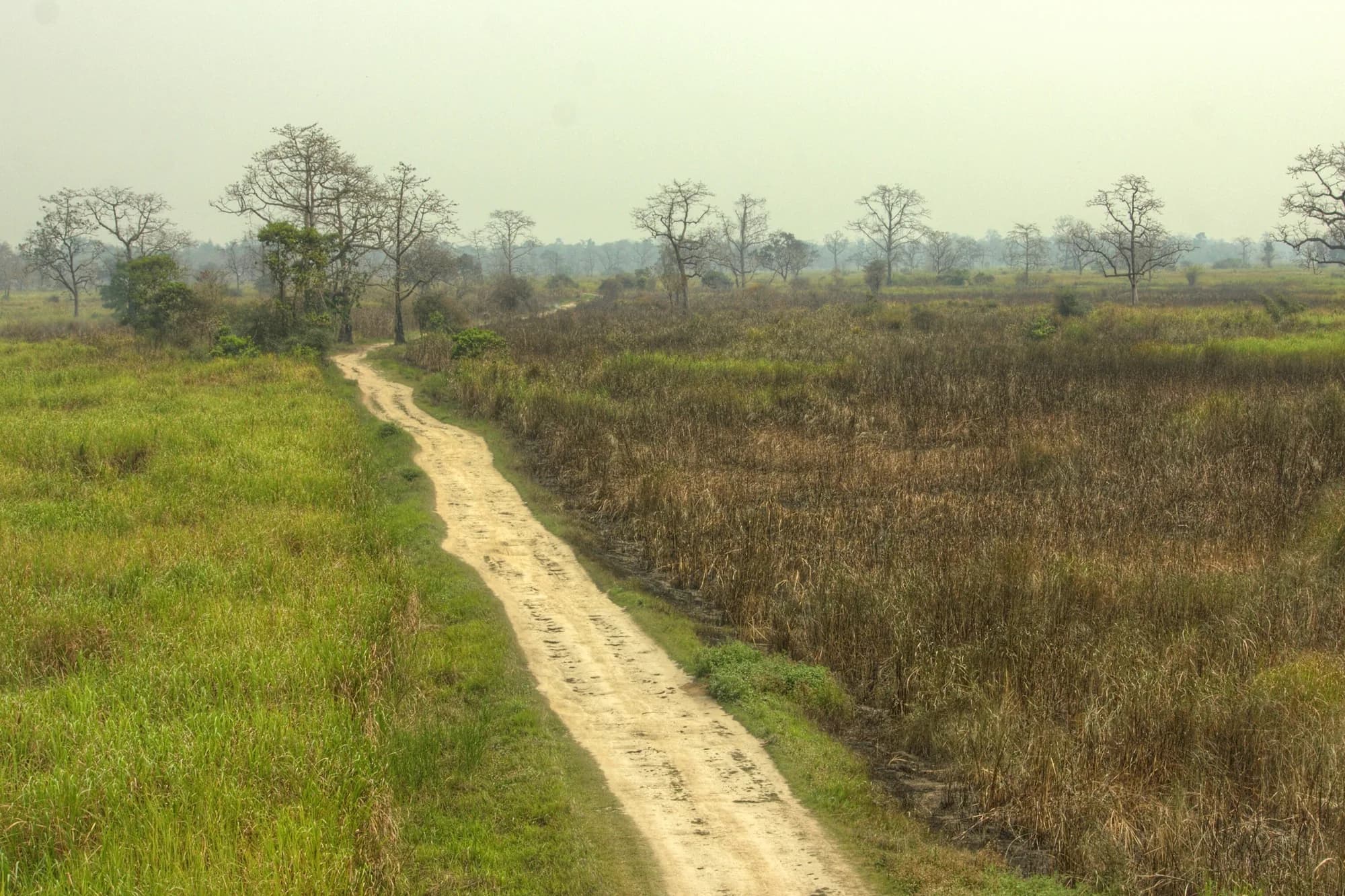
Madhya Pradesh
Kanha — the park in full
Sal forest and wide meadows, larger and calmer than Bandhavgarh. Repays four or five drives far more than two.
November to February
Birding on an Indian safari
Every reserve here is a birding destination whether or not it is sold as one. Say so when you book.
Every reserve, and nobody names it
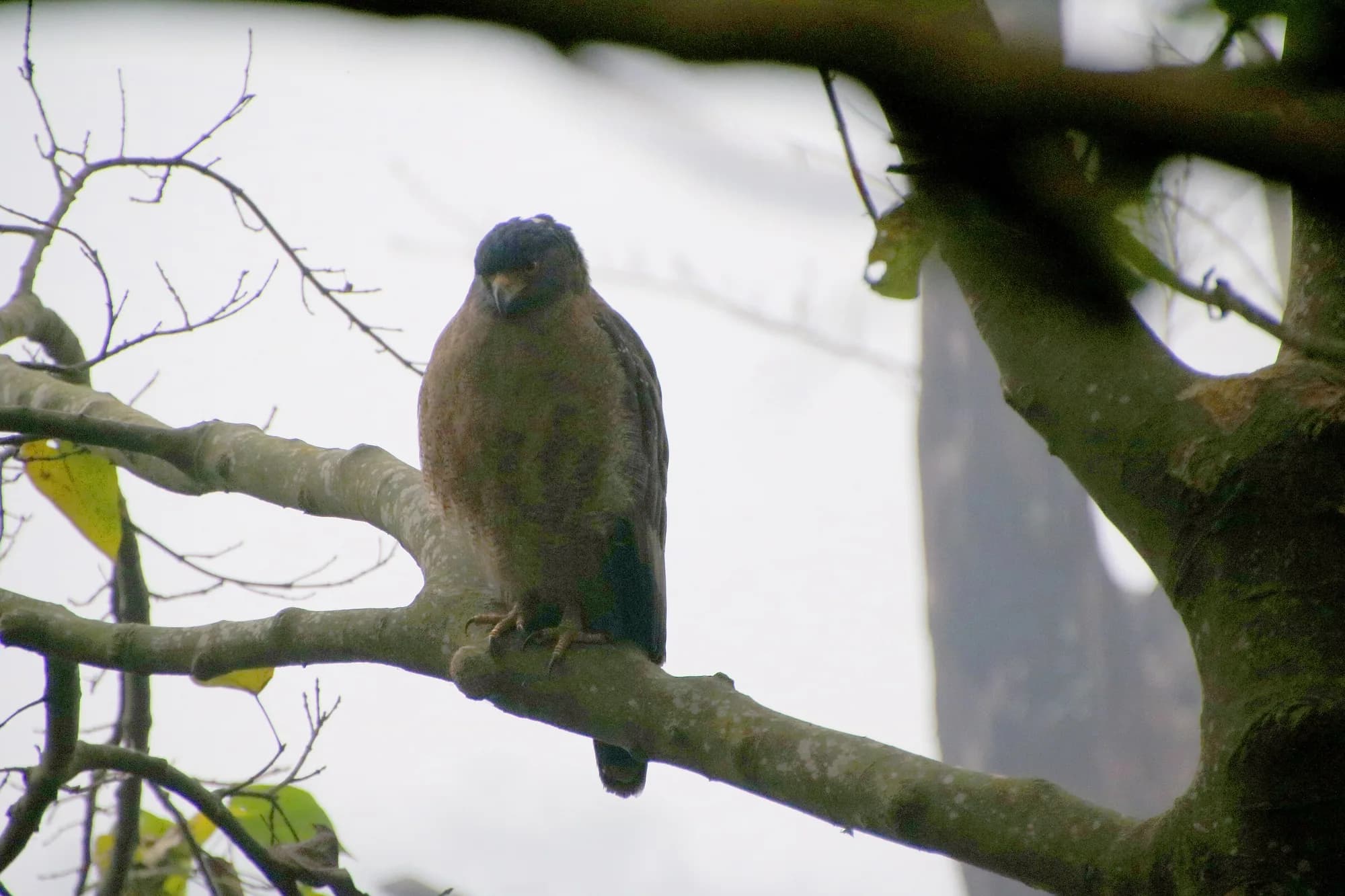
Crested serpent eagle — the common raptor
The raptor every visitor photographs and nobody can identify. Its whistling call is part of the soundtrack of an Indian forest.