
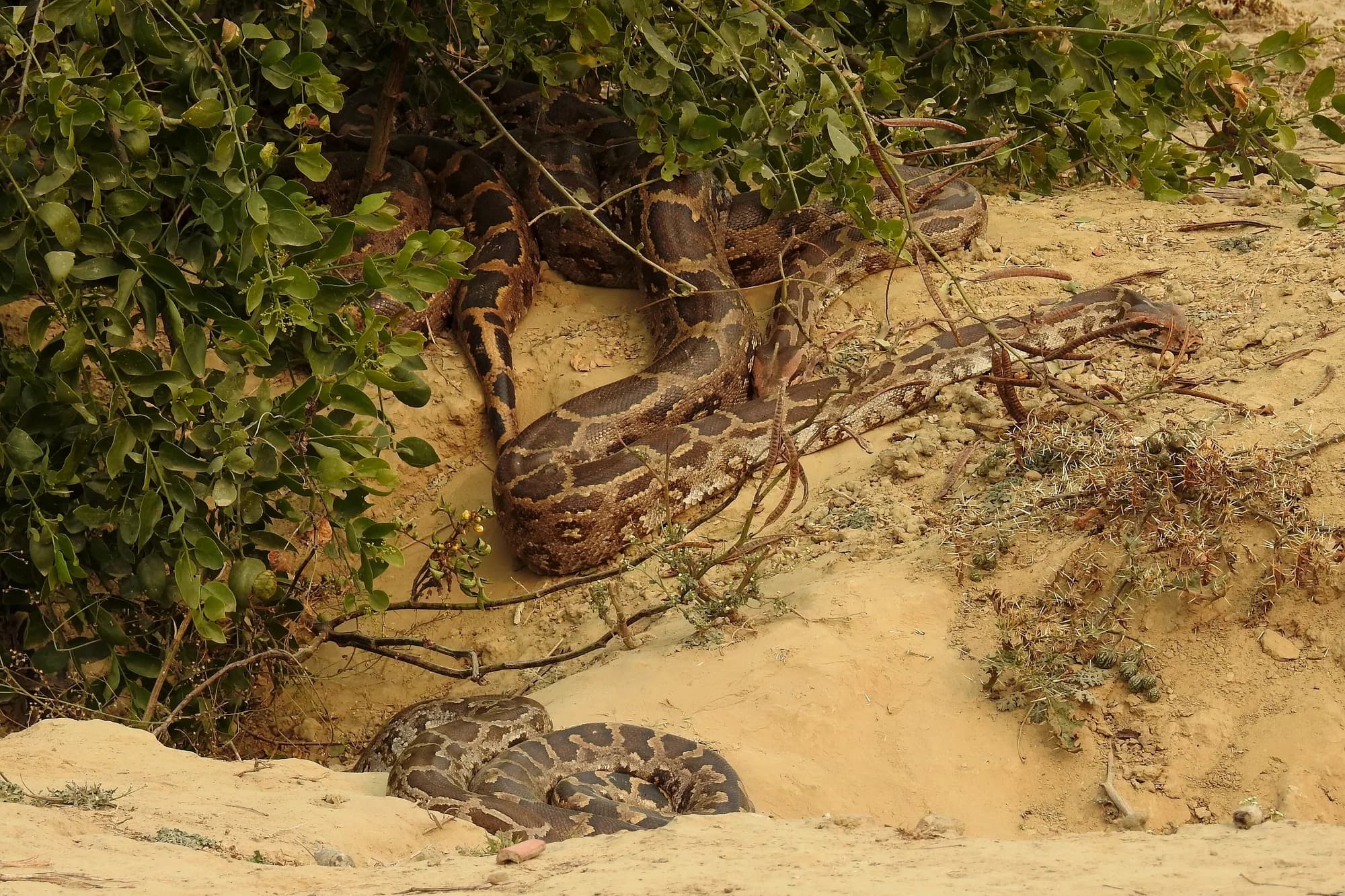
Species · Python molurus
Indian rock python
A heavy-bodied constrictor up to four metres, and one of the few large snakes in India you can plan to see — on cold mornings, at known burrows.
Also called
- Ajgar (अजगर) · Hindi
- Ajgar · Marathi
- Ajgar · Gujarati
Checked 30 Aug 2026
- Where
- Across most of India
- Best months
- December–February
- Seen
- Basking, on cold mornings
- Length
- Up to about 4 m
Grassland, scrub, forest and wetland edge across most of India, using porcupine and monitor burrows to shelter and to overwinter.
Where it is
Where to actually go
Ranked, with the reason each — these are not interchangeable.
- 01BandhavgarhMadhya PradeshBurrows in the grassland areas produce reliable winter basking, and the guides know which ones are in use.December to February, mid-morning
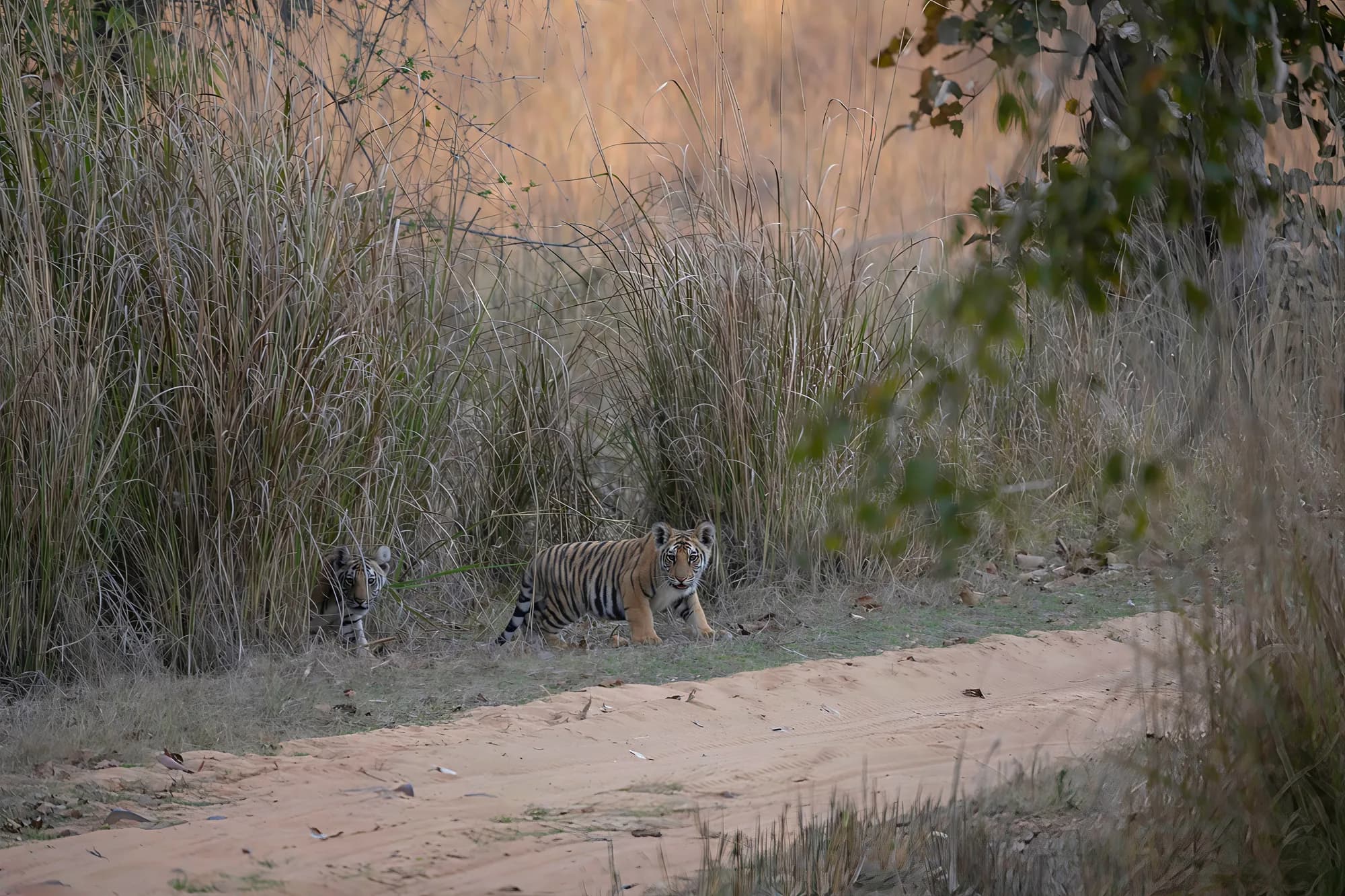
- 02SatpuraMadhya PradeshRocky and riverine ground, and the chance to walk rather than drive.On foot
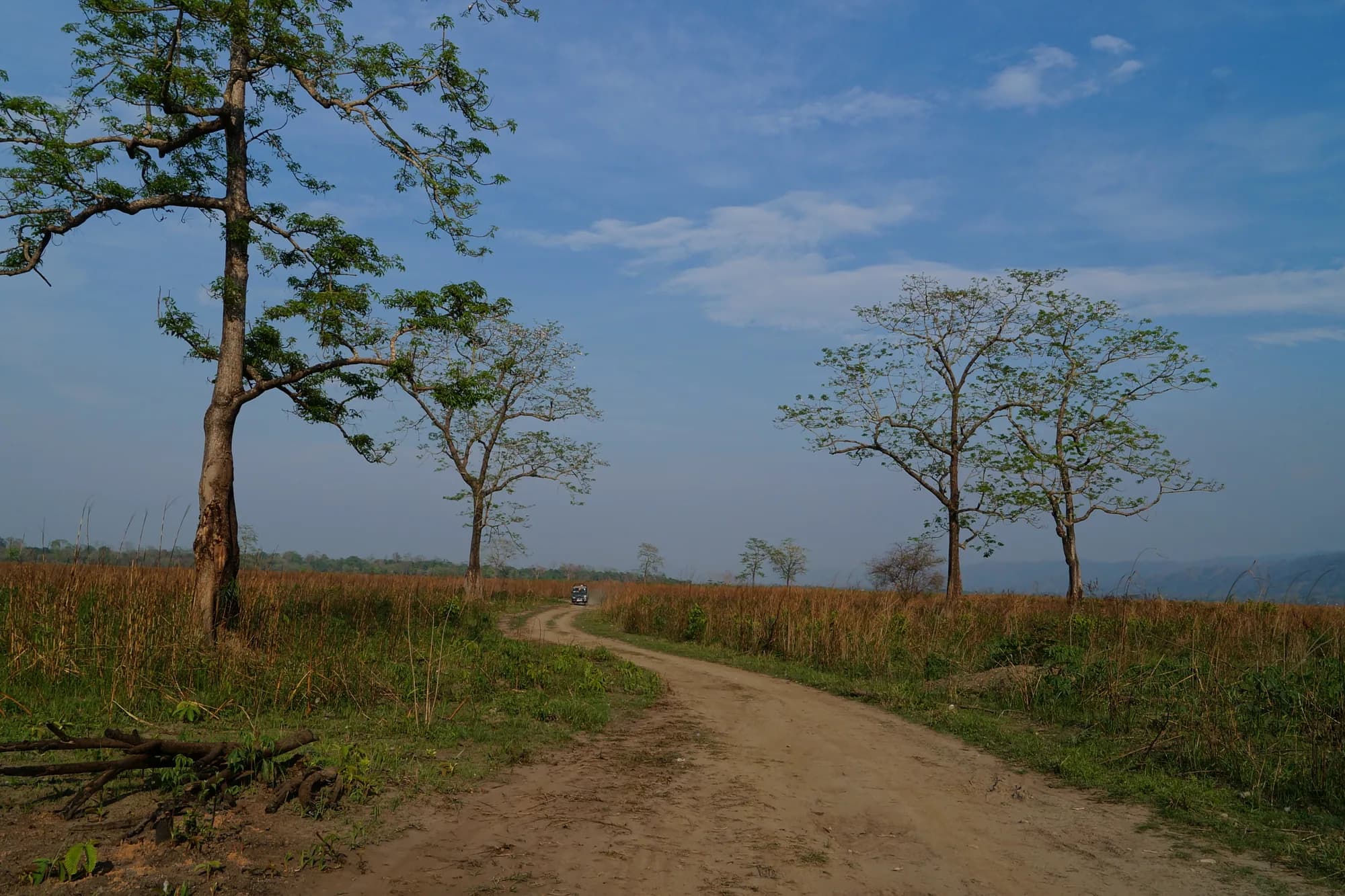
- 03CorbettUttarakhandRiverine grassland and the chaurs.Winter mornings
Where you will not see one
- In summerEffectively invisible. They have no reason to bask when it is already hot, so the whole opportunity is the cold months.
- Confused with a rat snakeA rat snake is slim, fast and often two metres or more. A python is enormously thicker for its length and moves slowly in a straight line.
When to go
When to go
- J
- F
- M
- A
- M
- J
- J
- A
- S
- O
- N
- D
January: best. February: best. March: good. April: marginal. May: marginal. June: marginal. July: closed or unproductive. August: closed or unproductive. September: closed or unproductive. October: marginal. November: good. December: best.
Through the day
- Dawn
- Morning
- Midday
- Afternoon
- Dusk
- Night
Dawn: usually resting. Morning: most active. Midday: most active. Afternoon: active. Dusk: usually resting. Night: usually resting.
What it looks like in the field
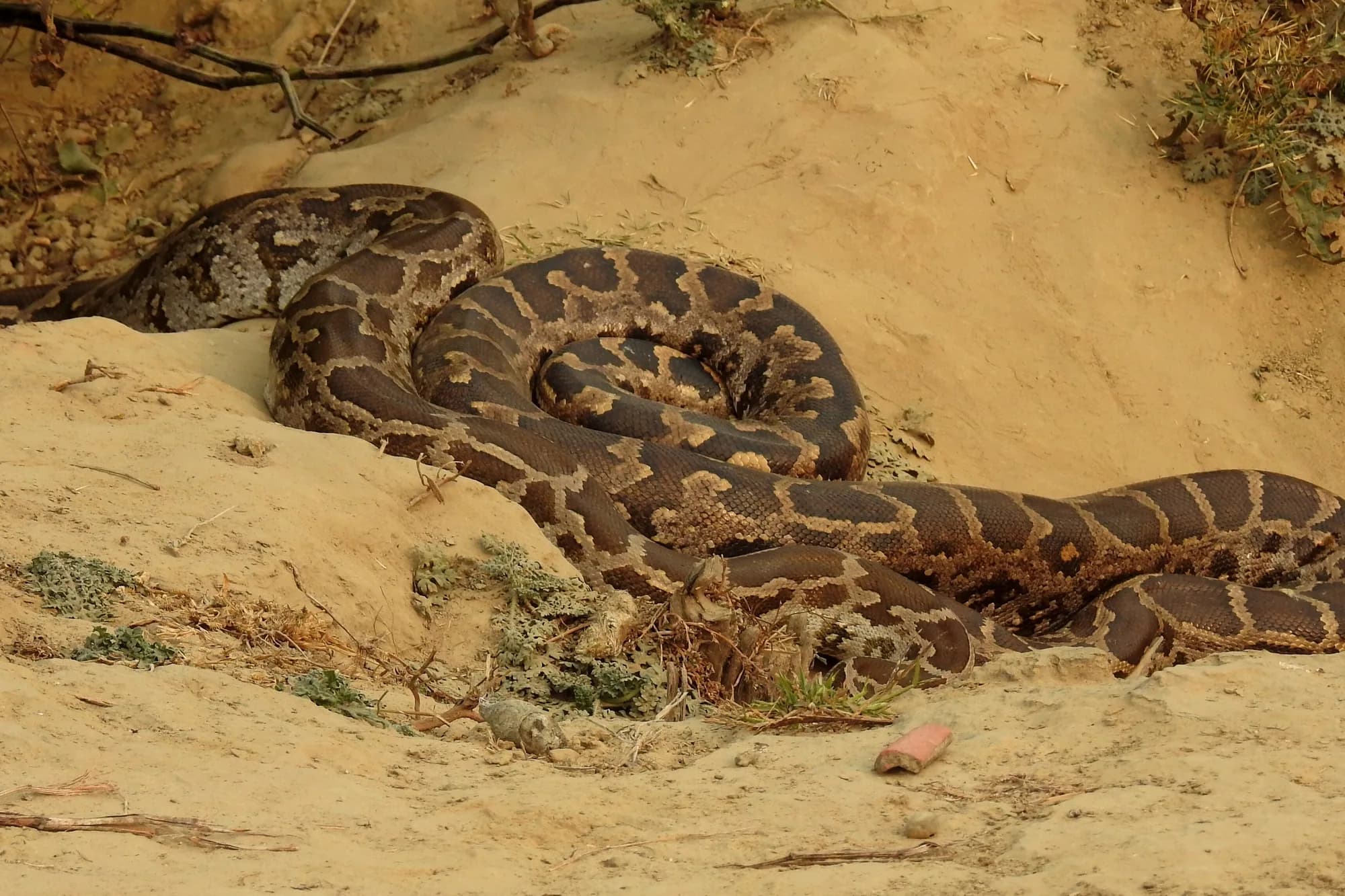
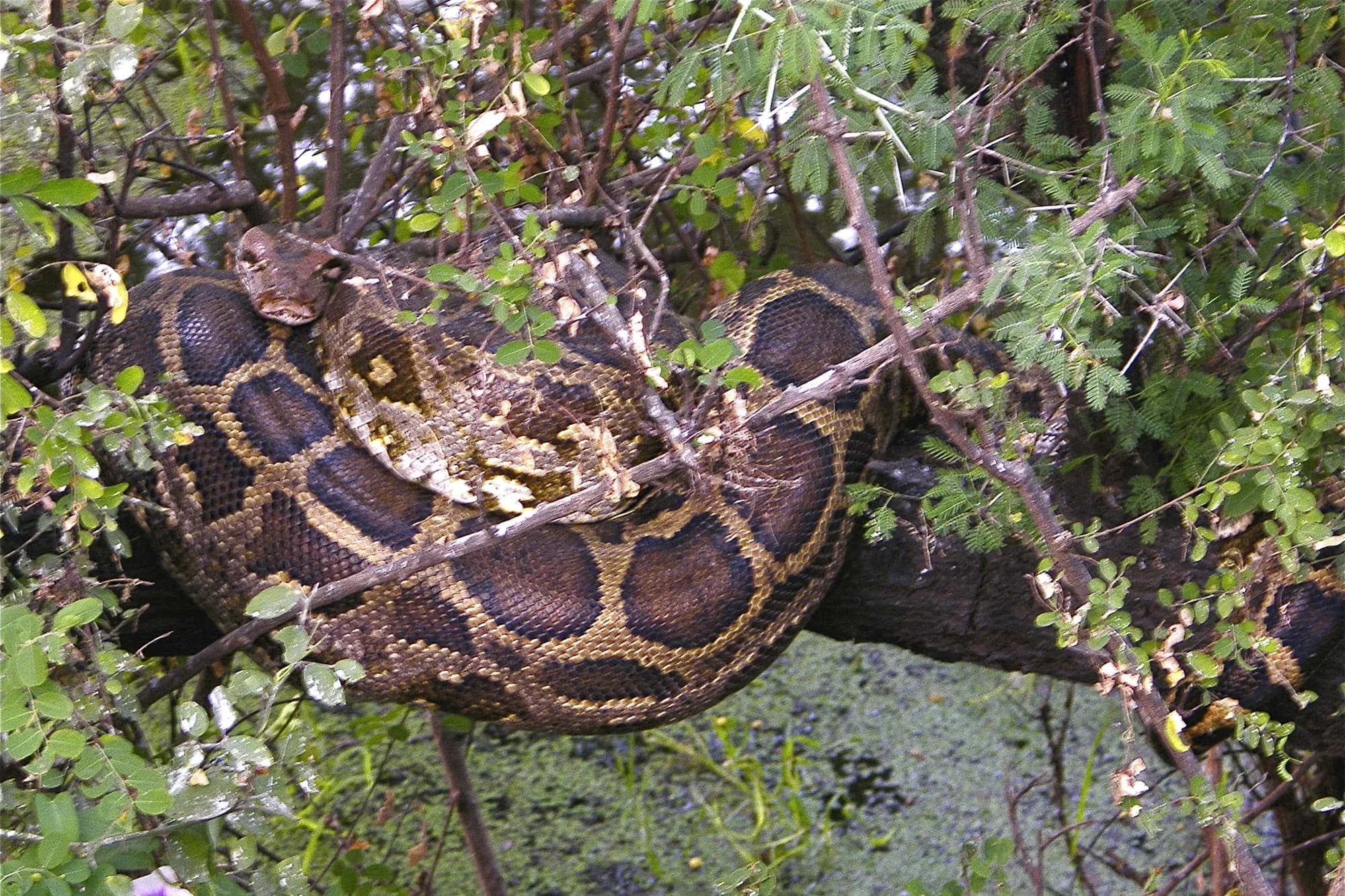
Photographs of Indian rock python in the wild, in Indian reserves. We publish no captive, baited or digitally composited images, and no photograph whose licence we cannot show.
What a sighting is actually like
Entirely static. A great deal of coiled snake at a burrow mouth, not moving at all, and usually much thicker than anyone expects. There is no drama; the interest is the sheer mass of the animal.
Status and protection
Status and protection
- IUCN Red List
- Near Threatened
- Population trend
- ↓ Decreasing
- Wildlife Protection Act 1972
- Schedule I
- CITES
- Appendix I
Species-level assessment for Python molurus; binomial matches exactly. Listed as Near Threatened under criteria A2d. Note this is the post-split P. molurus - the Burmese python P.
Assessed 2019 · IUCN Red List assessment
What to book to see one
What you would be booking
- How it is seen
- Any jeep drive on a cold clear morning. Ask your guide which burrows are being used.
- Drives to book
- Two or three winter mornings. Guides at Bandhavgarh and Keoladeo know individual burrows.
Keoladeo in Rajasthan is the classic site for this — pythons basking at burrow mouths along the walking tracks, at close range, in full view. It is not on this site's park list, but it is the best python watching in India.
Bandhavgarh — the park in fullQuestions people ask
When can I see a rock python?
How big do they get?
Where is the best place?
Read next
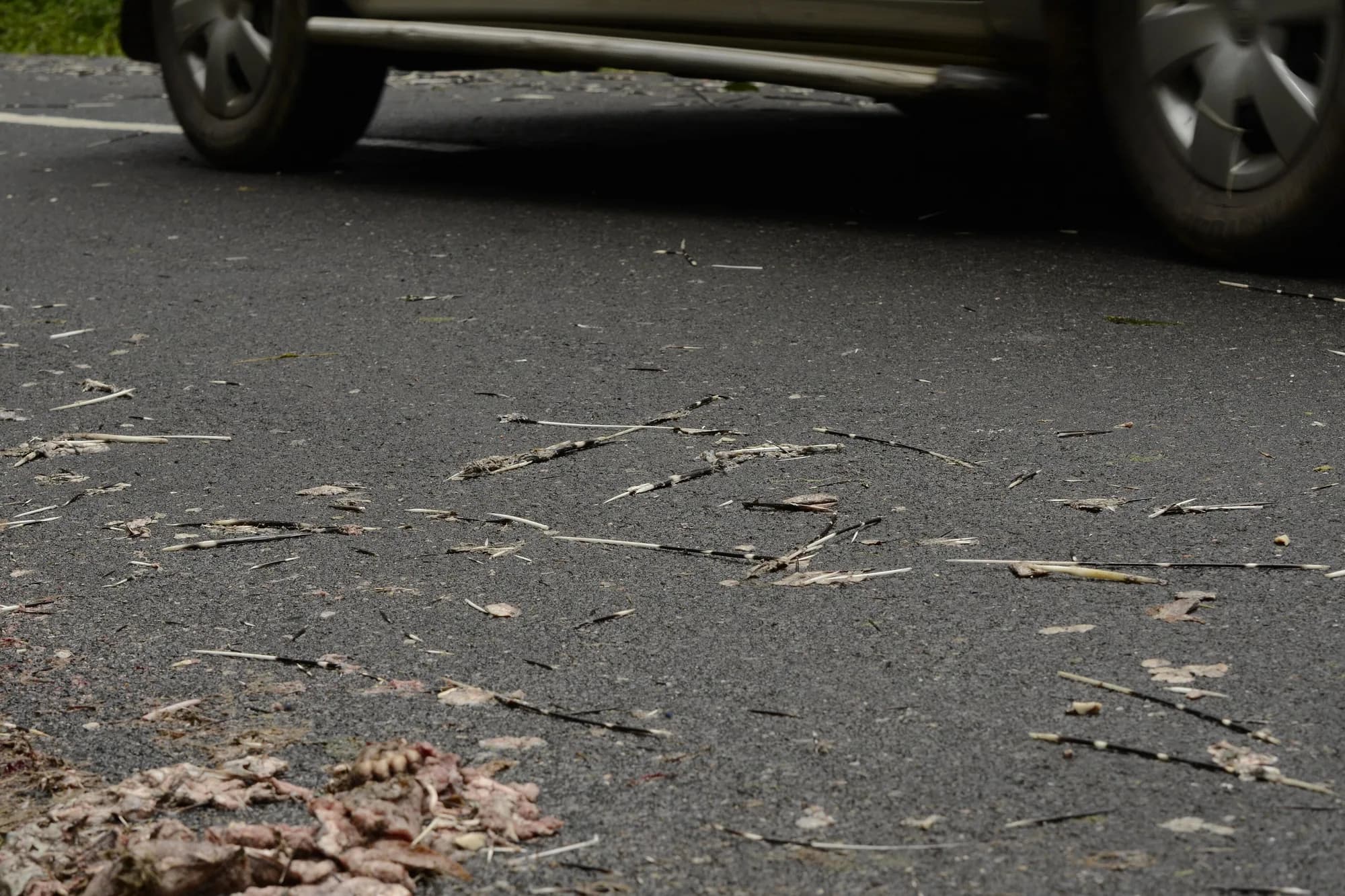
Quills on the track, animal rarely
Porcupine — whose burrows they use
You will find the quills long before you find the animal. A large nocturnal rodent that walks off tigers, and the source of the most commonly picked-up field sign in India.
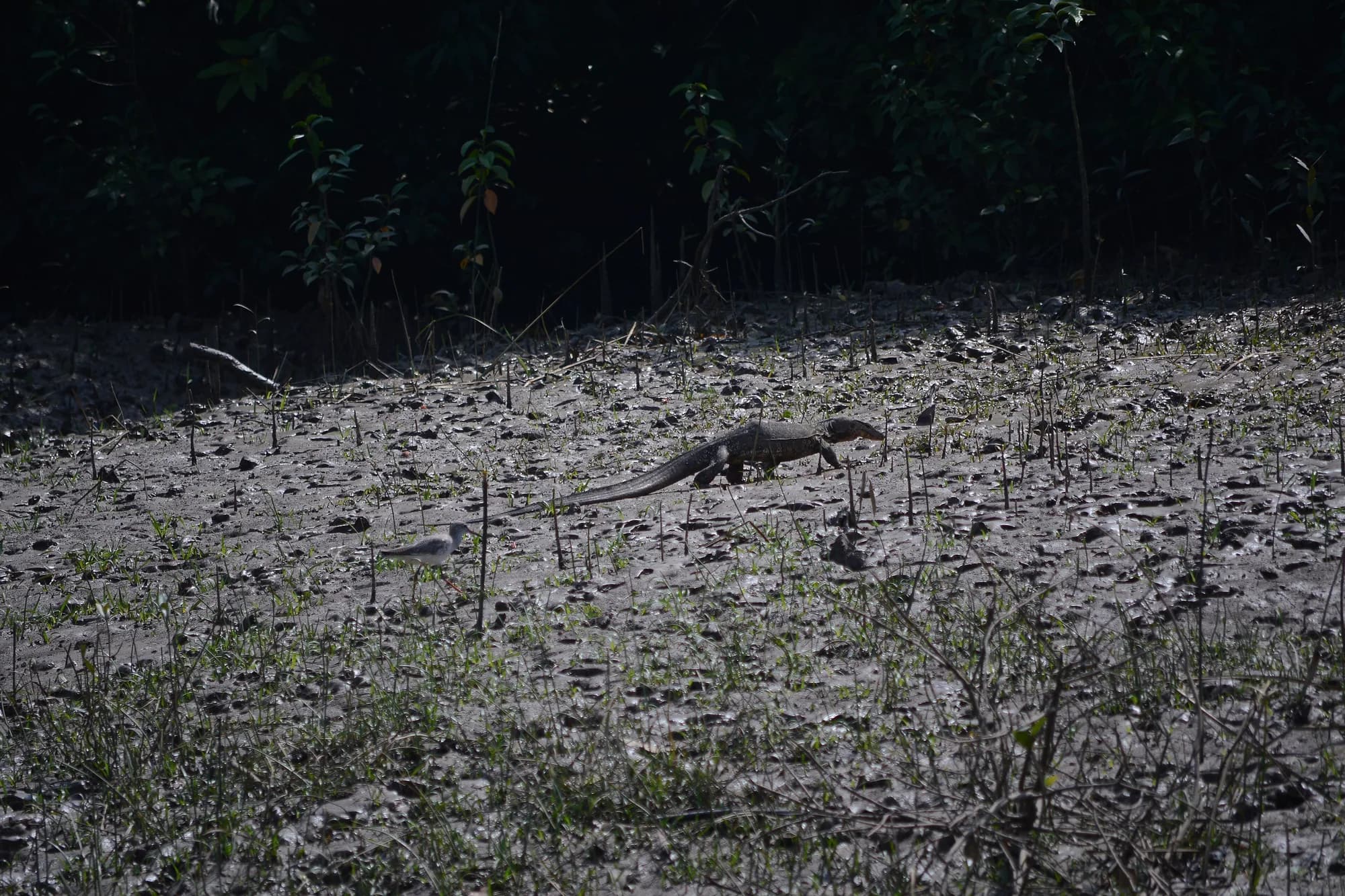
Crossing the track, and nobody knows what it is
Bengal monitor — the other burrow user
The large lizard everyone sees crossing a forest road and nobody can name. Up to a metre and a half, a strong climber, and entirely harmless.
Madhya Pradesh
Bandhavgarh — the park in full
The highest tiger density in India in a compact area — which is why it is the reserve most often recommended for a first trip.
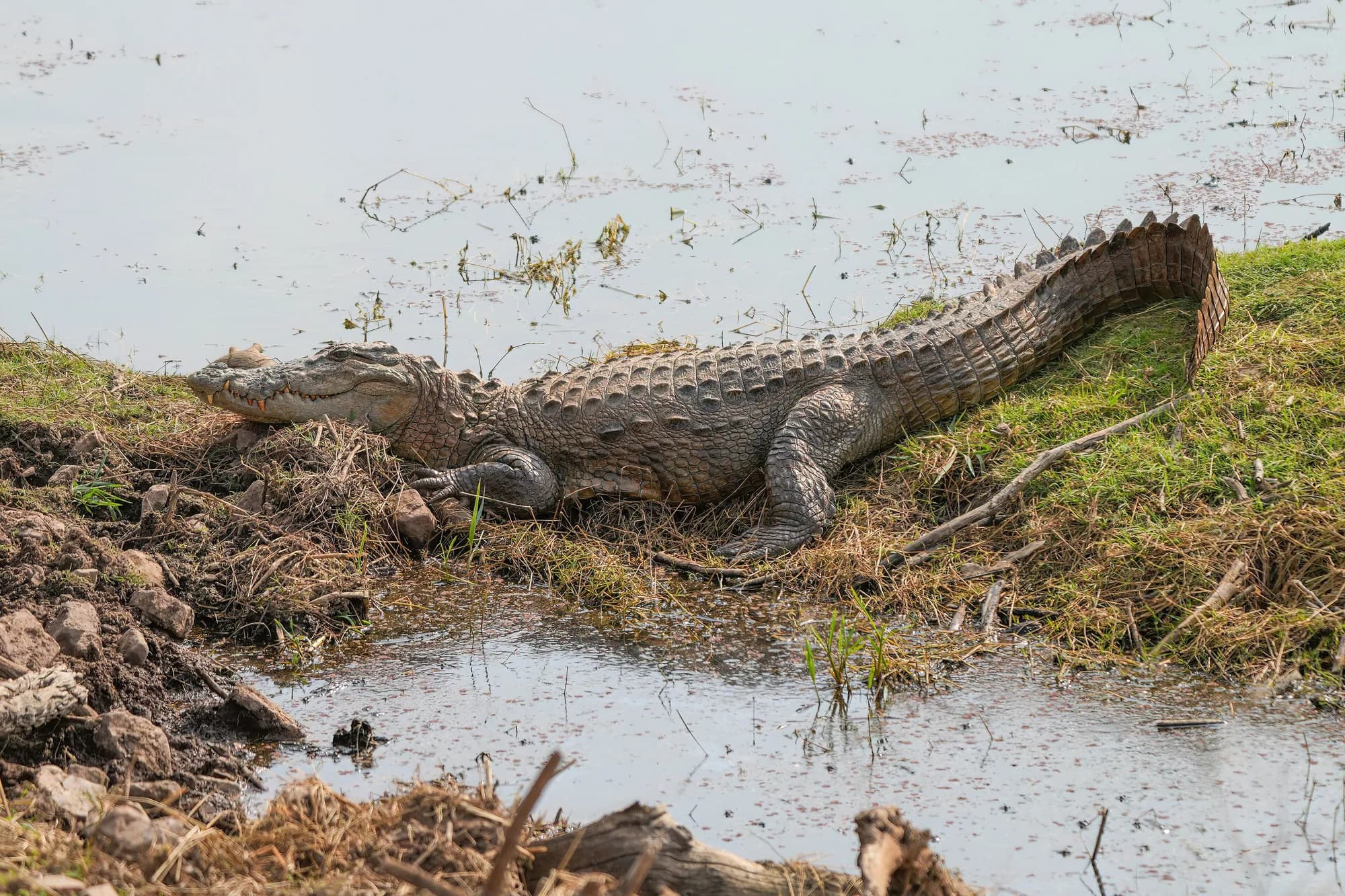
Every waterhole in the dry reserves
Mugger — the other big reptile
The crocodile you will actually see in India — broad-snouted, common, and basking on the bank of every dry-forest lake while everyone photographs the deer behind it.