
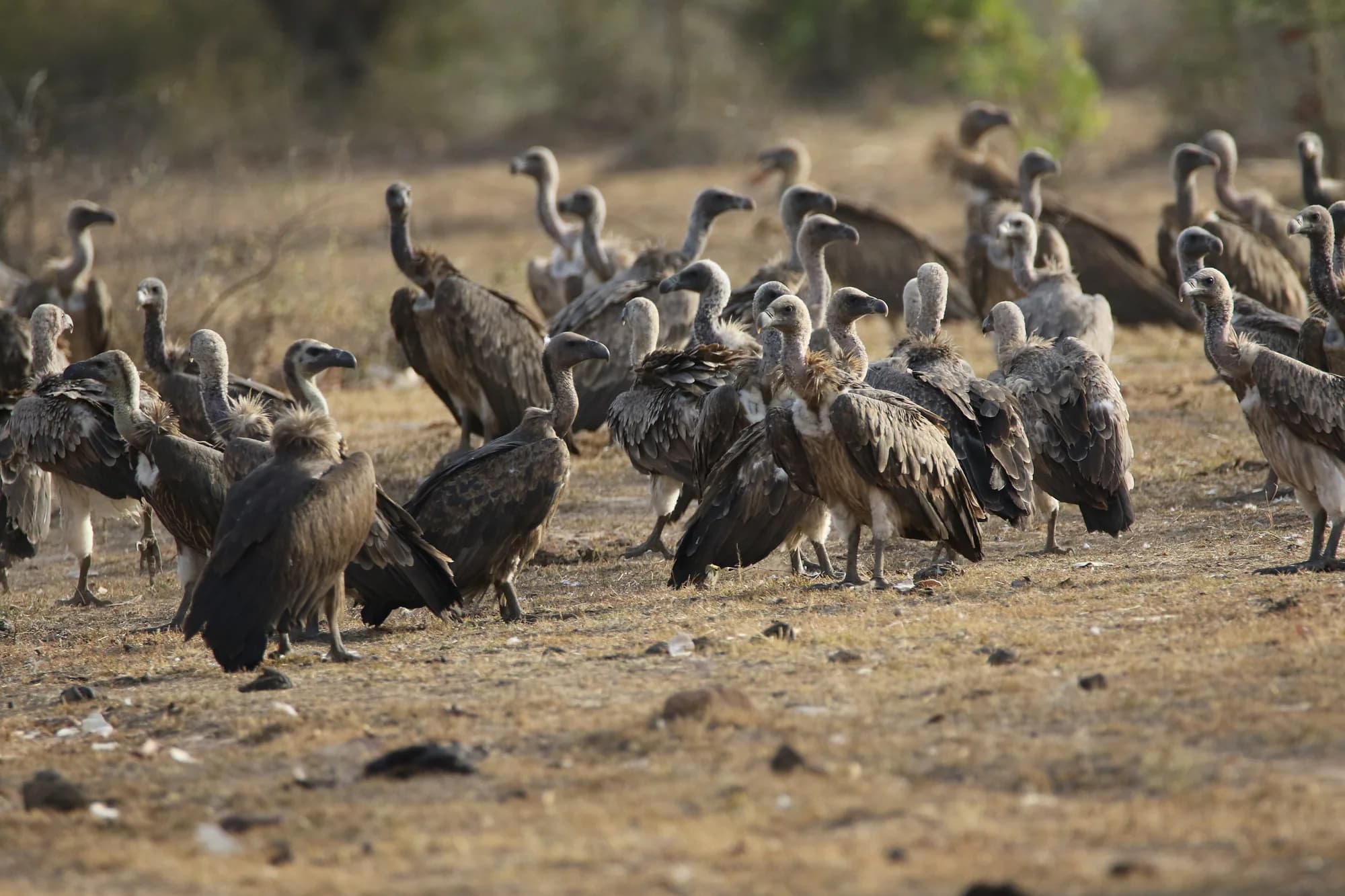
Species · Gyps indicus
Indian vulture
The cliff-nesting Gyps of peninsular India, hit by the same drug as its white-rumped cousin, and now most reliably found on the fort escarpments people drive past.
Also called
- Gidh (गिद्ध) · Hindi
- Gidhad · Marathi
Checked 30 Aug 2026
- Where
- Peninsular India
- Best months
- November–April
- Nests
- On cliffs, colonially
- Cause of decline
- Diclofenac
Peninsular India, nesting colonially on cliffs and escarpments rather than in trees — the clearest split from the white-rumped vulture.
Where it is
Where to actually go
Ranked, with the reason each — these are not interchangeable.
Where you will not see one
- Nesting in treesThat is the white-rumped vulture. Indian vultures use cliffs, and the split is the most useful field distinction between the two.
- Anywhere expecting large numbersDown by more than ninety per cent. A colony of a dozen birds on a cliff is now a good sighting.
When to go
When to go
- J
- F
- M
- A
- M
- J
- J
- A
- S
- O
- N
- D
January: best. February: best. March: best. April: good. May: marginal. June: marginal. July: closed or unproductive. August: closed or unproductive. September: closed or unproductive. October: marginal. November: best. December: best.
Through the day
- Dawn
- Morning
- Midday
- Afternoon
- Dusk
- Night
Dawn: usually resting. Morning: most active. Midday: most active. Afternoon: active. Dusk: usually resting. Night: not normally seen.
What it looks like in the field
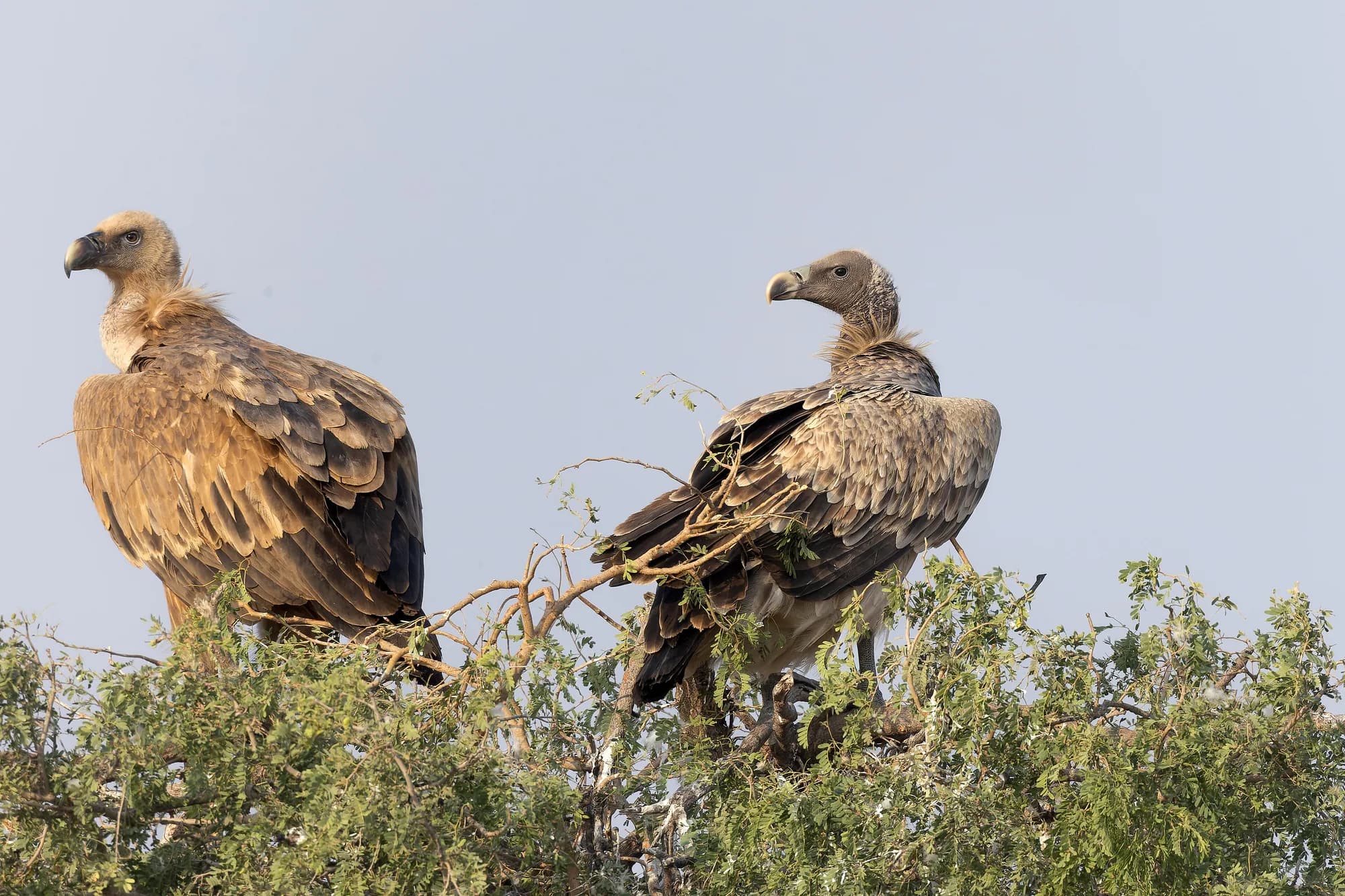
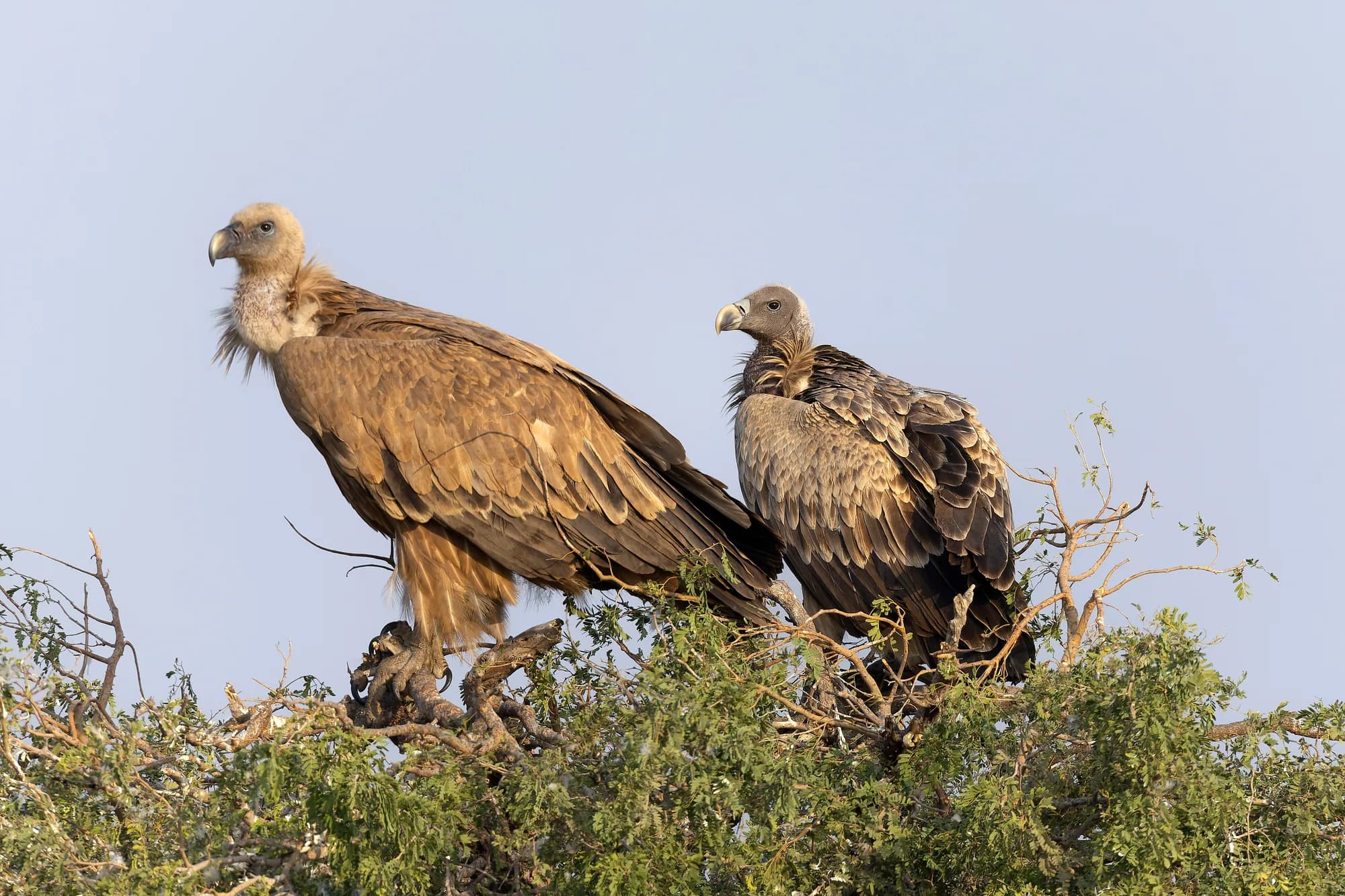
Photographs of Indian vulture in the wild, in Indian reserves. We publish no captive, baited or digitally composited images, and no photograph whose licence we cannot show.
Telling the two Gyps apart
Where they nest is the quickest answer. Indian vultures nest colonially on cliffs; white-rumped vultures nest in large trees. In peninsular India on a cliff, it is this one.
Status and protection
Status and protection
- IUCN Red List
- Critically Endangered
- Population trend
- ↓ Decreasing
- Wildlife Protection Act 1972
- Schedule I
- CITES
- Appendix II
Species-level assessment. Gyps indicus was split from Gyps tenuirostris (Slender-billed Vulture); the assessment retrieved is for G.
Assessed 2021 · IUCN Red List assessment
What to book to see one
What you would be booking
- How it is seen
- Any jeep drive past a cliff or escarpment, from mid-morning.
- Drives to book
- None needed at Ranthambore, where the fort cliffs are on the standard routes.
Ranthambore is the easiest place in India to see this species well, and almost nobody looks up at the fort wall because they are watching for a tiger below it.
Ranthambore — the park in fullQuestions people ask
Where can I see an Indian vulture?
How is it different from a white-rumped vulture?
Why are they endangered?
Read next
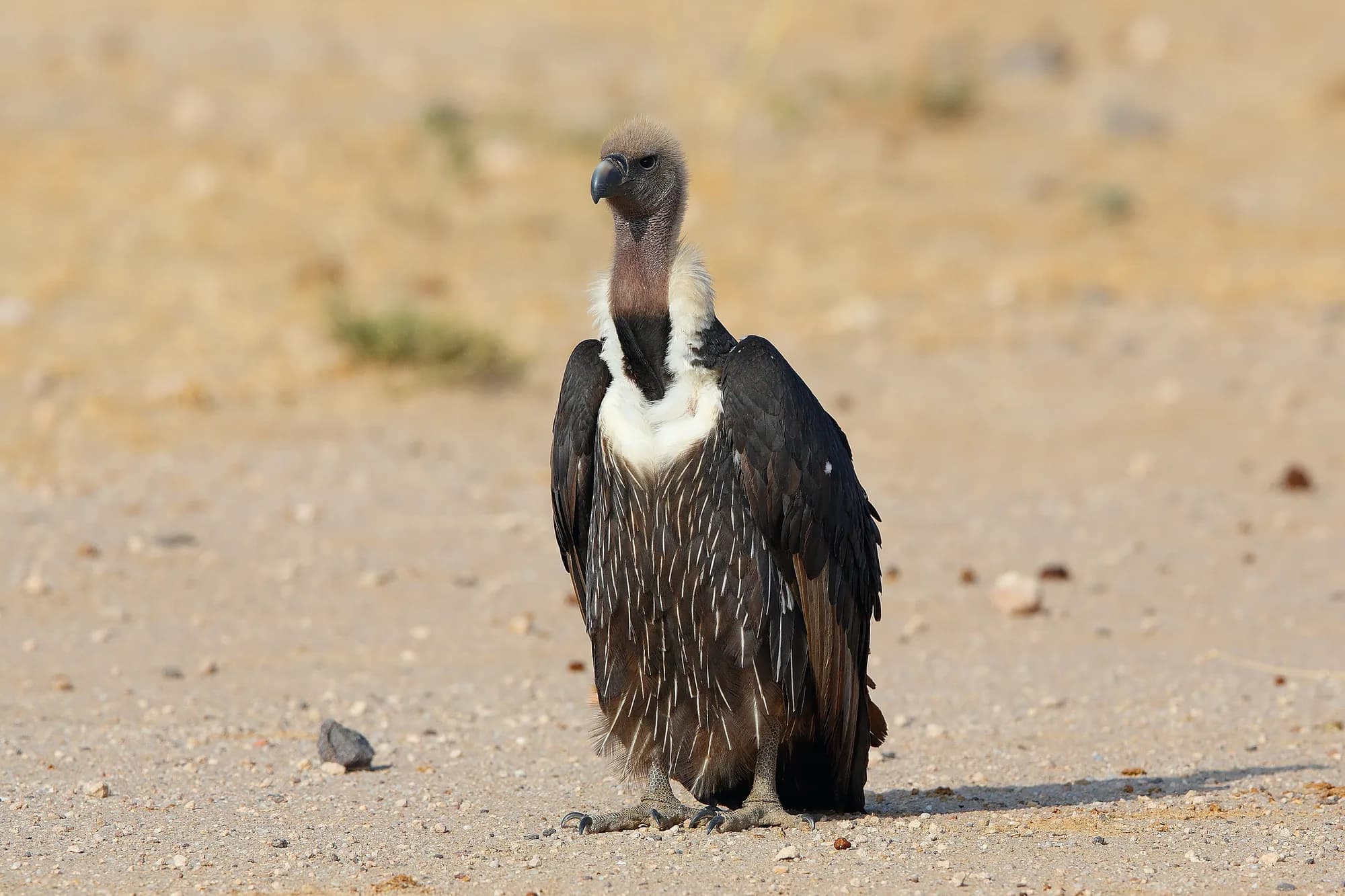
Once the commonest large raptor on earth
White-rumped vulture — the same collapse
A bird that numbered in the tens of millions and lost more than ninety-nine per cent of its population in about a decade. The fastest collapse of any bird species ever recorded.
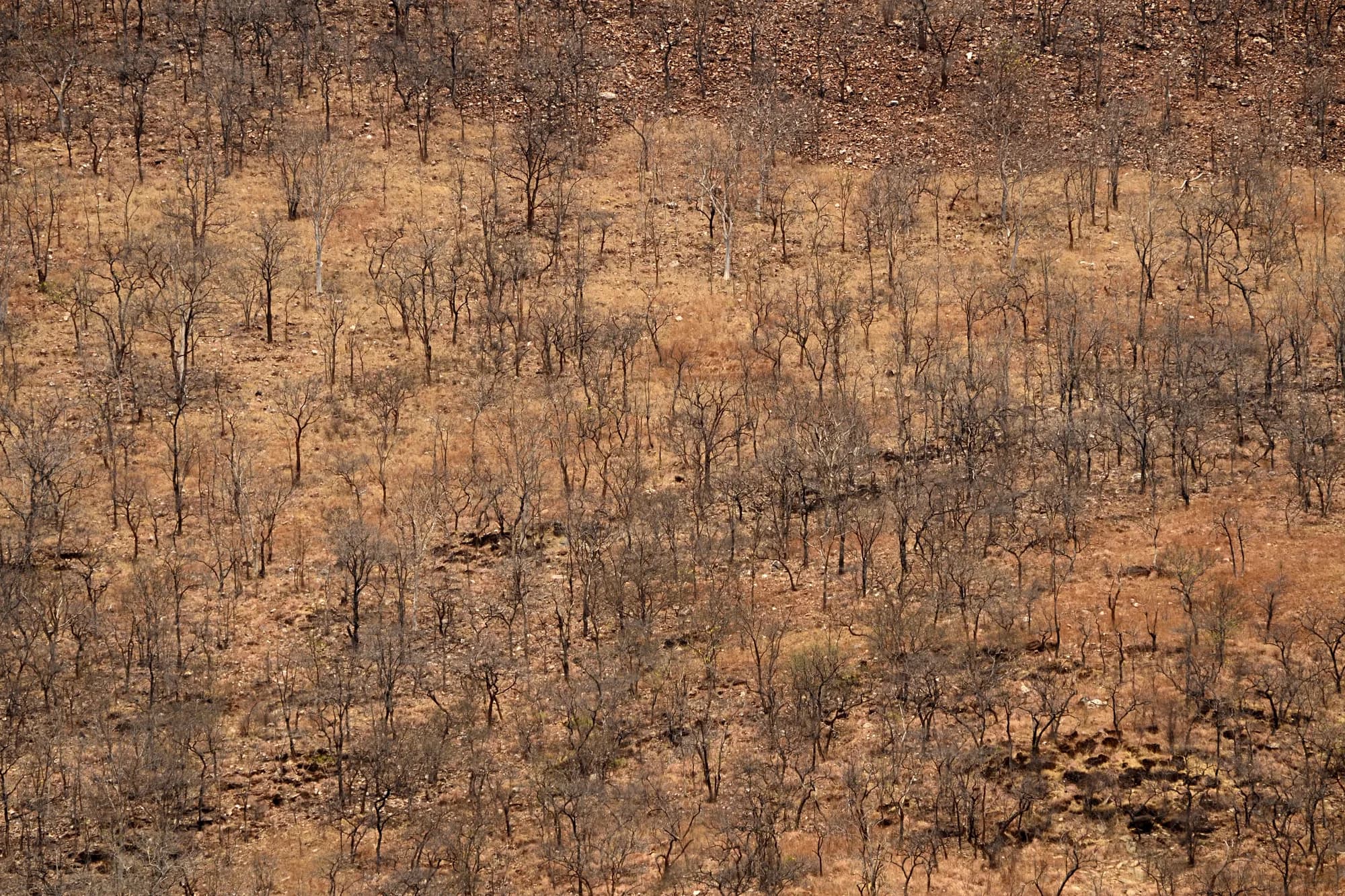
Rajasthan
Ranthambore — the park in full
Dry forest around a fort, and the easiest reserve to reach from Delhi — which is exactly why it is the busiest.
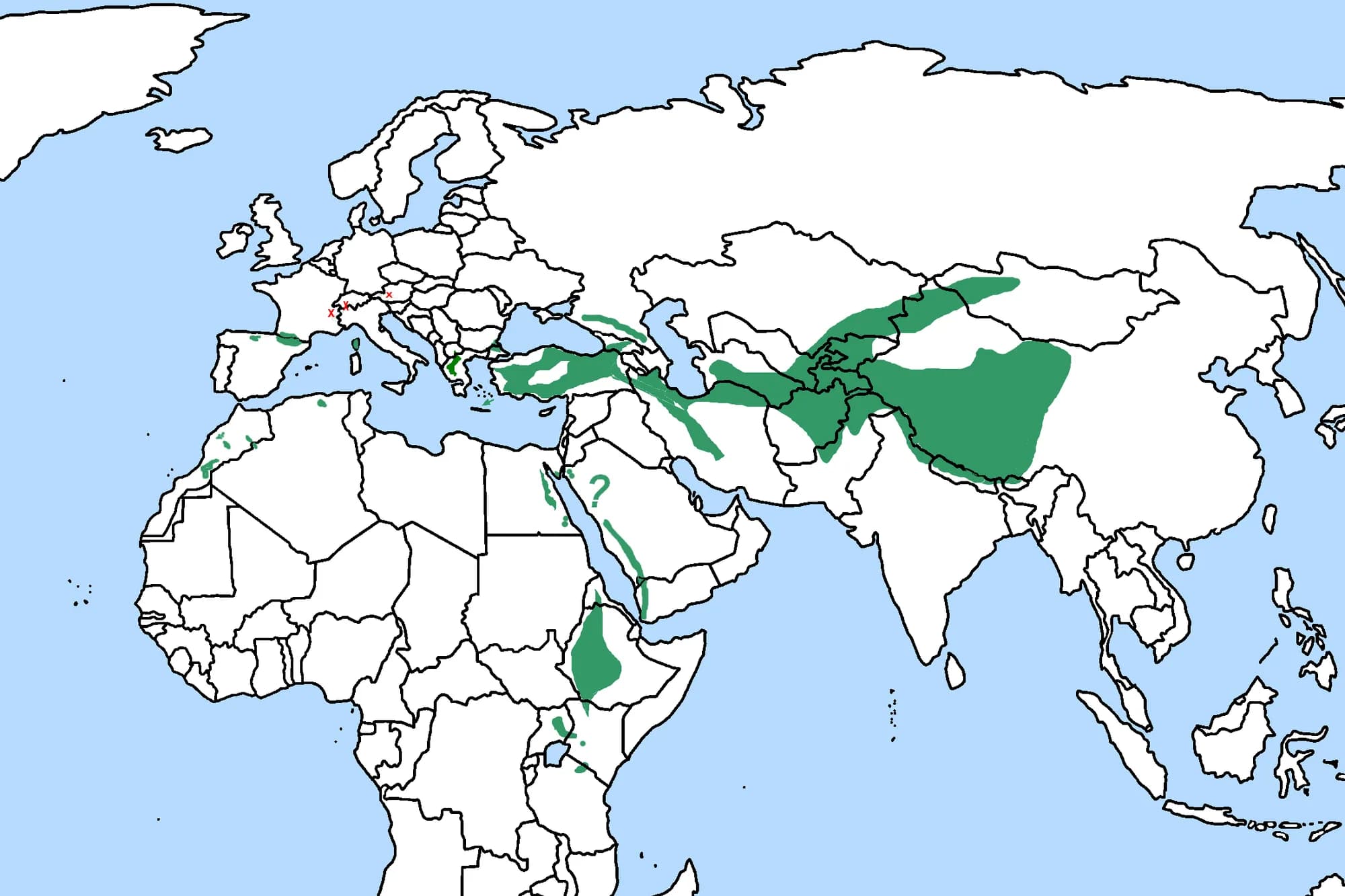
A Himalayan ridge, at eye level
Bearded vulture — the mountain one
Nearly three metres of wing passing below you on a ridge, orange-stained, with a diamond tail. The only bird in the world that lives mainly on bone, and the standard consolation on a blank snow leopard morning.
November to February
Birding on an Indian safari
Every reserve here is a birding destination whether or not it is sold as one. Say so when you book.