
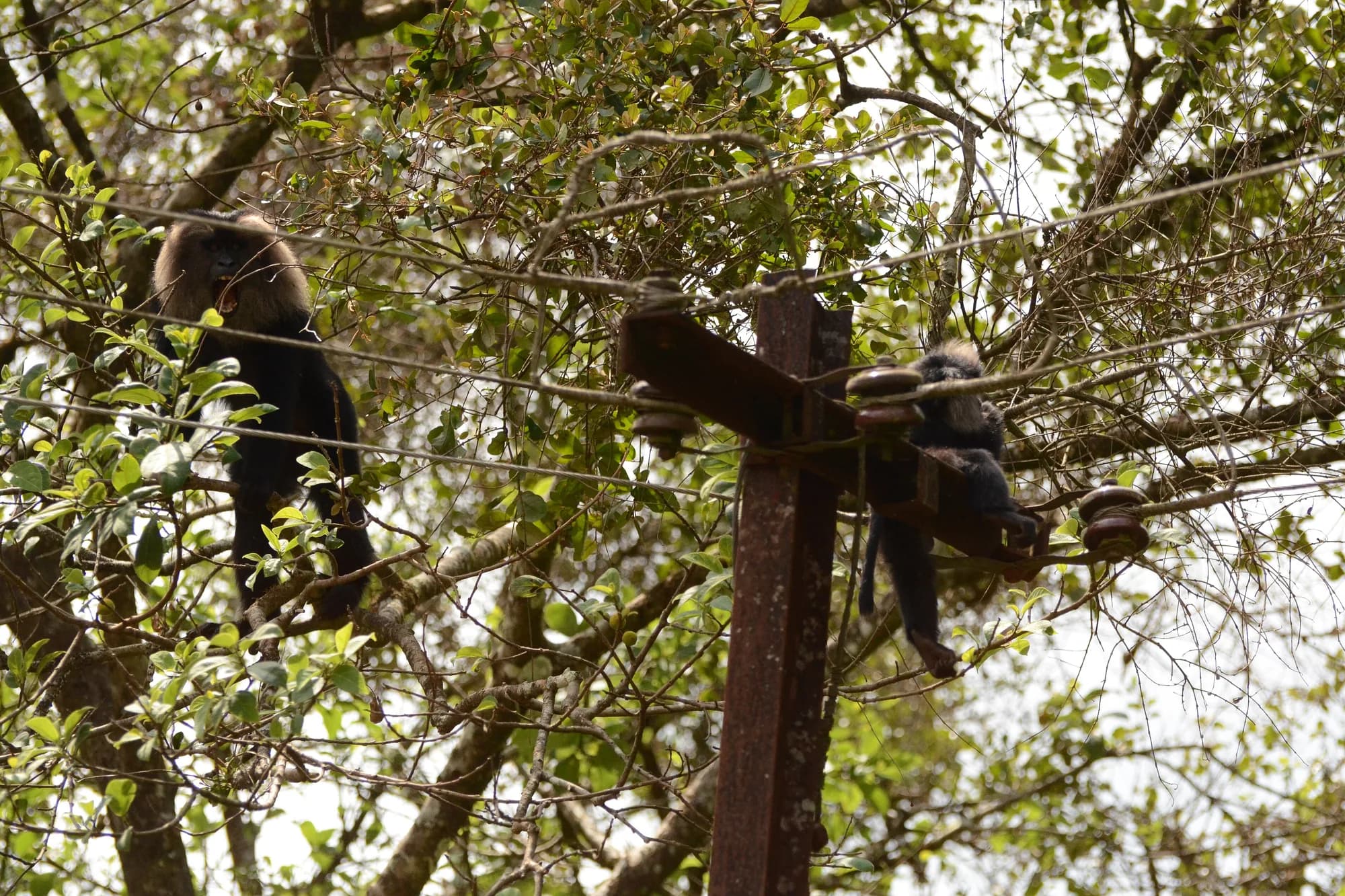
Species · Macaca silenus
Lion-tailed macaque
A black macaque with a silver mane and a tufted tail, confined to fragments of Western Ghats rainforest. One of the most distinctive primates in Asia and among the least seen in India.
Also called
- Singavalan kurangu · Malayalam
- Singa vaal kurangu · Tamil
- Sinh-puchh vanar · Hindi
Checked 30 Aug 2026
- Where
- Western Ghats
- Best months
- November–March
- Habitat
- Wet evergreen canopy
- Note
- Rarely comes down
Wet evergreen forest of the Western Ghats, in fragments. It does not use secondary forest or plantation the way other macaques do, which is why fragmentation hits it so hard.
Where it is
Where to actually go
Ranked, with the reason each — these are not interchangeable.
- 01ValparaiTamil NaduTroops using rainforest fragments among tea estates, well known to local naturalists and genuinely findable. The easiest reliable sighting.A local guide, and two mornings
- 02Silent ValleyKeralaThe classic site and much better forest. Restricted access and lower encounter rates.Better forest, harder sighting
- 03AnamalaiTamil NaduRainforest patches within the tiger reserve, best combined with Valparai.Pairs with Valparai
Where you will not see one
- Roadsides and templesThe macaque begging at a Ghats viewpoint is a bonnet macaque. Lion-tailed macaques do not approach people and do not leave the canopy, which is most of why they are in trouble.
- Periyar and the popular Ghats parksPresent in the wider landscape but not reliably where visitors go. Silent Valley and the Valparai fragments are the real sites.
- Anywhere outside the Western GhatsA strict endemic. Nothing in central India, the Northeast or Sri Lanka, despite what some tour listings imply.
When to go
When to go
- J
- F
- M
- A
- M
- J
- J
- A
- S
- O
- N
- D
January: best. February: best. March: best. April: good. May: marginal. June: marginal. July: marginal. August: marginal. September: marginal. October: good. November: best. December: best.
Through the day
- Dawn
- Morning
- Midday
- Afternoon
- Dusk
- Night
Dawn: active. Morning: most active. Midday: usually resting. Afternoon: active. Dusk: active. Night: not normally seen.
Telling it apart
Told apart from
Bonnet macaque
Every Ghats road and viewpoint
Brown, with a whorl of hair on the crown, and completely at ease around people. If it is on a road, a wall or a roof, it is a bonnet macaque.
Nilgiri langur
Ghats rainforest, in the same canopy
Also glossy black in the same forest, but a langur — much longer tail, slimmer build, and a golden-brown head ruff rather than a silver mane.
Marks chosen to be usable from a moving vehicle — a lion-tailed macaque is rarely still and never close enough for anything subtler.
What it looks like in the field
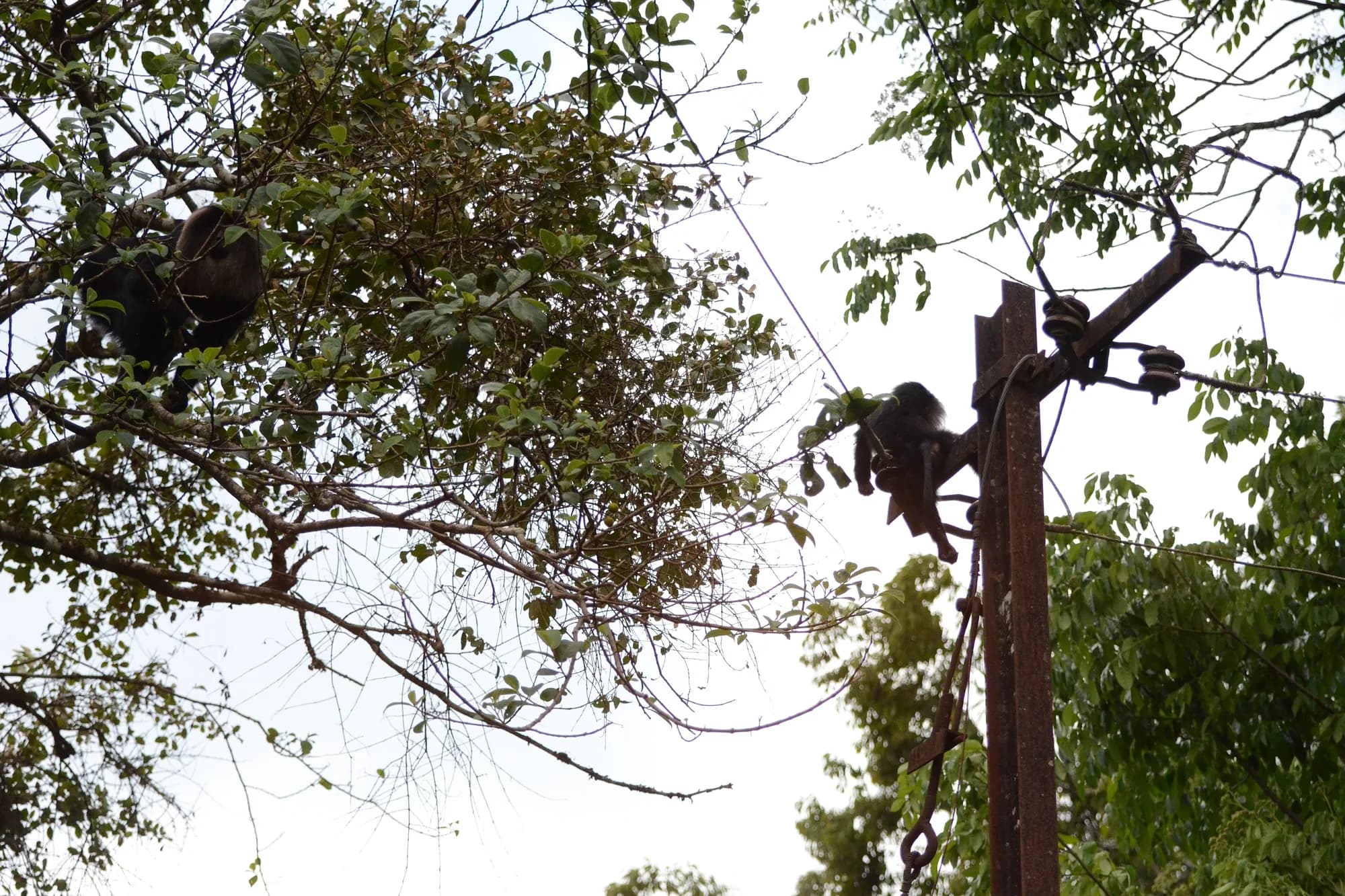
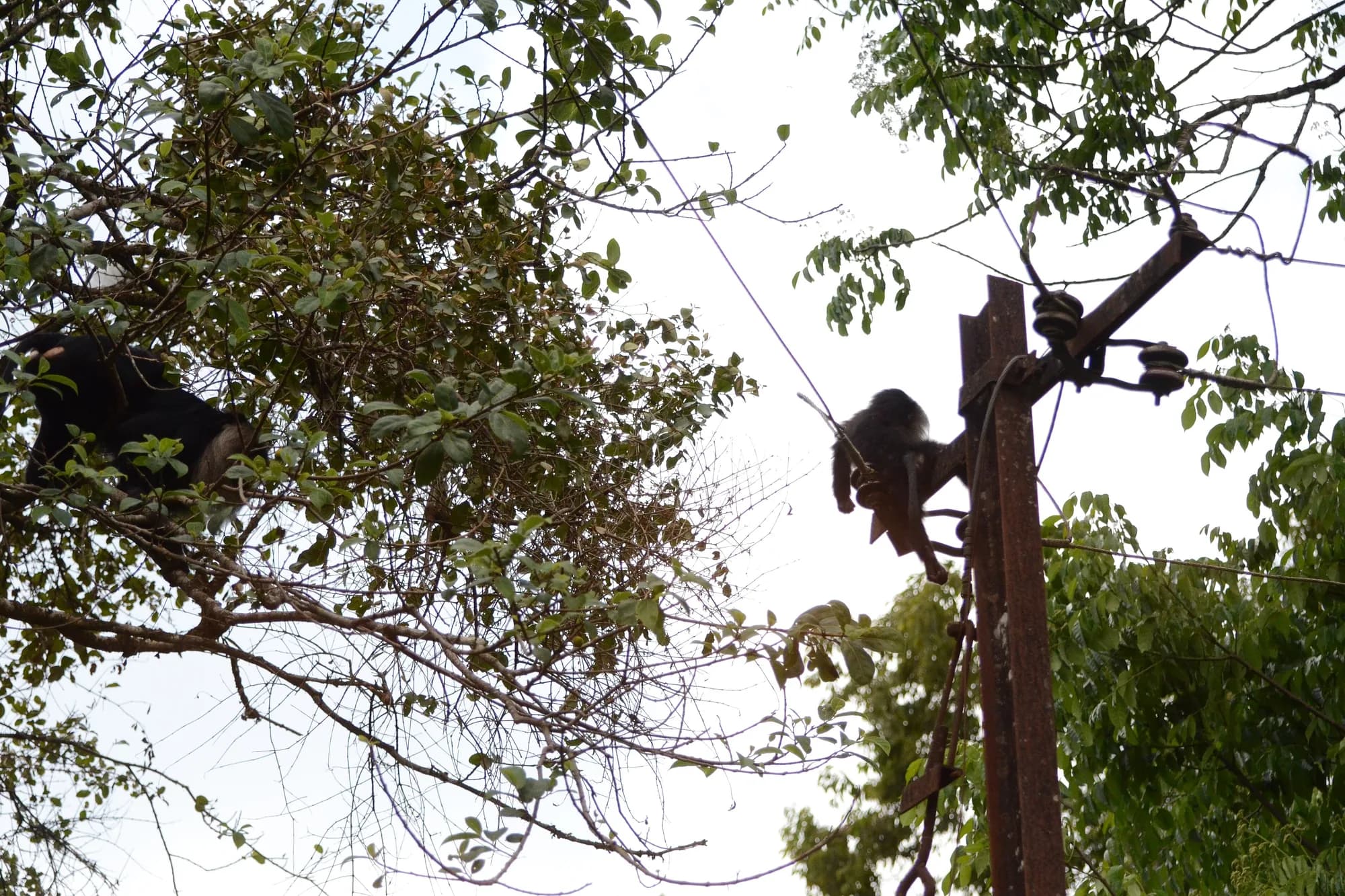
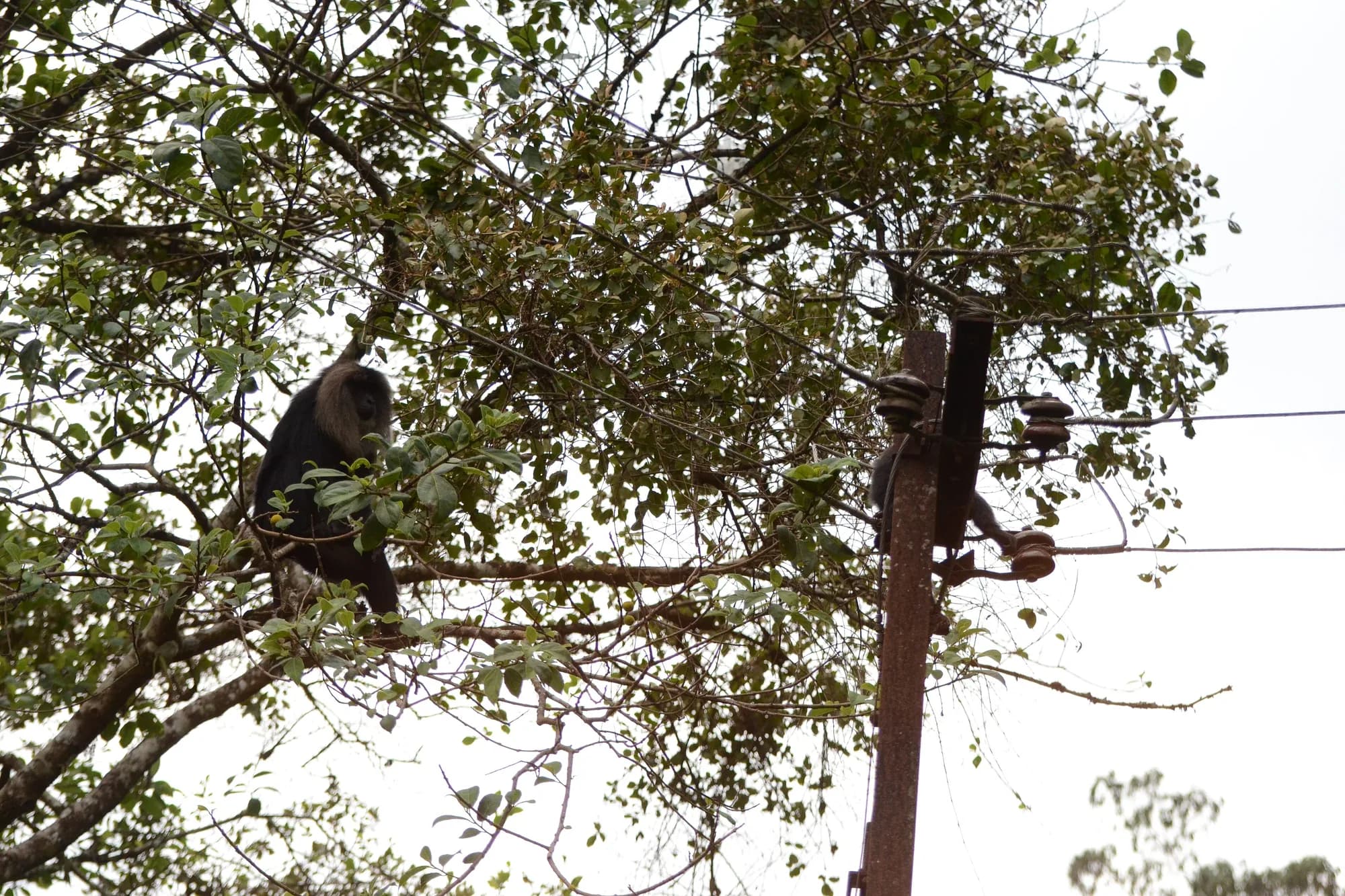
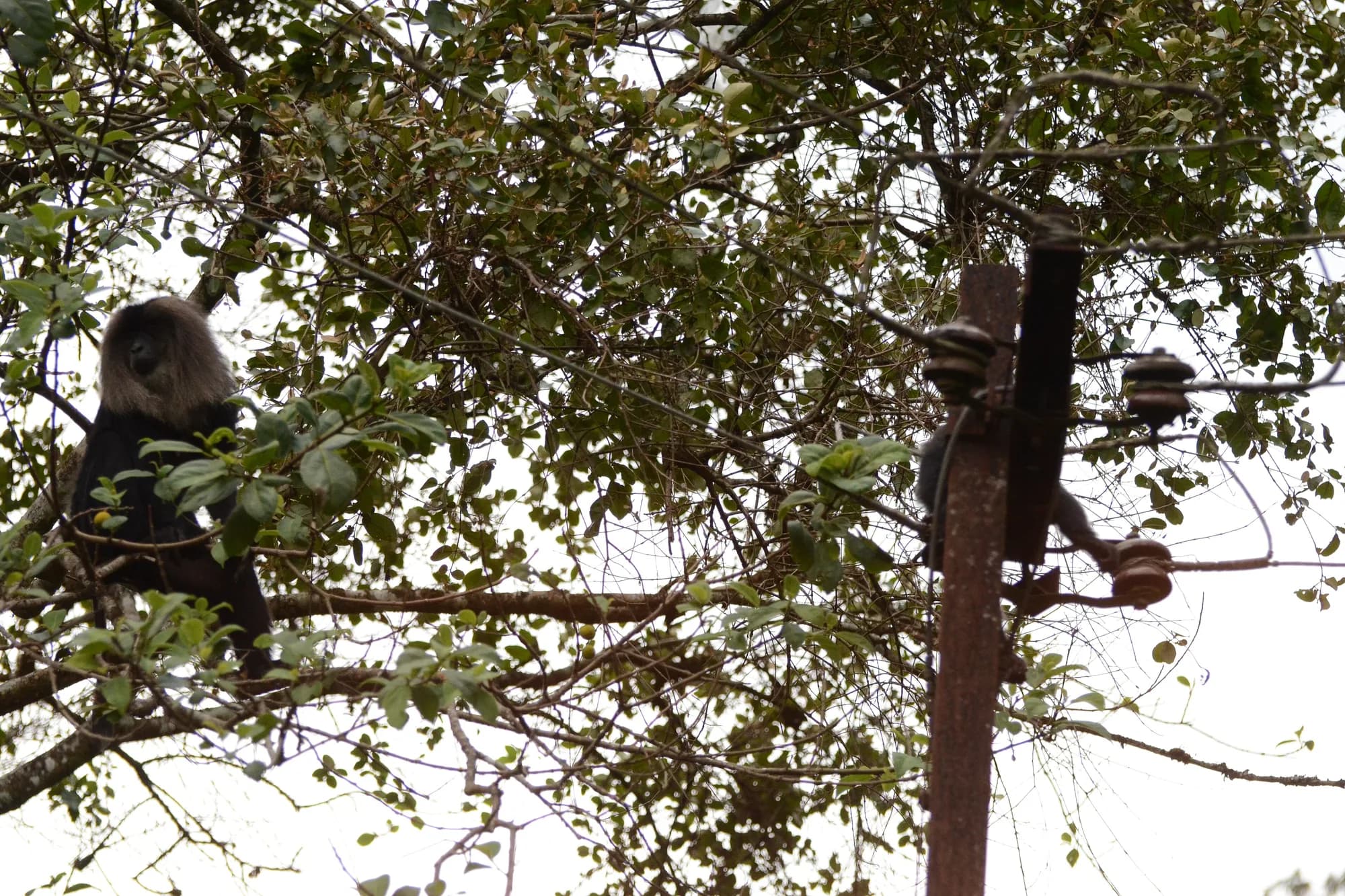
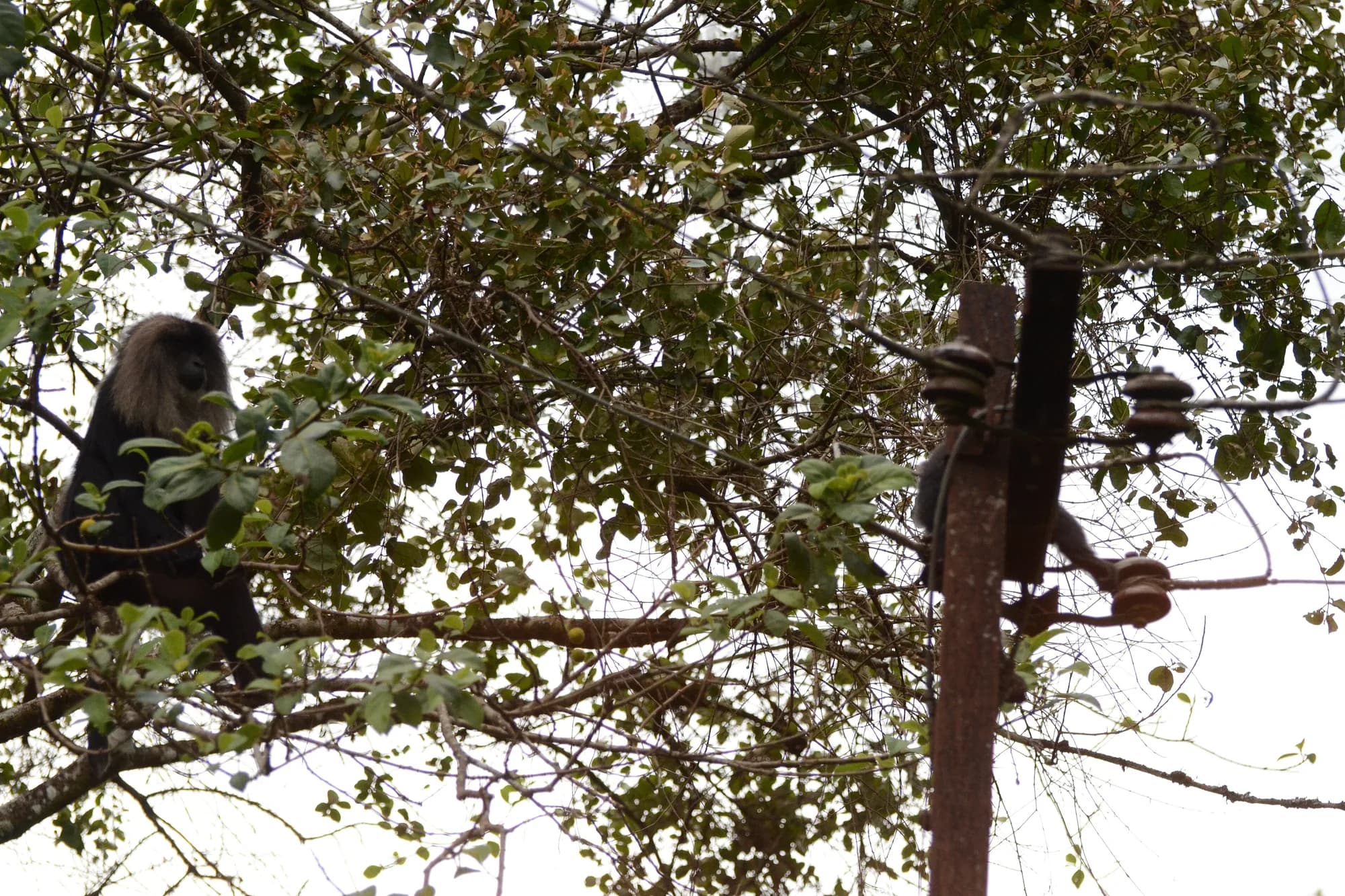
Photographs of Lion-tailed macaque in the wild, in Indian reserves. We publish no captive, baited or digitally composited images, and no photograph whose licence we cannot show.
What a sighting is actually like
High and brief. A troop crossing the canopy, silver manes catching the light for a few seconds at a time, and then nothing but moving branches. They do not come down and they do not linger for an audience.
The mane is what people remember. It reads as far too theatrical for a real animal.
Why the canopy gaps matter
This is a canopy specialist that will not cross open ground willingly. A road cut through rainforest is not an inconvenience to it — it is a boundary, and it splits a population into pieces that stop exchanging animals.
Status and protection
Status and protection
- IUCN Red List
- Endangered
- Population trend
- ↓ Decreasing
- Wildlife Protection Act 1972
- Schedule I (post-2022 amendment numbering)
- CITES
- Appendix I
Species-level assessment matching the binomial given (Macaca silenus). Criteria C2a(i); date assessed 20 November 2015, year published 2020; IUCN annotation 'Needs updating'.
Assessed 2020 · IUCN Red List assessment
What to book to see one
What you would be booking
- How it is seen
- A guided walk or a slow drive through rainforest fragments, often on private tea-estate roads around Valparai.
- Drives to book
- Two or three mornings. Troops are localised and known, so a local guide is worth more than extra time.
Valparai is the pragmatic choice — the troops there use fragments among tea estates and are findable, though that same accessibility is a symptom of how broken the habitat has become.
Periyar — the nearest park pageOn the same trip you would also get
- Nilgiri tahr — the other Ghats endemic, above the forest
- Great hornbill — the same rainforest canopy
- Indian giant squirrel — in the same trees, and far easier
- King cobra — the same Agumbe forest, and far harder
Questions people ask
Where can I see a lion-tailed macaque?
Is it the monkey I saw at the viewpoint?
Why is it endangered?
Read next
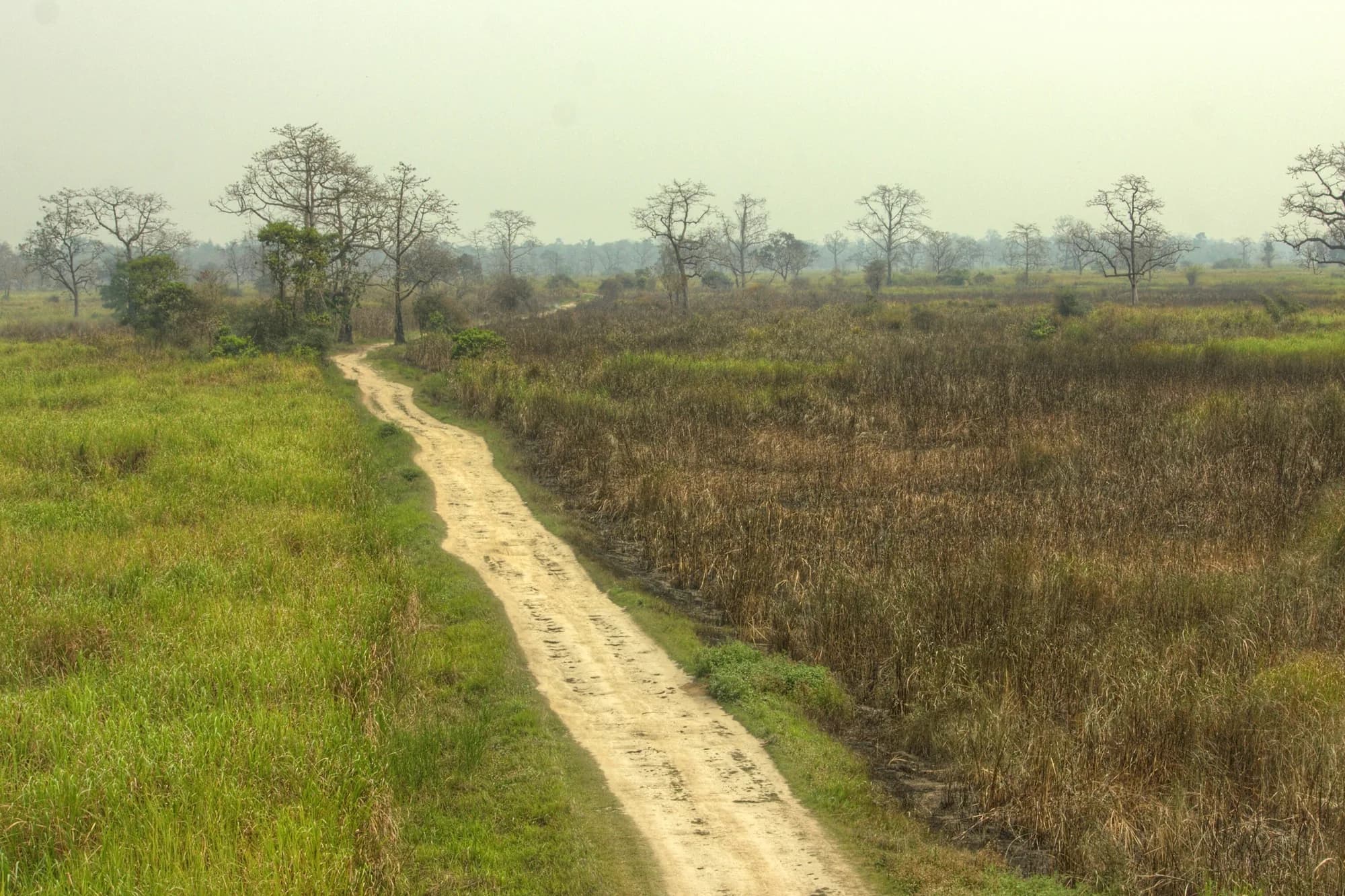
Kerala
Periyar — the nearest park page
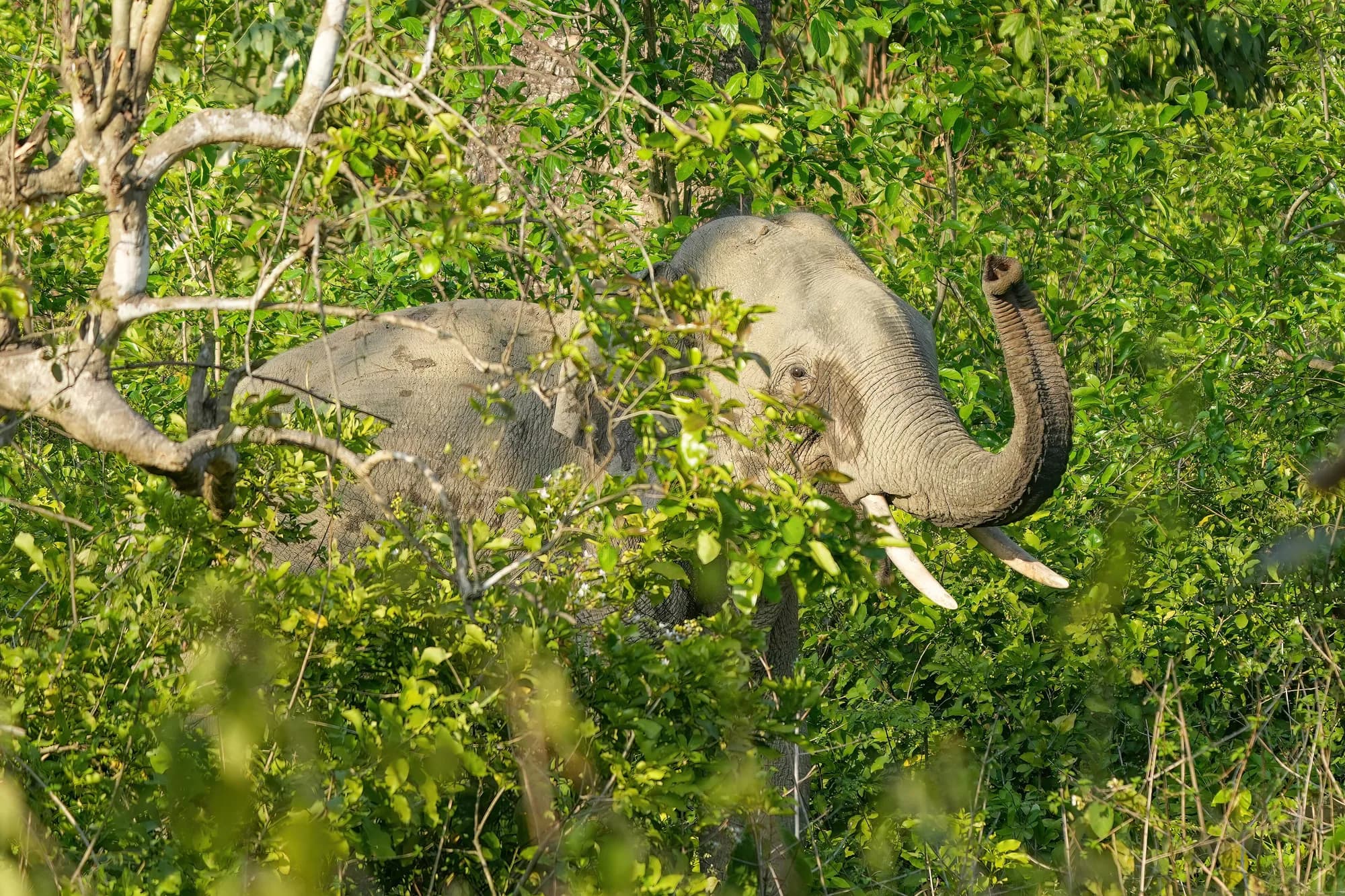
A lake in the Western Ghats, walked and boated rather than driven. Elephants, hornbills and rain — not a tiger destination in any practical sense.
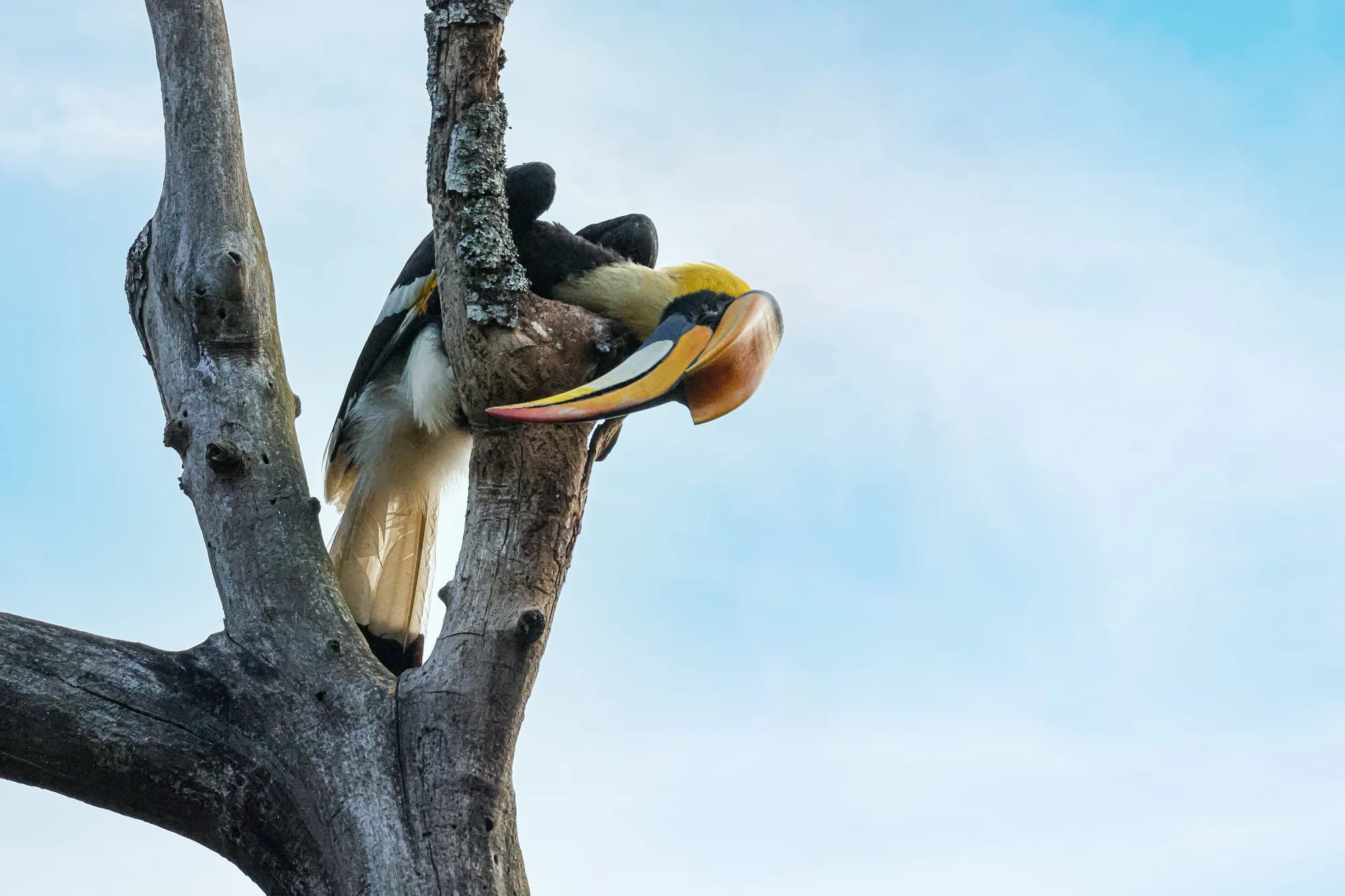
Three reserves, and you hear it first
Great hornbill — the same rainforest
The bird non-birders stop the vehicle for. You hear the wingbeats several hundred metres before you see it, and the nesting behaviour is stranger than anything a mammal in the same forest does.
Eravikulam, and the high Ghats grasslands
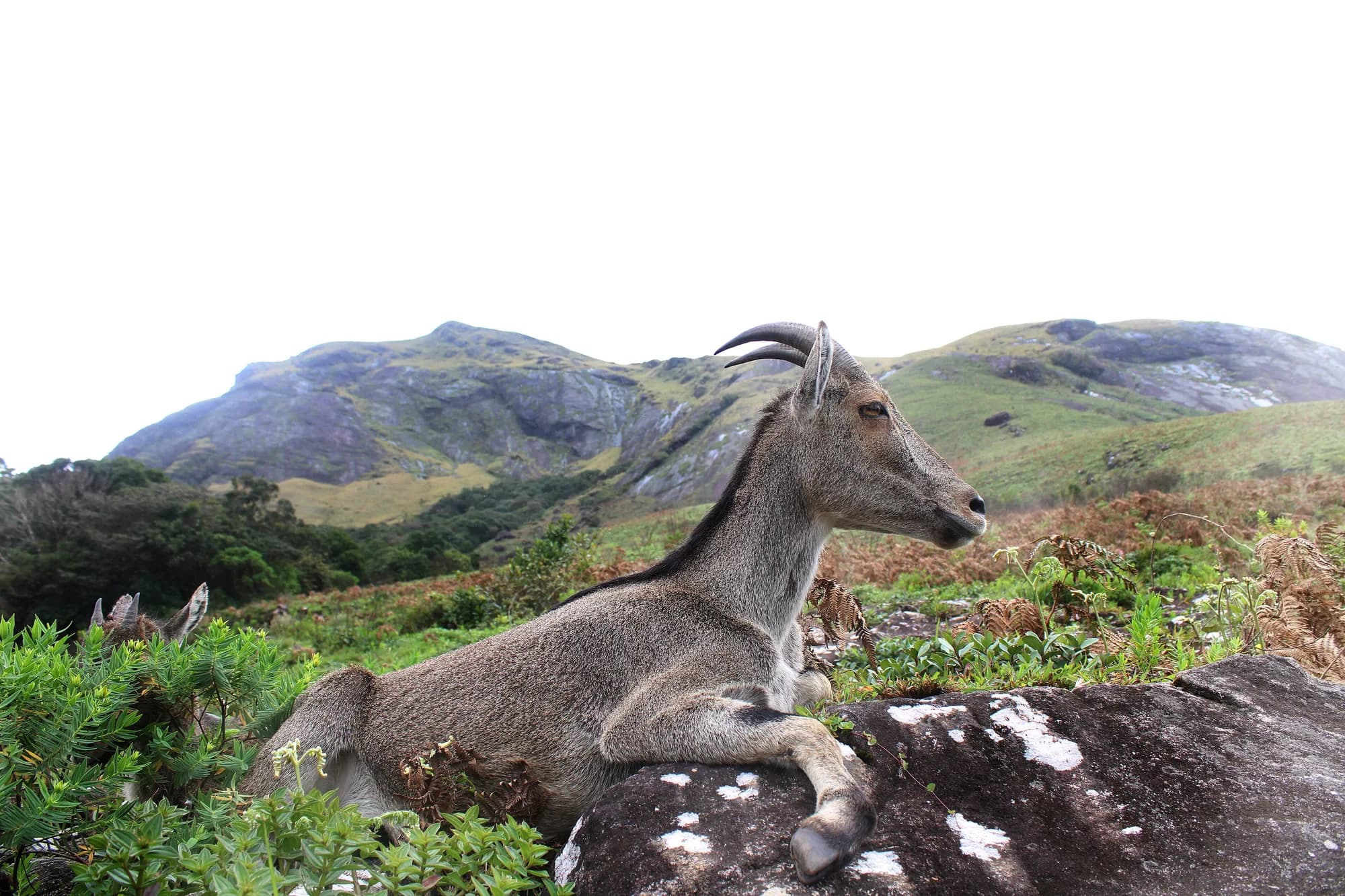
Nilgiri tahr — the other Ghats endemic
A wild goat on cliff grassland above two thousand metres, endemic to the Western Ghats, and the one endangered Indian endemic you can more or less count on seeing.
Our position
Travelling responsibly
Where we stand on vehicle crowding, baiting and playback — and what we will not link to, whoever is paying.