
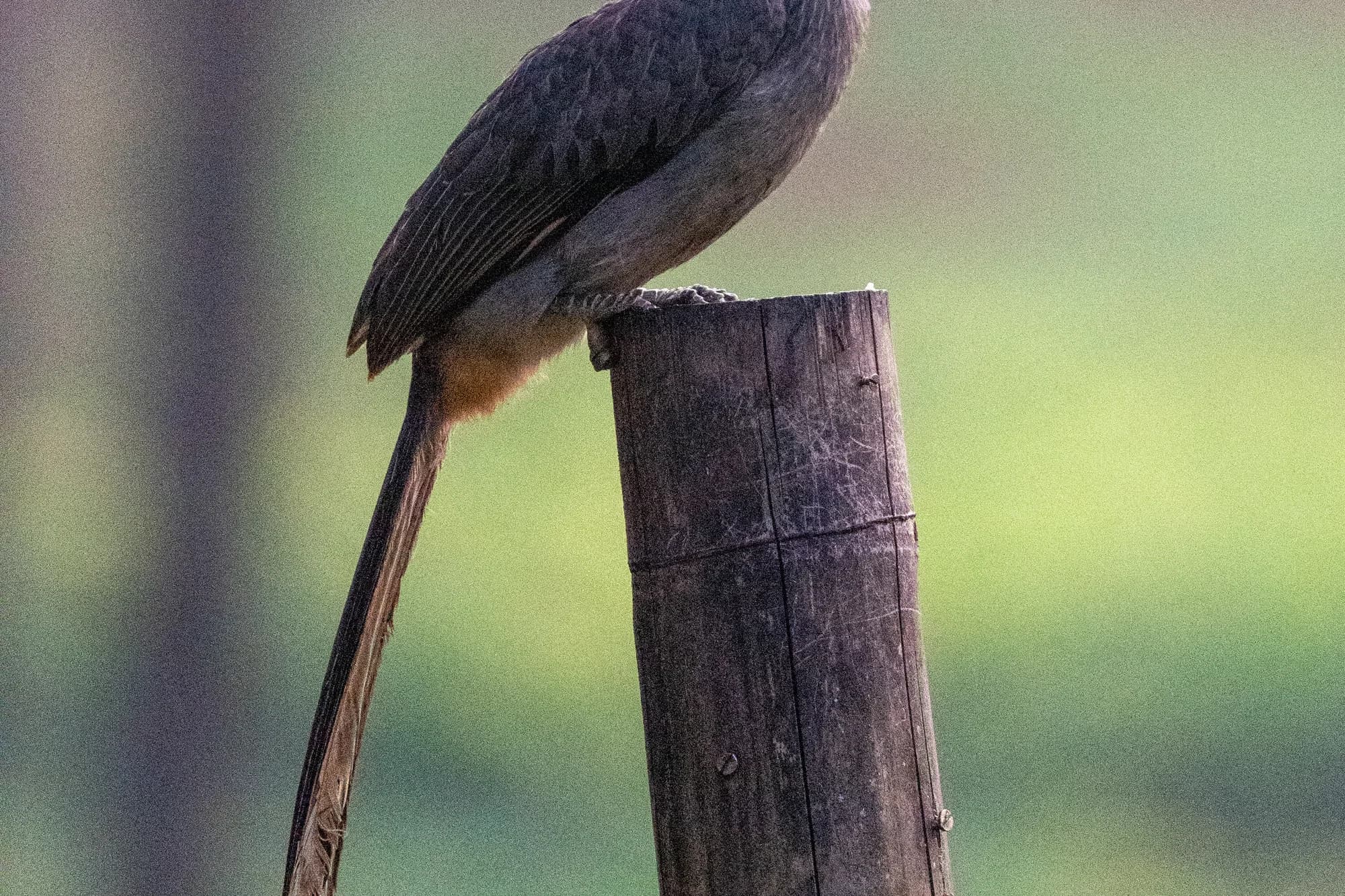
Species · Ocyceros griseus
Malabar grey hornbill
The Western Ghats' own hornbill — small, casque-less and endemic. It is common where the forest is intact, it announces itself constantly, and it is the easiest of India's four widespread hornbills to see badly and hardest to see well.
Also called
- Kozhi vezhambal (കോഴി വേഴാമ്പൽ) · Malayalam
- Kadu chikka · Kannada
- Sinna irattai · Tamil
Checked 31 Aug 2026
- Where
- Western Ghats, Maharashtra to Kerala
- Best months
- October–April
- Diet
- Figs, mostly
- Note
- No casque, unlike the others
Evergreen and moist deciduous forest along the Western Ghats from about the Surat Dangs south to Kerala, mostly below 1,500 metres. Endemic to the range and reasonably common inside it, which is unusual for a Ghats endemic.
Where it is
Where to actually go
Ranked, with the reason each — these are not interchangeable.
- 01ThattekadKeralaSmall, superb forest with resident guides who know every fruiting tree in it.The best-guided forest in India
- 02PeriyarKeralaCommon along the lake shore, and the boat gives you canopy-level views instead of neck-ache.Canopy height, from a boat
- 03ParambikulamKeralaExcellent forest with all three Ghats hornbills, quiet roads and few vehicles.Three hornbills in a day
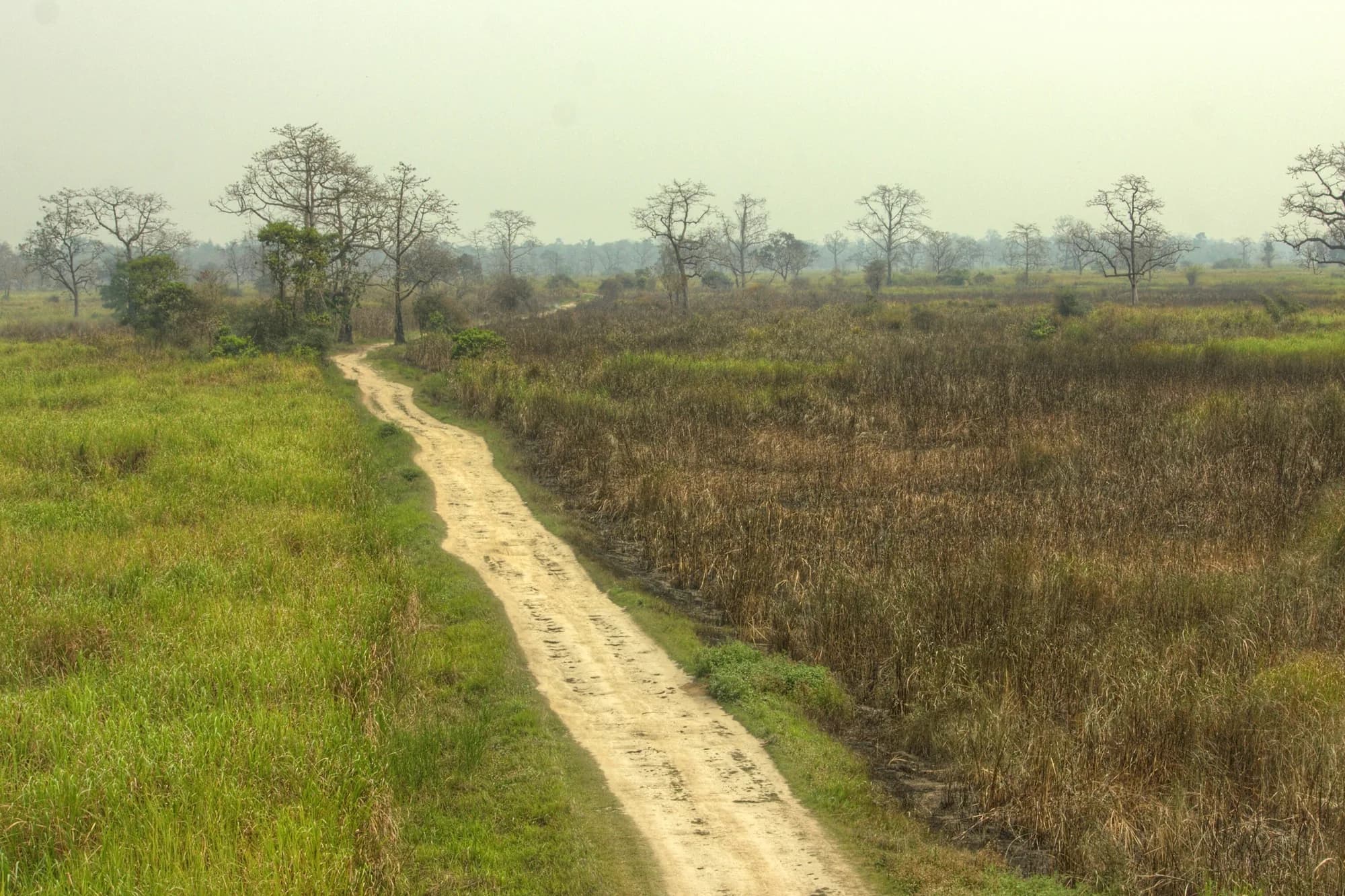
Where you will not see one
- Central and northern IndiaThe grey hornbill of Delhi, Rajasthan and the central forests is the Indian grey hornbill — a different species with a casque. This one exists only in the Ghats.
- Open dry scrubIt needs closed canopy with figs. In dry open country you are in Indian grey hornbill territory.
When to go
When to go
- J
- F
- M
- A
- M
- J
- J
- A
- S
- O
- N
- D
January: best. February: best. March: best. April: good. May: marginal. June: closed or unproductive. July: closed or unproductive. August: closed or unproductive. September: marginal. October: best. November: best. December: best.
Through the day
- Dawn
- Morning
- Midday
- Afternoon
- Dusk
- Night
Dawn: active. Morning: most active. Midday: usually resting. Afternoon: active. Dusk: active. Night: not normally seen.
Telling it apart
Told apart from
The dry eastern slope of the Ghats
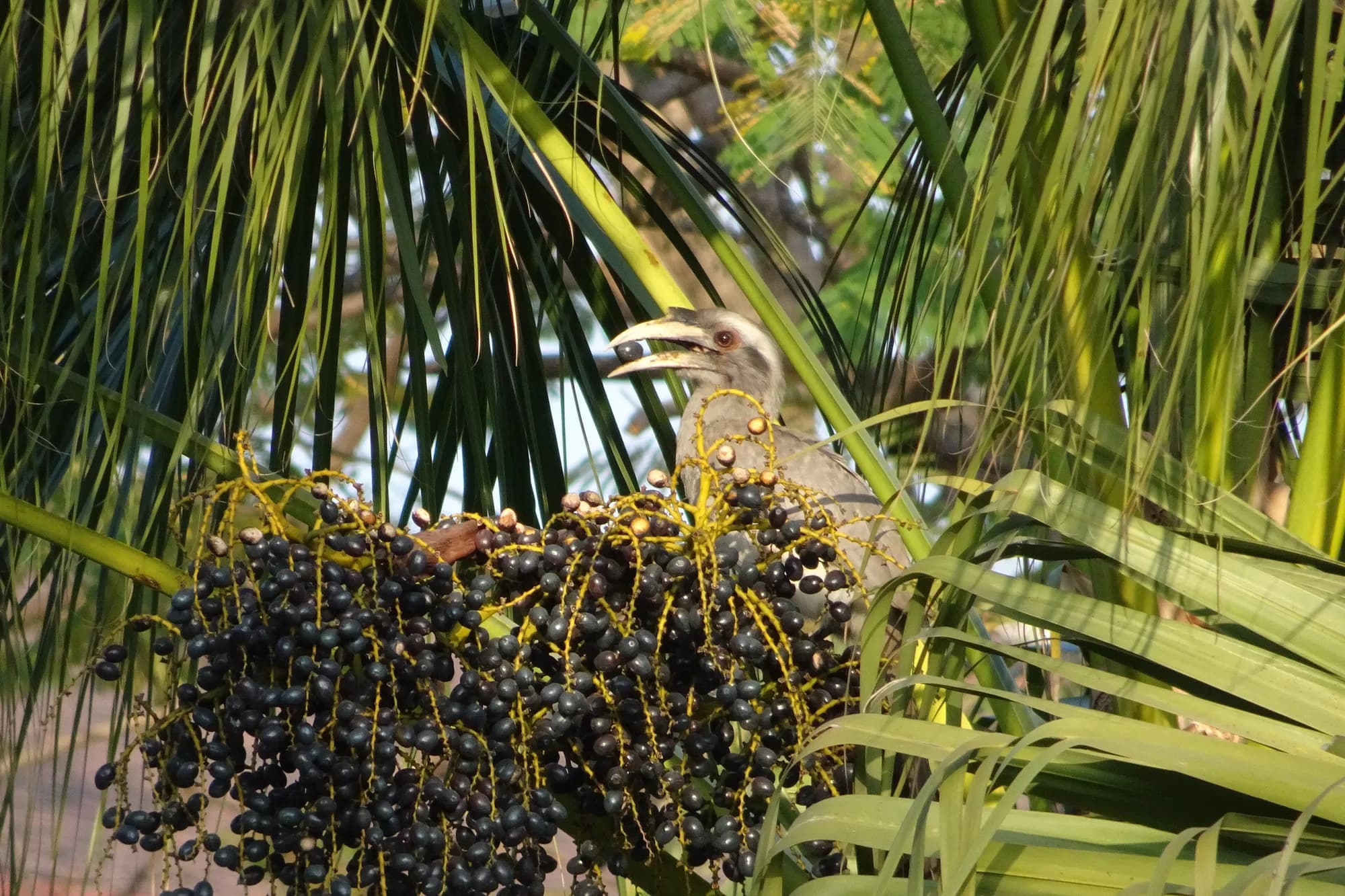
Casque and range. The Indian grey hornbill has a pointed casque on the bill and lives in drier forest across the north and centre; the Malabar has a smooth bill with no casque and is confined to the Ghats.
The same forest, the same fig
Size and colour. The pied is much larger, boldly black and white, with a huge black-and-yellow casque.
Marks chosen to be usable from a moving vehicle — a malabar grey hornbill is rarely still and never close enough for anything subtler.
What it looks like in the field
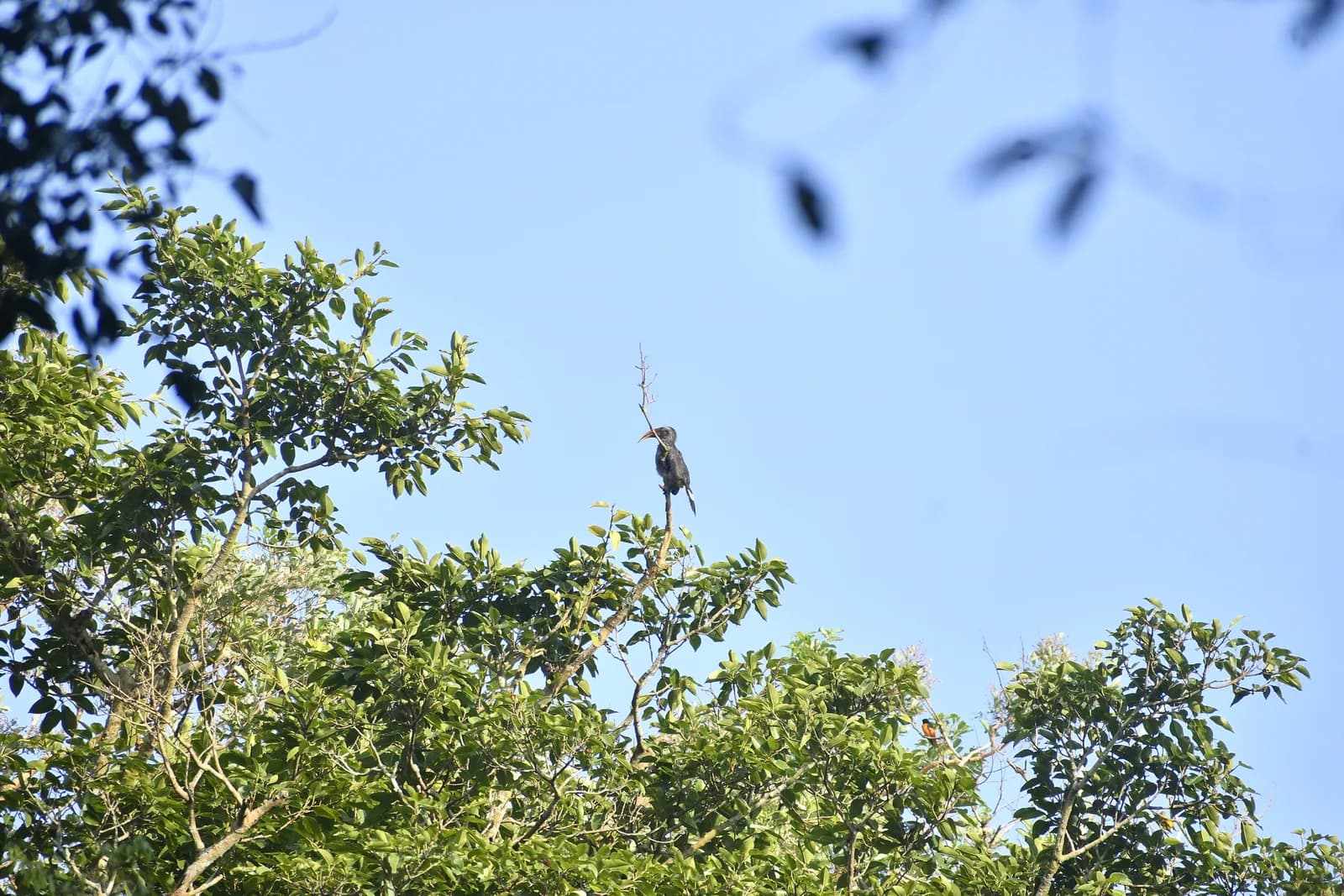
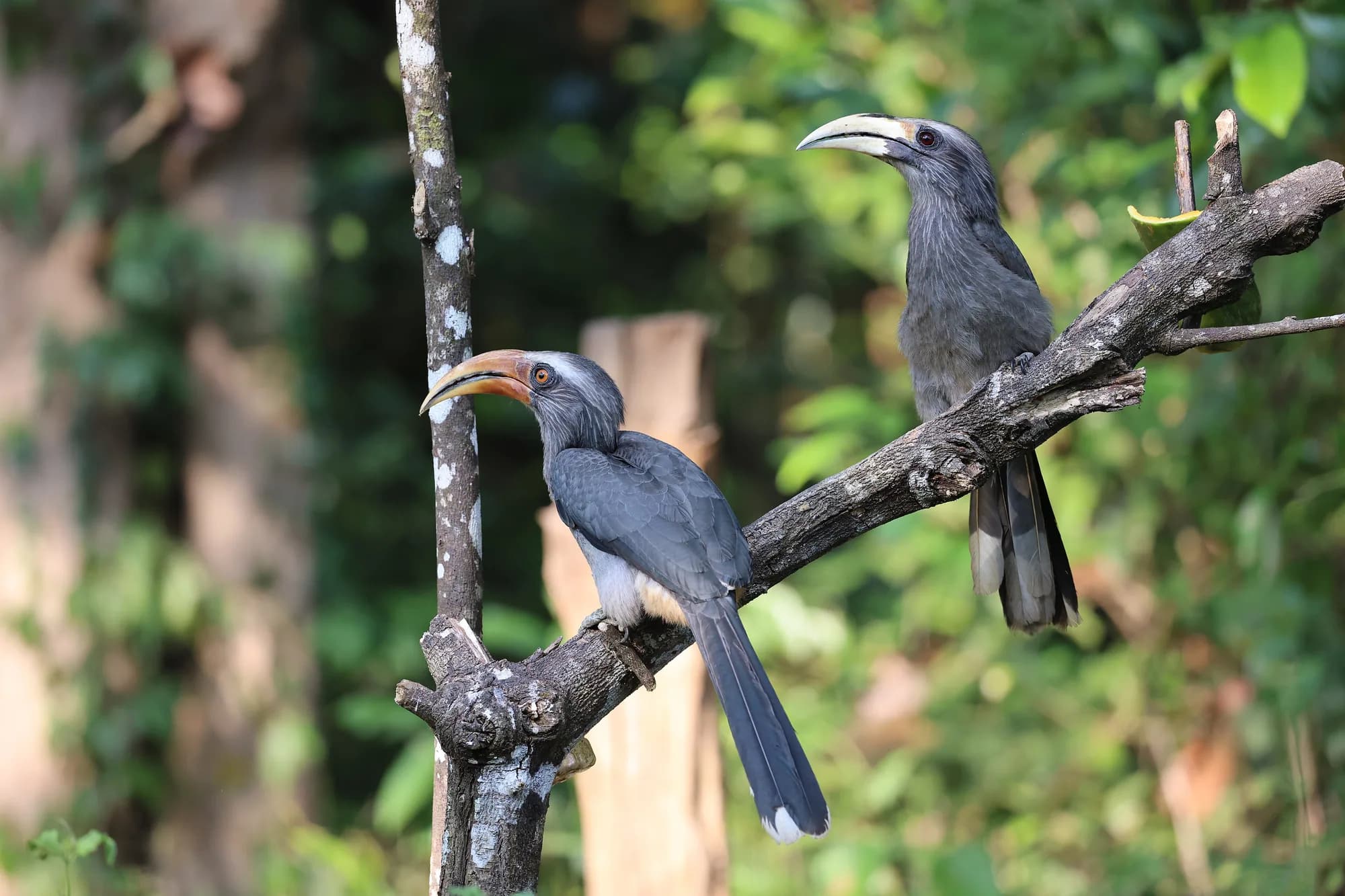
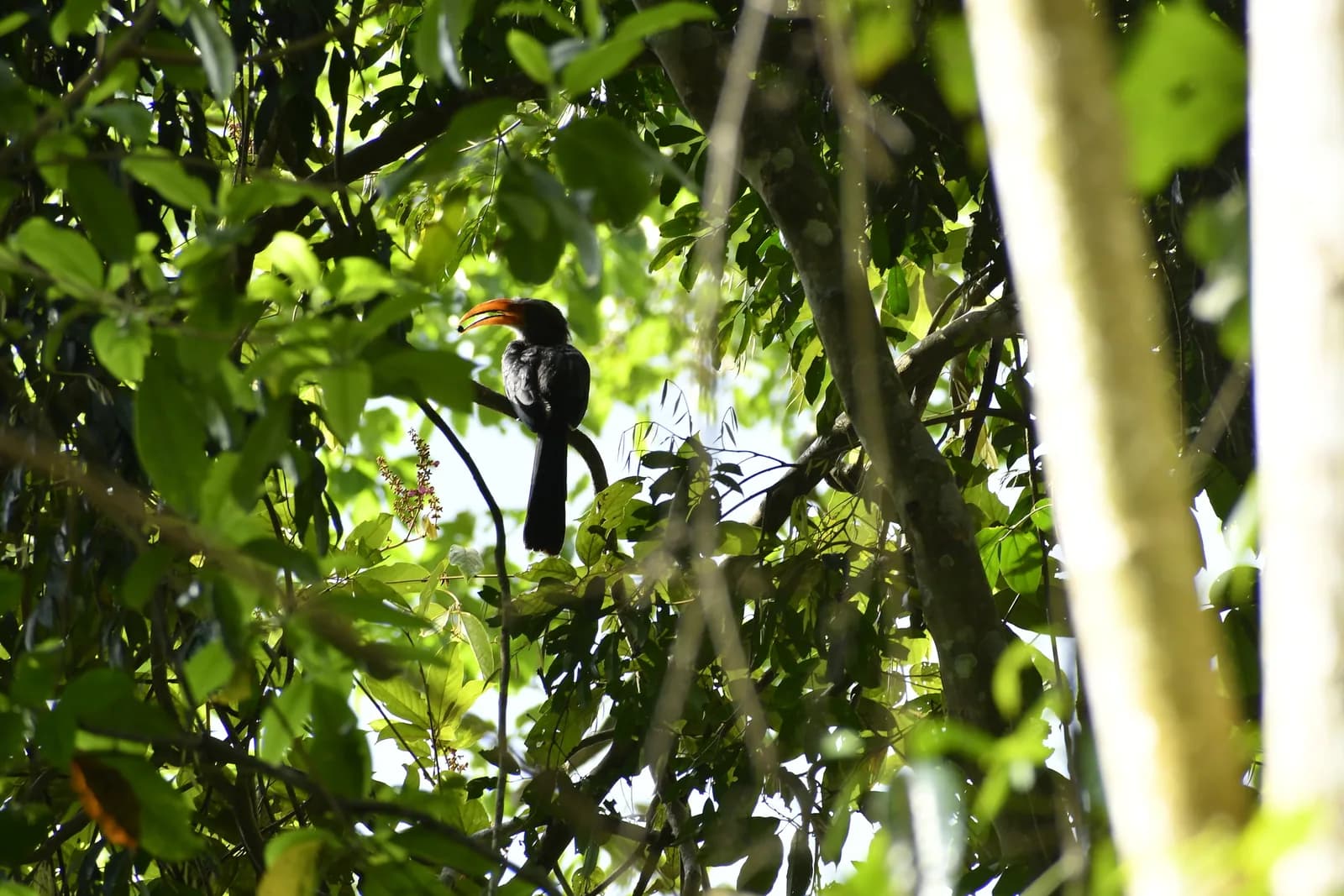
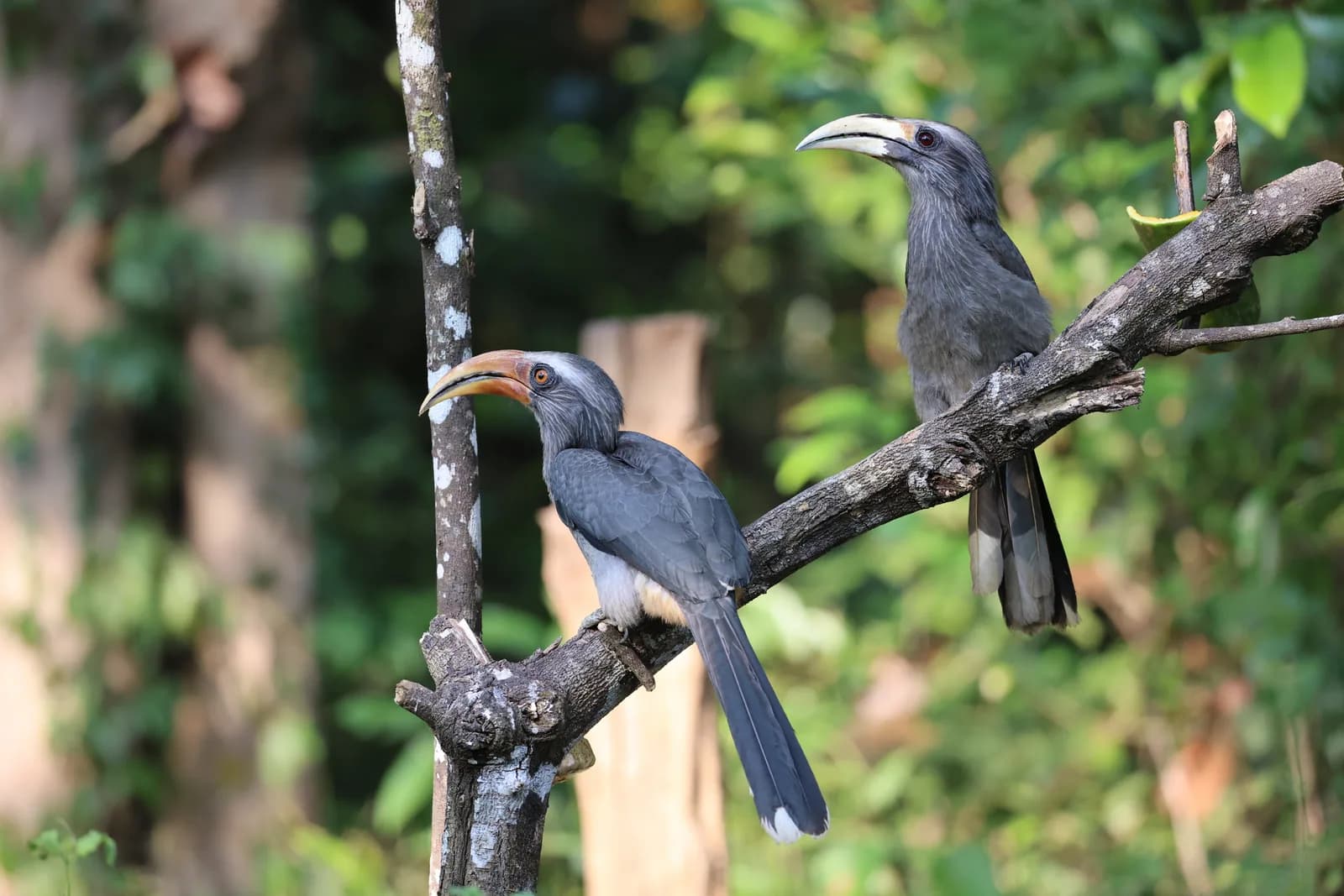
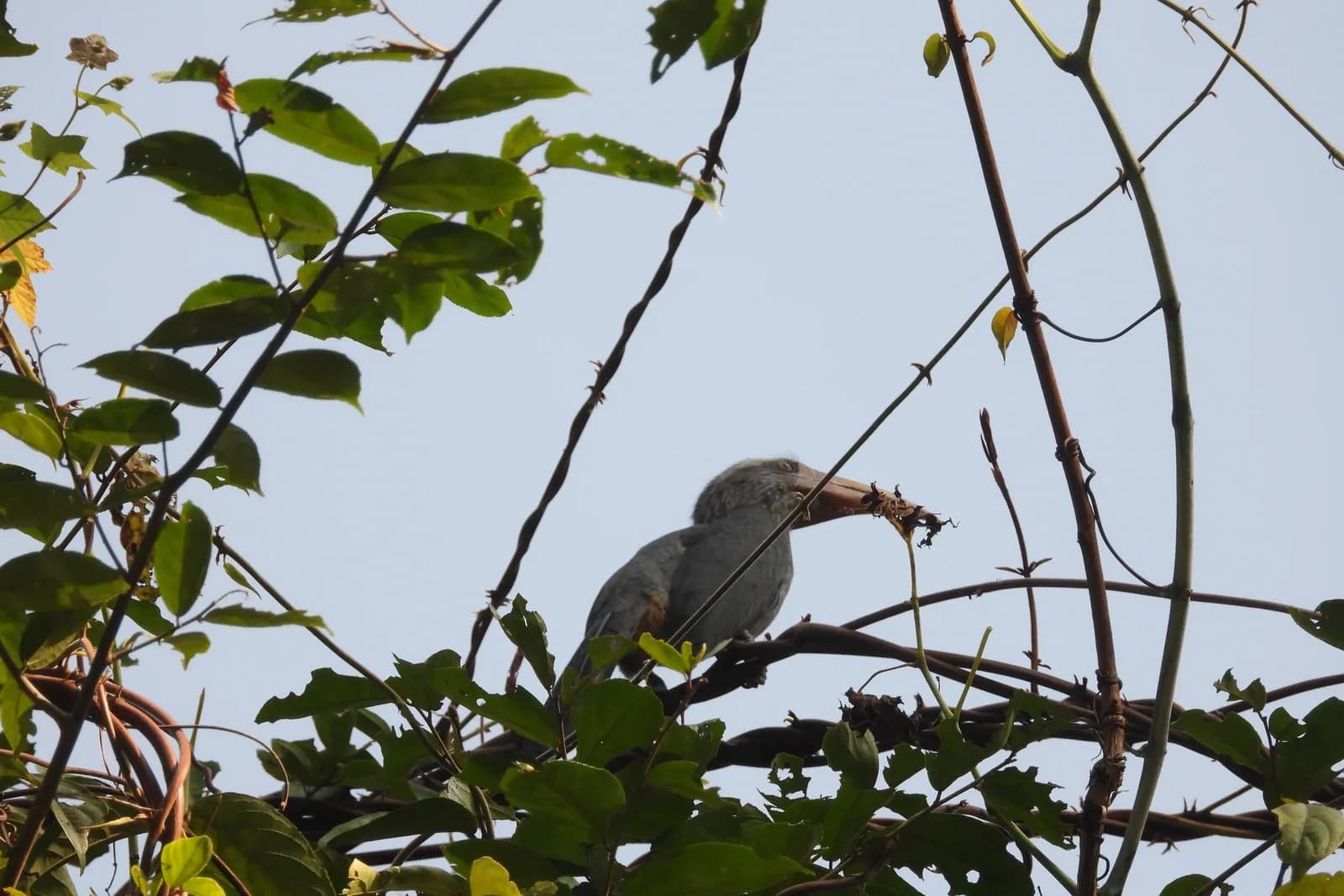
Photographs of Malabar grey hornbill in the wild, in Indian reserves. We publish no captive, baited or digitally composited images, and no photograph whose licence we cannot show.
Four hornbills, one question
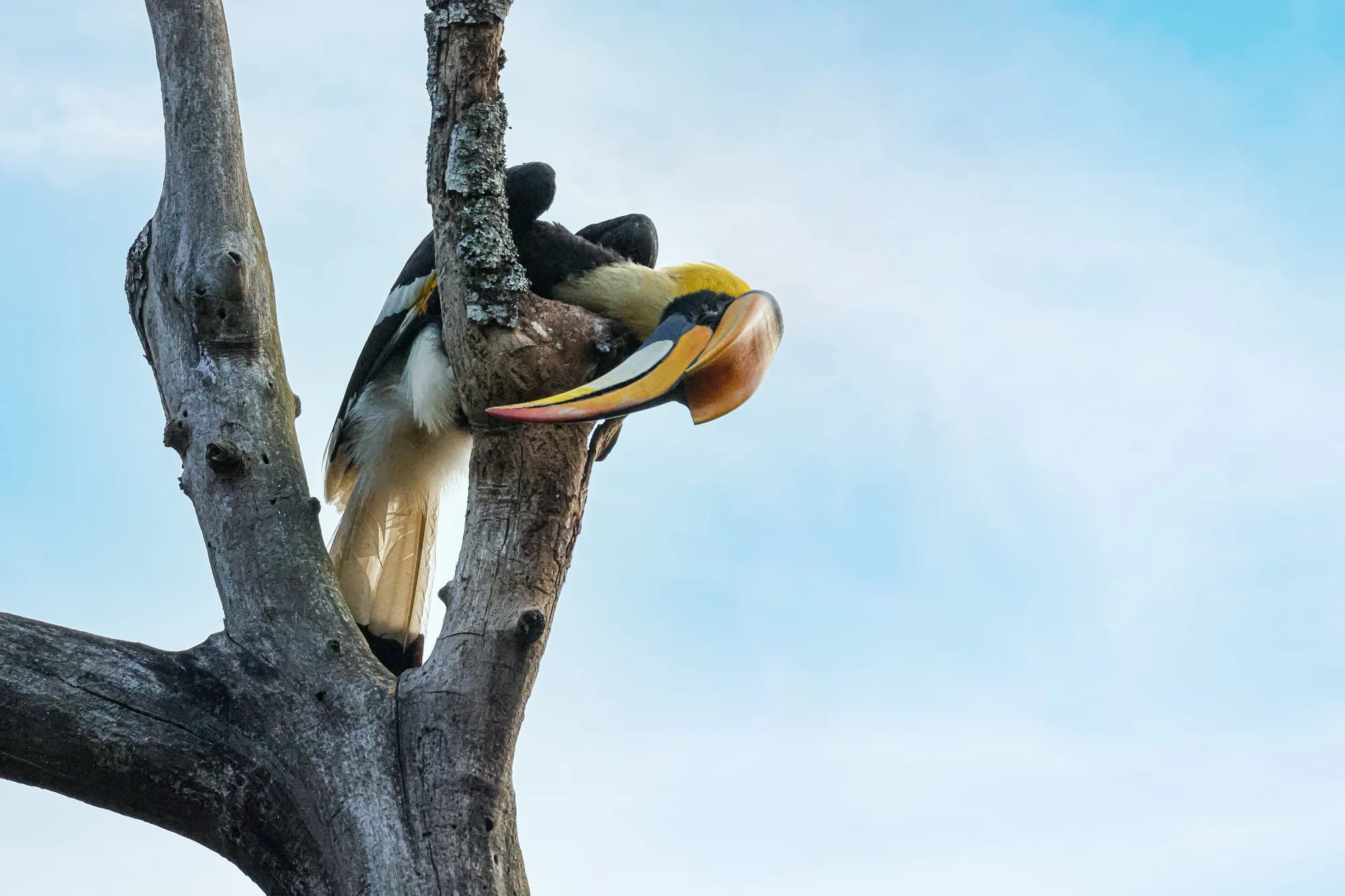
Look at the top of the bill. This species has nothing there — a clean curve, straw to yellowish, no casque at all. The Indian grey hornbill has a pointed casque; the Malabar pied and the great hornbill have enormous ones you could not miss.
Why figs decide everything
Hornbills are fig specialists, and a large fruiting fig in Ghats forest is the busiest place for a hundred metres in any direction. Nest sites need big old trees with natural cavities, which is the other thing selective logging removes.
A forest with figs and hollow trees has hornbills. A forest with neither looks green and is empty of them.
Status and protection
Status and protection
- IUCN Red List
- Vulnerable
- Population trend
- ↓ Decreasing
- Wildlife Protection Act 1972
- Schedule I
- CITES
- Not listed
Species-level assessment; the binomial given is the full species, not a subspecies. Taxon id 22682421.
Assessed 2020 · IUCN Red List assessment
What to book to see one
What you would be booking
- How it is seen
- Any Ghats forest — a Periyar boat, a Thattekad walk, a Parambikulam or Kali forest road.
- Drives to book
- One morning. If you are in good Ghats forest and have not found one, you are not listening.
Find a fruiting fig and stay at it. Hornbills, barbets, green pigeons and giant squirrels all come to the same tree, and standing still at one is worth more than driving past twenty.
Periyar — the park in fullQuestions people ask
Where can I see a Malabar grey hornbill?
How is it different from the Indian grey hornbill?
When is the best time?
Read next
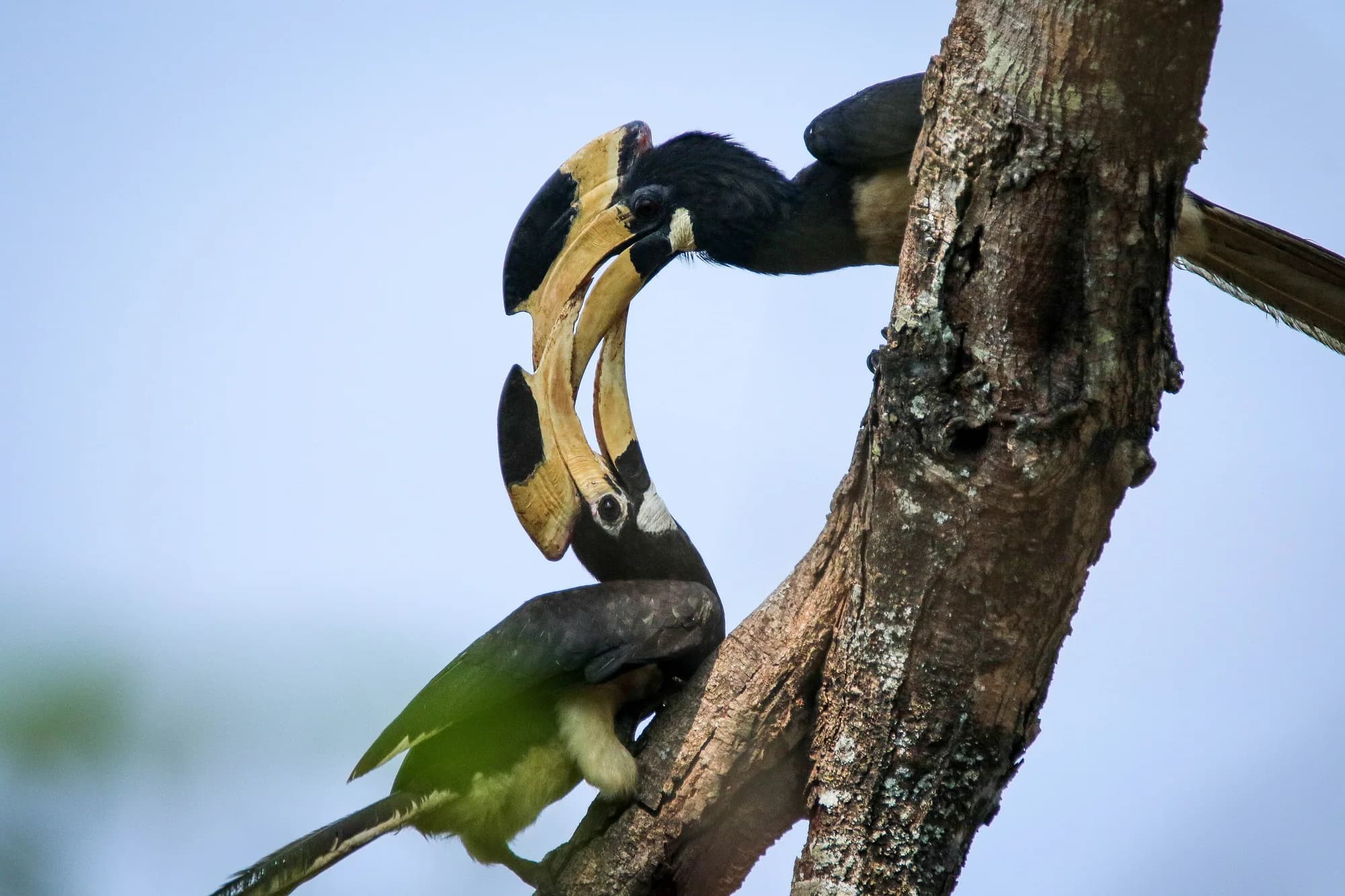
Fruiting figs along a river
Malabar pied hornbill — the big one
The hornbill most people actually see. Black and white, loudly present, and tied to fruiting fig trees along watercourses in the Western Ghats and central India.
Dry forest, and the edges of towns
Indian grey hornbill — the dry-forest one
The hornbill that turns up on the first morning of almost any north or central Indian safari, and in the trees outside the lodge. Small, grey, undramatic, and the one people actually photograph.
Three reserves, and you hear it first
Great hornbill — the one everyone wants
The bird non-birders stop the vehicle for. You hear the wingbeats several hundred metres before you see it, and the nesting behaviour is stranger than anything a mammal in the same forest does.
Thattekad — the park in full