
Species · Boselaphus tragocamelus
Nilgai
Asia's largest antelope, seen by every visitor to northern India and looked at by almost none of them. The bulls are slate blue-grey and genuinely strange animals.
Also called
- Nilgai (नीलगाय) — blue cow · Hindi
- Roz · Hindi
- Rohit · Marathi
Checked 30 Aug 2026
- Where
- Northern & central India
- Best months
- November–April
- Size
- Asia's largest antelope
- Note
- Bulls only are blue
Scrub, dry forest, grassland and above all farmland across northern and central India. One of the few large wild mammals here that has expanded with agriculture.
Where it is
Where to actually go
Ranked, with the reason each — these are not interchangeable.
- 01RanthamboreRajasthanAbundant and unmissable, often the first large mammal of the trip.Every drive
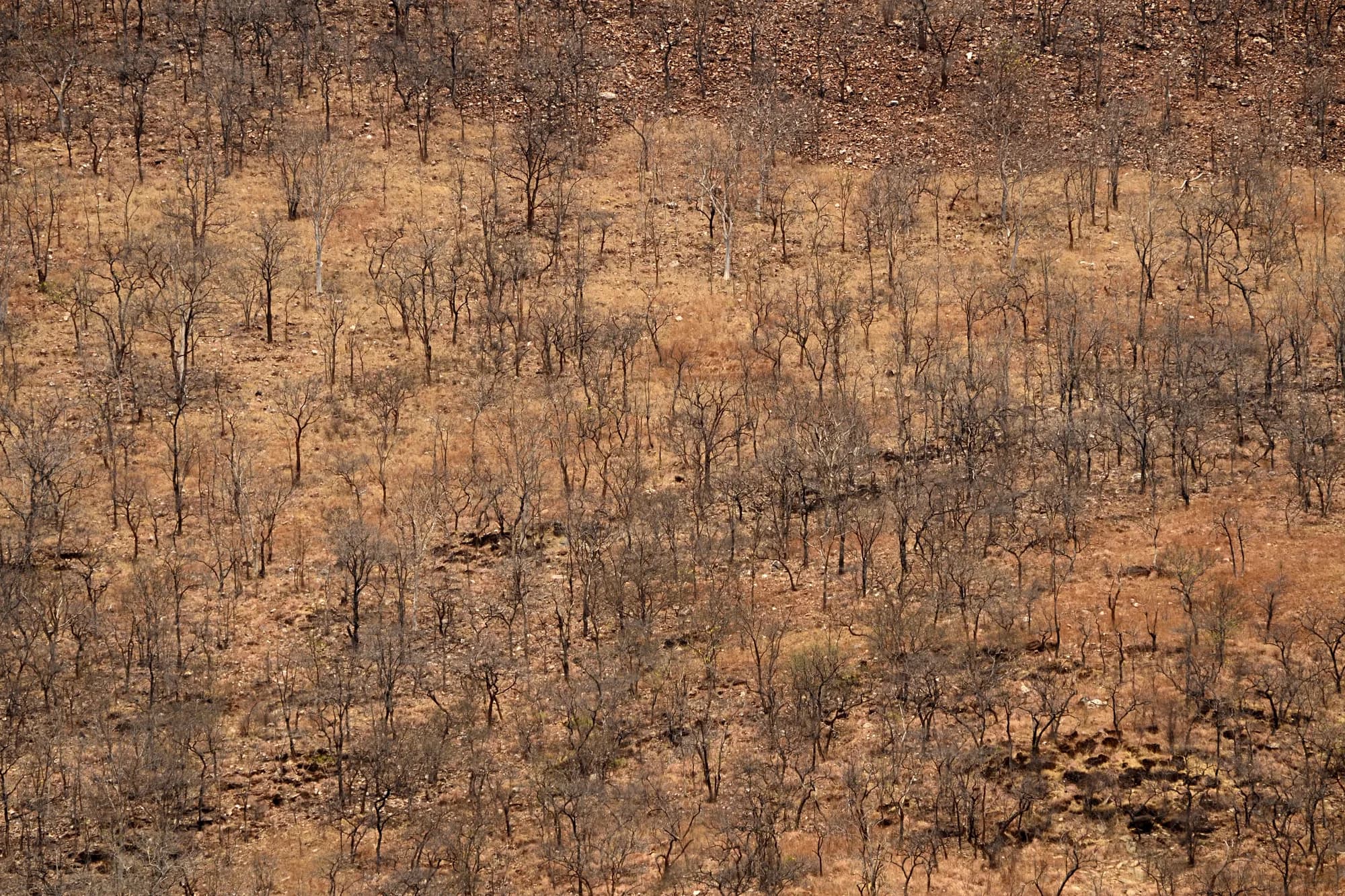
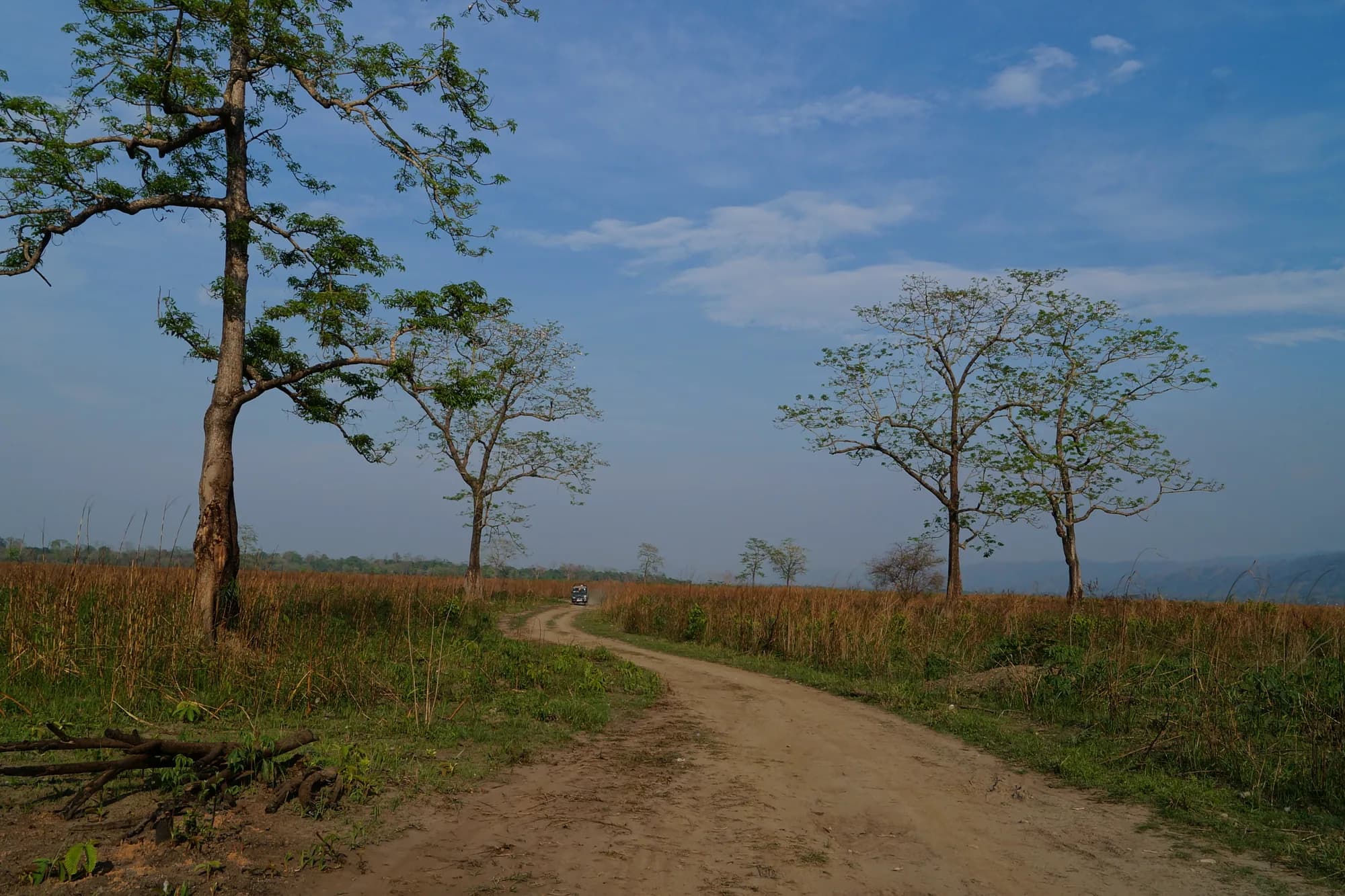
- 02CorbettUttarakhandThe grassland chaurs hold good numbers in the open.Morning on the chaurs
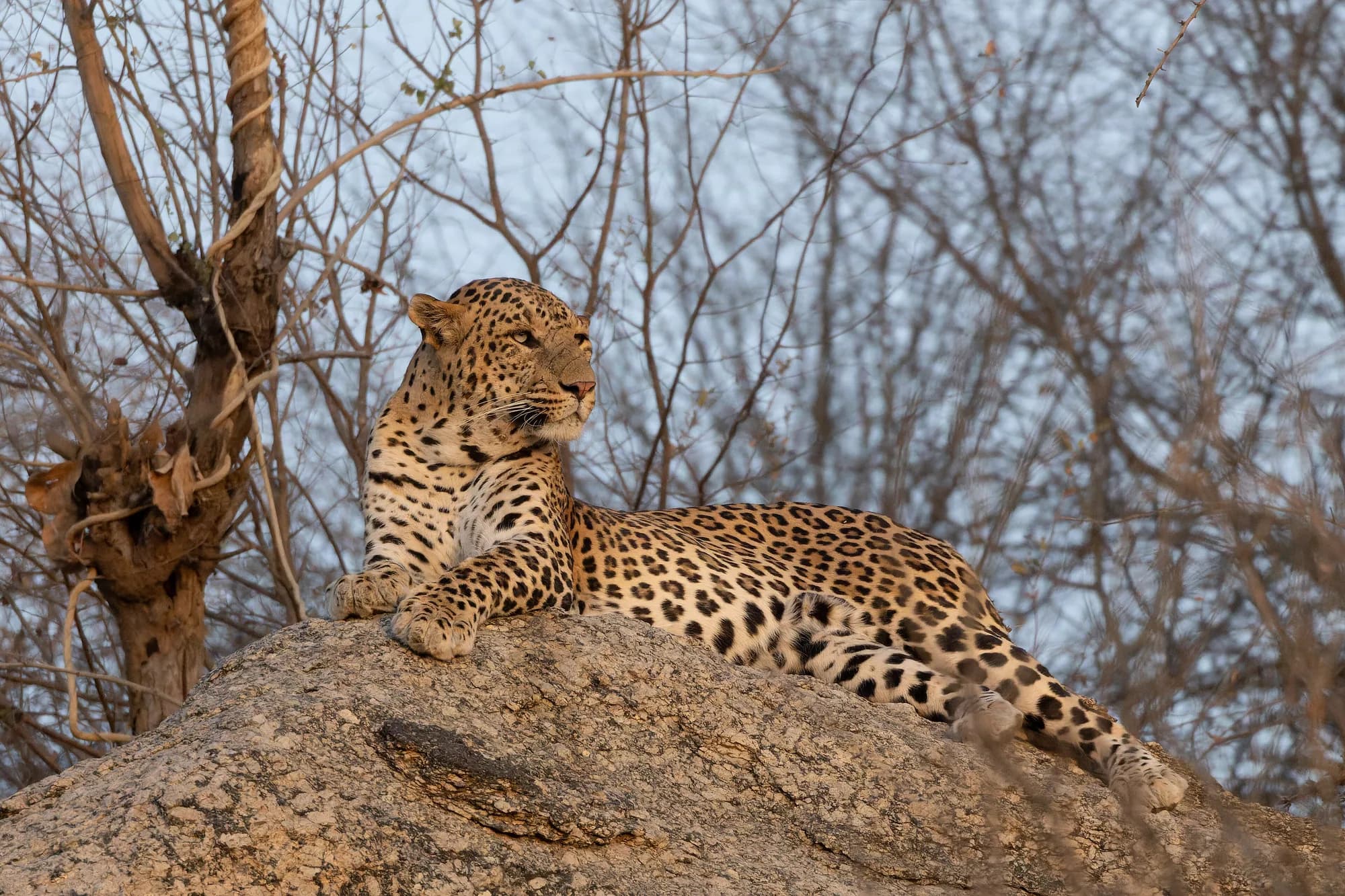
- 03JawaiRajasthanScrub and farmland, and a reminder of how much of this animal's life happens outside reserves.Between the granite hills
Where you will not see one
- The Western Ghats and the NortheastEffectively absent from the wet south and east. This is a dry northern and central animal.
- Expecting all of them to be blueOnly mature bulls are slate blue-grey. Cows and young are tawny brown, and a group is usually mostly tawny with one grey bull.
When to go
When to go
- J
- F
- M
- A
- M
- J
- J
- A
- S
- O
- N
- D
January: best. February: best. March: best. April: good. May: marginal. June: marginal. July: closed or unproductive. August: closed or unproductive. September: closed or unproductive. October: marginal. November: best. December: best.
Through the day
- Dawn
- Morning
- Midday
- Afternoon
- Dusk
- Night
Dawn: most active. Morning: active. Midday: usually resting. Afternoon: active. Dusk: most active. Night: not normally seen.
What it looks like in the field
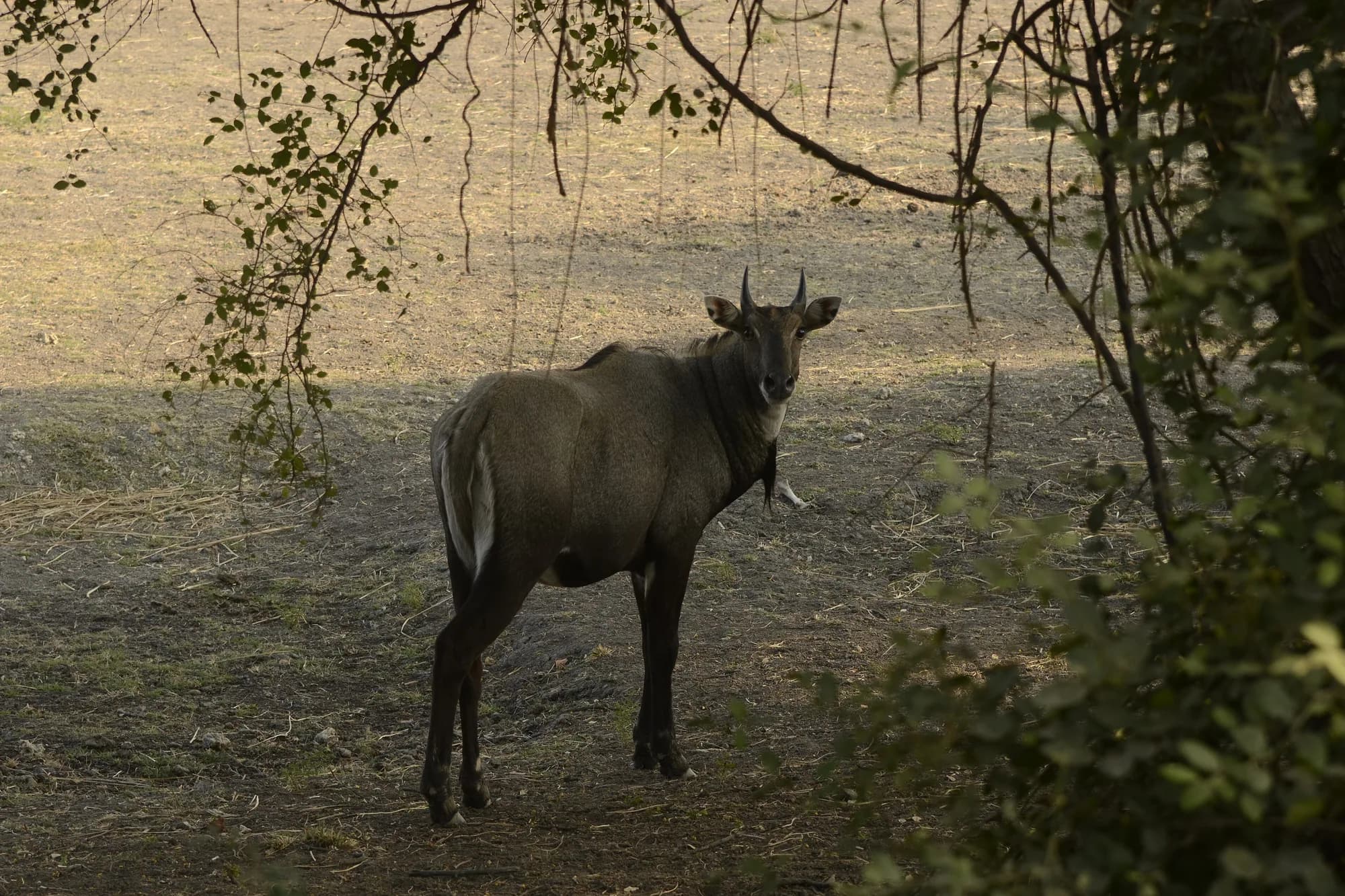
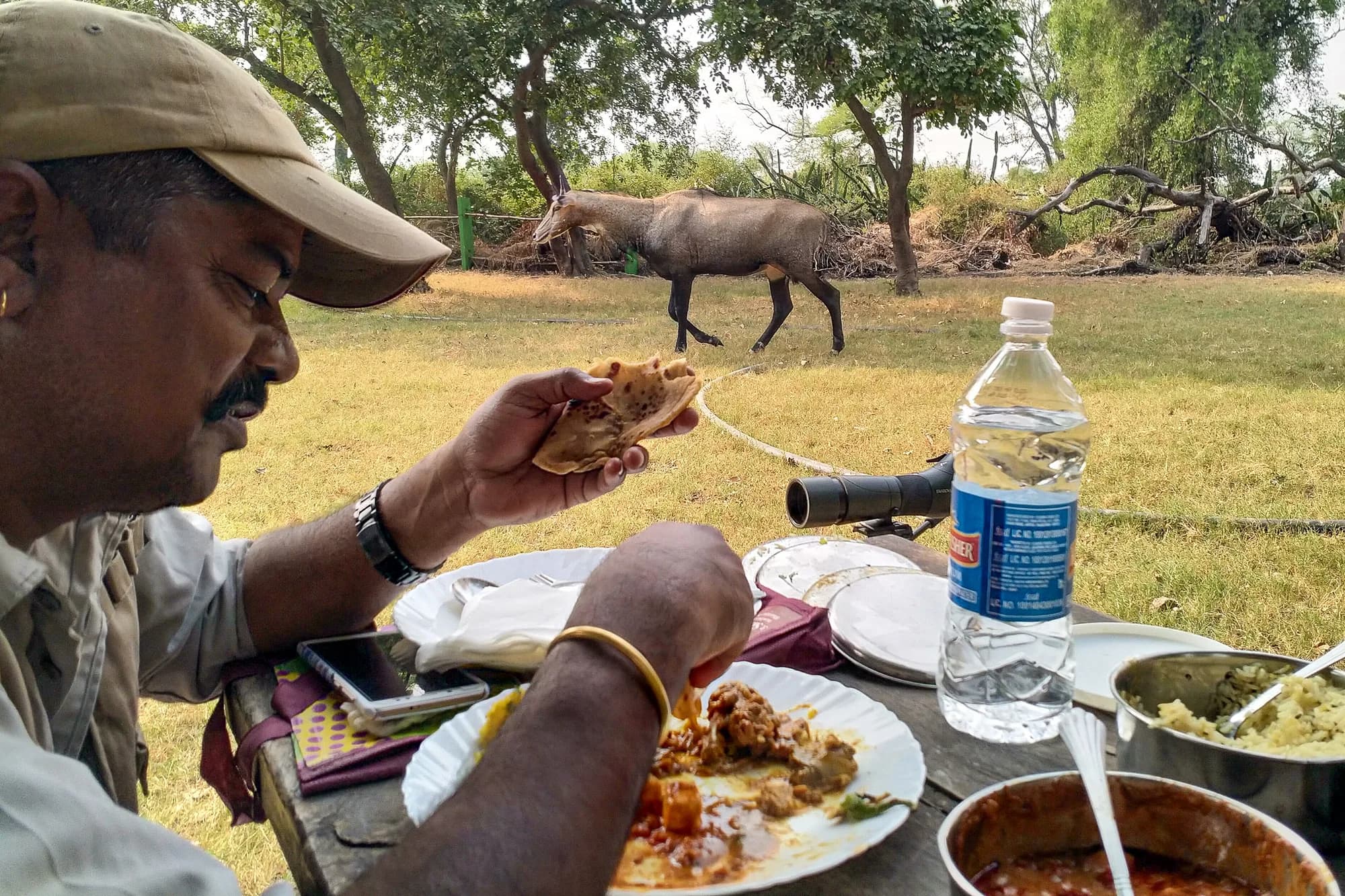
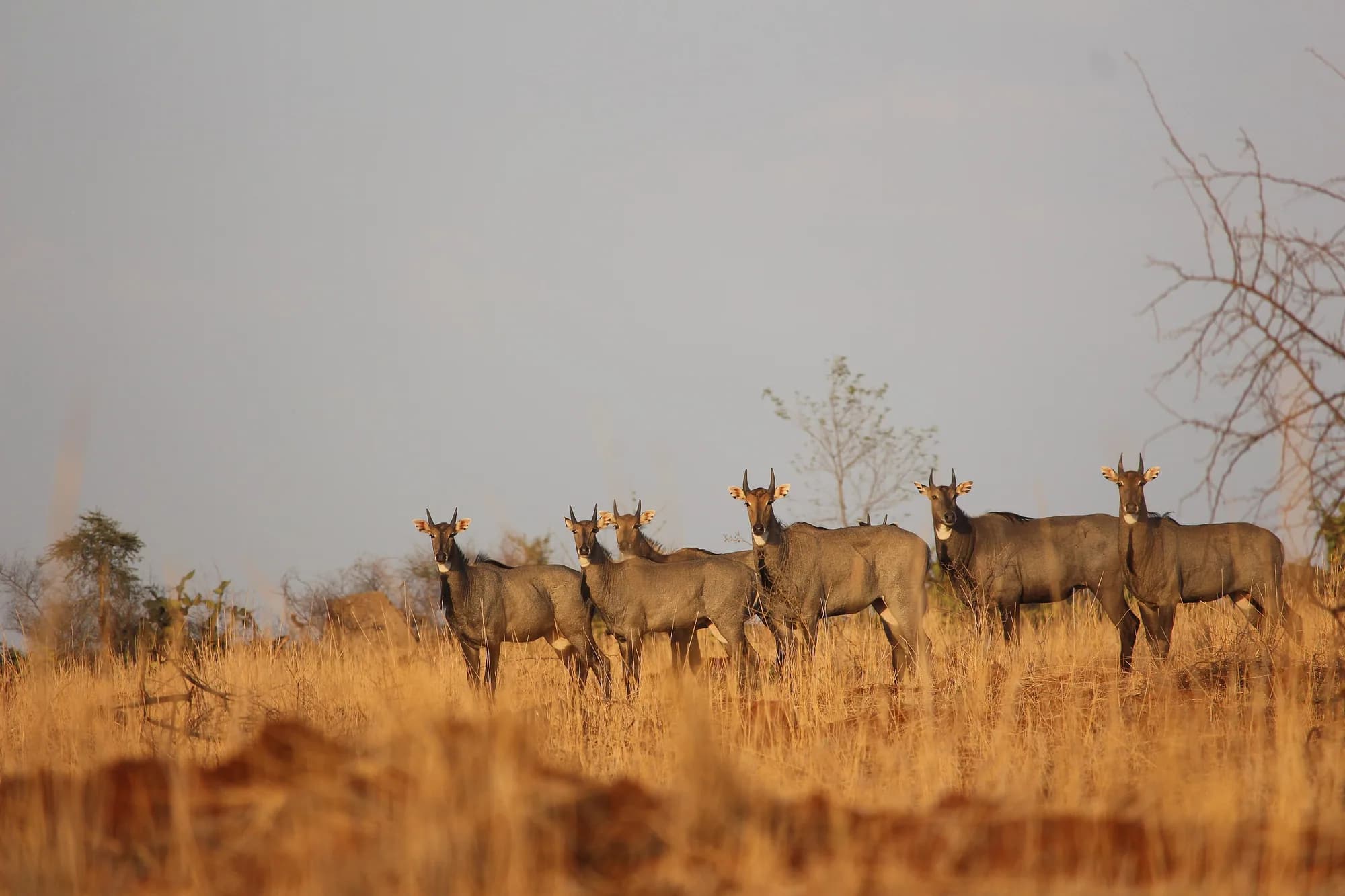
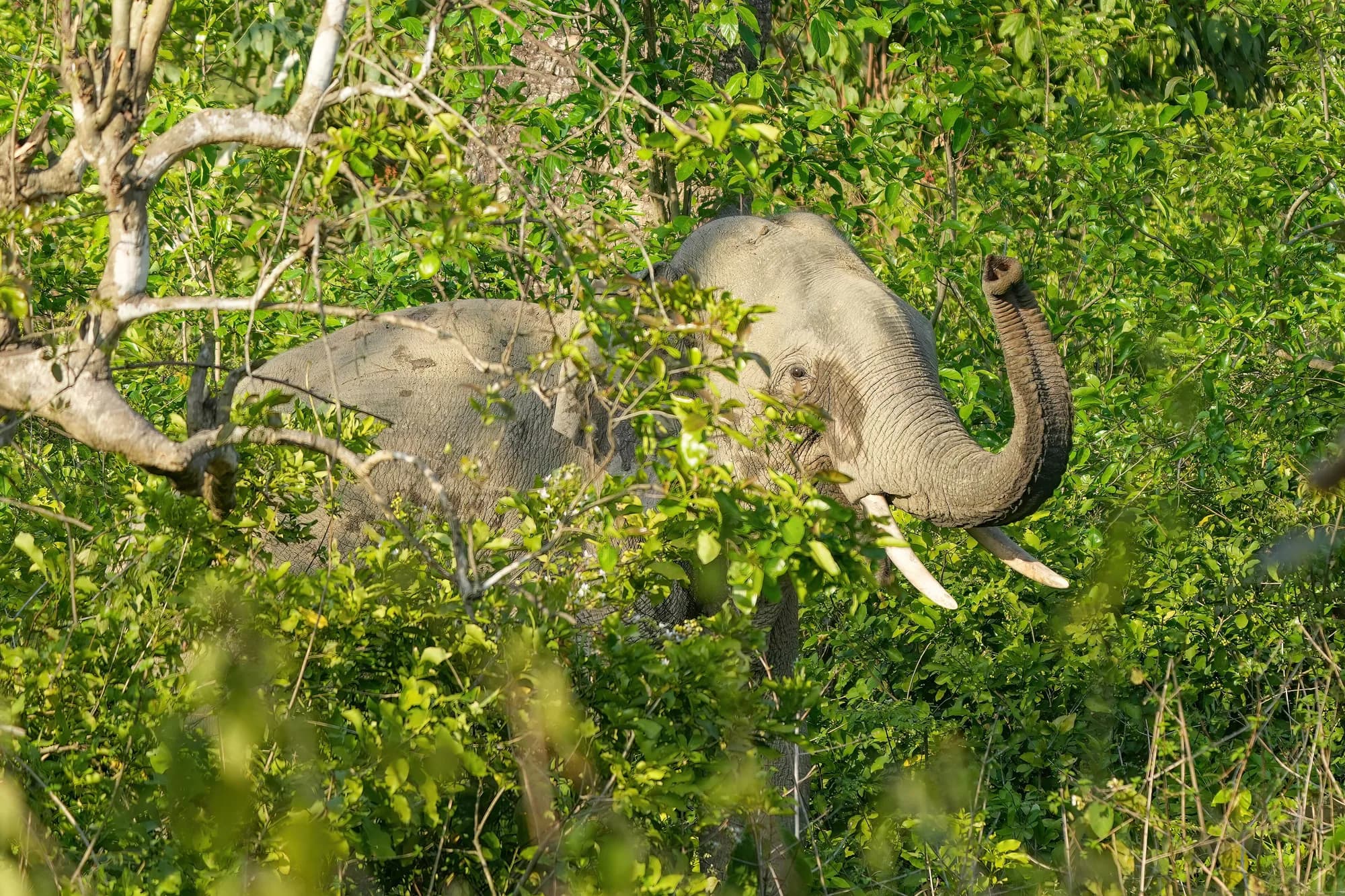
Photographs of Nilgai in the wild, in Indian reserves. We publish no captive, baited or digitally composited images, and no photograph whose licence we cannot show.
What a sighting is actually like
Immediate and unremarked. A very large tawny or blue-grey animal standing in the open, which the vehicle drives past because it is not a cat. Look properly and the proportions are odd — high at the shoulder, sloping steeply to the rump, on surprisingly thin legs.
Nothing else in India is shaped like it, which is why it has its own genus.
The problem with the name
Nilgai means blue cow, and that single word has shaped the animal’s fate. The association with cattle has made it culturally protected across much of northern India, and populations have grown accordingly.
Status and protection
Status and protection
- IUCN Red List
- Least Concern
- Population trend
- → Stable
- Wildlife Protection Act 1972
- Schedule II (post-2022 amendment numbering)
- CITES
- Appendix III (listed by Pakistan)
Species-level global assessment of Boselaphus tragocamelus; the binomial given is the full species, not an Indian subspecies.
Assessed 2016 (errata version published 2017) · IUCN Red List assessment
What to book to see one
What you would be booking
- How it is seen
- Any jeep safari in northern or central India. You will not have to look.
- Drives to book
- None needed. Nilgai are among the first large animals most visitors see.
The name causes a real conservation problem worth knowing about. Nilgai means blue cow, and that association with cattle has protected it culturally in some places while it is culled as a crop pest in others.
Ranthambore — the park in fullQuestions people ask
Why is it called a blue cow?
Where can I see nilgai?
Are they a problem for farmers?
Read next
Rajasthan
Ranthambore — the park in full
Dry forest around a fort, and the easiest reserve to reach from Delhi — which is exactly why it is the busiest.
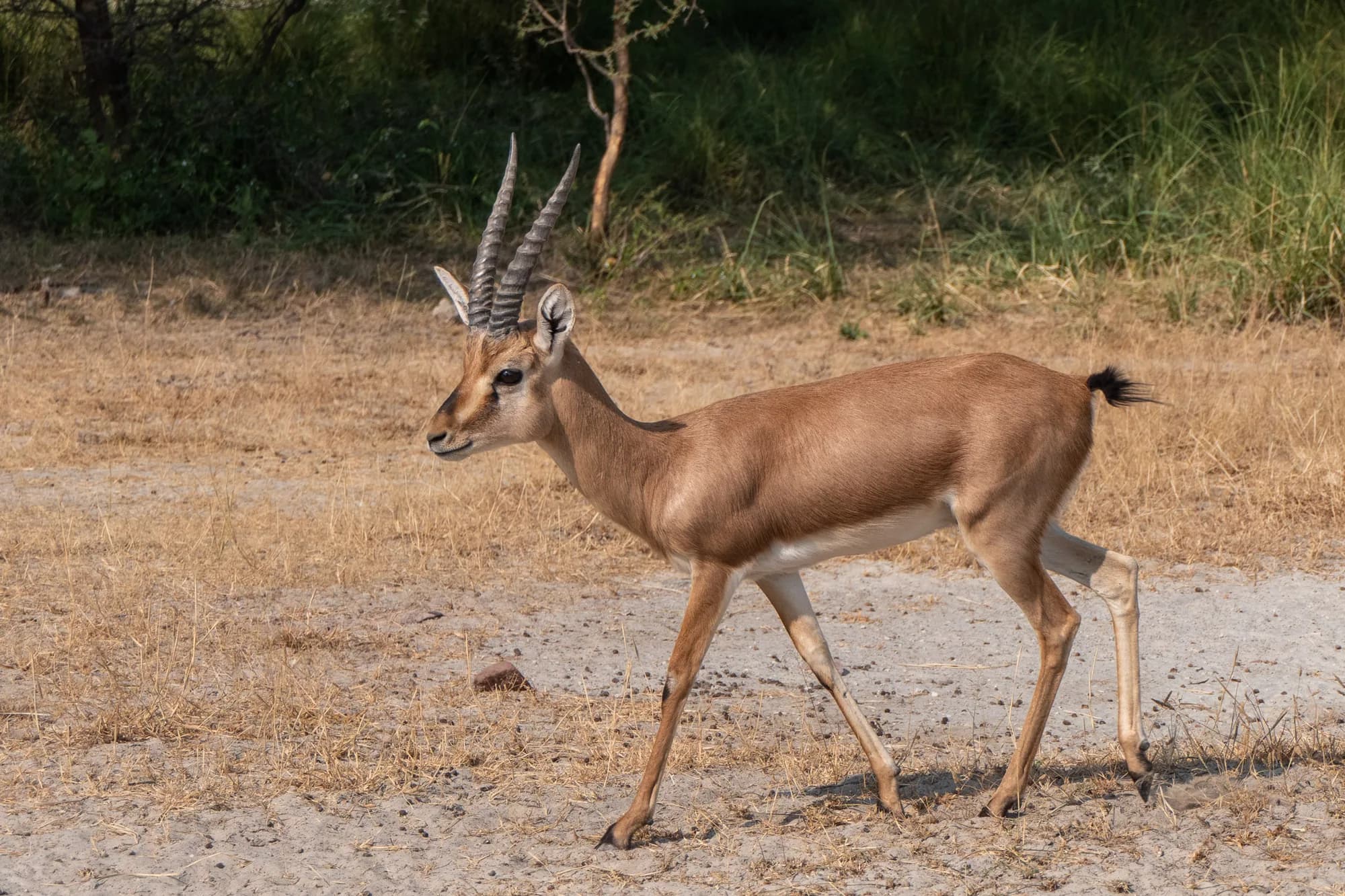
The dry country, and it makes it read as desert
Chinkara — the small one
India's gazelle — small, sandy and built for heat, going long stretches without drinking. The animal that makes Ranthambore and Jawai look like the dry country they are.
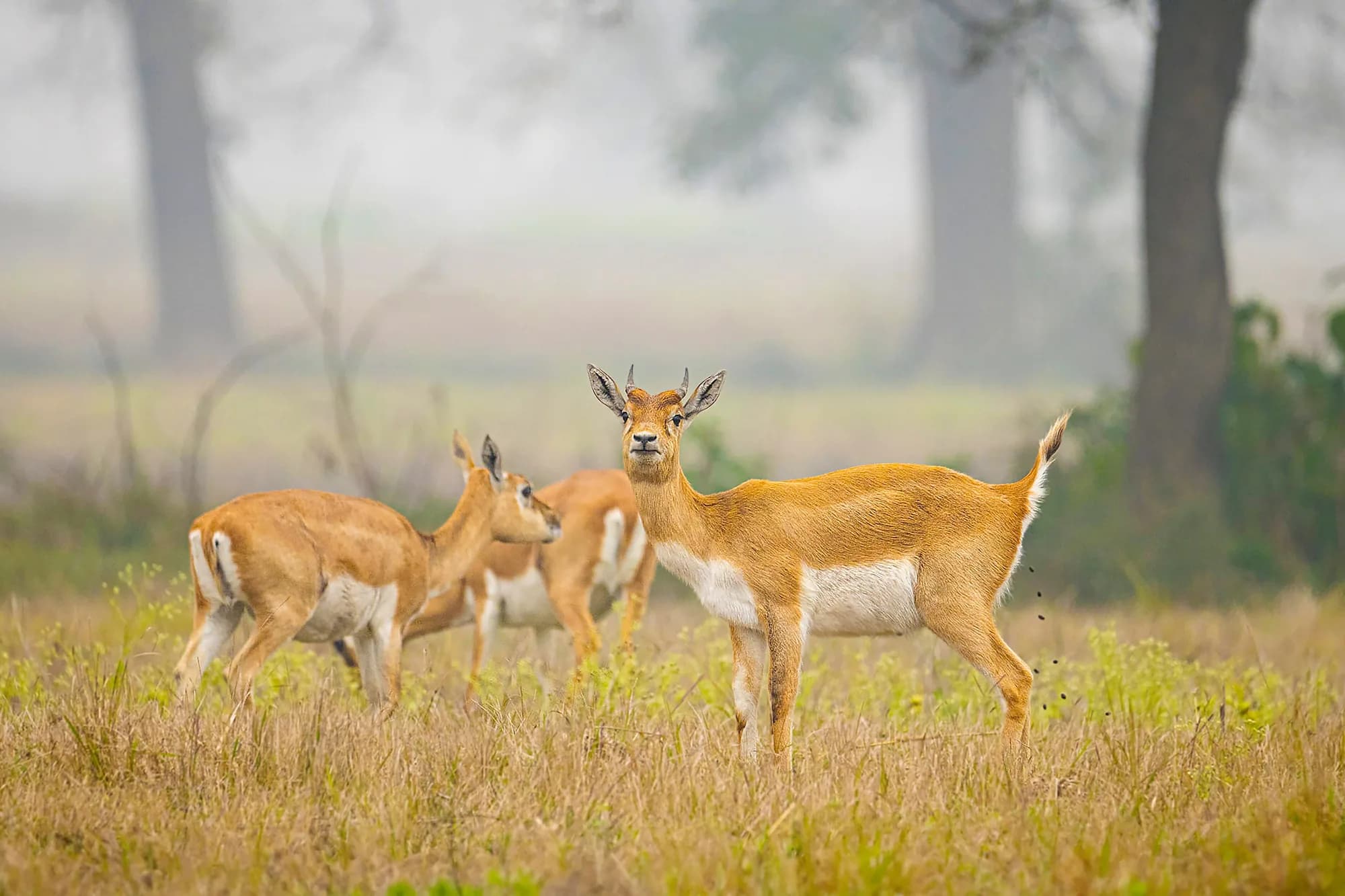
Grassland, and Velavadar above all
Blackbuck — the grassland antelope
India's most striking antelope — spiral horns, a hard black-and-white male in the rut — on flat open grassland where you can watch a hundred at once.
Our position
Travelling responsibly
Where we stand on vehicle crowding, baiting and playback — and what we will not link to, whoever is paying.