
Species · Diceros bicornis
Black rhinoceros
A browser, usually alone, usually in thick bush, and the hardest of the Big Five to see well. Roughly 6,800 remain in the wild — fewer than the white rhino by a factor of two, and the two animals are told apart by the shape of the mouth, not the colour.
Also called
- Kifaru · Swahili
- Swartrenoster · Afrikaans
- Chipembere · Shona
Checked 27 Sept 2026
- Where
- Seven countries here
- Best months
- Dry season; Etosha year-round at night
- Wild population
- About 6,800
- Odds
- Low, except at Etosha waterholes
Thick bush, thornveld and arid scrub — browsing habitat, not grassland. Almost the entire remaining population sits inside intensively protected areas in Namibia, South Africa, Kenya, Zimbabwe and Tanzania, and a good deal of it is in fenced sanctuaries rather than open parks.
Where it is
HabitatThick bush, thornveld and arid scrub — browsing habitat, not grassland.
Worth travelling for
Floodlit camp waterholes in a self-drive park. The most reliable wild black rhino viewing on earth.
Fenced sanctuaries holding both species at density, and the Laikipia conservancies.
Addo, Mountain Zebra and Mokala all hold them, quietly and with almost no visitors.
Reintroduced and intensively protected — the reason Rwanda can now add a savanna leg after the gorillas.
Also occurs
ZimbabweTanzaniaZambiaEswatiniMalawi
Present, but not where you would go to see one.
Gone from
CameroonChadThe western subspecies, declared extinct in 2011
Range this species has been lost from. It is the fact a map of where it currently lives cannot show you.
Where to actually go
Ranked, with the reason each — these are not interchangeable.
- 01EtoshaNamibiaFloodlit camp waterholes and a self-drive park. The most reliable place on earth to see a wild black rhino, and you can do it from a bench.Okaukuejo waterhole, after dark
- 02Lake NakuruKenyaA fenced sanctuary with both rhino species at high density in a small area. Not wilderness, and honest about that.Both species, one morning
- 03AkageraRwandaReintroduced and intensively protected, and the reason Rwanda can now be combined with a savanna leg after the gorillas.Pairs with Volcanoes
- 04Mana PoolsZimbabwePresent and genuinely wild rather than sanctuaried. Low odds in return for the best walking country in the region.Wild, and unlikely
- 05NgorongoroTanzaniaA small closely monitored crater-floor population, usually seen at distance. It is why the crater is sold as a one-day Big Five.Distant, but near-certain
Where you will not see one
- Most of the Big Five parksPresence on a park's species list does not mean a realistic sighting. Outside Etosha, the Kenyan sanctuaries and a few Namibian and South African reserves, this is a rare animal in big country.
- Open plainsBlack rhinos browse; white rhinos graze. Looking for one on short grass in the Mara or the Serengeti plains is looking in the wrong habitat.
- Uganda and Rwanda's forestsNo rhino in Bwindi, Mgahinga, Volcanoes, Kibale or Nyungwe. Rwanda's are in Akagera, which is savanna and a different trip.
When to go
When to go
- J
- F
- M
- A
- M
- J
- J
- A
- S
- O
- N
- D
January: marginal. February: marginal. March: marginal. April: good. May: good. June: best. July: best. August: best. September: best. October: best. November: good. December: marginal.
Through the day
- Dawn
- Morning
- Midday
- Afternoon
- Dusk
- Night
Dawn: most active. Morning: usually resting. Midday: not normally seen. Afternoon: usually resting. Dusk: most active. Night: most active.
What it looks like in the field
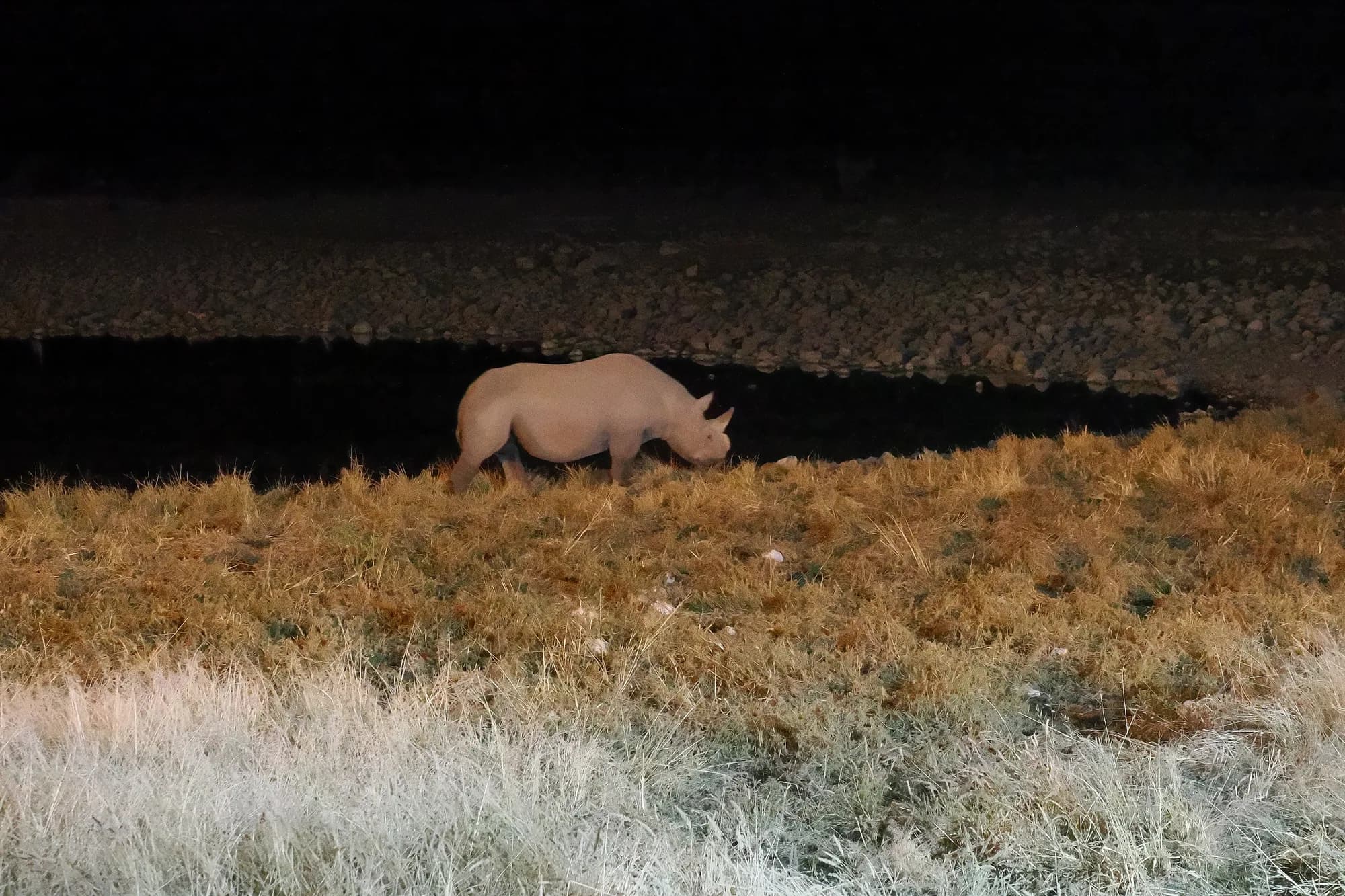
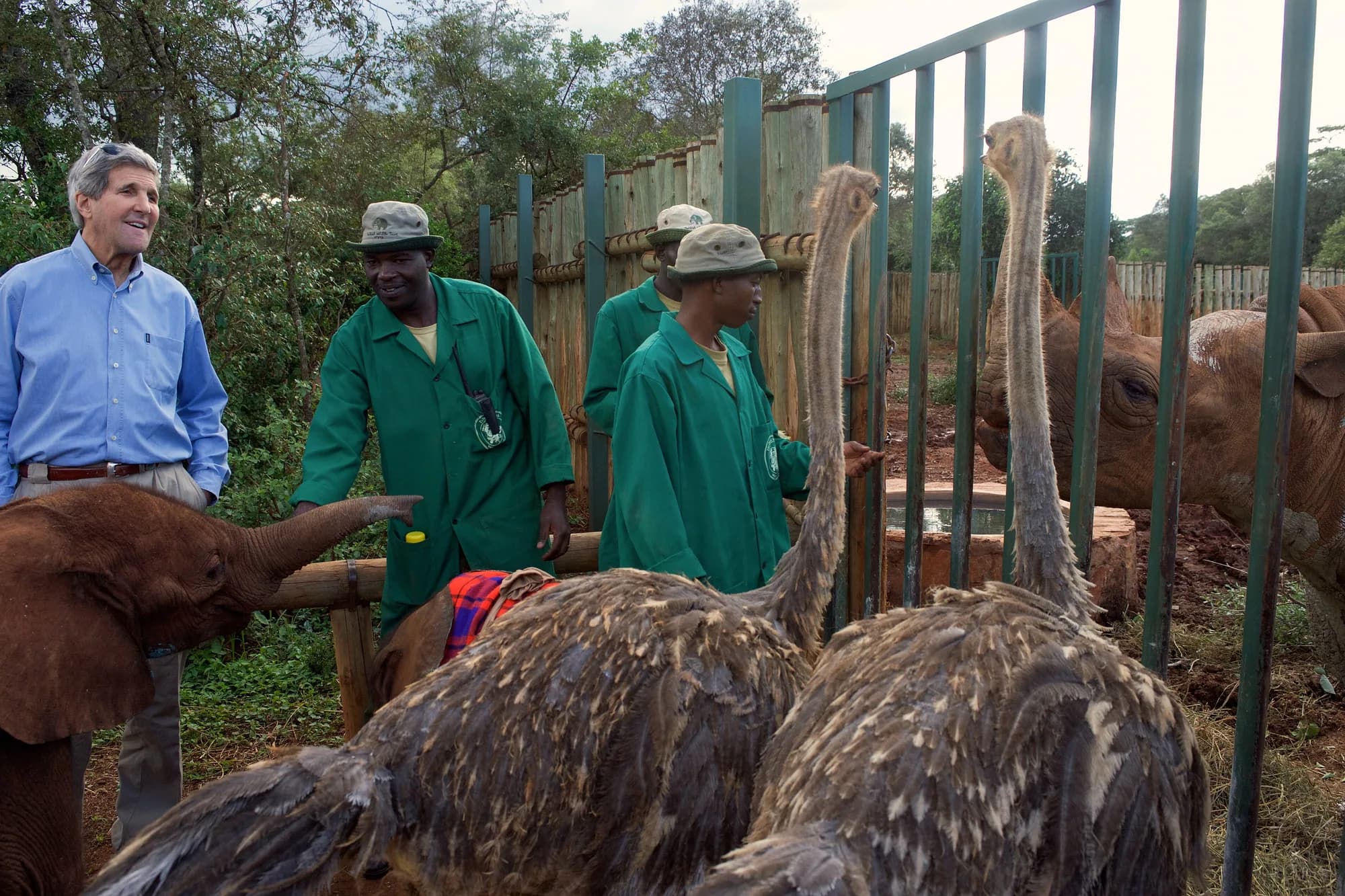
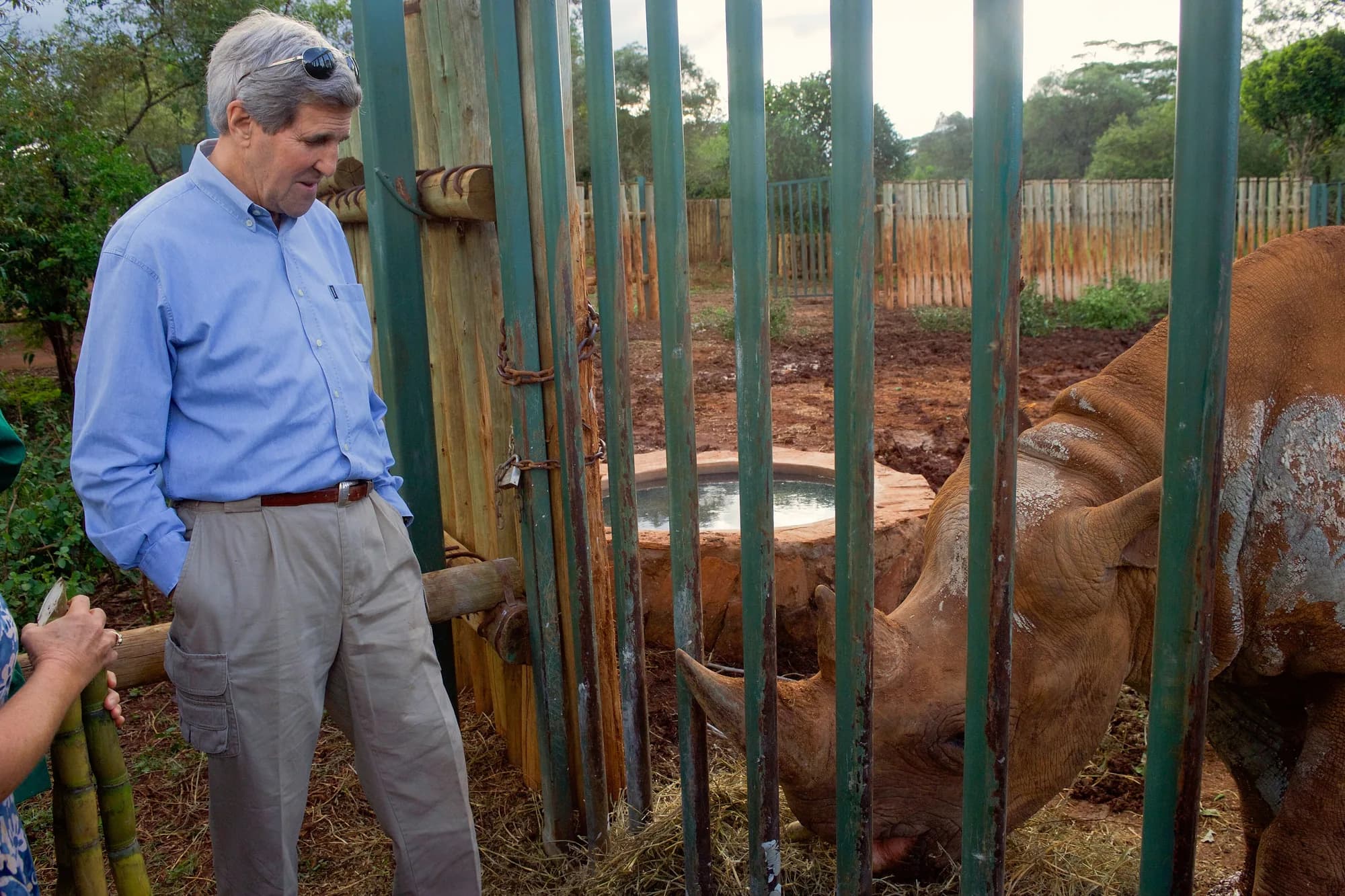
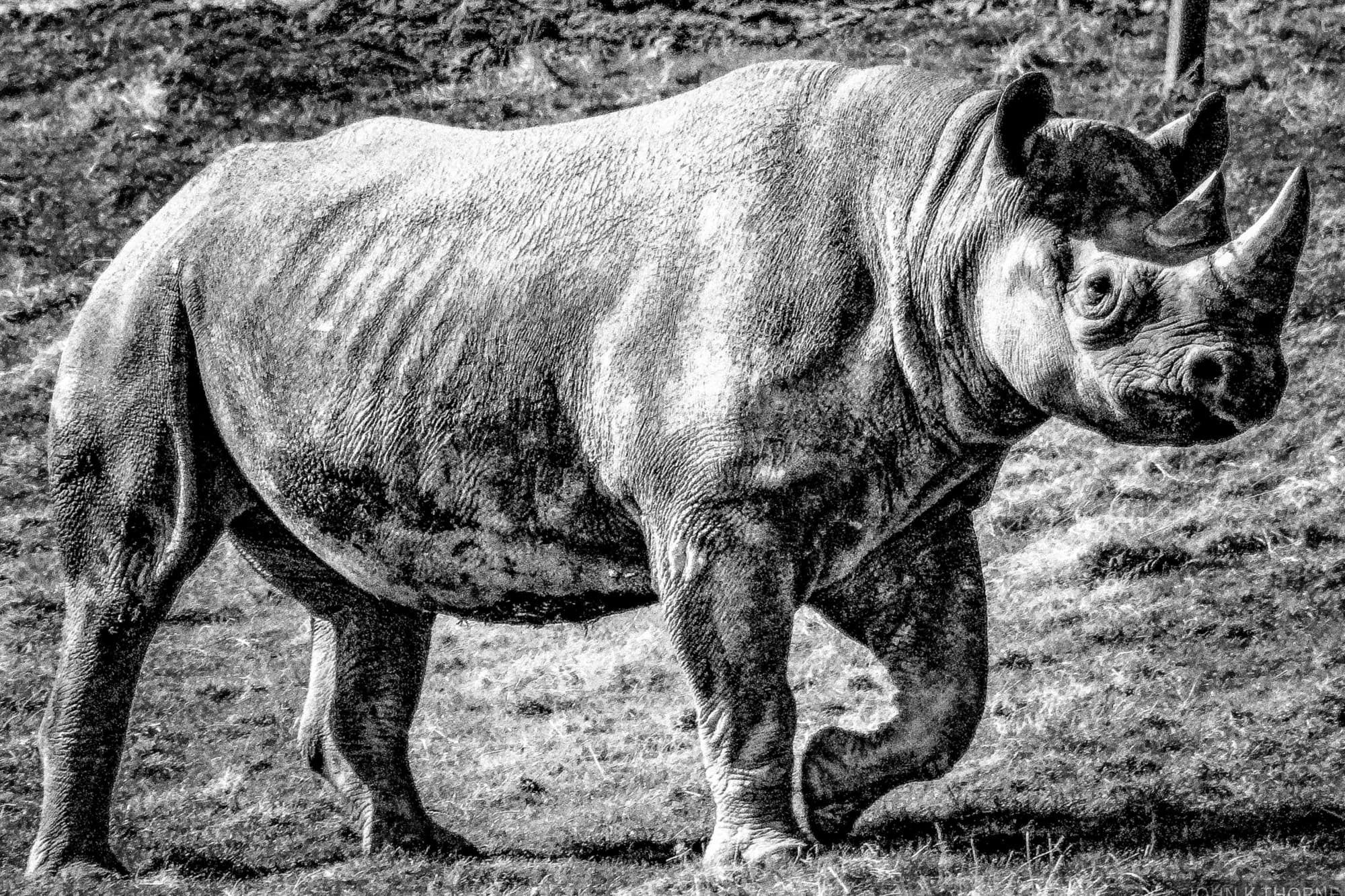
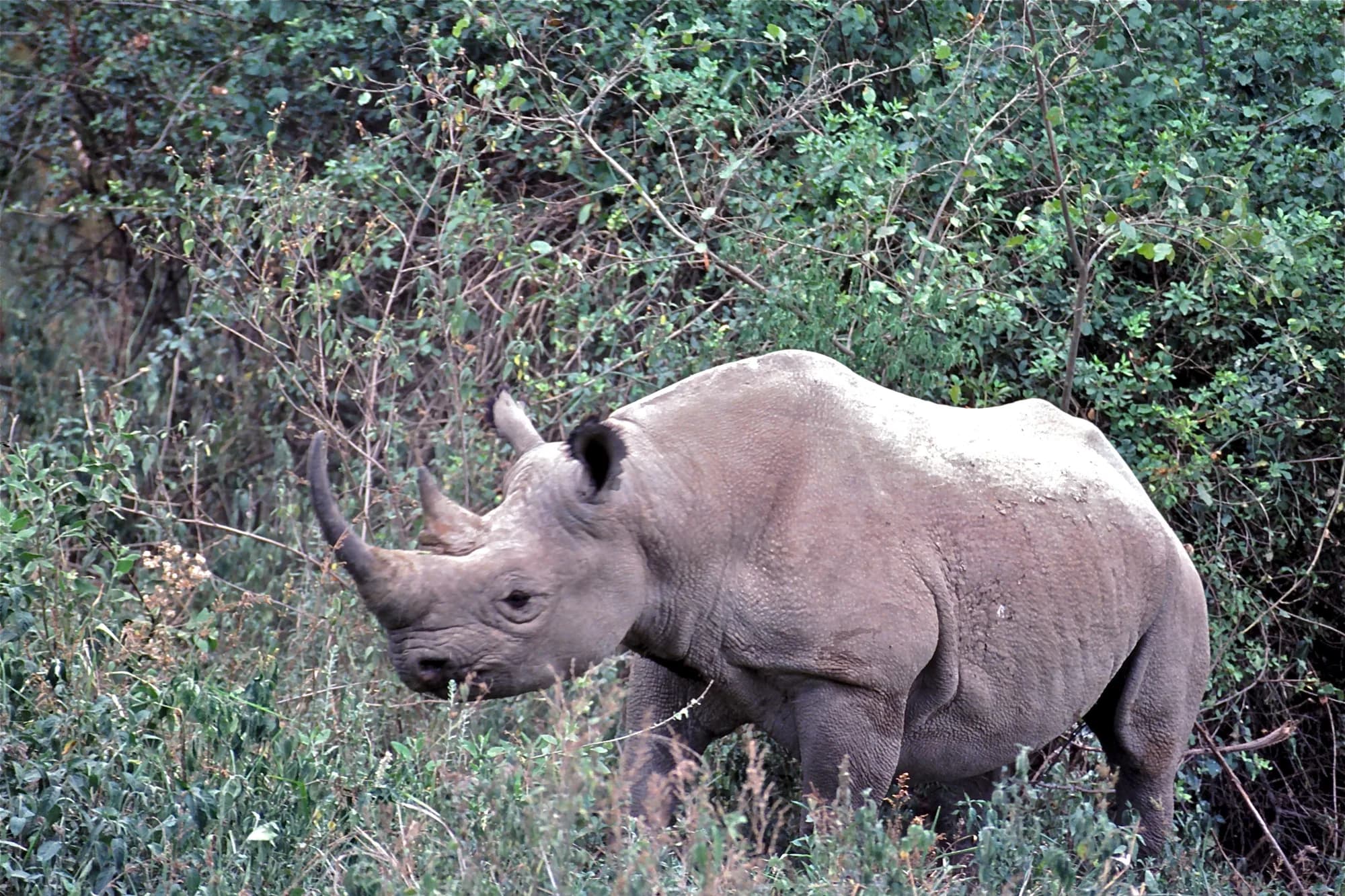
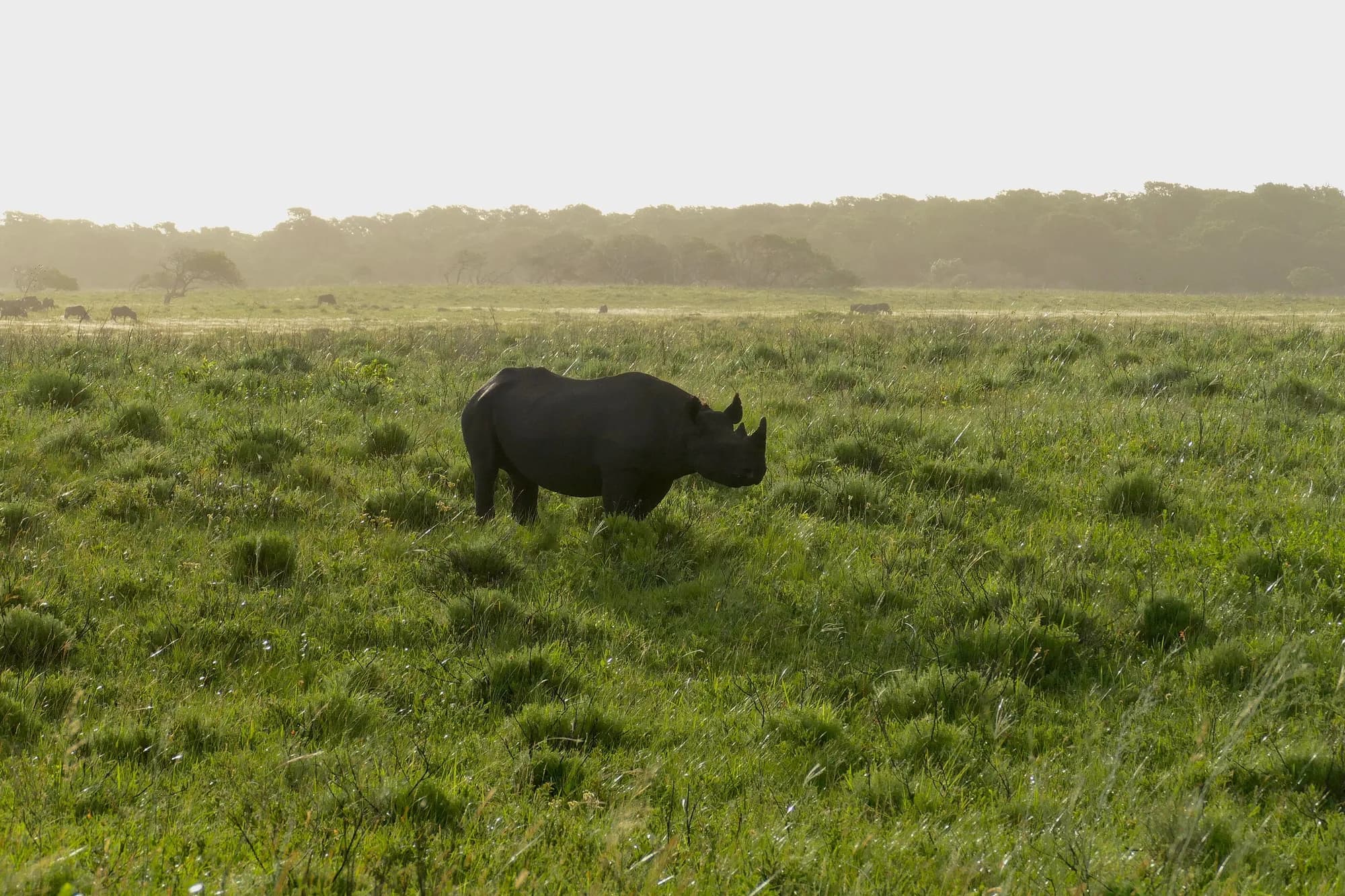
Photographs of Black rhinoceros in the wild, in Indian reserves. We publish no captive, baited or digitally composited images, and no photograph whose licence we cannot show.
Black or white
Neither animal is black or white and the colours are useless in the field. The difference is the mouth, and it follows from diet. A black rhino browses on shrubs and has a hooked, prehensile upper lip for gripping branches. A white rhino grazes and has a broad square lip for cropping grass — the name most likely comes from Afrikaans wyd, wide, rather than from any colour.
Everything else follows. Black rhinos are smaller, head carried higher, found alone in thick bush, and have a reputation for charging first. White rhinos are bigger, head carried low, often in groups on open grass, and are placid by comparison. If you are looking at a rhino on short grass with its head down, it is a white rhino.
Where the numbers stand
At the end of 2024 Africa held about 6,788 black rhinos and 15,752 white, according to the status report produced for CITES by the IUCN Species Survival Commission’s African Rhino Specialist Group with TRAFFIC. Black rhino numbers rose about 5 per cent over the year; white rhino numbers fell about 11 per cent.
That divergence is the thing worth carrying into a trip. The rarer animal is slowly recovering under intensive protection, and the commoner one is not — which is why so much white rhino viewing now happens in fenced reserves, and why rhino sightings are handled quietly wherever you go.
Status and protection
Status and protection
- IUCN Red List
- Critically Endangered
- Population trend
- ↑ Increasing
- CITES
- Appendix I
Species-level assessment for Diceros bicornis. Critically Endangered but trend Increasing - the category reflects how far the species fell, not its current direction.
Assessed 2020 · IUCN Red List assessment
What to book to see one
What you would be booking
- How it is seen
- A floodlit waterhole after dark, or a dedicated tracking walk in Namibia's Damaraland.
- Drives to book
- Not the useful unit. One night at an Etosha camp waterhole beats a week of drives elsewhere.
- Zone or shift
- Okaukuejo, Halali and Namutoni waterholes in Etosha; Lake Nakuru and the Laikipia conservancies in Kenya; Akagera in Rwanda.
Sightings of rhino are sometimes withheld or delayed by guides and rangers, and locations are not broadcast on radio. That is an anti-poaching measure, not unhelpfulness, and it is worth knowing before you ask.
Walking and tracking safarisOn the same trip you would also get
- White rhinoceros — the other one, and far commoner
- Black-backed jackal — at the same Etosha waterhole
Questions people ask
Where is the best place to see a black rhino?
What is the difference between a black and a white rhino?
How many black rhinos are left?
Read next
Five countries here, most of them in South Africa
White rhinoceros — the other one
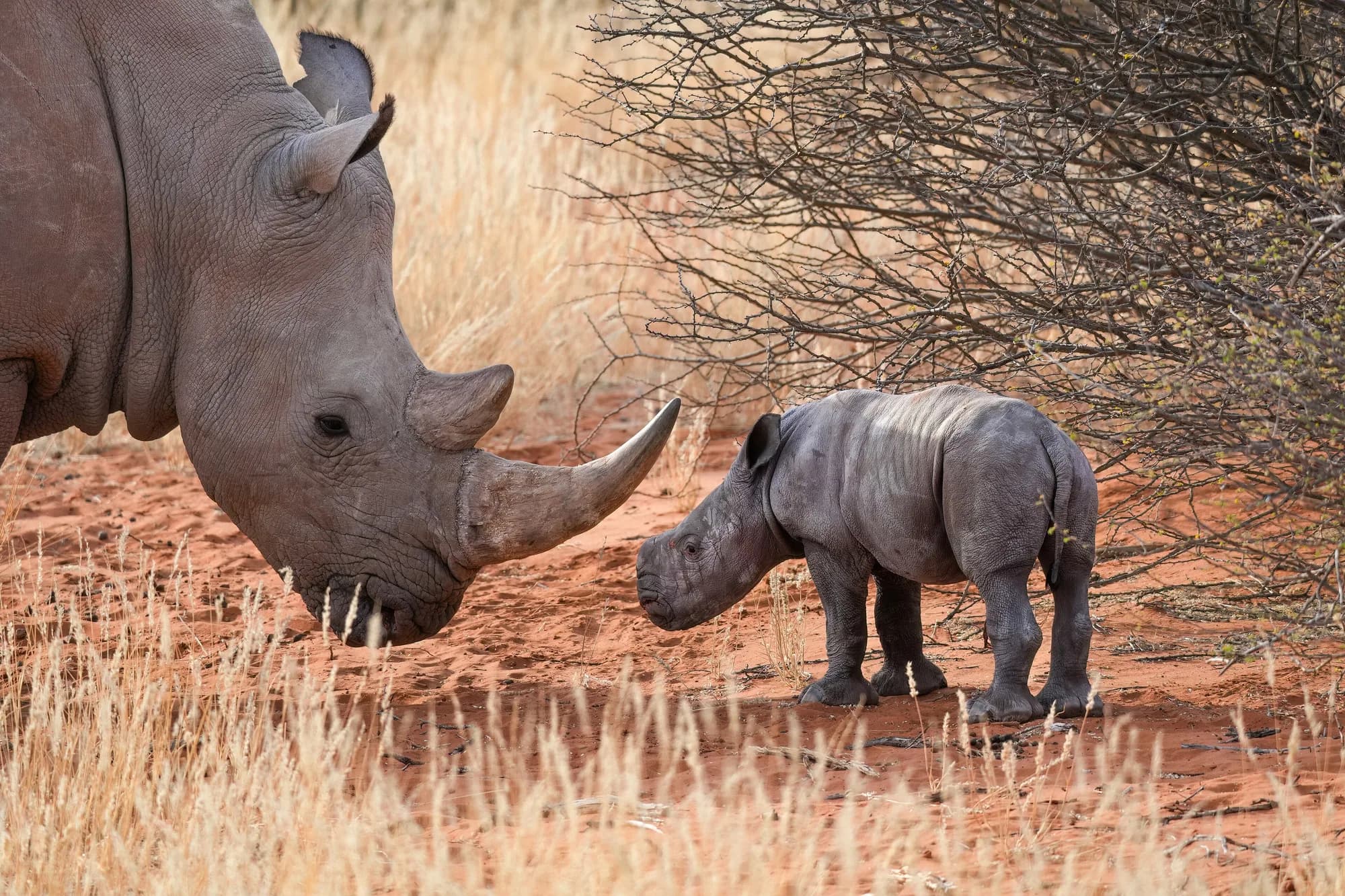
The bigger, calmer, grass-eating rhino, and the one most visitors actually see. About 15,750 remain — more than twice the black rhino — but the number fell roughly 11 per cent in a single year, and the northern subspecies is down to two animals.
Etosha — the floodlit waterholes
Akagera