
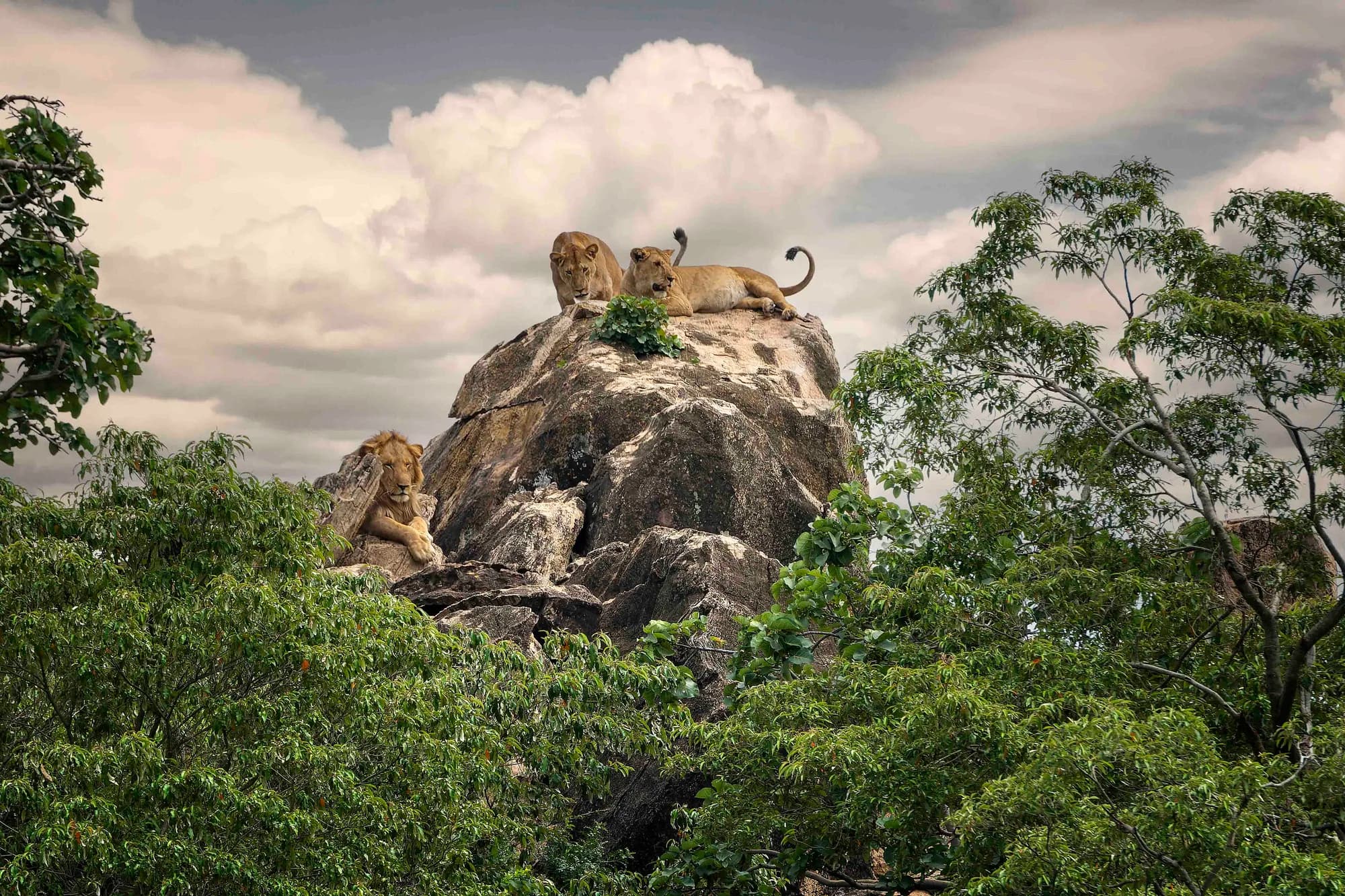
Uganda / Kidepo Valley / Itineraries — Kidepo Valley
Itineraries — Kidepo Valley
Every other Ugandan park can be done as a stop. Kidepo cannot, because two of your days are spent getting to it. The question is not how long to stay but whether the park earns the four days that staying three nights actually costs.
How long it needs, and the arithmetic behind the answer
Start from the travel, because the travel is the constraint. By road on UWA's quickest route it is about ten hours each way, and UWA itself recommends breaking the journey. By air it is historically about two hours each way, and there is no scheduled service to book.
What each length of stay actually buys, by road
| Nights at Kidepo | Total days away from Kampala | Full days in the park | Verdict |
|---|---|---|---|
| 1 | 4 with the recommended overnights | Under 1 | Do not. Two days of driving for one morning |
| 2 | 5 | About 1.5 | The Narus Valley only. Workable but tight |
| 3 | 6 | About 2.5 | The minimum we would defend. Narus twice, Kidepo Valley once |
| 4 | 7 | About 3.5 | Adds a hike or the Morungule range, or a weather day |
| 5+ | 8+ | 4.5+ | For birders and for anyone wanting the northern sector |
Based on UWA's own ten-hour drive estimate, its recommendation to break the journey at Ziwa Rhino Sanctuary, Gulu or Kitgum, and the gate hours of 7am to 7pm. Flying removes roughly two days from every row in the first column and changes nothing in the third.
Three nights is the number, and here is why not two
Two nights gives you an afternoon, a full day and a morning. That is enough for the Narus Valley and nothing else. The Kidepo Valley drive is thirty kilometres each way from Apoka with the hot springs eleven kilometres beyond the river — a full day, by UWA's own description. Taking it on a two-night trip means giving up your only full day in the valley that actually holds the game, to spend it in the valley UWA says is short on big game. Three nights is the first length at which you can do both without that trade.
Uganda Wildlife Authority — Kidepo Valley National Park
UWA's own Kidepo park page, read 14 October 2026. The source here for the park size and altitude band, the 1962 gazettement, the distance from Kampala, the five-kilometre distance to the Kenyan border, the mammal and bird counts, the buffalo, elephant and giraffe figures, the named gates on each road route, the ten-hour drive time, and UWA's own wording on Karamoja.
https://ugandawildlife.org/national-parks/kidepo-valley-national-park/Uganda Wildlife Authority — Kidepo Valley National Park brochure, 2018
UWA's own two-page park brochure, linked from the download button on its Kidepo page as KVNP PARK BROCHURE and hosted on ugandawildlife.org. The file's internal creation date is 20 June 2018 and it is still the brochure UWA publishes. Downloaded (9.8 MB) and read on 14 October 2026. It is the only UWA document that explains the difference between the Narus and Kidepo valleys, names the game circuits, the campsites, the viewpoints and the trail, gives the two rainfall figures, gives the three road distances, describes the rest camp's bed stock, and names the species for which Kidepo is the only Ugandan refuge. It disagrees with UWA's own park page on the mammal count and on the distance from Kampala, and both figures are published here.
https://ugandawildlife.org/wp-content/uploads/2024/05/KVNP-2018-4.pdfUganda Wildlife Authority — Conservation Tariff 2024–2026
Downloaded and read page by page on 14 October 2026. Fifteen physical pages numbering themselves 1–24: entrance categories, vehicle and aircraft entry, guided and self game drives, walks, mountain activities, camping, research fees, fines, and a per-park fees summary. Kidepo appears in six separate places in it — the Category A entrance band, the guided game drive table, the self game drive table, the lower nature-walk band, the mountain activities table and its own summary on document page 21 — and those six places do not always agree. The tariff is printed "subject to change without prior notice". Its cover period, July 2024 to June 2026, expired on 30 June 2026 and UWA has published no successor: checked again on 14 October 2026, this is still the only tariff linked from ugandawildlife.org.
https://ugandawildlife.org/wp-content/uploads/2024/03/UWA-Conservation-Tariff-July-2024-June-2026.pdfThree nights at Kidepo, hour by hour
Built around UWA's own gate hours, its named circuits and the twenty-four-hour entrance clock. Arrival assumes the recommended overnight at Kitgum the night before, which is what makes the morning entry possible.
The three-night pattern
| When | What | Why this and not something else |
|---|---|---|
| Day 1, 09:00 | Enter at Lokumoit. The 24-hour clock starts now | Morning entry buys you this afternoon, a dawn and a full morning on one day's fee |
| Day 1, afternoon | Settle at Apoka. Short nature walk around the rest camp | Zebra, hartebeest and reedbuck, per UWA, and it costs USD 25 not a drive |
| Day 1, dusk | Night game drive, if you are sleeping inside the park | The only nocturnal product here, and it is USD 30 a head |
| Day 2, first light | Narus Valley: the Kakine and Nagusokopire circuits | Buffalo in the valley-floor swamps, giraffe on the slopes above, lions on the outcrops |
| Day 2, midday | Rest at Apoka. The binocular viewpoint is here | 40 km/h speed limit and semi-arid heat make midday driving unproductive |
| Day 2, afternoon | Katurum circuit, or the loops north west of Apoka with a ranger | The second circuit, different ground, same valley |
| Day 3, full day | The Kidepo Valley drive: Lokimorigen, the river crossing, Kanangorok | Scenery, Jebel Lotuke, a dry riverbed to walk on, and the South Sudan border |
| Day 4, early | A last Narus drive, then exit before 09:00 | Keeps the trip inside three entrance days rather than four |
All place names and all of the what-to-look-at detail are UWA's own, from the Kidepo brochure. The exit timing is the twenty-four-hour rule doing its work: entering at 09:00 on day 1 and leaving before 09:00 on day 4 is exactly three entrance days. Leaving at 11:00 instead makes it four, at USD 40 a head.
What to drop if you lose a day
Drop day 3, the Kidepo Valley. It is the most expensive day in time and the one UWA itself says is short on big game. Keep both Narus days and the night drive. The scenery is a real loss and the hot springs are a genuine curiosity, but the choice is between a valley with the animals in it and a valley with the view, and on a shortened trip that is not a close call.
Uganda Wildlife Authority — Kidepo Valley National Park brochure, 2018
UWA's own two-page park brochure, linked from the download button on its Kidepo page as KVNP PARK BROCHURE and hosted on ugandawildlife.org. The file's internal creation date is 20 June 2018 and it is still the brochure UWA publishes. Downloaded (9.8 MB) and read on 14 October 2026. It is the only UWA document that explains the difference between the Narus and Kidepo valleys, names the game circuits, the campsites, the viewpoints and the trail, gives the two rainfall figures, gives the three road distances, describes the rest camp's bed stock, and names the species for which Kidepo is the only Ugandan refuge. It disagrees with UWA's own park page on the mammal count and on the distance from Kampala, and both figures are published here.
https://ugandawildlife.org/wp-content/uploads/2024/05/KVNP-2018-4.pdfUganda Wildlife Authority — Conservation Tariff 2024–2026
Downloaded and read page by page on 14 October 2026. Fifteen physical pages numbering themselves 1–24: entrance categories, vehicle and aircraft entry, guided and self game drives, walks, mountain activities, camping, research fees, fines, and a per-park fees summary. Kidepo appears in six separate places in it — the Category A entrance band, the guided game drive table, the self game drive table, the lower nature-walk band, the mountain activities table and its own summary on document page 21 — and those six places do not always agree. The tariff is printed "subject to change without prior notice". Its cover period, July 2024 to June 2026, expired on 30 June 2026 and UWA has published no successor: checked again on 14 October 2026, this is still the only tariff linked from ugandawildlife.org.
https://ugandawildlife.org/wp-content/uploads/2024/03/UWA-Conservation-Tariff-July-2024-June-2026.pdfWhere Kidepo fits in a Uganda circuit
Uganda's standard circuit runs west and south — Murchison, Kibale, Queen Elizabeth, Bwindi. Kidepo is in the opposite corner of the country. It does not slot into that loop; it is a separate expedition bolted onto one end of it, and the only sensible junction is Murchison.
The combinations, and what each costs in travel
| Pairing | Why it works or does not | UWA's own hook |
|---|---|---|
| Kidepo then Murchison Falls | Works. Both are northern, and the Gulu road passes the junction for Murchison | UWA's brochure suggests the Kidepo drive is more relaxing with an overnight break in Kitgum and even more so with a detour to Murchison Falls |
| Kidepo then Ziwa Rhino Sanctuary | Works. UWA names Ziwa as one of its three suggested overnight stops on the Gulu road | Ziwa entrance is USD 20 and rhino tracking USD 30 — the cheapest wildlife day in Uganda |
| Kidepo out, Pian Upe and Mount Elgon back | Works, on UWA's own recommendation to return a different way | The 661 km Moroto and Mbale route passes through Pian Upe Wildlife Reserve and close to Mount Elgon |
| Kidepo and Bwindi in one trip | Possible but brutal. Opposite corners of the country, and the seasons fight each other | Since 1 March 2026 the gorilla permit must be paid in full at booking, so the Bwindi date fixes first and Kidepo builds around it |
| Kidepo as a side trip from Kampala in under five days | Does not work | Ten hours each way, gates shut at 7pm |
Ziwa figures are from the tariff's own Ziwa Rhino Sanctuary block: entrance USD 20 FNR, rhino tracking USD 30 FNR. The Murchison and Pian Upe suggestions are UWA's own routing advice from the Kidepo brochure.
The pairing that quietly does not work
Kidepo and the western forests in the same fortnight, timed for the forests. June to September is the dry window that makes Bwindi and Kibale good, and it sits squarely inside UWA's single April-to-September Kidepo rainy season. Time the trip for the gorillas and you arrive at Kidepo with the sand rivers running and the game dispersed across 1,442 square kilometres. Time it for Kidepo — December to February — and the west is wetter. January is the least bad compromise and it is a compromise, not a solution. Anyone selling you one set of dates that suits the whole country has not looked at the rainfall.
Uganda Wildlife Authority — Kidepo Valley National Park brochure, 2018
UWA's own two-page park brochure, linked from the download button on its Kidepo page as KVNP PARK BROCHURE and hosted on ugandawildlife.org. The file's internal creation date is 20 June 2018 and it is still the brochure UWA publishes. Downloaded (9.8 MB) and read on 14 October 2026. It is the only UWA document that explains the difference between the Narus and Kidepo valleys, names the game circuits, the campsites, the viewpoints and the trail, gives the two rainfall figures, gives the three road distances, describes the rest camp's bed stock, and names the species for which Kidepo is the only Ugandan refuge. It disagrees with UWA's own park page on the mammal count and on the distance from Kampala, and both figures are published here.
https://ugandawildlife.org/wp-content/uploads/2024/05/KVNP-2018-4.pdfUganda Wildlife Authority — Conservation Tariff 2024–2026
Downloaded and read page by page on 14 October 2026. Fifteen physical pages numbering themselves 1–24: entrance categories, vehicle and aircraft entry, guided and self game drives, walks, mountain activities, camping, research fees, fines, and a per-park fees summary. Kidepo appears in six separate places in it — the Category A entrance band, the guided game drive table, the self game drive table, the lower nature-walk band, the mountain activities table and its own summary on document page 21 — and those six places do not always agree. The tariff is printed "subject to change without prior notice". Its cover period, July 2024 to June 2026, expired on 30 June 2026 and UWA has published no successor: checked again on 14 October 2026, this is still the only tariff linked from ugandawildlife.org.
https://ugandawildlife.org/wp-content/uploads/2024/03/UWA-Conservation-Tariff-July-2024-June-2026.pdfUWA — Introduction of low season gorilla and chimpanzee permit rates and revised tariff structure, 26 February 2026
The Executive Director's circular, reference TDO 93/04, signed and stamped by Dr James Musinguzi, copied to the Permanent Secretary MTWA, the Chairman of UWA's Board of Trustees and the Commissioner for Tourism and Business Development. A scanned two-page letter with no text layer: downloaded and rendered to images at 160 dpi on 14 October 2026, then read from the images. It introduces April, May and November primate rates with immediate effect, publishes a nine-line revised structure taking effect 1 January 2027, and suspends the seven-day unpaid reservation window from 1 March 2026. Not one of its lines is a Kidepo activity.
https://ugandawildlife.org/wp-content/uploads/2026/03/Tariff-changes-2026-2027.pdfThe flying itinerary, which is a different trip
If the two travel days are the obstacle, flying removes them and introduces a different set of constraints. It is worth laying out as its own itinerary because almost nothing from the driving version carries over.
Two nights, flying in, and what changes
| When | What | The constraint it runs into |
|---|---|---|
| Day 1, midday | Land at Kidepo Airport. Pay entrance at USD 40 a head | Landing fee is separate and excludes passenger entry |
| Day 1 | Pick-up to Apoka, UGX 50,000 | Three kilometres you cannot walk; animals cross the runway |
| Day 1, afternoon | Nature walk from the rest camp, USD 25 | You have no vehicle. Walks and the rest camp are what is in reach |
| Day 1, dusk | Night drive, USD 30 a head, if sleeping in the park | UWA's vehicle, where available, with a three-person minimum |
| Day 2 | Narus circuits, UWA vehicle at USD 30 a head | Two drives is USD 60 a head. A three-person minimum applies |
| Day 3, morning | A last drive, then out | Your departure is a charter, not a timetable |
Every figure here is from the tariff. The pattern to notice is that flying converts a fixed cost into a per-person-per-drive one: the driving party pays USD 10 a day for the vehicle however many of them there are, and the flying party pays USD 30 each, every drive, with a minimum of three charged whether or not three travel.
Which makes the flying trip shorter by design
At USD 30 a head per drive, a five-night flying itinerary accumulates vehicle cost in a way a five-night driving one does not — ten drives for two people is USD 600 of game-drive vehicle before any minimum is applied, and the three-person minimum pushes it to USD 900. So the flying trip tends to be two or three nights and the driving trip three or four, and that is a pricing effect rather than a judgement about the park. If you are flying and want five nights, the question to ask the lodge is whether it has its own vehicle, because that single answer is worth several hundred dollars.
Uganda Wildlife Authority — Conservation Tariff 2024–2026
Downloaded and read page by page on 14 October 2026. Fifteen physical pages numbering themselves 1–24: entrance categories, vehicle and aircraft entry, guided and self game drives, walks, mountain activities, camping, research fees, fines, and a per-park fees summary. Kidepo appears in six separate places in it — the Category A entrance band, the guided game drive table, the self game drive table, the lower nature-walk band, the mountain activities table and its own summary on document page 21 — and those six places do not always agree. The tariff is printed "subject to change without prior notice". Its cover period, July 2024 to June 2026, expired on 30 June 2026 and UWA has published no successor: checked again on 14 October 2026, this is still the only tariff linked from ugandawildlife.org.
https://ugandawildlife.org/wp-content/uploads/2024/03/UWA-Conservation-Tariff-July-2024-June-2026.pdfKidepo with children
Kidepo has no minimum age. There is no gorilla rule of fifteen here and no chimpanzee rule of twelve, because there is no primate permit — so on UWA's rules a child of any age can do everything this park sells. That makes the constraints practical rather than regulatory.
What a child costs, and what the age bands are
| Age | Entrance, FNR | Entrance, FR | Entrance, EAC |
|---|---|---|---|
| Under 5 | Free | Free | Free |
| 5 to 15 | USD 20 | USD 10 | UGX 5,000 |
| 16 and over | USD 40 | USD 30 | UGX 20,000 |
UWA's entrance notes define children as persons aged between 5 and 15 years and exempt persons below 5. Activity fees are a different matter: the night game drive is per person at USD 30 with no child rate published, and the walks at USD 25 likewise print no child rate. Only entrance has a child column at this park.
The real constraints are the drive and the fuel, not the animals
Ten hours each way on a road surfaced only as far as Kitgum, in a region where UWA says clean fuel is scarce, with gates that shut at 7pm, is a hard journey with a small child regardless of what the park is like at the end of it. If the family is driving, UWA's own suggestion of overnights at Ziwa Rhino Sanctuary, Gulu or Kitgum stops being optional. Ziwa in particular is worth the stop on its own terms: USD 20 entrance and USD 30 rhino tracking, on foot, with an animal a child can actually see.
And the one activity that suits them best is the cheapest
Short nature walks around Apoka Rest Camp, which UWA says produce zebra, hartebeest and reedbuck. They are in the USD 25 band, they require a ranger guide, they start at the camp and they do not involve a vehicle or a 40 km/h crawl. For a family with a four-year-old who enters free, a morning walk is the best value in this park's entire fee schedule.
Uganda Wildlife Authority — Conservation Tariff 2024–2026
Downloaded and read page by page on 14 October 2026. Fifteen physical pages numbering themselves 1–24: entrance categories, vehicle and aircraft entry, guided and self game drives, walks, mountain activities, camping, research fees, fines, and a per-park fees summary. Kidepo appears in six separate places in it — the Category A entrance band, the guided game drive table, the self game drive table, the lower nature-walk band, the mountain activities table and its own summary on document page 21 — and those six places do not always agree. The tariff is printed "subject to change without prior notice". Its cover period, July 2024 to June 2026, expired on 30 June 2026 and UWA has published no successor: checked again on 14 October 2026, this is still the only tariff linked from ugandawildlife.org.
https://ugandawildlife.org/wp-content/uploads/2024/03/UWA-Conservation-Tariff-July-2024-June-2026.pdfUganda Wildlife Authority — Kidepo Valley National Park brochure, 2018
UWA's own two-page park brochure, linked from the download button on its Kidepo page as KVNP PARK BROCHURE and hosted on ugandawildlife.org. The file's internal creation date is 20 June 2018 and it is still the brochure UWA publishes. Downloaded (9.8 MB) and read on 14 October 2026. It is the only UWA document that explains the difference between the Narus and Kidepo valleys, names the game circuits, the campsites, the viewpoints and the trail, gives the two rainfall figures, gives the three road distances, describes the rest camp's bed stock, and names the species for which Kidepo is the only Ugandan refuge. It disagrees with UWA's own park page on the mammal count and on the distance from Kampala, and both figures are published here.
https://ugandawildlife.org/wp-content/uploads/2024/05/KVNP-2018-4.pdfWhen the answer is Murchison instead, said plainly
This site would rather send you to the right park than fill a Kidepo itinerary. Here is the comparison as a trade, with the tariff on both sides.
Kidepo against Murchison Falls
| Kidepo Valley | Murchison Falls | |
|---|---|---|
| Entrance, FNR adult | USD 40 — Category A | USD 45 — Category A+, the only park in it |
| Distance from Kampala | 571 km or about 700 km, on UWA's two accounts | Substantially less; the Gulu road passes its junction |
| Scheduled flights | None published for 2026 | Three airstrips on Aerolink's 2026 timetable |
| Day game drive | USD 20 per guide — cheaper than Murchison | USD 25 per guide |
| Water-based activity | None. Both rivers are seasonal | Launch trip to the bottom of the falls, USD 30 |
| Species | 86 mammals, 28 in no other Ugandan park | 109 mammals on UWA's own comparison table |
| Vehicle surcharge | None | USD 10 extra on foreign-registered vehicles |
| What you are buying | Emptiness, a mountain horizon, and a species list | A waterfall, a river, and more animals per day |
All fee figures from the tariff; the mammal counts from the comparison table in UWA's Kidepo management plan, which puts Murchison at 109 mammals against Kidepo's 86. The vehicle surcharge at Murchison is the tariff's own note that vehicle entrance to MFNP is charged an addition of USD 10 for foreign-registered and UGX 10,000 for Ugandan-registered vehicles.
The verdict, which is not a verdict about quality
If you have four nights in Uganda and want savanna game, go to Murchison. More animals, a launch trip, a waterfall, a shorter road, actual scheduled flights, and a day drive USD 5 dearer that will show you more. Kidepo earns its journey on exactly one thing, and it is the thing no fee table can express: a 360-degree horizon of mountains with no other vehicle in it, at a park whose own authority records visitor numbers as very low compared with Murchison, Queen Elizabeth, Kibale, Bwindi and Lake Mburo. If emptiness is what you came for, nowhere in Uganda does it like this and Murchison does not come close. If it is not, Murchison is the better trip and the arithmetic above says so.
Uganda Wildlife Authority — Conservation Tariff 2024–2026
Downloaded and read page by page on 14 October 2026. Fifteen physical pages numbering themselves 1–24: entrance categories, vehicle and aircraft entry, guided and self game drives, walks, mountain activities, camping, research fees, fines, and a per-park fees summary. Kidepo appears in six separate places in it — the Category A entrance band, the guided game drive table, the self game drive table, the lower nature-walk band, the mountain activities table and its own summary on document page 21 — and those six places do not always agree. The tariff is printed "subject to change without prior notice". Its cover period, July 2024 to June 2026, expired on 30 June 2026 and UWA has published no successor: checked again on 14 October 2026, this is still the only tariff linked from ugandawildlife.org.
https://ugandawildlife.org/wp-content/uploads/2024/03/UWA-Conservation-Tariff-July-2024-June-2026.pdfUWA — Kidepo Valley National Park General Management Plan, Ministry of Tourism Wildlife and Antiquities / UWA Planning Unit
A 114-page government management plan, hosted on ugandawildlife.org, downloaded and read on 14 October 2026. Its file name and cover say 2012–2022 and its running header on every page says 2011–2021; the PDF's internal creation date is 17 July 2013. It is by a distance the most detailed document UWA has published on this park, and almost none of it has reached a travel page. It is the source here for the four management zones, the gate names and their problems, the summit heights of Lonyili and Morungole, the location of the airstrip, the 2008 Wildlife Conservation Society and Makerere University biodiversity survey figures, the 28 mammals found in no other Ugandan national park, the species the park has lost, and the cheetah population history. Where it disagrees with UWA's 2018 brochure or its 2026 web page, all figures are published.
https://ugandawildlife.org/wp-content/uploads/2022/01/Kidepo_Valley_-National_Park_GMP.pdf