
Uganda / Kidepo Valley / Wildlife — Kidepo Valley
Wildlife — Kidepo Valley
Kidepo's reputation rests on a list of animals found nowhere else in Uganda. Most of that list is real and sourced to UWA's own survey. One widely repeated name on it is not, and this page says which.
The counts, and the three different ones UWA publishes
UWA gives Kidepo's species richness in three documents and they do not agree. All three figures are below, with the survey behind each where there is one, because picking the flattering number is how a reference site stops being one.
Species counts for Kidepo, by UWA document
| Source | Mammals | Birds | Plants |
|---|---|---|---|
| UWA general management plan, from a 2008 WCS and Makerere University survey | 86 | 472 (and 462 earlier in the same document) | 692, of which 192 trees |
| UWA Kidepo brochure, 2018 | 86 | Over 475 | Not given |
| UWA Kidepo web page, read 14 October 2026 | Over 77 | 476 | Not given |
Two of the three agree on 86 mammals and one of those two names the survey it comes from: a Wildlife Conservation Society and Makerere University assessment of large and small mammals, birds and plants carried out in November and December 2008. The web page's 77 has no survey attached to it anywhere we can find. On that basis 86 is the figure with provenance and 77 is the outlier, and we say so rather than averaging them. The bird figures are the least reliable of the set — the management plan prints 462 in one chapter and 472 in another — so treat any Kidepo bird count as approximate whoever publishes it.
Where Kidepo actually ranks, which is not where the brochure says
The brochure says Kidepo's bird list is second in Uganda only to Queen Elizabeth's 604 species. The management plan prints a comparison table that says otherwise: Kidepo 86 mammals, 472 birds and 692 plants; Murchison Falls 109, 476 and 149; Queen Elizabeth 97, 610 and 950. On the plan's own table Kidepo is third for both mammals and birds, behind Queen Elizabeth and Murchison, and second only for plants. The plan states that in words too. Two UWA documents, one ranking each, and the one with the table behind it is the one to believe.
UWA — Kidepo Valley National Park General Management Plan, Ministry of Tourism Wildlife and Antiquities / UWA Planning Unit
A 114-page government management plan, hosted on ugandawildlife.org, downloaded and read on 14 October 2026. Its file name and cover say 2012–2022 and its running header on every page says 2011–2021; the PDF's internal creation date is 17 July 2013. It is by a distance the most detailed document UWA has published on this park, and almost none of it has reached a travel page. It is the source here for the four management zones, the gate names and their problems, the summit heights of Lonyili and Morungole, the location of the airstrip, the 2008 Wildlife Conservation Society and Makerere University biodiversity survey figures, the 28 mammals found in no other Ugandan national park, the species the park has lost, and the cheetah population history. Where it disagrees with UWA's 2018 brochure or its 2026 web page, all figures are published.
https://ugandawildlife.org/wp-content/uploads/2022/01/Kidepo_Valley_-National_Park_GMP.pdfUganda Wildlife Authority — Kidepo Valley National Park brochure, 2018
UWA's own two-page park brochure, linked from the download button on its Kidepo page as KVNP PARK BROCHURE and hosted on ugandawildlife.org. The file's internal creation date is 20 June 2018 and it is still the brochure UWA publishes. Downloaded (9.8 MB) and read on 14 October 2026. It is the only UWA document that explains the difference between the Narus and Kidepo valleys, names the game circuits, the campsites, the viewpoints and the trail, gives the two rainfall figures, gives the three road distances, describes the rest camp's bed stock, and names the species for which Kidepo is the only Ugandan refuge. It disagrees with UWA's own park page on the mammal count and on the distance from Kampala, and both figures are published here.
https://ugandawildlife.org/wp-content/uploads/2024/05/KVNP-2018-4.pdfUganda Wildlife Authority — Kidepo Valley National Park
UWA's own Kidepo park page, read 14 October 2026. The source here for the park size and altitude band, the 1962 gazettement, the distance from Kampala, the five-kilometre distance to the Kenyan border, the mammal and bird counts, the buffalo, elephant and giraffe figures, the named gates on each road route, the ten-hour drive time, and UWA's own wording on Karamoja.
https://ugandawildlife.org/national-parks/kidepo-valley-national-park/The twenty-eight, and which of them are still here
This is the claim Kidepo's whole reputation rests on, and the management plan states it more precisely than any brochure: twenty-eight of the eighty-six mammal species in Kidepo were not found in any of Uganda's other national parks. Note the tense UWA uses — the diversity of mammals in this park used to be very high — and the sentence that follows it.
The species UWA names as Kidepo-only, and their status in UWA's own plan
| Species | Named by | Status in the management plan |
|---|---|---|
| Cheetah | Plan, brochure, and the plan's conservation values list | Present; see the next section for the numbers |
| Caracal | Plan, brochure, and the conservation values list | Named, no population figure given |
| Bat-eared fox | Brochure and the conservation values list | Named, no population figure given |
| Striped hyaena | Plan and brochure | Occasionally seen; probably no more than 5 individuals |
| Aardwolf | Plan and the conservation values list | Named, no population figure given |
| Lesser kudu | Plan | Named among the twenty-eight |
| Greater kudu | Plan only | Named among the twenty-eight — but see the note below |
| Klipspringer, dikdik, Bright's gazelle, Chandler's mountain reedbuck | Plan | Bright's gazelle listed elsewhere as extirpated or below viability |
| African wild dog, Beisa oryx, roan antelope | Plan | UWA: believed to be extinct from the park |
UWA's own sentence, after listing them: "Currently some these species have become extinct due to serious pressures from outside the park. African Wild Dogs, Beisa oryx and the roan antelope are some animal species believed to be extinct from the park." A separate chapter adds that roan antelope, oryx, Bright's gazelle, black rhinoceros and ostrich were all found in Kidepo during the 1960s but are now either extirpated or in numbers too low for long-term viability. The twenty-eight is a historical list, not a current checklist, and UWA says so.
What happened to the black rhino, dated
The management plan gives the sequence precisely: there were 50 black rhinos in the park in 1971, 16 were counted in 1978, and the last was seen in 1983. It is the clearest single illustration of what the plan means by major declines during the 1970s, and it is the reason to read the twenty-eight as a record of what Kidepo was rather than a promise of what it holds.
UWA — Kidepo Valley National Park General Management Plan, Ministry of Tourism Wildlife and Antiquities / UWA Planning Unit
A 114-page government management plan, hosted on ugandawildlife.org, downloaded and read on 14 October 2026. Its file name and cover say 2012–2022 and its running header on every page says 2011–2021; the PDF's internal creation date is 17 July 2013. It is by a distance the most detailed document UWA has published on this park, and almost none of it has reached a travel page. It is the source here for the four management zones, the gate names and their problems, the summit heights of Lonyili and Morungole, the location of the airstrip, the 2008 Wildlife Conservation Society and Makerere University biodiversity survey figures, the 28 mammals found in no other Ugandan national park, the species the park has lost, and the cheetah population history. Where it disagrees with UWA's 2018 brochure or its 2026 web page, all figures are published.
https://ugandawildlife.org/wp-content/uploads/2022/01/Kidepo_Valley_-National_Park_GMP.pdfUganda Wildlife Authority — Kidepo Valley National Park brochure, 2018
UWA's own two-page park brochure, linked from the download button on its Kidepo page as KVNP PARK BROCHURE and hosted on ugandawildlife.org. The file's internal creation date is 20 June 2018 and it is still the brochure UWA publishes. Downloaded (9.8 MB) and read on 14 October 2026. It is the only UWA document that explains the difference between the Narus and Kidepo valleys, names the game circuits, the campsites, the viewpoints and the trail, gives the two rainfall figures, gives the three road distances, describes the rest camp's bed stock, and names the species for which Kidepo is the only Ugandan refuge. It disagrees with UWA's own park page on the mammal count and on the distance from Kampala, and both figures are published here.
https://ugandawildlife.org/wp-content/uploads/2024/05/KVNP-2018-4.pdfCheetah — real, sourceable, and far rarer than the marketing implies
Cheetah is the name that sells Kidepo and it is the one superlative-shaped claim about this park that survives checking. It survives it in a much weaker form than the brochures suggest, and four separate documents put numbers on it.
Published cheetah figures for Kidepo
| Source | Figure | What exactly it counts |
|---|---|---|
| UWA general management plan, citing UWA 2000b | No more than about 5 | Occasionally seen in the park or surrounding area; not known whether resident or transient |
| UWA general management plan, historical | About 25 in 1971 | The park population as estimated then |
| UWA large carnivore action plan, 2010 | Fewer than 5–10 | Reports from UWA staff, of resident animals |
| IUCN Red List, assessed 2021 | 17 | Kidepo National Park and bordering areas in South Sudan — a transboundary figure, not a park one |
The four are not necessarily in conflict: a park figure of five and a transboundary figure of seventeen can both be true of the same tiny population, and the 1971 figure of twenty-five is what the others should be read against. What none of them supports is an expectation of seeing one. UWA's own words are that cheetah are occasionally seen and that it is not known if any are resident or transient.
The exclusivity claim is about parks, not about Uganda
UWA's large carnivore action plan states that Kidepo Valley National Park is the only site where cheetah are known to occur in Uganda. UWA's own Pian-Upe Wildlife Reserve page, however, lists cheetah among that reserve's species. Pian-Upe is a wildlife reserve and not a national park, so the narrower claim — found in no other Ugandan national park — holds, and the broader one — found nowhere else in Uganda — does not. The same distinction matters for eland, which the Kidepo brochure says occurs only in Kidepo and Lake Mburo while UWA's Pian-Upe page lists it too. Anywhere on this site that Kidepo's species are called unique in Uganda, the word should be park.
UWA — Kidepo Valley National Park General Management Plan, Ministry of Tourism Wildlife and Antiquities / UWA Planning Unit
A 114-page government management plan, hosted on ugandawildlife.org, downloaded and read on 14 October 2026. Its file name and cover say 2012–2022 and its running header on every page says 2011–2021; the PDF's internal creation date is 17 July 2013. It is by a distance the most detailed document UWA has published on this park, and almost none of it has reached a travel page. It is the source here for the four management zones, the gate names and their problems, the summit heights of Lonyili and Morungole, the location of the airstrip, the 2008 Wildlife Conservation Society and Makerere University biodiversity survey figures, the 28 mammals found in no other Ugandan national park, the species the park has lost, and the cheetah population history. Where it disagrees with UWA's 2018 brochure or its 2026 web page, all figures are published.
https://ugandawildlife.org/wp-content/uploads/2022/01/Kidepo_Valley_-National_Park_GMP.pdfUWA — Strategic Action Plan for Large Carnivore Conservation in Uganda 2010–2020
UWA's own carnivore action plan, produced with the Ministry of Tourism, the Wildlife Conservation Society, the Zoological Society of London, Panthera and Makerere University from a workshop held 15–16 April 2010, and hosted on ugandawildlife.org. Read 14 October 2026. The source here for UWA's statement on where cheetah occur in Uganda and in what numbers.
https://ugandawildlife.org/wp-content/uploads/2022/07/UWA_Strategic_Action_Plan_for_large_Carnivore_Conservation_2010-2020.pdfIUCN Red List of Threatened Species, version 2026-1
The Red List assessments for cheetah (assessed 17 May 2021, published 2024), caracal, striped hyaena, bat-eared fox, greater kudu (assessed 14 June 2016, published 2020) and lesser kudu, read 14 October 2026 for their Uganda range status only. Note for the next researcher: iucnredlist.org returns HTTP 403 to a plain curl and to a fetch tool alike, and the old apiv3 API is decommissioned; these pages were read through a text-rendering proxy. They are cited here only for whether Uganda is in a species range, which is the one question a Red List assessment answers authoritatively.
Greater kudu, which we can no longer publish
This site's own park record describes Kidepo as holding species found in no other Ugandan park — cheetah, caracal, greater kudu. The first two check out. The third does not, and the correction is specific rather than a general retreat.
The two kudus, on the IUCN Red List
| Species | Uganda status on the Red List | What the assessment says |
|---|---|---|
| Greater kudu (Tragelaphus strepsiceros) | Presence uncertain | Uganda is not in the extant-resident list. The assessment states there is no recent information on their status in Uganda, citing a 1999 reference |
| Lesser kudu (Tragelaphus imberbis) | Extant, resident | The range description runs from extreme south-east Sudan and extreme north-east Uganda to north-east and central Tanzania |
Extreme north-east Uganda is Kidepo. On IUCN's assessments the Ugandan kudu is the lesser kudu, and the greater kudu's Ugandan presence is formally uncertain with no literature more recent than 1999 behind it. The Red List is cited here only for range, which is the question it answers authoritatively.
What UWA says, and why it is not enough on its own
UWA's management plan does name greater kudu, twice — once among the twenty-eight mammals found in no other Ugandan national park, and once among the park's unique species. But it names it in the past tense, in a list introduced with "the diversity of mammals in this park used to be very high" and closed with "currently some these species have become extinct". The plan's own conservation values list, which is its statement of what Kidepo is for, names cheetah, bat-eared fox, caracal, aardwolf and ostrich — and no kudu of either kind. So the only source for greater kudu at Kidepo is a 2013 government document that hedges it, against an IUCN assessment that puts Uganda in presence-uncertain. That is not a basis on which to print it as a reason to visit.
What we publish instead
Lesser kudu, which is sourceable to IUCN for Uganda and named by UWA's plan for this park. If you came to Kidepo having read that it holds greater kudu, the animal you are looking for is probably the lesser one, and the difference is not pedantry: they are different sizes, different shapes and different animals. We have asked for the park record above this page to be corrected.
IUCN Red List of Threatened Species, version 2026-1
The Red List assessments for cheetah (assessed 17 May 2021, published 2024), caracal, striped hyaena, bat-eared fox, greater kudu (assessed 14 June 2016, published 2020) and lesser kudu, read 14 October 2026 for their Uganda range status only. Note for the next researcher: iucnredlist.org returns HTTP 403 to a plain curl and to a fetch tool alike, and the old apiv3 API is decommissioned; these pages were read through a text-rendering proxy. They are cited here only for whether Uganda is in a species range, which is the one question a Red List assessment answers authoritatively.
UWA — Kidepo Valley National Park General Management Plan, Ministry of Tourism Wildlife and Antiquities / UWA Planning Unit
A 114-page government management plan, hosted on ugandawildlife.org, downloaded and read on 14 October 2026. Its file name and cover say 2012–2022 and its running header on every page says 2011–2021; the PDF's internal creation date is 17 July 2013. It is by a distance the most detailed document UWA has published on this park, and almost none of it has reached a travel page. It is the source here for the four management zones, the gate names and their problems, the summit heights of Lonyili and Morungole, the location of the airstrip, the 2008 Wildlife Conservation Society and Makerere University biodiversity survey figures, the 28 mammals found in no other Ugandan national park, the species the park has lost, and the cheetah population history. Where it disagrees with UWA's 2018 brochure or its 2026 web page, all figures are published.
https://ugandawildlife.org/wp-content/uploads/2022/01/Kidepo_Valley_-National_Park_GMP.pdfThe animals you have an actual chance with
Set the rarities aside. These are the species UWA gives population figures for, and they are the ones a three-day trip is really about.
The populations UWA publishes
| Species | Figure | Where to look, in UWA's own words |
|---|---|---|
| Buffalo | 10,000 to 15,000 | The swamps along the Narus valley floor; huge seasonal congregations |
| Elephant | 650 to 1,000, up from about 200 in the 1990s | Narus Valley; the open grasslands of East Kakine on foot |
| Rothschild's giraffe | Over 50, from a mid-1990s bottleneck of three | The drier slopes above the valley floor |
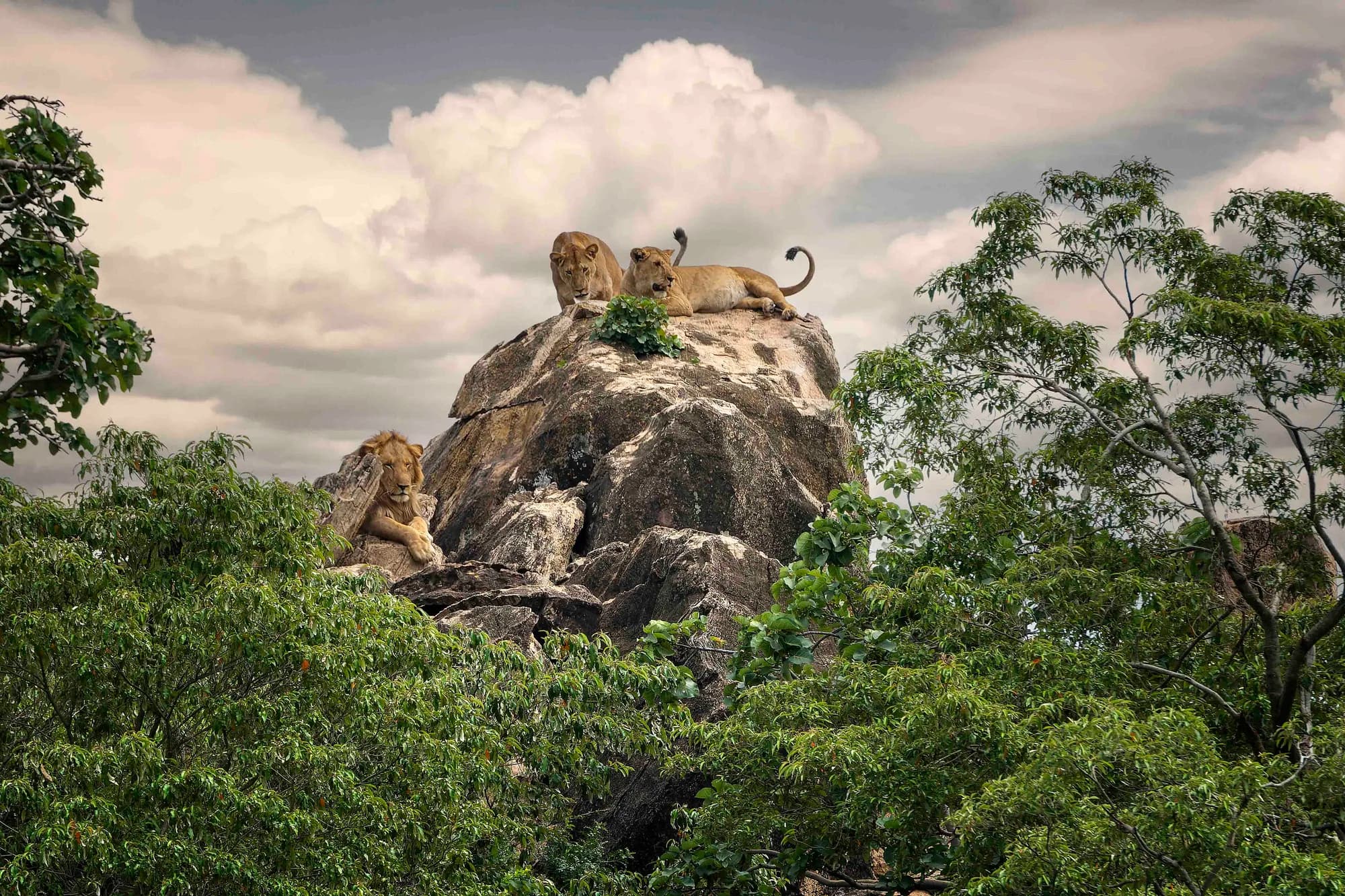
| Lion | No figure published | Resting on the rocky outcrops — scan them |
| Zebra, hartebeest, reedbuck | No figure published | Short nature walks around Apoka Rest Camp |
Buffalo, elephant and giraffe figures are from UWA's Kidepo web page, read 14 October 2026; the where-to-look phrasing is from the 2018 brochure. The management plan adds that populations of zebra and eland are decreasing, possibly due to predation by lions, which is the one piece of population trend data UWA publishes for this park that points downward.
The giraffe number is the one worth pausing on
Three animals in the mid-1990s to over fifty now, through breeding and translocation. That is a population rebuilt from a founder group small enough to name individually, inside one park, within thirty years. It is also the reason Rothschild's giraffe are a better reason to come here than cheetah: there are more than fifty of them, they stand on open slopes in daylight, and UWA tells you exactly which part of the valley profile to look at.
And the one that went the other way
The management plan records that eland were translocated here from Lake Mburo National Park and held in a boma to acclimatise. Fires in 2004 and 2005 razed part of the park from the Lomej hills west of Apoka and ravaged the boma. In UWA's words, the elands have since disappeared and it is hard to trace the translocated individuals. If you want to understand why this park's species list reads as a list of things that used to be here, that paragraph is the shortest explanation of it.
Uganda Wildlife Authority — Kidepo Valley National Park
UWA's own Kidepo park page, read 14 October 2026. The source here for the park size and altitude band, the 1962 gazettement, the distance from Kampala, the five-kilometre distance to the Kenyan border, the mammal and bird counts, the buffalo, elephant and giraffe figures, the named gates on each road route, the ten-hour drive time, and UWA's own wording on Karamoja.
https://ugandawildlife.org/national-parks/kidepo-valley-national-park/Uganda Wildlife Authority — Kidepo Valley National Park brochure, 2018
UWA's own two-page park brochure, linked from the download button on its Kidepo page as KVNP PARK BROCHURE and hosted on ugandawildlife.org. The file's internal creation date is 20 June 2018 and it is still the brochure UWA publishes. Downloaded (9.8 MB) and read on 14 October 2026. It is the only UWA document that explains the difference between the Narus and Kidepo valleys, names the game circuits, the campsites, the viewpoints and the trail, gives the two rainfall figures, gives the three road distances, describes the rest camp's bed stock, and names the species for which Kidepo is the only Ugandan refuge. It disagrees with UWA's own park page on the mammal count and on the distance from Kampala, and both figures are published here.
https://ugandawildlife.org/wp-content/uploads/2024/05/KVNP-2018-4.pdfUWA — Kidepo Valley National Park General Management Plan, Ministry of Tourism Wildlife and Antiquities / UWA Planning Unit
A 114-page government management plan, hosted on ugandawildlife.org, downloaded and read on 14 October 2026. Its file name and cover say 2012–2022 and its running header on every page says 2011–2021; the PDF's internal creation date is 17 July 2013. It is by a distance the most detailed document UWA has published on this park, and almost none of it has reached a travel page. It is the source here for the four management zones, the gate names and their problems, the summit heights of Lonyili and Morungole, the location of the airstrip, the 2008 Wildlife Conservation Society and Makerere University biodiversity survey figures, the 28 mammals found in no other Ugandan national park, the species the park has lost, and the cheetah population history. Where it disagrees with UWA's 2018 brochure or its 2026 web page, all figures are published.
https://ugandawildlife.org/wp-content/uploads/2022/01/Kidepo_Valley_-National_Park_GMP.pdfBirds — the raptors are the real claim
Kidepo's bird list is large but not the largest in Uganda. What is distinctive about it is its composition: a dry-country list in a country of forests and lakes, and a raptor concentration UWA makes a specific claim about.
- 56 raptor species, per the brochure — including the rare lappet-faced vulture, lesser kestrel and Denham's bustard.
- 14 raptors unique to this park in Uganda, per the management plan, citing Olivier 1992a.
- Over 100 dry-country residents of northern Uganda and Kenya, per the brochure.
- Endemic to the Kidepo region, in UWA's own phrasing: rose-ringed parakeets, Clapperton's francolin and the Karamoja apalis.
- The management plan adds the black-breasted barbet as one of Africa's rarest and most sought-after birds occurring here.
- Other named highlights: ostrich, secretary bird, kori bustard, red-throated bee-eaters, the Abyssinian roller and the Abyssinian ground hornbill. The web page adds northern carmine bee-eaters, little green bee-eaters and the Abyssinian scimitarbill.
- Experienced ranger guides are available at Apoka to help locate and identify birdlife in the park's various habitats.
The ostrich claim needs its caveat attached
UWA's 2026 web page says Kidepo is home to Uganda's only population of wild ostriches and the only place in Uganda where they roam freely. UWA's own management plan, thirteen years earlier, lists ostrich among the species found here in the 1960s that are now either extirpated or in numbers too low for long-term viability, and says that annual wildfires have very much affected the breeding conditions of ostriches and that their survival is of great concern — specifically that fires from Sudan devastate breeding sites between October and March, when the birds are hatching or have chicks. Both are UWA statements. The honest version is that Kidepo is the only Ugandan park with wild ostrich and that UWA's own plan has flagged the population as fragile.
A birding note the walks pages do not make
Birding and nature walks at Kidepo are USD 25 for a foreign non-resident, in the tariff's lower band with Murchison, Queen Elizabeth and Lake Mburo — not the USD 40 band that Bwindi, Kibale, Mount Elgon, Semuliki and the Rwenzori sit in. For a list with 56 raptors and a hundred dry-country specialities, that is the cheapest guided birding in Uganda by a clear margin, and the guide at Apoka is the only realistic way to tell a Karamoja apalis from everything else in a thornbush.
Uganda Wildlife Authority — Kidepo Valley National Park brochure, 2018
UWA's own two-page park brochure, linked from the download button on its Kidepo page as KVNP PARK BROCHURE and hosted on ugandawildlife.org. The file's internal creation date is 20 June 2018 and it is still the brochure UWA publishes. Downloaded (9.8 MB) and read on 14 October 2026. It is the only UWA document that explains the difference between the Narus and Kidepo valleys, names the game circuits, the campsites, the viewpoints and the trail, gives the two rainfall figures, gives the three road distances, describes the rest camp's bed stock, and names the species for which Kidepo is the only Ugandan refuge. It disagrees with UWA's own park page on the mammal count and on the distance from Kampala, and both figures are published here.
https://ugandawildlife.org/wp-content/uploads/2024/05/KVNP-2018-4.pdfUWA — Kidepo Valley National Park General Management Plan, Ministry of Tourism Wildlife and Antiquities / UWA Planning Unit
A 114-page government management plan, hosted on ugandawildlife.org, downloaded and read on 14 October 2026. Its file name and cover say 2012–2022 and its running header on every page says 2011–2021; the PDF's internal creation date is 17 July 2013. It is by a distance the most detailed document UWA has published on this park, and almost none of it has reached a travel page. It is the source here for the four management zones, the gate names and their problems, the summit heights of Lonyili and Morungole, the location of the airstrip, the 2008 Wildlife Conservation Society and Makerere University biodiversity survey figures, the 28 mammals found in no other Ugandan national park, the species the park has lost, and the cheetah population history. Where it disagrees with UWA's 2018 brochure or its 2026 web page, all figures are published.
https://ugandawildlife.org/wp-content/uploads/2022/01/Kidepo_Valley_-National_Park_GMP.pdfUganda Wildlife Authority — Conservation Tariff 2024–2026
Downloaded and read page by page on 14 October 2026. Fifteen physical pages numbering themselves 1–24: entrance categories, vehicle and aircraft entry, guided and self game drives, walks, mountain activities, camping, research fees, fines, and a per-park fees summary. Kidepo appears in six separate places in it — the Category A entrance band, the guided game drive table, the self game drive table, the lower nature-walk band, the mountain activities table and its own summary on document page 21 — and those six places do not always agree. The tariff is printed "subject to change without prior notice". Its cover period, July 2024 to June 2026, expired on 30 June 2026 and UWA has published no successor: checked again on 14 October 2026, this is still the only tariff linked from ugandawildlife.org.
https://ugandawildlife.org/wp-content/uploads/2024/03/UWA-Conservation-Tariff-July-2024-June-2026.pdfUganda Wildlife Authority — Kidepo Valley National Park
UWA's own Kidepo park page, read 14 October 2026. The source here for the park size and altitude band, the 1962 gazettement, the distance from Kampala, the five-kilometre distance to the Kenyan border, the mammal and bird counts, the buffalo, elephant and giraffe figures, the named gates on each road route, the ten-hour drive time, and UWA's own wording on Karamoja.
https://ugandawildlife.org/national-parks/kidepo-valley-national-park/