
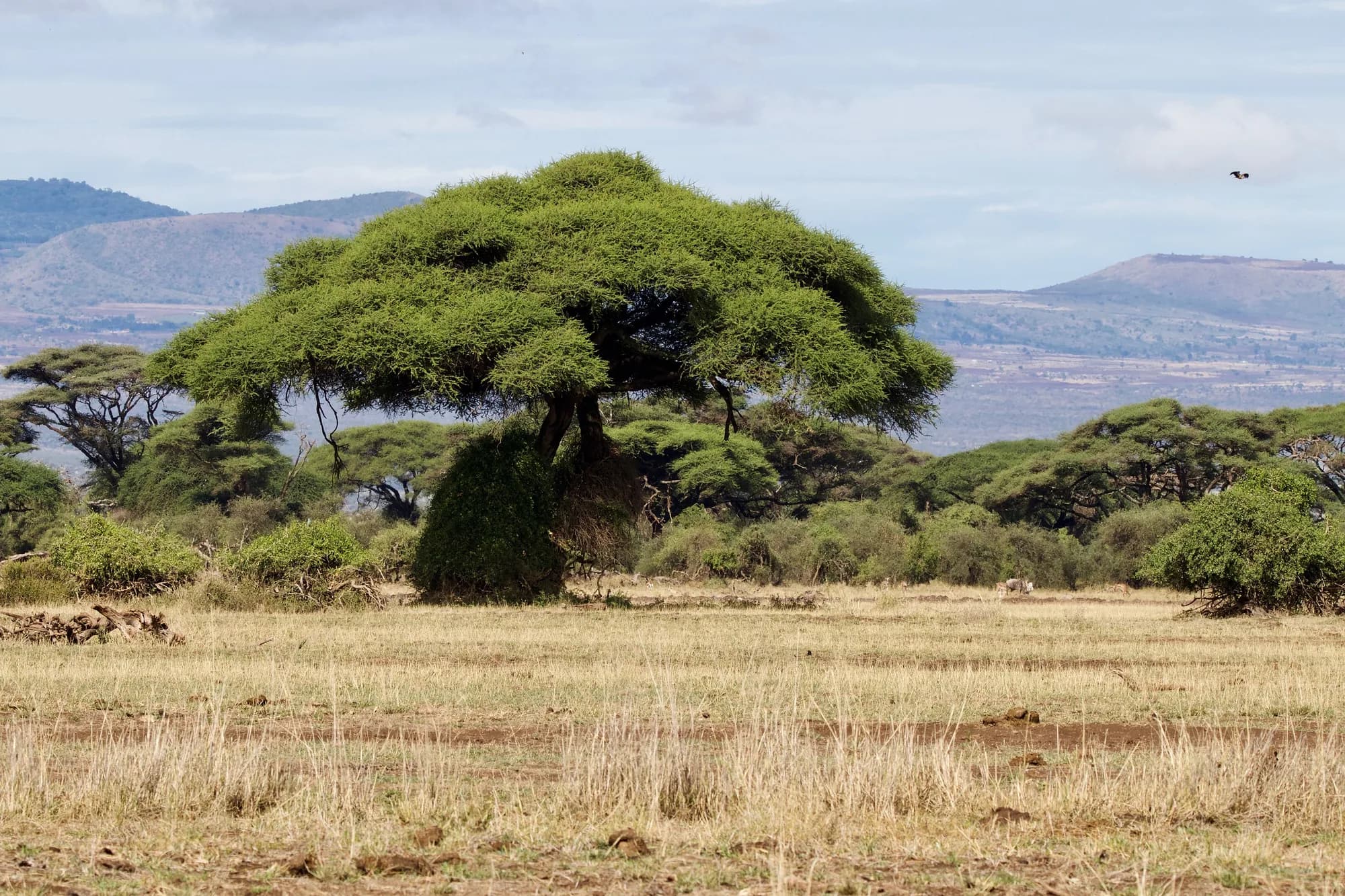
Kenya / Amboseli / Safari booking — Amboseli
Safari booking — Amboseli
Nothing about entering Amboseli needs booking. Everything about sleeping near it, and being driven around it well, does — and one of those two is chosen far more carelessly than the other.
There is no permit to win
Park entry is a daily fee collected by KWS, not an allocated permit. No lottery, no zone draw, no jeep quota, no sixty-days-in-advance portal opening at midnight. If you turned up at Meshanani gate tomorrow morning in a hired car with a passport and a card, you would be driving the swamp circuit forty minutes later.
That removes the single largest source of anxiety in booking an Indian or a Ugandan park and shifts the whole decision onto two things: where you sleep, and who is driving. The first is usually agonised over and the second is usually not, which is precisely the wrong way round for a park this small.
- A camp or lodge, inside the park or on the group ranches around it. This sets everything else.
- A vehicle and a driver-guide, private or shared. Ask the seat count before you ask the make of the car.
- Flights from Wilson, if you are flying rather than driving.
- Conservancy access, where your camp sits on group-ranch land — normally inside the rate rather than bought separately.
Park camp or conservancy camp
This is the decision that changes what your days are allowed to contain, and it is made once, at booking, and cannot be revisited from the vehicle. The national park gives you the swamps, the mountain and the elephant herds, on graded tracks, between gate hours. The conservancies give you night drives, walking with a Maasai guide and the right to leave the track — none of which the park permits, at any price, to anyone.
What each side of the boundary buys
| National park | Conservancy | |
|---|---|---|
| Land | State, gazetted, run by KWS | Community group-ranch land |
| You pay | USD 90 per adult per day to KWS | A conservancy fee, usually inside the camp rate |
| Off-road driving | No | Yes |
| Night drives | No | Yes |
| Walking | Observation Hill and picnic sites only | Yes, guided |
| Vehicles at a sighting | Uncapped | Capped by the conservancy |
| Where the money goes | KWS | The Maasai landowners |
The row that decides most bookings is the one about walking. For a first visit the park's permissions are enough; for a second, the conservancy's are the reason to come back.
Camps on the conservancies still drive into the national park by day — the conservancy fee buys extra permissions on their own land, not an alternative to the park. So a conservancy stay is park game drives plus a night drive and a walk, and a park stay is park game drives. That asymmetry is why the conservancy premium is more defensible here than the marketing usually manages to explain.
The vehicle is the booking that decides the trip
Amboseli is flat, open and dusty, and those three facts make the vehicle matter more here than in wooded country. In a closed minibus with a pop-top you photograph through a rectangle of sky. In an open-sided Land Cruiser you have the whole horizon, which in a park whose principal subject is a mountain on the southern skyline is not a small difference.
- Seat count first. A shared seven-seat minibus and a private four-seat Land Cruiser cost very different amounts and produce very different days. Ask the number before the brand.
- Which window is yours. On a shared vehicle a middle seat in the dust is a poor trade at any price.
- Whether the guide knows the families. In a park where every elephant group has a fifty-year file, a guide who can name the matriarch is offering something no other park on this site can.
- Dust protection for cameras. Ask whether the vehicle carries a cover or a blower; in August it is not a luxury.
- Whether the driver also guides. On cheaper packages these can be two different competences in one person, and only one of them is being paid for.
Sharing is less of a compromise here than in the Mara
The park is small, the circuit is short and the sightings are largely predictable — the swamps in the middle of the day, the open flats at either end of it. A shared vehicle costs you flexibility you would use less of here than almost anywhere else on this site. If the budget has to give somewhere, this is the least painful place for it to give.
How far ahead
Lead times
| When | Book by | Why |
|---|---|---|
| July – October | 6–9 months | Peak dry season; a small park with a short bed list |
| Christmas and New Year | 6–9 months | Peak domestic and international demand together |
| January – February | 3–6 months | Short dry window, cleanest air, less pressure on beds |
| March – May | 1–3 months | Long rains; tracks flood, rates fall, some camps close |
| November – December | 2–4 months | Short rains; patchy, green, and often very good value |
Amboseli has far fewer beds than the Mara ecosystem and a much shorter list of properties with a clear view of the mountain. That shortens the notice you can get away with in season, particularly for a south-facing room.
The counter-intuitive month is February. It is dry, the air is at its clearest, the mountain shows more reliably than in August, and it is not peak season — which makes it the single best combination of availability and conditions in the Amboseli year.
The questions that separate two quotes that look identical
- Are KWS park fees included, and for how many days? At USD 90 per adult per day this is the largest legitimate gap between two otherwise comparable quotes.
- Is the camp inside the park or on a conservancy, and is the conservancy fee inside the rate?
- Private vehicle or shared, and how many seats?
- How many game drives a day, and do they start before sunrise or after breakfast? In Amboseli that distinction decides whether you see the mountain.
- Which gate will you enter by, and how far is the camp from it?
- Are night drives and guided walks included, and if so, on whose land — because they cannot happen on KWS land.
Worked comparison
Two quotes for two non-resident adults, three park days. Quote A is USD 100 a head cheaper — USD 200 across the party — but excludes park fees; quote B includes them. Those fees are 2 adults x USD 90 x 3 days = USD 540, plus KSh 600 a day for an under-six-seat vehicle. So quote A is in fact the dearer of the two by USD 340 plus the vehicle charge, and the whole of that difference lands at the gate rather than at the point of sale.
Kenya Wildlife Service — Conservation Fees, October 2025 schedule
Read on 28 September 2026 from the verified fee record this site holds against KWS's own published schedule, taken from the PDF above on 27 September 2026. On 28 September kws.go.ke refused automated requests outright — a 403 from its firewall on the park page, a TLS failure on the fee page — so the figures are carried as recorded rather than re-read live, and no operator's copy of the tariff has been substituted for the department's. One caveat belongs on the face of the page rather than in a footnote: the schedule bands parks rather than naming a rate park by park, and Amboseli sits in the band printed "PREMIUM PARKS — Amboseli and Lake Nakuru National Parks". The mapping from that band to this park is the single step between the document and these tables.
https://kws.go.ke/wp-content/uploads/2026/05/KWS-Conservation-Fee-October-2025.pdfWhat goes wrong at the booking stage
- Booking five nights in one Amboseli camp. The park can be driven out in two days. People who block a week here run out of park on day three and spend the rest of it by the pool.
- Booking a bed in Kimana or Namanga town to save money, then losing the first and last hour of light every day to the drive in. Those are the two hours the park is worth seeing in.
- Booking a north-facing room. The mountain is to the south. It is a question nobody thinks to ask and it is the difference between watching Kilimanjaro from bed at six in the morning and not.
- Assuming a conservancy camp means conservancy rules inside the park. It does not. The night drive happens on their land, after you come back through the gate.
- Assuming the Mara's fee structure applies. It does not, and in Amboseli's favour.
- Pairing Amboseli with the Mara for cats and then being disappointed by Amboseli's. Wrong expectation, right pairing — the parks complement each other precisely because they are not alike.