
Kenya / Amboseli / Sightings log — Amboseli
Sightings log — Amboseli
This site does not run a moderated sightings log for Amboseli. What it can do is be straight about which of the two headline attractions is a certainty and which is weather.
No log, and why we will not fake one
A sightings log is worth something only when it is moderated and carries volume. A short list of unverified reports looks like data and behaves like advertising, and it is the easiest thing on a site like this one to fabricate. We have not collected that for Amboseli and we will not publish the appearance of it.
What can be said without a log is more useful than a thin one would be: the two things Amboseli is famous for have completely different odds, and almost every disappointed visitor has confused which is which.
A certainty and a gamble
The two headline attractions
| The elephants | The mountain | |
|---|---|---|
| Odds | Effectively certain | Weather, daily |
| Why | 1,903 known individuals in about 392 sq km with permanent water | Kilimanjaro makes its own cloud from mid-morning |
| What improves them | Nothing needed | More dawns and more evenings |
| What ruins them | Nothing | Driving at the wrong hours |
Read the last row twice. The commonest Amboseli complaint is a hidden mountain, and the commonest cause is an itinerary whose drives began after breakfast.
The elephant figure in that table is the Trust's count of living known individuals at the end of 2024, not an estimate. In a park of this size with the only permanent water for a long way in the middle of it, that number makes a sighting a formality rather than an outcome.
Amboseli Trust for Elephants — Annual Report 2024
Read 28 September 2026. Population, family, birth and mortality figures are the Trust's own, from the long-term monitoring section of its annual report for 2024. Because every elephant in this population has been identified individually since 1972, the numbers are stated to the animal rather than as a survey estimate — which is why they can be quoted the way they are here and cannot be quoted that way for any other elephant population on this site.
https://www.elephanttrust.org/wp-content/uploads/2025/05/amboseli-trust-for-elephants-annual-report-2024.pdfWhat disappoints
- A hidden Kilimanjaro. Overwhelmingly the commonest complaint, and it is almost always a two-night stay with mid-morning drives. The mountain was there; the visitor was out at the wrong hours.
- Cats. Visitors arriving from the Maasai Mara find lion sparse and leopard effectively absent, and read it as bad luck rather than as a different park with a different job.
- Dust. In September the pan is a grey fog behind every vehicle, and it gets into cameras, bags and throats in a way nobody is warned about in advance.
- The size. Amboseli can be driven out in two days, and people who booked five nights in one camp run out of park.
- Vehicle numbers at a good sighting in high season. The circuit is short and everyone is on it; a well-placed elephant family in August will have company.
- No rhino. People arrive expecting the full set and there are none here at all.
Four of those six are expectation problems rather than park problems, which is unusual — most parks disappoint people for reasons the park could fix. Amboseli mostly disappoints people who were sold the wrong thing, or the right thing at the wrong hour.
What exceeds expectations
Almost always the elephants — not that they are seen, which is a given, but how close the families come and how much of what the guide tells you about them is specifically, checkably true. In most parks a guide's account of a herd is a general one. Here it is likely to be a named family with a documented history, because somebody has been writing that history down since 1972 and the guides know it.
- The swamps at midday. Visitors braced for the dead hours find elephants up to their bellies in water and the best behaviour of the day.
- Observation Hill at first light, for people who did not realise they would be allowed out of the vehicle at all.
- The scale of the bulls. Amboseli's big males are the reason photographers come back, and they are not what a first-time visitor expects an elephant to look like.
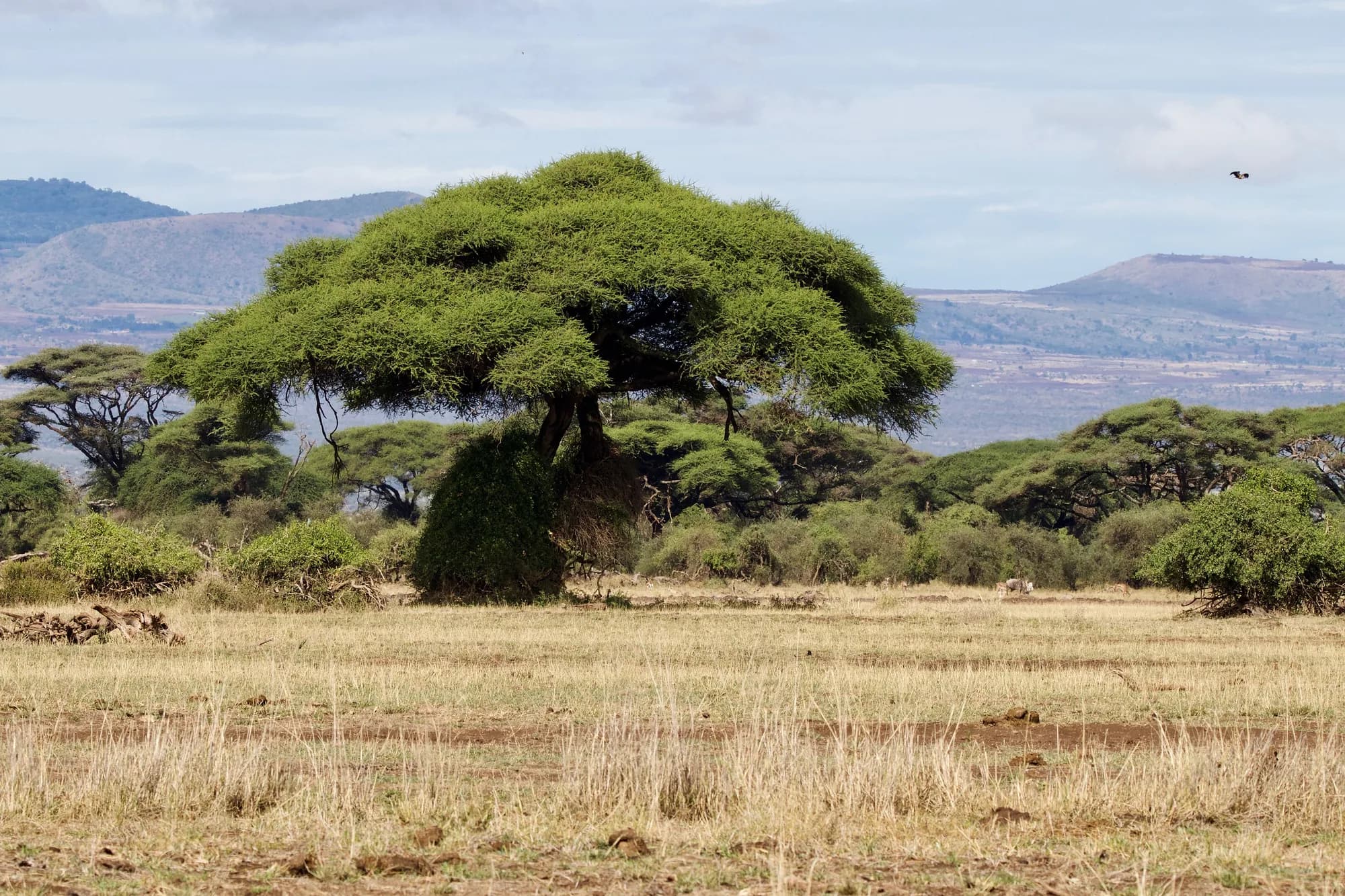
- The landscape without the mountain. The pan, the fever trees and the dust devils are a strange and very photogenic place in their own right, and people who accept that come away happier than people who did not.
- Conservancy night drives, for anyone who split the stay. Almost everybody reports these as the better half and is surprised by it.
How to improve your own odds
- Book three nights rather than two. Six mountain windows rather than four, for the price of one bed and one day of fees.
- Insist on pre-dawn departures at the point of booking, not at the camp on the first evening.
- Stay out through the middle of the day at the swamps instead of returning for lunch.
- Go in January or February rather than August if the mountain matters more than the density of game.
- Split the stay so that two of the nights are on a conservancy, and take the night drive.
- Ask the guide which family you are looking at. If they can tell you, you are getting the thing that makes this park different.
Your sighting may actually be data here
One thing distinguishes Amboseli from every other park on this site. The Amboseli Trust for Elephants asks its partners across the ecosystem to help with sightings, particularly of musth males, and runs a community scout programme with Big Life in which twenty-three scouts monitor elephants in areas away from the central swamps. There is a live dataset here that a good camp is plugged into.
So if you photograph a bull in musth, or a big male away from the usual ground, showing it to your guide is not a courtesy — it may end up somewhere. That is a better use of a photograph than a social feed, and it is worth knowing before you delete the ones that were slightly out of focus.
This is not a public reporting channel
The Trust's request is addressed to its partners in the ecosystem, not to visitors directly, and we are not going to invent a contact route for you. Go through your camp or your guide, who will know whether they are one of those partners.
Amboseli Trust for Elephants — Annual Report 2024
Read 28 September 2026. Population, family, birth and mortality figures are the Trust's own, from the long-term monitoring section of its annual report for 2024. Because every elephant in this population has been identified individually since 1972, the numbers are stated to the animal rather than as a survey estimate — which is why they can be quoted the way they are here and cannot be quoted that way for any other elephant population on this site.
https://www.elephanttrust.org/wp-content/uploads/2025/05/amboseli-trust-for-elephants-annual-report-2024.pdf