
Species · Hippotragus niger
Sable antelope
A jet-black bull with swept-back horns most of a metre long, and the animal experienced guides point at before they point at a lion. It is a woodland species, which is why it is missing from the parks most people visit.
Also called
- Palahala · Swahili
- Swartwitpens · Afrikaans
- Mharapara · Shona
Checked 27 Sept 2026
- Where
- Six countries here
- Best months
- Dry season, June–October
- Horns
- Both sexes; bulls to about 1.2 m
- Odds
- Good in miombo, nil on the plains
Miombo and other open woodland with access to water — not open plains and not thick forest. That habitat band runs through Zimbabwe, Zambia, southern Tanzania, Angola and northern Botswana, and it explains the distribution better than any range map.
Where it is
HabitatMiombo and open woodland with access to water — not open plains and not thick forest.
Worth travelling for
Miombo on a scale nothing else here matches, and one of the most reliable populations in Africa.
Good woodland herds that come to the pumped waterholes, so timing a sighting is straightforward.
One of the few places sable and roan overlap with both kudu species.
Small Waterberg and Northern Cape reserves where sable are part of the reason to go.
Also occurs
NamibiaKenyaAngolaMozambiqueMalawi
Present, but not where you would go to see one.
Gone from
Much of its former Angolan range — the giant sable survives only in two reserves
Range this species has been lost from. It is the fact a map of where it currently lives cannot show you.
Where to actually go
Ranked, with the reason each — these are not interchangeable.
- 01KafueZambiaMiombo on a scale nothing else here matches, and one of the most reliable sable populations in Africa.Busanga, dry season
- 02HwangeZimbabweGood woodland herds that come to the pumped waterholes, which makes timing a sighting straightforward.At a pan, late afternoon
- 03RuahaTanzaniaOne of the few places where sable and roan overlap with both greater and lesser kudu, in a park with very few vehicles.For the antelope generally
- 04MarakeleSouth AfricaA small Waterberg park where sable are part of the reason to go, within easy reach of Johannesburg.The accessible option
- 05MokalaSouth AfricaQuiet SANParks reserve holding sable and roan together, with almost no visitors.Empty, and both species
Where you will not see one
- The Serengeti and the Maasai MaraOpen short-grass plains are the wrong habitat. The northern circuit is not where you see sable.
- The desert parksKgalagadi, Etosha, Namib-Naukluft and the Karoo reserves have none — that is roan and gemsbok country instead.
- Southern KrugerSable in Kruger are a northern and central animal in the woodland sections. The busy south is the wrong end of the park.
When to go
When to go
- J
- F
- M
- A
- M
- J
- J
- A
- S
- O
- N
- D
January: marginal. February: marginal. March: marginal. April: good. May: good. June: best. July: best. August: best. September: best. October: best. November: good. December: marginal.
Through the day
- Dawn
- Morning
- Midday
- Afternoon
- Dusk
- Night
Dawn: most active. Morning: active. Midday: usually resting. Afternoon: active. Dusk: most active. Night: usually resting.
What it looks like in the field
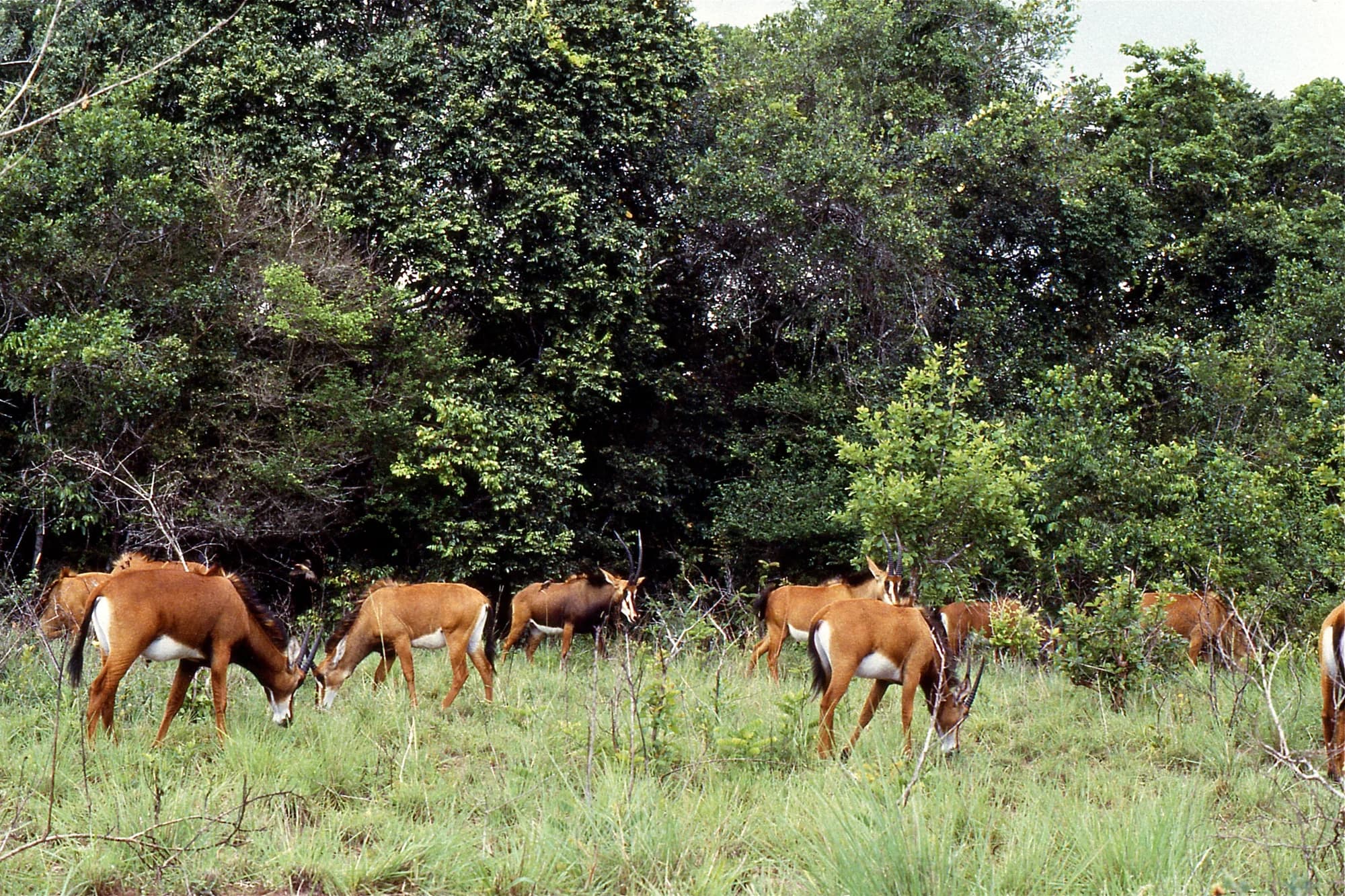
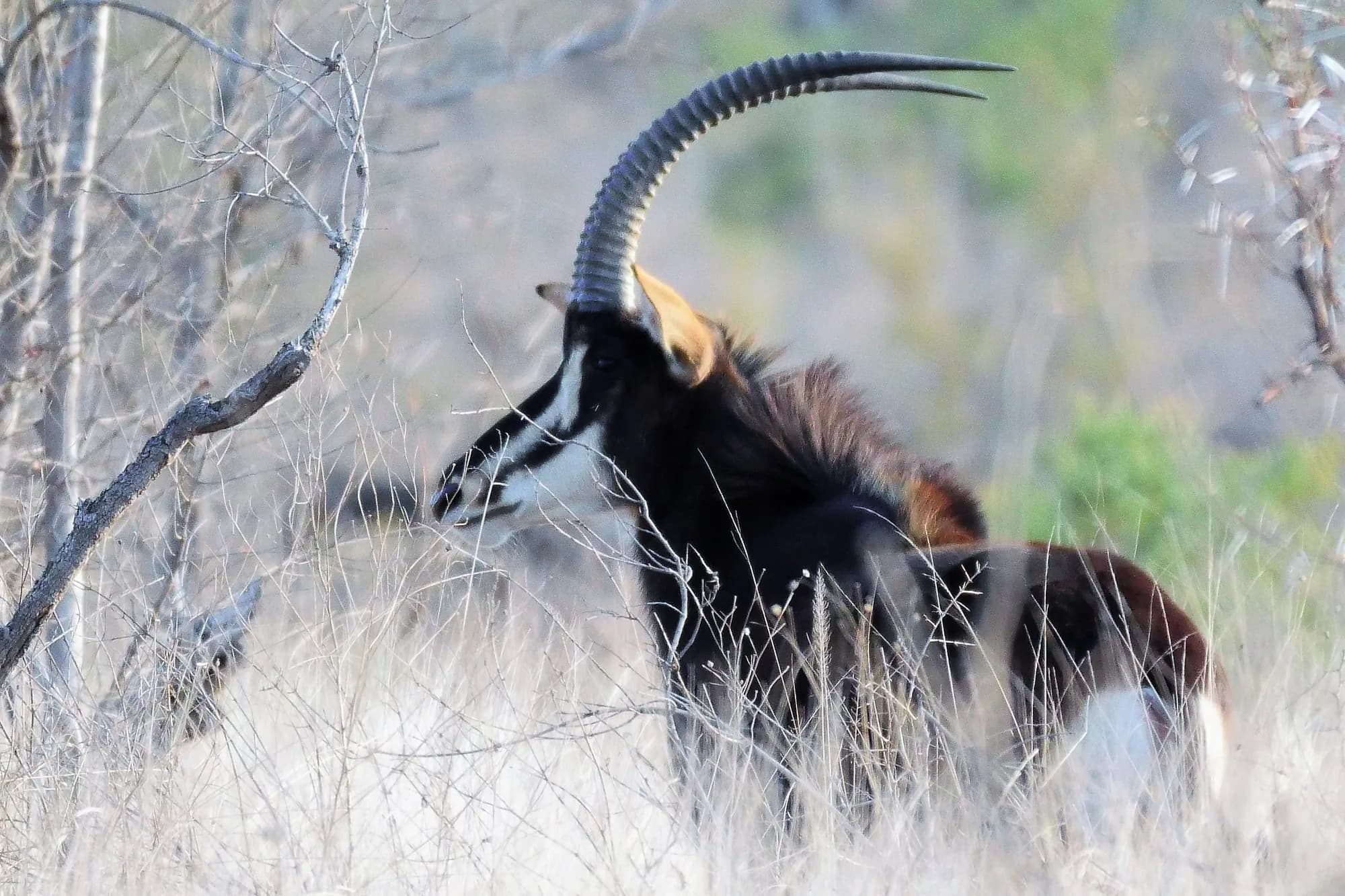
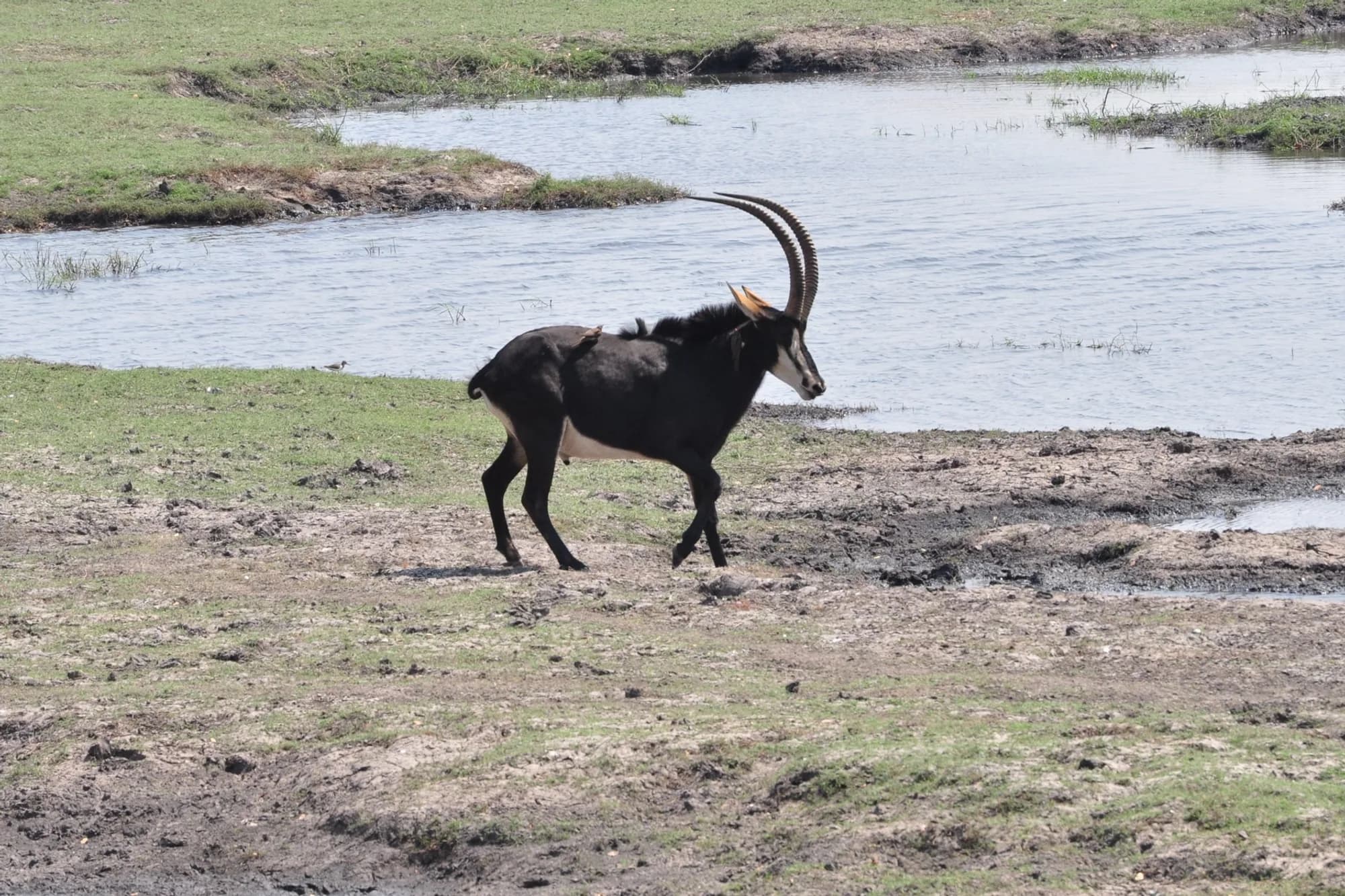
Photographs of Sable antelope in the wild, in Indian reserves. We publish no captive, baited or digitally composited images, and no photograph whose licence we cannot show.
Bulls, cows and what to look at
Sexes differ enough that people report them as two species. A mature bull is jet black with a sharply marked white face and belly, and heavy ridged horns swept back in a long arc. A cow is chestnut to dark brown with shorter, thinner horns, and young animals are lighter again — a bull darkens over several years, so a herd shows the whole gradient at once.
Herds are cows and calves with one territorial bull; other bulls hold neighbouring territories or run in bachelor groups. Fights are fought kneeling, horns locked, and the horns are genuinely dangerous — sable have killed lions.
Status and protection
Status and protection
- IUCN Red List
- Least Concern
- Population trend
- → Stable
Species-level assessment for Hippotragus niger, matching the binomial on the page.
Assessed 2017 · IUCN Red List assessment
What to book to see one
What you would be booking
- How it is seen
- Game drives in woodland, and waterholes in the late dry season.
- Drives to book
- Two or three in a miombo park. Nothing, in the wrong habitat.
- Zone or shift
- Kafue's Busanga sector, Hwange's woodland, Kruger's north, Ruaha and Nyerere.
The giant sable of Angola is a separate and critically endangered subspecies, and it is not what you are seeing anywhere on this site.
KafueOn the same trip you would also get
- Roan antelope — the same woodland, bigger and paler
- African buffalo — the same water
Questions people ask
Where is the best place to see sable antelope?
Why are there no sable in the Serengeti?
How do I tell a sable from a roan antelope?
Read next
Three countries here, in the same woodland as sable
Roan antelope — the one it is confused with
The second-largest antelope in Africa after the eland, and the one most often mistaken for a female sable. Roan are scarce, declining across most of their range, and the reason a Kafue or Waterberg trip is worth more than its park list suggests.
Kafue — the Busanga plains
Hwange