
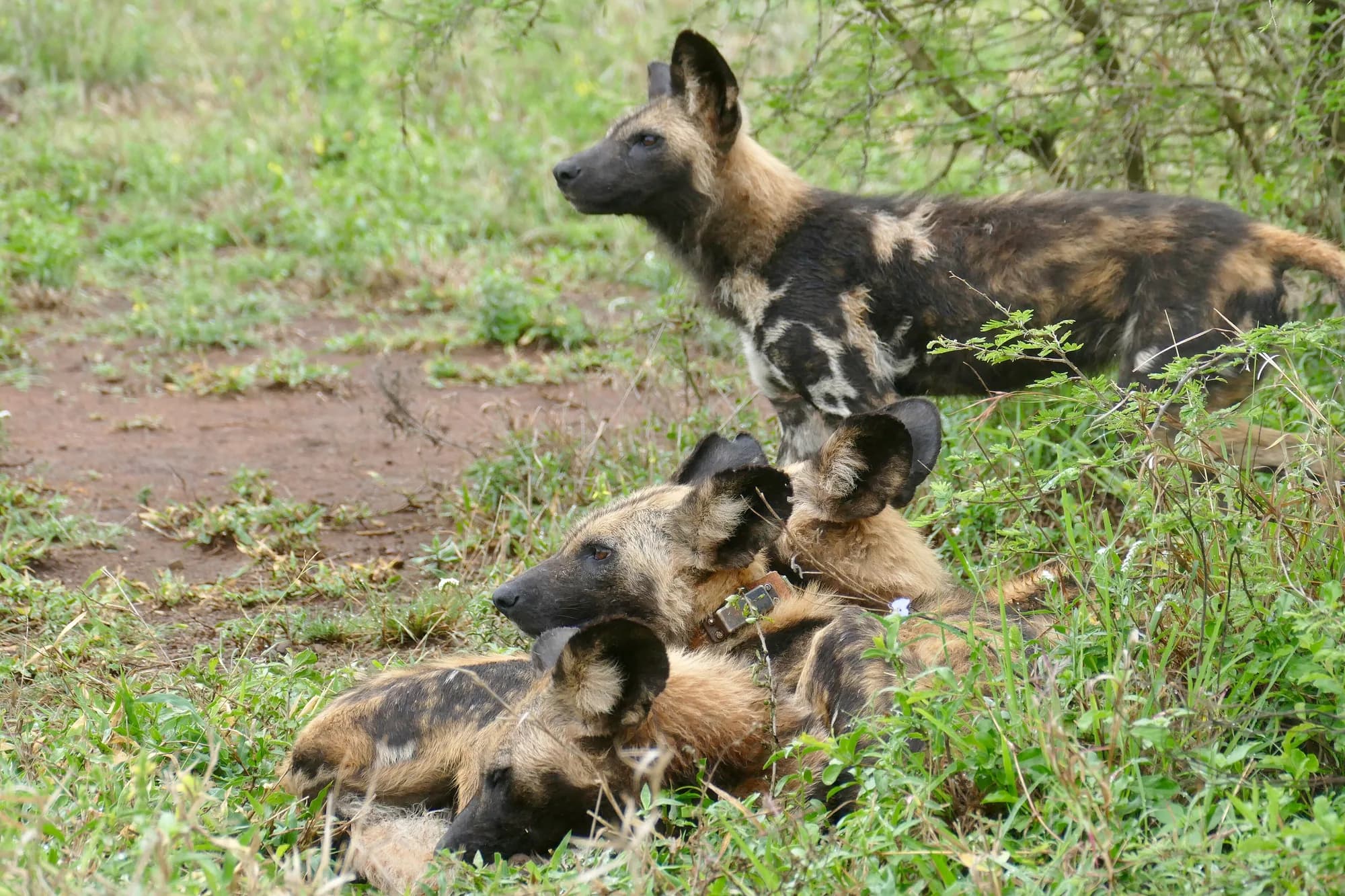
Species · Lycaon pictus
African wild dog
The rarest large carnivore most people will ever have a realistic chance of seeing, and the most rewarding to watch. A pack hunts as a unit in daylight, covers ground fast, and is gone — which is why the parks that deliver them are a short and specific list.
Also called
- Mbwa mwitu · Swahili
- Wildehond · Afrikaans
- Mhumhi · Shona
Checked 27 Sept 2026
- Where
- Six countries here
- Best months
- June–August, at the den
- Wild population
- About 6,600 adults and yearlings
- Odds
- Real in four parks, poor elsewhere
Woodland, savanna and floodplain, in packs that range over hundreds of square kilometres — which is the whole conservation problem. The largest remaining populations are in northern Botswana, western Zimbabwe, eastern Namibia, western Zambia, southern Tanzania and northern Mozambique. They are gone from 25 of the 39 countries they once occupied.
Where it is
HabitatWoodland, savanna and floodplain, in packs ranging over hundreds of square kilometres.
Worth travelling for
The best wild dog country on this site, and one of the few places you can follow a hunt on foot.
High density in the Okavango's dry country, with packs known to the camps and tracked between them.
Southern Tanzania holds one of the largest remaining populations anywhere, in parks most itineraries skip.
Resident packs in the Luangwa and Kafue, seen on perhaps one trip in three.
Also occurs
South AfricaNamibiaMozambiqueKenya
Present, but not where you would go to see one.
Gone from
25 of the 39 countries it once occupiedMost of West and North AfricaUgandaRwandaBurundi
Range this species has been lost from. It is the fact a map of where it currently lives cannot show you.
Where to actually go
Ranked, with the reason each — these are not interchangeable.
- 01Mana PoolsZimbabweThe best wild dog park on this site, and one of the few places you can follow a hunt on foot with a guide. Well-studied packs and open albida woodland.Denning season, and on foot
- 02MoremiBotswanaHigh density in the Okavango's dry country, with packs known to the camps and tracked between them.Dry season, with a good camp
- 03NyerereTanzaniaSouthern Tanzania holds one of the largest remaining populations anywhere, in a park most itineraries skip entirely.The southern circuit alternative
- 04HwangeZimbabweResident packs and a long research history, in a park that is easy to combine with Victoria Falls.Accessible, and reliable enough
- 05KrugerSouth AfricaA small population concentrated in the north and centre. Self-drivers do see them; it is luck rather than a plan.The north, and luck
Where you will not see one
- East Africa's northern circuitThe Serengeti, Ngorongoro and the Maasai Mara are poor for wild dogs. Tanzania's population is in the south, in Nyerere and Ruaha.
- The desert and Cape parksKgalagadi, Namib-Naukluft, the Richtersveld, the Karoo parks and the Cape reserves have none.
- Anywhere, without patiencePacks range over hundreds of square kilometres. Even in a good park, finding them is a matter of days and radios, not of a single drive.
When to go
When to go
- J
- F
- M
- A
- M
- J
- J
- A
- S
- O
- N
- D
January: marginal. February: marginal. March: marginal. April: good. May: good. June: best. July: best. August: best. September: good. October: good. November: marginal. December: marginal.
Through the day
- Dawn
- Morning
- Midday
- Afternoon
- Dusk
- Night
Dawn: most active. Morning: active. Midday: not normally seen. Afternoon: usually resting. Dusk: most active. Night: not normally seen.
What it looks like in the field
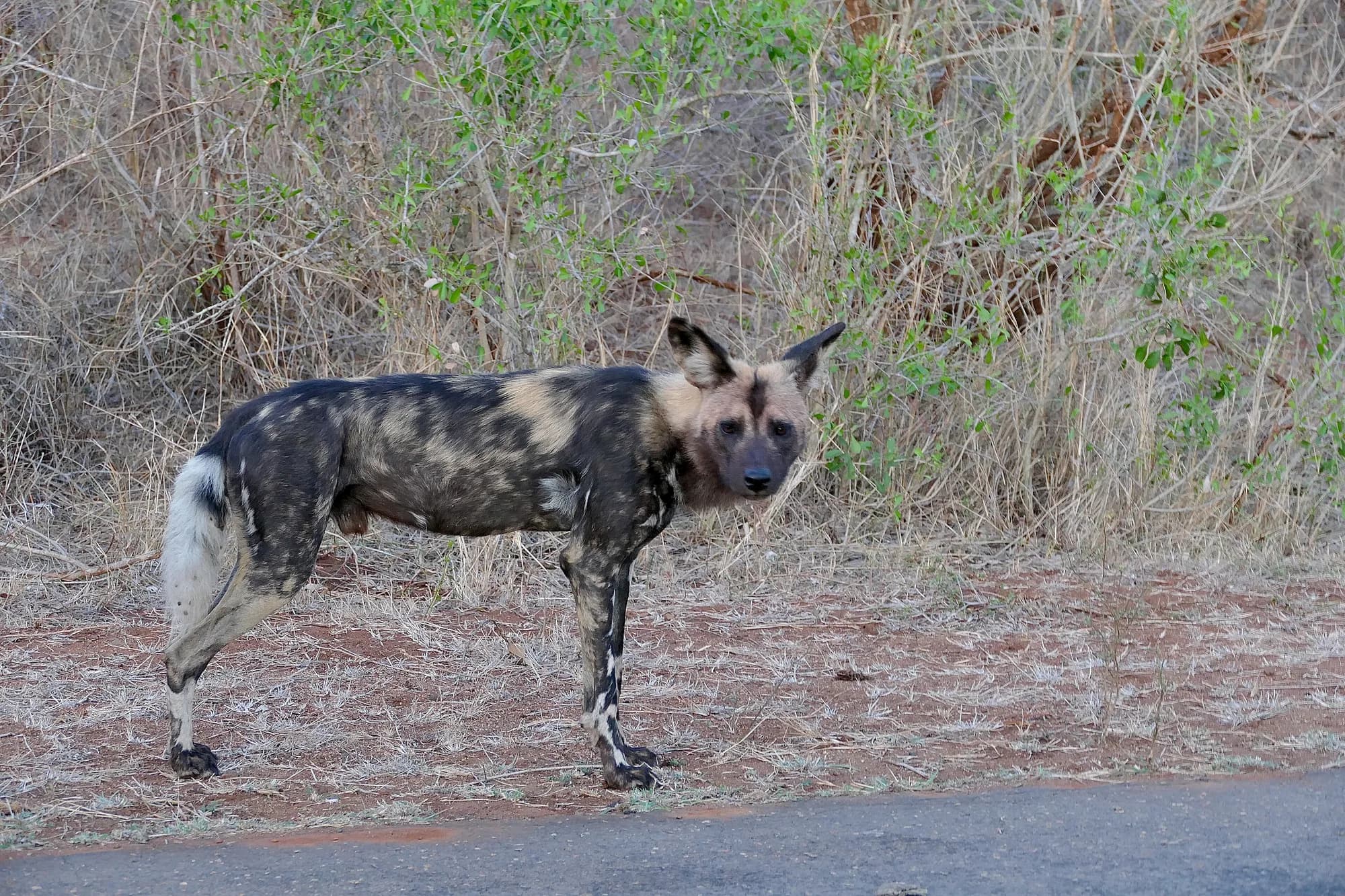
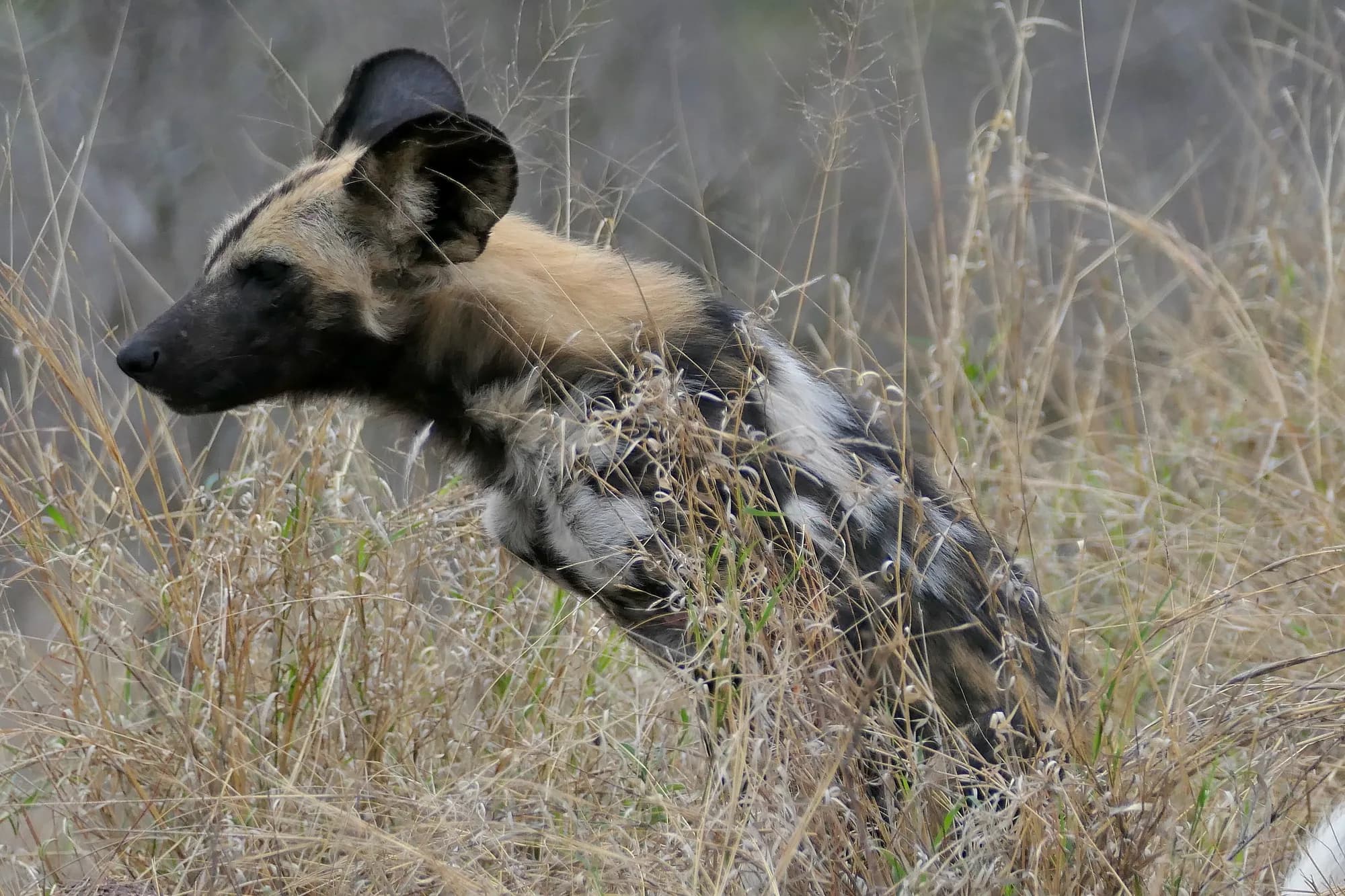
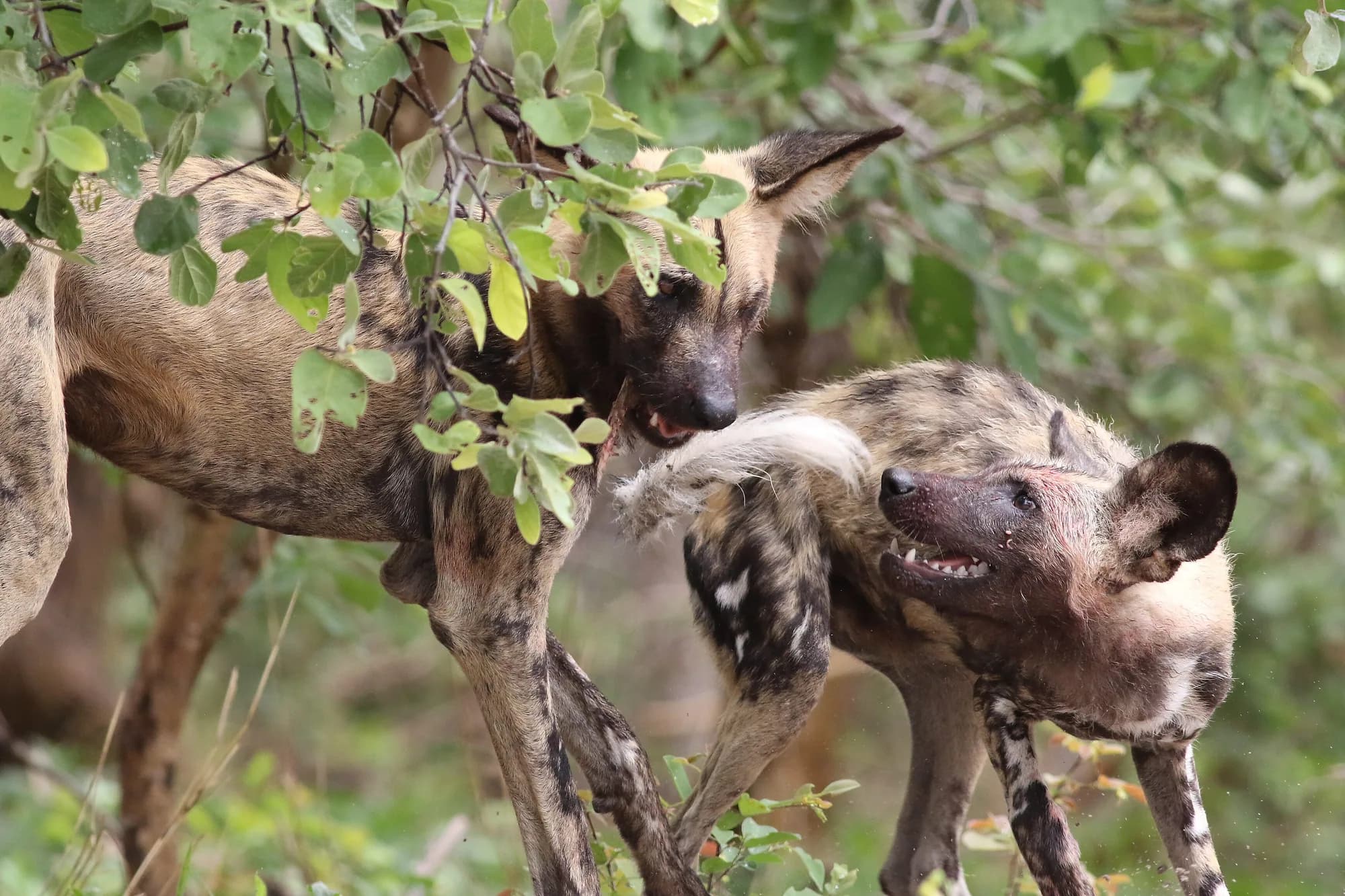
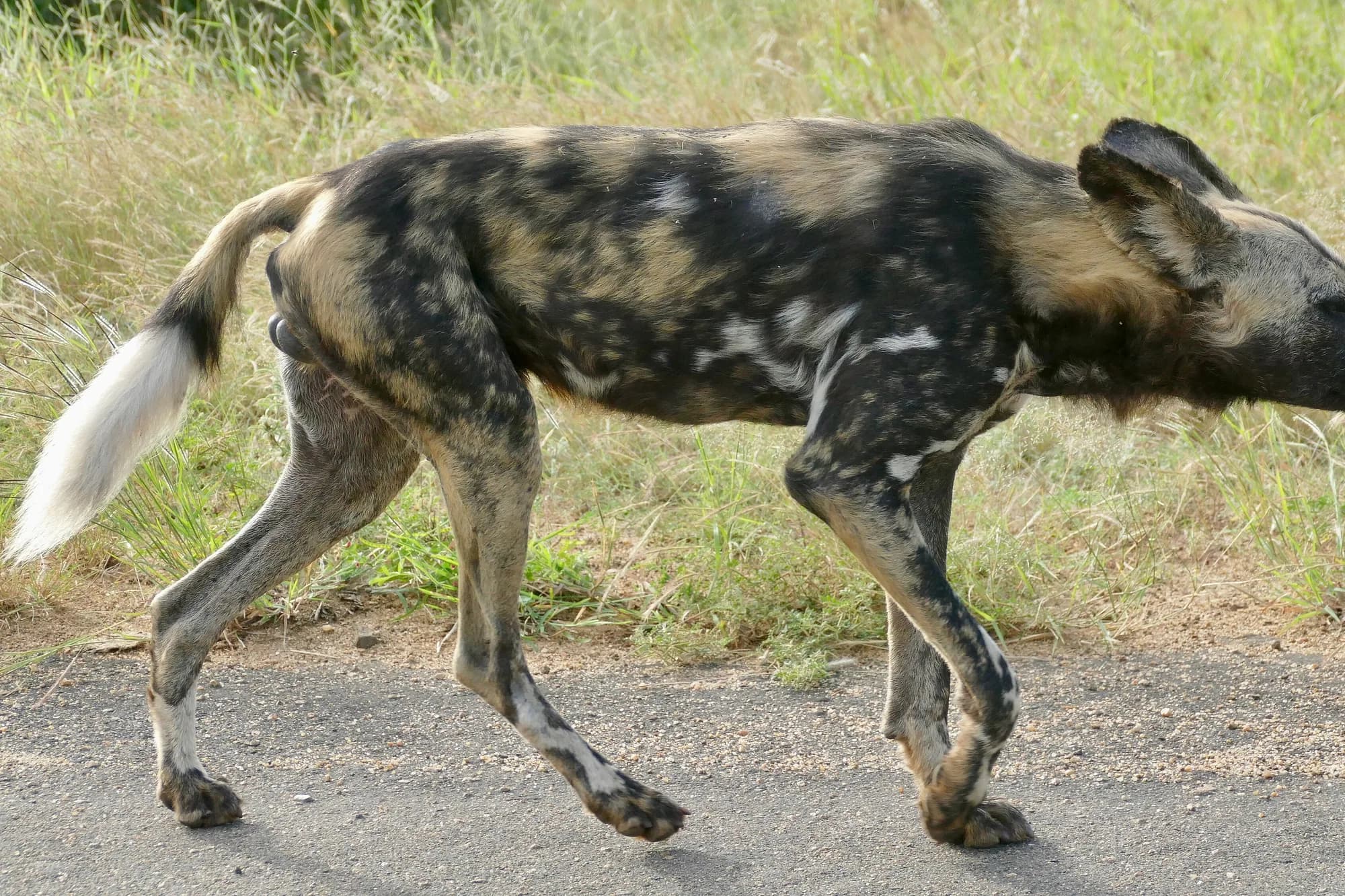
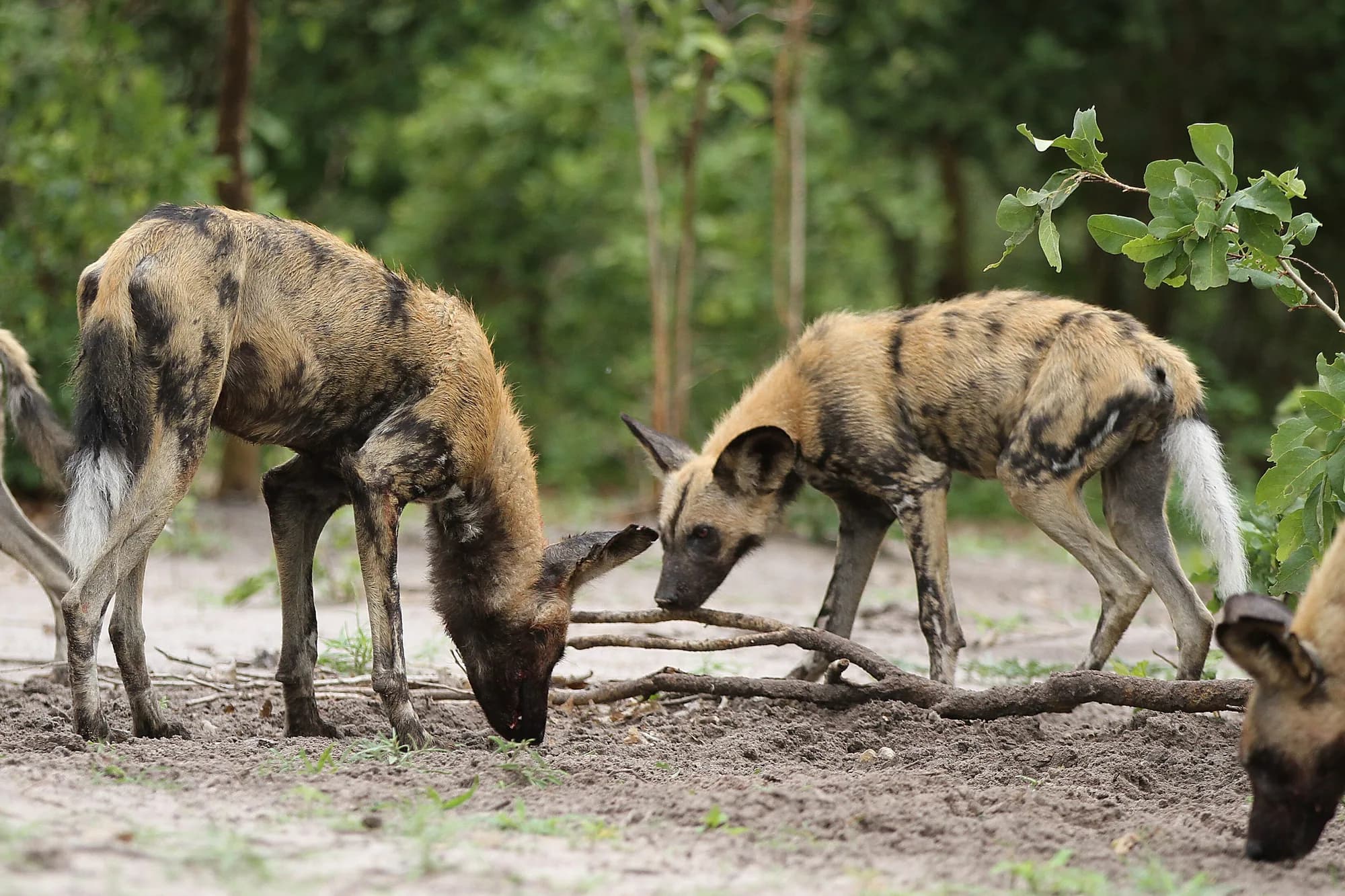
Photographs of African wild dog in the wild, in Indian reserves. We publish no captive, baited or digitally composited images, and no photograph whose licence we cannot show.
The parks that have them
Around 6,600 adults and yearlings remain across the whole of Africa, in fewer than forty subpopulations. That number does more to explain the trip than any behaviour note: you are not choosing between parks that all have wild dogs, you are choosing between the handful that do.
Mana Pools, Moremi and the wider Okavango, Nyerere and Ruaha in southern Tanzania, and Hwange are the realistic list on this site. The northern circuit of Tanzania and Kenya — which is where most first safaris go — is close to hopeless for this animal, and nobody selling a Serengeti itinerary will tell you so.
Watching a pack
A pack is a breeding pair and their grown offspring, and it is one of the more genuinely cooperative social systems among mammals. Pups eat first at a kill, ahead of the adults that made it. Injured and old adults are fed by regurgitation. Before a hunt the pack performs a rally — nose-to-nose, twittering, tails up — and the hunt starts when everybody has joined in.
The hunt itself is an endurance chase rather than an ambush, run at around 50 km/h over several kilometres, and it succeeds far more often than a lion hunt does. The consequence is speed at the kill: dogs eat fast because hyenas and lions come, and a pack that loses kills repeatedly to hyenas will abandon an area.
Status and protection
Status and protection
- IUCN Red List
- Endangered
- Population trend
- ↓ Decreasing
- CITES
- Not listed
Species-level assessment for Lycaon pictus, matching the binomial on the page.
Assessed 2025 · IUCN Red List assessment
What to book to see one
What you would be booking
- How it is seen
- Game drives, early and late, in a park with a known pack. Ask before booking whether the operator has current denning information.
- Drives to book
- Plan on four to six days in one of the good parks. This is not a two-night animal.
- Zone or shift
- Mana Pools and Hwange in Zimbabwe; Moremi and the Okavango in Botswana; Nyerere and Ruaha in southern Tanzania; northern Kruger.
Denning season, roughly June to August across the southern range, is the one time a pack is tied to a fixed point. It is far and away the best window, and good operators know where the dens are.
Mana PoolsOn the same trip you would also get
- Spotted hyena — the thief at every wild dog kill
- Impala — the main prey across most of the range
Questions people ask
Where is the best place to see African wild dogs?
How many African wild dogs are left?
Can I see wild dogs in the Serengeti or the Maasai Mara?
Why are they called painted wolves?
Read next
Common across the savanna parks, and badly misunderstood
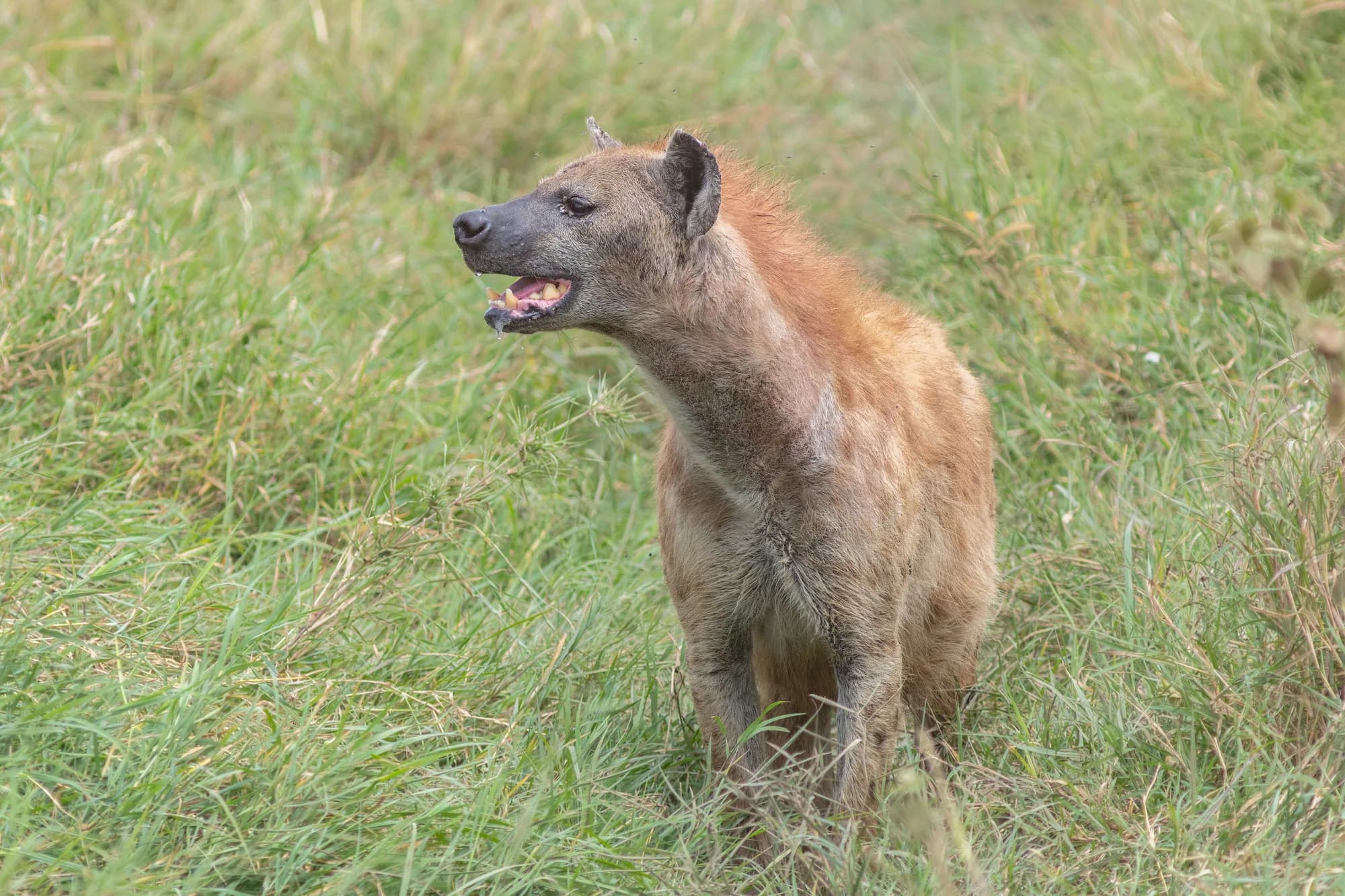
Spotted hyena — the competitor
Not a scavenger that steals from lions so much as a highly successful hunter that lions steal from. A matriarchal clan of eighty animals with a rank order inherited down the female line is the most socially complex thing you will watch on a game drive.
Mana Pools — the best of them
Moremi