
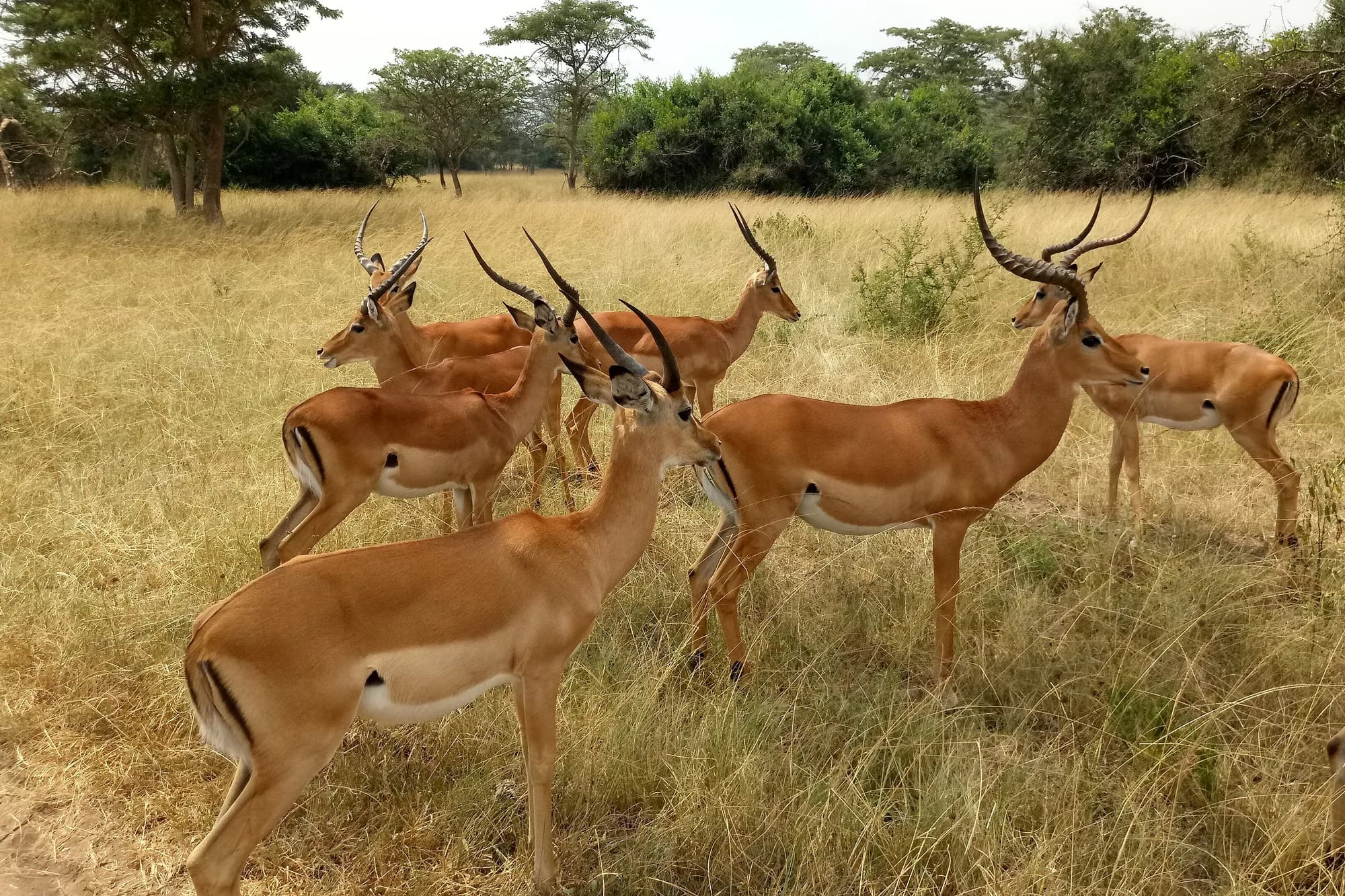
Species · Aepyceros melampus
Impala
The animal everybody stops photographing on day two, and the one most of the predators on this site are eating. Learning to read impala is the cheapest way to find cats, because they will tell you there is one before you see it.
Also called
- Swala pala · Swahili
- Rooibok · Afrikaans
- Mhara · Shona
Checked 27 Sept 2026
- Where
- Most savanna parks here
- Best months
- Any; rut May–July
- Groups
- Harems, bachelor herds, territorial rams
- Odds
- Certain
Woodland edge and light savanna with water, from Kenya to northern South Africa — the single most abundant medium-sized antelope across that range. The black-faced impala of north-western Namibia and southern Angola is a separate and much rarer subspecies.
Where it is
HabitatWoodland edge and light savanna with water. The most abundant medium-sized antelope across that range.
Worth travelling for
By far the most abundant large mammal in Kruger, and the animal you will use to find leopards.
High density and high predator pressure, which is what makes them interesting rather than scenery.
The country's only impala park, and the animal the capital is named after.
The western sector holds black-faced impala, a genuinely rare subspecies.
Also occurs
KenyaTanzaniaZimbabweBotswanaMozambiqueAngola
Present, but not where you would go to see one.
Where to actually go
Ranked, with the reason each — these are not interchangeable.
- 01KrugerSouth AfricaBy far the most abundant large mammal in the park, and the one you will use to find leopards.Everywhere, all the time
- 02South LuangwaZambiaHigh density and high predator pressure, which is the combination that makes them interesting rather than scenery.With the leopards
- 03Lake MburoUgandaUganda's impala park — the animal the country's capital is named after, and largely confined to here.The only place in Uganda
- 04EtoshaNamibiaThe western sector holds black-faced impala, a genuinely rare subspecies and a different sighting entirely.The rare subspecies
Where you will not see one
- The desert and Cape parksKgalagadi, the Namib, the Richtersveld and the Cape reserves are outside the range. Etosha has the rare black-faced subspecies in the west, not the common one.
- The forest parksNot in Bwindi, Kibale, Nyungwe or Mahale.
When to go
When to go
- J
- F
- M
- A
- M
- J
- J
- A
- S
- O
- N
- D
January: good. February: good. March: good. April: good. May: best. June: best. July: best. August: good. September: good. October: good. November: good. December: good.
Through the day
- Dawn
- Morning
- Midday
- Afternoon
- Dusk
- Night
Dawn: most active. Morning: most active. Midday: active. Afternoon: most active. Dusk: most active. Night: usually resting.
What it looks like in the field
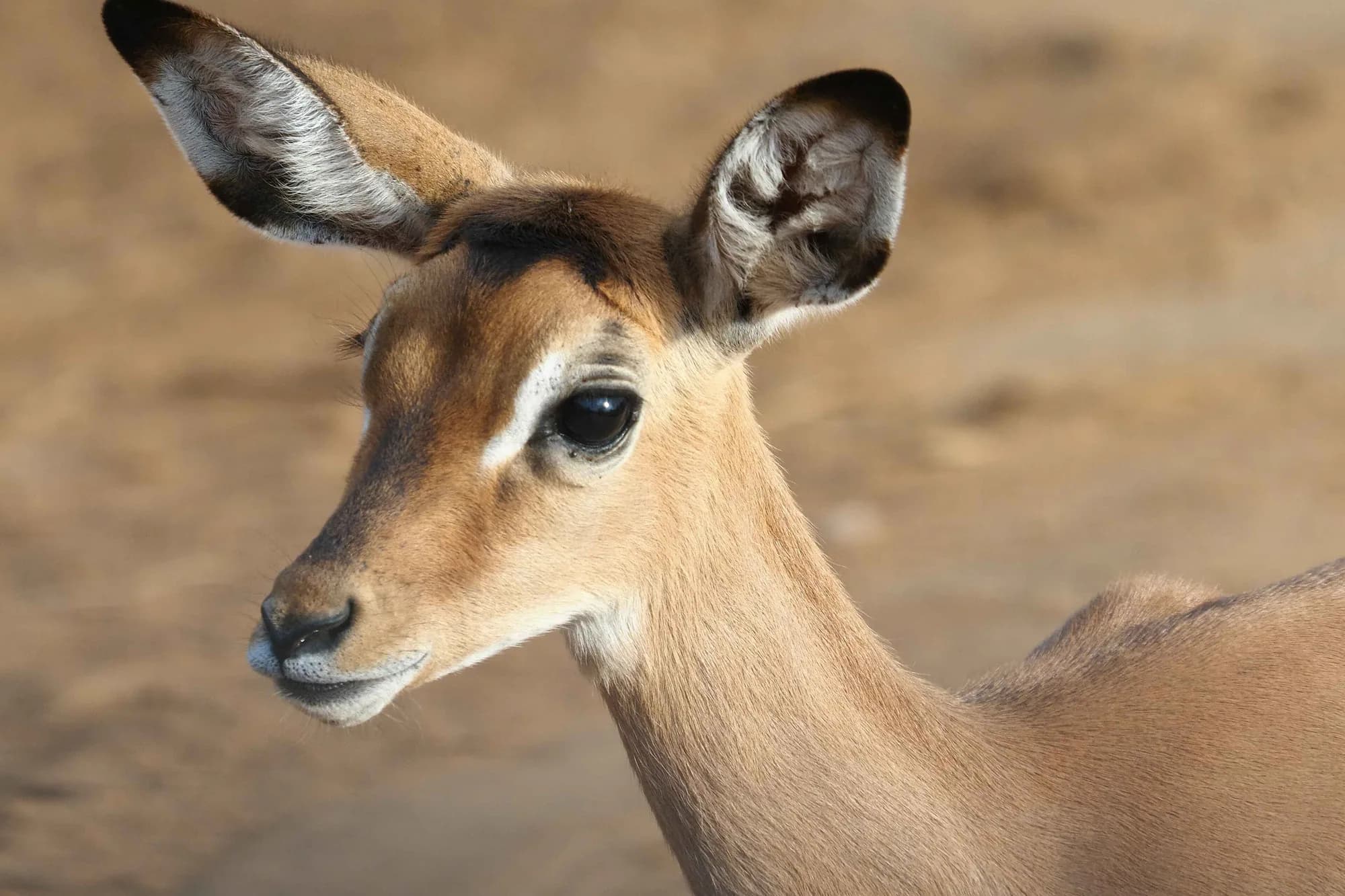
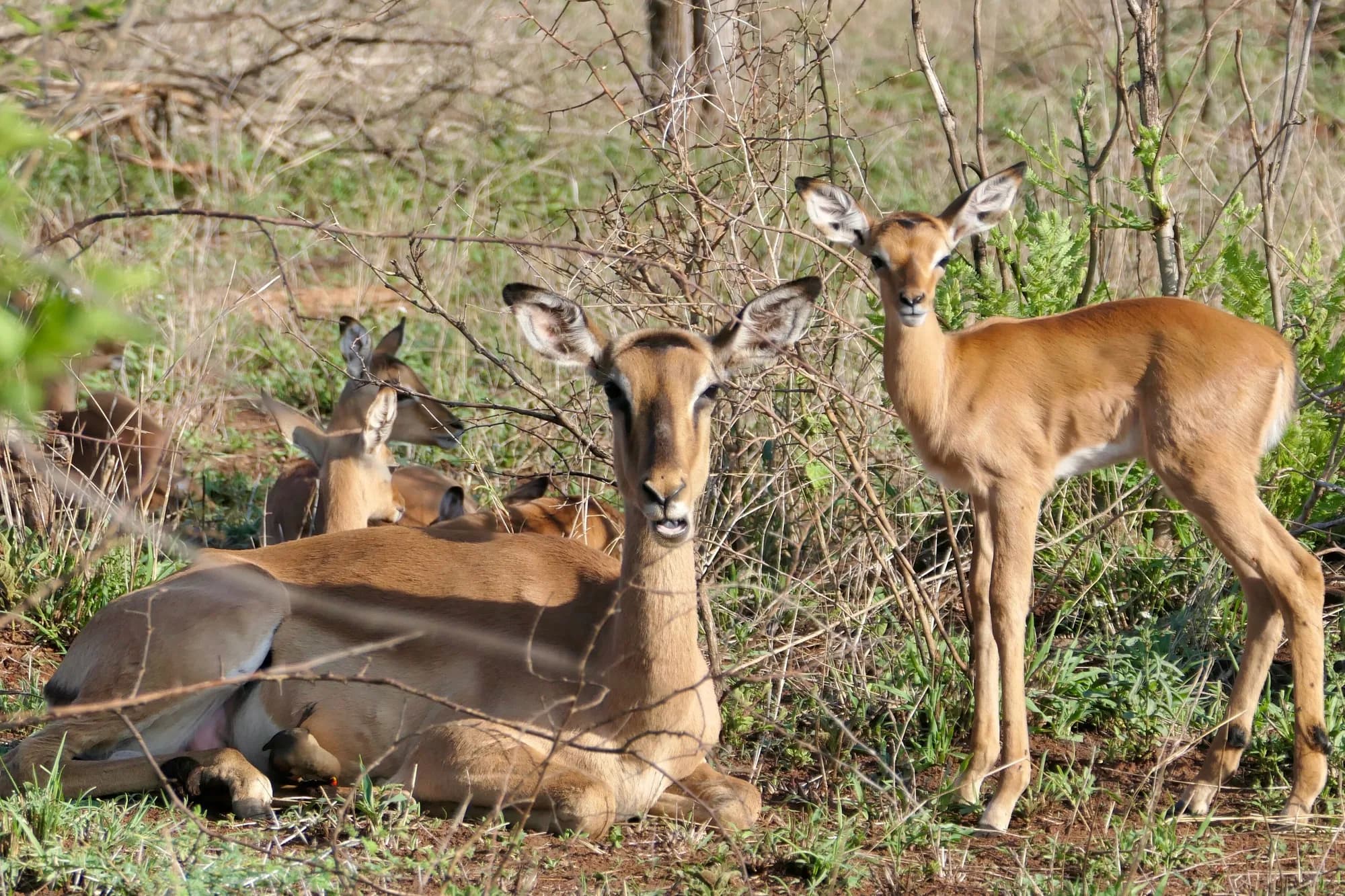
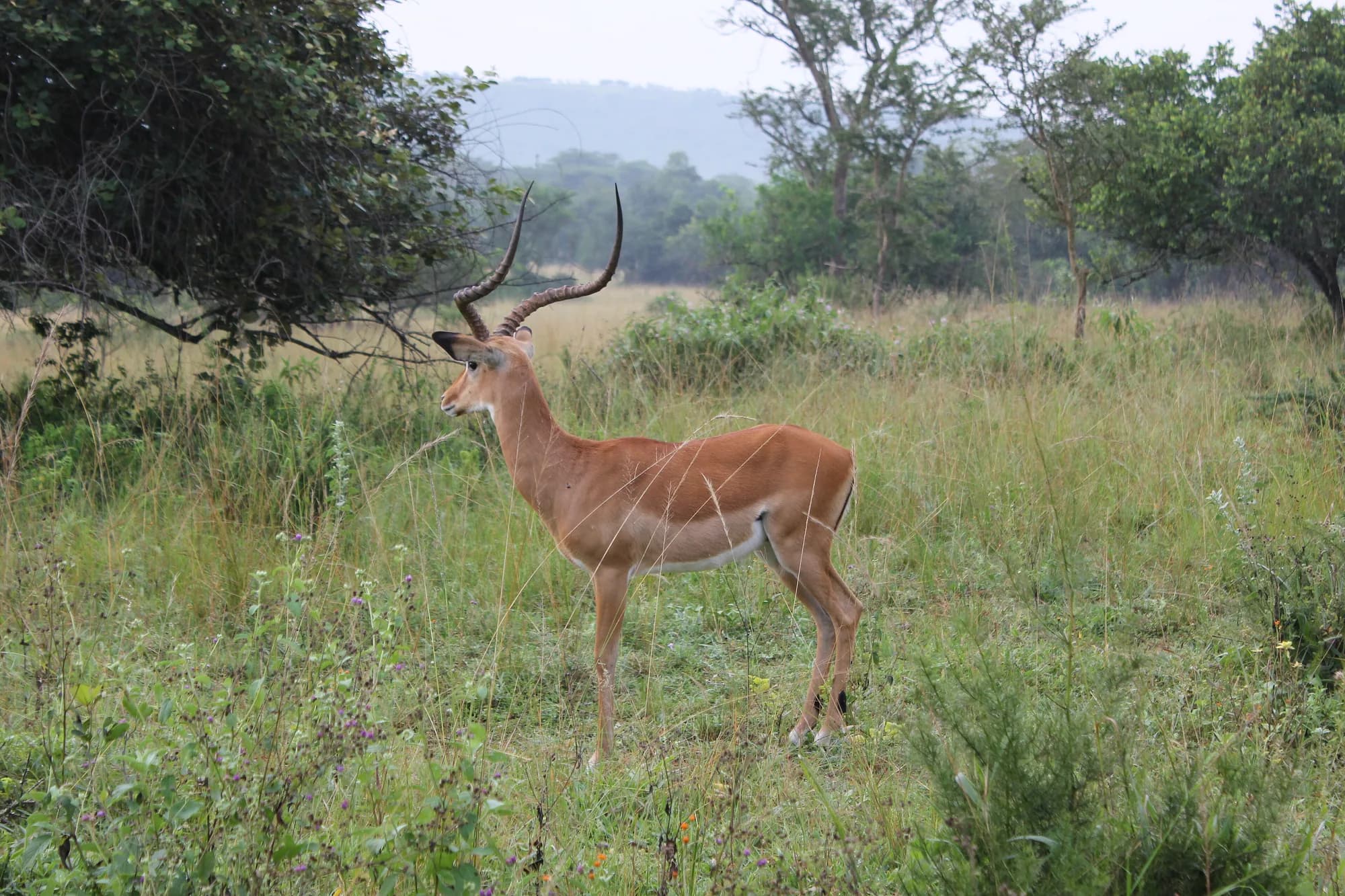
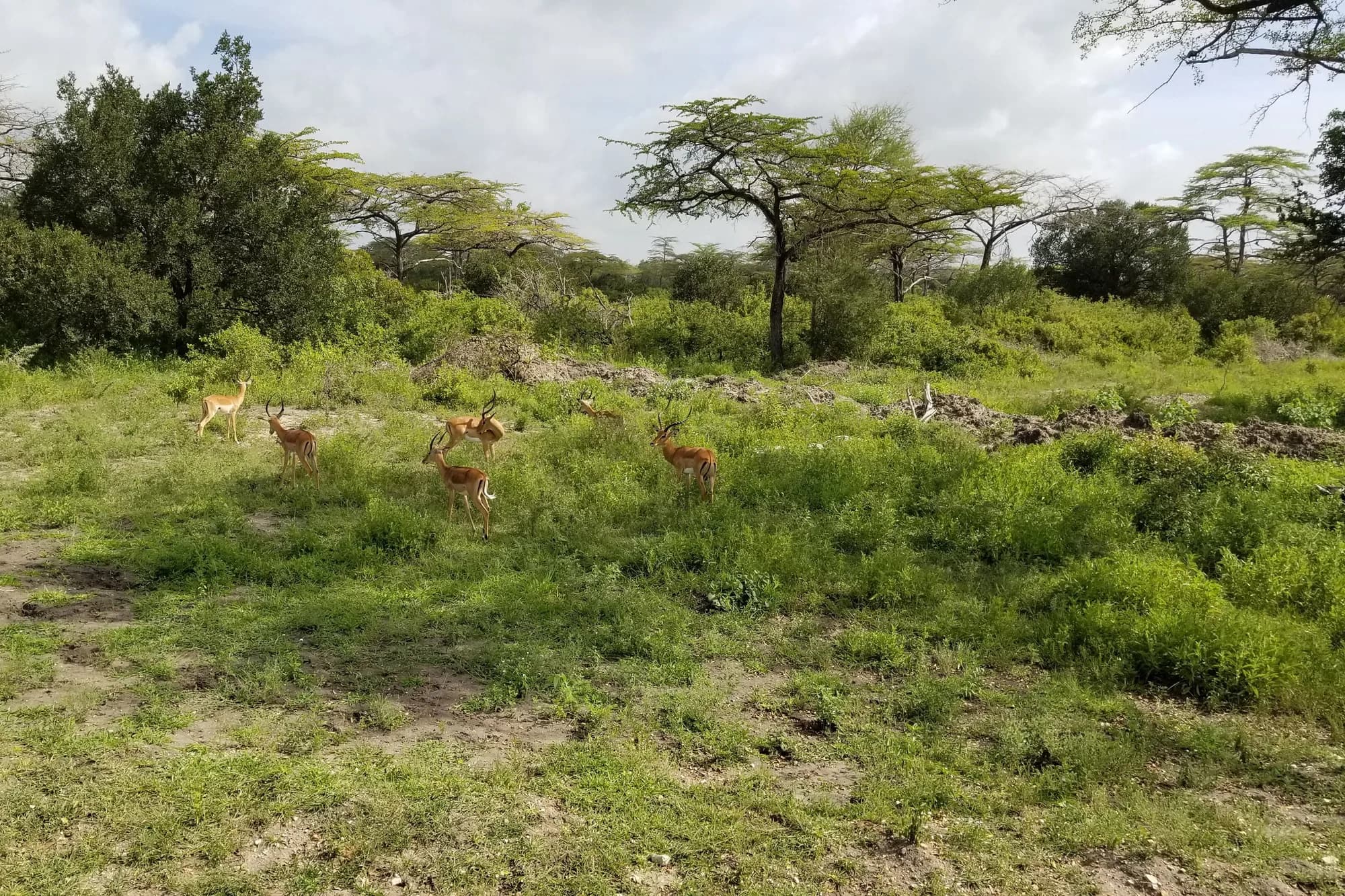
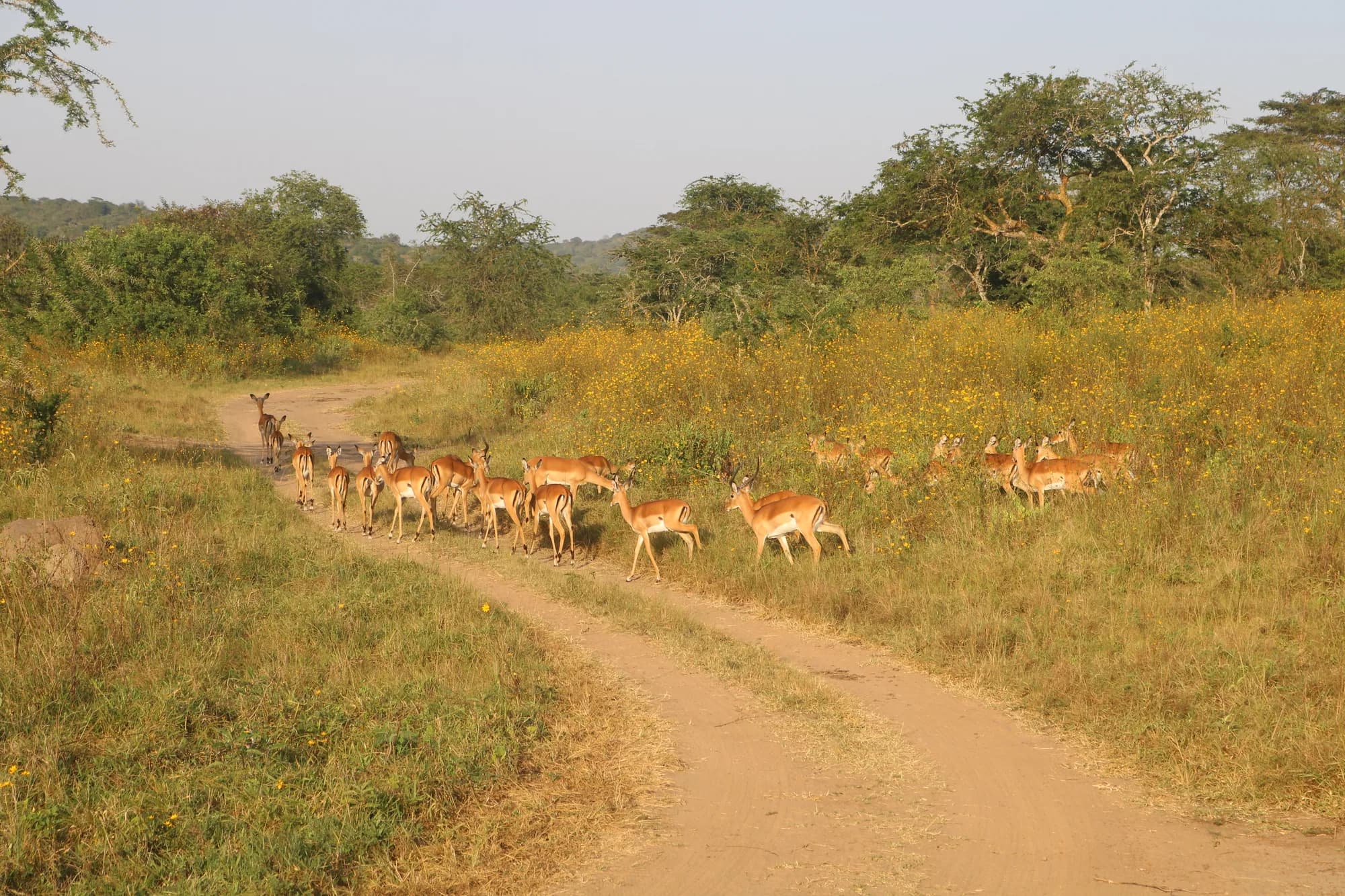
Photographs of Impala in the wild, in Indian reserves. We publish no captive, baited or digitally composited images, and no photograph whose licence we cannot show.
Reading impala
Impala are worth an hour of attention on the first drive and then pay for themselves all week. A herd that stops feeding, turns as one, and holds still is looking at a predator. The snort that follows — a hard explosive bark, repeated — is the alarm, and the useful information is not the sound but the direction every head is pointing.
Guides use this constantly and often do not explain it. If your driver stops in apparently empty bush with the engine off, they are almost always working an alarm call — impala, baboon or vervet.
The social structure is legible too. Through most of the year: harems of females with a single territorial ram, and separate bachelor herds of males waiting their turn. In the southern autumn rut the rams roar — a startling guttural noise people mistake for a predator — and chase constantly, losing condition fast. A ram that holds a territory through the rut rarely holds it the following year.
Status and protection
Status and protection
- IUCN Red List
- Least Concern
- Population trend
- → Stable
Species-level assessment for Aepyceros melampus, matching the binomial on the page.
Assessed 2016 · IUCN Red List assessment
What to book to see one
What you would be booking
- How it is seen
- No planning required. What is worth doing is asking your guide to explain the alarm behaviour on the first drive.
- Drives to book
- Zero. You will see hundreds.
An impala snort — a sharp explosive bark, repeated, with the whole herd facing one direction — is the most reliable predator indicator on a game drive. Follow the direction they are looking, not the sound.
KrugerOn the same trip you would also get
- African leopard — the main predator, and the reason to listen
- African wild dog — impala is most of the diet
Questions people ask
Why do guides pay so much attention to impala?
How do I tell an impala from other antelope?
What is a black-faced impala?
Read next
Six countries here, and three parks worth booking for
African leopard — the reason to listen
Present in almost every park on this site and seen in very few of them. Leopards are the one big cat where the park choice is not a preference but the whole answer — outside a handful of reserves with habituated animals, a sighting is luck.
Seven parks here, in thick bush
Greater kudu
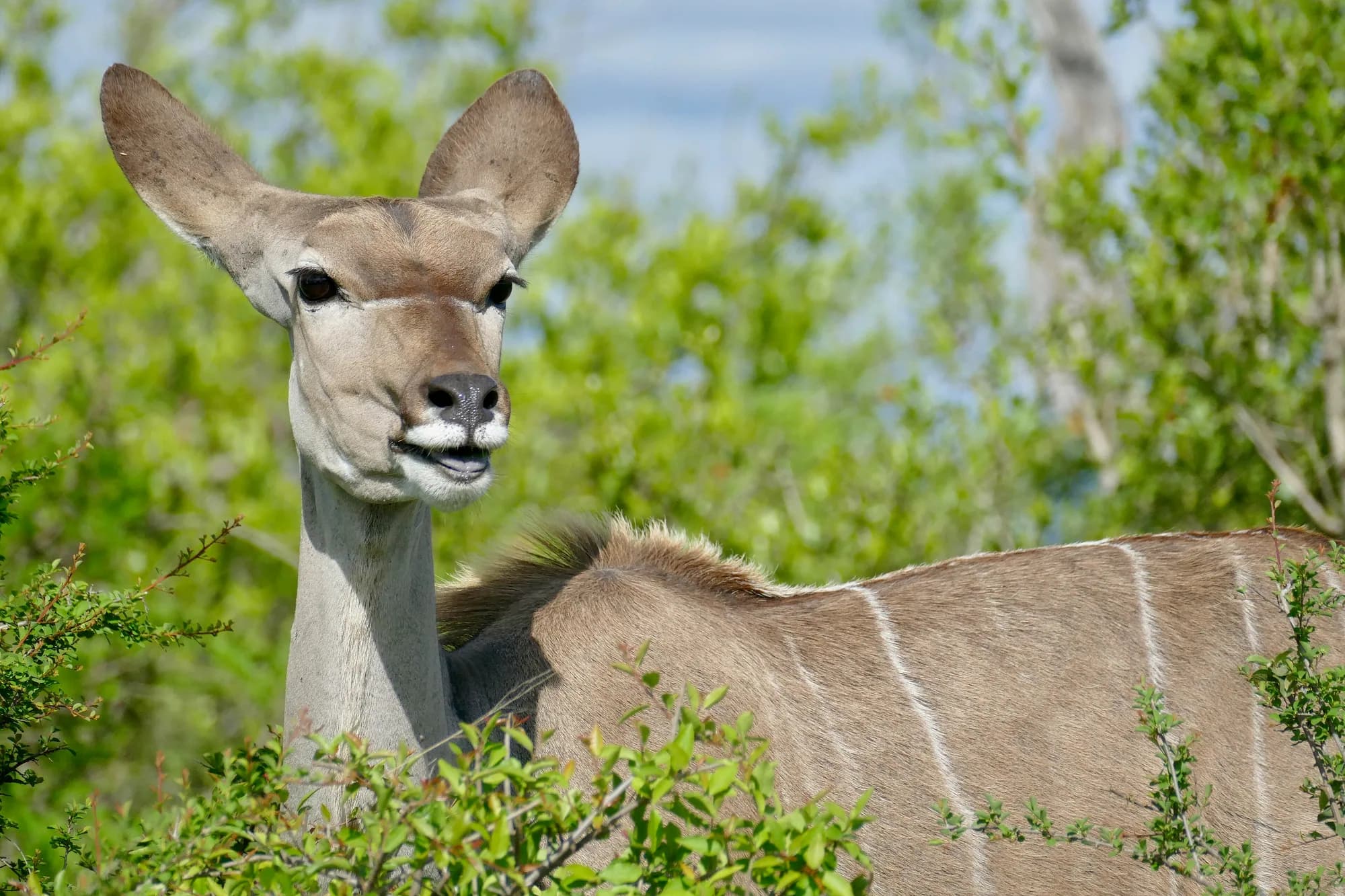
A very large antelope with spiral horns over a metre long, and the animal people most often fail to see because it is standing still ten metres away. Kudu are a bush species, and their whole defence is not moving.
Kruger