
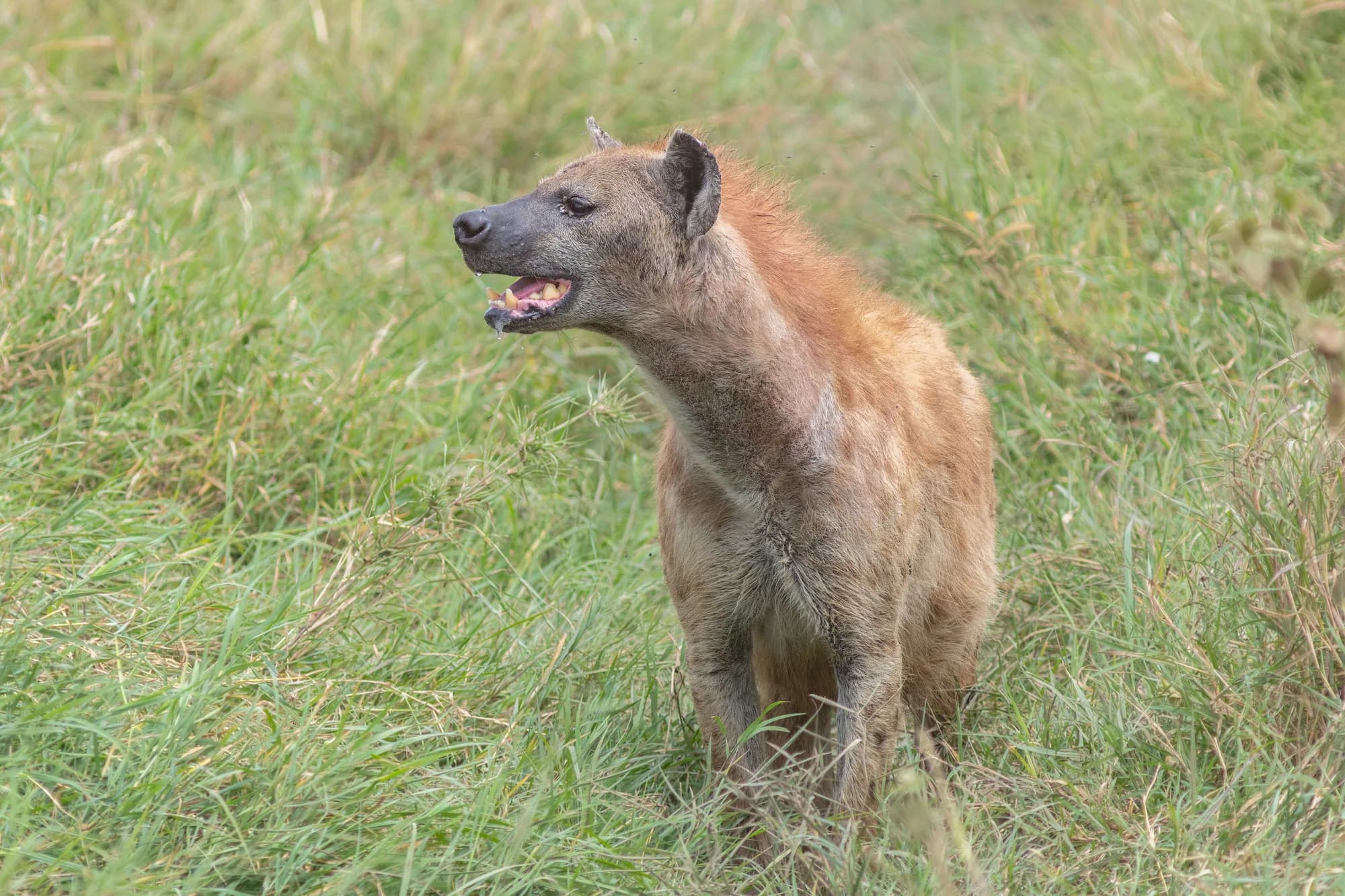
Species · Crocuta crocuta
Spotted hyena
Not a scavenger that steals from lions so much as a highly successful hunter that lions steal from. A matriarchal clan of eighty animals with a rank order inherited down the female line is the most socially complex thing you will watch on a game drive.
Also called
- Fisi · Swahili
- Gevlekte hiëna · Afrikaans
- Bere · Shona
Checked 27 Sept 2026
- Where
- Most savanna parks here
- Best months
- Year-round; dry season best
- Clan
- Matriarchal, up to about 80
- Odds
- High, especially at dawn and after dark
Savanna, woodland and semi-desert across sub-Saharan Africa, and one of the most numerous large carnivores on the continent. Absent from the rainforest blocks and thin in the true deserts, common almost everywhere else on this site.
Where it is
HabitatSavanna, woodland and semi-desert. One of the most numerous large carnivores on the continent.
Worth travelling for
The crater clans are among the most studied anywhere, at high density in the open.
Large clans, active dens, and enough prey that you see hunting rather than scavenging.
Night drives are routine, which is the only way to see what hyenas actually do.
Common and frequently seen at dawn and dusk, including at culvert dens.
Also occurs
BotswanaZimbabweNamibiaUgandaEthiopiaMozambique
Present, but not where you would go to see one.
Gone from
Most of North AfricaMuch of South Africa outside the reserves
Range this species has been lost from. It is the fact a map of where it currently lives cannot show you.
Where to actually go
Ranked, with the reason each — these are not interchangeable.
- 01NgorongoroTanzaniaThe crater's clans are among the most studied anywhere, at high density in the open, and regularly seen taking kills from lions rather than the reverse.Open ground, high density
- 02Maasai MaraKenyaLarge clans, active dens, and enough prey that you see hunting rather than scavenging.Dens, at dawn
- 03South LuangwaZambiaNight drives are routine, which is the only way to see what hyenas actually do.After dark
- 04SerengetiTanzaniaClans that commute enormous distances to follow the migration, which is a behaviour unique to this population.With the migration
- 05KrugerSouth AfricaCommon and frequently seen on roads at dawn and dusk, including at culvert dens.Easy, self-drive
Where you will not see one
- The Cape and forest parksNo spotted hyena in Table Mountain, Garden Route, Agulhas, or in Bwindi, Volcanoes, Kibale and Nyungwe.
- The arid southwest, for this speciesKgalagadi, the Namib and the Skeleton Coast are brown hyena country — a different, shaggier, solitary animal.
When to go
When to go
- J
- F
- M
- A
- M
- J
- J
- A
- S
- O
- N
- D
January: good. February: good. March: good. April: good. May: good. June: best. July: best. August: best. September: best. October: best. November: good. December: good.
Through the day
- Dawn
- Morning
- Midday
- Afternoon
- Dusk
- Night
Dawn: most active. Morning: usually resting. Midday: not normally seen. Afternoon: usually resting. Dusk: active. Night: most active.
What it looks like in the field
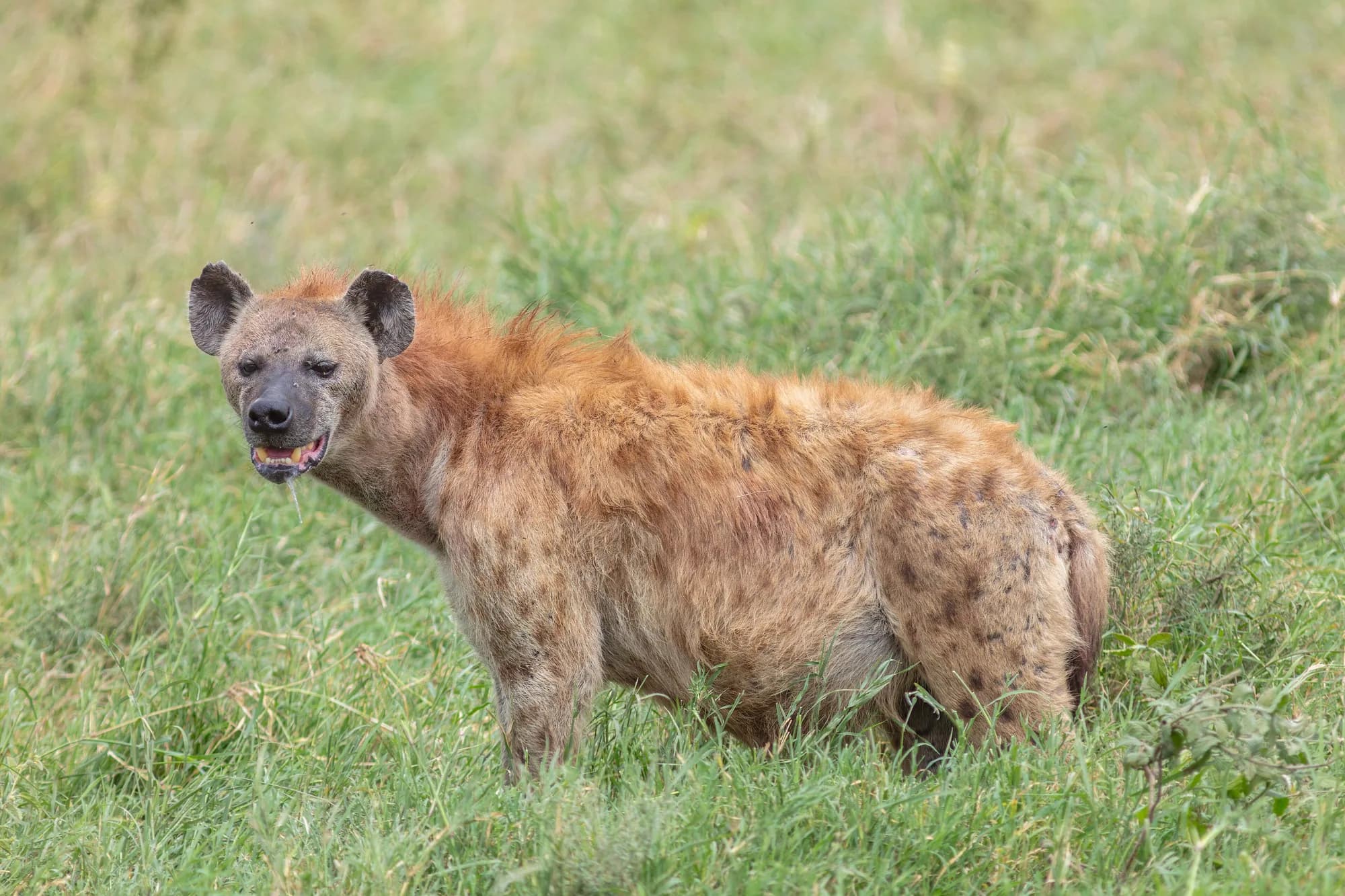
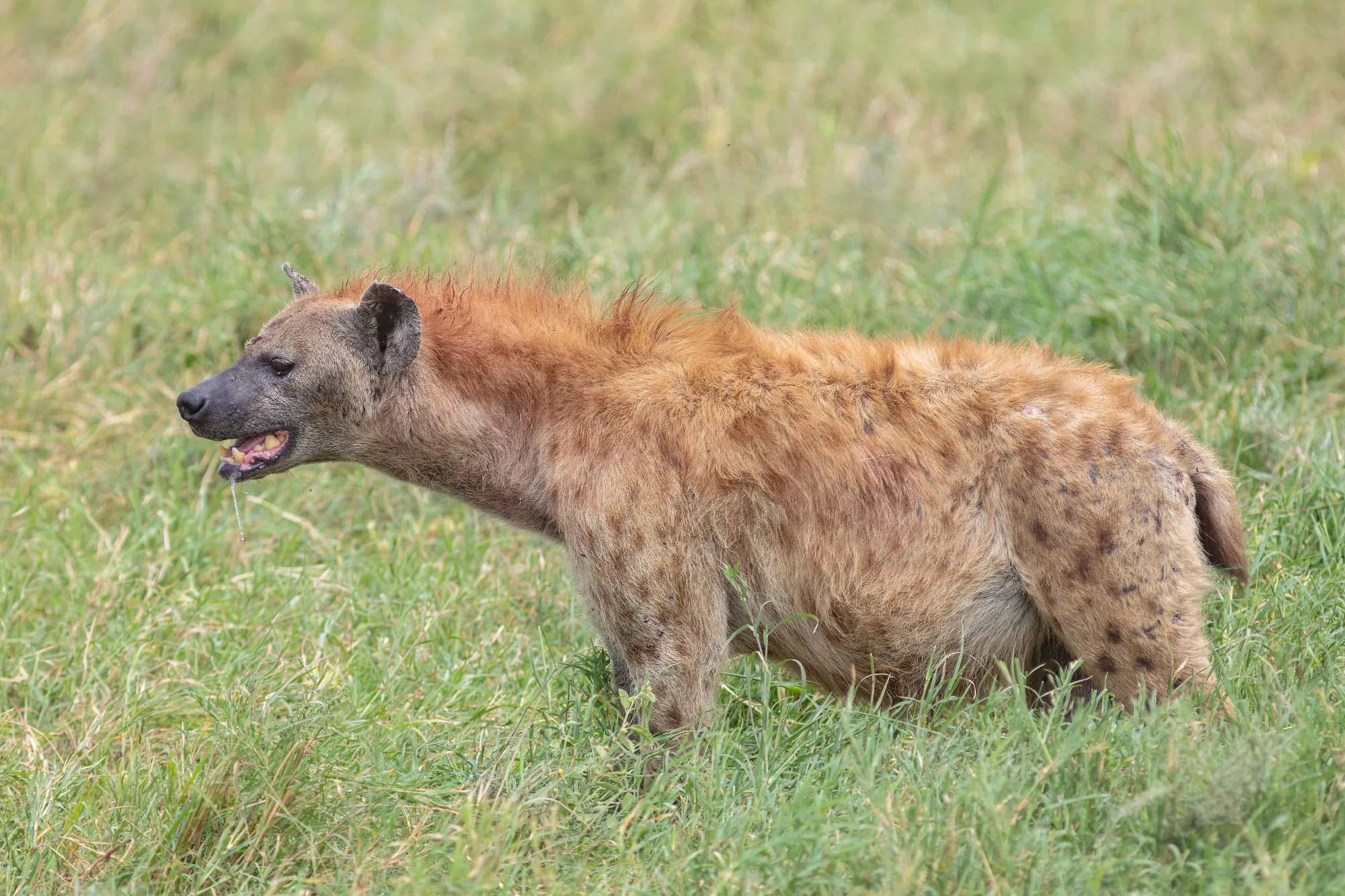
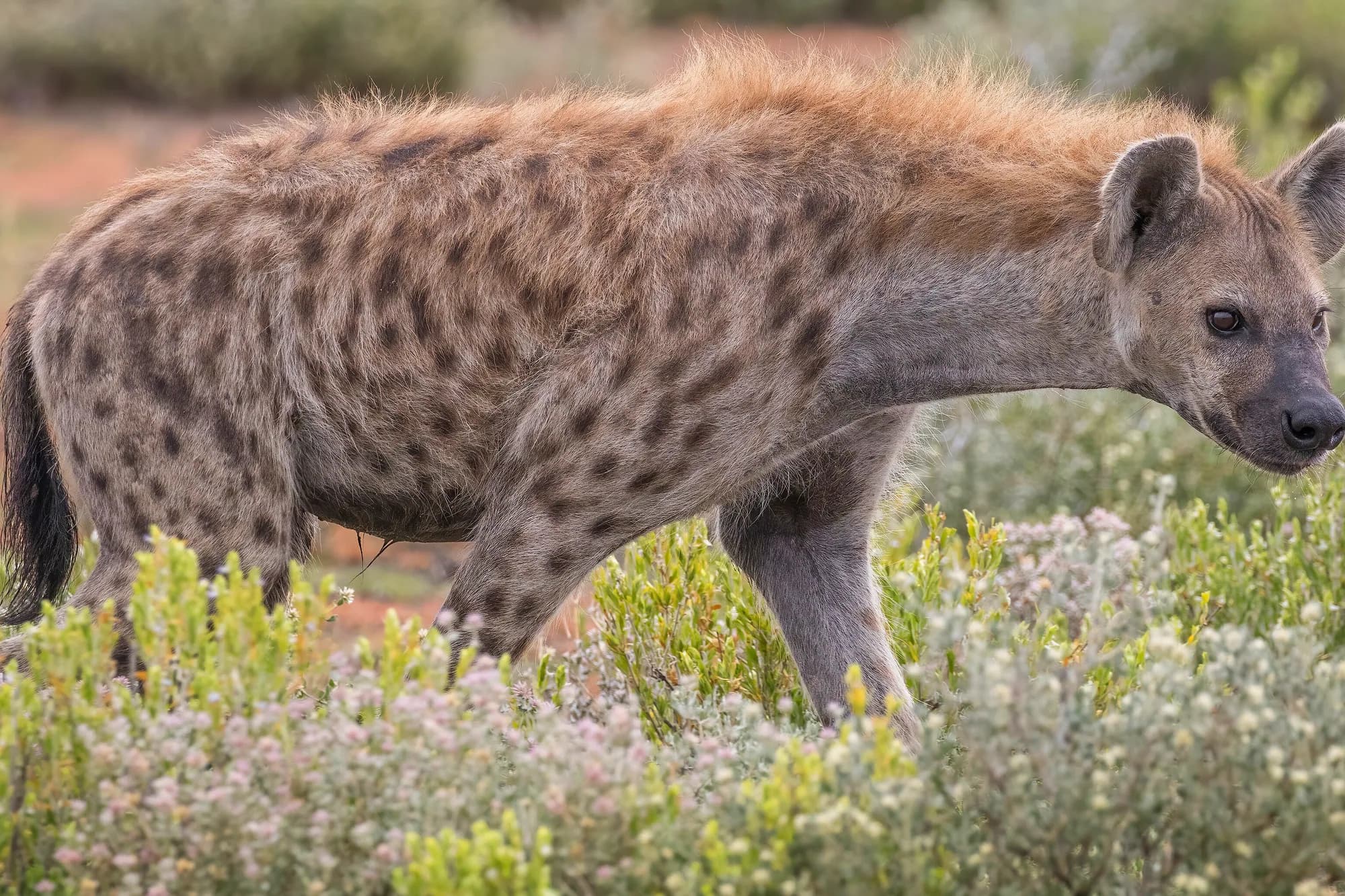
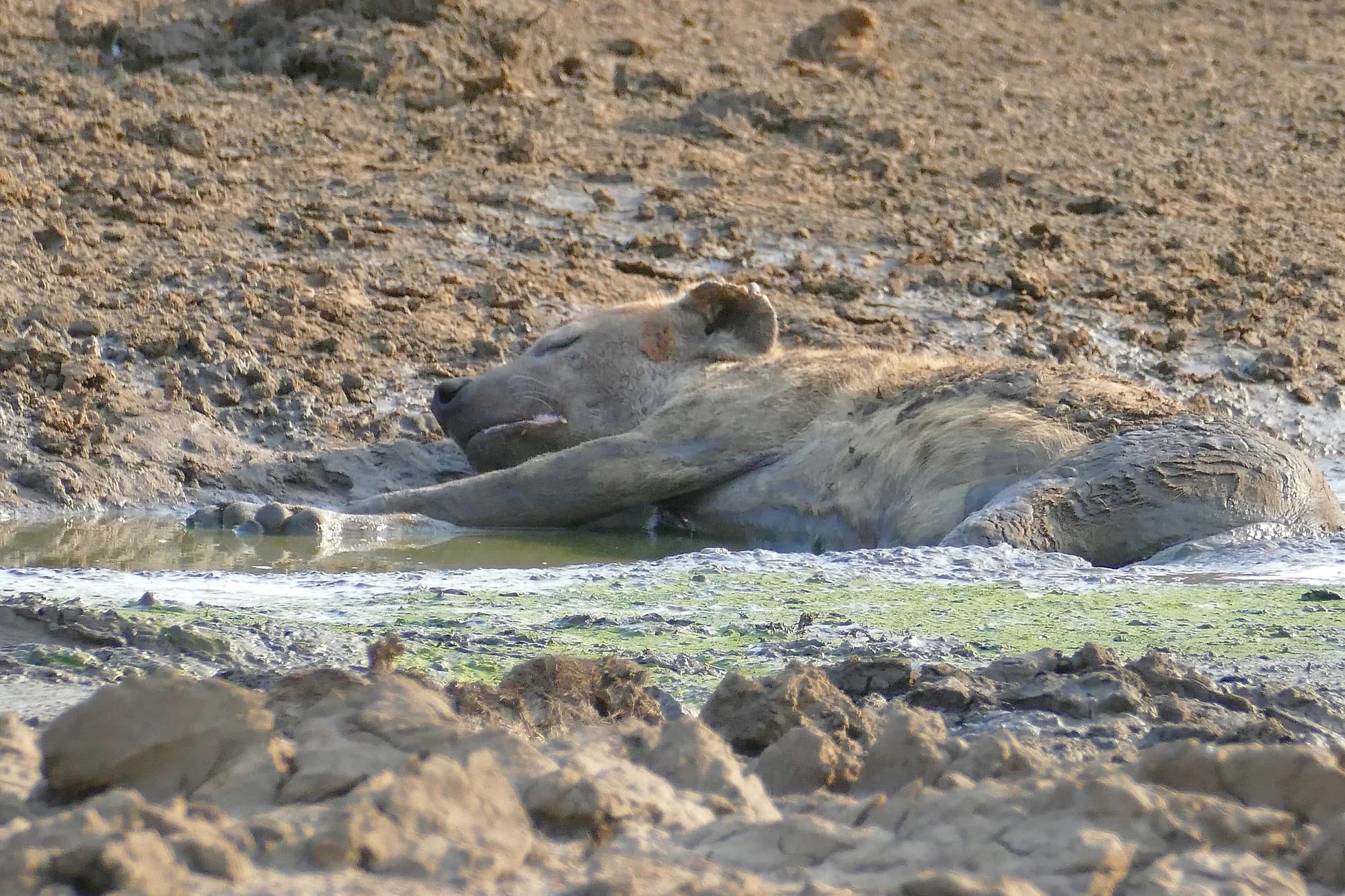
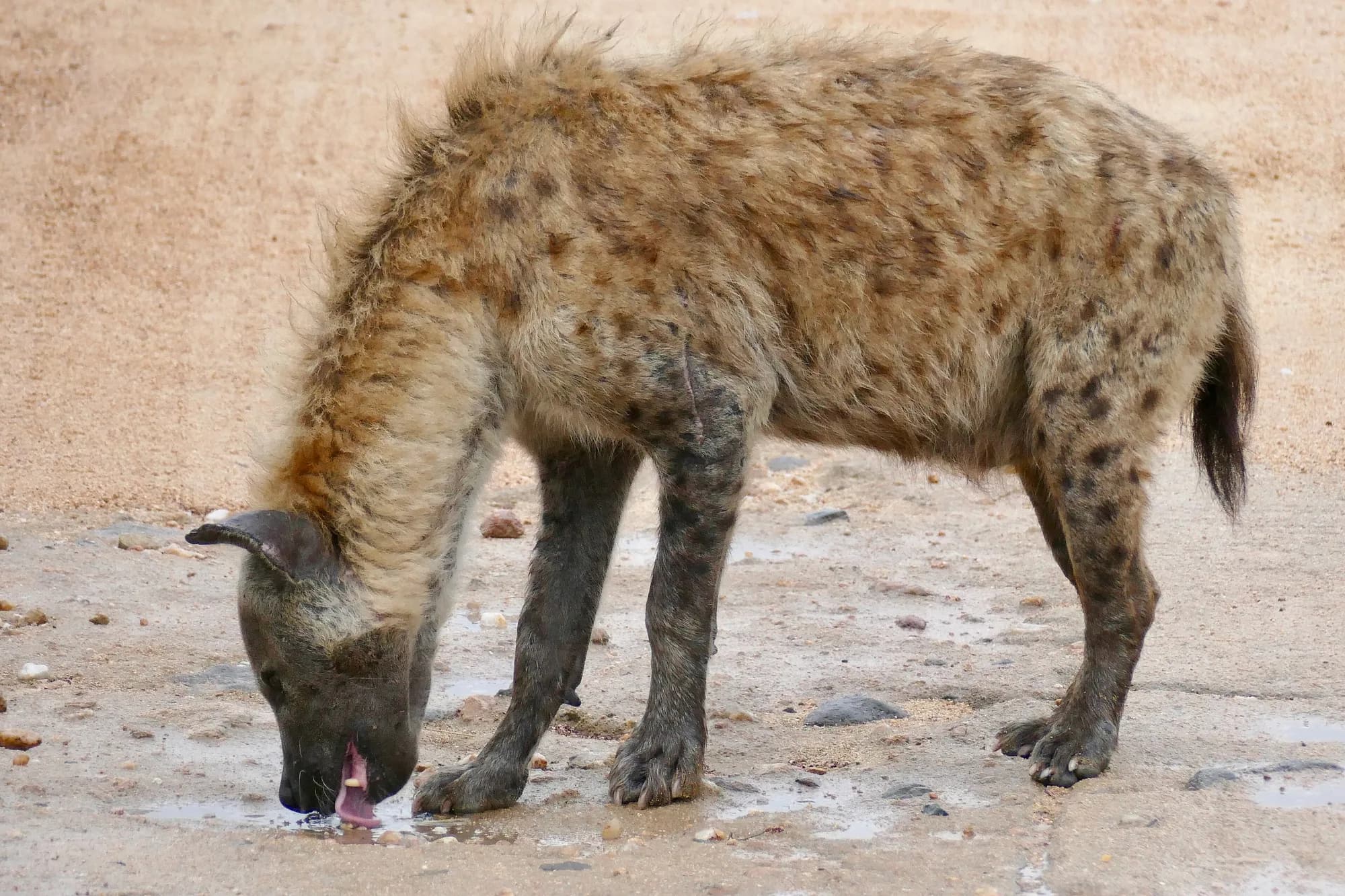
Photographs of Spotted hyena in the wild, in Indian reserves. We publish no captive, baited or digitally composited images, and no photograph whose licence we cannot show.
The scavenger myth
The story everybody arrives with — hyenas skulk, lions hunt — is close to backwards. Spotted hyenas kill the majority of what they eat, and in several well-studied systems it is lions that take kills from hyenas more often than the other way round. Ngorongoro is the clearest case: the crater’s lions get a substantial share of their food from hyena kills.
They are also built for it rather than for scavenging alone. A hyena runs down prey over distance, and the jaw is strong enough to crack and digest bone, which is why hyena droppings dry white with calcium and why almost nothing is left of a carcass they finish.
How a clan works
A clan can reach eighty animals and is matriarchal. Females are larger than males, dominant over all of them, and rank passes from mother to daughter, so a cub’s position is settled at birth. Immigrant males sit at the bottom regardless of size. This is a genuinely unusual arrangement among mammals and it makes a den the most information-dense sighting on a drive: who displaces whom, who greets whom, and in what order.
The greeting itself is the famous one — two animals standing head to tail with hind legs raised, inspecting genitalia. Females have a heavily masculinised anatomy which for a long time led to the belief, still repeated by guides, that hyenas are hermaphrodites. They are not.
Status and protection
Status and protection
- IUCN Red List
- Least Concern
- Population trend
- ↓ Decreasing
Species-level assessment for Crocuta crocuta, matching the binomial on the page.
Assessed 2015 · IUCN Red List assessment
What to book to see one
What you would be booking
- How it is seen
- Dawn game drives and, better, night drives. Dens are worth asking about specifically.
- Drives to book
- One or two. Very easy to see, easy to see badly.
- Zone or shift
- Ngorongoro Crater and the Mara for clan behaviour; South Luangwa and the Zambian parks for night drives.
A den is the sighting to ask for. Cubs are born black and stay at the den for months, and a den in the open with six or eight animals at it is an hour of continuous behaviour.
NgorongoroOn the same trip you would also get
- African lion — the rivalry runs both ways
- Cheetah — the one that loses kills to it
Questions people ask
Do hyenas really steal kills from lions?
Where is the best place to see spotted hyenas?
Are female hyenas dominant?
Read next
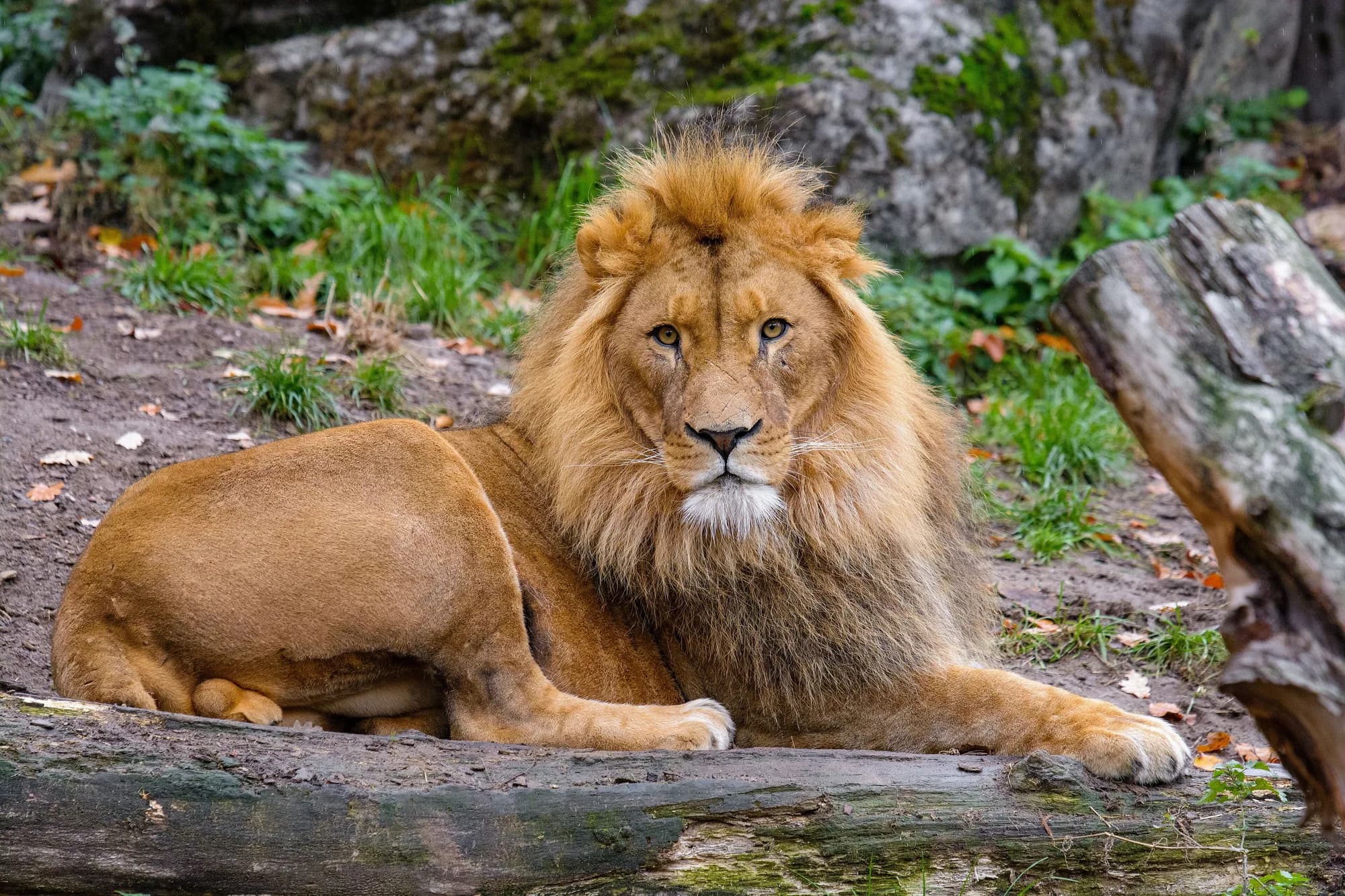
Nine countries here, and thinner on the ground than it looks
African lion — the rivalry
The animal everyone books the trip for, and the one most often seen asleep. Lions are not hard to find in a good park — they are hard to find doing anything, and the difference between those two sentences is most of what separates a good lion trip from a disappointing one.
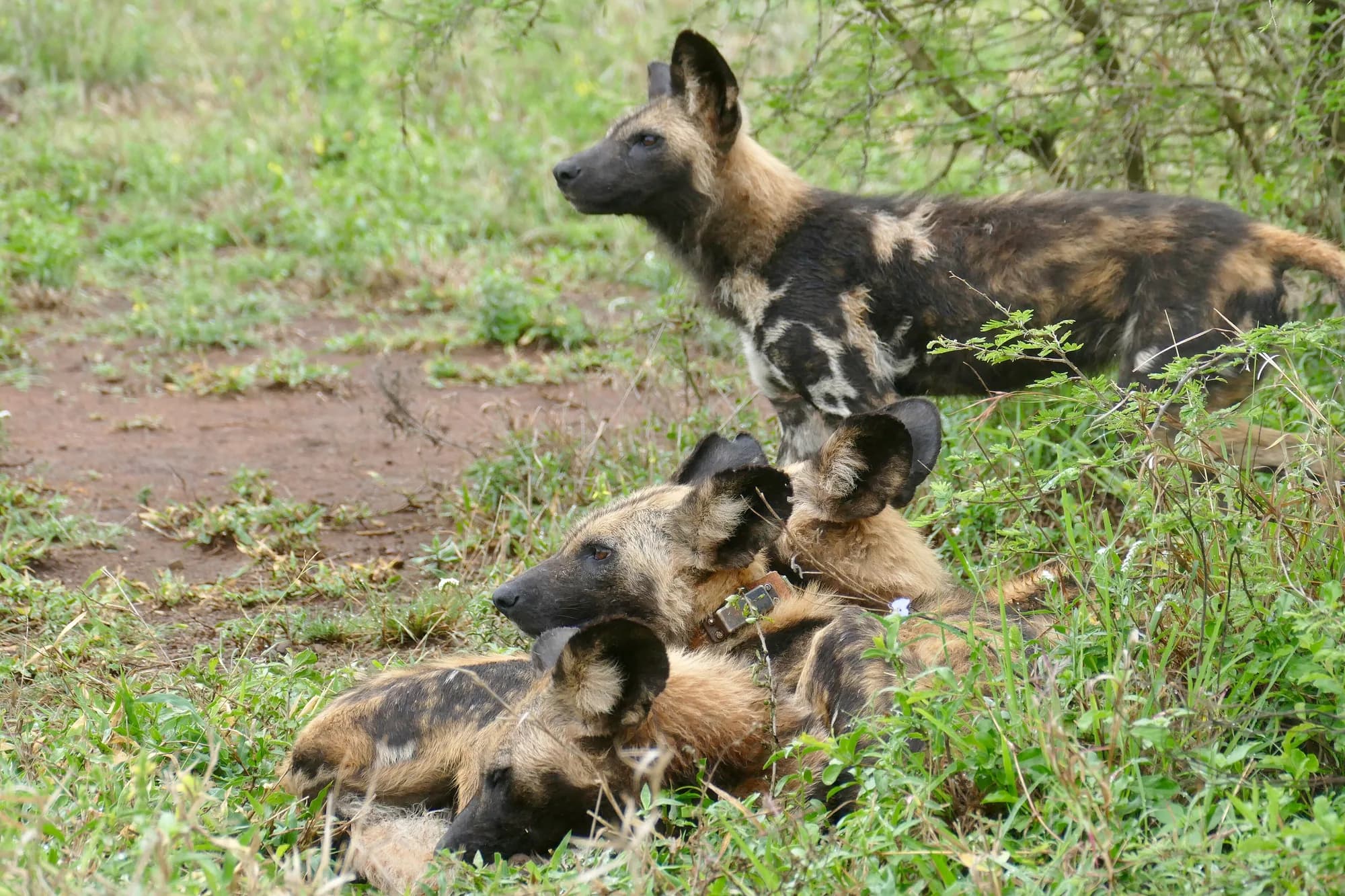
Six countries here, and about 6,600 left in all of Africa
African wild dog
The rarest large carnivore most people will ever have a realistic chance of seeing, and the most rewarding to watch. A pack hunts as a unit in daylight, covers ground fast, and is gone — which is why the parks that deliver them are a short and specific list.
Ngorongoro