
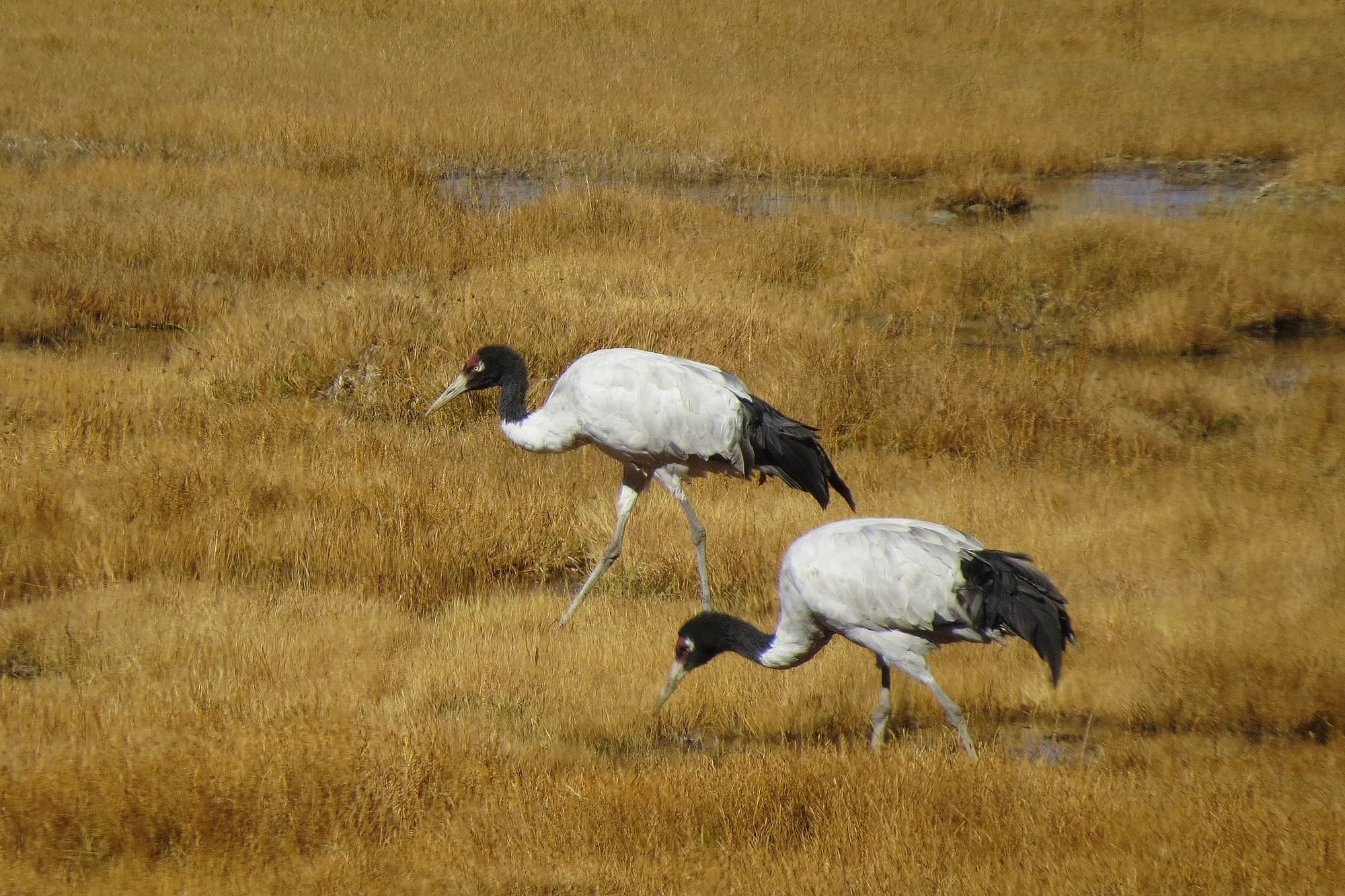
Species · Grus nigricollis
Black-necked crane
The only crane that breeds on the Tibetan plateau, and in India only in Ladakh. A handful of pairs, on wetlands at four thousand metres, in the months everyone else visits for snow leopard's opposite season.
Also called
- Trung trung karmo · Ladakhi
- Chatrung · Tibetan
- Kala gardan sarus · Hindi
Checked 31 Aug 2026
- Where
- Ladakh — Changthang
- Best months
- June–September
- Altitude
- Around 4,000 m and above
- Breeding pairs in India
- Very few, all in Ladakh
Breeds on the Ladakh plateau and winters mostly outside India. A few birds appear in Arunachal Pradesh and Sikkim in winter, but the Indian breeding population is Ladakh's alone.
Where it is
Where to actually go
Ranked, with the reason each — these are not interchangeable.
Where you will not see one
- Ladakh in winterThe breeding birds leave. Winter in Ladakh is the snow leopard season and holds no cranes.
- Anywhere on the plainsConfusion with the sarus crane is common in reports. Sarus is a huge grey bird of lowland wetlands with a red head; this is a plateau bird with a black neck.
When to go
When to go
- J
- F
- M
- A
- M
- J
- J
- A
- S
- O
- N
- D
January: closed or unproductive. February: closed or unproductive. March: closed or unproductive. April: marginal. May: good. June: best. July: best. August: best. September: good. October: marginal. November: closed or unproductive. December: closed or unproductive.
Through the day
- Dawn
- Morning
- Midday
- Afternoon
- Dusk
- Night
Dawn: active. Morning: most active. Midday: usually resting. Afternoon: active. Dusk: active. Night: not normally seen.
What it looks like in the field
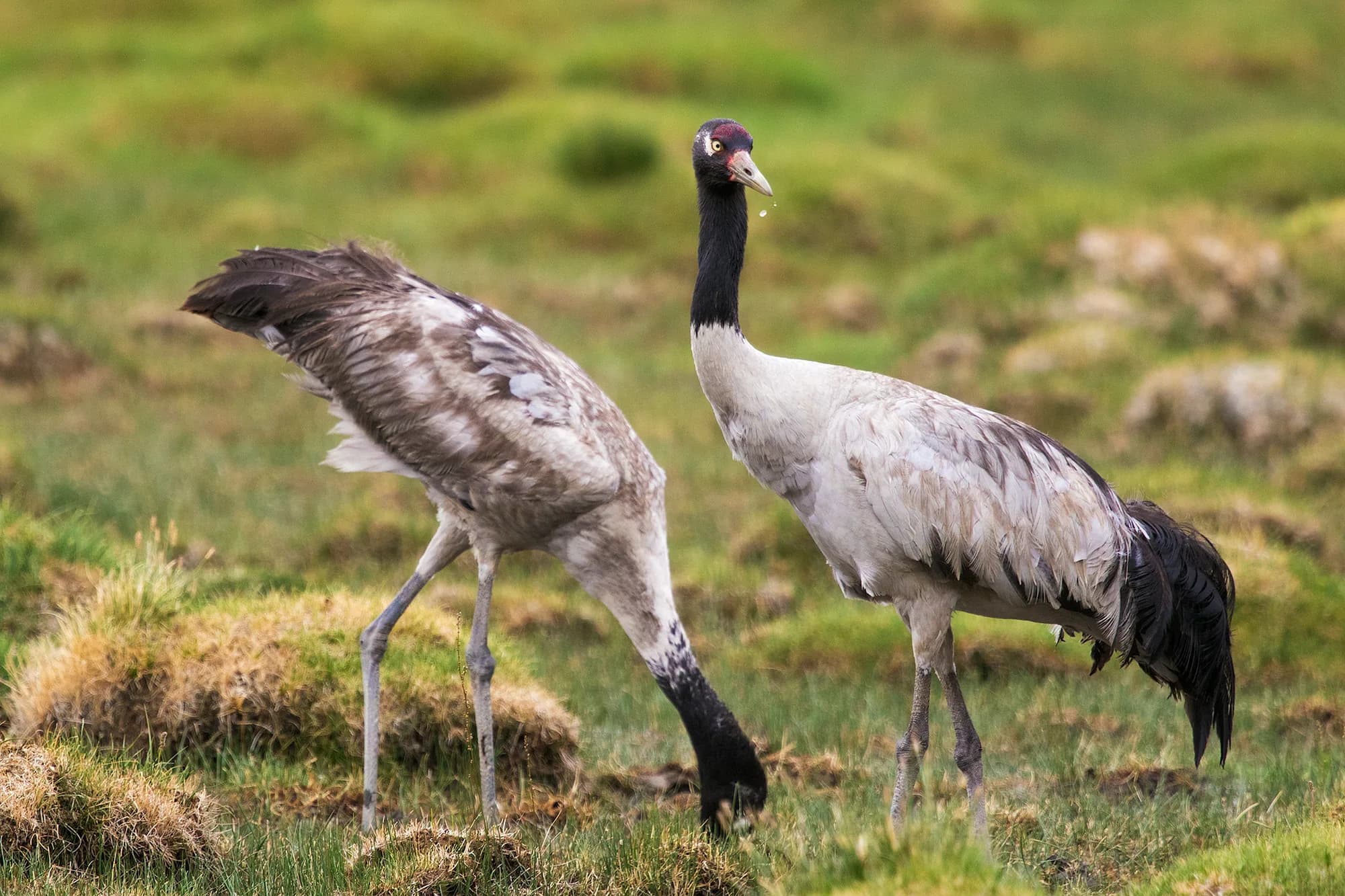
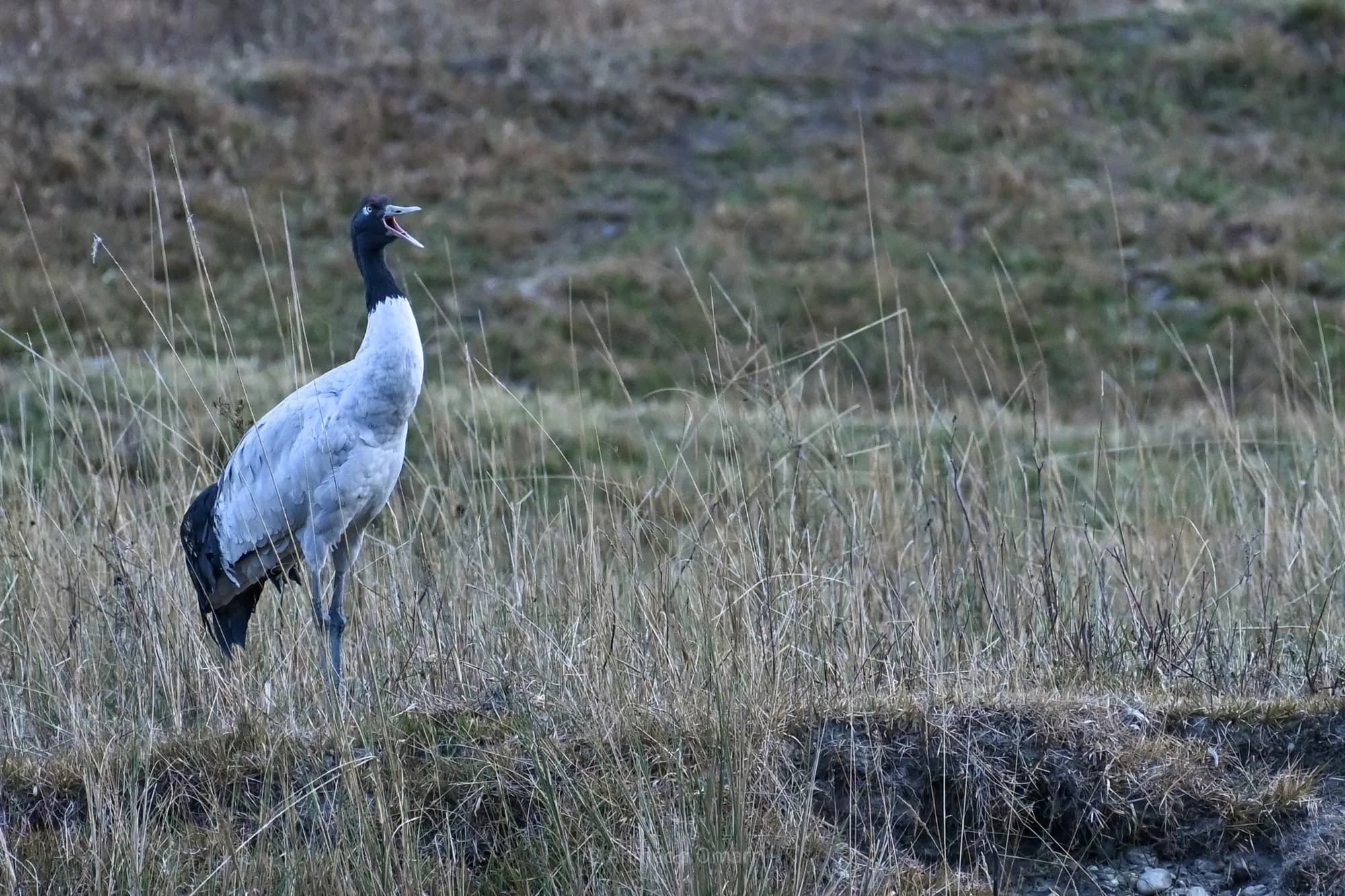
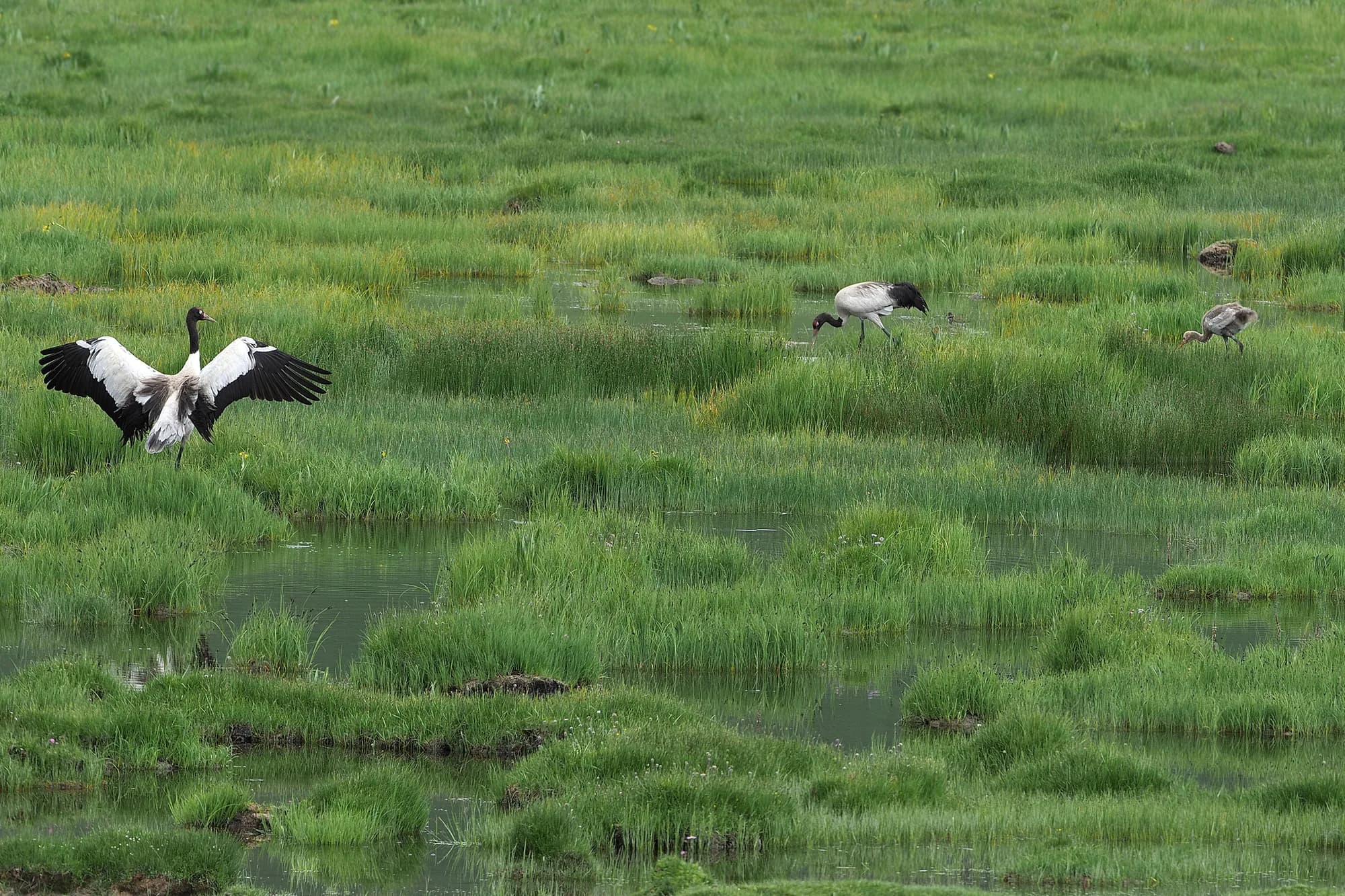
Photographs of Black-necked crane in the wild, in Indian reserves. We publish no captive, baited or digitally composited images, and no photograph whose licence we cannot show.
The opposite season to a snow leopard trip
Most people who go to Ladakh for wildlife go in February for snow leopard. This bird is there in July. Same roads, same altitude, entirely different trip — green marsh instead of frozen gorge, and the passes open rather than fought over.
If you have already done a winter Ladakh trip, this is the reason to go back in summer. If you have not, it is worth knowing the two cannot be combined.
What a sighting is actually like
Two very large pale birds standing in a shallow marsh, several hundred metres away, in a landscape with nothing else moving in it. They are not hard to see once you are at the right wetland — they are hard to get to, and deliberately not approached closely.
Status and protection
Status and protection
- IUCN Red List
- Near Threatened
- Population trend
- → Stable
- Wildlife Protection Act 1972
- Schedule I
- CITES
- Appendix I
Global, species-level assessment of Grus nigricollis; binomial matches exactly. Criteria C1+2a(ii); last assessed 24 July 2020.
Assessed 2020 · IUCN Red List assessment
What to book to see one
What you would be booking
- How it is seen
- A Changthang permit and a vehicle, with a guide who knows the current nesting marshes.
- Drives to book
- Long days on the plateau. This is not a park circuit — it is driving between wetlands.
Nesting pairs are protected and approached only at a distance. A good guide will position you and stop, rather than working closer.
Changthang — the park in fullQuestions people ask
Where can I see a black-necked crane in India?
When should I go?
How close can you get?
Read next
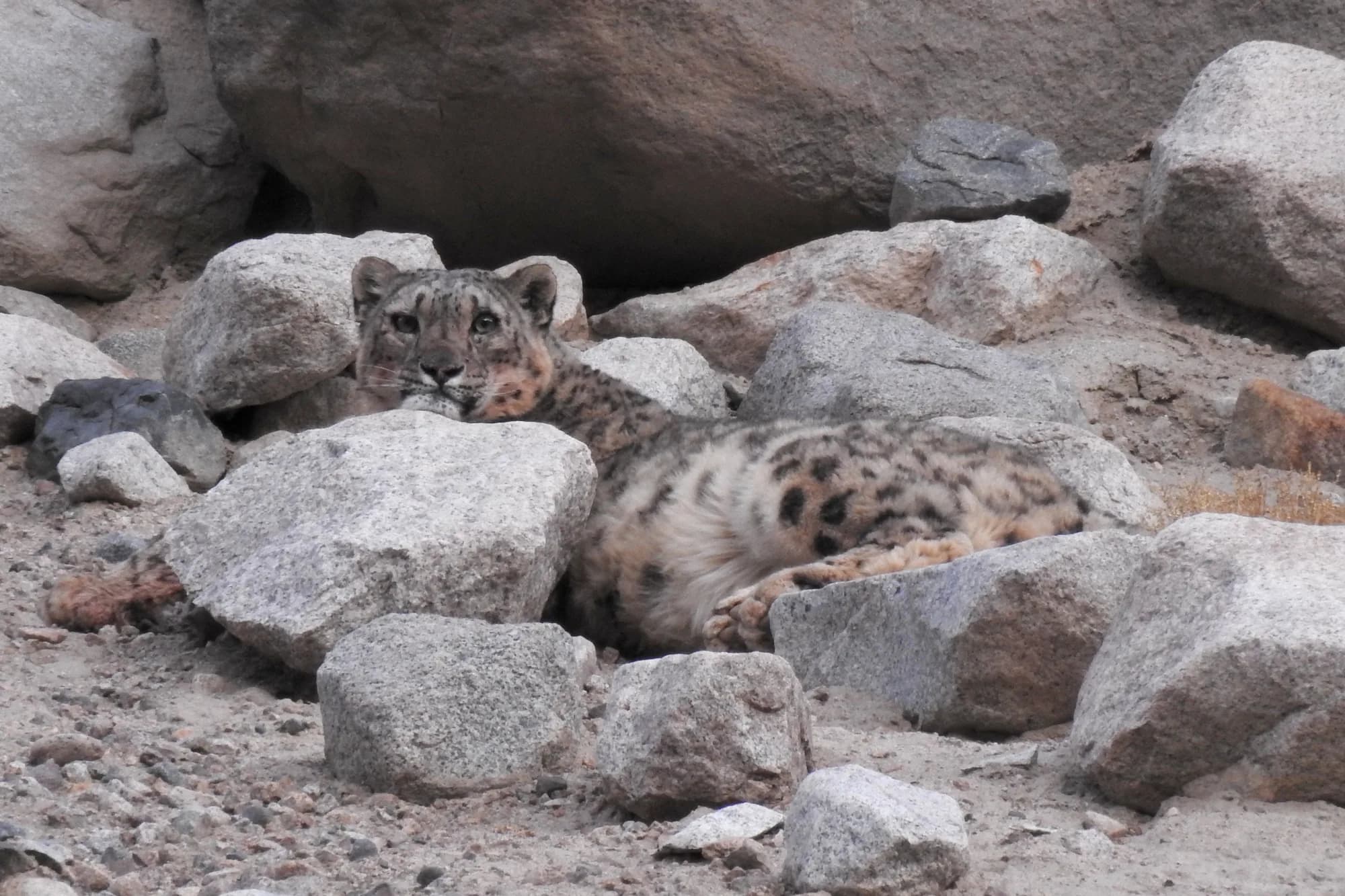
Ladakh and Spiti, in winter
Snow leopard — the same place, the other season
Not a safari. A mountain expedition with a chance of the animal — cold, high, and measured in days of patience rather than in drives.
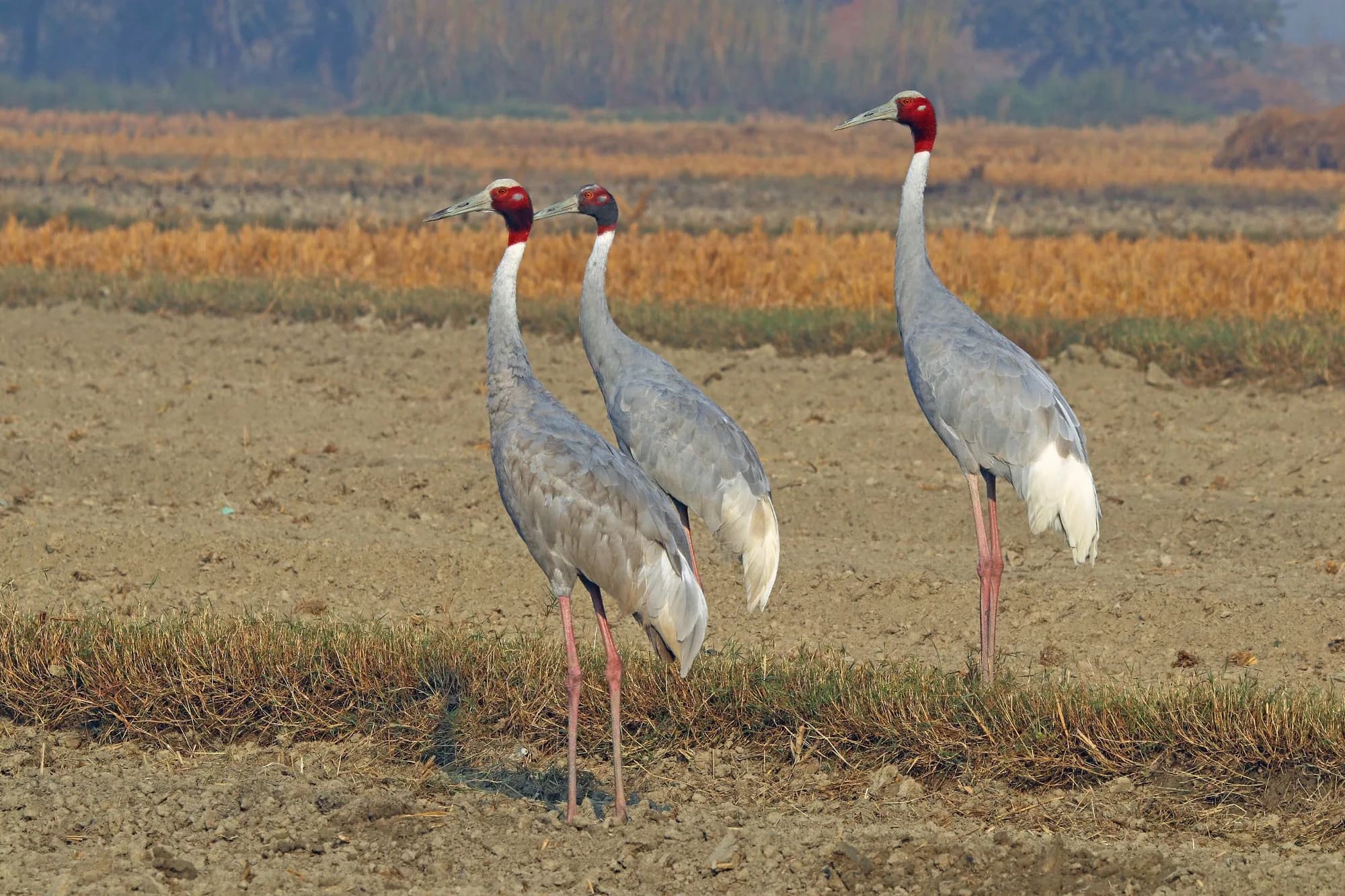
Wetlands and paddy, in pairs for life
Sarus crane — the lowland one
The tallest flying bird on earth, standing nearly as high as a person, living in farmland rather than wilderness and pairing for life.
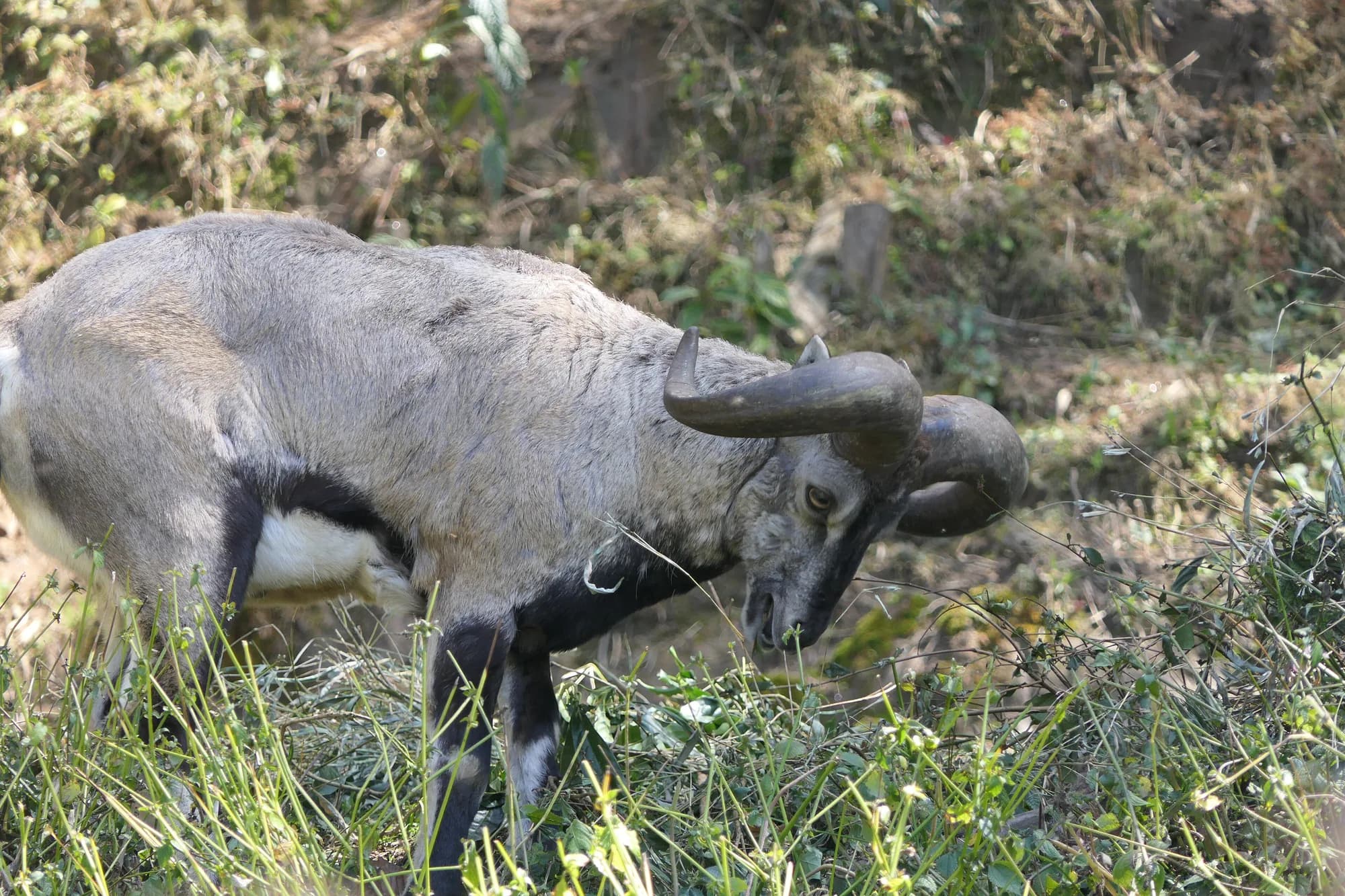
Ladakh and Spiti, above the treeline
Blue sheep — the same plateau
Neither blue nor a sheep, and the animal a snow leopard trip actually revolves around. If you are watching bharal, you are watching the right slope.
Twelve months, cross-park
When to go, month by month
The single decision that moves the odds most. Heat, crowds, closures and what is actually open, one page per month.