

Species · Gyps coprotheres
Cape vulture
Southern Africa's own vulture, and a colonial cliff-nester, which means the whole species is concentrated onto a short list of crags. That is a conservation problem and a travel opportunity at the same time: find the cliff and you have found several hundred birds.
Also called
- Kransaasvoël · Afrikaans
- iNqe · isiZulu
Checked 28 Sept 2026
- Where
- Southern Africa, endemic
- Best months
- Apr–Sep, with birds on the nest ledges
- Wingspan
- Around 2.5 m
- Odds
- Near-certain at a colony; scarce away from one
Breeds only in southern Africa — South Africa, Lesotho, Botswana, Zimbabwe, Eswatini and Mozambique, with a relict colony in Namibia. Birds range enormously in a day and are recorded well beyond the breeding cliffs, so a Cape vulture over a farm in the Karoo may have come from a colony two hundred kilometres away. The breeding range is the real range and it is far smaller than the sightings map suggests.
Where it is
HabitatNests colonially on tall cliffs and gorges, and forages over open grassland, karoo and bushveld within a day's flight of them. It needs three things in the same landscape: vertical rock, large dead animals, and no poison.
Worth travelling for
Holds most of the world population. Marakele's Kransberg cliff is the one to go to — several hundred pairs, and regularly described as the largest colony of the species anywhere. Golden Gate sits in the Free State sandstone below the Maluti escarpment, which is the other stronghold.
The Waterberg Plateau cliffs hold Namibia's last Cape vultures, down to a handful of birds and supported by supplementary feeding. It is a sobering sighting rather than a good one, and it is the clearest illustration on this site of what poisoning does to a colonial species.
Also occurs
LesothoBotswanaZimbabweEswatiniMozambique
Present, but not where you would go to see one.
Gone from
Most of the Western and Northern Cape as a breeding bird
Range this species has been lost from. It is the fact a map of where it currently lives cannot show you.
Where to actually go
Ranked, with the reason each — these are not interchangeable.
- 01MarakeleSouth AfricaThe Kransberg colony, several hundred pairs strong and reachable by a road that climbs to the height of the nesting cliffs. It is the best view of a Cape vulture colony available to an ordinary visitor anywhere in the world.Drive the high road, mid-morning
- 02Golden Gate HighlandsSouth AfricaFree State sandstone below the Maluti escarpment, which is the other core of the breeding range. Fewer birds in one place than Marakele, better country, and a genuine chance of bearded vulture overhead as well.For the escarpment, and the lammergeier
- 03Waterberg PlateauNamibiaNamibia's last Cape vultures, on the plateau's sandstone cliffs and down to a handful of birds. Worth going for what it tells you rather than for what you will see.The relict colony
Where you will not see one
- East AfricaThere are no Cape vultures in Kenya, Tanzania or Uganda. The big pale Gyps vulture on a Serengeti carcass is a white-backed or a Rüppell's, and neither is this bird.
- Cape Town and the peninsulaThe name is a historical accident of where the species was described, not a guide to where it lives now. It has gone as a breeding bird from most of the Western and Northern Cape, and Table Mountain is not a Cape vulture site.
- Namibia, in any numberOne relict colony at Waterberg Plateau, reduced to single figures and kept going by a feeding site. Do not plan a Namibian trip around this species.
- Anywhere without cliffsThey forage over flat country constantly and breed on none of it. Etosha, the Okavango and the Kalahari parks see birds passing; the colonies are all on rock.
When to go
When to go
- J
- F
- M
- A
- M
- J
- J
- A
- S
- O
- N
- D
January: good. February: good. March: good. April: best. May: best. June: best. July: best. August: best. September: best. October: good. November: good. December: good.
Through the day
- Dawn
- Morning
- Midday
- Afternoon
- Dusk
- Night
Dawn: active. Morning: most active. Midday: most active. Afternoon: active. Dusk: active. Night: not normally seen.
Realistic odds on a three-day trip
- Near-certain
- Likely
- Lucky
- Expedition
Telling it apart
Told apart from
White-backed vulture
Marakele, Kruger, and anywhere in the bushveld where both occur
The commonest confusion by far, and the eye settles it: an adult Cape vulture's eye is pale honey-yellow, a white-backed's is dark. The Cape is also noticeably bigger and paler, with two patches of bare blue-grey skin at the base of the neck.
Lappet-faced vulture
The same carcasses in the north and east
Much darker overall, with a bare pink-red head and conspicuous white thighs. It is the bird that opens a carcass and the one the others wait for. No pale sandy body.
Hooded vulture
Bushveld and camp edges
Small, slim, all dark brown with a thin bill built for scraps rather than hide. Half the bulk. If it is picking around the edge of a scrum rather than in it, it is this.
Marks chosen to be usable from a moving vehicle — a cape vulture is rarely still and never close enough for anything subtler.
What it looks like in the field


Photographs of Cape vulture in the wild, in Indian reserves. We publish no captive, baited or digitally composited images, and no photograph whose licence we cannot show.
Photographing it
- Lens
- 400mm and up for birds at the cliff; something far shorter for the kettle overhead, which is a wide shot and is usually the better picture.
- Typical distance
- A hundred metres or more at the colony, and you should not be closer. At a feeding-site hide, a few tens of metres, with the birds entirely aware of you.
- Light
- A pale bird against grey rock in hard highveld light is a hard exposure. Early or late, and expose for the bird, not the cliff.
Where to stopNever approach a nesting ledge or work above a colony, on foot or by drone. Colonial cliff-nesters flush together and a single disturbance can cost a whole season's eggs across a whole face. Vulture restaurants are open about being artificial; if that bothers you, the answer is to watch from the colony road instead, not to go looking for a wild carcass.
Signs and calls
- Whitewash
- Long white streaks running down a cliff face from occupied ledges, visible with the naked eye from kilometres away and the single quickest way to find a colony. A face that is stained but empty means the colony has failed or moved, which is worth noticing.
- Spiralling kettle
- Vultures circling upward in a thermal without descending are travelling, not feeding. Birds dropping steeply out of a column, one after another, are going to a carcass and the sequence is visible for a long way.
- Pellets and bone
- Below a roost, a litter of moulted feathers and regurgitated pellets of hair and bone fragments. The bone matters more than it looks — see the note below.
- Ledge nests
- Untidy stick platforms on broad ledges, often side by side within a few metres, each holding a single egg in the southern autumn. Watch from across the valley with a scope, never from above.
The colony is the species
Most vultures nest in trees, spread thinly across a landscape. The Cape vulture does not. It breeds colonially on tall cliffs, in tight clusters of ledges, often a few metres apart, and the consequence is that a very large share of the world’s population is standing on a short list of rock faces at any moment in the breeding season. Each pair lays a single egg, in the southern autumn, and a failed year at one cliff removes a meaningful fraction of the year’s young.
That concentration is exactly why the species is in trouble and exactly why it is easy to see. The Red List has it as Vulnerable with a decreasing trend; the 2021 assessment moved it down from Endangered, which reflects better information and real conservation effort rather than a bird that is now fine. Poisoning is the dominant threat — carcasses laced to kill jackals and caracals, and increasingly carcasses poisoned deliberately by poachers to bring down the birds that would otherwise give away a kill. Power lines take a steady toll, collision and electrocution both. And there is a persistent trade in vulture heads for traditional belief use, which is difficult to police because the demand is real and local.
For a visitor the practical point is that finding vultures is finding cliffs. Look for whitewash: long white streaks down a face, visible with the naked eye from kilometres, and the fastest way to locate a colony in unfamiliar country. Then wait for the thermals. Nothing much flies at dawn in winter, and by eleven the air over the same cliff can hold fifty birds.
Vulture restaurants
A vulture restaurant is a supplementary feeding site: a cleared patch of veld where a farmer, a reserve or an NGO puts out carcasses from a known, poison-free, drug-free source, usually with a hide at one end. They exist because the alternative, for a Cape vulture, is a landscape of livestock that may have been treated with veterinary drugs and game that may have been shot with lead.
There is a second reason, and it is the one most people have not heard. Cape vulture chicks need bone fragments to build their own skeleton, and in a landscape where the large bone-crushing carnivores have been removed, nobody is producing the splinters the adults would otherwise carry back. Chicks raised on meat alone develop bone deformities and fail to fledge. Good feeding sites therefore put out crushed bone deliberately. That is a conservation programme replacing an ecological function that used to be performed by spotted hyenas, and it is worth sitting with for a moment.
Watching from a hide at one is close, loud and slightly uncomfortable — a hundred large birds arriving on a carcass someone put there for you is not a wild sighting and nobody pretends otherwise. It is also, for many of these populations, the reason there are still birds to watch.
Status and protection
Status and protection
- IUCN Red List
- Vulnerable
- Population trend
- ↓ Decreasing
Species-level assessment for Gyps coprotheres, matching the binomial on the page. Endemic to southern Africa.
Assessed 2021 · IUCN Red List assessment
What to book to see one
What you would be booking
- How it is seen
- A drive to a colony viewpoint, or a hide at a supplementary feeding site. No vehicle skill and no tracker required — this is one of the few large birds on this site you can see well from a car park.
- Drives to book
- One visit to a colony, timed for mid-morning, will do it. Away from a colony, budget several days and expect nothing.
- Zone or shift
- Marakele's Kransberg road, which climbs to eye level with the nesting cliffs. At Golden Gate, the sandstone faces and the escarpment country toward the Lesotho border.
Marakele's high road is steep, narrow and single-track in places; check whether your hire car is permitted on it before you drive up, because plenty are not. Feeding sites usually need to be arranged in advance and many are on private land rather than in the park.
Birding on safariOn the same trip you would also get
- Verreaux's eagle — the other cliff-nester, often on the same crag
- Brown hyena — at the same carcass, and the reason bone is on the ground
- Black-backed jackal — first to a carcass and last to leave it
Questions people ask
Where is the best place to see Cape vultures?
Are Cape vultures found outside southern Africa?
What is a vulture restaurant?
How do I tell a Cape vulture from a white-backed vulture?
What time of day should I go?
Read next
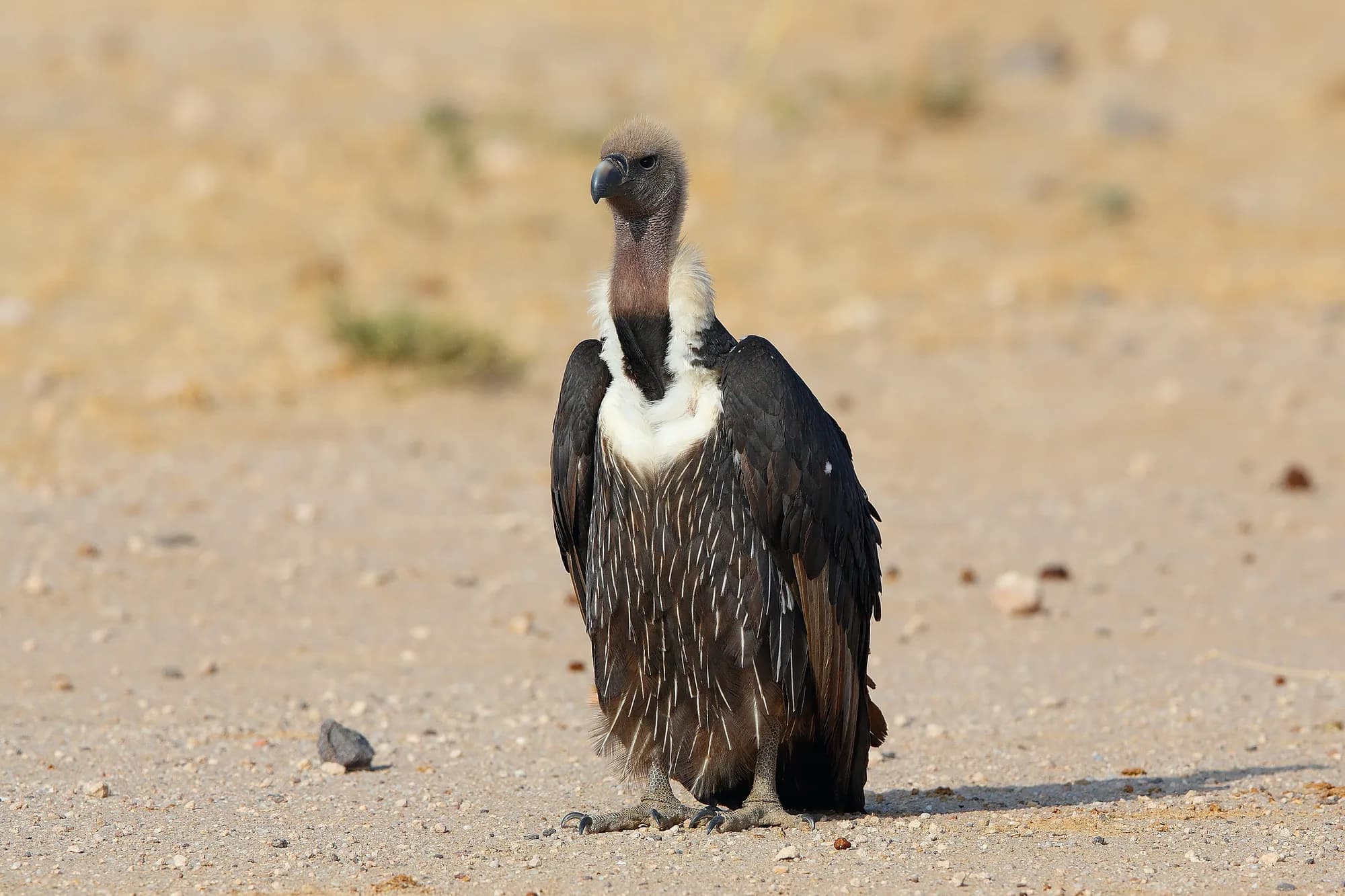
Once the commonest large raptor on earth
White-rumped vulture — the Asian collapse
A bird that numbered in the tens of millions and lost more than ninety-nine per cent of its population in about a decade. The fastest collapse of any bird species ever recorded.
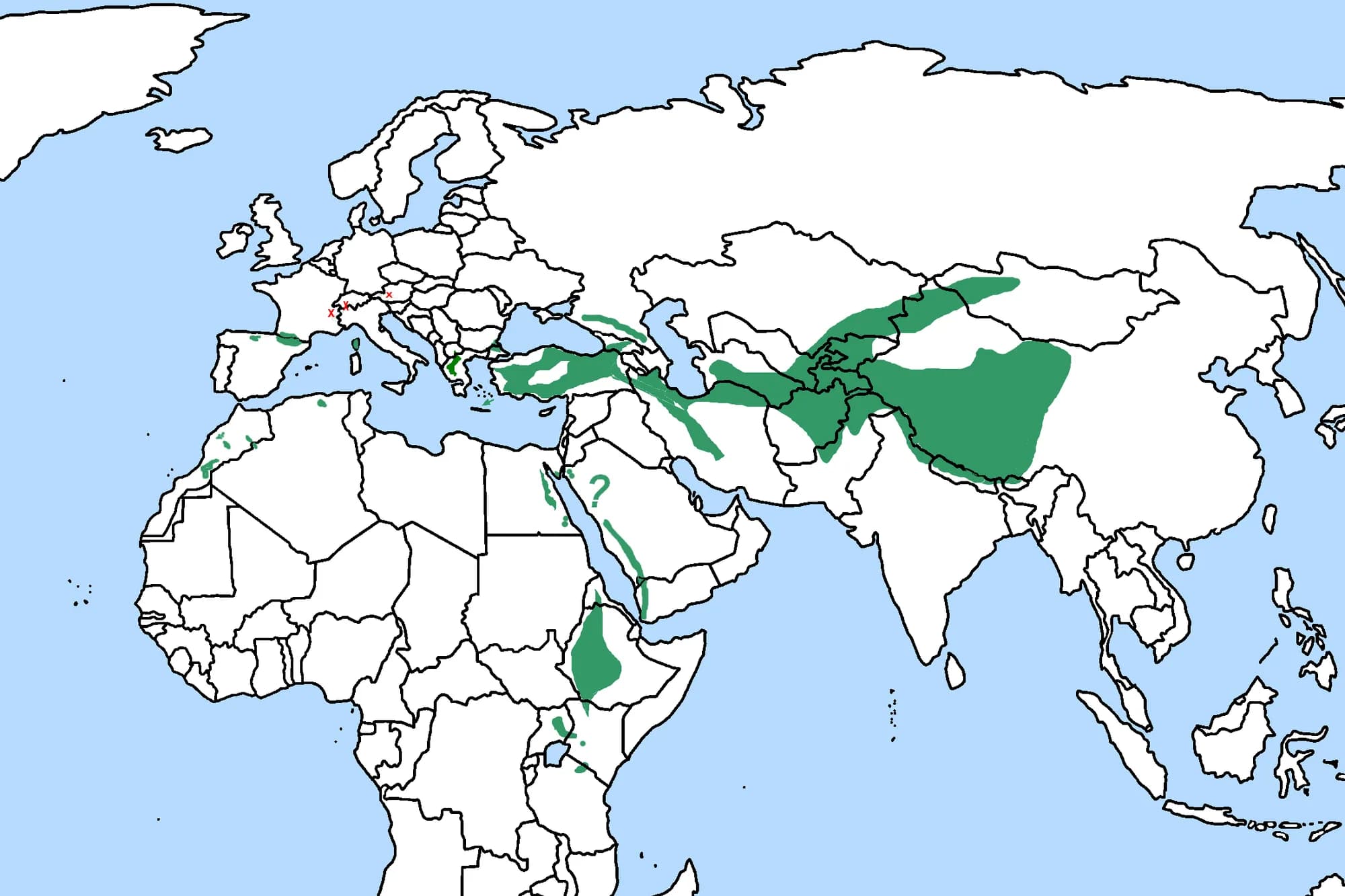
A Himalayan ridge, at eye level
Lammergeier — the other bone specialist
Nearly three metres of wing passing below you on a ridge, orange-stained, with a diamond tail. The only bird in the world that lives mainly on bone, and the standard consolation on a blank snow leopard morning.
Marakele
Waterberg Plateau